
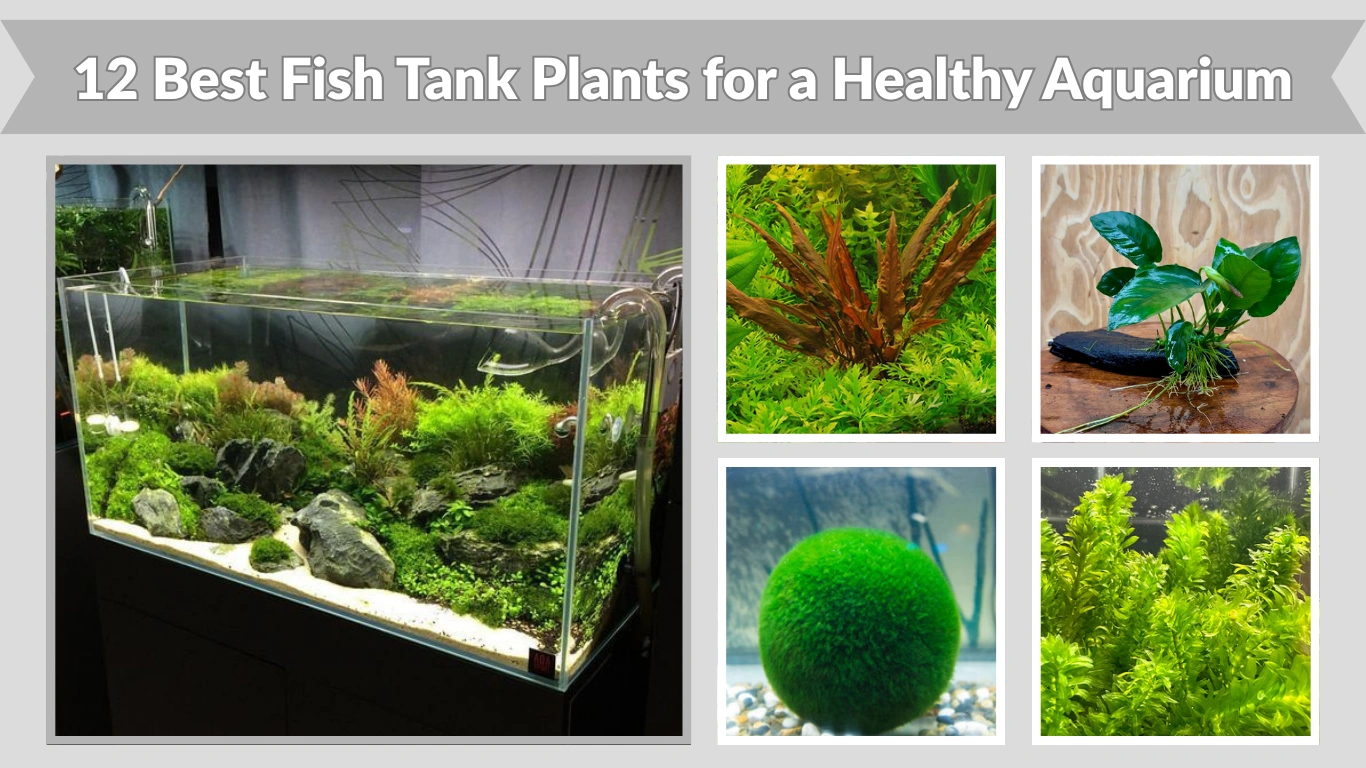
Aquarium plants play a vital role in creating a healthy, balanced, and visually appealing fish tank. Beyond their natural beauty, live plants help improve water quality, provide oxygen, and create a more comfortable environment for fish, shrimp, and other aquatic life. Whether you’re a beginner setting up your first tank or an experienced aquarist looking to enhance your aquascape, choosing the right plants can make a significant difference.
In this guide, we’ll explore 12 popular fish tank plants that are not only beautiful but also easy to care for. From low-maintenance options like Anubias and Java Fern to fast-growing plants like Hornwort and Water Wisteria, each plant offers unique benefits and characteristics. Understanding their care requirements and features will help you build a thriving, natural aquarium that both you and your fish will enjoy.
1. Anubias
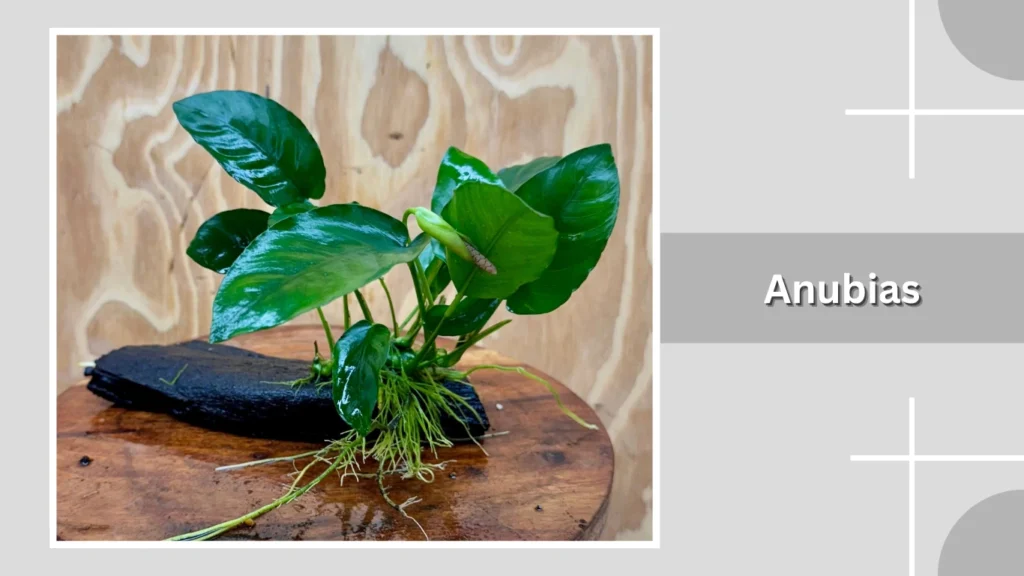
Anubias is a highly popular freshwater aquarium plant valued for its durability, slow growth, and adaptability to a wide range of tank conditions. Native to West Africa, it naturally grows along riverbanks and shaded aquatic environments, often attached to rocks or wood rather than rooted in substrate. Because of its resilience, Anubias is widely recommended for beginners as well as experienced aquarists who want a low-maintenance plant. Its thick, attractive leaves add a natural, lush look to aquariums, and it fits well in both small and large tank setups. Anubias is also commonly used in aquascaping, especially in low-tech tanks where lighting and CO₂ levels are minimal. Its slow growth rate means less frequent trimming and maintenance, making it ideal for hobbyists who prefer a stable, easy-to-manage planted aquarium.
Identification
- Anubias has broad, oval to heart-shaped leaves that are dark green and have a thick, leathery texture.
- The plant grows from a horizontal rhizome, which should remain above the substrate.
- Leaves grow upright from the rhizome on sturdy stems and can vary in size depending on the species (e.g., Anubias nana vs. Anubias barteri).
- The root system is thin and primarily used for anchoring rather than nutrient absorption.
- It is typically attached to driftwood, rocks, or decorations rather than planted directly in the substrate.
Care
Anubias is extremely easy to care for and thrives in low to moderate lighting conditions. In fact, excessive light can encourage algae growth on its slow-growing leaves, which can be difficult to remove. It does not require CO₂ supplementation, although it can benefit from it in more advanced setups. Water parameters are not strict—Anubias tolerates a pH range of approximately 6.0 to 7.5 and temperatures between 22–28°C (72–82°F). The most important care tip is to avoid burying the rhizome, as this can cause it to rot and kill the plant. Instead, it should be tied or glued to hardscape materials. Occasional fertilization with liquid fertilizers can enhance growth, but it is not strictly necessary. Due to its slow growth, pruning is minimal and usually only required to remove older or algae-covered leaves.
Benefits
Anubias offers several advantages in a freshwater aquarium. Its hardy nature makes it resistant to damage from fish, including herbivorous or digging species that often uproot or eat softer plants. The plant provides excellent shelter and resting spots for fish, shrimp, and fry, contributing to a more natural and stress-free environment. Its broad leaves can also serve as surfaces for beneficial biofilm growth, which shrimp and some fish species feed on. Additionally, Anubias contributes to water quality by absorbing nitrates and other waste compounds, although its impact is moderate due to its slow growth. Because it requires minimal maintenance, it is perfect for low-tech setups, beginner tanks, and aquascapes that aim for long-term stability with minimal intervention.
2. Java Fern
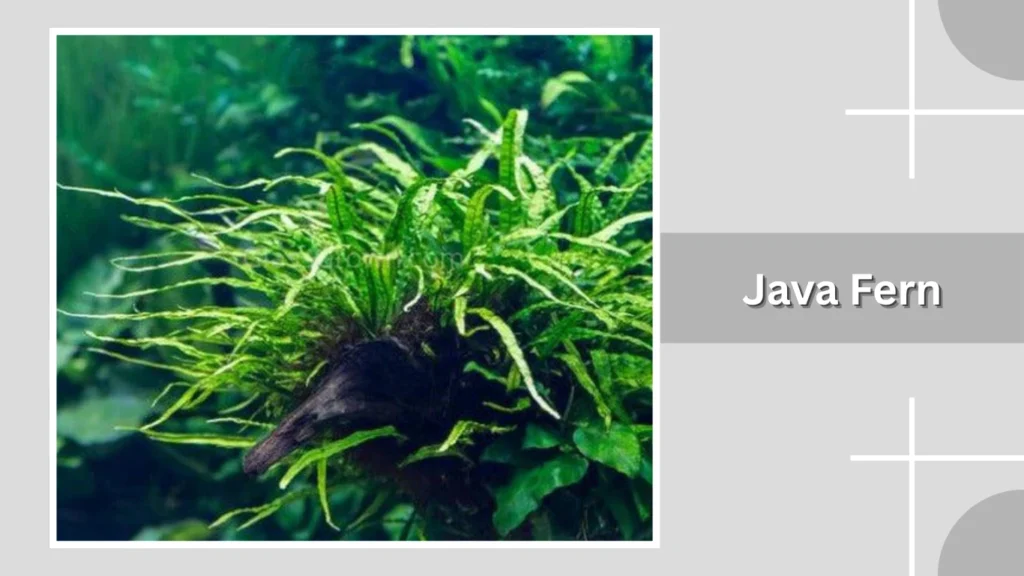
Java Fern is another hardy and beginner-friendly aquarium plant, widely appreciated for its unique leaf shapes and ability to thrive in low-light conditions. Native to Southeast Asia, it naturally grows attached to rocks and driftwood in rivers and streams. Like Anubias, Java Fern does not need to be planted in substrate, making it highly versatile for aquascaping. It is a slow to moderate grower and adapts well to a variety of tank environments, including community tanks and low-tech setups. Its long, flowing green leaves add movement and texture to aquariums, creating a natural and calming aesthetic. Java Fern is also known for its resilience, making it suitable for tanks with fish that may disturb or eat more delicate plants.
Identification
- Long, narrow, leathery leaves that can vary in shape (standard, needle, or lace varieties).
- Leaves are typically bright to dark green and grow from a horizontal rhizome.
- The plant develops small black spots under leaves, which are spores (not disease).
- Roots are thin and primarily used for anchoring to surfaces like wood or rocks.
- New plantlets often grow from older leaves, a unique reproduction feature.
Care
Java Fern is very low-maintenance and thrives in low to moderate lighting. Too much light can lead to algae buildup on its leaves, so subdued lighting is ideal. It does not require CO₂ injection, though it may grow slightly faster with it. The plant prefers a temperature range of 20–28°C (68–82°F) and can tolerate a wide pH range from 6.0 to 7.5. Like Anubias, its rhizome must not be buried in the substrate, as this can cause rot. Instead, it should be attached to rocks, driftwood, or decorations using thread or aquarium-safe glue. Fertilization is optional but can support healthier growth. Pruning is minimal and typically involves removing damaged or older leaves. Java Fern propagates easily through plantlets that form on mature leaves, which can be detached and replanted.
Benefits
Java Fern provides numerous benefits in an aquarium setup. Its sturdy leaves are rarely eaten by fish, making it ideal for tanks with species that typically damage plants. It offers excellent hiding spots and resting areas for fish, shrimp, and fry, contributing to a more natural habitat. The plant also supports beneficial microorganisms on its leaf surfaces, which can serve as a food source for small aquatic life. While its slow growth means it does not absorb nutrients as rapidly as fast-growing plants, it still contributes to maintaining water quality over time. Additionally, Java Fern is highly adaptable and can be used in a variety of aquascaping styles, from simple beginner tanks to more elaborate natural layouts.
3. Amazon Sword
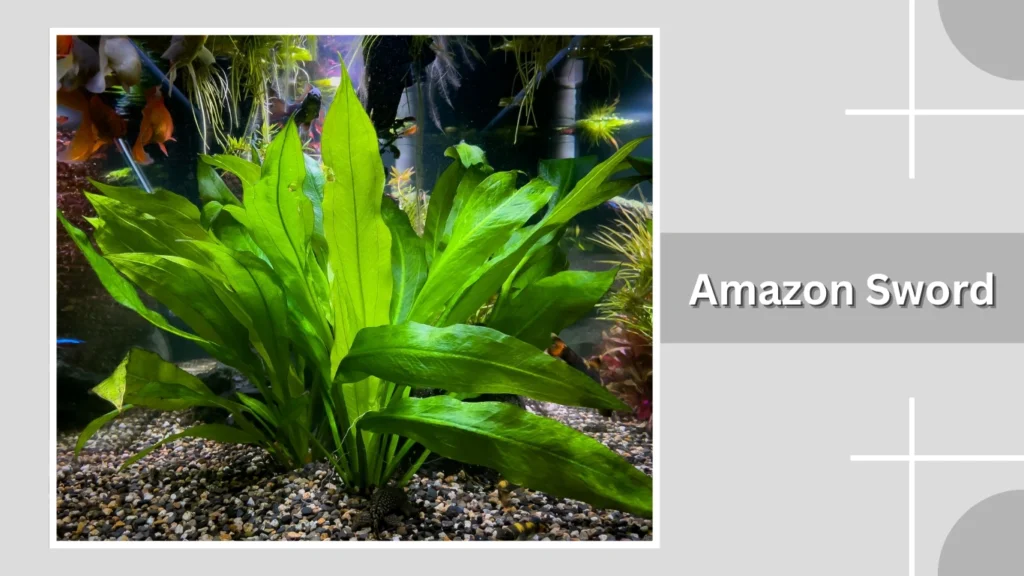
Amazon Sword is a classic and widely used aquarium plant known for its large, vibrant green leaves and strong presence in aquascapes. Native to South America, particularly the Amazon Basin, this plant is commonly used as a centerpiece or background plant due to its size and bushy growth. It is especially popular in community aquariums because it creates a natural environment that mimics river habitats. While it is slightly more demanding than beginner plants like Anubias or Java Fern, it is still relatively easy to maintain with proper care. Its fast growth and ability to spread make it an excellent choice for filling space and adding depth to an aquarium. Amazon Sword thrives best in nutrient-rich environments and can grow quite large, making it suitable for medium to large tanks.
Identification
- Large, broad, sword-shaped leaves that grow in a rosette pattern from the base.
- Leaves are typically bright to deep green, though some varieties may have reddish hues.
- Can grow quite tall, often reaching 30–50 cm (12–20 inches) or more.
- Strong root system that spreads deeply into the substrate.
- New leaves emerge from the center of the plant, pushing older leaves outward.
Care
Amazon Sword requires moderate lighting to maintain healthy growth and vibrant leaf color. Unlike rhizome plants, it must be planted in the substrate, where it absorbs nutrients through its roots. A nutrient-rich substrate or the use of root tabs is highly recommended for optimal growth. It benefits from CO₂ supplementation but can still grow without it in low-tech setups, albeit more slowly. The ideal temperature range is 22–28°C (72–82°F), with a pH between 6.5 and 7.5. Regular fertilization, especially with iron and micronutrients, helps prevent yellowing leaves. Due to its rapid growth, trimming may be required to prevent overcrowding. Removing older or damaged leaves also encourages new growth and keeps the plant healthy.
Benefits
Amazon Sword provides significant benefits in an aquarium, both aesthetically and functionally. Its large leaves create shelter and hiding spots for fish, helping reduce stress and promote natural behavior. It is particularly useful for breeding tanks, where fry can find protection among its dense foliage. As a fast-growing plant, it absorbs nitrates and other excess nutrients efficiently, helping maintain water quality and reduce algae growth. Its strong root system also helps stabilize the substrate. Additionally, Amazon Sword enhances the visual appeal of an aquarium by adding height, structure, and a lush, natural look, making it a favorite choice for aquascapers aiming to create a balanced and immersive underwater landscape.
4. Vallisneria
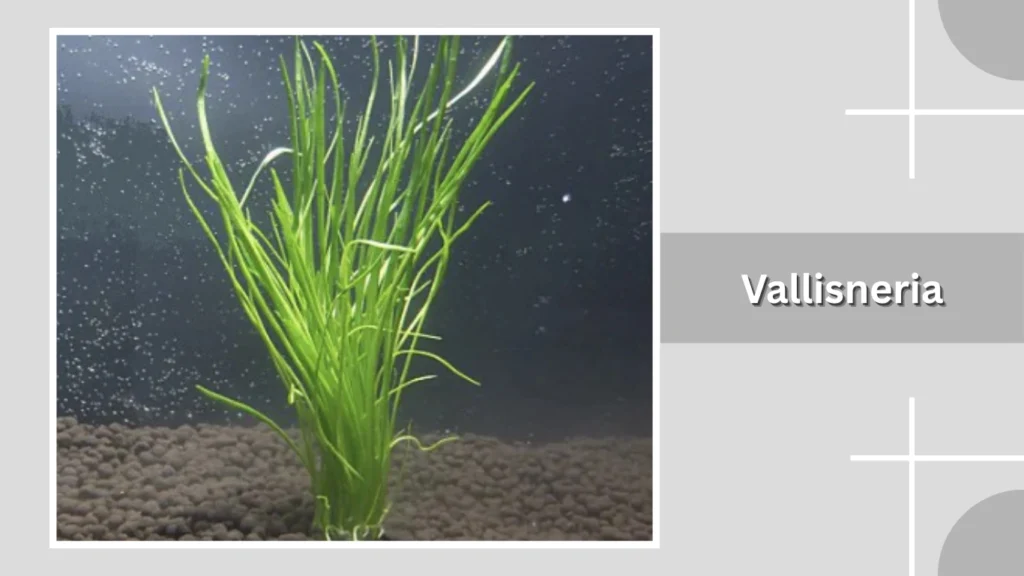
Vallisneria, often called “Val,” is a popular aquarium plant known for its long, ribbon-like leaves that create a flowing, grass-like appearance in the tank. Native to tropical and subtropical regions around the world, it is commonly used as a background plant due to its height and spreading nature. Vallisneria is ideal for aquarists who want to achieve a natural underwater look with minimal effort. It grows relatively quickly and can form dense underwater meadows, making it a great choice for larger aquariums. This plant is beginner-friendly and adapts well to a variety of water conditions, making it suitable for both low-tech and moderately advanced setups.
Identification
- Long, thin, ribbon-like leaves that grow straight upward and can reach the water surface.
- Leaves are typically bright to medium green and may gently sway with water movement.
- Grows in clusters from the base, spreading through runners across the substrate.
- Leaf length varies by species, with some reaching over 60 cm (24 inches).
- Roots are firmly planted in the substrate and spread horizontally as the plant propagates.
Care
Vallisneria is relatively easy to care for and thrives in low to moderate lighting conditions. It prefers to be planted in a nutrient-rich substrate, although it can still grow in inert substrates if supplemented with root fertilizers. The plant benefits from stable water conditions, with an ideal temperature range of 20–28°C (68–82°F) and a pH between 6.5 and 8.0. It does not require CO₂ injection, but additional CO₂ can enhance growth speed and leaf density. Vallisneria propagates through runners, which produce new plants that can be left to spread or relocated as needed. It is important not to trim the leaves mid-way, as cut tips may turn brown; instead, remove entire leaves from the base when pruning. Sudden changes in water conditions can sometimes cause “melting,” but the plant usually recovers quickly once conditions stabilize.
Benefits
Vallisneria offers several benefits that make it a valuable addition to aquariums. Its fast growth helps absorb excess nutrients such as nitrates, which contributes to improved water quality and reduced algae growth. The dense, grass-like coverage provides excellent shelter and breeding grounds for fish and shrimp, promoting a more natural and secure environment. Its tall leaves also create vertical structure and depth in aquascapes, enhancing the overall visual appeal of the tank. Additionally, Vallisneria helps oxygenate the water and can act as a natural barrier or background, making it ideal for dividing spaces within larger aquariums or creating a lush, jungle-like aquascape.
5. Hornwort
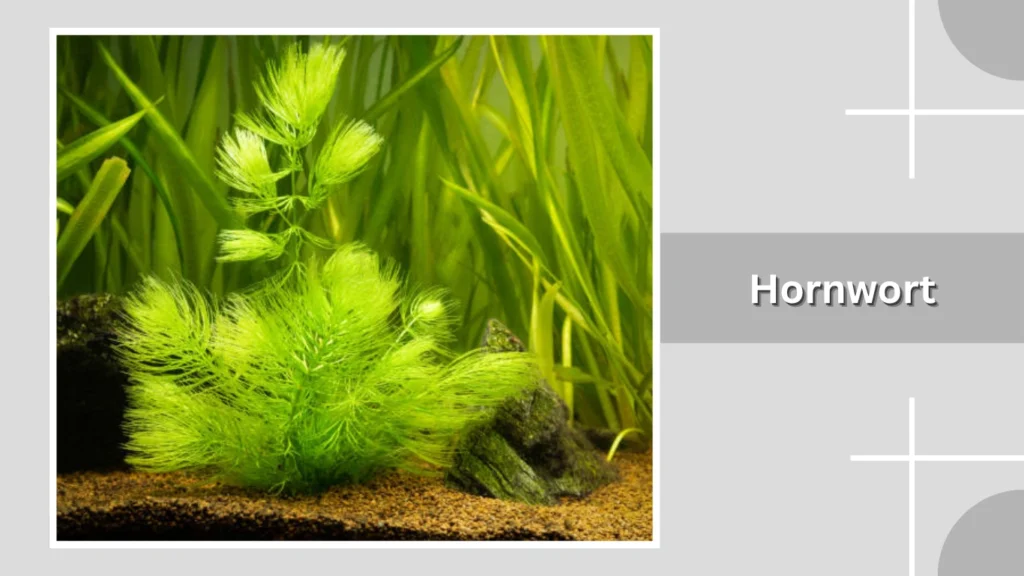
Hornwort is a fast-growing, versatile aquarium plant known for its feathery, bushy appearance and ability to float or be anchored in the substrate. It is found worldwide in a variety of freshwater environments, making it highly adaptable to different aquarium conditions. Hornwort is especially popular among beginners due to its rapid growth and low maintenance requirements. It does not have true roots, which allows it to float freely or be loosely placed in the tank. This flexibility makes it useful for both decorative purposes and functional roles, such as providing cover for fish. Its dense, needle-like foliage creates a soft, natural look and can quickly fill empty spaces in an aquarium.
Identification
- Thin, needle-like leaves arranged in whorls around the stem, giving a bushy, bottle-brush appearance.
- Bright to dark green coloration depending on lighting and water conditions.
- Lacks true roots; may float freely or be anchored loosely in substrate.
- Stems can grow long and branch out, forming dense clusters.
- Slightly rough texture compared to other soft-leaf plants.
Care
Hornwort is extremely easy to care for and thrives in a wide range of conditions, from low to high lighting. It does not require CO₂ supplementation and grows rapidly even in low-tech setups. The ideal temperature range is 15–30°C (59–86°F), and it tolerates a broad pH range from 6.0 to 8.0. Because it grows quickly, it may require regular trimming to prevent it from overtaking the tank. Trimmings can be replanted or left floating to grow into new plants. Since Hornwort absorbs nutrients directly from the water column, liquid fertilizers can enhance its growth, but it often thrives without them. It may occasionally shed needles, especially when adapting to new environments, but this is normal and temporary.
Benefits
Hornwort provides numerous benefits in an aquarium, particularly due to its fast growth rate. It is highly effective at absorbing excess nutrients like nitrates and ammonia, which helps maintain water quality and reduce algae growth. Its dense structure offers excellent hiding places for fish fry, shrimp, and small fish, making it ideal for breeding tanks. When used as a floating plant, it can also provide shade, helping to reduce excessive light and limit algae formation. Additionally, Hornwort oxygenates the water and contributes to a healthier aquatic ecosystem. Its low maintenance and rapid propagation make it a practical and attractive choice for both beginner and experienced aquarists.
6. Water Wisteria
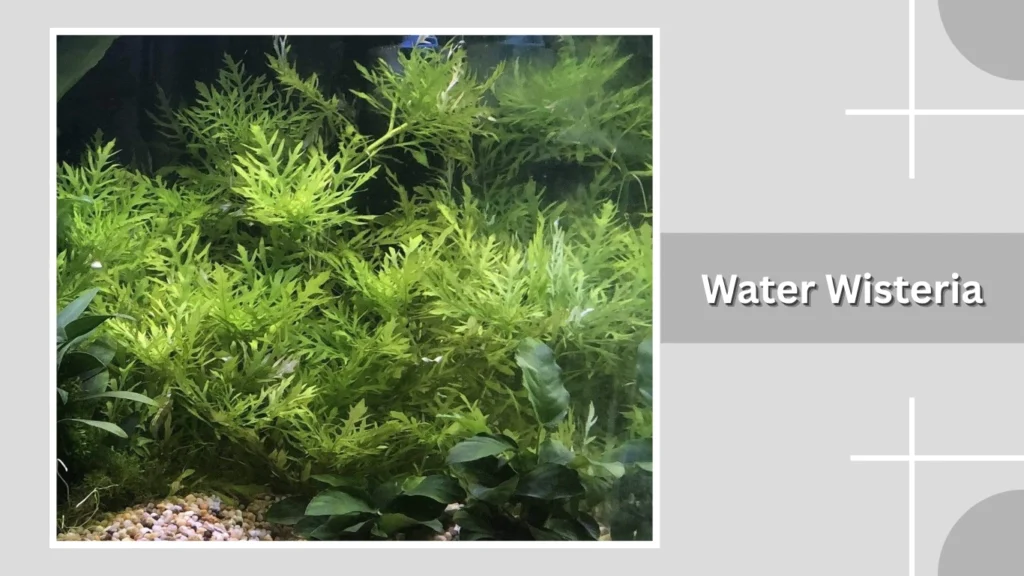
Water Wisteria is a fast-growing and highly adaptable aquarium plant known for its delicate, lace-like leaves and vibrant green color. Native to the Indian subcontinent, it thrives in a variety of freshwater environments and is commonly used in aquariums for its decorative appeal and functional benefits. It can be planted in the substrate or left floating, making it a versatile choice for aquascaping. Water Wisteria is especially popular among beginners because it grows quickly and helps stabilize tank conditions. Its soft, bushy appearance adds a natural and slightly wild look to aquariums, making it ideal for creating lush underwater landscapes.
Identification
- Bright green, finely divided leaves that resemble lace or ferns.
- Leaf shape can vary depending on whether the plant is submerged or grown.
- Grows on upright stems that can branch out and form dense clusters.
- Can reach heights of 20–50 cm (8–20 inches) depending on conditions.
- Roots develop when planted but can also grow as a floating plant without anchoring.
Care
Water Wisteria is easy to care for and thrives in low to moderate lighting, though higher light encourages faster and denser growth. It does not require CO₂ supplementation, but adding CO₂ can significantly boost its growth rate and leaf complexity. The ideal temperature range is 22–28°C (72–82°F), with a pH between 6.0 and 7.5. It absorbs nutrients both through its roots and directly from the water column, so both root tabs and liquid fertilizers can be beneficial. Due to its rapid growth, regular trimming is necessary to prevent it from overshadowing other plants. Trimmings can be replanted to propagate new plants easily. It adapts quickly to different conditions, making it forgiving for beginners.
Benefits
Water Wisteria offers excellent benefits for maintaining a healthy aquarium. Its fast growth allows it to absorb large amounts of excess nutrients, helping control nitrate levels and reduce algae growth. The plant provides dense cover for fish, shrimp, and fry, creating a safe and stress-free environment. When used as a floating plant, it can also provide shade, which helps regulate light levels in the tank. Additionally, it contributes to oxygenation and improves overall water quality. Its versatility, rapid growth, and attractive appearance make it a valuable addition to both beginner and advanced aquariums.
7. Dwarf Hairgrass
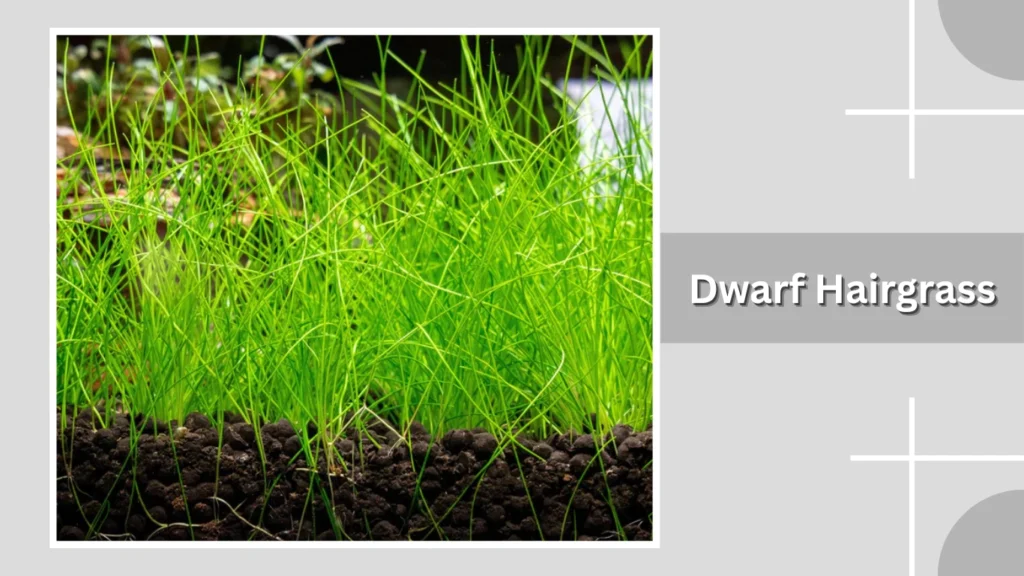
Dwarf Hairgrass is a popular carpeting plant used in aquascaping to create a lush, grass-like foreground. It is widely appreciated for its fine, hair-like blades that resemble a natural underwater lawn. Native to various regions around the world, this plant is commonly found in shallow freshwater environments. Dwarf Hairgrass is a favorite among aquascapers who aim to achieve a clean, minimalist, or nature-style aquarium layout. While it requires slightly more care than beginner plants, it is still manageable with proper lighting and nutrients. Over time, it spreads across the substrate, forming a dense green carpet that enhances the overall aesthetic of the tank.
Identification
- Very thin, grass-like blades that grow upright from the substrate.
- Bright green coloration that forms a soft, lawn-like appearance.
- Typically grows to a height of 5–15 cm (2–6 inches).
- Spreads through runners, creating a dense carpet over time.
- Fine root system that anchors the plant into the substrate.
Care
Dwarf Hairgrass requires moderate to high lighting to grow densely and form a proper carpet. In low light, it may grow sparsely or taller instead of spreading. CO₂ supplementation is highly recommended for optimal growth, though it can survive without it at a slower rate. The ideal temperature range is 20–28°C (68–82°F), with a pH between 6.0 and 7.5. A nutrient-rich substrate or the use of root tabs is important for healthy root development. Regular trimming helps maintain a short, carpeted look and encourages lateral spreading. It may take time to establish, but once rooted, it spreads steadily through runners. Proper maintenance and stable conditions are key to achieving a dense, healthy carpet.
Benefits
Dwarf Hairgrass provides both aesthetic and functional benefits in an aquarium. Its carpeting growth creates a natural, meadow-like appearance that enhances aquascapes and adds depth to the tank. It offers hiding spots for small fish, shrimp, and fry, especially near the substrate level. As it spreads, it helps stabilize the substrate and prevents debris from settling deeply. The plant also contributes to water quality by absorbing nutrients, though its impact is moderate compared to faster-growing plants. Additionally, a well-maintained carpet can reduce algae growth by limiting available nutrients and covering exposed substrate. Its elegant and natural look makes it a top choice for aquarists aiming for professional-quality layouts.
8. Cryptocoryne
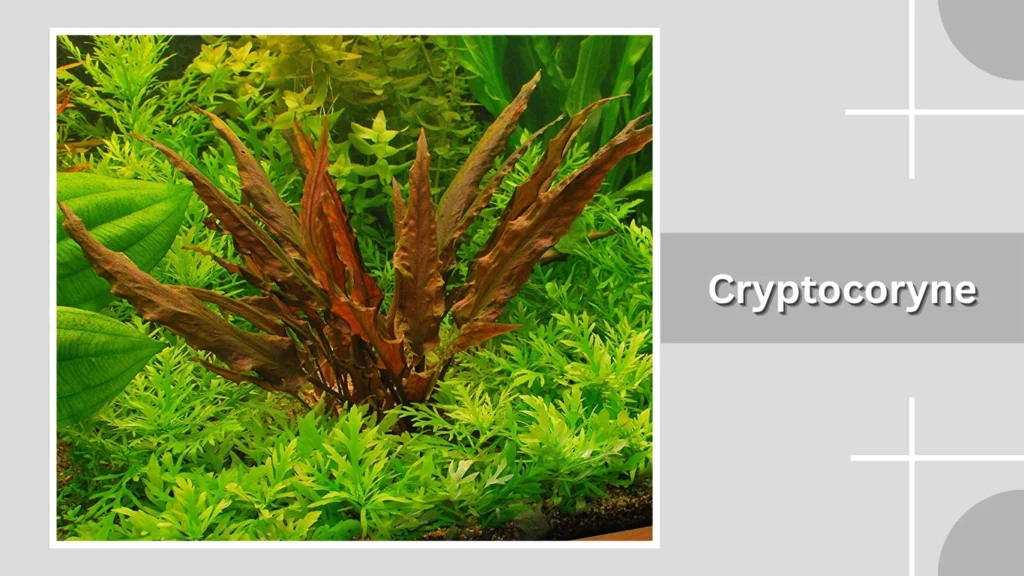
Cryptocoryne, often referred to as “Crypts,” is a diverse group of aquarium plants known for their unique leaf shapes, colors, and adaptability. Native to Southeast Asia, these plants are commonly found in slow-moving rivers and streams. Cryptocoryne species are widely used in aquariums due to their ability to thrive in low-light conditions and their relatively low maintenance requirements. They are especially popular for midground placement in aquascapes, where they add texture and variation. Although they are hardy, Crypts are known for a phenomenon called “crypt melt,” where leaves may temporarily die off when introduced to new environments. However, they usually recover quickly and regrow once they adapt.
Identification
- Leaves vary in shape from narrow to broad, often with slightly wavy or textured edges.
- Color ranges from light green to dark green, brown, or even reddish tones depending on the species.
- Grows in a rosette form from the base, with leaves emerging outward.
- Typically reaches heights of 10–30 cm (4–12 inches), depending on the variety.
- The root system is well-developed and spreads through the substrate.
Care
Cryptocoryne plants are well-suited for low to moderate lighting and do not require CO₂ injection, making them ideal for low-tech aquariums. They prefer stable water conditions, with a temperature range of 22–28°C (72–82°F) and a pH between 6.0 and 7.5. A nutrient-rich substrate or root tabs are beneficial, as Crypts primarily feed through their roots. One important aspect of care is stability—sudden changes in lighting, water parameters, or placement can trigger “crypt melt,” where leaves deteriorate. This is not fatal, and new leaves usually grow back once conditions stabilize. Minimal pruning is required, usually limited to removing damaged or decaying leaves. Patience is key, as Crypts may take time to establish but are very rewarding once settled.
Benefits
Cryptocoryne plants offer several advantages for aquarium environments. Their hardy nature and low light requirements make them ideal for beginners and low-maintenance setups. They provide excellent shelter for fish, shrimp, and bottom-dwelling species, helping reduce stress and promote natural behavior. Their root systems help anchor the substrate and prevent shifting. While not the fastest growers, they still contribute to water quality by absorbing nutrients over time. Additionally, their variety in leaf shapes and colors allows aquarists to create visually interesting and dynamic aquascapes. Cryptocoryne is a reliable and attractive choice for adding depth and character to freshwater aquariums.
9. Ludwigia
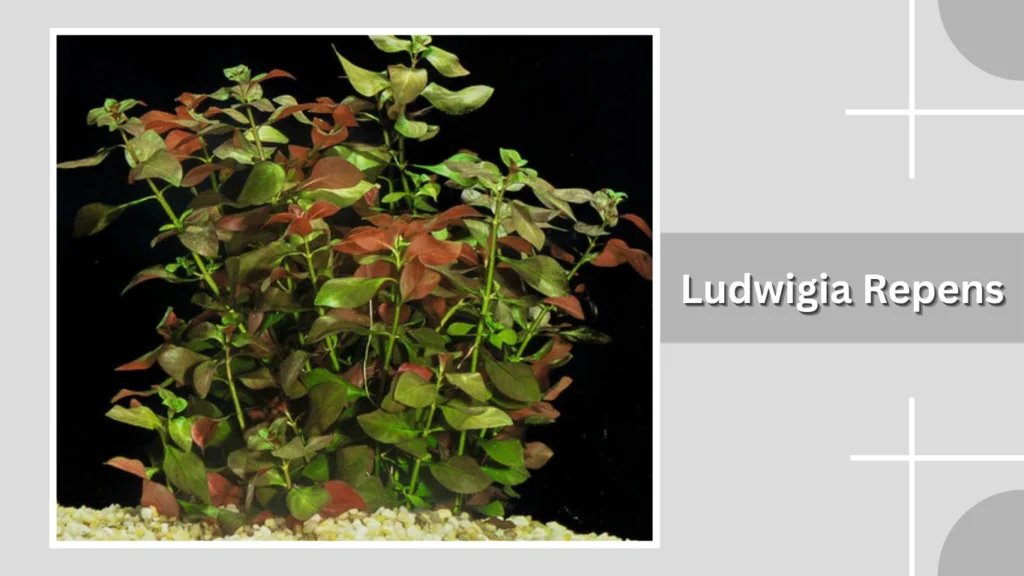
Ludwigia is a popular stem plant known for its vibrant colors, ranging from green to deep red, depending on lighting and nutrient conditions. Native to the Americas, it is widely used in aquariums to add contrast and visual interest, especially in planted tanks. Ludwigia is commonly placed in the background or midground and is favored by aquascapers for its colorful appearance and relatively easy care. While it can grow in low-tech setups, achieving its signature red coloration typically requires higher lighting and proper nutrient balance. Its upright growth and dense foliage make it an attractive addition to both simple and advanced aquarium layouts.
Identification
- Upright stems with oval to elongated leaves growing in pairs along the stem.
- Leaf color ranges from green to orange or deep red, depending on light intensity.
- Can grow 20–50 cm (8–20 inches) tall or more in optimal conditions.
- Stems are flexible and can branch out with trimming.
- Roots develop along the stem nodes when planted in substrate.
Care
Ludwigia thrives in moderate to high lighting, which is essential for developing its red coloration. In low light, the plant tends to remain green and grow more sparsely. CO₂ supplementation is not mandatory but significantly improves growth rate, density, and color vibrancy. The ideal temperature range is 20–28°C (68–82°F), with a pH between 6.0 and 7.5. Nutrient-rich water and regular fertilization, especially with iron, are important for maintaining healthy leaves and color. Ludwigia is planted in the substrate, where it develops roots from its stem nodes. Regular trimming is recommended to encourage bushier growth and prevent the plant from becoming too tall or leggy. Cuttings can be replanted easily to propagate new plants.
Benefits
Ludwigia provides both aesthetic and functional benefits in an aquarium. Its colorful leaves create strong visual contrast against green plants, making it a focal point in aquascapes. The dense growth offers hiding spaces for fish and shrimp, contributing to a more natural and secure environment. As a relatively fast-growing plant, it helps absorb excess nutrients such as nitrates, improving water quality and reducing algae growth. Additionally, its vertical growth adds height and structure to the aquarium, enhancing depth and balance in the overall design. Ludwigia is an excellent choice for aquarists looking to add color and dynamic growth to their planted tanks.
10. Cabomba
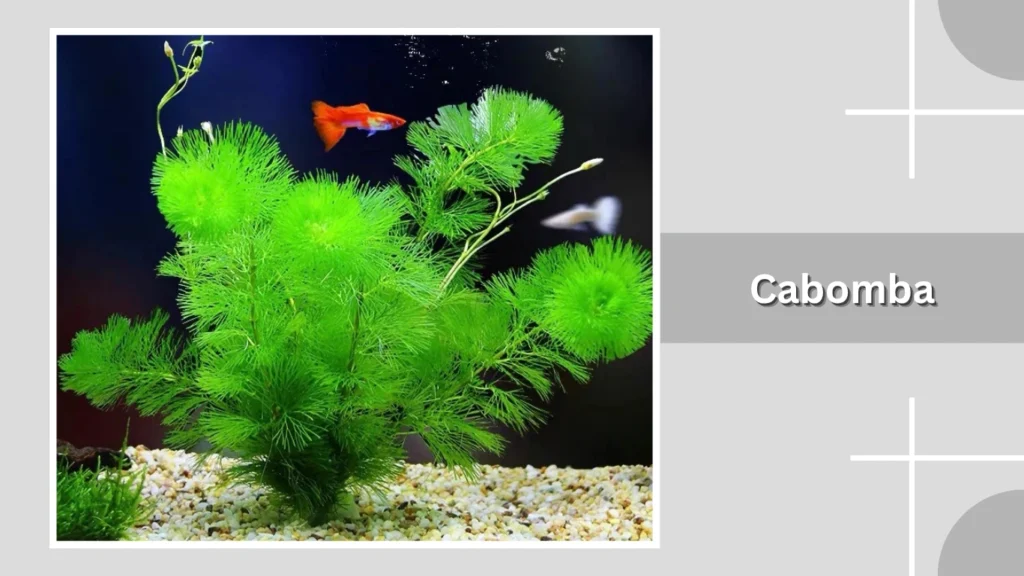
Cabomba, also known as fanwort, is a delicate and visually striking aquarium plant recognized for its finely divided, fan-shaped leaves. Native to North and South America, it thrives in clean, well-maintained water and is often used as a background plant in aquariums. Cabomba is especially valued for its soft, feathery appearance, which creates a lush, underwater forest effect. While it is beautiful, it is slightly more demanding than beginner plants and requires stable conditions to grow well. It is best suited for aquarists who can provide moderate to high lighting and good water quality.
Identification
- Soft, fan-shaped leaves that are finely divided into many thin segments.
- Bright green coloration, though some species may have reddish or purple hues.
- Grows on long, slender stems that can reach up to 30–80 cm (12–30 inches).
- Leaves grow in whorls around the stem, creating a bushy, layered look.
- Fragile structure compared to tougher aquarium plants.
Care
Cabomba requires moderate to high lighting to maintain its dense and attractive growth. In low light, it may become sparse and lose its lower leaves. CO₂ supplementation is highly beneficial and often necessary for optimal growth, especially in more demanding setups. The ideal temperature range is 20–28°C (68–82°F), with a slightly acidic to neutral pH of 6.0–7.5. Clean, well-filtered water is important, as Cabomba is sensitive to poor water quality and debris accumulation. It absorbs nutrients mainly from the water column, so regular liquid fertilization is recommended. Pruning should be done carefully, as the plant is delicate; cut stems can be replanted to propagate new growth.
Benefits
Cabomba enhances the visual appeal of an aquarium with its soft, feathery texture and vibrant color. It provides excellent hiding places for small fish, fry, and shrimp, making it ideal for breeding tanks. Its dense foliage also supports beneficial microorganisms, contributing to a balanced ecosystem. As a fast-growing plant under the right conditions, it helps absorb excess nutrients and improve water quality, reducing algae growth. Additionally, Cabomba adds depth and movement to aquascapes, as its fine leaves gently sway with water currents, creating a natural and calming effect.
11. Bacopa
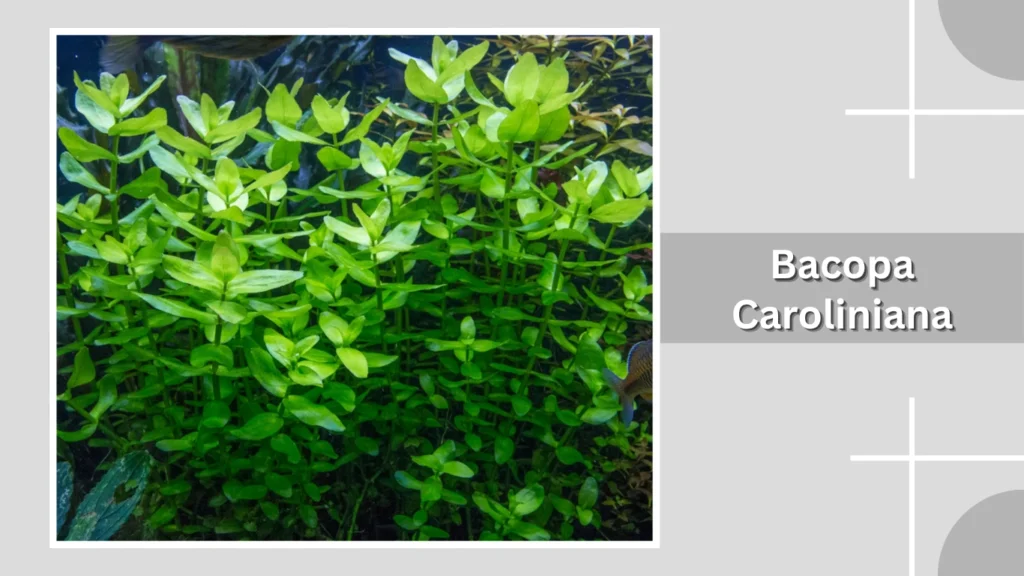
Bacopa is a hardy and attractive stem plant commonly used in freshwater aquariums for its simple yet elegant appearance. Native to tropical and subtropical regions, it is known for its thick stems and round, succulent-like leaves. Bacopa is often used in the background or midground of aquariums, where it adds vertical structure and a bright green contrast to other plants. It is beginner-friendly and can tolerate a wide range of water conditions, making it a reliable choice for many aquarists. Under the right conditions, Bacopa can even produce small flowers when grown immersed, adding to its appeal beyond the aquarium.
Identification
- Thick, upright stems with pairs of small, round to oval leaves.
- Leaves are light to bright green and have a slightly fleshy texture.
- Grows vertically and can reach heights of 20–40 cm (8–16 inches).
- Leaves are evenly spaced along the stem, giving a neat, structured look.
- Roots develop from the lower nodes when planted in the substrate.
Care
Bacopa is easy to care for and thrives in low to moderate lighting, although higher light can promote faster and more compact growth. It does not require CO₂ supplementation but benefits from it in more advanced setups. The ideal temperature range is 20–28°C (68–82°F), with a pH between 6.0 and 7.5. Bacopa absorbs nutrients both through its roots and from the water column, so a combination of substrate nutrients and liquid fertilizers works well. It is a slow to moderate grower, so maintenance is minimal. Regular trimming helps encourage bushier growth and prevents the plant from becoming too tall or sparse. Cuttings can be replanted easily to propagate new plants.
Benefits
Bacopa offers several benefits in an aquarium setting. Its sturdy structure makes it resistant to damage from fish, including species that may nibble on softer plants. It provides shelter and resting areas for fish and shrimp, contributing to a more natural and comfortable environment. While not the fastest-growing plant, Bacopa still helps absorb excess nutrients, supporting better water quality over time. Its clean, upright growth adds balance and structure to aquascapes, making it useful for creating organized and visually appealing layouts. Additionally, its low maintenance requirements make it a great choice for both beginners and experienced aquarists.
12. Marimo Moss Ball
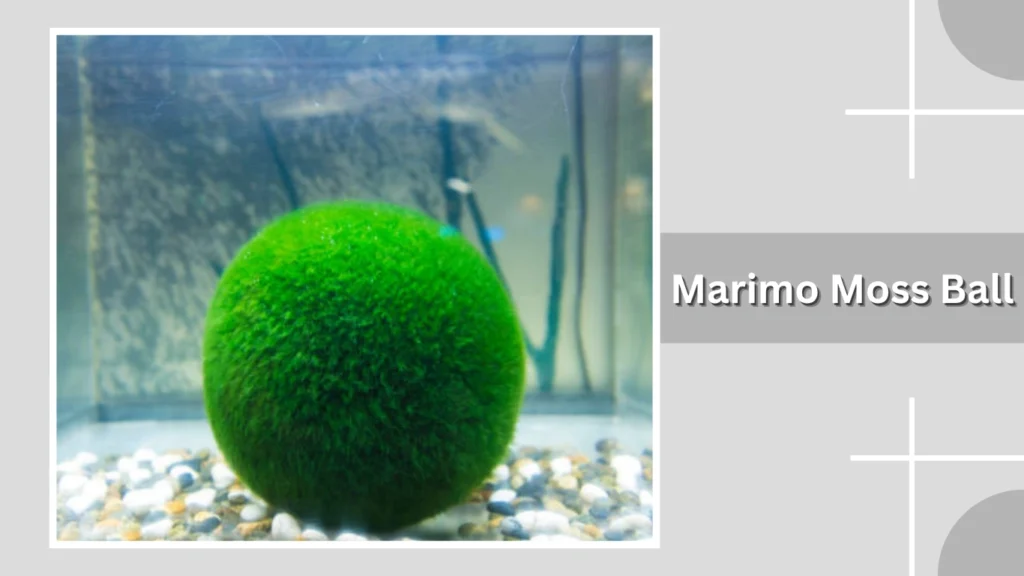
Marimo Moss Ball is a unique and decorative aquarium plant known for its soft, spherical shape and velvety green texture. Despite its name, it is not actually moss but a form of algae (Aegagropila linnaei) that naturally forms into round balls in certain lake environments, particularly in Japan and Northern Europe. Marimo is highly popular among aquarium hobbyists due to its unusual appearance, ease of care, and compatibility with a wide range of tank setups. It is especially suitable for small aquariums, shrimp tanks, and even decorative jars. Its slow growth and minimal care requirements make it an excellent choice for beginners or those looking for a low-maintenance addition to their aquarium.
Identification
- Round, ball-shaped structure with a soft, velvety texture.
- Bright to deep green color depending on lighting conditions.
- Typically ranges from 2–10 cm (1–4 inches) in diameter.
- Maintains its shape through gentle rolling in water currents.
- Does not have roots, stems, or traditional leaves like other plants.
Care
Marimo Moss Ball is extremely easy to care for and thrives in low to moderate lighting. Excessive light can cause it to lose its vibrant color or develop brown patches, so indirect or subdued lighting is ideal. It does not require CO₂ injection or special fertilizers, as it absorbs nutrients directly from the water. The ideal temperature range is 15–25°C (59–77°F), making it suitable for both tropical and cooler aquariums. Regular maintenance involves gently rinsing the moss ball in clean aquarium water during water changes and occasionally rolling it to maintain its round shape. It can be placed anywhere in the tank—on the substrate or decor—and does not need anchoring.
Benefits
Marimo Moss Ball offers several benefits beyond its unique appearance. It helps improve water quality by absorbing nitrates and other waste substances, contributing to a cleaner aquarium environment. Its soft surface provides a grazing area for shrimp and small fish, which feed on the biofilm that grows on it. Marimo also helps trap small debris, acting as a natural filter within the tank. Additionally, its slow growth means it requires very little maintenance, making it perfect for beginners or low-tech aquariums. Its charming, minimalist look adds a distinctive aesthetic touch, making it a favorite among aquarists who want something simple yet visually appealing.
FAQs
What is the easiest aquarium plant for beginners?
Anubias and Java Fern are considered the easiest aquarium plants for beginners. They require low light, no CO₂, and minimal maintenance, making them ideal for new aquarists.
Do aquarium plants need CO₂ to grow?
Not all aquarium plants require CO₂. Many low-tech plants like Anubias, Java Fern, and Cryptocoryne can grow well without CO₂. However, adding CO₂ helps faster growth and better coloration in more demanding plants.
How often should I trim aquarium plants?
Trimming depends on the plant type. Fast-growing plants like Hornwort and Water Wisteria may need weekly trimming, while slow-growing plants like Anubias require very little maintenance.
Can aquarium plants grow in gravel?
Yes, many plants can grow in gravel, especially if you use root tabs for nutrients. However, some plants like Anubias and Java Fern should not be buried and instead attached to rocks or driftwood.
Why are my aquarium plants turning brown or melting?
Plants may turn brown or melt due to sudden changes in water conditions, poor lighting, lack of nutrients, or adaptation stress. This is common with plants like Cryptocoryne, and they usually recover once conditions stabilize.