
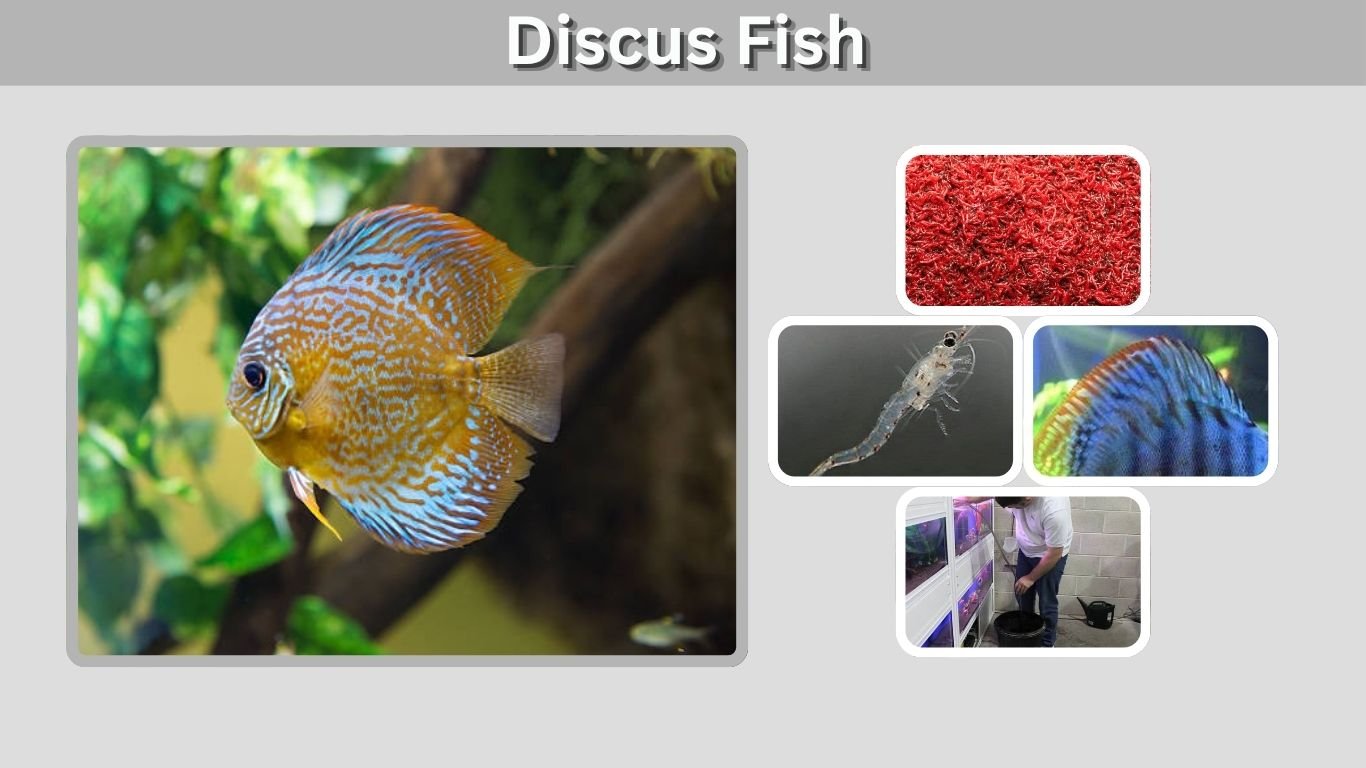
Discus fish are among the most striking freshwater aquarium fish, famous for their round bodies, graceful swimming, and brilliant colors. Native to the Amazon River basin of South America, discus prefer warm, clean, stable water and generally require more careful maintenance than many beginner fish. With the right aquarium size, water quality, nutritious diet, and compatible tank mates, they can become long-lived centerpiece fish. This guide covers discus fish care, tank setup, feeding, behavior, lifespan, common varieties, and suitable companions.
What Is a Discus Fish?
Discus are freshwater cichlids belonging to the genus Symphysodon. Their nearly circular, laterally compressed bodies give them their common name. Selective breeding has produced many colorful aquarium varieties, including blue, red, turquoise, pigeon blood, and patterned strains. Although beautiful, discus are sensitive to sudden changes in water conditions, making consistency one of the most important parts of successful care.
Discus Fish Identification
- Round, disc-shaped body
- Strongly compressed from side to side
- Long dorsal and anal fins
- Small mouth
- Red, orange, or dark eyes depending on variety
- Vertical body bars may be present
- Colors include blue, red, orange, brown, turquoise, and white
- Adults commonly reach about 6–8 inches
Where Do Discus Fish Come From?
Wild discus originate from slow-moving freshwater habitats within the Amazon basin. They are associated with warm rivers, flooded forests, submerged branches, and areas with relatively gentle currents.
Natural water conditions vary by location, but many wild habitats are soft and acidic. Captive-bred discus are often more adaptable than wild fish and can thrive in moderately different water chemistry as long as conditions remain stable.
Discus Fish Tank Size and Aquarium Setup
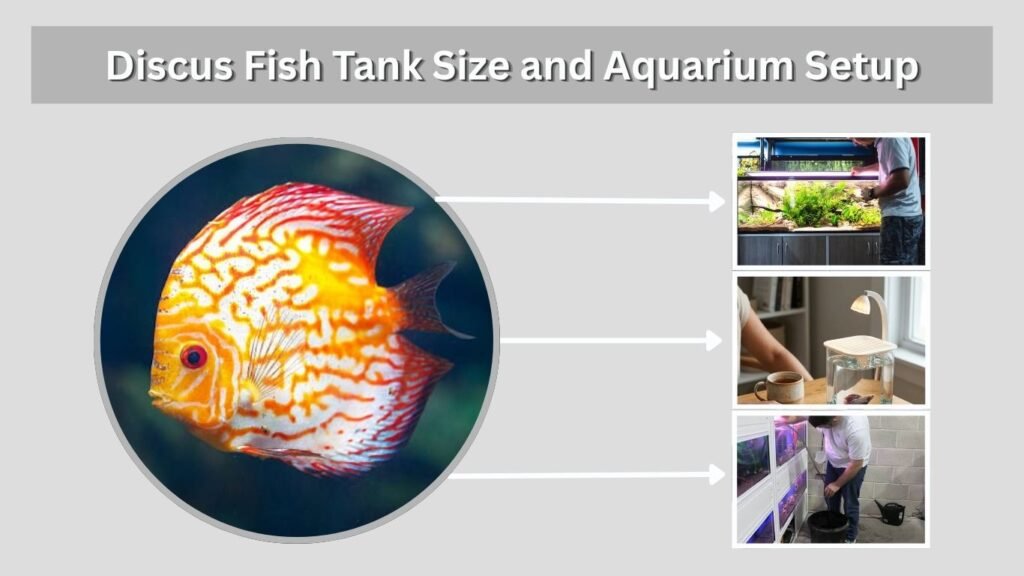
Discus require more space than their flat body shape initially suggests. They are social cichlids that usually do best in groups, and maintaining excellent water quality becomes easier in a larger aquarium. Tank height is also important because fully grown discus are tall fish. A well-filtered, warm aquarium with plenty of swimming room provides a much better environment than a small tank.
Recommended Discus Tank Setup
- Minimum around 55 gallons for a small group or temporary setup
- Around 75 gallons or larger is preferable for an adult group
- Temperature around 82–86°F
- Gentle to moderate filtration
- Stable water conditions
- Regular partial water changes
- Open swimming space
- Smooth decorations without sharp edges
Is a 55-Gallon Tank Good for Discus?
A 55-gallon aquarium can house a limited number of discus, especially juveniles, but space becomes tighter as they mature.
For a proper social group of adult fish, a larger aquarium is usually easier to maintain. More water volume provides greater stability and gives subordinate fish additional room to escape dominant individuals.
A 75-gallon or larger aquarium is generally more practical for a long-term discus community.
Discus Fish Water Requirements
Stable water quality is one of the most important parts of discus care. These fish are less tolerant of deteriorating conditions than many hardy community species. Ammonia and nitrite should remain at zero, while nitrate should be kept low through regular maintenance. Sudden swings in temperature or chemistry can cause stress even when the final measurement remains within an acceptable range.
Water Parameters
- Temperature: approximately 82–86°F
- pH: commonly around 6.0–7.5
- Ammonia: 0 ppm
- Nitrite: 0 ppm
- Nitrate: kept as low as practical
- Water movement: gentle to moderate
Water Changes
Regular water changes remove nitrate, uneaten food, dissolved waste, and other contaminants.
Juvenile discus that are being fed heavily may require more frequent changes than adults. Rather than following one rigid schedule, monitor water quality and adjust maintenance accordingly.
Use conditioned replacement water with a temperature reasonably close to the aquarium to reduce stress.
What Do Discus Fish Eat?
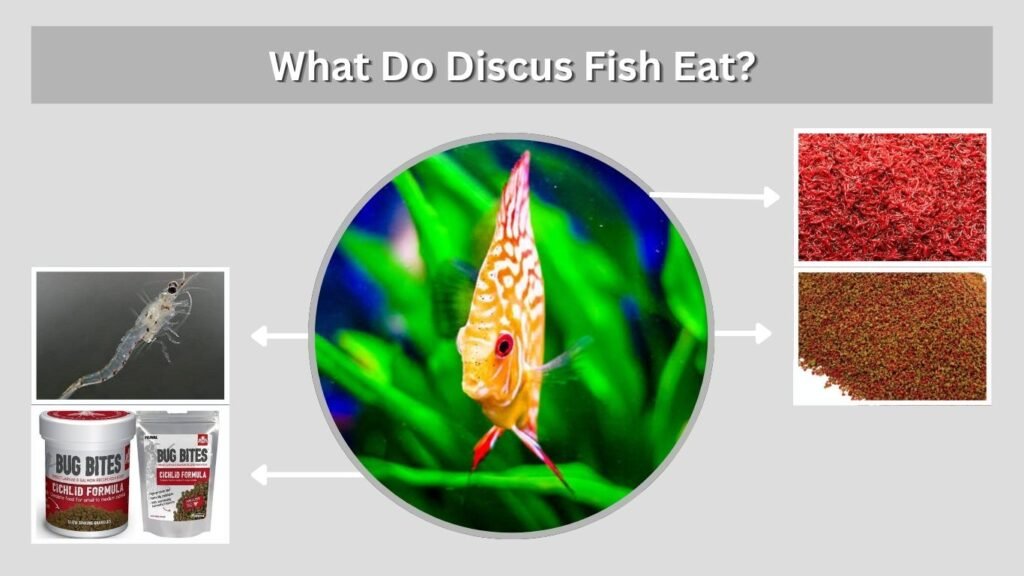
Discus are omnivorous fish with a strong preference for animal-based foods. A varied diet supports growth, immune function, coloration, and reproduction. Captive fish should receive high-quality prepared foods rather than depending exclusively on one frozen or live food. Feeding smaller portions several times daily can be particularly useful for juveniles that are still growing.
Best Foods for Discus
- High-quality discus pellets
- Cichlid granules
- Frozen brine shrimp
- Mysis shrimp
- Bloodworms as an occasional food
- Blackworms from reliable sources
- Nutritionally balanced frozen mixes
- Specialized discus foods
How Often Should You Feed Discus?
Adult discus can usually be fed two or three small meals each day.
Juveniles need more frequent feeding because they are growing rapidly. Young fish may receive several small meals throughout the day, provided excess food is removed and water quality is maintained.
Overfeeding should be avoided because uneaten food quickly pollutes the warm aquarium water.
Discus Fish Tank Mates
Discus are generally peaceful, but their unusually warm water requirement limits the number of suitable companions. Tank mates should tolerate high temperatures, avoid aggressive behavior, and not compete excessively for food. Small peaceful schooling fish can make the aquarium look more natural while bottom-dwelling species may occupy areas that discus rarely use.
Good Discus Tank Mates
- Cardinal Tetras
- Rummy-Nose Tetras
- Sterbai Corydoras
- Hatchetfish
- Pencilfish
- German Blue Rams
- Peaceful warm-water plecos
- Other compatible discus
Fish to Avoid With Discus
Very aggressive cichlids are poor companions because they can bully discus.
Fast, highly competitive feeders may also prevent discus from receiving enough food. Fin-nipping species should be avoided because the long dorsal and anal fins of discus provide easy targets.
Cold-water fish such as goldfish are unsuitable because their temperature requirements are completely different.
Discus Fish Behavior
Discus are social fish that establish a hierarchy within their group. Mild chasing and displays can therefore occur even in a peaceful aquarium. Keeping several individuals spreads aggression rather than allowing one dominant fish to continually target a single subordinate animal. Providing enough room and visual barriers can further reduce stress.
Do Discus Fish Need to Live in Groups?
Young discus generally benefit from being kept in groups.
A group of five or six is commonly recommended when aquarium size allows. Within the group, fish develop a social hierarchy.
A bonded breeding pair is different and can be maintained separately once established.
Keeping only two random discus can sometimes lead to problems because the dominant fish may continually harass the weaker one.
Blue Discus and Other Popular Varieties
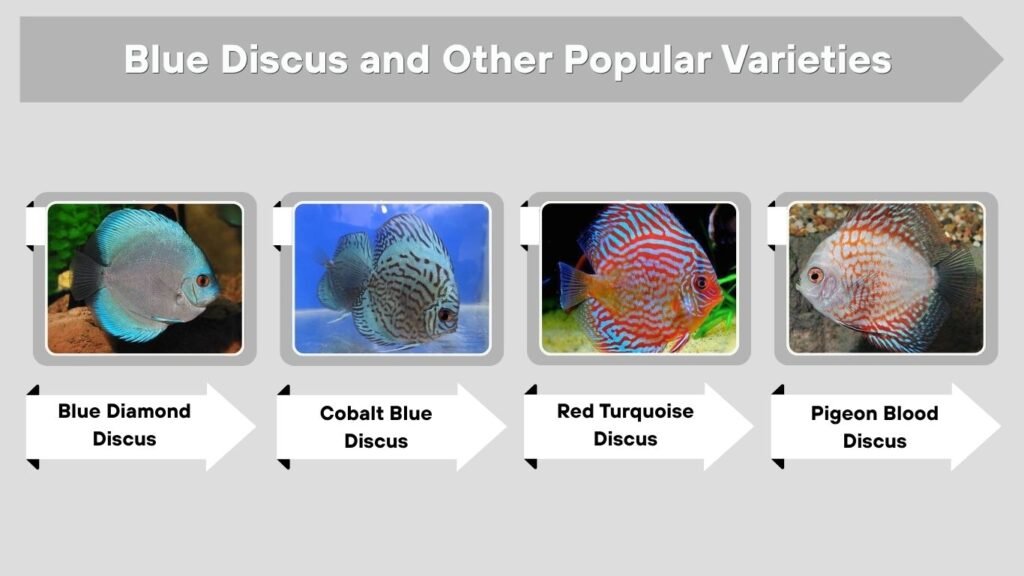
Selective breeding has created an enormous range of discus colors. Differences between varieties are primarily appearance rather than basic care requirements. Whether the fish is blue, red, turquoise, or patterned, it still requires warm water, good nutrition, social interaction, and excellent water quality.
Popular Discus Types
- Blue Diamond Discus
- Cobalt Blue Discus
- Red Turquoise Discus
- Pigeon Blood Discus
- Marlboro Red Discus
- Leopard Discus
- Snakeskin Discus
- Golden Discus
Blue Discus Fish
Blue discus are among the most popular aquarium varieties.
Coloration ranges from solid pale blue to deep cobalt and turquoise patterns. Some strains have almost no visible vertical bars, while others retain darker markings.
Strong coloration depends partly on genetics but can also be influenced by diet, health, stress, lighting, and aquarium conditions.
Discus Fish Lifespan and Growth
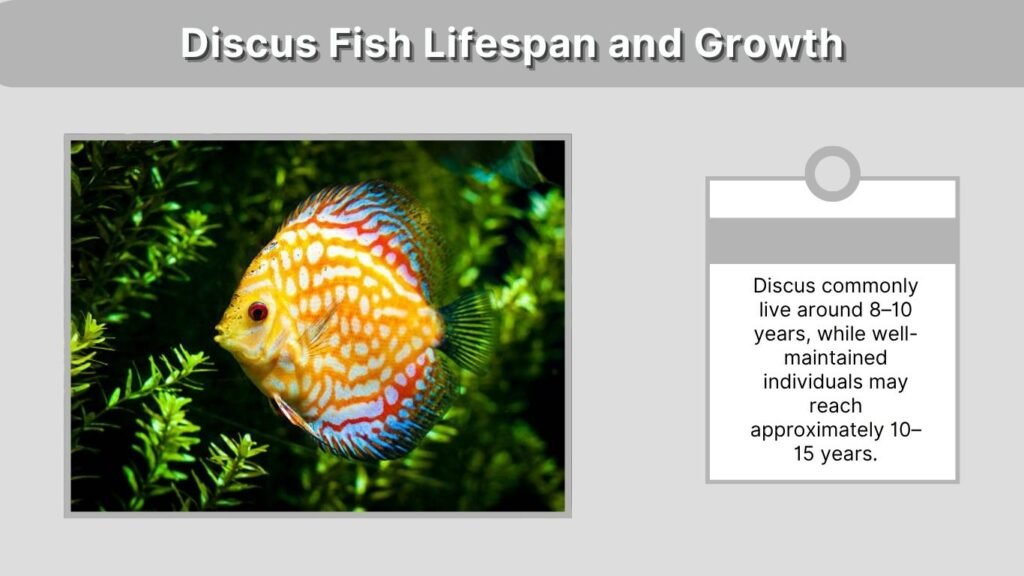
Discus are not short-lived aquarium fish. When maintained in clean, stable conditions, they can remain part of an aquarium for many years. Growth is fastest when young, making nutrition and water quality particularly important during the juvenile period. Poor conditions during early development can lead to permanently smaller or poorly shaped adult fish.
How Long Do Discus Fish Live?
Discus commonly live around 8–10 years, while well-maintained individuals may reach approximately 10–15 years.
Lifespan is influenced by genetics, diet, water quality, disease exposure, and long-term stress.
Maintaining consistent conditions is generally more important than attempting to achieve a supposedly perfect pH number.
How Big Do Discus Get?
Aquarium discus commonly reach around 6–8 inches in length.
Their tall, rounded body means an adult appears considerably larger than a slender fish of the same measured length.
Proper nutrition and clean water during the first year of life are especially important for achieving healthy adult size.
Are Discus Fish Difficult to Keep?
Discus have a reputation as difficult aquarium fish, but modern captive-bred strains are generally easier to maintain than many wild specimens. They are still best suited to aquarists who understand aquarium cycling, filtration, water testing, temperature management, and disease prevention.
Common Discus Care Problems
Poor water quality can cause stress, appetite loss, and increased susceptibility to disease.
Other common problems include overcrowding, low temperatures, sudden water-parameter changes, incompatible tank mates, inadequate nutrition, and introducing new fish without quarantine.
A stable routine prevents many of these issues before treatment becomes necessary.
Discus Fish Price and Buying Tips
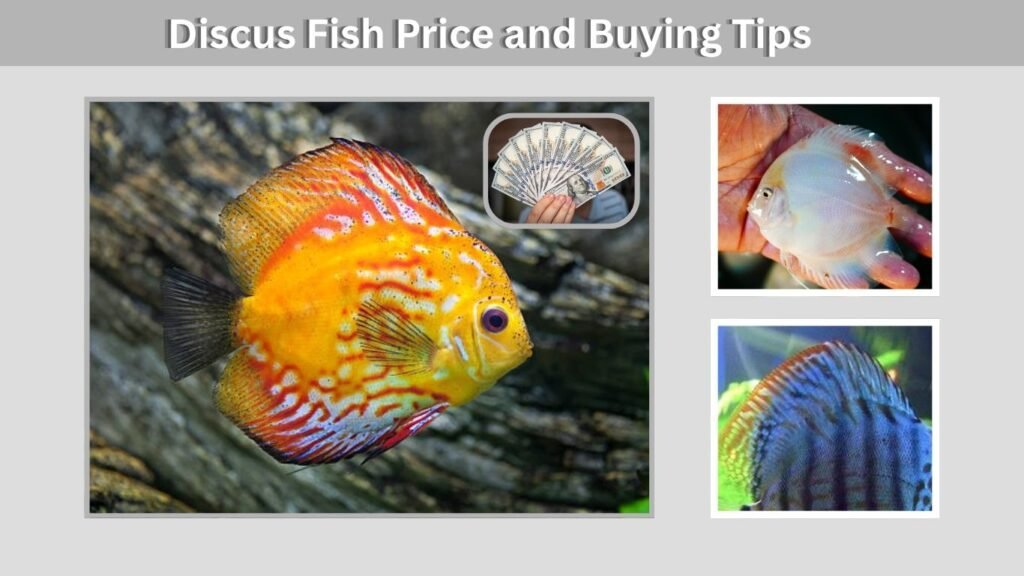
Discus prices vary significantly depending on size, strain, coloration, breeder reputation, and location. Juveniles are normally less expensive than large adults, while rare or selectively bred strains can command substantially higher prices. Cost should not be the only consideration because healthy fish from a reputable source often adapt much better than stressed or poorly raised specimens.
Choosing Healthy Discus
Look for:
- Clear eyes
- Full, rounded body shape
- Upright fins
- Active swimming
- Normal breathing
- Strong feeding response
- No white spots or visible sores
- No unusually dark coloration
- No sunken belly
Avoid fish that remain isolated, breathe rapidly, refuse food, or appear unusually thin.
FAQs
Discus fish require slightly more planning than many standard community fish, but their care becomes manageable once the aquarium is stable. Most problems involve unsuitable tank size, poor water quality, low temperature, aggressive tank mates, or inconsistent maintenance. Understanding their basic environmental requirements makes keeping these colorful Amazon cichlids considerably easier.
1. What size tank do discus fish need?
A 55-gallon tank may work for a small number or juveniles, but around 75 gallons or larger is generally better for a group of adult discus.
2. What temperature do discus fish need?
Most captive discus do well at approximately 82–86°F, although exact preferences can vary slightly.
3. Can discus fish live with tetras?
Yes. Warm-water species such as Cardinal Tetras and Rummy-Nose Tetras are commonly kept with discus.
4. How many discus should be kept together?
Juvenile discus are generally best kept in a social group of around five or six when tank size allows. Established breeding pairs can be housed separately.
5. How long do discus fish live?
Discus commonly live around 8–10 years, while excellent care can allow some individuals to survive for 10–15 years.