
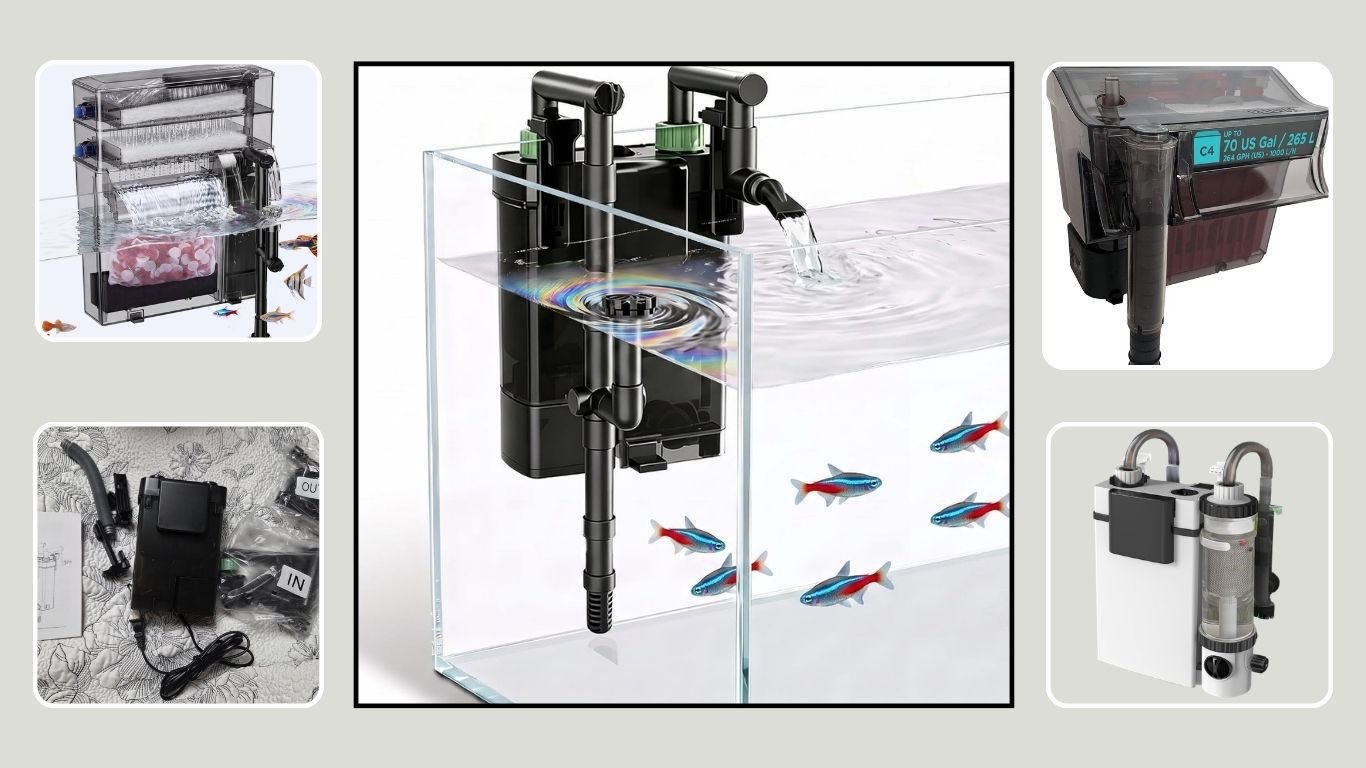
A reliable hang-on-back aquarium filter can make tank maintenance easier while keeping the water cleaner, clearer, and healthier for fish. These filters are popular because they are simple to install, easy to maintain, and capable of providing mechanical, chemical, and biological filtration. Whether you have a small freshwater setup or a larger community aquarium, choosing the right HOB filter can improve water circulation and reduce waste buildup. Below, we review nine of the best hang-on-back aquarium filters based on filtration performance, adjustability, maintenance, and overall usability.
1. hygger Aquarium Hang-On-Back Filter – Best for Multi-Stage Filtration
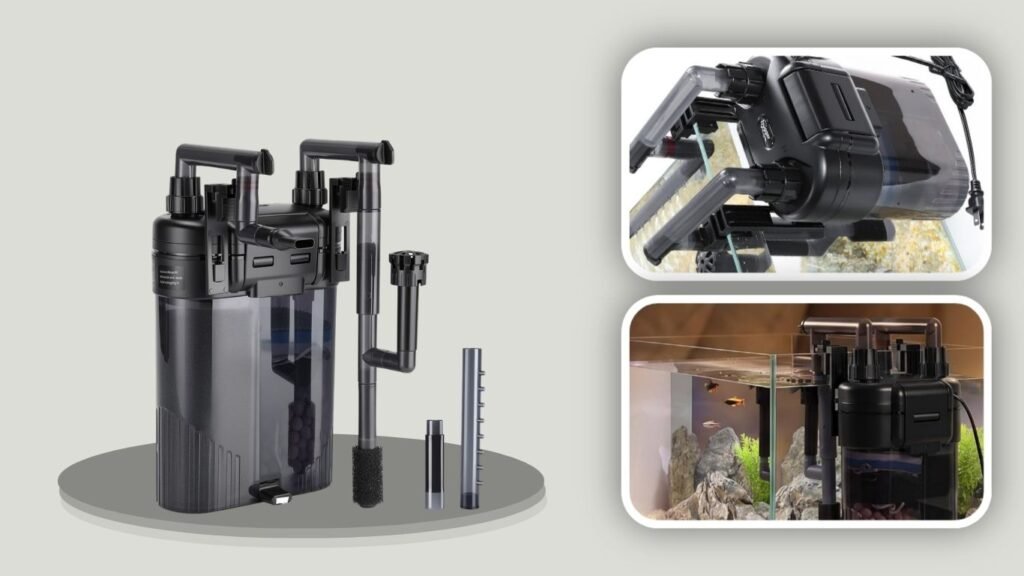
The hygger Aquarium Hang-On-Back Filter is a practical choice for aquarists who want stronger water treatment without installing a bulky external filtration system. Its 4-stage filtration design targets visible debris, dissolved impurities, and biological waste while helping maintain steady water circulation. The compact hang-on-back design also keeps more equipment outside the aquarium, leaving additional swimming space for fish.
Key Features
- 4-stage filtration system
- Mechanical and biological filtration support
- Hang-on-back space-saving design
- Helps collect suspended debris
- Designed to improve water circulation
- Accessible filter media compartment
- Suitable for freshwater aquarium setups
Why It Stands Out for Everyday Aquarium Care
The biggest advantage of this hygger filter is its multi-stage approach. Instead of simply pulling large particles from the aquarium, the filtration process is designed to treat water through several stages. This can be useful in community tanks where leftover food, fish waste, and other organic materials accumulate throughout the day.
A hang-on-back setup also makes maintenance more convenient. Most of the filtration components remain accessible from outside the tank, reducing the need to place your hands deep into the aquarium during routine cleaning.
Filtration Performance and Water Circulation
Good circulation helps transport suspended waste toward the filter rather than allowing it to settle in corners or between decorations. The hygger design combines filtration with continuous water movement, making it useful for tanks that require more consistent circulation.
Its biological filtration capacity is particularly important for long-term aquarium stability. Beneficial bacteria can colonize suitable filter media and help process ammonia and nitrite produced by fish waste.
Maintenance and Overall Value
Aquarium filters work best when routine maintenance is straightforward, and the accessible design of this model can make media inspection and cleaning less complicated. Cleaning mechanical media as needed while preserving established biological media can help keep filtration performance stable.
For aquarists who want a HOB unit with more filtration stages than a basic cartridge-style filter, this hygger model provides a well-rounded combination of water treatment, circulation, and convenient maintenance.
2. Large Aquarium 13-Stage Filter – Best for High-Capacity Filtration
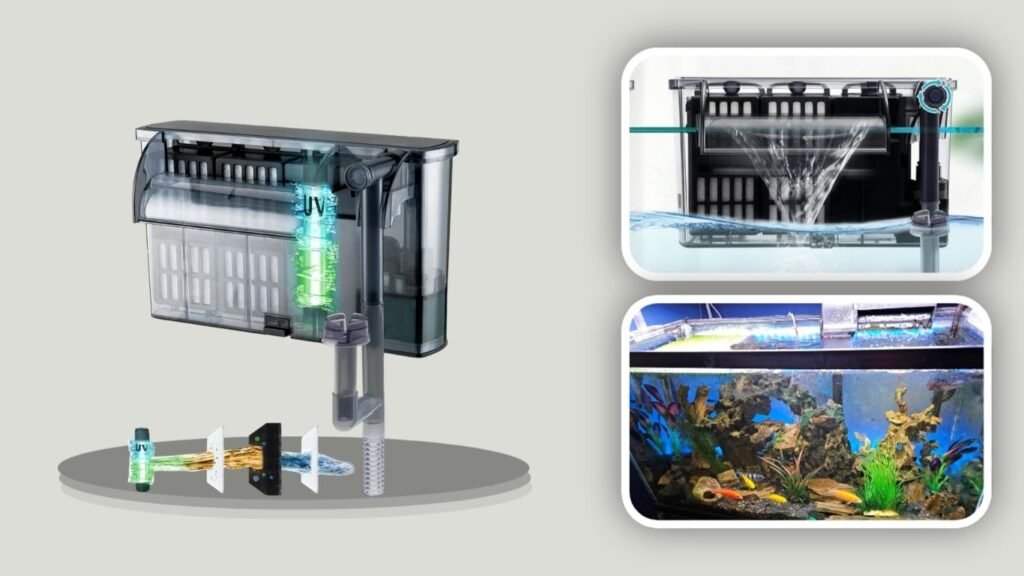
The Large Aquarium 13-Stage Filter is designed for aquarists who want extensive filtration for tanks with heavier waste production. Its multi-stage configuration provides numerous opportunities to capture debris and support cleaner aquarium water. It can be particularly useful for larger community tanks, heavily stocked setups, or aquariums where maintaining water clarity requires more filtration capacity.
Key Features
- 13-stage filtration design
- Intended for approximately 20–75 gallon aquariums
- Multiple filtration compartments
- Mechanical filtration for suspended debris
- Supports biological filtration
- High-capacity design
- Hang-on-back installation
Why It Works Well for Larger Aquariums
Larger tanks often contain more fish, food, plants, and organic material, which means the filter needs to process a greater amount of waste. A filter with multiple filtration stages can distribute that workload across different media instead of relying on a single cartridge.
The broad tank-size range also makes this model versatile for aquarists who may upgrade to a somewhat larger aquarium in the future.
Multi-Stage Filtration Performance
A 13-stage configuration gives water several opportunities to pass through filtration materials before returning to the aquarium. Mechanical stages can capture larger debris, while biological media can provide surface area for beneficial bacteria.
This approach can help reduce suspended particles and support more stable biological filtration. However, even powerful filtration should be combined with regular water changes and proper aquarium stocking.
Maintenance and Practical Value
One advantage of a larger filtration system is greater media capacity. More space allows aquarists to organize different types of filter material according to the needs of the tank.
Routine maintenance remains important because clogged mechanical media can restrict water flow. Cleaning the debris-catching stages while avoiding aggressive cleaning of established biological media can preserve beneficial bacteria.
For aquarists managing a medium or larger aquarium with substantial filtration demands, this model provides an appealing combination of large media capacity and multi-stage water treatment.
3. hygger Aquarium HOB Filter with Surface Skimmer – Best for Surface Cleaning
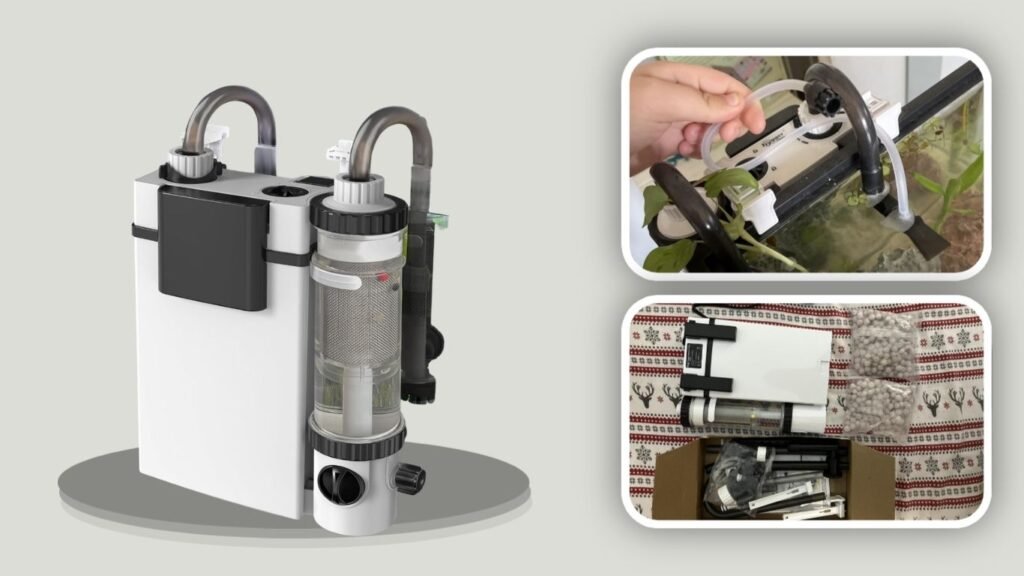
The hygger Aquarium HOB Filter with Surface Skimmer combines standard filtration with surface-cleaning capability. This makes it especially useful for aquariums where proteins, fine debris, or oily films regularly collect at the water surface. Its adjustable design also allows aquarists to fine-tune filtration and circulation according to the needs of different fish and aquarium layouts.
Key Features
- Integrated surface skimming function
- Adjustable water flow
- Multi-stage filtration design
- Helps remove floating surface debris
- Hang-on-back installation
- Supports water circulation and oxygen exchange
- Accessible filtration compartment
Why It Is Best for Surface Film Control
Surface film is a common aquarium problem, particularly in tanks with limited surface movement. Oils from fish food, organic waste, and naturally occurring microorganisms can create a visible layer on top of the water.
The surface skimmer helps pull this material toward the filter rather than allowing it to remain on the aquarium surface. Removing surface debris can also improve the appearance of the tank and promote better gas exchange.
Adjustable Flow and Filtration Performance
Adjustable flow is useful because different aquarium inhabitants prefer different water conditions. Strong swimmers may tolerate higher circulation, while bettas, small fish, or certain planted setups often perform better with gentler movement.
Being able to modify the flow provides greater control over the aquarium environment. Combined with filtration media, the system can remove suspended particles while providing biological support for processing dissolved waste.
Ease of Use and Overall Value
The combination of filtration and surface skimming means one unit can handle two important aquarium-maintenance tasks. That can reduce the need for a separate surface skimmer and help keep equipment inside the aquarium to a minimum.
Aquarists who frequently notice oily surface film or floating debris may find this design particularly useful. Its combination of adjustable circulation, surface cleaning, and multi-stage filtration makes it a versatile option for everyday freshwater aquarium maintenance.
4. AQQA Quiet Aquarium Filter – Best for 20–30 Gallon Tanks
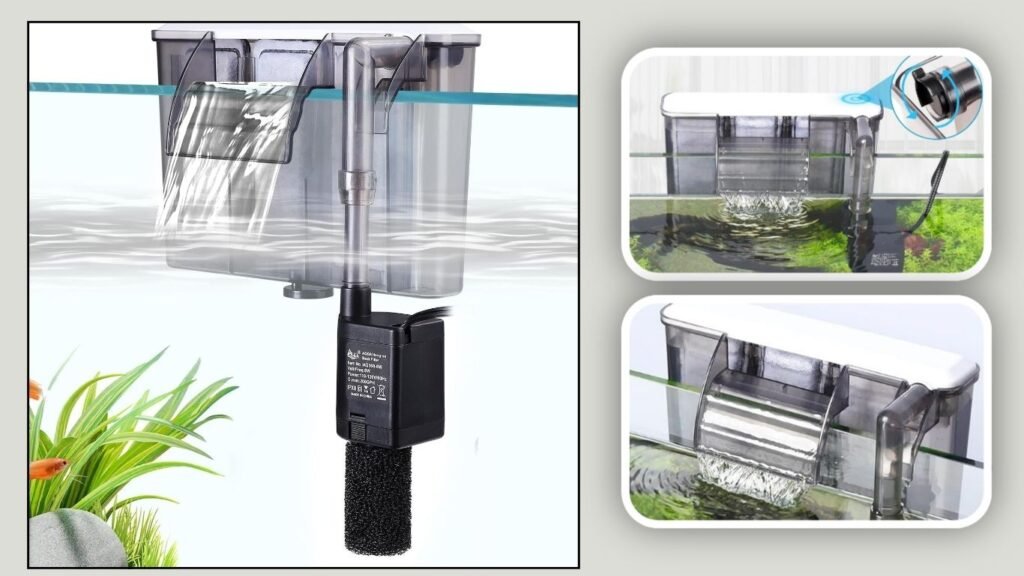
The AQQA Quiet Aquarium Filter is designed for aquarists who want effective filtration without excessive equipment noise. Intended for approximately 20–30 gallon setups, it can work well in bedrooms, offices, living areas, or other spaces where a loud aquarium filter would be distracting. Its hang-on-back construction provides filtration while keeping the main aquarium interior relatively uncluttered.
Key Features
- Designed for 20–30 gallon aquariums
- Quiet operating design
- Hang-on-back installation
- Mechanical filtration support
- Biological filtration capability
- Helps maintain continuous water circulation
- Space-saving construction
Why It Is Best for Quiet Aquarium Setups
Aquarium filters operate continuously, so even moderate motor or water noise can become noticeable over time. A quieter filtration system is particularly valuable when the aquarium is located near a bed, work desk, television, or relaxation area.
The AQQA filter is built with quieter operation as an important design consideration while still providing the continuous circulation required for aquarium filtration.
Filtration and Circulation Performance
For a 20–30 gallon aquarium, consistent filtration is more important than simply choosing the most powerful pump available. Water needs to circulate efficiently enough to move waste toward the intake without creating excessive current.
This filter provides a balance between everyday circulation and filtration. Mechanical filtration can trap particles such as excess food and waste, while suitable biological media helps support beneficial bacteria responsible for processing ammonia and nitrite.
Maintenance and Best Applications
The external hang-on-back placement makes routine servicing relatively convenient because aquarists can access the filtration area without dismantling equipment inside the aquarium.
Regularly checking the intake and mechanical media can help prevent reduced flow. Biological media should generally be handled more carefully to preserve established bacterial colonies.
For medium-sized freshwater setups, especially community tanks located in quiet living spaces, the AQQA provides a practical mix of filtration, manageable circulation, and noise-conscious operation.
5. FZONE Aquarium HOB Filter – Best for Customizable Water Return
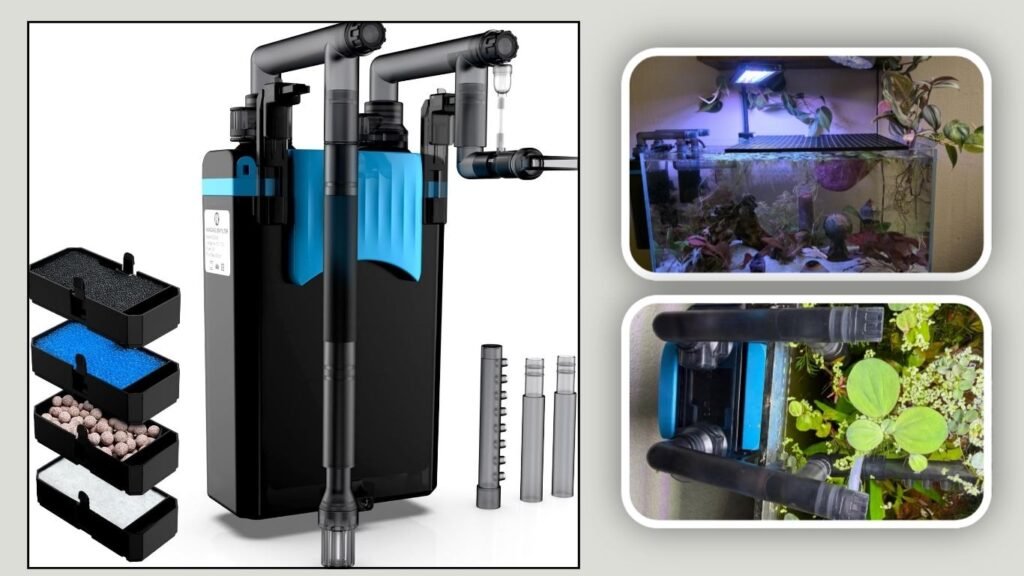
The FZONE Aquarium Hang-On-Back Filter stands out because of its adjustable rainfall and duckbill-style water-return options. This gives aquarists more control over how filtered water re-enters the aquarium. Whether the goal is gentle surface movement, broader water distribution, or more directional circulation, the customizable outlet design makes this filter suitable for several aquarium styles.
Key Features
- Adjustable rainfall outlet
- Duckbill water-return option
- Hang-on-back filtration design
- Customizable water circulation
- Supports mechanical and biological filtration
- Helps improve surface agitation
- Space-efficient external installation
Why It Is Best for Controlling Water Movement
Different aquarium inhabitants have different flow preferences. Some fish prefer relatively calm water, while others are comfortable with stronger circulation. Plants and aquarium decorations can also create areas where water movement becomes restricted.
The FZONE outlet system provides more flexibility than a basic fixed waterfall return. A rainfall-style outlet can distribute water over a wider area, while the duckbill outlet can direct flow toward specific parts of the tank.
Filtration Performance and Oxygen Exchange
Good filtration depends partly on circulation. If water is not reaching the filter intake effectively, debris can accumulate in low-flow areas even when the filter itself is powerful.
Adjustable returns allow aquarists to experiment with positioning until circulation becomes more balanced. Surface movement can also improve oxygen exchange by disrupting the water surface and encouraging interaction between aquarium water and surrounding air.
Practical Use and Overall Value
The main reason to consider this FZONE model is flexibility. Aquarists can modify the return configuration as aquarium conditions change rather than being limited to a single flow pattern.
This can be especially useful in planted tanks, community aquariums, or setups where fish have different preferences for current strength. Combined with standard mechanical and biological filtration, the customizable outlet system makes the FZONE filter a practical option for aquarists who want greater control over both filtration and water circulation.
6. Veehoo Aquarium Filter with One-Touch Drain – Best for Easy Maintenance
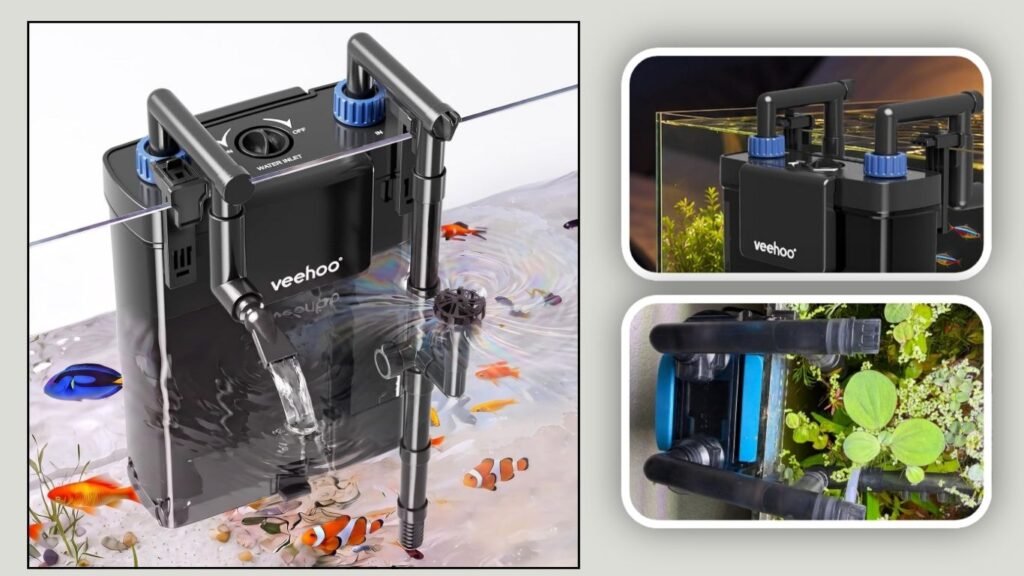
The Veehoo Aquarium Filter with One-Touch Drain is designed for aquarists who want effective filtration with a simpler cleaning routine. Its one-touch drainage feature can make regular maintenance more convenient, especially for users who dislike dismantling complicated filtration systems. Combined with multi-stage filtration and hang-on-back installation, this model offers a practical balance of water treatment, accessibility, and everyday usability.
Key Features
- One-touch drainage system
- Hang-on-back installation
- Multi-stage filtration support
- Easy-access filter chamber
- Helps capture suspended waste
- Supports biological filtration
- Designed for convenient maintenance
Why It Is Best for Easier Cleaning
Filter maintenance is one of the most important parts of keeping an aquarium healthy, but complicated cleaning procedures can make routine care frustrating. The one-touch drain feature helps simplify the process by allowing easier removal of collected water and waste from the filtration area.
This can be especially useful in tanks with heavier feeding schedules or fish that produce larger amounts of waste.
Filtration Performance and Everyday Use
The Veehoo filter is designed to support multiple forms of filtration. Mechanical media can capture visible particles, while biological media provides space for beneficial bacteria that help process ammonia and nitrite.
Consistent water movement also helps prevent debris from settling around the aquarium. When positioned correctly, the intake can continuously draw suspended particles toward the filtration chamber.
Maintenance and Overall Value
The maintenance-focused design is the strongest reason to consider this filter. Easier access and drainage can encourage more consistent cleaning, which helps maintain stable flow and filtration performance.
Aquarists should still avoid completely replacing or aggressively washing all biological media at the same time. For users who want filtration that is easier to service on a regular basis, the Veehoo one-touch drain model offers a practical and user-friendly solution.
7. Fluval C4 Power Filter – Best for Proven Multi-Stage Filtration
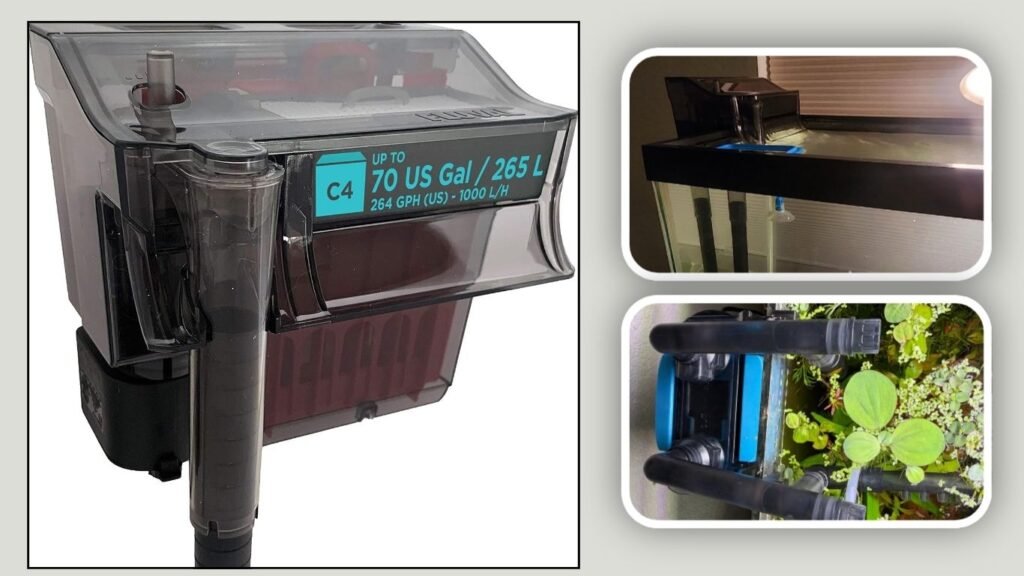
The Fluval C4 Power Filter is a well-established hang-on-back option designed to provide mechanical, chemical, and biological filtration in separate stages. Its structured media system gives aquarists greater control over how aquarium water is treated. The design is particularly suitable for users who want a traditional HOB filter with organized filtration compartments and strong water-processing capability.
Key Features
- Multi-stage filtration system
- Mechanical filtration media
- Chemical filtration capability
- Biological filtration chamber
- Adjustable flow control
- Hang-on-back installation
- Separate filtration compartments
Why It Is Best for Structured Filtration
One of the key strengths of the Fluval C4 is the separation of filtration stages. Instead of forcing all media into one compact cartridge, the filter organizes different filtration materials into dedicated areas.
This allows mechanical media to trap debris first, followed by chemical and biological filtration. The layered approach can make maintenance more predictable because each stage can be inspected separately.
Performance and Water Quality Management
Mechanical filtration removes suspended particles such as food and waste. Chemical media can help manage dissolved impurities when needed, while biological filtration supports beneficial bacteria responsible for processing nitrogenous waste.
Adjustable flow also gives aquarists more control over circulation. This can be useful when balancing filtration performance with the swimming abilities and flow preferences of aquarium inhabitants.
Durability and Overall Value
Fluval filters are widely recognized for their modular filtration approach, and the C4 is designed for users who prefer customizable media rather than disposable cartridge-only systems.
The separate filtration compartments can also help reduce unnecessary media replacement. Instead of changing everything at once, aquarists can service individual stages according to their condition.
For aquarists who value organized filtration, adjustable flow, and long-term flexibility, the Fluval C4 remains a strong HOB-style option.
8. Veehoo Aquarium Filter with Dry-Wet Filtration – Best for Biological Filtration
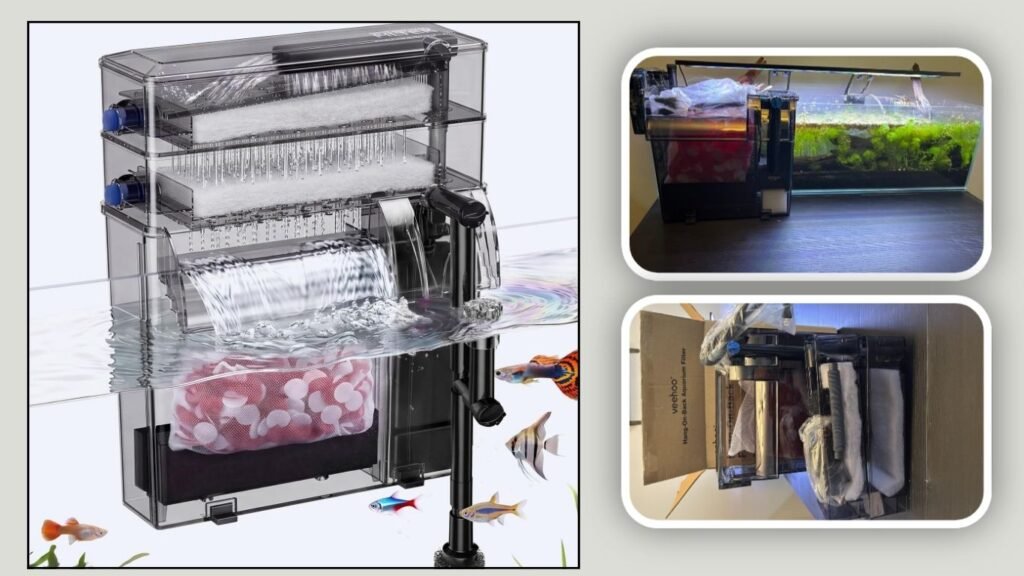
The Veehoo Aquarium Filter with Dry-Wet Filtration is designed for aquarists who want to place additional emphasis on biological filtration. Dry-wet filtration exposes biological media to both water and oxygen, creating favorable conditions for beneficial bacteria. This makes the system especially appealing for aquariums where stable biological processing and efficient waste conversion are priorities.
Key Features
- Dry-wet filtration system
- Supports strong biological filtration
- Hang-on-back configuration
- Multi-stage water treatment
- Helps improve oxygen exposure
- Accessible filter media
- Designed for continuous circulation
Why It Is Best for Biological Filtration
Beneficial bacteria are essential to aquarium stability because they help convert harmful ammonia and nitrite into less toxic nitrate. These bacteria require oxygen as well as suitable surfaces to colonize.
Dry-wet filtration can increase oxygen exposure around biological media, creating favorable conditions for bacterial activity. This makes the design especially useful for aquarists who maintain moderate or heavily stocked freshwater tanks.
Water Circulation and Filtration Performance
As aquarium water passes through the filtration stages, suspended debris can be removed before water reaches the biological section. This helps prevent excessive solid waste from covering biological media and reducing its efficiency.
Continuous circulation also helps transport dissolved waste toward the filter. Combined with regular water changes, this can contribute to more stable aquarium conditions.
Maintenance and Long-Term Value
Biological filtration works best when the media is allowed to remain established. Therefore, cleaning should be performed carefully using aquarium water rather than untreated tap water whenever possible.
The accessible hang-on-back design makes inspection and maintenance more manageable. For aquarists who prioritize biological stability and oxygen-rich filtration, this Veehoo model offers an interesting alternative to simpler cartridge-style HOB filters.
9. Aquarium Filter with Surface Skimmer & Backwash Function – Best for Convenient Cleaning
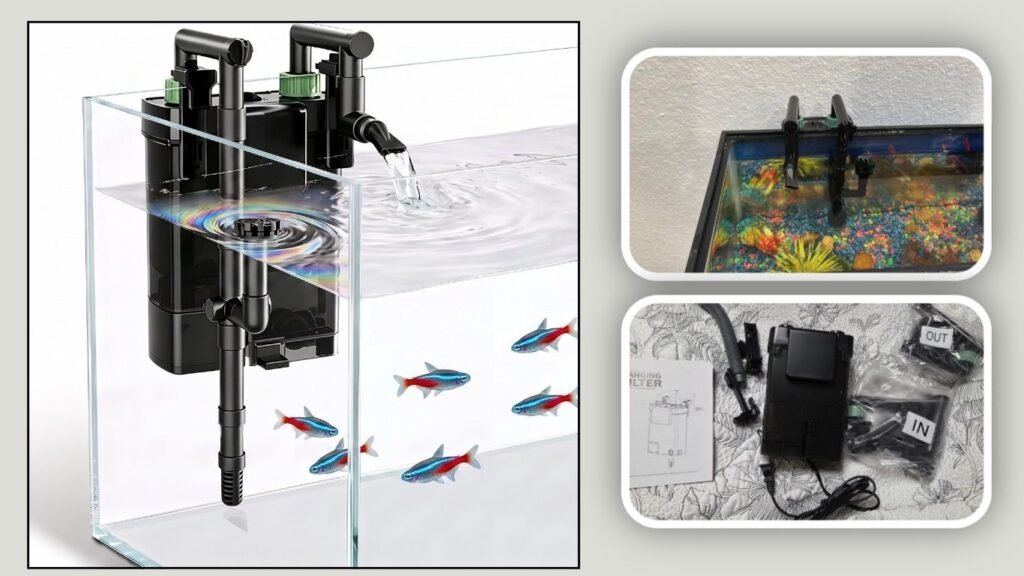
This Aquarium Filter with Surface Skimmer and Backwash Function combines several useful maintenance features in one hang-on-back unit. The integrated surface skimmer helps remove floating debris and surface film, while the backwash function is designed to simplify cleaning of the filtration system. This combination makes it particularly useful for aquarists who want cleaner water with less complicated routine maintenance.
Key Features
- Integrated surface skimmer
- Backwash cleaning function
- Hang-on-back installation
- Multi-stage filtration support
- Helps remove surface film
- Promotes water circulation
- Maintenance-friendly design
Why It Is Best for Surface and Filter Maintenance
Surface debris can make otherwise clean aquarium water look cloudy or oily. An integrated skimmer continuously draws floating contaminants toward the filtration system, helping maintain a cleaner-looking surface.
The backwash function adds another layer of convenience. Instead of manually taking apart the entire filter every time debris builds up, backwashing can help loosen and remove accumulated material from certain filtration areas.
Filtration Performance and Water Movement
Combining surface skimming with traditional filtration helps address waste at multiple levels of the aquarium. Suspended particles can be pulled through the main intake while floating material is collected from the surface.
The returning water also creates surface movement, which can improve gas exchange. Better circulation helps reduce stagnant areas and keeps more debris suspended long enough to reach the filter.
Ease of Maintenance and Overall Value
This model is particularly appealing for aquarists who prioritize convenience. Surface cleaning and backwashing can reduce the amount of manual maintenance required compared with simpler filters.
Regular inspection is still important because filter media eventually needs cleaning or replacement depending on its type. For aquariums that frequently develop surface film or require regular debris removal, this filter provides a practical combination of filtration, skimming, and maintenance-focused features.
FAQs
1. What Is a Hang-On-Back Aquarium Filter?
A hang-on-back aquarium filter, commonly called a HOB filter, attaches to the rear or side wall of an aquarium. It draws water through an intake tube, passes it through filtration media, and returns the cleaned water to the tank. HOB filters are popular because they are compact, accessible, and relatively easy to maintain.
2. How Do I Choose the Right Size HOB Filter?
Choose a filter that is rated for your aquarium size or slightly larger. Fish stocking level, feeding habits, and waste production should also be considered. A heavily stocked tank may benefit from a filter rated above the aquarium’s actual volume.
3. How Often Should I Clean a Hang-On-Back Filter?
Most HOB filters should be inspected every few weeks, although the exact schedule depends on fish load and debris buildup. Mechanical media may require frequent rinsing, while biological media should be cleaned gently to preserve beneficial bacteria.
4. Are Hang-On-Back Filters Good for Freshwater Aquariums?
Yes. HOB filters are well suited to many freshwater aquariums because they can provide mechanical, chemical, and biological filtration while improving water circulation. They work particularly well in community tanks, planted aquariums, and beginner setups.
5. Can I Use a HOB Filter as the Only Aquarium Filter?
In many appropriately stocked freshwater aquariums, a properly sized HOB filter can serve as the primary filtration system. However, larger or heavily stocked tanks may benefit from additional filtration, such as a sponge filter or canister filter, to increase biological filtration and circulation.