
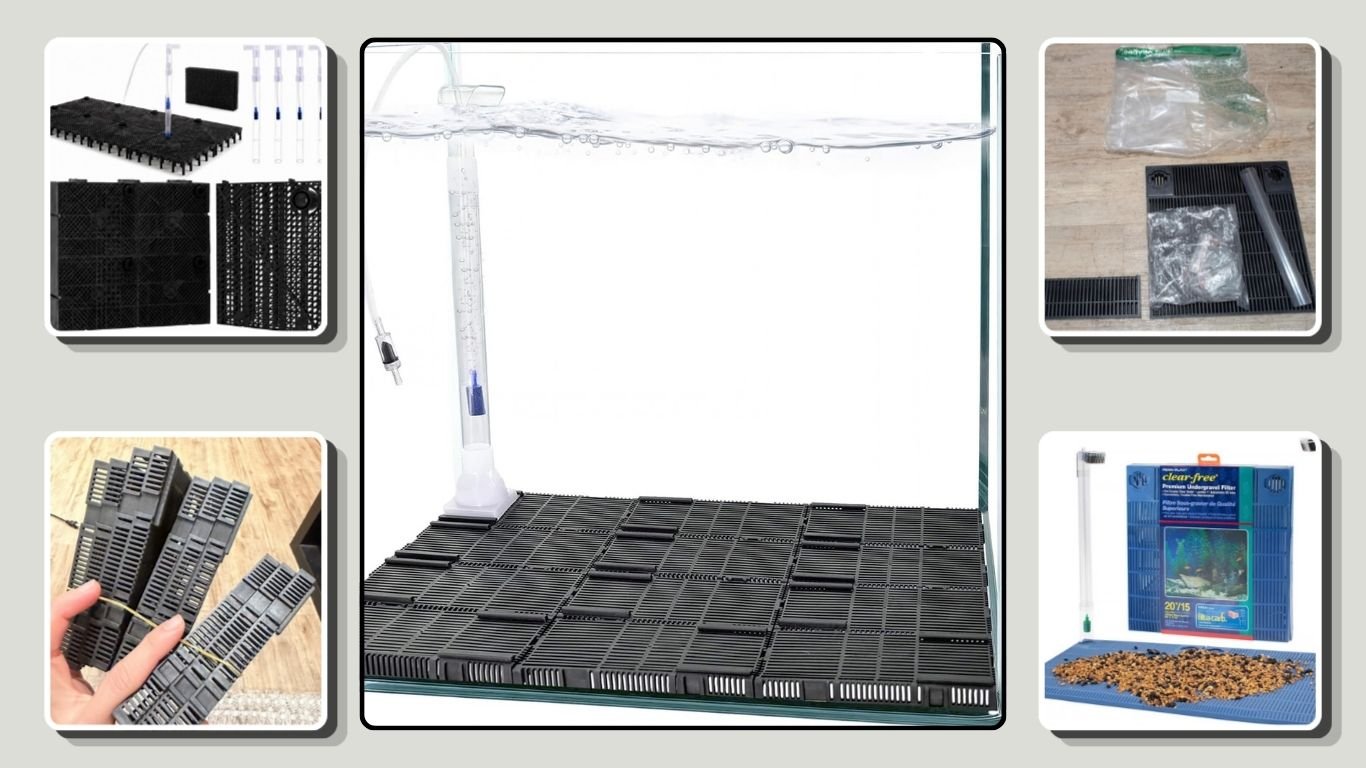
An undergravel aquarium filter offers a simple way to support biological filtration while keeping the tank setup neat and unobtrusive. Installed beneath the gravel, these filters use water movement to draw debris and oxygen through the substrate, creating a large surface area for beneficial bacteria. They can work well in freshwater and some saltwater aquariums, especially when paired with an air pump or powerhead. In this guide, we review the 8 best undergravel aquarium filters to help you compare reliable options for different tank sizes and filtration needs.
1. Penn-Plax Premium Undergravel Filter for 10-Gallon Aquariums
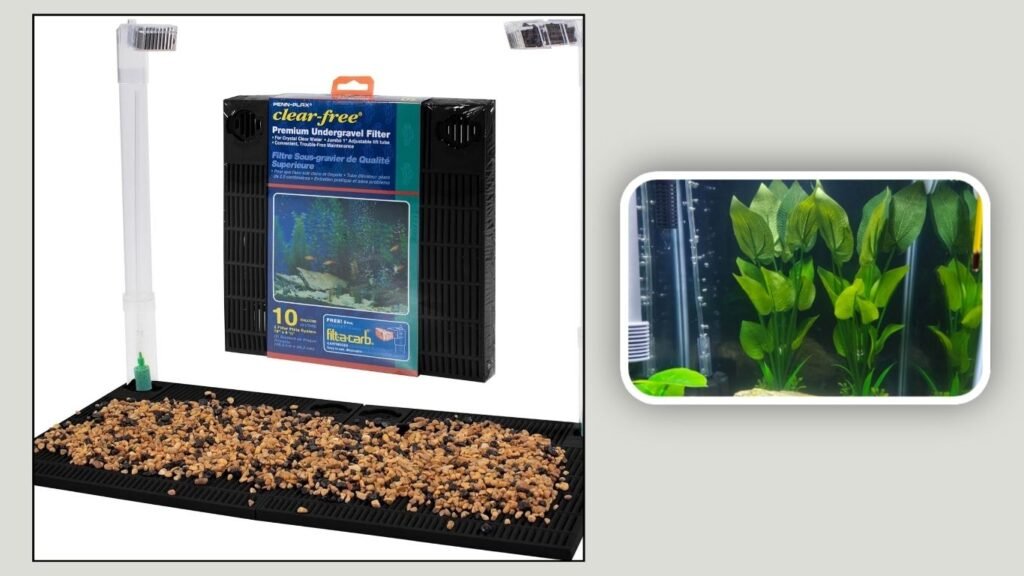
The Penn-Plax Premium Undergravel Filter is a practical choice for standard 10-gallon aquariums where you want filtration without a bulky unit hanging inside the tank. Installed beneath the gravel, it uses the substrate as part of the filtration system while keeping most equipment out of sight. Its straightforward air-driven design also suits freshwater and saltwater setups.
Key Features
- Designed for most 10-gallon aquariums
- Undergravel plate filtration system
- Air-driven operating design
- Adjustable uplift tubes
- Supports biological filtration
- Helps provide water circulation through gravel
- Works with freshwater and saltwater setups
- Low-profile installation beneath substrate
Why It Works Well for Small Aquariums
A 10-gallon aquarium has limited interior space, so large filters can quickly make the tank feel crowded. Penn-Plax avoids that problem by placing most of the filtration system underneath the gravel.
Once covered, only the uplift tubes remain visible. This leaves more usable swimming space while also maintaining a cleaner aquascape.
The system is especially appealing for traditional gravel-bottom aquariums where simplicity is more important than complicated filtration controls.
Filtration and Everyday Performance
Undergravel filtration draws aquarium water downward through the gravel and beneath the filter plates before returning it through the uplift tubes. This constant movement allows the gravel bed to provide significant surface area for beneficial bacteria.
An appropriate air pump powers the circulation while also contributing additional aeration. Because there are relatively few mechanical components, regular maintenance is mainly focused on gravel cleaning, airflow, and keeping the uplift system clear.
Best for Compact Gravel-Bottom Tanks
This Penn-Plax model is a strong match for 10-gallon community tanks, small freshwater setups, and aquariums where you prefer equipment to remain discreet.
Its combination of hidden installation, biological filtration, aeration, and straightforward maintenance makes it particularly attractive to aquarists who appreciate simple systems that can operate continuously without taking up valuable tank space.
2. Penn-Plax Premium Undergravel Aquarium Filter
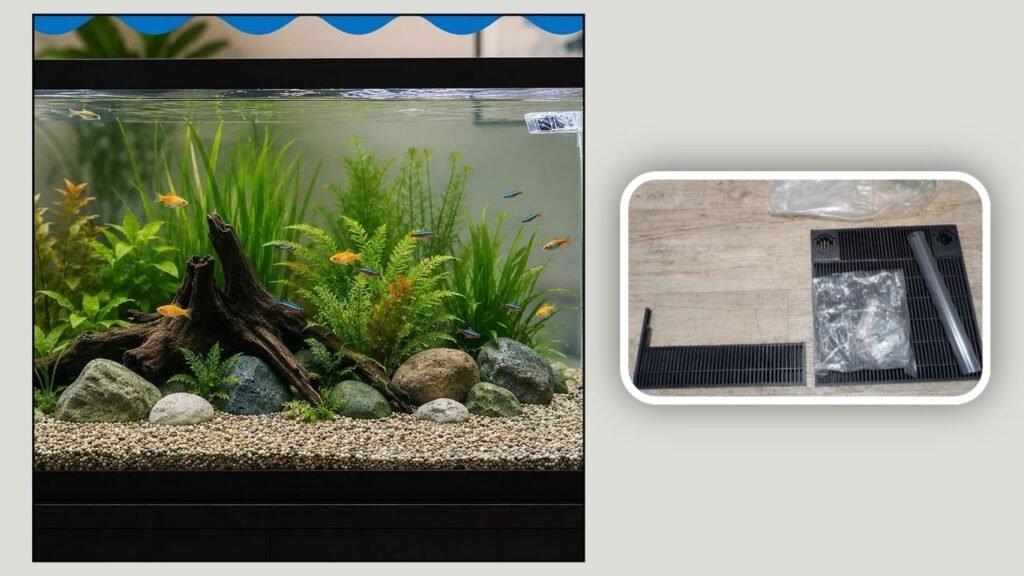
This larger Penn-Plax Premium Undergravel Filter follows the same classic filtration concept while providing broader coverage for bigger aquarium footprints. The filter plates sit beneath the gravel, allowing water to move through the substrate and create a large biological filtration zone. Adjustable uplift tubes make the design adaptable, while the hidden installation keeps the aquarium looking uncluttered.
Key Features
- Multi-plate undergravel filtration design
- Adjustable uplift tubes
- Designed to remain hidden beneath gravel
- Supports biological filtration
- Promotes water movement through substrate
- Air-driven operation
- Helps aerate aquarium water
- Suitable for freshwater and saltwater systems
Why It Stands Out for Larger Tanks
Larger aquariums benefit from filtration that distributes water movement across more than one small area. An undergravel plate system can create circulation across much of the tank floor instead of drawing water from only one corner.
The modular plate design is particularly useful because the filtration area can cover a substantial portion of the aquarium bottom.
Once gravel is added, the equipment almost disappears visually, leaving more attention on fish, plants, rocks, and decorations.
Biological Filtration and Water Movement
The gravel bed becomes part of the filtration process as water is continually drawn through it. This gives beneficial bacteria a broad surface area where they can establish colonies and participate in processing aquarium waste.
Air-driven uplift tubes return water upward while increasing surface movement and oxygenation.
The system does require regular gravel vacuuming because debris can accumulate within the substrate. With consistent maintenance, however, the design provides dependable biological support without relying on a large internal filter body.
Best for Traditional Aquarium Setups
This Penn-Plax option suits aquarists who prefer established filtration technology and a neat aquarium interior.
It is particularly useful in gravel-bottom community tanks where fish produce moderate waste and where regular substrate cleaning is already part of the maintenance routine.
For someone wanting broad filtration coverage without a prominent filter inside the aquarium, its simple undergravel layout has considerable practical appeal.
3. BaoZqua Air-Driven Undergravel Biofiltration System
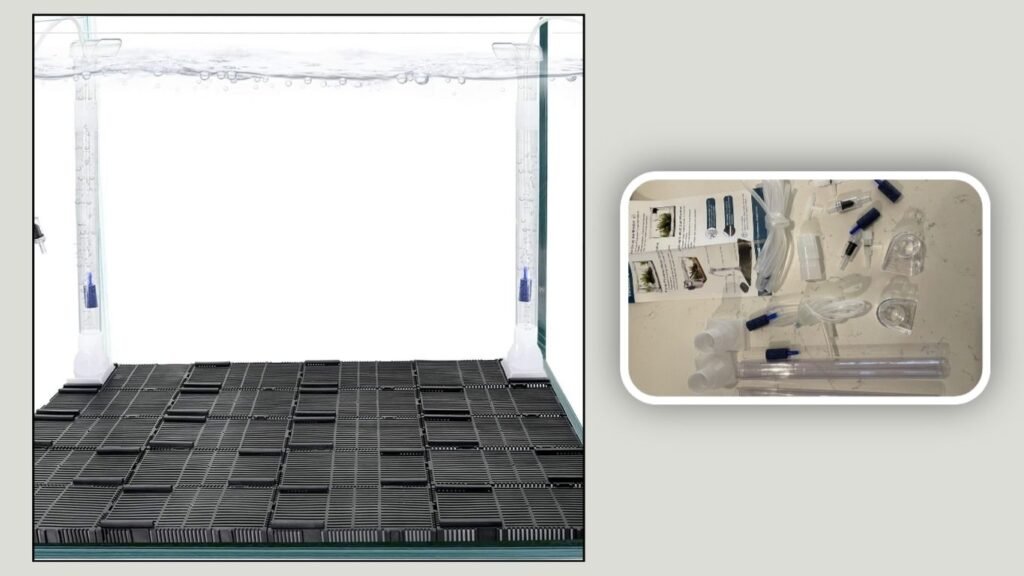
The BaoZqua Undergravel Biofiltration System offers a more modular interpretation of the traditional undergravel filter. Multiple interlocking plates allow the filtration base to be arranged beneath the substrate, while adjustable uplift tubes help accommodate different aquarium layouts. This design can be particularly useful when standard one-piece filter plates do not match the exact dimensions of your tank.
Key Features
- Modular undergravel filter plates
- Air-driven biofiltration design
- Adjustable uplift tubes
- Customizable bottom coverage
- Supports beneficial bacterial growth
- Helps circulate water through substrate
- Concealed installation beneath gravel
- Suitable for customized aquarium layouts
Why the Modular Design Is Useful
Not every aquarium has the same footprint. Decorations, rocks, wood, and unusual tank dimensions can make a rigid undergravel plate inconvenient.
BaoZqua’s modular approach gives aquarists greater control over where filtration plates are positioned. Individual sections can be arranged across the bottom before the substrate is added.
This makes the system attractive for aquascapes where certain areas need filtration while other areas may contain large hardscape pieces.
Biofiltration and Circulation Performance
The filter works by encouraging water to travel through the gravel and into the space beneath the plates. This exposes more substrate surface area to oxygenated water and supports colonies of beneficial bacteria.
Adjustable uplift tubes then direct water back toward the upper portion of the aquarium.
Because the system is air-driven, selecting a suitable air pump is important for achieving consistent circulation. Gravel size also matters; substrate that is too fine may restrict flow or fall through larger plate openings.
Best for Custom Tank Layouts
BaoZqua is particularly appealing for aquarists who want more flexibility than a fixed undergravel plate can provide.
It suits community tanks, breeding setups, and customized gravel-bottom aquariums where the bottom layout needs to work around decorations or unusual dimensions.
The combination of modular coverage, hidden filtration, and adjustable uplift components makes this a practical option for hobbyists who enjoy tailoring equipment to their specific aquarium.
4. Lee’s Original Undergravel Aquarium Filter
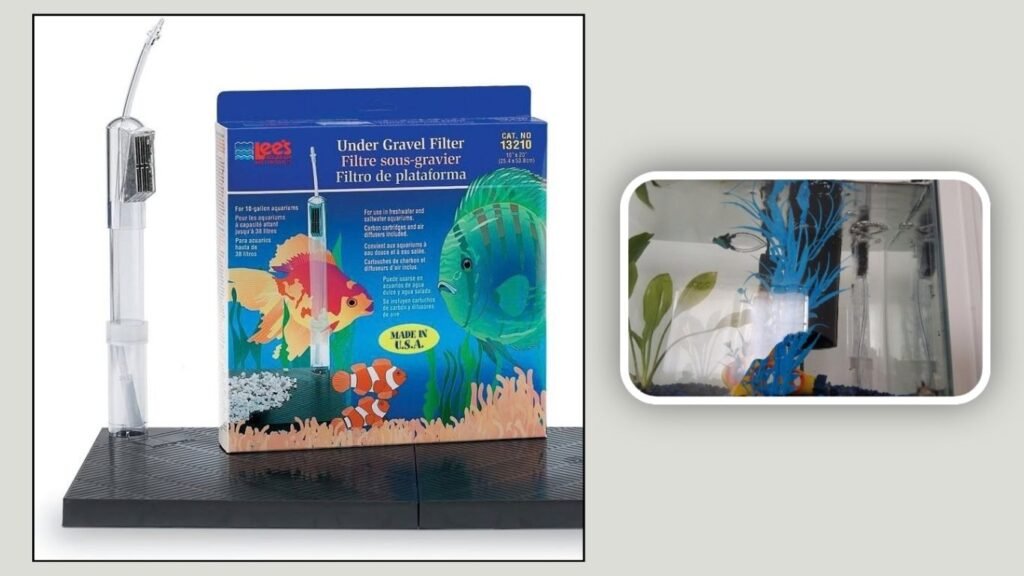
Lee’s Original Undergravel Filter represents the traditional approach that made this filtration style popular for decades. Its plate sits beneath the aquarium gravel, creating a hidden filtration area that uses water movement through the substrate to support biological filtration. The uncomplicated design makes it especially attractive for hobbyists who value reliability, easy operation, and minimal equipment inside the aquarium.
Key Features
- Traditional undergravel filtration system
- Installs beneath aquarium gravel
- Uses uplift tubes for circulation
- Supports biological filtration
- Keeps filtration hardware largely hidden
- Simple design with few moving components
- Works well in traditional gravel aquariums
- Can contribute additional aeration
Why the Simple Design Still Works
Modern aquarium filters may include pumps, electronic controls, cartridges, and multiple media chambers, but simplicity has its own advantages.
Lee’s undergravel design relies on steady water movement through the substrate rather than a complicated mechanical assembly. Once installed properly, the filter can operate quietly while remaining almost completely hidden.
This is particularly useful in tanks where decorations and fish should remain the main visual features.
Long-Term Filtration Performance
A properly maintained undergravel filter can create a large biological filtration zone because the aquarium gravel itself provides extensive surface area for bacteria.
Continuous circulation supplies oxygenated water to this bacterial community while preventing the lower substrate from becoming completely stagnant.
Regular gravel vacuuming remains important because solid waste can settle between particles. The system performs best with appropriately sized gravel rather than extremely fine sand, which can restrict circulation.
Best for Classic Gravel Aquarium Setups
Lee’s Original Undergravel Filter is particularly suitable for aquarists who prefer a proven, uncomplicated filtration method. It makes sense for community tanks, breeding tanks, and traditional freshwater aquariums with moderate stocking levels.
For someone who prefers straightforward maintenance and does not need the advanced features of a powered canister or internal filter, this classic undergravel format provides an efficient and discreet foundation.
5. Sieral Undergravel Aquarium Filter System
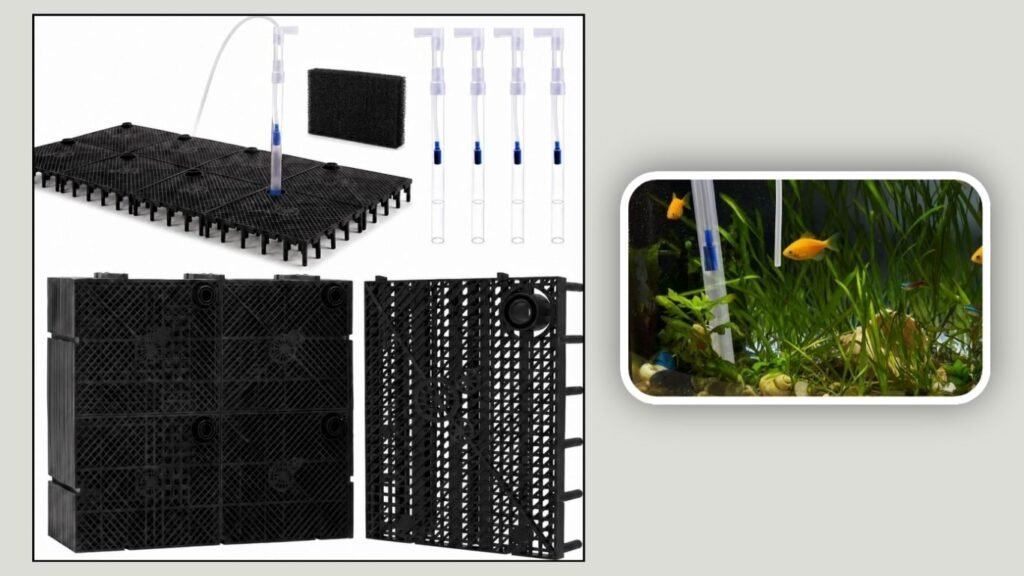
The Sieral Undergravel Aquarium Filter is designed for larger aquarium installations where broad bottom coverage is important. Its multi-plate construction spreads filtration across the substrate, while multiple uplift tubes help move water from underneath the gravel back into the tank. The system can be used in freshwater or saltwater aquariums when the substrate and setup are appropriate.
Key Features
- Multi-plate undergravel system
- Designed for larger aquarium footprints
- Multiple uplift tubes
- Hidden beneath gravel substrate
- Supports biological filtration
- Helps distribute water circulation
- Suitable for freshwater and saltwater tanks
- Useful for broad bottom coverage
Why It Suits Larger Aquariums
One challenge with larger tanks is getting filtration activity across the entire bottom instead of concentrating circulation around a single intake.
Sieral addresses this with multiple plates that can cover a wider area beneath the substrate. Several uplift points also help distribute water movement more evenly. Because the plates disappear once covered with gravel, the aquarium maintains a clean appearance despite the larger filtration footprint.
Filtration and Maintenance Performance
Water moving through gravel exposes beneficial bacteria to dissolved waste compounds while also carrying oxygen into the substrate. This can make the bottom layer an important part of the aquarium’s biological filtration system.
Larger tanks still require careful maintenance. Regular gravel vacuuming helps remove debris before it accumulates beneath the substrate, and uplift tubes should remain clear to maintain consistent water movement.
Pairing the system with an appropriately sized air supply is also important for reliable operation.
Best for Spacious Gravel-Bottom Tanks
This Sieral system is particularly useful when you want undergravel filtration across a broad aquarium floor. It suits larger community tanks and setups where keeping visible filtration equipment to a minimum is a priority.
Aquarists who already prefer routine gravel cleaning may appreciate how the system turns much of the substrate into an active biological filtration area without dominating the aquarium visually.
6. Sieral Gravel Undergravel Aquarium Filter
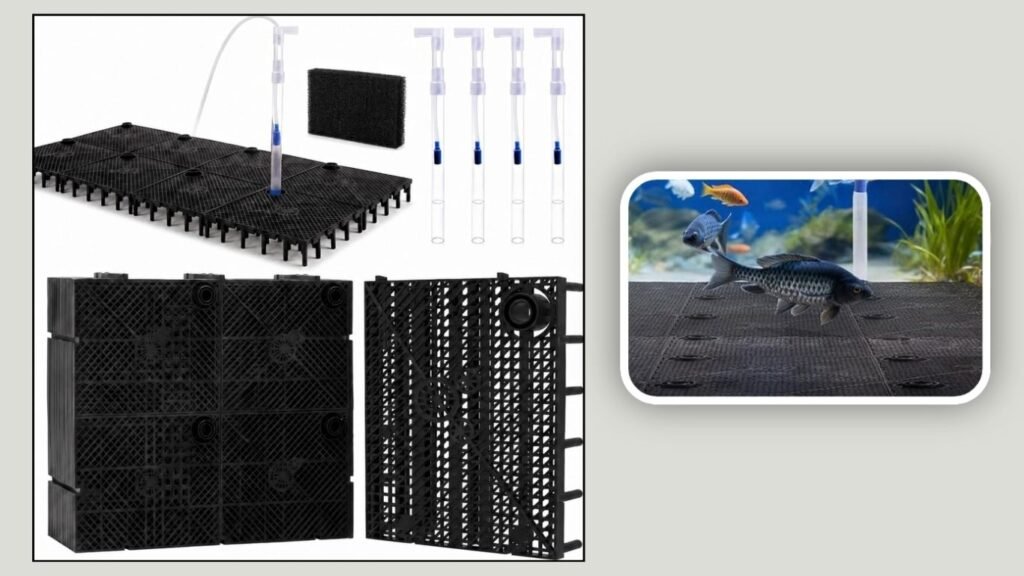
This Sieral undergravel filter provides another option for aquarists interested in hidden substrate-based filtration. Its filter plates are positioned below gravel so water can circulate through the substrate rather than relying entirely on a visible intake unit. The design works especially well for tanks where maintaining an uncluttered interior and increasing biological filtration area are both important.
Key Features
- Undergravel plate filtration
- Concealed below aquarium substrate
- Air-driven circulation design
- Supports beneficial bacteria
- Encourages water movement through gravel
- Helps improve substrate oxygenation
- Suitable for traditional aquarium layouts
- Minimal visible equipment after installation
Why It Keeps the Aquarium Looking Clean
Filters are essential equipment, but large housings, intake tubes, and power cords can interfere with a carefully decorated aquarium. An undergravel system minimizes this problem because almost all of the filter sits beneath the substrate.
Only the uplift components remain visible, and these can usually be positioned toward the back corners of the tank. This creates more open viewing space and leaves rocks, plants, decorations, and fish as the primary visual elements.
Biological Performance and Maintenance
The filtration process continuously pulls aquarium water through spaces in the gravel. This provides beneficial bacteria with both oxygen and a large area to colonize. The result is a filtration system that makes use of the entire substrate bed rather than relying solely on a small piece of filter media.
Gravel maintenance is essential for maintaining this advantage. Periodic vacuuming prevents excessive organic debris from blocking circulation or accumulating beneath the substrate.
Best for Minimalist Aquarium Interiors
This Sieral model suits aquarists who want filtration that stays mostly out of view. It can be particularly useful in simple community aquariums, traditional gravel tanks, and setups where equipment visibility is undesirable.
For hobbyists comfortable with regular substrate cleaning, its ability to combine biological filtration, circulation, and a cleaner interior appearance makes it an appealing alternative to bulky internal systems.
7. BaoZqua Adjustable Air-Driven Undergravel Biofilter
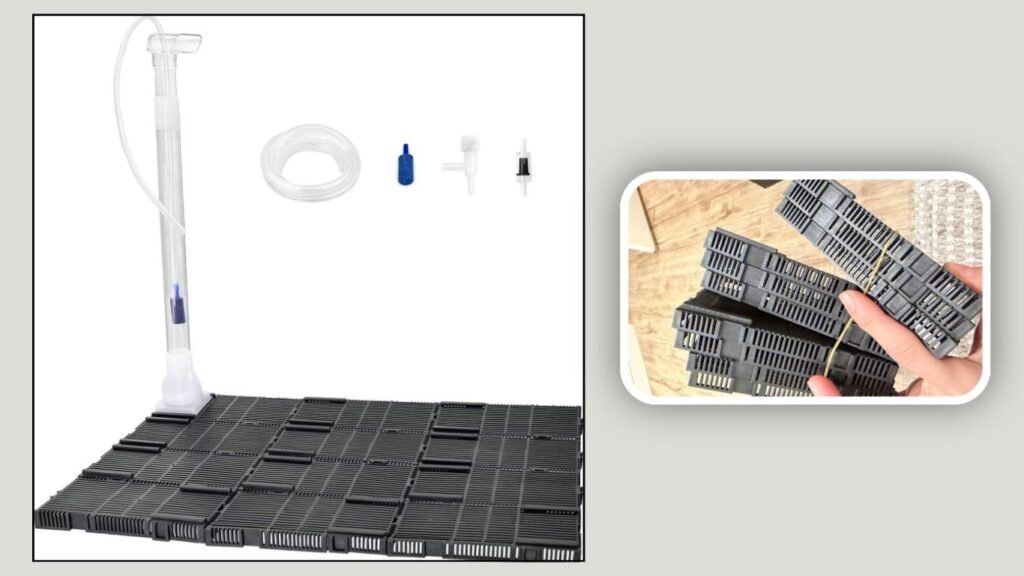
BaoZqua’s Adjustable Undergravel Biofilter combines modular filter plates with air-driven circulation to create a flexible filtration foundation. The system is intended to sit underneath aquarium gravel, where water passing through the substrate supports beneficial bacterial activity. Adjustable components allow the installation to be adapted more easily to the aquarium’s dimensions and internal layout.
Key Features
- Modular undergravel filter design
- Adjustable uplift components
- Air-driven operation
- Supports biological filtration
- Promotes substrate water circulation
- Hidden filtration plates
- Adaptable to different aquarium layouts
- Useful for freshwater gravel setups
Why Adjustability Is an Advantage
Aquarium dimensions and water levels vary considerably, making fixed-height uplift tubes less convenient in some tanks. An adjustable system gives the aquarist more flexibility when positioning the return point and arranging the filter plates.
The modular plates are also useful around rocks, decorations, and other objects that occupy bottom space. Instead of forcing the aquarium layout around the filter, you can plan the filtration base to suit the tank.
Circulation and Biological Support
As air rises through the uplift assembly, water is encouraged to move beneath the filter plates and through the gravel.
This steady flow helps oxygenated water reach the bacteria living throughout the substrate. The gravel therefore becomes a substantial biological media bed.
The system also produces visible bubble movement, which can increase surface agitation and contribute to gas exchange. Performance depends on correct substrate selection and adequate airflow, so pairing the system with a properly sized air pump is important.
Best for Flexible DIY-Style Setups
BaoZqua is well suited to hobbyists who enjoy adapting aquarium equipment rather than using a single rigid configuration. It can work particularly well in tanks with customized hardscape, unconventional footprints, or specific filtration zones.
For someone looking for a concealed biological filter while retaining more control over plate arrangement and uplift positioning, the adjustable design offers useful flexibility.
8. Penn-Plax Premium Undergravel Filter
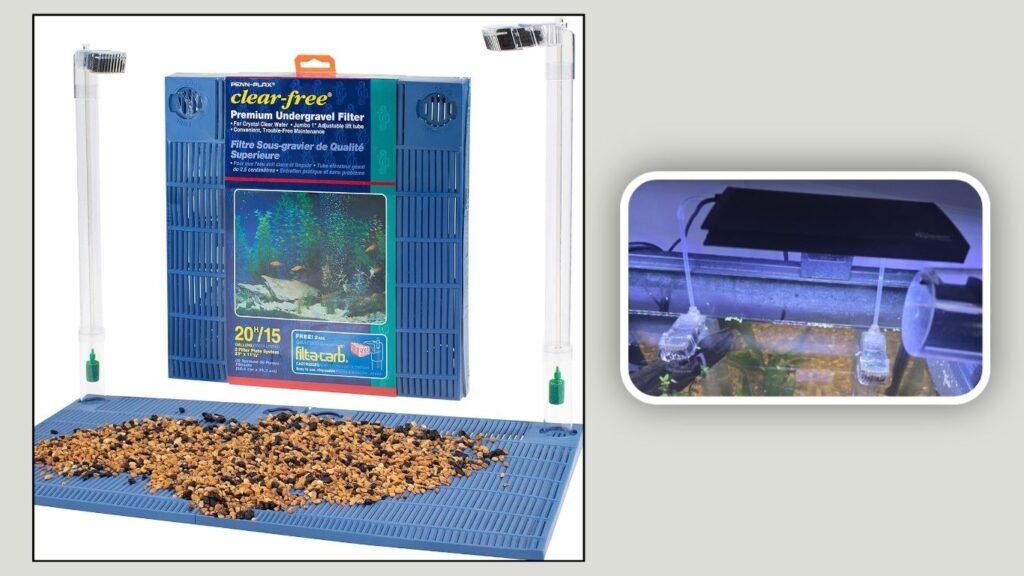
This Penn-Plax Premium Undergravel Filter is designed for mid-sized aquariums and combines traditional substrate filtration with an easy-to-hide plate system. Once the plates are positioned and covered with gravel, water is drawn through the substrate and returned through adjustable uplift tubes. The result is a filtration system that adds biological capacity without occupying much visible space inside the aquarium.
Key Features
- Designed for mid-sized aquarium setups
- Multiple undergravel filter plates
- Adjustable uplift tubes
- Air-driven filtration system
- Supports biological filtration
- Helps aerate aquarium water
- Mostly concealed beneath gravel
- Suitable for freshwater and saltwater tanks
Why It Is a Strong Mid-Size Option
Small undergravel filters may not provide enough bottom coverage for a medium aquarium, while oversized systems can be unnecessary.
This Penn-Plax configuration offers a useful middle ground, spreading filtration beneath a broader substrate area while retaining the same simple operating principle. The adjustable tubes also help accommodate different aquarium heights, making installation more flexible. Once the tank is finished, the filter does not interfere heavily with the aquascape.
Filtration and Aeration Performance
Water continuously passing through the gravel exposes a large population of beneficial bacteria to aquarium waste.
At the same time, air rising through the uplift tubes creates circulation and surface movement. This combination allows one simple system to support both biological filtration and aeration.
Because undergravel filters depend on open pathways through the substrate, regular gravel vacuuming is an important part of long-term performance.
Using appropriately sized gravel also helps maintain consistent water flow.
Best for Medium Community Aquariums
This Penn-Plax filter makes sense for aquarists who want a traditional filtration method for a moderately sized tank without filling the aquarium with visible hardware. It is especially suitable for gravel-bottom community setups and aquariums where dependable biological filtration and aeration are priorities.
Its straightforward construction, hidden installation, and broad substrate filtration make it an attractive option for anyone who values simplicity over complex filtration equipment.
FAQs
1. Are undergravel filters good for aquariums?
Undergravel filters can work very well in suitable gravel-bottom aquariums. They move water through the substrate, allowing the gravel to provide a large surface area for beneficial bacteria. They are particularly useful for biological filtration and aeration. However, regular gravel cleaning is important because debris can accumulate within the substrate if maintenance is neglected.
2. Do undergravel filters need an air pump?
Most traditional air-driven undergravel filters require a separate aquarium air pump. The pump pushes air through an air stone or uplift assembly, and rising bubbles create the water movement needed to pull aquarium water through the gravel. Some undergravel systems can also be operated with compatible powerheads, depending on their design.
3. What type of gravel is best for an undergravel filter?
Medium-sized aquarium gravel generally works better than very fine sand. The substrate needs enough open space between particles for water to move through it. Very fine materials can restrict circulation or pass through openings in the filter plate. A layer deep enough to cover the plates securely while maintaining water flow usually provides the most practical setup.
4. Can you use an undergravel filter with aquarium plants?
Yes, but plant selection and layout require some consideration. Plants with moderate root systems can often grow successfully over an undergravel filter. Extremely dense roots may eventually interfere with plate access or water movement. Potted plants, epiphytes attached to rocks or wood, and moderately rooted species can make maintaining an undergravel setup easier.
5. How often should you clean an undergravel aquarium filter?
The gravel surface should generally be vacuumed during routine water changes rather than waiting until large amounts of debris accumulate. Cleaning frequency depends on fish stocking, feeding, substrate depth, and waste production. Regular partial gravel vacuuming helps maintain open water pathways while preserving much of the beneficial bacterial population living throughout the substrate.