
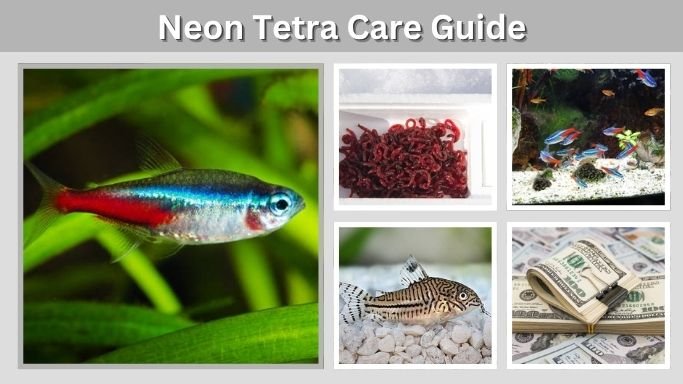
Neon tetra is one of the most popular freshwater aquarium fish because of its bright blue stripe, red lower body, peaceful behavior, and small size. These colorful schooling fish are loved by beginners and experienced fish keepers alike. However, neon tetras still need the right tank setup, clean water, proper food, and peaceful tank mates to stay healthy. This guide explains neon tetra care, tank requirements, lifespan, food, diseases, breeding, and common mistakes.
What Is a Neon Tetra?
Neon tetra is a small freshwater fish known for its glowing blue and red color pattern. It belongs to the tetra group and is often kept in community aquariums because it is peaceful, active, and beautiful.
Neon Tetra Species Overview
The neon tetra is scientifically known as Paracheirodon innesi. It originally comes from soft, warm freshwater habitats in South America, especially slow-moving streams and shaded forest waters. In aquariums, it is usually seen swimming in groups across the middle part of the tank.
Neon tetras are schooling fish, which means they feel safer and behave more naturally when kept with others of their own kind. A single neon tetra may become stressed, shy, or inactive.
Neon Tetra Appearance
Neon tetras are easy to recognize because of their bright horizontal stripe. Their blue line runs from the eye toward the body, while the red stripe usually appears on the lower back half.
Key features include:
- Bright neon-blue stripe
- Red lower body marking
- Silver or transparent body areas
- Small, slim body shape
- Peaceful schooling behavior
- Active swimming in groups
Neon Tetra Size and Lifespan
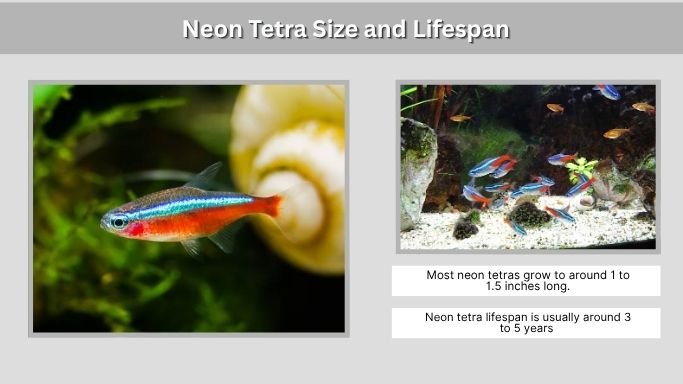
Neon tetras are small fish, which makes them popular for home aquariums. However, small size does not mean they can live in poor conditions or tiny bowls.
How Big Do Neon Tetras Get?
Most neon tetras grow to around 1 to 1.5 inches long. Their small body size allows a group to live comfortably in a properly maintained aquarium. Even though they are tiny, they need swimming space because they are active schooling fish.
A healthy neon tetra should look slim but not skinny. Its colors should be bright, and it should swim normally with the group.
How Long Do Neon Tetras Live?
The average neon tetra lifespan is usually around 3 to 5 years in a well-maintained aquarium. Some may live longer with excellent water quality, low stress, and a stable diet.
Poor water conditions, aggressive tank mates, sudden temperature changes, and disease can shorten their life. Clean water and a stable tank are the biggest keys to helping neon tetras live longer.
Neon Tetra Tank Requirements
A good neon tetra tank should be stable, clean, and peaceful. Neon tetras do best in groups, so the tank must be large enough for a school rather than just one or two fish.
Neon Tetra Tank Size
A 10-gallon tank is often considered a practical minimum for a small group of neon tetras. A larger tank is even better because it gives them more swimming room and keeps water conditions more stable.
| Tank Size | Suggested Neon Tetra Group |
| 5 gallons | Not ideal for a proper school |
| 10 gallons | 6 to 8 neon tetras |
| 20 gallons | 10 to 15 neon tetras |
| 30 gallons | 15 to 25 neon tetras |
| 75 gallons | Large community school possible |
A 5-gallon tank is usually too small for a healthy long-term neon tetra school. These fish may be small, but they need group space and stable water.
Neon Tetra Water Temperature
Neon tetras prefer warm tropical water. A good temperature range is usually around 72°F to 78°F. Because they are tropical fish, they often need a heater unless the room temperature stays stable and warm all year.
Sudden temperature swings can stress neon tetras and make them more likely to get sick. Use an aquarium thermometer to monitor the water daily.
Water Quality and Tank Setup
Neon tetras do best in clean, mature aquariums with gentle filtration. They are sensitive to ammonia and nitrite, so the tank should be fully cycled before adding them.
Good tank features include:
- Gentle filter flow
- Stable heater
- Soft to moderately soft water
- Live or silk plants
- Open swimming space
- Dim to moderate lighting
- Hiding spots with plants or driftwood
Avoid adding neon tetras to a brand-new uncycled tank. New tank problems are a common reason neon tetras become weak or die early.
Neon Tetra Food and Diet
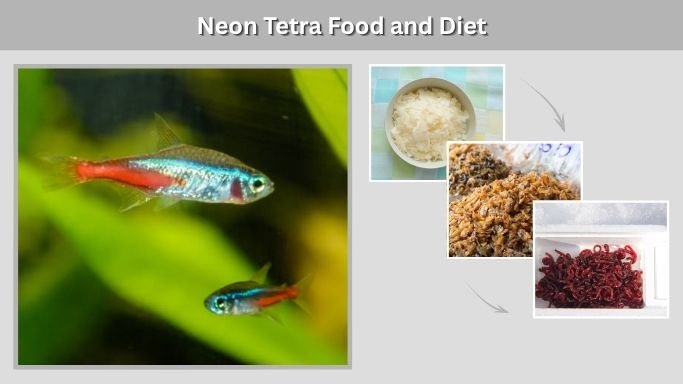
Neon tetras are omnivores. In an aquarium, they eat a mix of small prepared foods and tiny protein-rich foods. Their mouths are small, so food should be small enough for them to swallow easily.
What Do Neon Tetras Eat?
Neon tetras can eat high-quality flake food, micro pellets, freeze-dried foods, frozen foods, and live foods. A varied diet helps improve color, energy, and health.
Common neon tetra foods include:
- Crushed tropical flakes
- Micro pellets
- Baby brine shrimp
- Daphnia
- Bloodworms in small amounts
- Freeze-dried tubifex
- Mosquito larvae
- Small frozen foods
Feed small portions once or twice daily. Only give what they can eat in a short time. Extra food can rot, pollute the water, and cause disease.
Best Feeding Tips
Neon tetras should not be overfed. Their stomachs are tiny, and too much food can cause waste buildup in the aquarium. It is better to feed small amounts than large meals.
A balanced routine can include flakes or micro pellets as the main food, with frozen or live treats a few times per week.
Neon Tetra Tank Mates
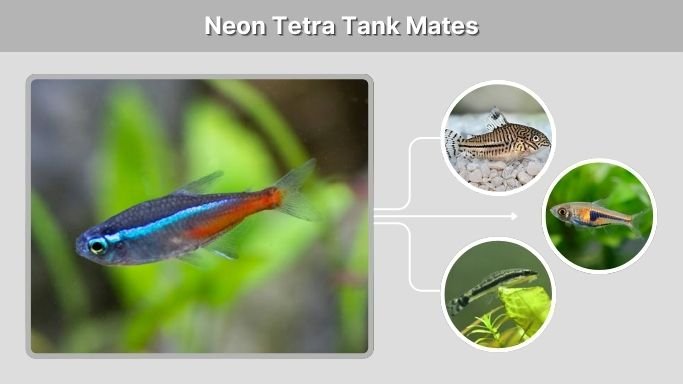
Neon tetras are peaceful fish and usually do best with other calm community species. They should not be kept with large, aggressive, or fin-nipping fish.
Best Fish With Neon Tetras
Good tank mates are peaceful fish that enjoy similar water conditions. Choose species that will not chase, bite, or eat neon tetras.
Good neon tetra tank mates include:
- Cory catfish
- Small rasboras
- Harlequin rasboras
- Ember tetras
- Small peaceful gouramis
- Otocinclus catfish
- Kuhli loaches
- Small peaceful snails
- Cherry shrimp with caution
Avoid large cichlids, aggressive barbs, big predatory fish, and any fish large enough to swallow them.
Can Neon Tetras Live With Bettas?
Neon tetras can sometimes live with bettas, but it depends on the betta’s personality and tank size. Some bettas ignore neon tetras, while others chase or attack them.
A larger planted tank gives both species more space. Avoid keeping them together in a small tank. Watch carefully for stress, torn fins, hiding, or chasing.
Neon Tetra vs Cardinal Tetra
Neon tetras and cardinal tetras look similar, so many beginners confuse them. Both are colorful schooling fish with blue and red markings.
Key Differences
| Feature | Neon Tetra | Cardinal Tetra |
| Red stripe | Covers back half of body | Runs almost full body length |
| Size | Usually smaller | Slightly larger |
| Color | Bright blue and partial red | Strong blue and full red |
| Care level | Beginner-friendly with stable water | Slightly more sensitive |
| Group behavior | Schooling | Schooling |
Cardinal tetras often have a fuller red stripe than neon tetras. Neon tetras are usually more common in beginner aquariums.
Black Neon Tetra and Green Neon Tetra
Many people search for black neon tetra and green neon tetra because these fish have similar names. However, they are not the same as the standard neon tetra.
Black Neon Tetra
Black neon tetra is a separate tetra species. It has a darker body with a bright pale stripe and black line. It is peaceful, hardy, and good for community tanks.
Black neon tetras are usually a little different in appearance and should not be confused with sick or dull-colored neon tetras.
Green Neon Tetra
Green neon tetra is another related species with a more subtle blue-green shine. It is often smaller and may prefer softer, warmer water. It can be more delicate than the common neon tetra.
Both black neon and green neon tetras are schooling fish, so they should also be kept in groups.
Neon Tetra Breeding and Eggs
Breeding neon tetras can be challenging for beginners. They are egg-laying fish and need stable, clean, soft water conditions for successful spawning.
Pregnant Neon Tetra: Is It Really Pregnant?
A neon tetra does not become pregnant like a livebearing fish. Instead, a female may become full of eggs. Many people call this a “pregnant neon tetra,” but the correct term is egg-carrying or gravid.
A female with eggs may look rounder in the belly. However, swelling can also be caused by overeating, constipation, or disease, so body shape alone is not proof of breeding.
Neon Tetra Eggs
Neon tetra eggs are tiny and may be scattered among plants or spawning mops. Adult fish may eat the eggs, so breeders often use a separate breeding tank.
The eggs are sensitive to light and poor water quality. This is why breeding neon tetras is harder than simply keeping them in a community tank.
Neon Tetra Disease and Illness
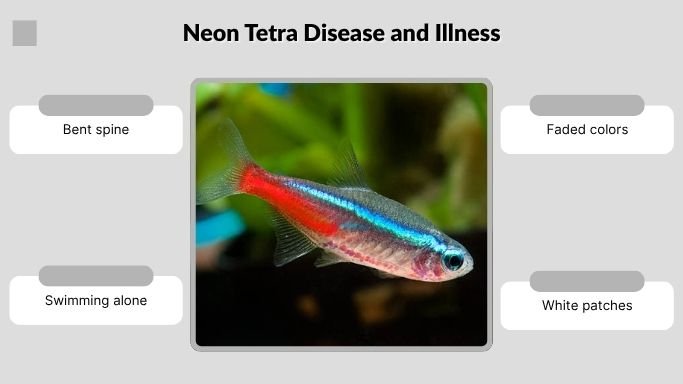
Neon tetra disease is one of the most searched health problems for this fish. It is serious and can spread in a tank. However, not every sick neon tetra has true neon tetra disease.
Common Signs of Sick Neon Tetras
A sick neon tetra may show:
- Faded colors
- White patches
- Bent spine
- Swimming alone
- Loss of appetite
- Trouble swimming
- Weight loss
- Fin damage
- Rapid breathing
- Hiding more than usual
If one fish looks sick, check the water quality first. Ammonia, nitrite, poor filtration, and stress can cause many problems that look like disease.
How to Prevent Neon Tetra Disease
Prevention is easier than treatment. Buy healthy fish from trusted sources, quarantine new fish when possible, and keep the tank clean.
Important prevention tips include:
- Keep stable water temperature
- Avoid overcrowding
- Do regular water changes
- Do not overfeed
- Quarantine new fish
- Remove very sick fish if needed
- Avoid aggressive tank mates
Good water quality is the strongest defense against most neon tetra illnesses.
Neon Tetra Care Level
Neon tetras are often called beginner fish, but they are not indestructible. They are easy to keep only when the aquarium is stable and fully cycled.
Are Neon Tetras Hardy?
Neon tetras can be hardy in the right conditions, but they are sensitive to sudden water changes. They may struggle in new tanks, dirty tanks, or tanks with unstable temperature.
They do best when added to a mature aquarium with peaceful tank mates and consistent care.
Beginner Care Checklist
| Care Need | Best Practice |
| Group size | Keep at least 6 |
| Tank size | 10 gallons or larger |
| Temperature | Around 72°F to 78°F |
| Food | Small varied foods |
| Tank mates | Peaceful community fish |
| Water changes | Regular partial changes |
| Lighting | Moderate or dim |
| Plants | Helpful for comfort |
Neon Tetra Price and Buying Tips
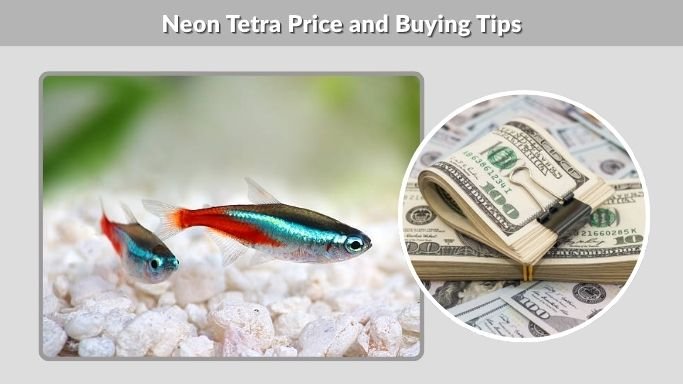
Neon tetras are usually affordable and widely available in aquarium stores. Prices vary by location, size, color quality, and store.
How to Choose Healthy Neon Tetras
When buying neon tetras, look for active fish with bright colors and clear bodies. Avoid fish that are thin, faded, gasping, swimming strangely, or covered in spots.
Good signs include:
- Bright blue and red color
- Active schooling
- Clear eyes
- Smooth swimming
- No white patches
- No torn fins
- Normal body shape
Do not buy fish from a tank where several fish look sick or dead. It is better to wait than risk bringing disease into your aquarium.
FAQs
How many neon tetras should be kept together?
Neon tetras should be kept in a group of at least 6. A larger group of 10 or more is even better because they feel safer and show more natural schooling behavior.
How many neon tetras can live in a 10-gallon tank?
A 10-gallon tank can usually hold around 6 to 8 neon tetras if the tank is properly filtered, cycled, and maintained. Avoid overcrowding because poor water quality can quickly make them sick.
What temperature do neon tetras need?
Neon tetras usually do best in warm tropical water around 72°F to 78°F. A heater is recommended in most tanks to keep the temperature stable.
What do neon tetras eat?
Neon tetras eat small tropical flakes, micro pellets, baby brine shrimp, daphnia, bloodworms, and other tiny foods. Feed small portions and avoid overfeeding.
Can neon tetras live with bettas?
Neon tetras can sometimes live with bettas in a larger planted tank, but it depends on the betta’s temperament. Some bettas are peaceful, while others may chase or nip neon tetras.