
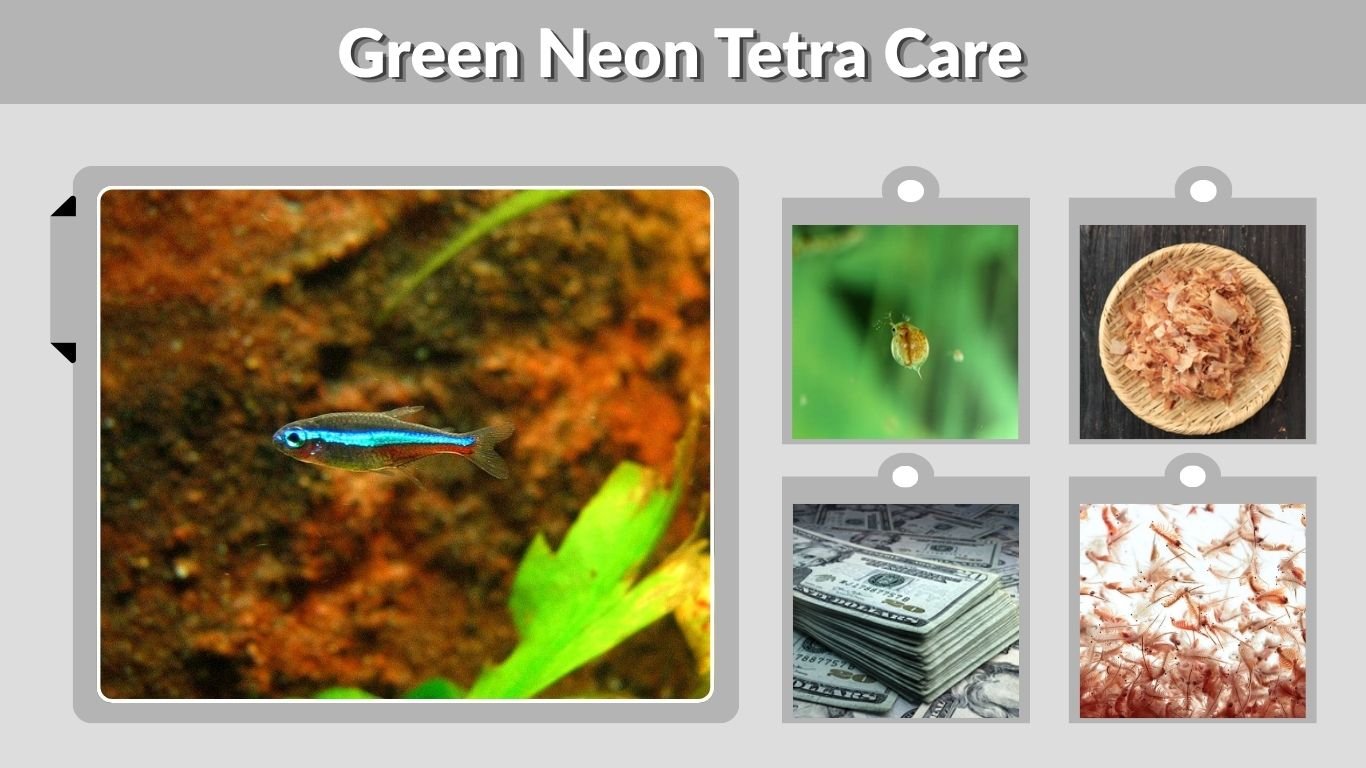
The green neon tetra is a small, peaceful freshwater fish known for its glowing blue-green stripe and calm schooling behavior. Many aquarists choose it for planted tanks, blackwater aquariums, and peaceful community setups. Although it looks similar to the common neon tetra, the green neon tetra is smaller, more delicate, and often prefers softer, warmer water. This guide covers green neon tetra size, tank setup, diet, tank mates, breeding, and key comparisons.
What Is a Green Neon Tetra?
The green neon tetra, scientifically known as Paracheirodon simulans, is a tiny South American tetra from slow-moving blackwater streams. It is often confused with neon tetras and cardinal tetras because all three have bright horizontal stripes.
Green neon tetras usually have a strong blue-green line running along the body, with a lighter red area compared to cardinal tetras. Their small size and schooling behavior make them excellent for aquascapes and peaceful planted aquariums.
Green Neon Tetra Size and Lifespan
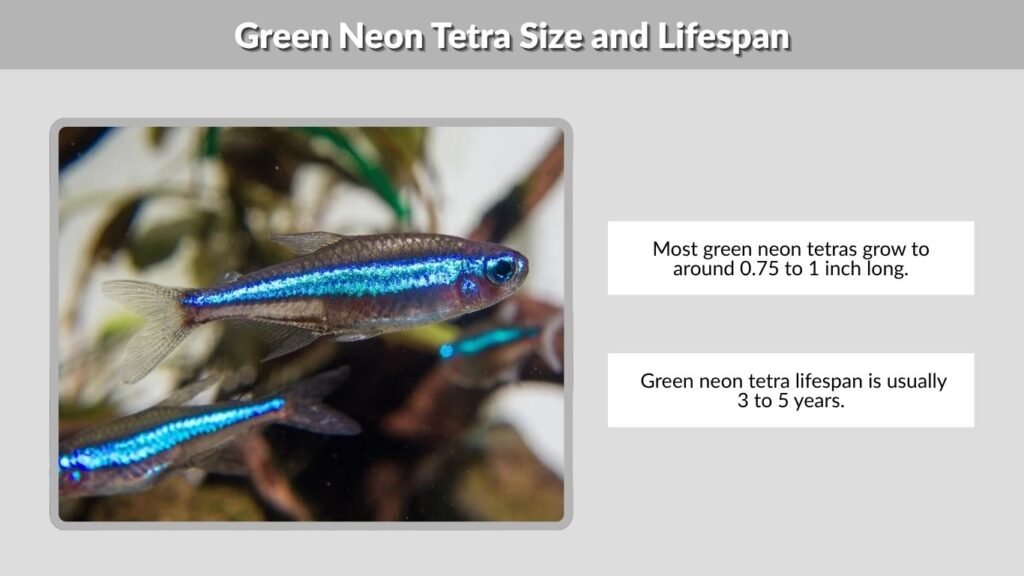
Green neon tetras are among the smaller tetra species, so they need stable water and a calm environment. Their small body size makes them beautiful in groups, but it also means they should not be kept with large or aggressive fish.
How Big Do Green Neon Tetras Get?
Most green neon tetras grow to around 0.75 to 1 inch long. Some may reach slightly over 1 inch in excellent conditions, but they stay smaller than standard neon tetras and cardinal tetras.
How Long Do Green Neon Tetras Live?
Green neon tetra lifespan is usually 3 to 5 years with proper care. Clean water, stable temperature, a good diet, and a stress-free school can help them live longer.
Are Green Neon Tetras Hardy?
Green neon tetras are moderately hardy, but they are not as forgiving as some beginner fish. They do best in mature aquariums with stable water parameters. New tanks with ammonia spikes, sudden pH changes, or poor acclimation can stress them quickly.
Green Neon Tetra Tank Setup
A green neon tetra tank should feel calm, shaded, and secure. These fish come from soft, acidic waters, so they look and behave best in planted or blackwater-style aquariums.
| Care Factor | Best Range |
| Minimum tank size | 10 gallons |
| Group size | 6 or more |
| Temperature | 75–82°F |
| pH | 5.0–7.0 |
| Water hardness | Soft to moderately soft |
| Tank level | Middle area |
| Temperament | Peaceful schooling fish |
Green Neon Tetra Tank Size
A 10-gallon tank is the better minimum for a small school of green neon tetras. Many people ask about a green neon tetra 5-gallon tank, but 5 gallons is usually too small for a proper school. It may work only as a temporary quarantine tank, not a long-term home.
How Many Green Neon Tetras in a 10-Gallon Tank?
In a 10-gallon tank, keep around 6 to 8 green neon tetras if the aquarium is well-filtered and not overcrowded. Since they are schooling fish, keeping only one or two will make them shy and stressed.
Plants, Lighting, and Decor
Green neon tetras look best in a planted tank with soft lighting. Good setup ideas include:
- Java fern, Anubias, Amazon sword, or floating plants
- Driftwood and leaf litter for a blackwater look
- Dark substrate to enhance their green-blue glow
- Open swimming space in the middle of the tank
- Gentle filtration with low to moderate flow
Green Neon Tetra Diet and Food
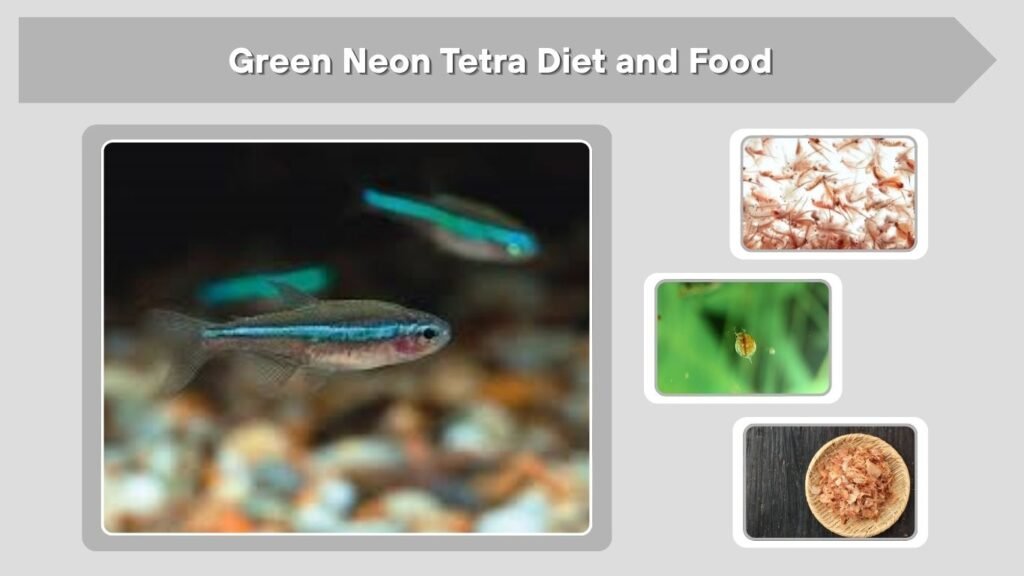
Green neon tetras are omnivores. In the wild, they eat tiny insects, larvae, microorganisms, and small organic particles. In aquariums, they need small foods that fit their tiny mouths.
Best Food for Green Neon Tetras
Good green neon tetra food options include crushed flakes, micro pellets, baby brine shrimp, daphnia, cyclops, and frozen or live micro foods. A varied diet helps improve color, activity, and overall health.
Feeding Schedule
Feed green neon tetras once or twice daily in small amounts. Only give what they can finish within a minute or two. Overfeeding can quickly pollute a small tank and cause water quality problems.
Do Green Neon Tetras Eat Shrimp?
Green neon tetras usually do not harm adult shrimp, but they may eat baby shrimp if they can fit them in their mouths. If keeping green neon tetra and cherry shrimp together, use dense plants, moss, and hiding spots to protect baby shrimp.
Green Neon Tetra Tank Mates
Green neon tetras are peaceful and should be kept with other calm, small fish. Avoid aggressive, large, or fin-nipping species that may chase or eat them.
Good green neon tetra tank mates include:
- Ember tetras
- Chili rasboras
- Pygmy corydoras
- Small peaceful rasboras
- Otocinclus catfish
- Kuhli loaches
- Cherry shrimp in planted tanks
- Peaceful dwarf cichlids in larger tanks
Green neon tetra with betta fish can work, but only in the right setup. Use at least a 10-gallon planted tank, choose a calm betta, and watch for chasing. Some bettas ignore tetras, while others may attack small schooling fish.
Green Neon Tetra vs Neon Tetra vs Cardinal Tetra
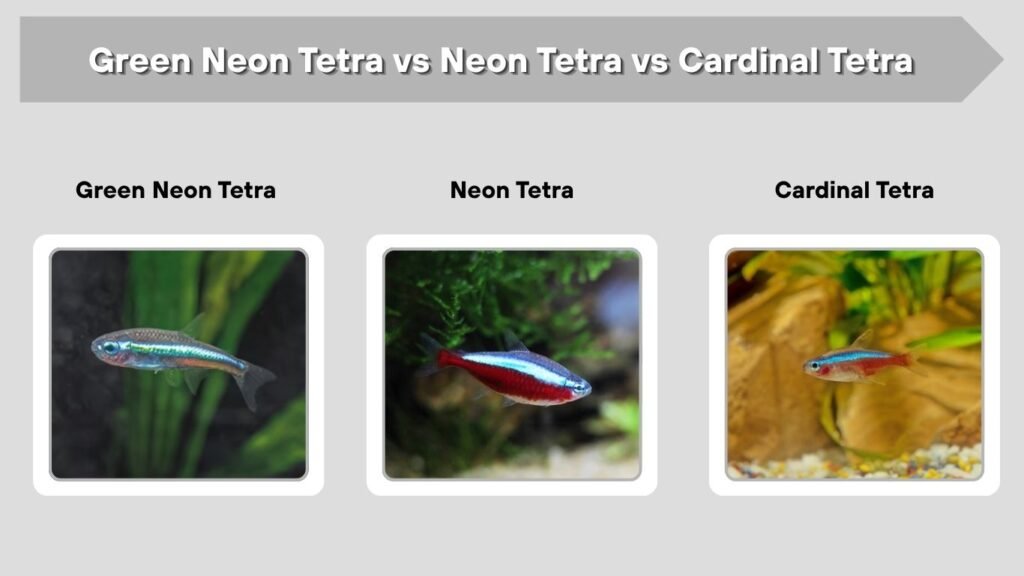
Green neon tetras, neon tetras, and cardinal tetras are related-looking fish, but they are not the same. The green neon tetra is usually the smallest and has a softer, more delicate appearance.
| Fish | Size | Main Color Pattern | Best For |
| Green neon tetra | 0.75–1 inch | Blue-green stripe, lighter red | Soft water planted tanks |
| Neon tetra | 1–1.5 inches | Blue stripe, red back half | Beginner community tanks |
| Cardinal tetra | 1.5–2 inches | Blue stripe, full red lower body | Larger warm community tanks |
| Ember tetra | 0.75–1 inch | Orange-red body | Nano planted tanks |
Green neon tetra vs neon tetra is a common comparison. Neon tetras are usually easier to find and slightly hardier. Green neon tetras are smaller, more subtle, and often better for soft-water aquascapes.
Green Neon Tetra Breeding
Breeding green neon tetras is possible, but it is not easy for beginners. They are egg scatterers and may eat their own eggs if left in the breeding tank.
Breeding Conditions
For breeding green neon tetra pairs or groups, use very soft, acidic water, dim lighting, and fine-leaved plants or spawning mops. A separate breeding tank gives the eggs a better chance of survival.
Eggs and Fry Care
After spawning, adults should be removed. Eggs are sensitive to light and poor water quality. Fry needs tiny foods such as infusoria at first, then baby brine shrimp as they grow.
Buying Green Neon Tetras
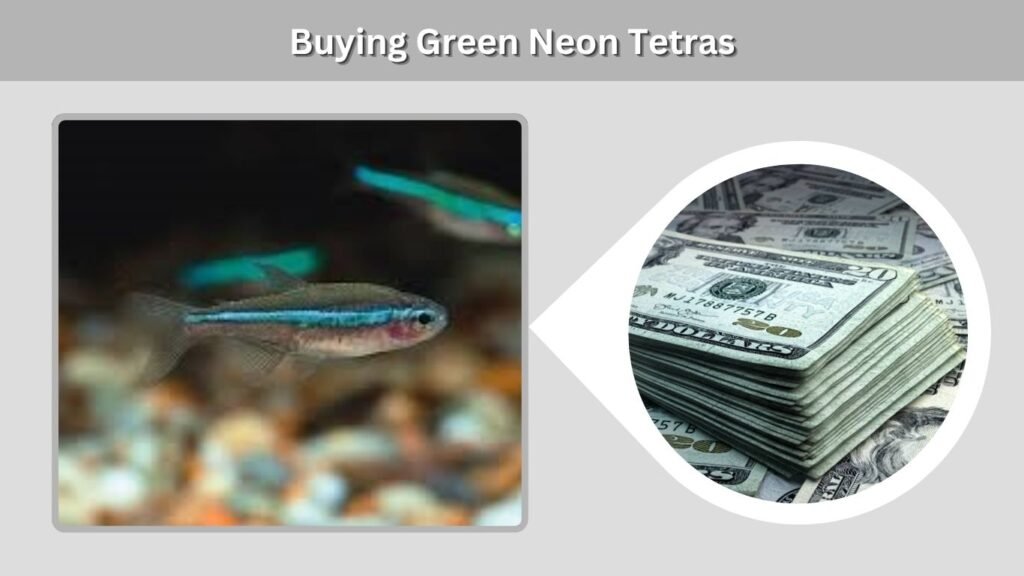
When searching for green neon tetra for sale, buy from a trusted aquarium store or breeder. These fish may be wild caught or captive bred, depending on the seller. Captive-bred green neon tetras are often better adapted to aquarium life.
Before buying, check for:
- Clear eyes and active swimming
- Full color without faded patches
- No white spots, fungus, or damaged fins
- Fish schooling together instead of hiding alone
- Seller information about water parameters
Avoid adding new fish directly to a display tank. Quarantine is safer, especially because small tetras can carry disease if they come from crowded store tanks.
FAQs
Are Green Neon Tetras Good for Beginners?
Green neon tetras can work for careful beginners, but they are better for aquarists who understand water stability. They need a mature tank, peaceful tank mates, and gentle acclimation. A standard neon tetra may be easier for a first aquarium.
Can Green Neon Tetras Live in a 5-Gallon Tank?
A 5-gallon tank is not ideal for green neon tetras because they need a group of at least six. A 10-gallon tank is much better. In 5 gallons, there is not enough swimming room or stable water volume for a healthy school.
Do Green Neon Tetras School With Neon Tetras?
Green neon tetras may swim near neon tetras, but they usually prefer their own species. For the best behavior, keep a proper group of green neon tetras instead of relying on other tetra species to complete the school.
Are Green Neon Tetras Fin Nippers?
Green neon tetras are not known as serious fin nippers. They are peaceful fish when kept in a proper group. Stress, overcrowding, or too few tetras may cause chasing, but they are usually safe with calm community fish.
What Is the Best Temperature for Green Neon Tetras?
The best green neon tetra temperature is usually around 75–82°F. A stable temperature is more important than frequent changes. Use a reliable heater and avoid sudden drops, especially in small aquariums where water conditions change quickly.