
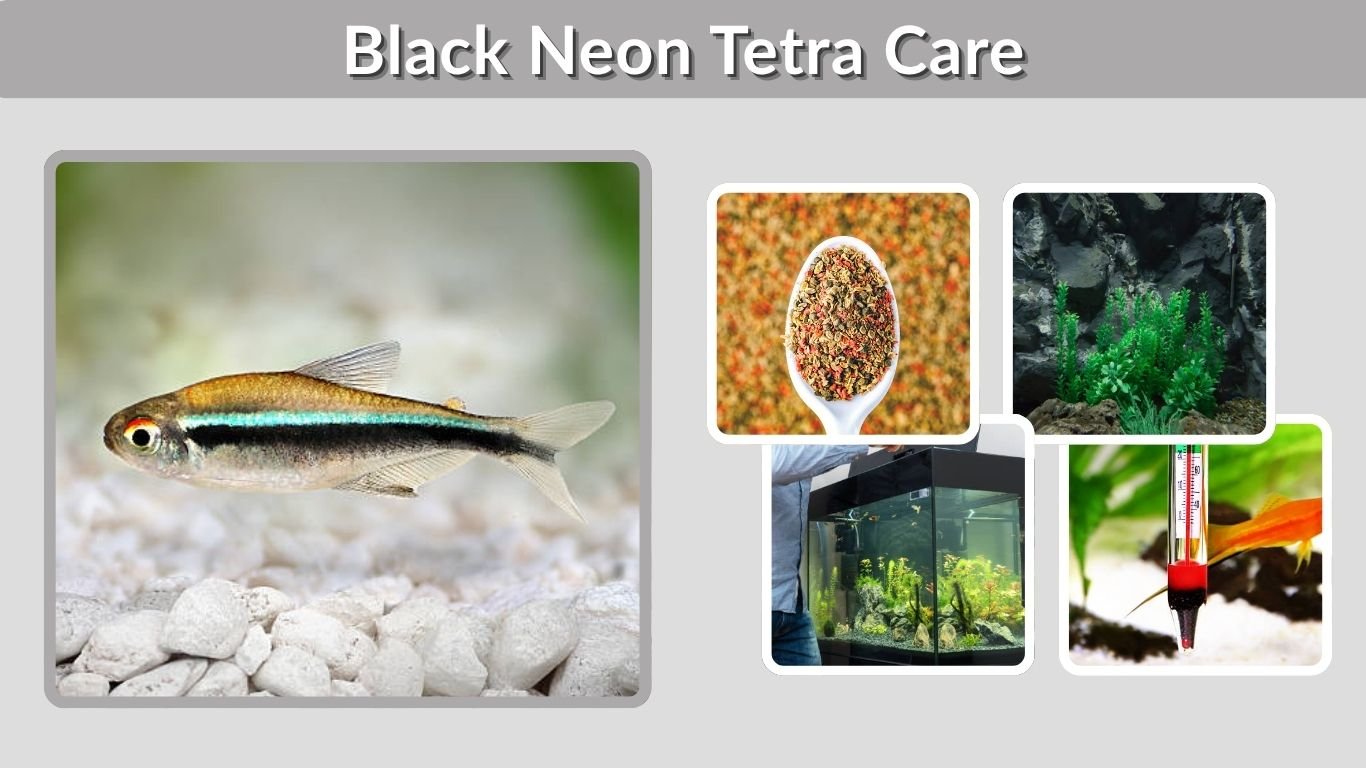
Black neon tetra is a peaceful freshwater fish known for its dark body, glowing horizontal stripe, and active schooling behavior. It is often confused with the regular neon tetra, but it is a different species with its own look and care needs. Black neon tetras are popular in community aquariums because they are hardy, small, calm, and easy to keep in groups. With the right tank size, water temperature, food, and tank mates, these fish can become a beautiful part of a planted aquarium.
What Is a Black Neon Tetra?
The black neon tetra is a small tropical freshwater fish from South America. It is loved by aquarium keepers because it has a simple but elegant color pattern. Instead of the bright blue and red of the regular neon tetra, the black neon tetra has a silvery-white stripe above a dark black stripe.
Black Neon Tetra Scientific Name
The scientific name of the black neon tetra is Hyphessobrycon herbertaxelrodi. It belongs to the character family, the same larger group that includes many other popular tetra species.
Black neon tetras are schooling fish, which means they should be kept with others of their own kind. When kept in a group, they feel safer, swim more naturally, and show better behavior.
Black Neon Tetra Appearance
Black neon tetras have a slim body with a bright pale stripe running from the eye toward the tail. Under that pale stripe is a dark black band that gives the fish its name. Their eyes often have a reddish-orange mark above them, which adds more color.
Key identification features include:
- Slim silver-gray body
- Bright white or greenish-white horizontal stripe
- Black stripe below the pale stripe
- Reddish-orange marking above the eye
- Clear or lightly colored fins
- Peaceful schooling movement
Black Neon Tetra Size and Lifespan
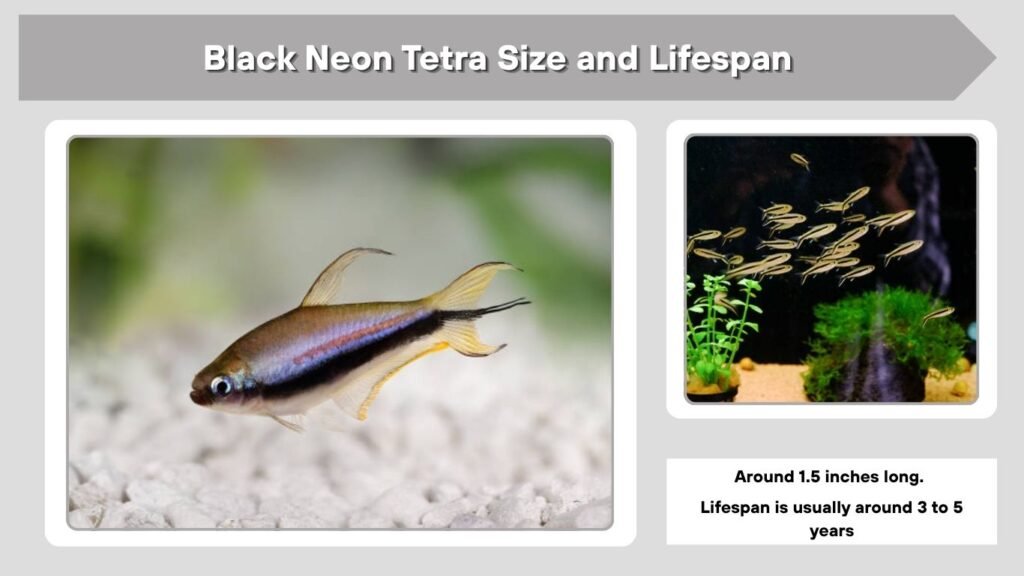
Black neon tetras are small fish, but they still need enough swimming space. They are active schooling fish, so a proper group and tank size are important.
Black Neon Tetra Size
Most black neon tetras grow to around 1.5 inches long. Some may reach close to 2 inches in excellent conditions, but they usually stay small.
Because of their small size, many people think they can live in very tiny tanks. However, black neon tetras need group space. A single fish or a very small group may become stressed and hide more often.
Black Neon Tetra Lifespan
The average black neon tetra lifespan is usually around 3 to 5 years in a well-maintained aquarium. Some may live longer if the water quality is stable and the fish are not stressed.
Poor water quality, aggressive tank mates, sudden temperature changes, and overfeeding can shorten their life. A stable aquarium is the best way to help them live longer.
Black Neon Tetra Care
Black neon tetra care is considered beginner-friendly, but these fish still need proper conditions. They do best in clean, warm, stable water with peaceful tank mates and a group of their own species.
Basic Care Requirements
| Care Factor | Best Range or Setup |
| Care level | Easy to moderate |
| Adult size | About 1.5 inches |
| Lifespan | Around 3 to 5 years |
| Minimum group | 6 or more |
| Best tank size | 10 gallons or larger |
| Temperature | About 72°F to 80°F |
| Temperament | Peaceful |
| Diet | Omnivore |
| Swimming level | Middle area of tank |
Black neon tetras are often hardier than regular neon tetras, which makes them a good choice for beginners. However, they should still be added to a fully cycled aquarium, not a brand-new unstable tank.
Are Black Neon Tetras Hardy?
Yes, black neon tetras are generally hardy when kept in good conditions. They can adapt to a range of community tank setups, but they do not do well in dirty water or stressful environments.
They need regular water changes, gentle filtration, and stable temperature. Avoid sudden changes in water conditions because even hardy fish can become sick when stressed.
Black Neon Tetra Tank Size
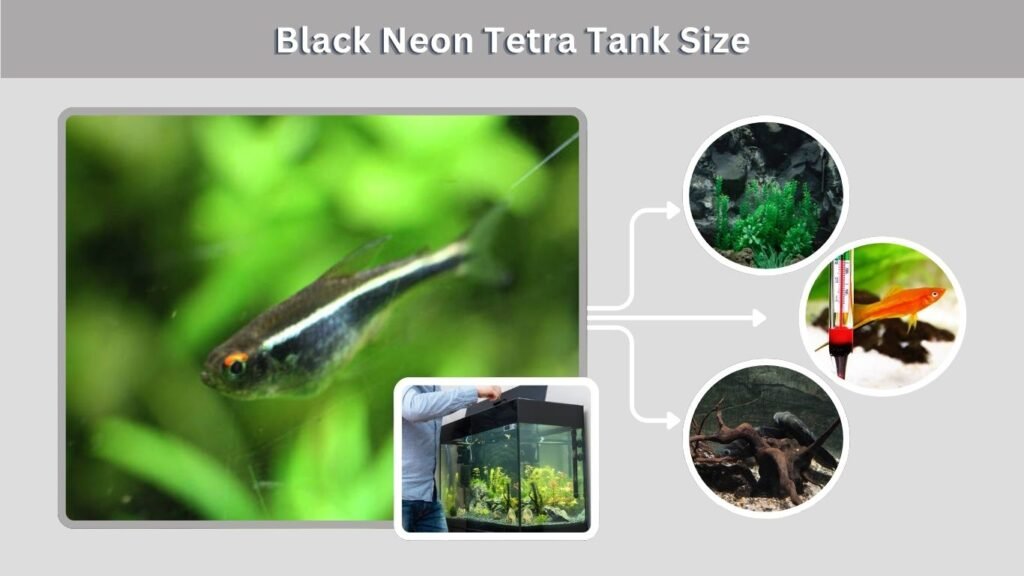
A good black neon tetra tank should provide enough room for schooling. These fish look best when kept in a group, so tank size matters.
Minimum Tank Size
A 10-gallon tank can work for a small group of 6 black neon tetras. However, a 20-gallon tank is better because it gives them more space to swim and makes water conditions more stable.
| Tank Size | Suggested Number of Black Neon Tetras |
| 5 gallons | Not recommended |
| 10 gallons | 6 black neon tetras |
| 20 gallons | 10 to 15 black neon tetras |
| 30 gallons | 15 to 20 black neon tetras |
| 40+ gallons | Larger community school |
A 5-gallon tank is too small for a proper school. Black neon tetras may survive in small spaces for a short time, but they will not show their best behavior.
Tank Setup
Black neon tetras look beautiful in planted tanks. Dark substrate, driftwood, floating plants, and soft lighting can make their stripe stand out.
Good tank setup ideas include:
- Live or silk plants
- Open swimming space
- Gentle filter flow
- Heater and thermometer
- Dark substrate
- Driftwood or roots
- Floating plants for shade
- Peaceful community layout
Black Neon Tetra Water Parameters
Stable water is more important than chasing perfect numbers. Black neon tetras can adapt to different freshwater conditions, but sudden changes should be avoided.
Temperature and pH
Black neon tetras usually do well at around 72°F to 80°F. A stable temperature around the middle of that range is ideal for most home aquariums.
They can live in slightly acidic to neutral water. A pH around 6.0 to 7.5 is usually suitable. If your local water is stable and not extreme, black neon tetras can often adjust well.
Water Quality Tips
Clean water is essential for healthy black neon tetras. Ammonia and nitrite should always be at zero in a cycled aquarium. Nitrate should be kept low with regular water changes.
Important tips include:
- Cycle the tank before adding fish
- Test water regularly
- Change part of the water weekly
- Do not overfeed
- Clean filter media gently in tank water
- Avoid sudden temperature changes
- Do not overcrowd the tank
Black Neon Tetra Food
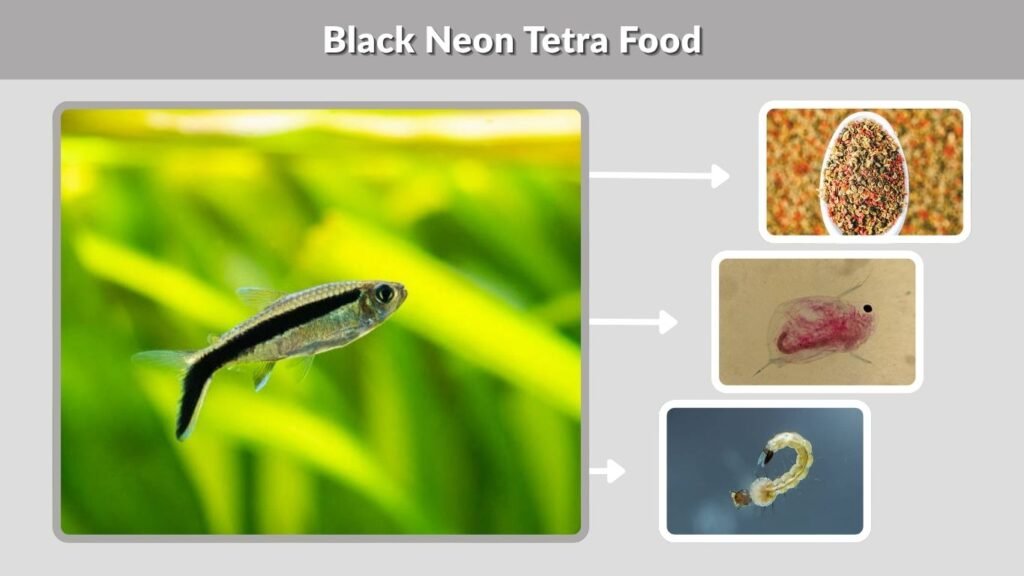
Black neon tetras are omnivores. In the wild, they eat tiny insects, worms, crustaceans, and plant matter. In aquariums, they accept many small fish foods.
What Do Black Neon Tetras Eat?
Black neon tetras can eat crushed flakes, micro pellets, frozen foods, freeze-dried foods, and small live foods. Their mouths are small, so food should be tiny enough to swallow easily.
Good food options include:
- Crushed tropical flakes
- Micro pellets
- Baby brine shrimp
- Daphnia
- Bloodworms in small amounts
- Freeze-dried tubifex
- Mosquito larvae
- Small live foods
Feed small portions once or twice daily. Only give what they can finish quickly. Extra food can pollute the water and cause health problems.
Feeding Tips
A varied diet helps improve color and energy. Use high-quality flakes or micro pellets as the main food, then add frozen or live foods a few times per week.
Do not feed large bloodworms too often. They can be used as a treat, but they should not be the only food.
Black Neon Tetra Tank Mates
Black neon tetras are peaceful and usually do well in community tanks. They should be kept with other calm fish that are similar in size and temperament.
Best Tank Mates
Good tank mates for black neon tetras include:
- Neon tetras
- Cardinal tetras
- Ember tetras
- Harlequin rasboras
- Cory catfish
- Otocinclus catfish
- Kuhli loaches
- Dwarf gourami
- Honey gourami
- Small peaceful snails
- Amano shrimp
- Cherry shrimp with caution
Small shrimp may be eaten if they fit in the fish’s mouth, especially baby shrimp. Adult Amano shrimp are usually safer because they are larger.
Are Black Neon Tetras Aggressive?
Black neon tetras are not usually aggressive. They are peaceful schooling fish. However, like many tetras, they may show small chasing behavior within their group.
They are not known as serious fin nippers, but stress, overcrowding, or too small a group can cause unwanted behavior. Keeping at least 6 helps reduce stress and improves group behavior.
Black Neon Tetra With Betta
Black neon tetras can sometimes live with bettas, but success depends on the betta’s personality, tank size, and setup.
Can Black Neon Tetras Live With Bettas?
Yes, black neon tetras can live with bettas in some tanks. A larger planted tank gives both fish more space and hiding areas. A 20-gallon tank is better than a small tank for this combination.
Some bettas are calm and ignore tetras. Others may chase them. Also, active tetras may stress a slow-moving betta in a small aquarium.
Tips for Keeping Them Together
Use a planted tank with hiding spots and open swimming space. Add the black neon tetras as a group, not one or two fish. Watch for chasing, fin damage, hiding, or stress.
If the betta becomes aggressive, separate the fish.
Black Neon Tetra vs Neon Tetra
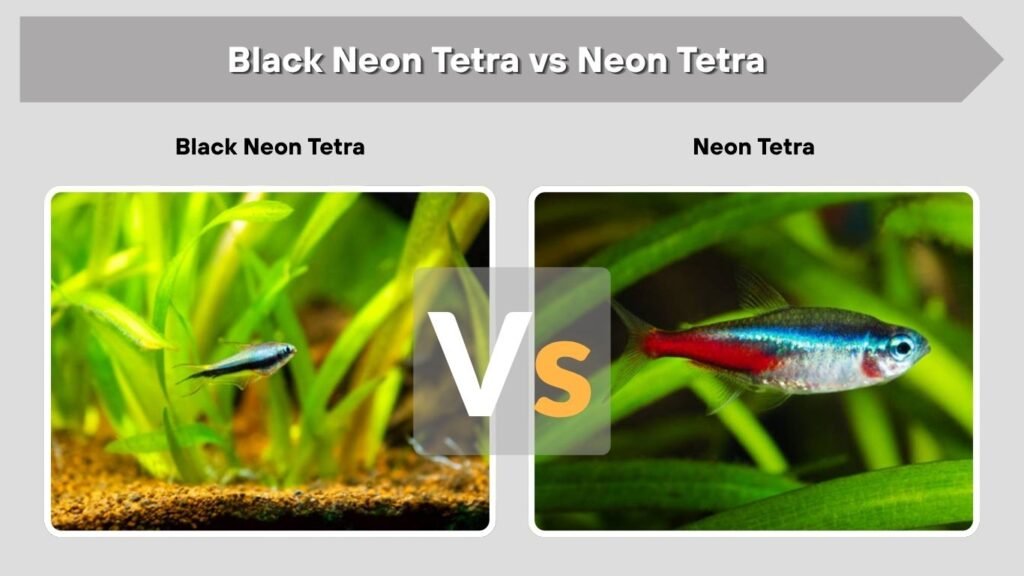
Black neon tetras and neon tetras are both peaceful schooling fish, but they are not the same species. They have different colors and slightly different hardiness levels.
Key Differences
| Feature | Black Neon Tetra | Neon Tetra |
| Scientific name | Hyphessobrycon herbertaxelrodi | Paracheirodon innesi |
| Main color | Black and silver-white stripe | Blue and red stripe |
| Size | Around 1.5 inches | Around 1 to 1.5 inches |
| Temperament | Peaceful | Peaceful |
| Hardiness | Often considered hardier | Can be more sensitive |
| Group size | 6 or more | 6 or more |
Black neon tetras can live with regular neon tetras if the tank is peaceful and large enough. However, they may not always school tightly together because they recognize their own species.
Will Black Neon Tetras School With Neon Tetras?
They may swim near neon tetras, but they usually prefer their own group. For best behavior, keep at least 6 black neon tetras and at least 6 neon tetras if you want both species.
Black Neon Tetra Male vs Female
Male and female black neon tetras look similar, but there are some differences. These differences are easier to notice when the fish are mature.
How to Tell Male and Female Apart
Females are usually rounder in the belly, especially when carrying eggs. Males are often slimmer and may look slightly more streamlined.
Common differences:
- Females usually have a fuller belly
- Males are usually slimmer
- Females may look wider from above
- Males may show sharper body lines
- Females may become rounder before spawning
It can be hard to tell young black neon tetras apart. Body shape becomes easier to compare in a mature group.
Pregnant Black Neon Tetra
A “pregnant black neon tetra” is not truly pregnant. Black neon tetras are egg layers, not livebearers. A female may become full of eggs, which makes her belly look rounded.
A bloated black neon tetra is not always carrying eggs. Swelling can also be caused by constipation, overeating, poor water quality, internal infection, or disease.
Black Neon Tetra Breeding
Breeding black neon tetras is possible, but it usually requires a separate breeding setup. In a community tank, eggs and fry are often eaten by adult fish.
How to Breed Black Neon Tetras
To breed black neon tetras, use a small breeding tank with soft, slightly acidic water, dim lighting, and fine-leaved plants or spawning mops. Add a healthy male and female pair or small group.
After spawning, remove the adults because they may eat the eggs. Eggs usually hatch better in clean, stable water with low light.
Black Neon Tetra Eggs and Fry
Black neon tetra eggs are tiny and may be scattered among plants. The fry are very small after hatching and need microscopic foods at first.
Good first foods for fry include infusoria, liquid fry food, or very tiny live foods. As they grow, they can eat baby brine shrimp and finely crushed foods.
Black Neon Tetra Disease
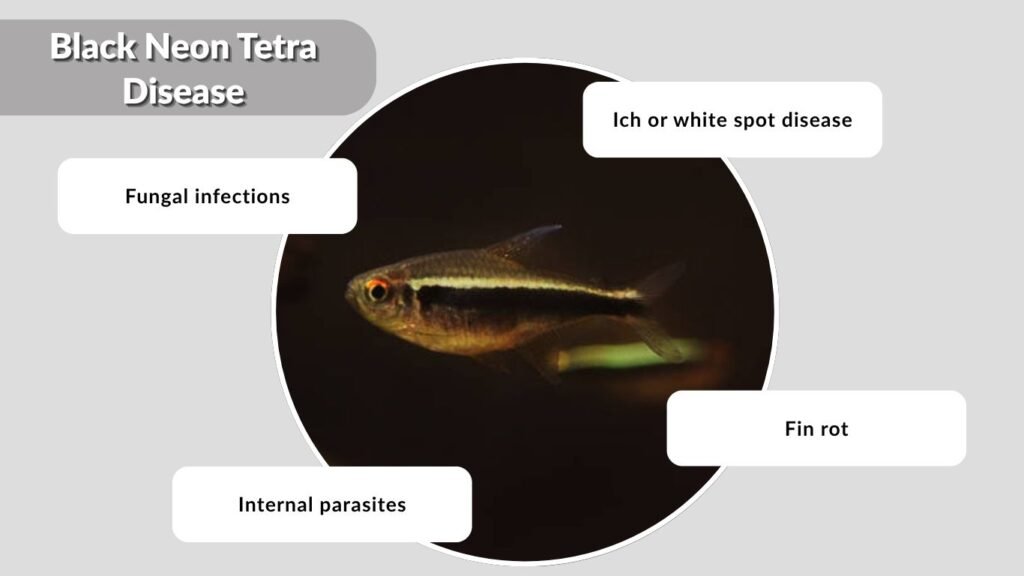
Black neon tetras can get common freshwater fish diseases if the tank is dirty or stressful. Good water quality is the best prevention.
Common Health Problems
Black neon tetras may suffer from:
- Ich or white spot disease
- Fin rot
- Fungal infections
- Internal parasites
- Bloating
- Swim bladder issues
- Stress-related color loss
- Bacterial infections
A sick black neon tetra may hide, stop eating, lose color, swim strangely, breathe fast, or develop spots or patches.
How to Prevent Disease
Preventing disease starts with stable water and low stress. Quarantine new fish before adding them to the main tank if possible.
Important prevention tips include:
- Keep ammonia and nitrite at zero
- Do regular water changes
- Avoid overcrowding
- Feed a varied diet
- Keep a proper school
- Choose peaceful tank mates
- Avoid sudden temperature changes
- Remove uneaten food
Black Neon Tetra Price and Buying Tips
Black neon tetras are usually affordable and easy to find in aquarium stores. Prices vary by store, country, size, and quality.
How to Choose Healthy Fish
Choose black neon tetras that are active, alert, and swimming with the group. Their bodies should look smooth, and their stripes should be clear.
Avoid buying fish that show:
- Faded color
- White spots
- Torn fins
- Bent body
- Heavy breathing
- Clamped fins
- Bloated belly
- Strange swimming
- Fish sitting alone
If several fish in the store tank look sick, avoid buying from that tank.
FAQs
How many black neon tetras should be kept together?
Black neon tetras should be kept in a group of at least 6. A group of 10 or more is even better because they feel safer and show more natural schooling behavior.
How big do black neon tetras get?
Black neon tetras usually grow to around 1.5 inches long. Some may get close to 2 inches in excellent conditions, but they remain small aquarium fish.
Are black neon tetras aggressive?
No, black neon tetras are usually peaceful. They may chase each other lightly within the group, but they are not normally aggressive toward other peaceful fish.
Can black neon tetras live with bettas?
Black neon tetras can sometimes live with bettas in a larger planted tank. However, it depends on the betta’s personality. If the betta chases or attacks them, they should be separated.
What do black neon tetras eat?
Black neon tetras eat crushed flakes, micro pellets, daphnia, baby brine shrimp, bloodworms, and other small foods. A varied diet helps them stay healthy and colorful.