
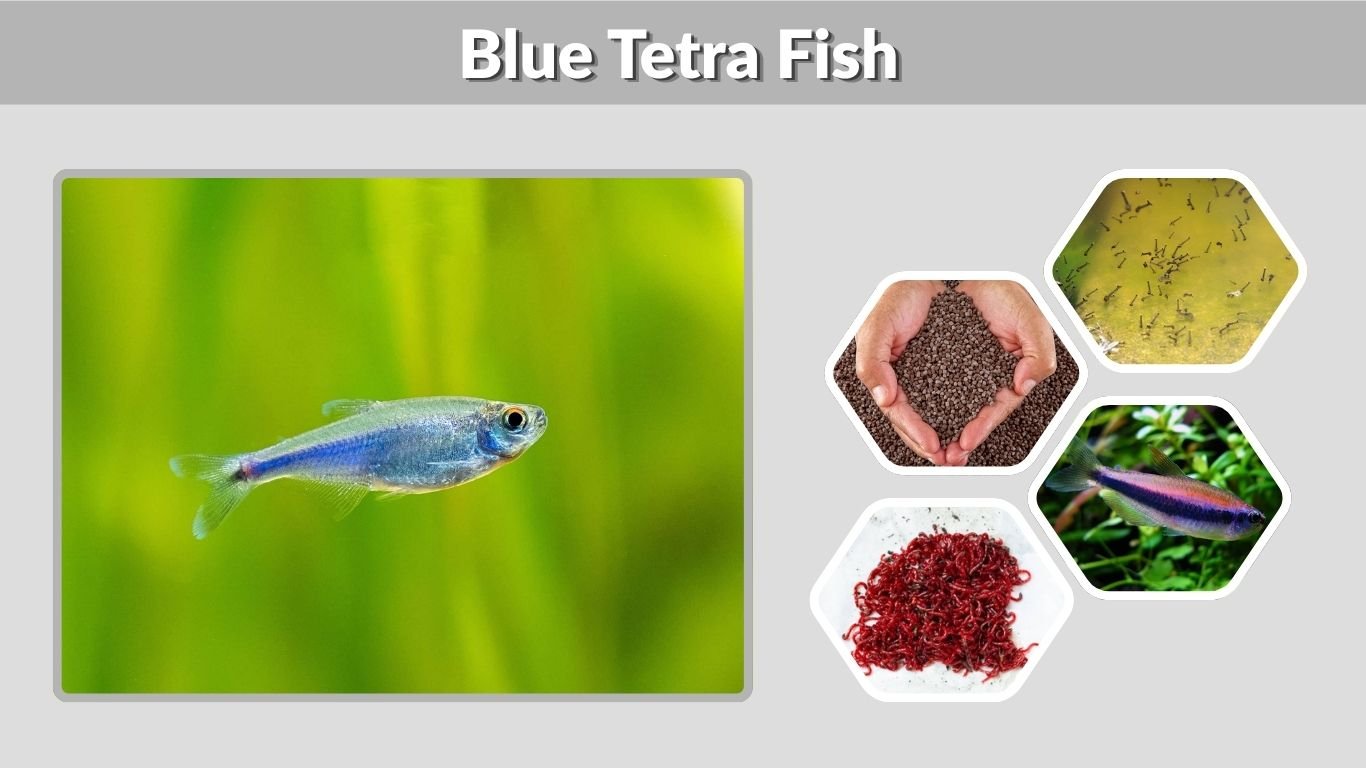
The blue tetra fish is a small, energetic freshwater fish valued for its shimmering blue coloration and active schooling behavior. The name most commonly refers to Cochu’s blue tetra, although aquarium stores may also use it for blue emperor tetras, neon tetras, blue GloFish tetras, and other blue-colored species. Because these fish do not all have identical care requirements, correct identification is important. A properly maintained aquarium, a sufficiently large school, stable tropical water, and suitable tank mates can help blue tetras display stronger colors and more natural behavior.
What Is a Blue Tetra Fish?
The fish most specifically known as the blue tetra or Cochu’s blue tetra is Boehlkea fredcochui. It is a small tropical freshwater species native to the Amazon River basin in South America. Adults can reach approximately 5.4 centimeters, although many aquarium specimens remain slightly smaller.
Blue tetra is also used as a general retail description. A fish sold under this name may instead be a royal or blue emperor tetra, neon tetra, cardinal tetra, diamond tetra, or a fluorescent Cosmic Blue GloFish tetra.
Owners should confirm the scientific or trade name before purchasing because size, temperament, coloration, and preferred water conditions vary among these fish.
Blue Tetra Identification
Cochu’s blue tetra has a streamlined, laterally compressed body with reflective blue coloration along its sides. Depending on aquarium lighting, the color may appear turquoise, sky blue, violet-blue, or silver-blue.
Common identifying features include:
- Slender, torpedo-shaped body
- Metallic blue or bluish-purple sides
- Mostly transparent fins
- Forked tail
- Large eyes relative to body size
- Fast, active swimming behavior
- Adult length of roughly 4–5 centimeters
The fish may appear pale when stressed, newly transported, kept alone, or placed under harsh lighting. Its color usually improves when it feels secure in a planted aquarium with darker surroundings.
Different Types of Blue Tetra Fish
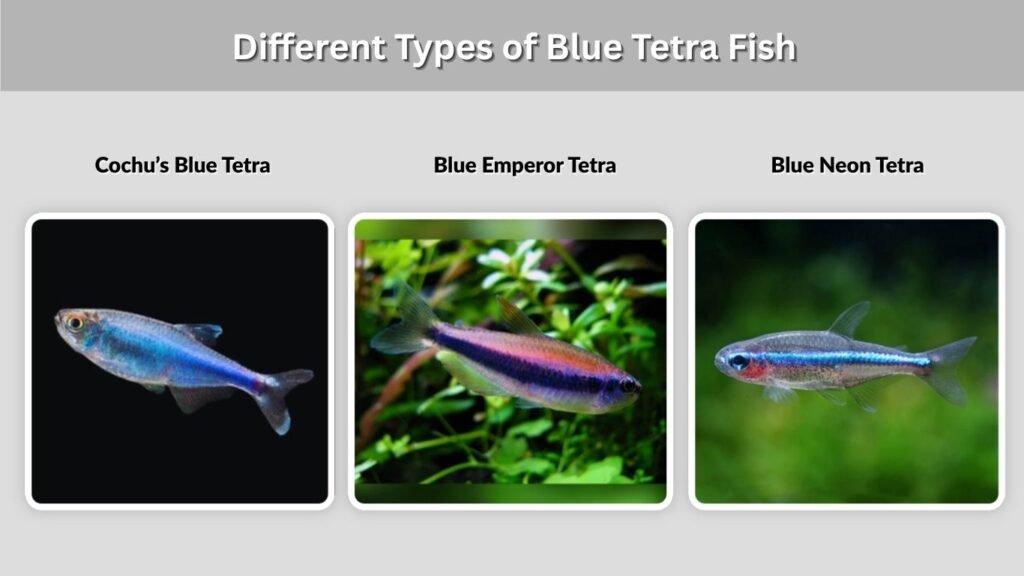
Several tetra species can match searches for a small blue aquarium fish. Knowing the differences can prevent unsuitable care or accidental mixing of incompatible species.
Cochu’s Blue Tetra
Cochu’s blue tetra, scientifically known as Boehlkea fredcochui, is the species most accurately called the blue tetra. It is an active schooling fish from the Amazon basin and prefers warm freshwater between approximately 22°C and 26°C. FishBase reports a broad pH tolerance of about 6.0–8.0, with soft to moderately hard water.
It is generally a community fish, but it can become overly active or nip fins when maintained in an undersized group.
Blue Emperor Tetra
The blue emperor tetra, also called the royal or purple emperor tetra, is Inpaichthys kerri. It originates from the upper Madeira River system in Brazil and reaches approximately 3–4 centimeters in aquarium conditions. It prefers warmer water around 24–27°C.
Males are usually more intensely blue or purple, while females may have less vivid bodies. Mature males can also develop a blue adipose fin, whereas females may show a reddish-orange adipose fin.
Blue Neon Tetra
“Blue neon tetra” often refers to the common neon tetra, Paracheirodon innesi. This species has a bright blue horizontal stripe and a red section along the rear half of its body.
Neon tetras are smaller and generally calmer than Cochu’s blue tetras. They should not be confused with green neon tetras, which have a more extensive blue-green stripe and a subtler red marking.
Cosmic Blue GloFish Tetra
Cosmic Blue is a fluorescent color variety of the GloFish tetra. It is not the same species as Cochu’s blue tetra. GloFish tetras are derived from the black skirt tetra and therefore have a taller, deeper body.
Their fluorescent color is inherited rather than produced by injected dye. Because they are based on a different tetra species, they require more swimming space and may behave differently from small, streamlined blue tetras. The GloFish brand produces fluorescent fish in several species and colors, including tetras.
Blue Tetra Fish Tank Size
A small school of blue tetras should be kept in an aquarium of at least 20 gallons. A longer tank is preferable to a tall, narrow aquarium because these fish are active horizontal swimmers.
A 20-gallon long tank may accommodate a modest school, while a 30-gallon or larger aquarium offers better swimming room and makes it easier to maintain stable water quality.
Tank size should increase when keeping:
- More than ten blue tetras
- Several different schooling species
- Larger community fish
- Highly active tank mates
- Fish that occupy the same middle-water zone
Overcrowding can increase stress, chasing, fin-nipping, waste accumulation, and competition during feeding.
How Many Blue Tetras Should Be Kept Together?
Blue tetras are social fish and should not be kept alone. A minimum group of six is sometimes suggested for schooling tetras, but Cochu’s blue tetras generally behave better in a larger group.
Keeping eight to twelve or more allows aggression and chasing to be distributed throughout the school. A larger group also encourages coordinated swimming and can make the fish feel more secure.
When kept in groups that are too small, blue tetras may:
- Chase weaker individuals repeatedly
- Nip the fins of slower fish
- Hide or appear nervous
- Lose color
- Swim restlessly along the glass
Buying a larger group at the beginning is usually better than adding individual fish gradually from different sources.
Blue Tetra Water Parameters
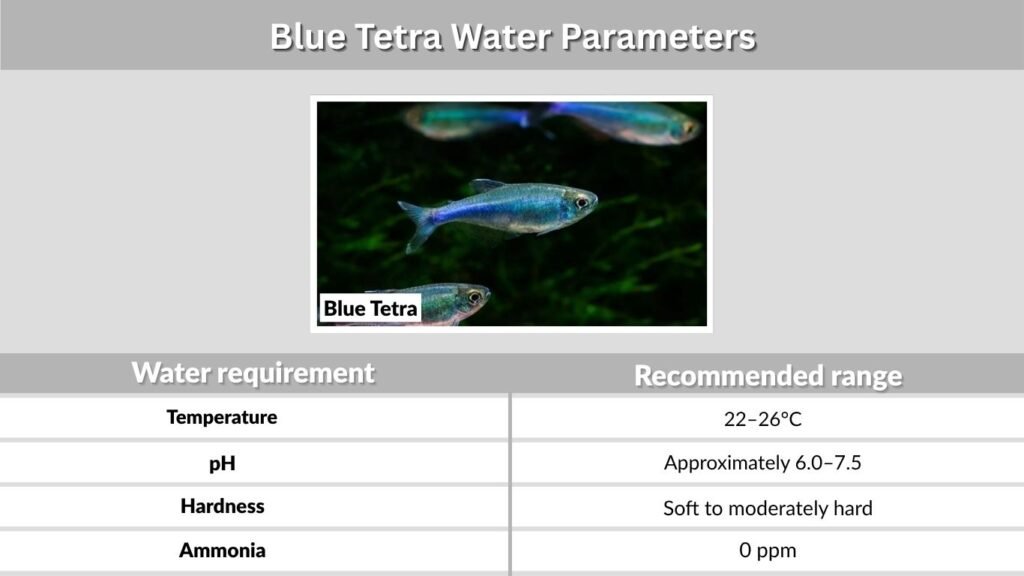
Blue tetras need clean, stable tropical freshwater. Although Cochu’s blue tetra can tolerate a relatively broad pH range, sudden changes are more dangerous than a slightly imperfect but stable reading.
Suitable general conditions include:
| Water requirement | Recommended range |
|---|---|
| Temperature | 22–26°C |
| pH | Approximately 6.0–7.5 |
| Hardness | Soft to moderately hard |
| Ammonia | 0 ppm |
| Nitrite | 0 ppm |
| Nitrate | Kept as low as practical |
FishBase lists a temperature range of 22–26°C, pH of 6.0–8.0, and hardness of approximately 5–12 dH for Boehlkea fredcochui. A narrower middle range is usually easier to maintain in a mixed community aquarium.
Change roughly 20–30 percent of the water weekly, depending on stocking level and nitrate accumulation. Always treat tap water with a suitable conditioner and match the replacement water temperature closely.
Setting Up a Blue Tetra Aquarium
Blue tetras look especially attractive in a planted aquarium with open swimming space. Place plants along the back and sides while leaving the center relatively clear.
Useful aquarium features include:
- Dark sand or fine gravel
- Live plants
- Driftwood or smooth branches
- Floating plants
- Gentle to moderate current
- A secure lid
- Dim or moderate lighting
Dark substrate and floating plants can make metallic blue coloration appear stronger. Floating vegetation also reduces harsh overhead light and provides a greater sense of security.
Use a properly cycled filter with enough capacity for the aquarium. The current should circulate oxygen and waste without forcing the fish to struggle continuously.
Blue Tetra Fish Diet
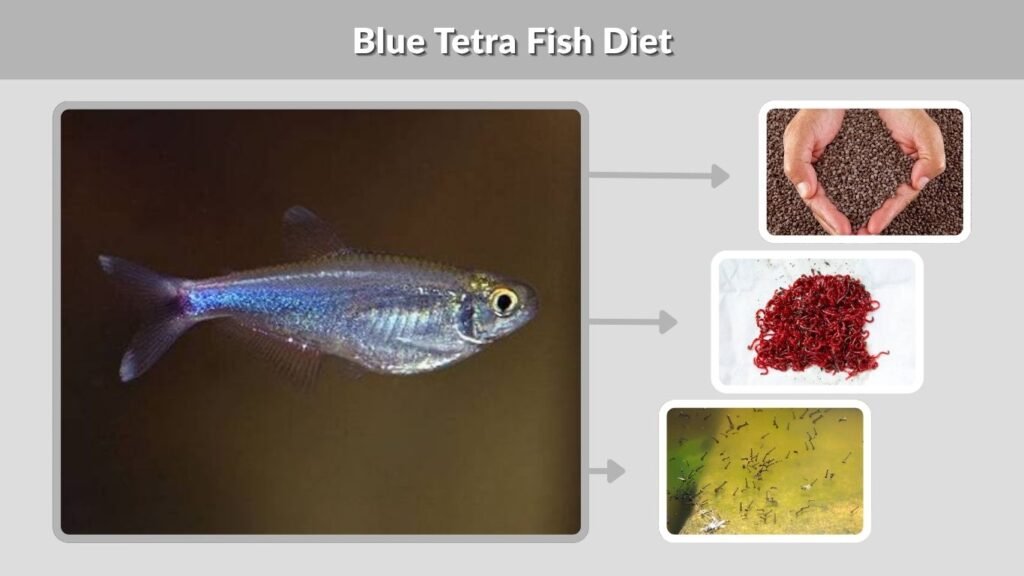
Blue tetras are omnivorous and accept a range of commercial, frozen, and live foods. A varied diet promotes healthy growth, stronger coloration, and successful breeding.
Suitable foods include:
- High-quality micro pellets
- Crushed tropical flakes
- Baby brine shrimp
- Daphnia
- Small bloodworms
- Mosquito larvae from safe sources
- Cyclops
- Other small frozen foods
Specialist profiles describe blue tetras as omnivorous fish that particularly enjoy small live and frozen foods such as daphnia, brine shrimp, and bloodworms.
Feed one or two small meals daily. The fish should consume most food within approximately two minutes. Overfeeding causes poor water quality, bloating, and excess waste.
Because blue tetras swim and feed quickly, make sure shy bottom dwellers and slower tank mates also receive enough food.
Blue Tetra Fish Tank Mates
Blue tetras can live in a peaceful community aquarium, but they are more energetic than some delicate tetra species. Their best companions are active fish of similar size that tolerate the same water conditions.
Possible tank mates include:
- Other medium-sized peaceful tetras
- Rasboras
- Zebra danios
- Peaceful barbs
- Corydoras catfish
- Small plecos
- Kuhli loaches
- Dwarf South American cichlids in larger tanks
Avoid combining them with long-finned bettas, fancy guppies, slow angelfish, or other fish that may be bothered by chasing and fin-nipping. Very large predatory fish may treat blue tetras as food.
Their behavior should be monitored after introduction. Even normally peaceful fish can become troublesome when overcrowded, underfed, stressed, or kept in an undersized school.
Blue Tetra Behavior
Blue tetras are active during the day and generally occupy the middle and upper-middle parts of the aquarium. They often swim together loosely rather than remaining in a perfectly synchronized school at all times.
Short chases within the group are normal. Males may display toward one another or compete for position, especially when breeding conditions are favorable.
Constant attacks, torn fins, hiding, or one fish being isolated are not normal. These problems may indicate:
- An insufficient school size
- Limited swimming space
- Poor water quality
- Incompatible tank mates
- Lack of visual barriers
- Illness or weakness
Adding plants, increasing the school, and checking water parameters can often reduce problematic behavior.
Blue Tetra Fish Lifespan
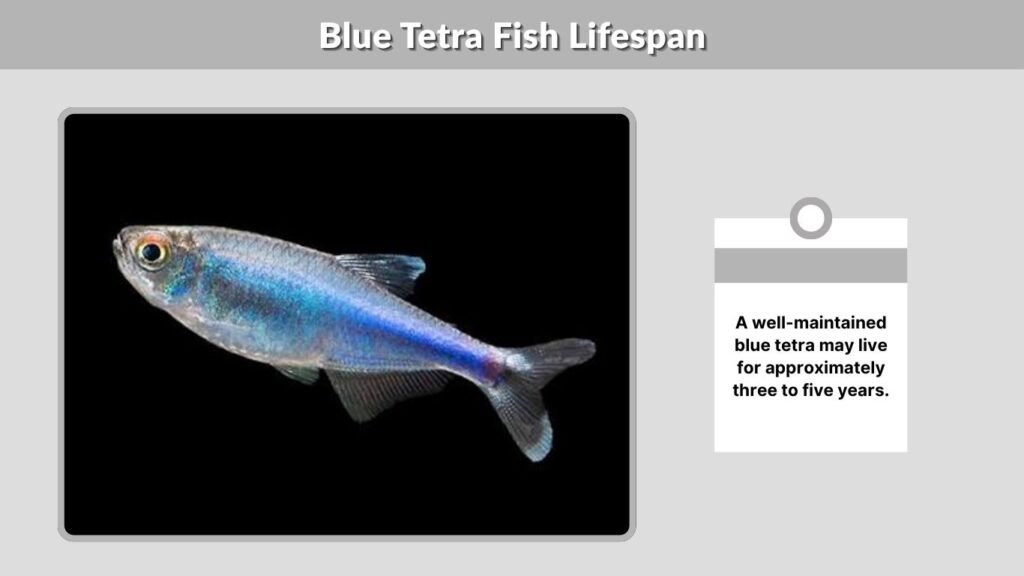
A well-maintained blue tetra may live for approximately three to five years, although some references suggest Cochu’s blue tetra often lives closer to two or three years. Lifespan depends heavily on genetics, transport stress, water quality, diet, temperature, and disease prevention.
Consistently high temperatures may accelerate metabolism and potentially shorten life. Poor water conditions, especially detectable ammonia or nitrite, can cause early death even when the aquarium looks visually clean.
Quarantining new fish can prevent parasites and bacterial infections from spreading to an established school.
Male vs. Female Blue Tetra
Sex differences can be subtle. Mature females are generally fuller-bodied, particularly when carrying eggs. Males may appear slimmer and sometimes display brighter coloration.
The differences are easier to observe when several healthy adults are compared together. A single rounded fish is not necessarily pregnant because bloating, constipation, internal parasites, or fluid retention can produce a similar appearance.
Tetras do not become pregnant in the way livebearing fish do. A swollen female is usually carrying unfertilized eggs that will be released during spawning.
Blue Tetra Fish Breeding
Blue tetras are egg-scattering fish and do not provide parental care. Adults may eat their own eggs, so breeding is more successful in a separate aquarium.
A basic breeding setup should include:
- Soft, slightly acidic water
- Dim lighting
- Fine-leaved plants or spawning mops
- A mesh or marble layer protecting the eggs
- A sponge filter with gentle flow
- A conditioned male and female or small breeding group
Feed the adults high-quality live and frozen foods before breeding. Spawning commonly occurs after the lights come on or early in the day. The female scatters eggs while the male fertilizes them.
Remove the adults after spawning. Keep the aquarium dim because tetra eggs and young fry can be sensitive to strong light.
Once the fry become free-swimming, offer infusoria or a prepared liquid fry food. As they grow, introduce newly hatched brine shrimp and finely powdered foods.
Common Health Problems
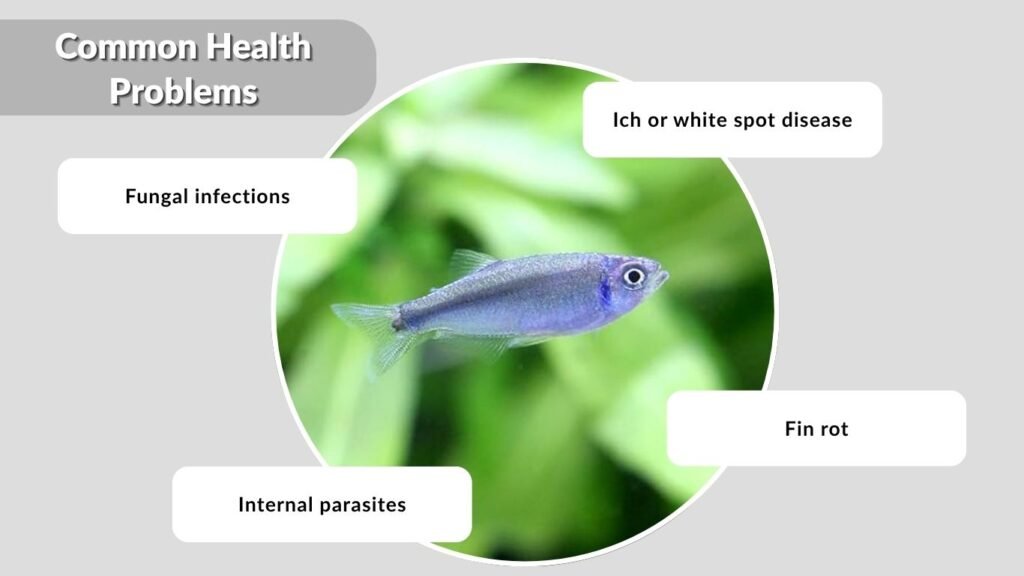
Blue tetras may develop many of the same health conditions seen in other tropical community fish.
Possible problems include:
- Ich or white spot disease
- Fin rot
- Fungal infections
- Internal parasites
- Bacterial infections
- Ammonia or nitrite poisoning
- Stress-related color loss
A pale fish is not always sick. Color can fade temporarily because of transport, nighttime rest, aggression, or an unfamiliar aquarium. However, color loss combined with rapid breathing, clamped fins, spots, swelling, sores, or refusal to eat requires attention.
Test the water before using medication because poor water quality often causes or worsens disease.
FAQs
Are blue tetra fish aggressive?
Blue tetras are generally community fish, but they can be energetic and occasionally nip fins. Keeping at least eight to twelve together in a sufficiently large aquarium usually reduces aggression toward other fish.
Can blue tetras live with neon tetras?
They can share a properly sized aquarium when their water requirements are compatible. However, blue tetras are faster and more active, so neon tetras need a large school, hiding places, and protection from excessive competition.
How big do blue tetra fish get?
Cochu’s blue tetra can reach approximately 5.4 centimeters in total length, although many aquarium specimens are around 4–5 centimeters. Other fish sold as blue tetras may be smaller or larger.
Is a blue tetra the same as a blue emperor tetra?
No. Cochu’s blue tetra is Boehlkea fredcochui, while the blue emperor or royal tetra is Inpaichthys kerri. They differ in body shape, adult size, coloration, and natural distribution.
How many blue tetras can live in a 20-gallon tank?
A 20-gallon long aquarium can usually support a school of approximately eight to ten blue tetras when filtration is adequate and additional tank mates are limited. A larger aquarium is better for bigger communities.