
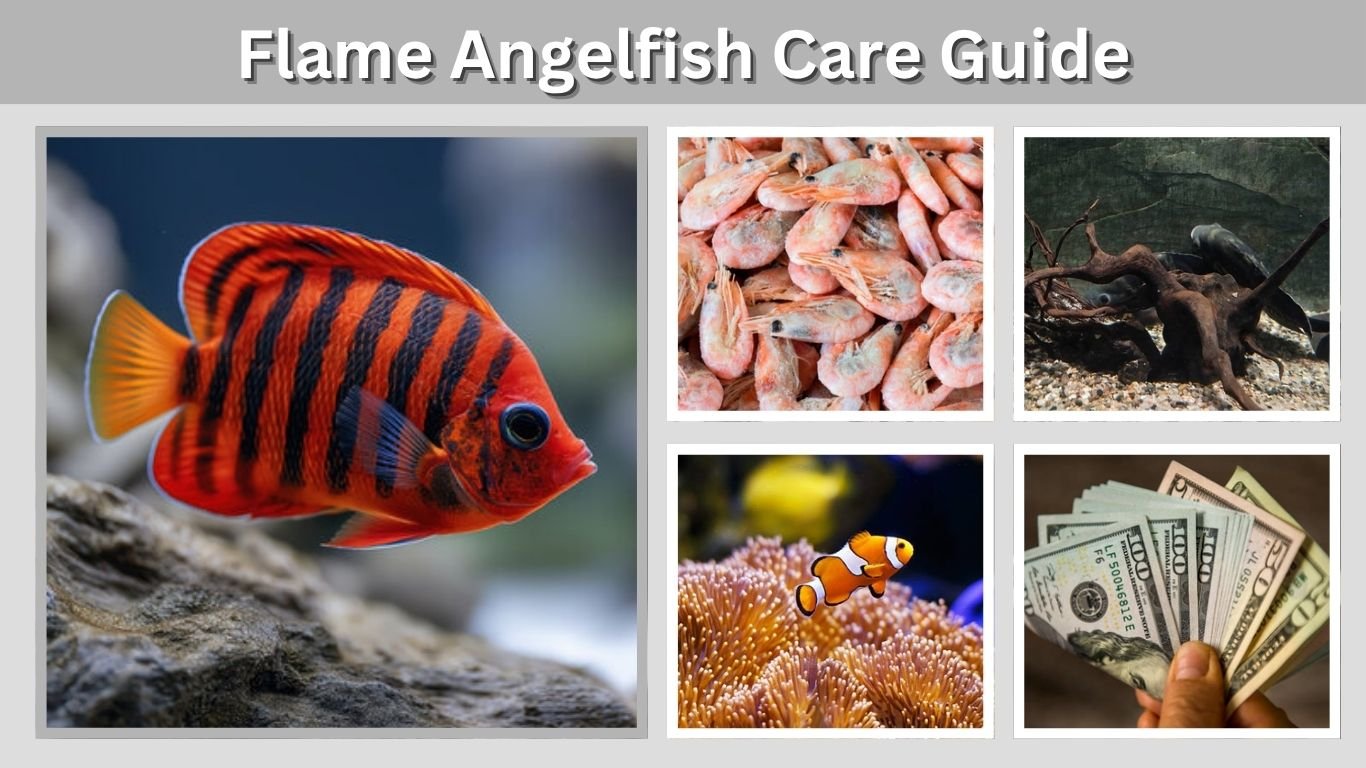
The flame angelfish is one of the most recognizable marine aquarium fish, with a fiery orange-red body, dark vertical bars, and electric-blue fin edges. This dwarf angelfish is smaller than many marine angelfish, but it still needs a spacious, mature saltwater aquarium with live rock and stable water conditions. Flame angelfish are active, intelligent, and moderately territorial. They can live in reef aquariums, although individual fish may nip corals, clam mantles, and other stationary invertebrates.
Flame Angelfish Quick Facts
The accepted scientific name of the flame angelfish is Centropyge loriculus. The older name Centropyge loricula still appears frequently in aquarium stores and care guides, but marine taxonomy databases treat it as a synonym of C. loriculus.
| Feature | Information |
| Scientific name | Centropyge loriculus |
| Family | Pomacanthidae |
| Water type | Saltwater |
| Maximum wild size | Approximately 6 inches |
| Common aquarium size | Around 4 inches |
| Minimum tank size | Approximately 70 gallons |
| Temperament | Semi-aggressive |
| Diet | Omnivorous, with strong algae-grazing behavior |
| Reef safety | Reef-safe with caution |
| Care level | Moderate |
FishBase records a maximum total length of approximately 15 centimeters, or nearly 6 inches. Aquarium specimens are commonly listed at around 4 inches.
What Does a Flame Angelfish Look Like?
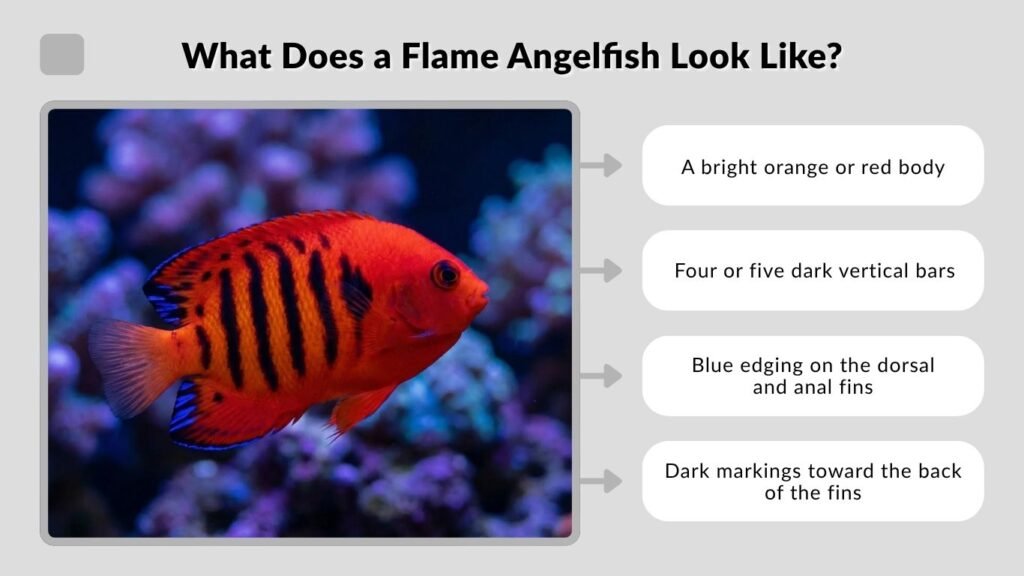
Flame angelfish have a deep, laterally compressed body typical of dwarf marine angelfish. Their intense coloration makes them noticeable even among brightly colored reef fish.
Identification Features
A typical flame angelfish has:
- A bright orange or red body
- Four or five dark vertical bars
- Blue edging on the dorsal and anal fins
- Dark markings toward the back of the fins
- A rounded tail
- A small mouth adapted for grazing
- A strong spine near the gill cover
Coloration varies geographically. Individuals associated with the Marshall Islands are often described as deep red with thicker black bars, while Christmas Island fish may appear more orange-red with thinner bars. Tahitian individuals can display a particularly intense red color with very little yellow.
Terms such as “red flame angelfish,” “Hawaiian flame angelfish,” or “purple flame angelfish” usually describe color, origin, or marketing variations rather than separate species.
Natural Habitat and Distribution
Flame angelfish are marine, reef-associated fish found mainly in tropical areas of the Pacific Ocean. They inhabit clear lagoons and seaward reefs, usually remaining close to rocks, coral structures, and other protective cover.
FishBase records the species from shallow water down to approximately 60 meters. Wild flame angelfish are secretive and generally remain close to shelter where they can quickly retreat from predators. They naturally graze on algae and may form small social groups or harems.
Their natural distribution includes several areas of Oceania and the tropical central and western Pacific. The species also occurs naturally around Hawaii, although it may be relatively uncommon there.
Flame Angelfish Minimum Tank Size
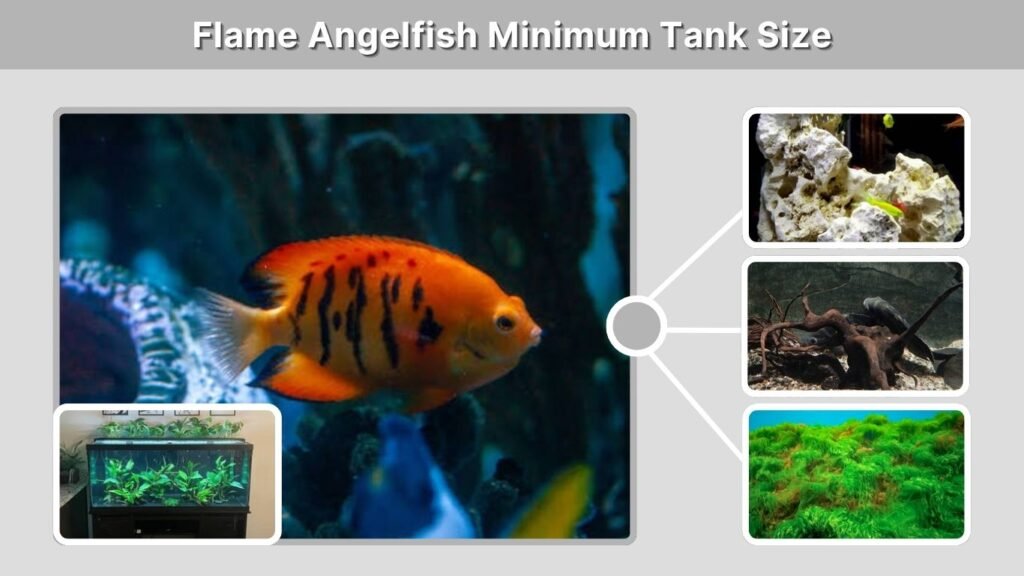
A flame angelfish should be provided with an aquarium of approximately 70 gallons or larger. Although it is called a dwarf angelfish, it is active, territorial, and spends much of the day exploring and grazing.
A 20-gallon aquarium does not offer enough long-term territory, swimming room, or grazing space. Larger aquariums also provide more stable water chemistry and make it easier for peaceful tank mates to avoid the angelfish when necessary.
Ideal Tank Setup
A suitable flame angelfish aquarium should contain:
- Plenty of established live rock
- Caves and crevices for shelter
- Open swimming areas
- A mature biological filtration system
- Moderate water movement
- Stable salinity and temperature
- A secure lid
- Natural algae growth for grazing
Flame angelfish should ideally be introduced to a mature aquarium rather than a newly established system. Live rock provides shelter, grazing surfaces, and small natural food items that help the fish adjust.
Water Conditions
Stable water conditions are essential. Sudden changes in salinity, temperature, pH, or nitrogen waste can weaken the fish and increase its susceptibility to disease.
| Water factor | Recommended level |
| Temperature | 72–78°F |
| Specific gravity | 1.020–1.025 |
| pH | 8.1–8.4 |
| Carbonate hardness | 8–12 dKH |
| Ammonia | 0 ppm |
| Nitrite | 0 ppm |
These fish are considered sensitive to elevated copper concentrations. Copper-based medication should therefore only be used in a separate treatment aquarium with accurate testing and professional-level dosing rather than being added casually to the display tank.
What Do Flame Angelfish Eat?
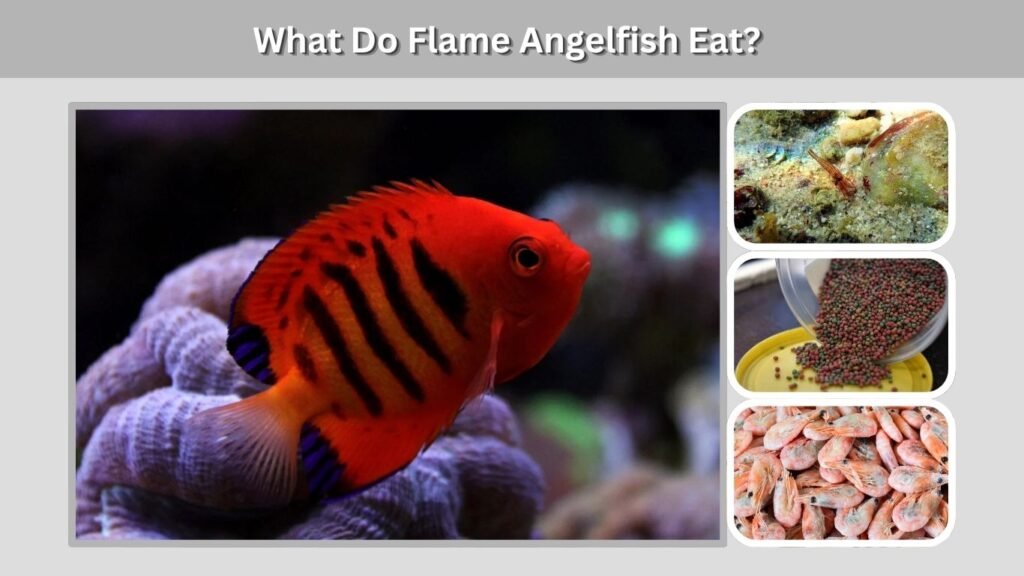
Wild flame angelfish feed heavily on algae growing across reef surfaces. In an aquarium, they should receive a varied omnivorous diet rather than relying only on one pellet or frozen food.
Recommended Foods
Offer a mixture of:
- Spirulina-based flakes or pellets
- Marine algae preparations
- Angelfish formulas
- Mysis shrimp
- Finely chopped marine foods
- Frozen shrimp
- High-quality marine pellets
- Naturally growing algae on live rock
Feed small portions two or three times daily when possible. Regular feeding is particularly important in a reef aquarium because a hungry flame angelfish may be more likely to investigate coral tissue or clam mantles. However, feeding well cannot guarantee that an individual will leave every coral untouched.
Are Flame Angelfish Reef-Safe?
Flame angelfish are generally classified as reef-safe with caution. Some individuals live in reef tanks for years without causing serious damage, while others repeatedly nip corals or clams.
Potential targets include:
- Large-polyp stony corals
- Some soft corals
- Zoanthids
- Fleshy coral tissue
- Clam mantles
- Sessile invertebrates
The risk depends strongly on the individual fish. A flame angelfish that behaves well initially may begin nipping later. Anyone keeping one in a reef aquarium should be prepared to remove it if corals remain closed, display damaged tissue, or show other signs of repeated disturbance.
A fish-only-with-live-rock aquarium is the safest option for owners who do not want to risk valuable corals or clams.
Flame Angelfish Temperament
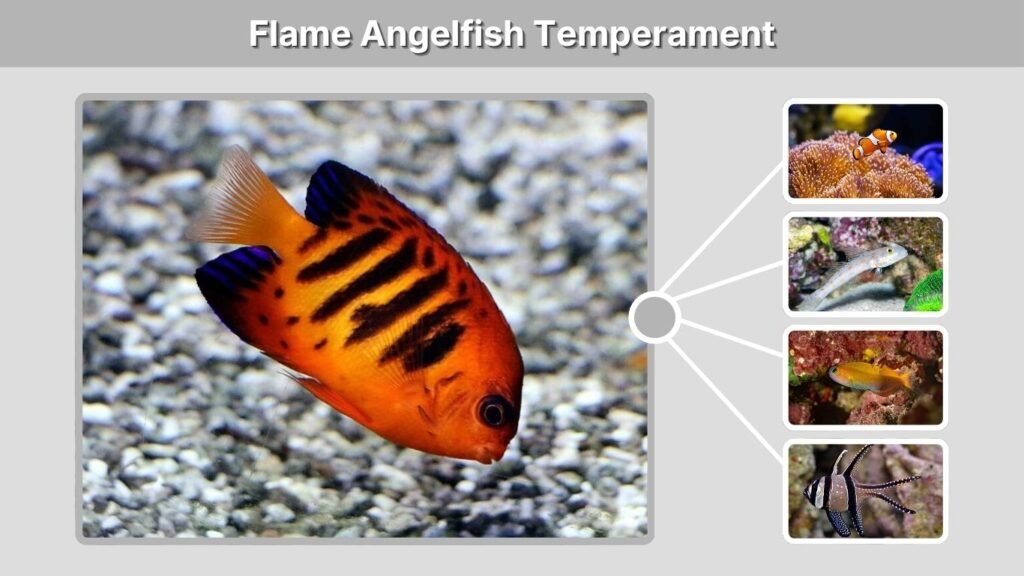
Flame angelfish are semi-aggressive and often become more confident and territorial after settling into an aquarium. They may chase shy fish away from caves or feeding areas.
Suitable Tank Mates
Possible companions include:
- Ocellaris clownfish
- Gobies
- Blennies
- Peaceful wrasses
- Cardinalfish
- Hawkfish
- Some tangs in sufficiently large tanks
- Other robust community marine fish
Avoid combining a flame angelfish with very timid species that cannot compete for food. Keeping it with another dwarf angelfish can also lead to territorial fighting, particularly in smaller aquariums.
When adding a flame angelfish to a peaceful community, introducing it after more timid fish have established territories may reduce its ability to dominate the entire aquarium.
Are Flame Angelfish Aggressive?
Flame angelfish are not constantly aggressive, but they can defend caves, feeding areas, and preferred sections of live rock. Aggression is usually worse in undersized or sparsely decorated aquariums.
Territorial behavior can be reduced by providing:
- A larger aquarium
- Numerous separate hiding places
- Visual barriers made from live rock
- More than one feeding location
- Tank mates with different shapes and habits
- Adequate daily food
Two flame angelfish should not be placed together casually. Creating a pair or social group requires a large aquarium, careful size selection, and experience with dwarf angelfish behavior.
Flame Angelfish Lifespan
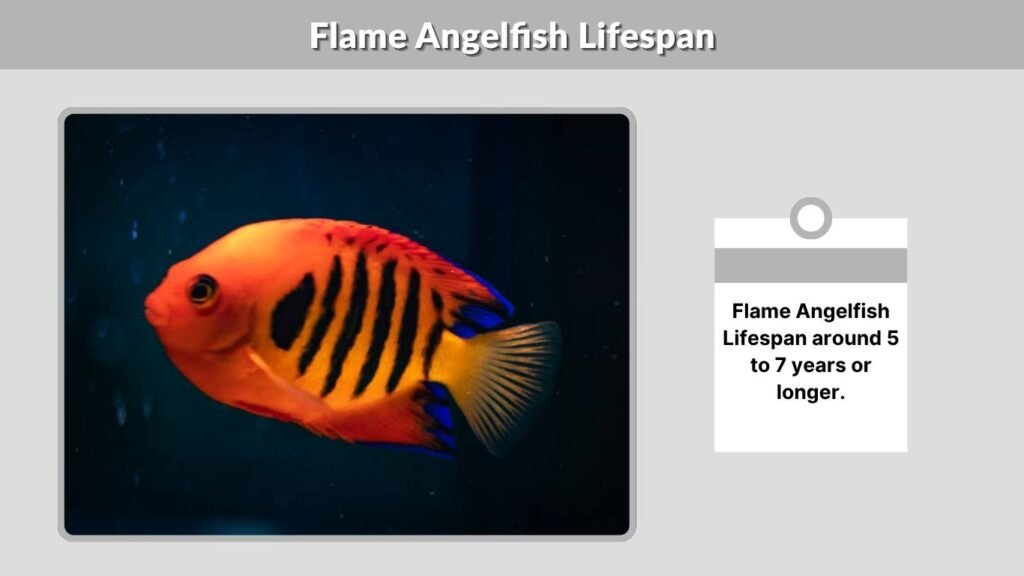
A precise maximum lifespan is not firmly documented in major species databases. Aquarium references commonly report approximately five to seven years or longer, but the actual lifespan depends heavily on the fish’s condition when purchased, diet, tank maturity, water stability, and disease prevention.
A flame angelfish surviving only a few months should not be considered normal. Choosing an alert specimen that already accepts prepared food and placing it in a stable aquarium greatly improves its chances of long-term survival.
Male vs. Female Flame Angelfish
Male and female flame angelfish generally have no obvious, consistently reliable color difference for the average aquarium owner. Size and coloration can provide clues, but they cannot confirm sex in every individual.
Dwarf angelfish are hermaphroditic, and social structure influences their sexual development. Wild flame angelfish may form harems containing one dominant male and several females.
This biology makes pairing possible, but it does not make breeding easy in a home aquarium.
Breeding Flame Angelfish
Flame angelfish have been bred and reared in captivity, but raising the larvae remains considerably more difficult than breeding common clownfish.
Conditioned adults can spawn regularly, and research has examined how broodstock nutrition affects egg production, fertilization, and larval quality. The delicate pelagic larvae require extremely small live foods and carefully controlled rearing conditions.
Captive-bred fish are worth considering when available because they may arrive better adapted to aquarium foods and reduce dependence on wild collection.
Buying a Healthy Flame Angelfish
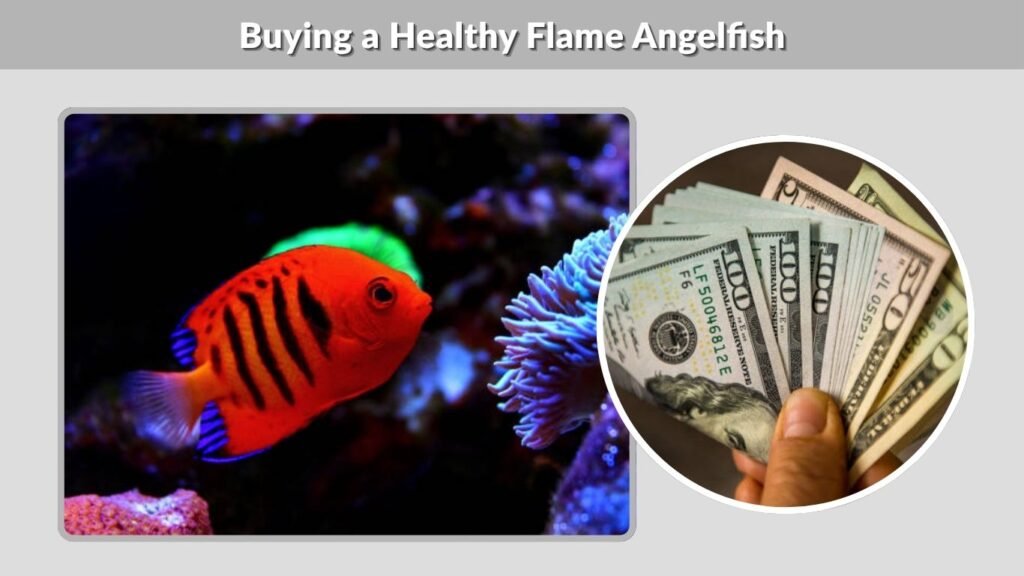
Price varies according to size, collection location, coloration, availability, transportation costs, and whether the fish is captive-bred.
Before purchasing, look for a fish that:
- Swims actively without gasping
- Has clear eyes
- Has a full, unpinched belly
- Shows no white spots or cloudy patches
- Has intact fins
- Grazes naturally
- Accepts prepared food
- Does not rub against decorations
Ask the seller to feed the fish before purchase. A flame angelfish that refuses several suitable foods or has a hollow abdomen may be difficult to recover.
Quarantine the new fish before placing it in the display aquarium. This allows time to observe its appetite and detect parasites without exposing established fish.
FAQs
Are flame angelfish freshwater fish?
No. Flame angelfish are tropical marine fish and require a fully established saltwater aquarium. They cannot survive in a freshwater angelfish tank.
How big do flame angelfish get?
Aquarium specimens are commonly around 4 inches long, although FishBase records a maximum total length of approximately 6 inches. Their activity and territorial behavior still require substantial aquarium space.
Can a flame angelfish live in a 20-gallon tank?
A 20-gallon tank is not recommended for permanent care. A mature aquarium of approximately 70 gallons or larger offers more suitable swimming room, live-rock grazing area, and territorial space.
Can flame angelfish live with clownfish?
Yes, flame angelfish and clownfish can often live together in an adequately sized aquarium. Provide separate hiding areas, introduce fish carefully, and monitor feeding and aggression.
Is a flameback angelfish the same as a flame angelfish?
No. The African flameback angelfish is Centropyge acanthops, while the flame angelfish is Centropyge loriculus. Flamebacks are primarily blue with an orange-yellow back, whereas flame angelfish are predominantly orange-red with black bars.