
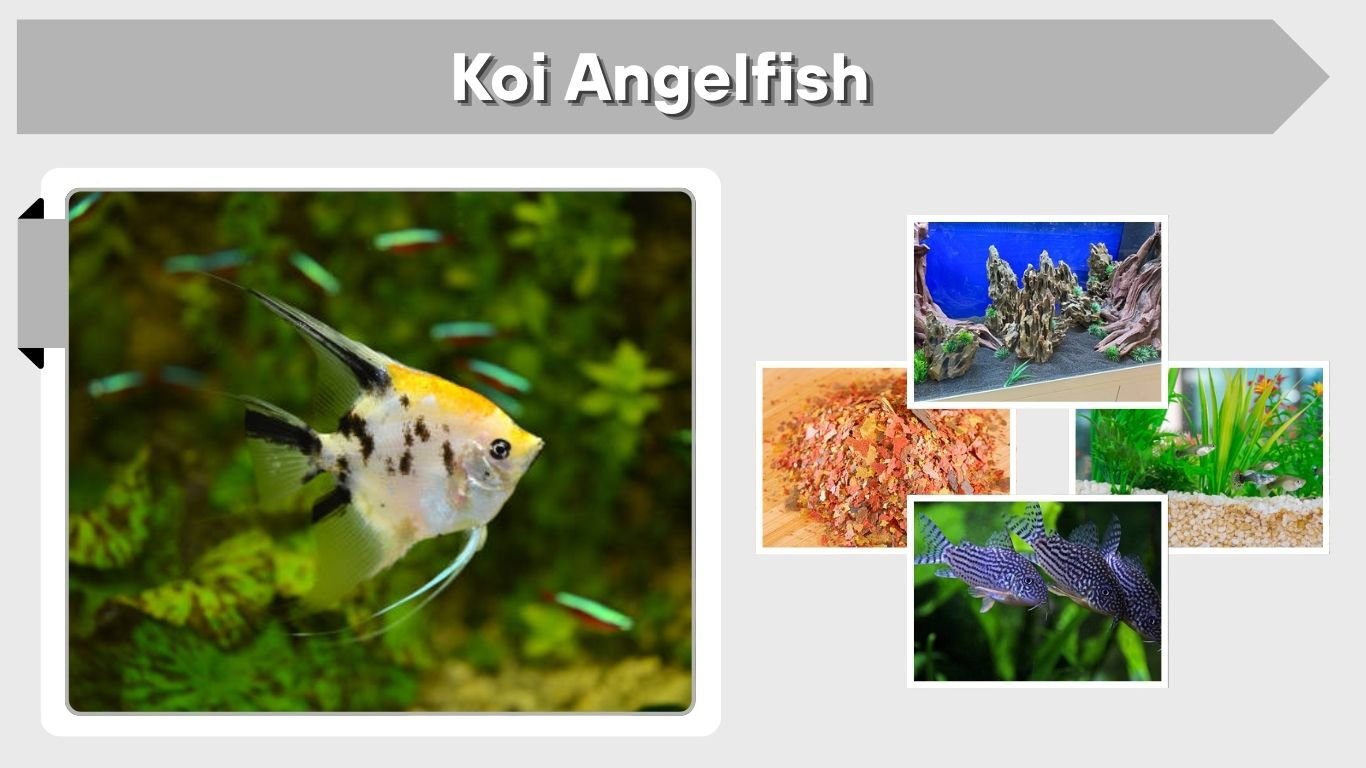
The koi angelfish is a colorful freshwater fish admired for its white, orange, red, yellow, and black markings. Despite its name and koi-like pattern, it is not a type of koi carp. It is a selectively bred variety of the common freshwater angelfish, Pterophyllum scalare. Koi angelfish require warm water, a tall aquarium, nutritious food, compatible tank mates, and enough room to establish territories. This guide covers their appearance, adult size, lifespan, temperament, tank setup, breeding, color varieties, and daily care.
What Is a Koi Angelfish?
Koi angelfish are domesticated color varieties of Pterophyllum scalare, a South American cichlid naturally associated with densely vegetated swamps and flooded river habitats. Selective breeding created fish with koi-like combinations of white, orange, red, yellow, and irregular black marbling.
Although every individual has a different pattern, many koi angelfish display:
- A white or pale base color
- Orange, yellow, or red on the head
- Irregular black patches
- Transparent or lightly marked fins
- Long thread-like pelvic fins
- Tall dorsal and anal fins
- A narrow, laterally compressed body
Their patterns may change slightly as they grow. Genetics, diet, lighting, health, and stress can also influence the intensity of their orange or red coloration.
Koi Angelfish Size and Growth
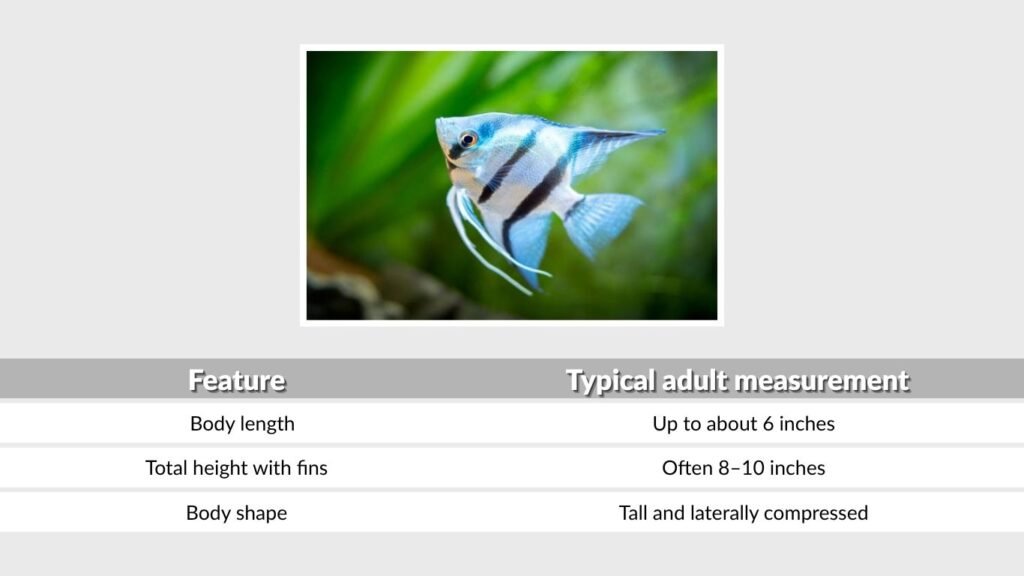
A full-grown koi angelfish commonly reaches about 6 inches in body length. Its tall dorsal and anal fins can make the fish appear much larger, particularly in veiltail varieties with extended fins. FishBase reports a maximum length of approximately 15 centimeters for P. scalare.
| Feature | Typical adult measurement |
| Body length | Up to about 6 inches |
| Total height with fins | Often 8–10 inches |
| Body shape | Tall and laterally compressed |
| Growth rate | Fastest during the first year |
Baby koi angelfish may be sold when their bodies are only around the size of a coin. Buyers should choose an aquarium based on adult size rather than the small size of the juvenile fish.
Koi Angelfish Colors and Varieties
The term “koi angelfish” covers several selectively bred patterns rather than one perfectly standardized appearance.
Red and Red Devil Koi Angelfish
Red koi angelfish have stronger orange-red coloration than traditional varieties. Fish sold as Red Devil, Super Red, Red King, or Ultimate Coverage Koi are generally selected for extensive red or orange coverage.
The term “Red Devil” is commonly used by sellers and breeders for high-coverage koi angelfish rather than for a separate angelfish species. Color quality can vary considerably among individuals.
Yellow, Orange and Blushing Koi Angelfish
Yellow koi angelfish have golden-yellow or orange markings, particularly around the head and upper body. Orange koi fish display warmer, deeper pigmentation.
Blushing koi angelfish have reduced pigmentation over the gill covers. This makes the reddish gills visible through the skin, producing the characteristic “blushing” cheeks.
Marble, Veiltail and Pearlscale Koi Angelfish
Marble koi angelfish have irregular black patches over a white, yellow, or orange background. No two marbled fish have exactly the same markings.
Veiltail koi angelfish possess unusually long, flowing fins and need plenty of open vertical space. Pearlscale varieties have textured scales that reflect light differently, giving the body a sparkling or beaded appearance.
Koi Angelfish Tank Size and Setup
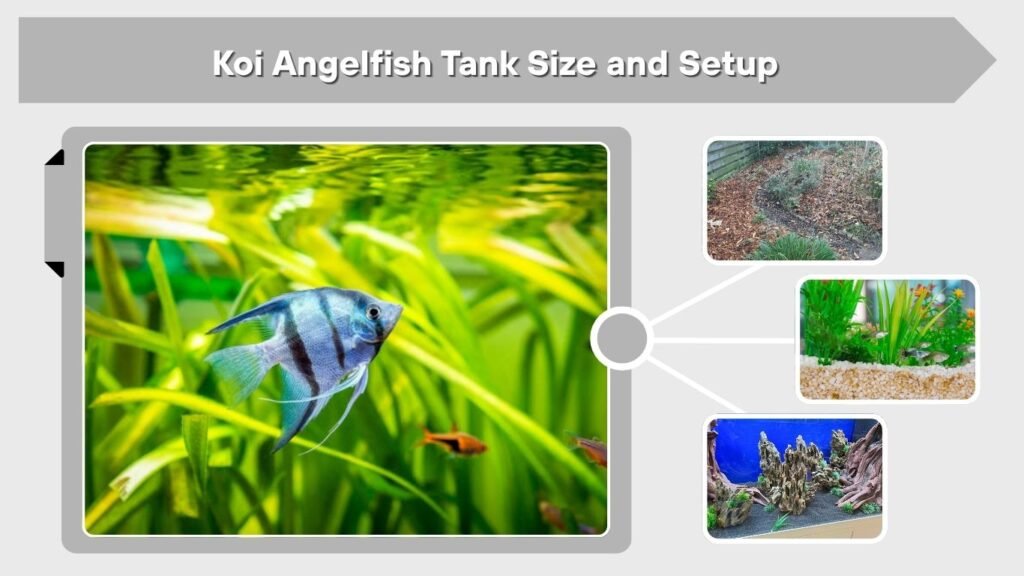
Koi angelfish need a tall aquarium because their bodies and fins extend vertically. A 29-gallon tank can house a limited number of adult angelfish, while a 55-gallon aquarium provides more space for a juvenile group or community setup. Territorial fish may need to be separated as they mature.
A suitable aquarium should include:
- Reliable filtration
- A heater and thermometer
- Tall live or artificial plants
- Driftwood and sheltered areas
- Open swimming space
- Gentle to moderate water movement
- A secure lid
- Regular partial water changes
Avoid sharp decorations that may tear long fins. Broad-leaved plants, vertical wood, or smooth spawning cones can also provide surfaces on which breeding pairs may lay eggs.
Water Temperature and Parameters
Koi angelfish are tropical freshwater fish. A temperature of approximately 78–84°F, or 26–29°C, works well for most captive fish. The broader documented range for P. scalare is around 24–30°C, with a pH range of approximately 6.0–8.0.
| Water requirement | Recommended range |
| Temperature | 78–84°F or 26–29°C |
| pH | Approximately 6.0–8.0 |
| Ammonia | 0 ppm |
| Nitrite | 0 ppm |
| Nitrate | Kept low through maintenance |
Stability is often more important than achieving one exact pH value. Sudden temperature or chemistry changes can stress the fish and weaken its resistance to disease.
Koi Angelfish Food
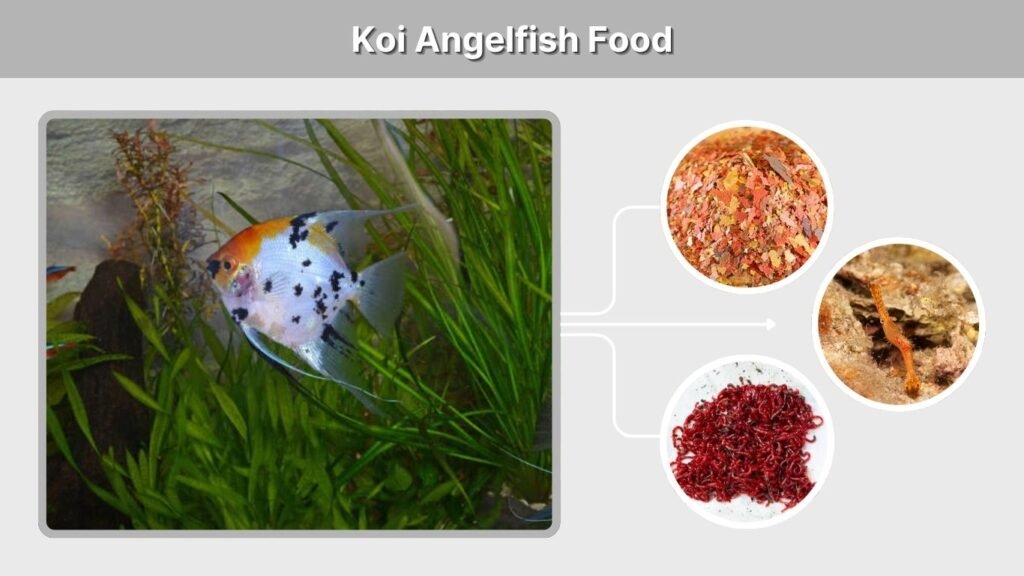
Koi angelfish are omnivorous and accept many prepared, frozen, and live foods. A varied diet supports growth, breeding condition, fin development, and strong coloration.
Suitable foods include:
- Quality cichlid flakes
- Small or medium pellets
- Brine shrimp
- Mysis shrimp
- Bloodworms
- Daphnia
- Insect-based foods
- Spirulina-containing foods
Feed adults small portions once or twice daily, offering only what they can consume promptly. Young fish may benefit from smaller meals given more frequently. Baby brine shrimp and finely crushed prepared foods are useful for fry.
Color-enhancing foods containing natural carotenoid-rich ingredients may support orange and red pigmentation. However, food cannot give a fish extensive red coverage if it lacks the necessary genetic traits.
Are Koi Angelfish Aggressive?
Koi angelfish are usually described as semi-aggressive. They may live peacefully in a community aquarium but can chase one another while establishing rank, competing for space, or forming breeding pairs.
Aggression commonly increases when:
- The aquarium is overcrowded
- A pair begins spawning
- There are too few shelters
- Several mature males compete
- Tank mates nip their fins
- Food or territory is limited
Angelfish parents may vigorously defend their eggs and fry. Compared with many other cichlids, however, they can be relatively manageable when given sufficient space and suitable companions.
Best Koi Angelfish Tank Mates
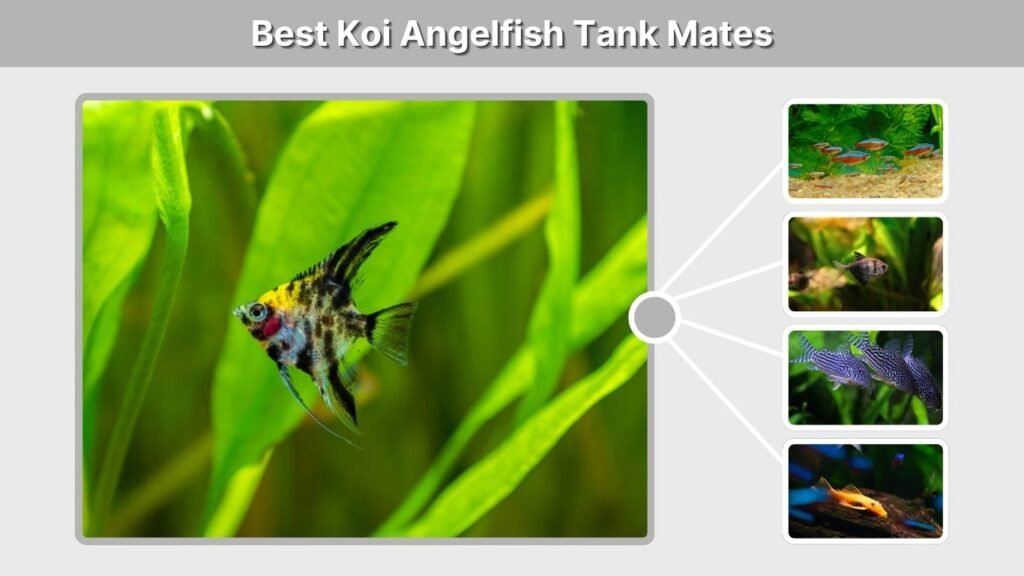
Appropriate companions are peaceful fish that prefer similar warm-water conditions and are too large to be swallowed.
Possible tank mates include:
- Adult cardinal tetras
- Black skirt tetras
- Larger rasboras
- Corydoras catfish
- Peaceful plecos
- Dwarf gouramis in carefully monitored tanks
- Larger peaceful livebearers
- Other angelfish when adequate space is available
Avoid very small fish, tiny shrimp, aggressive cichlids, and known fin-nippers. Angelfish may eat any animal small enough to fit into their mouths, while fin-nipping species can damage their extended fins.
Can Koi and Angelfish Live Together?
Koi carp and koi angelfish should not normally be housed together. The similarity is only in their colors and name.
Koi carp are large pond fish that can reach about 75 centimeters and are generally maintained at cooler temperatures of roughly 4–24°C. They require spacious, heavily filtered ponds. Koi angelfish are much smaller tropical aquarium fish that prefer water around 24–30°C. Their size, habitat, temperature, feeding behavior, and space requirements are therefore unsuitable for long-term cohabitation.
Koi Angelfish Male and Female Differences
Male and female koi angelfish are difficult to distinguish by appearance, especially when young. Head shape, body fullness, and fin shape are sometimes suggested as clues, but these are not consistently reliable.
Sex becomes clearer during spawning. The female develops a wider, rounded breeding tube and deposits eggs, while the male has a narrower tube and fertilizes them. Raising a group of juveniles and allowing compatible fish to pair naturally is one of the most dependable ways to obtain a breeding pair.
Koi Angelfish Breeding
A breeding pair cleans a vertical surface before the female lays rows of adhesive eggs. The male follows and fertilizes them. Both parents may fan, clean, and protect the eggs, although inexperienced or stressed fish sometimes eat their first spawns.
Eggs commonly hatch within two or three days at warm aquarium temperatures. The larvae initially remain attached near the spawning area before becoming free-swimming several days later. Once swimming, the fry can be offered newly hatched brine shrimp or finely powdered fry food.
Koi Angelfish Lifespan
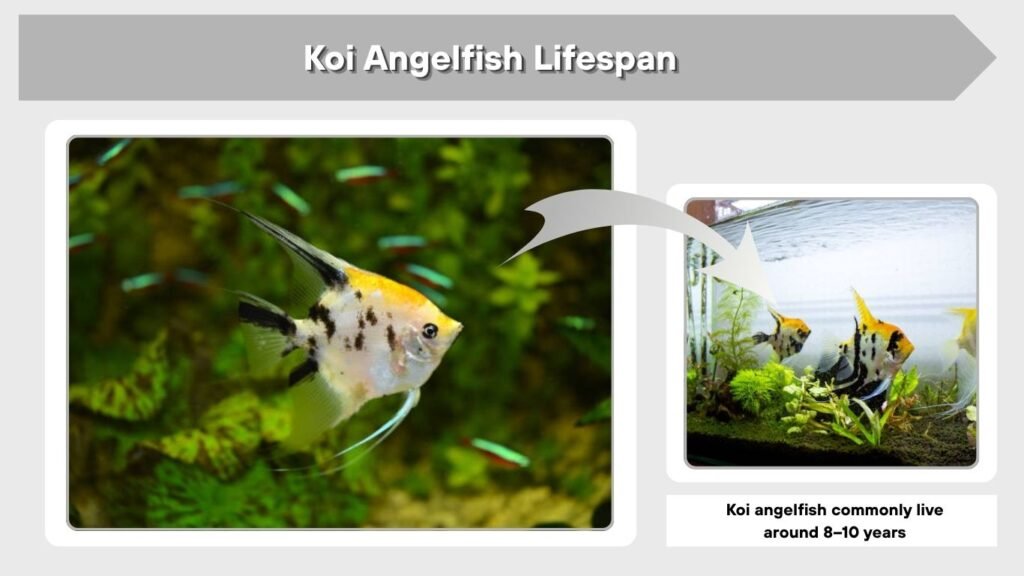
Koi angelfish commonly live around 8–10 years under good aquarium conditions, with some individuals surviving longer. Lifespan depends on genetics, water quality, diet, tank size, disease prevention, and stress levels.
Stable warm water, effective filtration, proper nutrition, and avoiding overcrowding give the fish the best chance of reaching its expected lifespan.
Buying a Healthy Koi Angelfish
Koi angelfish prices vary according to size, color coverage, fin type, breeder quality, location, and whether the fish is sold individually or as a proven pair.
Choose a fish with:
- Clear eyes
- An upright body position
- Smooth, controlled swimming
- Open, undamaged fins
- A well-filled body
- Normal breathing
- An active feeding response
- No white spots, sores, or fuzzy growths
Avoid buying from a tank containing visibly sick fish. Quarantining new arrivals before introducing them to the main aquarium can reduce the risk of spreading disease.
FAQs
Are koi angelfish freshwater fish?
Yes. Koi angelfish are freshwater cichlids derived mainly from Pterophyllum scalare. They require a heated freshwater aquarium and should never be placed in a saltwater setup. Their natural ancestors originate from tropical South American river systems and flooded habitats.
How big do koi angelfish get?
A full-grown koi angelfish commonly reaches about 6 inches in body length. Its long dorsal, anal, and pelvic fins can make its total height considerably greater. A tall aquarium is therefore more appropriate than a shallow tank with the same water capacity.
Can koi angelfish live alone?
A single koi angelfish can live successfully as a centerpiece fish in a suitable community aquarium. Keeping one fish may also reduce territorial conflict. Groups can work in larger tanks, but owners should watch for bullying as pairs form and fish mature.
Do koi angelfish lose their color?
Their orange, red, yellow, and black markings may appear lighter or darker because of age, stress, diet, health, lighting, or background color. Some juvenile markings also change naturally with maturity. Persistent fading accompanied by poor appetite or unusual behavior may indicate stress or illness.
Are koi angelfish good for beginners?
They can suit committed beginners who understand aquarium cycling, water testing, heating, filtration, and compatible stocking. However, their adult size, territorial behavior, long fins, and need for stable water make them more demanding than many small community fish.