
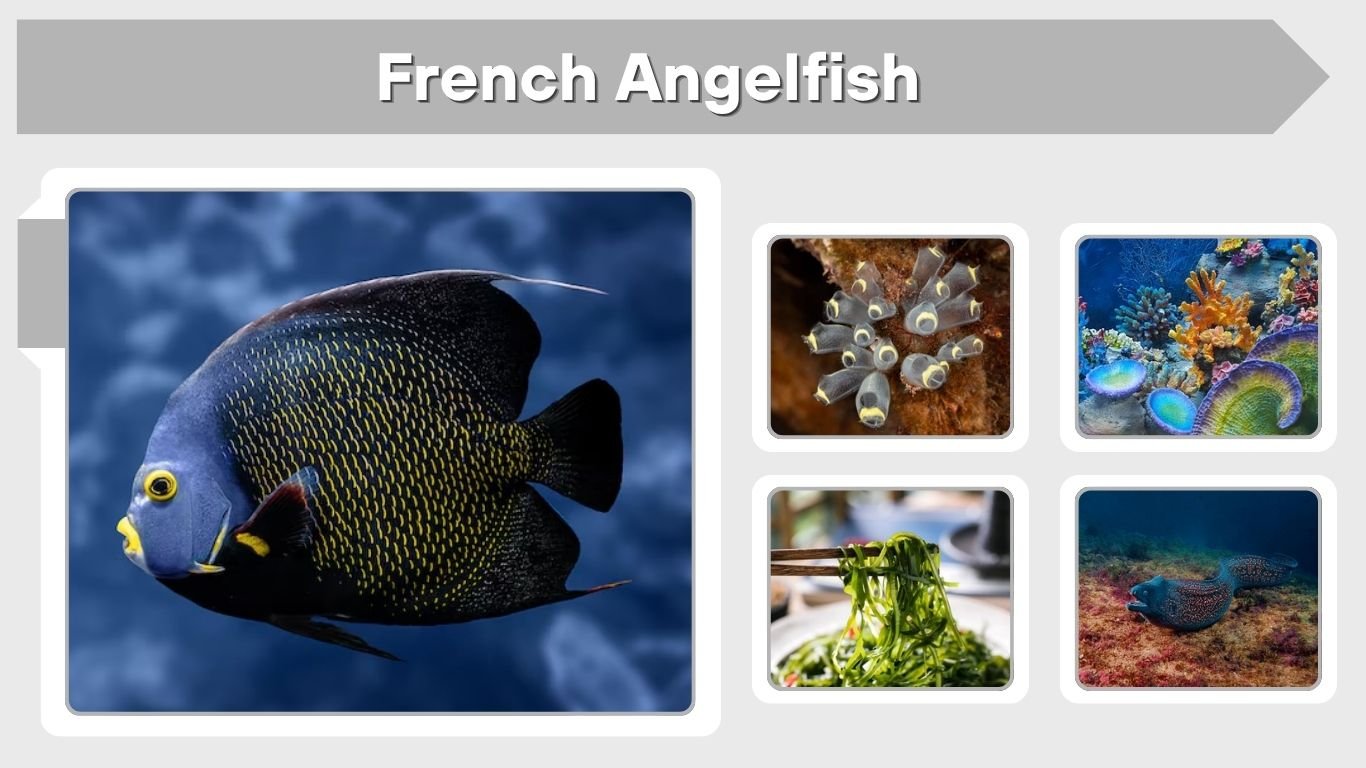
The French angelfish is a large, striking marine fish known for its dark body, golden-edged scales, pale mouth, and bright yellow markings. Adults are often seen swimming in pairs over tropical reefs, while juveniles look dramatically different and operate cleaning stations for other fish. Scientifically named Pomacanthus paru, this curious reef fish occurs mainly in the western Atlantic, Caribbean Sea, Gulf of Mexico, and waters surrounding Florida. Here is everything you need to know about its appearance, habitat, diet, behavior, lifespan, breeding, and aquarium care.
French Angelfish Overview
The French angelfish belongs to the marine angelfish family Pomacanthidae. Its deep, laterally compressed body allows it to move around coral formations, rocky ledges, caves, and narrow reef passages.
| Feature | Details |
| Scientific name | Pomacanthus paru |
| Family | Pomacanthidae |
| Common length | Around 11–16 inches |
| Maximum reported length | About 16 inches in FishBase records |
| Habitat | Coral reefs, rocky areas and seagrass beds |
| Diet | Sponges, algae and marine invertebrates |
| Behavior | Territorial, curious and commonly paired |
| Conservation status | Least Concern |
The species is recognized by the U.S. Fish and Wildlife Service under the scientific name Pomacanthus paru. FishBase reports a common length of approximately 28 centimeters and a maximum documented length of 41.1 centimeters.
French Angelfish Identification
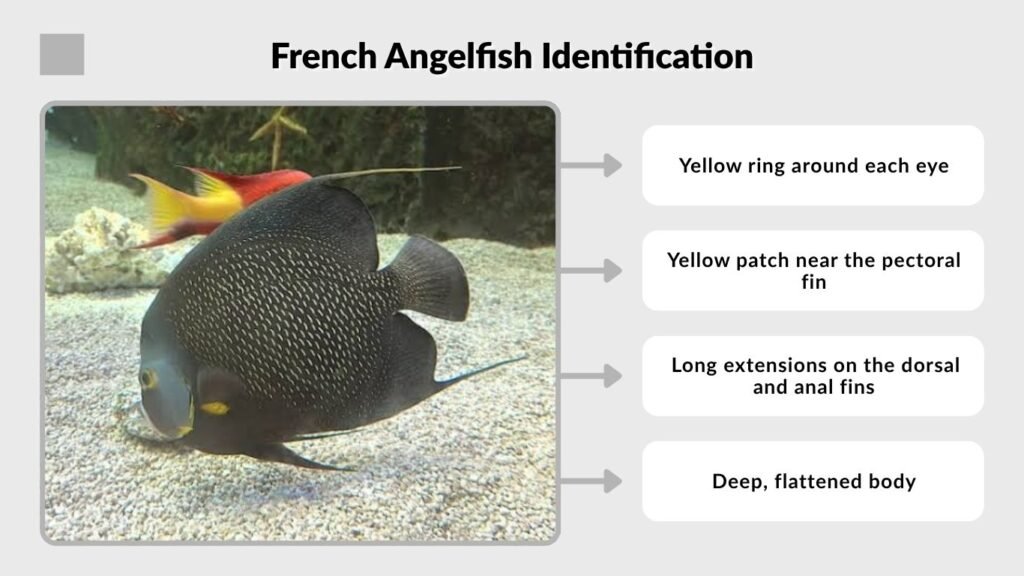
Adult and juvenile French angelfish look so different that inexperienced observers may assume they are separate species.
Adult French Angelfish
An adult has a dark gray or nearly black body. Most body scales have bright golden-yellow edges, producing a speckled or net-like pattern. The face may appear bluish-gray, while the chin and area around the mouth are pale.
Other identification features include:
- Yellow ring around each eye
- Yellow patch near the pectoral fin
- Long extensions on the dorsal and anal fins
- Deep, flattened body
- Small mouth with brush-like teeth
- Dark, rounded tail
Adults have a heavy, almost circular profile when viewed from the side. Their long dorsal and anal fins create a graceful outline as they swim.
Juvenile French Angelfish
A juvenile French angelfish has a black or dark brown body marked with three prominent yellow bands. Yellow also outlines the tail, and a yellow line runs down the forehead toward the mouth.
As the fish matures, the bands gradually disappear. The dark scales develop golden edges, the facial area becomes lighter, and the fins take on the elongated shape seen in adults.
Juvenile French Angelfish vs Gray Angelfish
Young French and gray angelfish can look remarkably similar. Both have dark bodies crossed by yellow bands.
The facial marking provides one useful clue. On a juvenile French angelfish, the yellow forehead band reaches the lips but does not continue completely around the mouth. On a juvenile gray angelfish, the marking splits and extends around the mouth area.
French Angelfish Habitat and Range
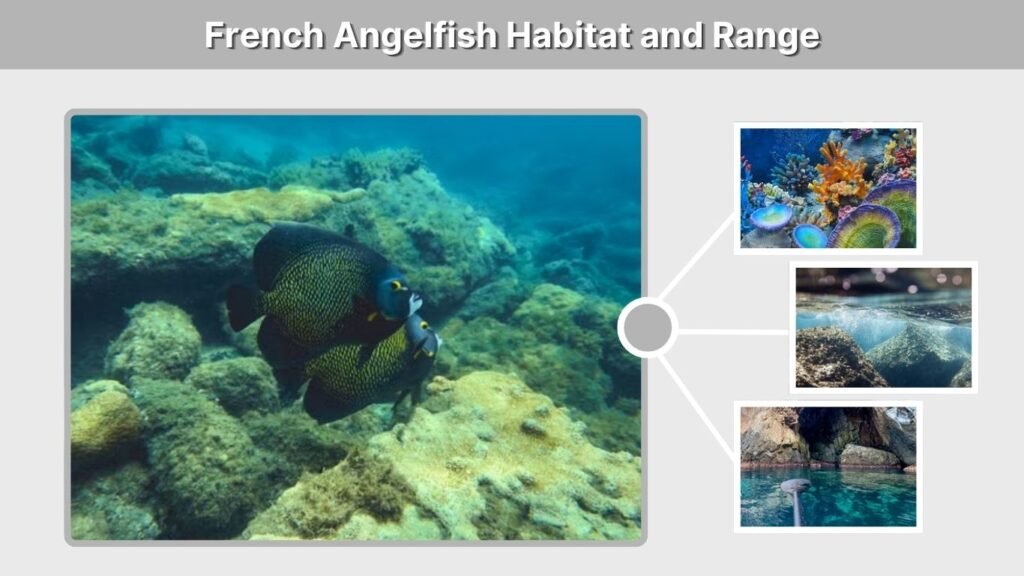
French angelfish are tropical marine fish associated mainly with reefs and other structurally complex habitats.
Natural Range
Their western Atlantic range extends from Florida and the Bahamas through the Caribbean and Gulf of Mexico to Brazil. They have occasionally been recorded much farther north, including near New York. Populations also occur around some isolated Atlantic islands.
Preferred Habitat
French angelfish commonly occupy:
- Coral reefs
- Rocky reef edges
- Caves and ledges
- Seagrass beds
- Mangrove-associated waters
- Areas with sponges and soft corals
Juveniles are frequently found in seagrass beds and sheltered reef areas. Adults tend to remain close to established reef territories containing feeding areas and nighttime shelters. The species has been recorded from shallow water down to approximately 157 meters, although it is commonly encountered on accessible coastal reefs.
What Do French Angelfish Eat?
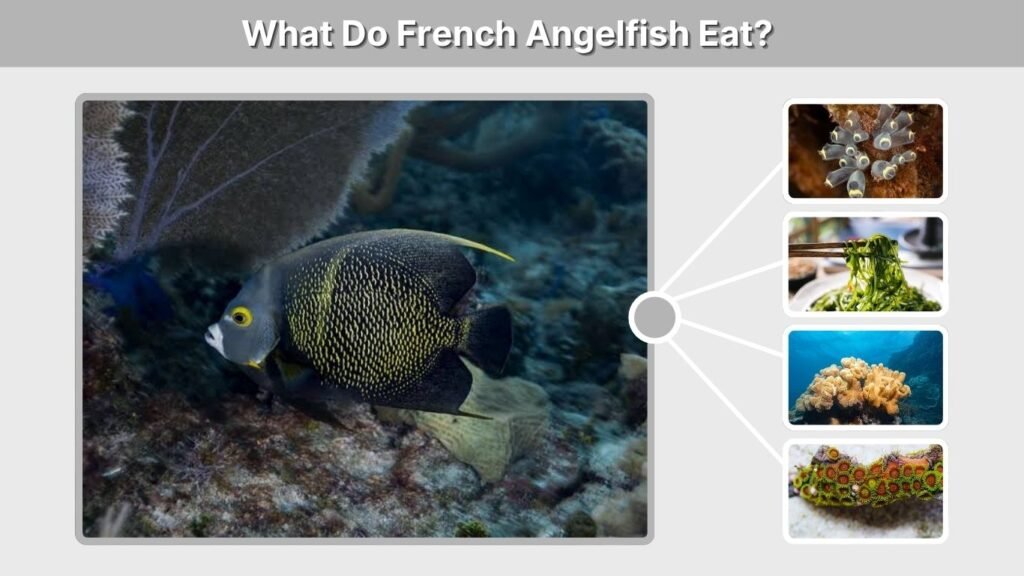
French angelfish are omnivores, but adults depend heavily on sponges and other attached marine organisms.
Adult Diet
Their natural diet includes:
- Sponges
- Tunicates and sea squirts
- Algae
- Soft corals
- Zoanthids
- Gorgonians
- Hydroids
- Small crustaceans
They use small, brush-like teeth to remove food from rocks, coral surfaces, and reef structures. Feeding marks may sometimes be visible on large sponges after an angelfish has taken repeated bites.
Juvenile Diet and Cleaning Behavior
Juveniles eat algae, detritus, and parasites removed from other fish. They establish cleaning stations where larger reef animals approach and allow the young angelfish to pick parasites and damaged tissue from their skin.
Their clients may include moray eels, jacks, snappers, surgeonfish, grunts, and wrasses. The juvenile’s contrasting black-and-yellow coloration and fluttering swimming motion may help advertise its cleaning service.
French Angelfish Behavior
French angelfish are active during the day and usually seek shelter among reef structures at night. Adults may repeatedly return to familiar feeding areas and resting places.
Are French Angelfish Friendly?
Wild individuals can be surprisingly curious. They sometimes approach divers and snorkelers rather than immediately hiding. However, curiosity should not be mistaken for domestication.
They may defend their home area from other French angelfish or similar competitors. In aquariums, individuals can also become dominant toward fish with comparable shapes, colors, or feeding habits.
Are French Angelfish Smart?
There is no standard scientific test ranking French angelfish intelligence. However, their cleaning behavior, territorial awareness, pair formation, curiosity, and ability to adjust their feeding behavior suggest considerable behavioral flexibility.
Captive fish may learn feeding routines and recognize regular activity around their aquarium. It is reasonable to describe them as observant and responsive, although claims that they possess human-like intelligence would be exaggerated.
Do French Angelfish Mate for Life?
French angelfish commonly form monogamous breeding pairs and are frequently observed traveling, feeding, and defending an area together. However, describing them as guaranteed lifelong partners may be too strong because proving that every pair remains together throughout both fishes’ lives is difficult.
During spawning, a pair rises above the reef and releases eggs and sperm into the water. The fertilized eggs drift in the plankton, and newly hatched larvae remain in open water before settling onto reef habitat.
French Angelfish Lifespan
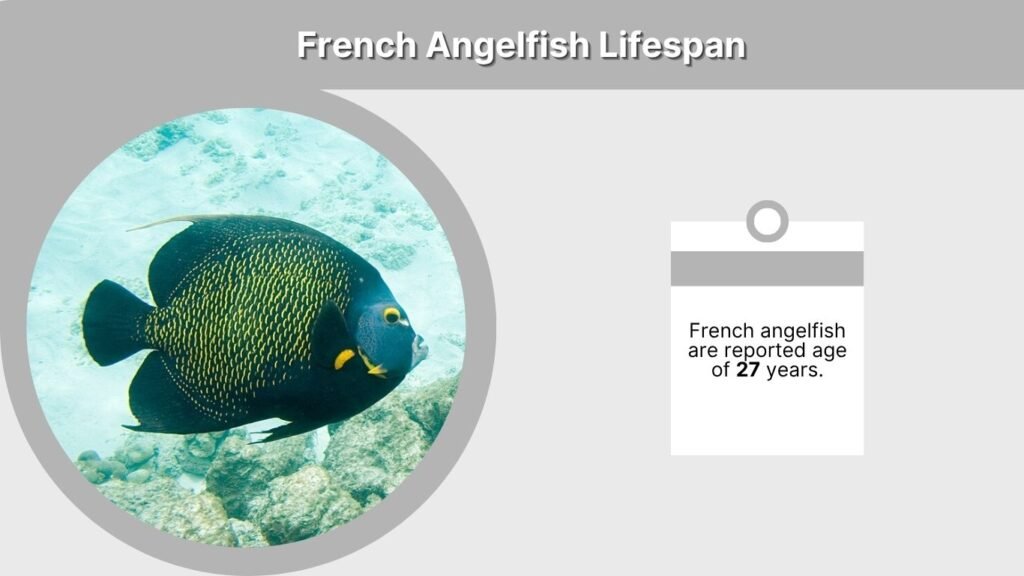
French angelfish are relatively long-lived marine fish. FishBase records a maximum reported age of 27 years, although lifespan varies with habitat quality, predation, disease, collection pressure, and aquarium conditions.
A properly maintained captive individual may live for many years, making it a serious long-term commitment rather than a temporary aquarium purchase.
French Angelfish Aquarium Care
French angelfish are admired in marine aquariums, but their adult size and specialized feeding requirements make them better suited to experienced aquarists.
Aquarium Requirements
A suitable setup should provide:
- A very large, mature saltwater aquarium
- Strong biological filtration
- Excellent water quality
- Open swimming space
- Large caves and rock shelters
- A varied diet containing marine algae and sponge-based foods
- Compatible tank mates that are not easily bullied
These fish produce considerable waste and require more space as they mature. Buyers should plan for the adult fish rather than choosing a tank based only on the size of a juvenile.
Feeding in Captivity
Captive French angelfish should receive a varied diet rather than ordinary flakes alone. Appropriate foods may include marine angelfish preparations containing sponge, algae-based foods, mysis shrimp, chopped marine seafood, and other nutritionally balanced frozen foods.
Offering several smaller meals can better reflect their natural habit of grazing and taking repeated bites throughout the day.
Are French Angelfish reefs Safe?
French angelfish are generally not considered reliably reef safe. Their natural diet includes sponges, soft corals, zoanthids, gorgonians, tunicates, and other attached invertebrates. An individual may nip or consume valuable aquarium organisms.
They are usually better suited to a large fish-only marine aquarium or a carefully planned system where damage to corals and sponges can be accepted.
French Angelfish Predators
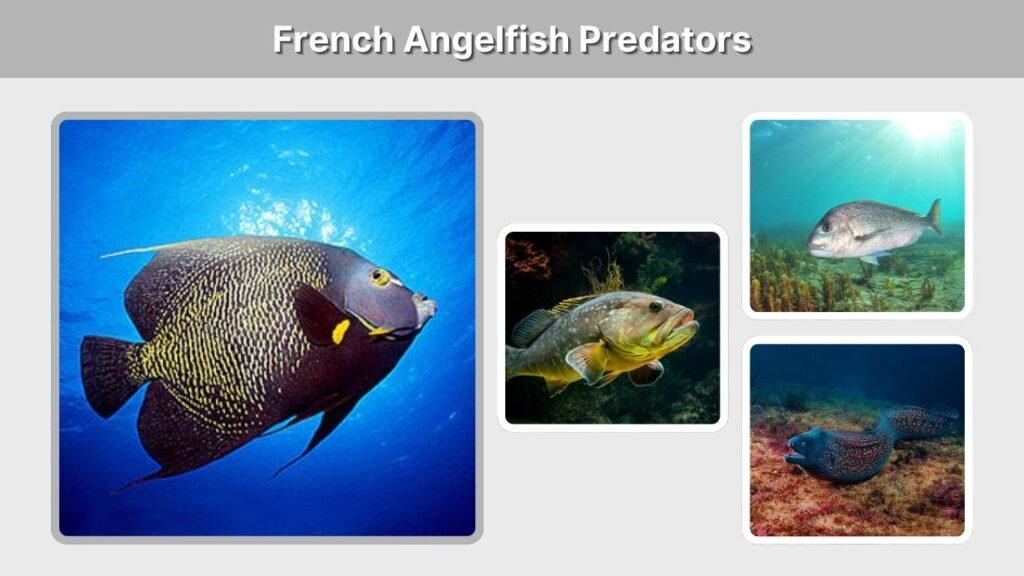
Large predatory reef fish can prey on French angelfish, particularly juveniles. Potential predators include large groupers, snappers, moray eels, and sharks capable of overpowering them.
Juveniles reduce danger by staying near shelter, seagrass, coral structures, and cleaning stations. Adults rely on their larger size, deep bodies, reef knowledge, and ability to retreat rapidly into protected areas. The Florida Museum identifies large fish as their main potential predators.
FAQs
How big does a French angelfish get?
French angelfish commonly grow to around 11–16 inches in length. FishBase lists a maximum documented length of approximately 16 inches, although some older species accounts describe unusually large individuals. Their deep bodies make adults appear especially substantial.
Can two French angelfish live together?
Adults naturally occur in pairs, but placing two unfamiliar fish together in an aquarium does not guarantee compatibility. Territorial disputes may occur, particularly in limited space. A bonded pair requires a very large aquarium with multiple shelters and carefully managed introductions.
Can French angelfish live in a reef tank?
They can physically live in a reef aquarium, but they may eat or damage sponges, soft corals, zoanthids, gorgonians, and other invertebrates. For that reason, they are not considered dependably reef safe.
How much does a French angelfish cost?
The price varies considerably according to size, source, location, availability, and whether the fish was captive-raised or wild-collected. The purchase price is only part of the expense because this species needs a large marine system and long-term care.
Are French angelfish edible?
French angelfish have been used as food in some regions. However, reef fish may carry ciguatera toxins, which cannot reliably be detected by appearance, smell, or taste. Eating locally caught specimens should follow regional health and fisheries guidance.