
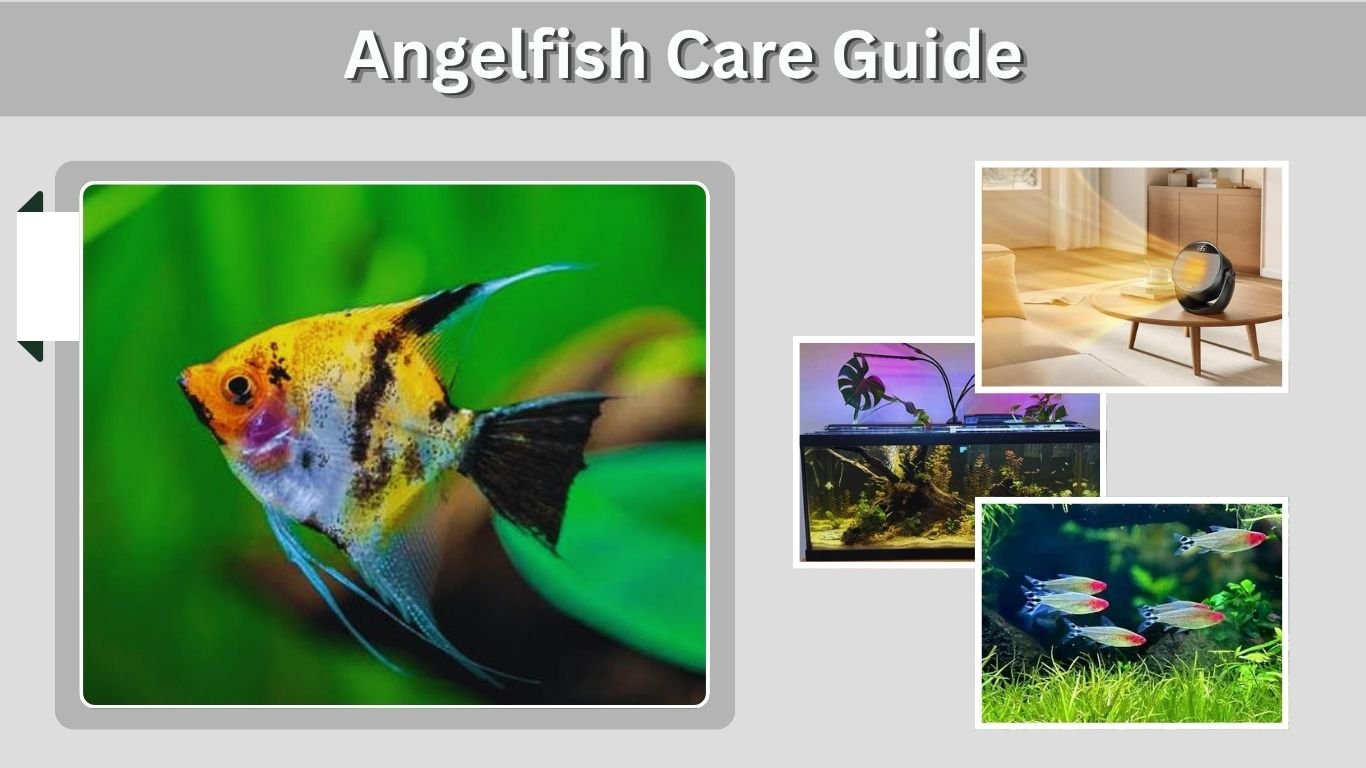
Freshwater angelfish are graceful cichlids known for their tall bodies, flowing fins, and calm appearance. They can thrive in a well-planned community aquarium, but they still need enough swimming space, warm clean water, suitable tank mates, and a balanced diet. Adult angelfish can also become territorial, especially when pairing or breeding, so tank setup matters. This angelfish care guide covers tank size, water temperature, feeding, compatible tank mates, planted-tank setup, breeding basics, and common problems to help you maintain healthy fish.
Freshwater Angelfish Tank Requirements
A good angelfish tank should provide both height and open swimming space. Their tall fins make shallow aquariums less suitable than taller tanks. Stable water conditions are equally important because sudden changes in temperature or water quality can stress the fish. Mature angelfish also need enough territory to reduce fighting.
Basic Tank Requirements
A suitable setup should include:
- Minimum tank size: Around 29–30 gallons for a single adult or established pair
- Larger groups: 55 gallons or more is preferable
- Temperature: About 76–82°F
- pH: Approximately 6.5–7.5
- Filtration: Moderate, reliable filtration
- Water movement: Gentle to moderate
- Substrate: Sand or smooth gravel
- Plants: Tall live or artificial plants
- Lighting: Moderate
- Maintenance: Regular partial water changes
Tank dimensions are as important as total gallons. A taller aquarium gives adult angelfish enough vertical room for their long dorsal and anal fins.
Can Angelfish Live in a 20-Gallon Tank?
A 20-gallon tank may temporarily house a juvenile angelfish, but it is usually too small for a fully grown adult, especially a standard 20-gallon tank with limited height.
Adult angelfish become both tall and territorial. A 29- or 30-gallon aquarium is a more practical starting point for one adult or a compatible pair, while larger tanks offer greater stability.
55- and 75-Gallon Angelfish Tanks
A 55-gallon tank provides considerably more flexibility for a community setup. It offers enough swimming room for angelfish plus several compatible schooling or bottom-dwelling species.
A 75-gallon tank is even better for groups because the additional width helps fish establish territories. Larger tanks also make it easier to separate aggressive individuals naturally.
Best Tank Mates for Angelfish
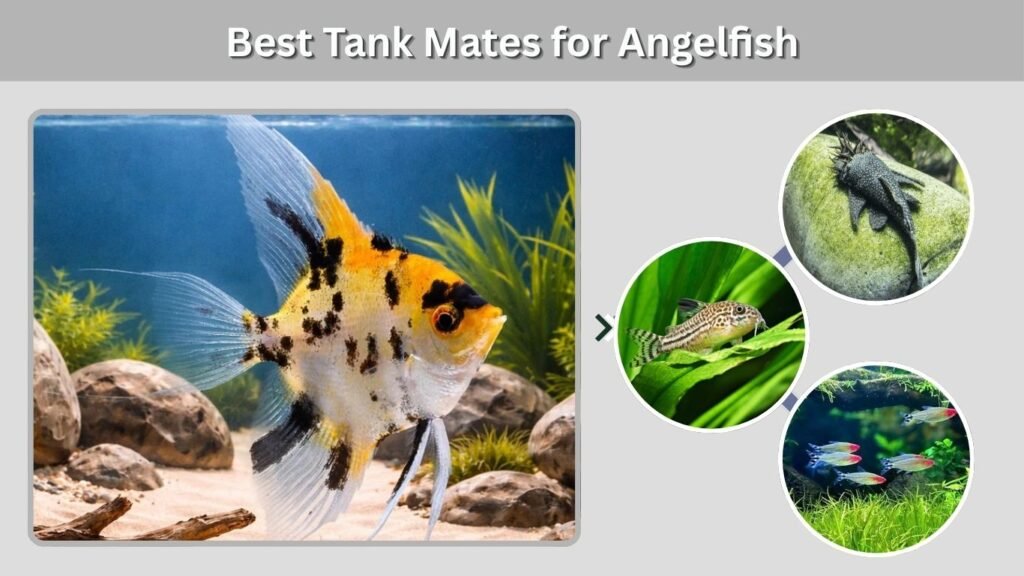
Choosing tank mates requires balancing temperament, size, and water requirements. Freshwater angelfish are cichlids, so they are not completely peaceful. Adults may eat very small fish, while aggressive fin-nippers can damage their long fins. Compatible species should be large enough not to become prey but calm enough to avoid constant conflict.
Good Angelfish Tank Mates
Suitable choices can include:
- Corydoras catfish
- Bristlenose plecos
- Rummy-nose tetras
- Lemon tetras
- Larger peaceful tetras
- Harlequin rasboras
- Dwarf gouramis in suitable setups
- Bolivian rams
- Kuhli loaches
- Swordtails
- Mollies where water conditions overlap
- Peaceful rainbowfish
Always consider individual temperament. Two fish of normally compatible species can still behave differently in a particular aquarium.
Bad Tank Mates for Angelfish
Avoid fish that are extremely aggressive, persistent fin-nippers, or small enough to be swallowed.
Tiger barbs, for example, can nip flowing fins unless kept under carefully managed conditions. Very small tetras may eventually be viewed as prey by large angelfish. Highly aggressive cichlids can also bully angelfish and prevent them from feeding normally.
Can Angelfish Live With Bettas?
Keeping an angelfish and betta together is risky. Both can be territorial, and their long fins may encourage aggression.
Some individual fish may tolerate each other in a large, heavily planted aquarium, but the combination should not be considered reliably compatible. Separate tanks are usually safer.
Angelfish Feeding Guide
Angelfish are omnivores and benefit from a varied diet. Feeding only one type of dry food can provide basic nutrition, but combining quality pellets or flakes with frozen, live, and occasional vegetable-based foods usually produces better condition, coloration, and growth. Avoid excessive feeding because leftover food quickly reduces water quality.
Best Foods for Angelfish
A balanced diet may include:
- High-quality cichlid pellets
- Tropical fish flakes
- Frozen brine shrimp
- Frozen mysis shrimp
- Bloodworms
- Daphnia
- Live brine shrimp
- Insect larvae
- Spirulina-based foods
- Small amounts of vegetable matter
Rotate different foods instead of relying on one item every day.
How Often Should You Feed Angelfish?
Adult angelfish generally do well with one or two small meals daily. Juveniles need more frequent feeding because they are actively growing.
Offer only what the fish can finish within a few minutes. Consistently leaving food on the bottom is a sign that portions are too large.
Feeding Juvenile Angelfish
Young angelfish require protein-rich foods to support rapid development. High-quality crushed pellets, flakes, baby brine shrimp, and other appropriately sized foods can be offered several times per day in small portions.
Good nutrition during the juvenile stage helps produce stronger adults with better body shape and fin development.
How to Set Up an Angelfish Tank
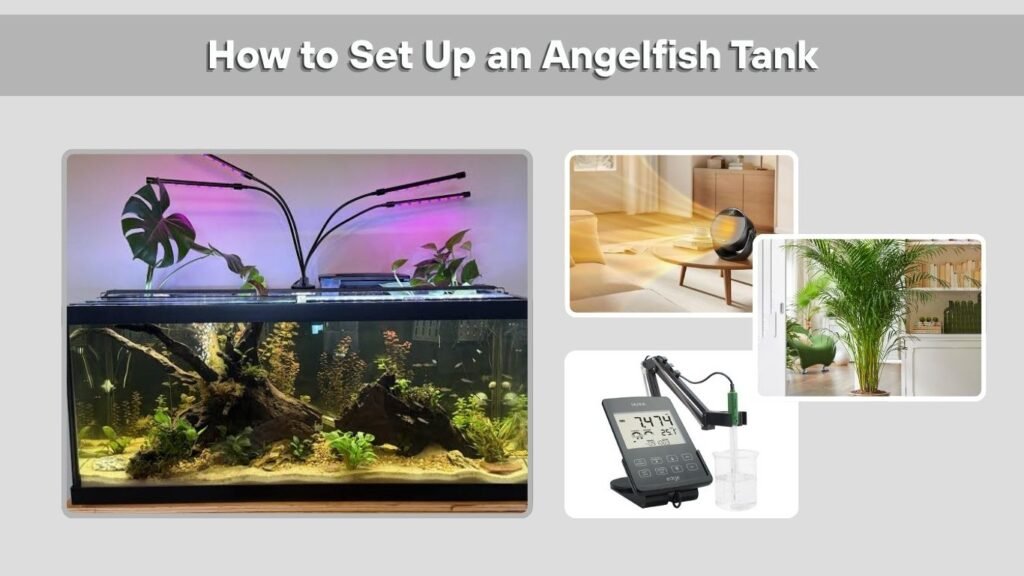
The best angelfish aquariums combine open swimming areas with vertical structures and plants. Angelfish naturally move around branches, roots, and vegetation, so a completely empty aquarium offers little security. Plants can also break lines of sight between territorial fish, reducing stress when multiple angelfish share one tank.
Angelfish Tank Setup Checklist
For a practical setup, include:
- A tall aquarium
- Reliable heater
- Suitable filter
- Thermometer
- Smooth substrate
- Tall plants
- Driftwood or smooth decorations
- Open swimming area
- Secure aquarium lid
- Water conditioner
- Water-testing supplies
Avoid sharp decorations that could tear long fins.
Best Plants for an Angelfish Tank
Amazon swords are especially popular because their tall, broad leaves suit angelfish well. Java fern, Anubias, Vallisneria, Cryptocoryne, and floating plants can also work.
A planted tank gives angelfish hiding areas and creates visual barriers between competing individuals. Breeding pairs may also select broad leaves as surfaces for depositing eggs.
Filtration and Water Changes
Use a filter powerful enough to maintain clean water without producing extremely strong currents. Angelfish are not designed for constant high-flow environments.
Regular partial water changes remove waste products and help stabilize water chemistry. Consistent maintenance is generally better than making large, sudden changes after the aquarium becomes dirty.
Angelfish Behavior in a Community Tank
Angelfish often appear calm while young, but their behavior can change dramatically as they mature. Individuals may form pairs, defend sections of the aquarium, or chase other fish away from preferred areas. These behaviors are normal for cichlids, but overcrowding can make aggression much worse.
How Much Angelfish Can You Keep?
The answer depends on aquarium size, age, filtration, and whether breeding pairs form.
A 55-gallon aquarium can accommodate several juvenile angelfish, but adults may need to be reduced or rearranged as territories develop. A 75-gallon aquarium provides more options, although compatibility still needs monitoring.
Why Is My Angelfish at the Top of the Tank?
An angelfish repeatedly remaining near the surface can indicate low oxygen, poor water quality, high temperature, stress, or illness.
Check temperature, ammonia, nitrite, nitrate, and filter operation. If several fish are gasping near the surface, water quality and oxygen levels should be investigated immediately.
Why Is My Angelfish at the Bottom?
Occasional resting is normal, but an angelfish that remains motionless on the bottom for long periods may be stressed or sick.
Look for clamped fins, rapid breathing, unusual coloration, loss of appetite, swelling, or visible parasites. Poor water conditions should always be ruled out before assuming a specific disease.
Angelfish Breeding Tank Setup
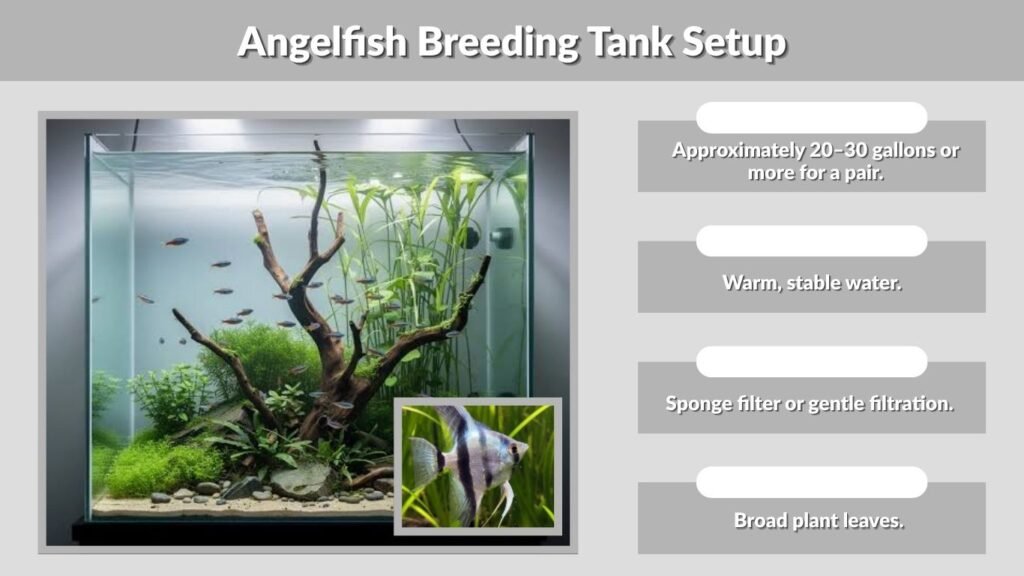
Angelfish frequently form breeding pairs in community aquariums. Once a pair begins spawning, they may become much more aggressive because both parents defend their eggs and territory. A separate breeding aquarium gives the pair greater privacy and prevents other fish from constantly attempting to eat the eggs.
Preparing a Breeding Tank
A breeding setup should provide:
- Approximately 20–30 gallons or more for a pair
- Warm, stable water
- Sponge filter or gentle filtration
- Broad plant leaves
- Vertical spawning surface
- Minimal disturbance
- Regular water changes
- Nutritious conditioning foods
Pairs commonly clean a surface before spawning and then deposit rows of eggs.
Angelfish Eggs in a Community Tank
Eggs laid in a community aquarium face a high risk of being eaten by tank mates. The parents may aggressively defend them, creating conflict throughout the tank.
Some inexperienced pairs also eat their own first batches of eggs. Repeated spawning often improves parental behavior as the pair matures.
How Long Do Angelfish Live in a Tank?
With good care, freshwater angelfish commonly live around 8–10 years, and some may survive longer. Genetics, diet, aquarium size, disease prevention, and long-term water quality all influence lifespan. Maintaining stable conditions is more important than constantly changing the aquarium in an attempt to achieve perfect numbers.
Keeping Angelfish Healthy
Long-term care depends on a few consistent habits:
- Maintain stable water temperature
- Avoid overcrowding
- Perform routine water changes
- Feed varied foods
- Choose compatible tank mates
- Watch for bullying
- Quarantine new fish when possible
- Test water regularly
Stable conditions reduce stress and help the immune system function effectively.
FAQs
1. What size tank do angelfish need?
A 29- or 30-gallon tank is a practical minimum for one adult freshwater angelfish or an established pair. Larger tanks such as 55 or 75 gallons are preferable for community setups or multiple angelfish because they provide more swimming room and territory.
2. What are the best tank mates for angelfish?
Good choices include Corydoras catfish, bristlenose plecos, larger peaceful tetras, rasboras, kuhli loaches, Bolivian rams, and some peaceful rainbowfish. Avoid very small fish that may be eaten and aggressive species that repeatedly nip the angelfish’s long fins.
3. What temperature should an angelfish tank be?
Freshwater angelfish generally thrive at about 76–82°F. A stable temperature is more important than frequent adjustments. Use a reliable aquarium heater and thermometer, and avoid sudden changes that can stress the fish or weaken their resistance to disease.
4. Can you keep angelfish in a 10-gallon tank?
A 10-gallon aquarium is not suitable for an adult freshwater angelfish. These fish grow tall and need substantially more swimming space. Small tanks also experience faster changes in water quality, making them more difficult to keep stable.
5. How often should angelfish be fed?
Adult angelfish can usually be fed one or two small meals each day. Juveniles may receive several smaller meals to support growth. Feed portions that can be consumed quickly, and remove excessive leftovers to prevent deterioration of aquarium water quality.