
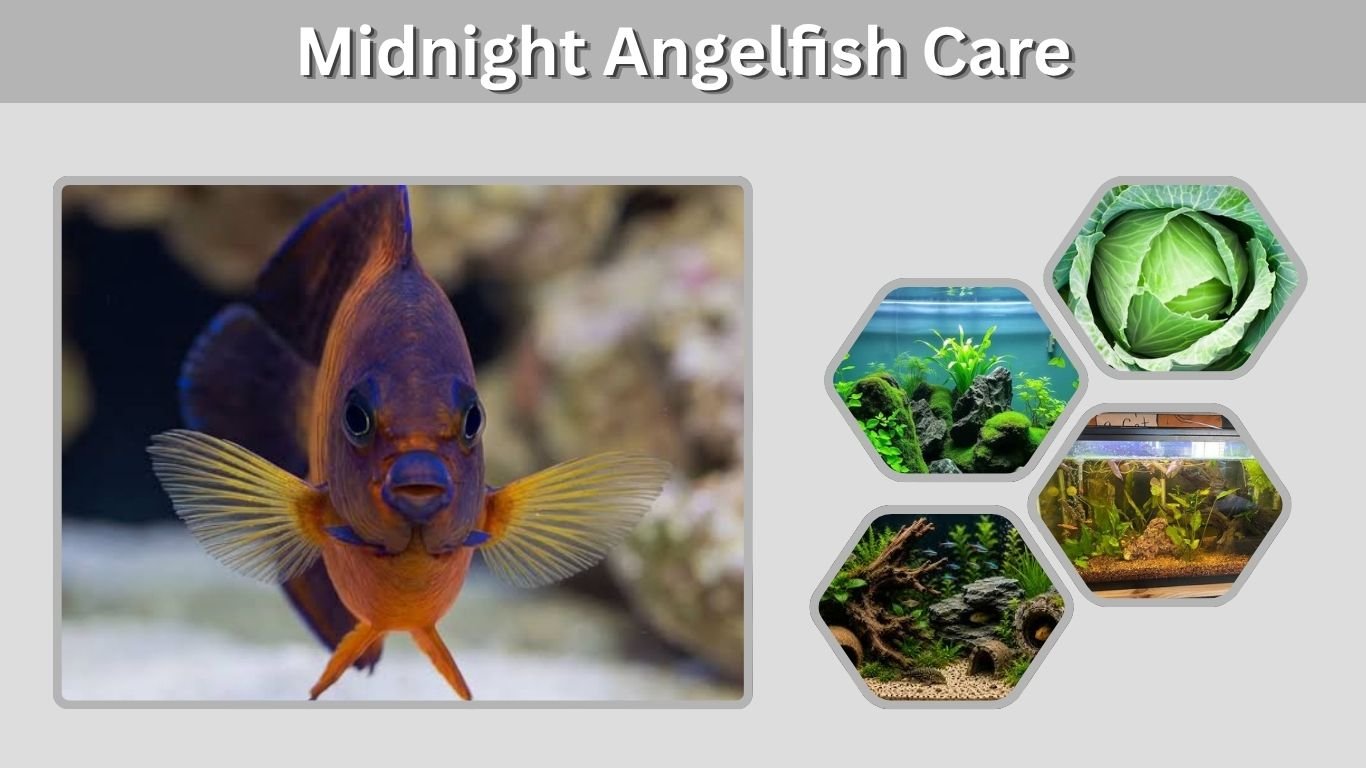
The Midnight Angelfish (Centropyge nox) is a striking dwarf marine angelfish recognized by its nearly solid black coloration. Also called the Black Nox Angelfish or Midnight Pygmy Angelfish, this unusual species creates a dramatic contrast against colorful saltwater fish and aquarium rockwork. Although relatively small, it needs a mature aquarium with plenty of hiding places, natural algae growth, and stable water conditions. Understanding its diet, temperament, tank requirements, and questionable reef compatibility is important before adding one to a marine aquarium.
Midnight Angelfish Quick Facts
The Midnight Angelfish belongs to the dwarf angelfish genus Centropyge and the family Pomacanthidae. It is a true saltwater angelfish, not a freshwater angelfish variety. Adults remain relatively compact compared with large marine angels, but their active grazing behavior and need for secure territories mean that they should still be provided with a spacious, well-established aquarium.
| Feature | Midnight Angelfish |
| Scientific name | Centropyge nox |
| Other names | Black Nox Angelfish, Midnight Pygmy Angelfish |
| Family | Pomacanthidae |
| Maximum size | About 4 inches |
| Recommended tank | Around 70 gallons or larger |
| Diet | Omnivore with strong algae component |
| Temperament | Semi-aggressive |
| Reef safe | With caution |
| Aquarium type | Saltwater |
| Natural region | Western Pacific |
Midnight Angelfish Appearance and Identification
Unlike many marine angelfish that display combinations of yellow, orange, blue, and red, the Midnight Angelfish is famous for its remarkably dark coloration. Its simple appearance is actually what makes the species distinctive. Under aquarium lighting, its body may appear jet black, bluish-black, or extremely dark brown, sometimes with a small amount of yellow near the pectoral-fin region.
How to Identify a Midnight Angelfish
Common identification characteristics include:
- Almost completely black or bluish-black body
- Deep, laterally compressed body shape
- Continuous dark dorsal and anal fins
- Dark tail matching the body
- Small yellowish area occasionally visible near the pectoral-fin base
- Typical angelfish spine near the gill cover
- Maximum adult length of approximately 4 inches
Its lack of bright patterns makes it relatively easy to distinguish from most other Centropyge angelfish.
Is There a Blue Midnight Angelfish?
The term blue Midnight Angelfish does not normally refer to a separate recognized species. Centropyge nox itself can appear slightly bluish-black under strong aquarium lighting.
Different light temperatures, camera settings, background colors, and individual variation can make the fish appear more blue in photographs. A true Midnight Angelfish should still have predominantly dark coloration rather than the obvious blue patterns found on many other marine angelfish.
Midnight Angelfish Size, Lifespan and Habitat
Although classified as a pygmy or dwarf angelfish, the Midnight Angelfish requires more room than its body length alone might suggest. Wild fish spend their time around complex reef structures where they graze and quickly retreat into shelter when disturbed. Recreating these conditions in captivity gives the fish opportunities for natural feeding, exploration, and secure territorial behavior.
How Big Does a Midnight Angelfish Get?
The Midnight Angelfish reaches approximately 10 cm, or about 4 inches, in total length. This compact adult size is one reason it is described as a dwarf or pygmy angelfish.
Its exact aquarium lifespan is less consistently documented than its size. Some aquarium sources report roughly five to seven years, although longevity can vary considerably depending on nutrition, water quality, disease, collection history, and overall husbandry.
Providing excellent conditions from the beginning offers the best opportunity for long-term survival.
Natural Habitat and Distribution
Midnight Angelfish naturally occur throughout parts of the Western Pacific, including areas from the Ryukyu Islands and Indonesia to the Solomon Islands, New Caledonia, Micronesia, and Australia’s Great Barrier Reef.
They inhabit coral-rich outer reef slopes and may also occur in lagoons and reef passages. They are associated with areas containing abundant invertebrate growth and natural algae, and wild individuals are commonly encountered singly or in pairs.
Midnight Angelfish Care and Tank Size
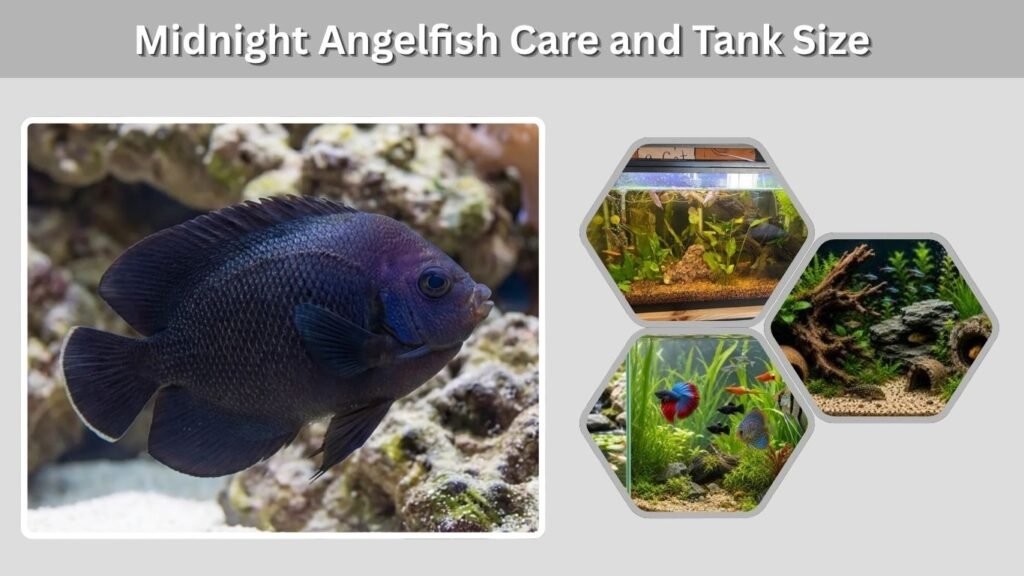
Successful Midnight Angelfish care starts with a mature saltwater aquarium. This species may be shy when first introduced and relies heavily on rock structures for security. An established tank also produces natural algae that the fish can graze between meals. Providing both open swimming areas and complicated rockwork helps create a more natural environment and reduces unnecessary stress.
Ideal Midnight Angelfish Tank Setup
A suitable aquarium should provide:
- Around 70 gallons or more for long-term housing
- Mature live rock
- Numerous caves and crevices
- Open swimming space
- Natural algae growth
- Stable temperature and salinity
- Effective biological filtration
- Good water movement
- Peaceful surroundings during initial acclimation
Several aquarium suppliers recommend approximately 70 gallons as a practical minimum for this species.
Why an Established Aquarium Matters
A newly established aquarium may not provide enough natural grazing opportunities for a Midnight Angelfish. In the wild, algae form an important part of its diet, and FishBase notes that the species performs well in tanks containing established algae growth.
Mature rockwork also contains cracks and caves where the fish can retreat. A newly introduced Midnight Angel may spend considerable time hiding before gradually becoming confident enough to explore the aquarium.
Avoid constantly rearranging its environment after it has established a territory unless aggression or another serious problem makes changes necessary.
Midnight Angelfish Diet and Feeding

Feeding is particularly important when keeping this dwarf angelfish. Wild Midnight Angelfish are known to consume algae, while captive individuals can accept a broader selection of marine aquarium foods. A combination of plant-based foods and suitable marine proteins is preferable to relying on a single pellet or frozen food. Natural algae growing on established rock provides valuable feeding opportunities between scheduled meals.
Best Foods for Midnight Angelfish
A varied diet may include:
- Spirulina-based foods
- Marine algae
- Nori or suitable seaweed
- Mysis shrimp
- Quality marine pellets
- Frozen marine preparations
- Angelfish-specific foods
- Finely chopped marine seafood
- Naturally growing algae on live rock
Offering smaller meals several times during the day can work well because dwarf angelfish naturally spend considerable time grazing.
What If a Midnight Angelfish Is Not Eating?
A newly purchased Midnight Angelfish can initially be secretive, particularly if placed into a bright aquarium with aggressive or highly active tank mates.
Good hiding places are important during this period. Natural algae on live rock may encourage the fish to begin grazing even before it accepts prepared food.
Try offering several foods rather than repeatedly giving one type. Mysis shrimp, algae-based preparations, marine angelfish foods, and seaweed are useful options.
Persistent loss of appetite combined with weight loss, abnormal breathing, spots, damaged fins, or unusual swimming should be investigated.
Is a Midnight Angelfish Reef Safe?
The Midnight Angelfish is best regarded as reef safe with caution. Like other dwarf angelfish, individuals can differ significantly in their behavior around corals and other invertebrates. Some aquarium sources specifically warn that Midnight Angels may pick at soft coral polyps, zoanthids, clam mantles, and other sessile organisms, making them less predictable than dedicated reef-safe fish.
Midnight Angelfish in a Reef Tank
A Midnight Angelfish may live in a reef aquarium without immediately damaging every coral, but there is always some risk.
The fish naturally investigates rock surfaces while searching for food. Unfortunately, that grazing behavior may extend to coral tissue or clam mantles.
Providing frequent meals and plenty of natural algae may reduce food-driven picking, but it cannot guarantee that a particular fish will leave corals untouched.
For tanks containing valuable or delicate corals, consider the possibility of needing to remove the angelfish later.
Temperament and Tank Mates
Midnight Angelfish may be shy when introduced but can become territorial after settling into an aquarium.
Calm community fish that do not aggressively compete for food are often better companions. Fishkeeper recommends avoiding aggressive tank mates and strong competitors for grazing foods, particularly when introducing this relatively secretive species.
Adding another dwarf angelfish requires considerably more caution. Similar species may compete for territories, caves, and grazing surfaces.
In most average-sized home aquariums, keeping one Midnight Angelfish is simpler than attempting several dwarf angels together.
Midnight Angelfish for Sale and Cost
Midnight Angelfish regularly enter the marine aquarium trade, although availability and cost can vary significantly depending on location, specimen size, collection source, shipping expenses, and retailer. For that reason, there is no single reliable worldwide Midnight Angelfish price. Health and feeding response should be given greater importance than choosing a specimen simply because its price is lower.
What to Check Before Buying
Choose a fish that:
- Actively investigates its surroundings
- Has a full, healthy-looking body
- Has clear eyes
- Has intact fins
- Breathes steadily
- Shows no obvious white spots
- Has no open wounds or sores
- Responds to food
- Is not continuously lying or hiding unnaturally
If possible, watch the Midnight Angelfish eat before purchasing it. A specimen already accepting prepared food can be easier to establish in a home aquarium.
Is the Midnight Angelfish Freshwater or Saltwater?
The Midnight Angelfish is strictly a saltwater marine species. It should not be confused with black varieties of freshwater angelfish belonging to the genus Pterophyllum.
Centropyge nox is a reef-associated marine fish adapted to tropical saltwater conditions.
Searches for “Midnight Angelfish freshwater” may therefore lead to confusion between two completely different groups of fish that happen to share the common name angelfish.
FAQs
Midnight Angelfish attract aquarists because their nearly solid black coloration is unusual among tropical marine fish. Before keeping one, however, it is important to consider more than appearance. Tank maturity, natural grazing opportunities, compatible companions, and coral safety all influence whether the fish will adapt successfully and remain healthy in a home saltwater aquarium.
Are Midnight Angelfish dwarf angelfish?
Yes. The Midnight Angelfish belongs to the dwarf marine angelfish genus Centropyge. It reaches only about 4 inches long, making it considerably smaller than large marine angelfish such as Emperor or Blueface Angelfish.
What size tank does a Midnight Angelfish need?
A tank of around 70 gallons or larger is a good long-term choice. More space allows the fish to establish territory while providing plenty of mature live rock, caves, swimming room, and natural surfaces for grazing.
Is a Midnight Angelfish aggressive?
It can be territorial, particularly toward other angelfish or fish competing for similar resources. However, individual temperament varies. Providing ample rockwork, hiding places, and sufficient aquarium space can help reduce territorial encounters.
Is the Midnight Angelfish reef safe?
It is best described as reef safe with caution. Some specimens may nip soft coral polyps, zoanthids, clam mantles, and other sessile invertebrates. Individual behavior varies, so placing one in a valuable coral reef aquarium involves some risk.
What does a Midnight Angelfish eat?
Wild Midnight Angelfish feed heavily on algae. Aquarium fish should receive a varied diet containing marine algae, Spirulina-based foods, mysis shrimp, quality marine preparations, and other appropriate foods. Mature live rock also gives them natural grazing opportunities throughout the day.