
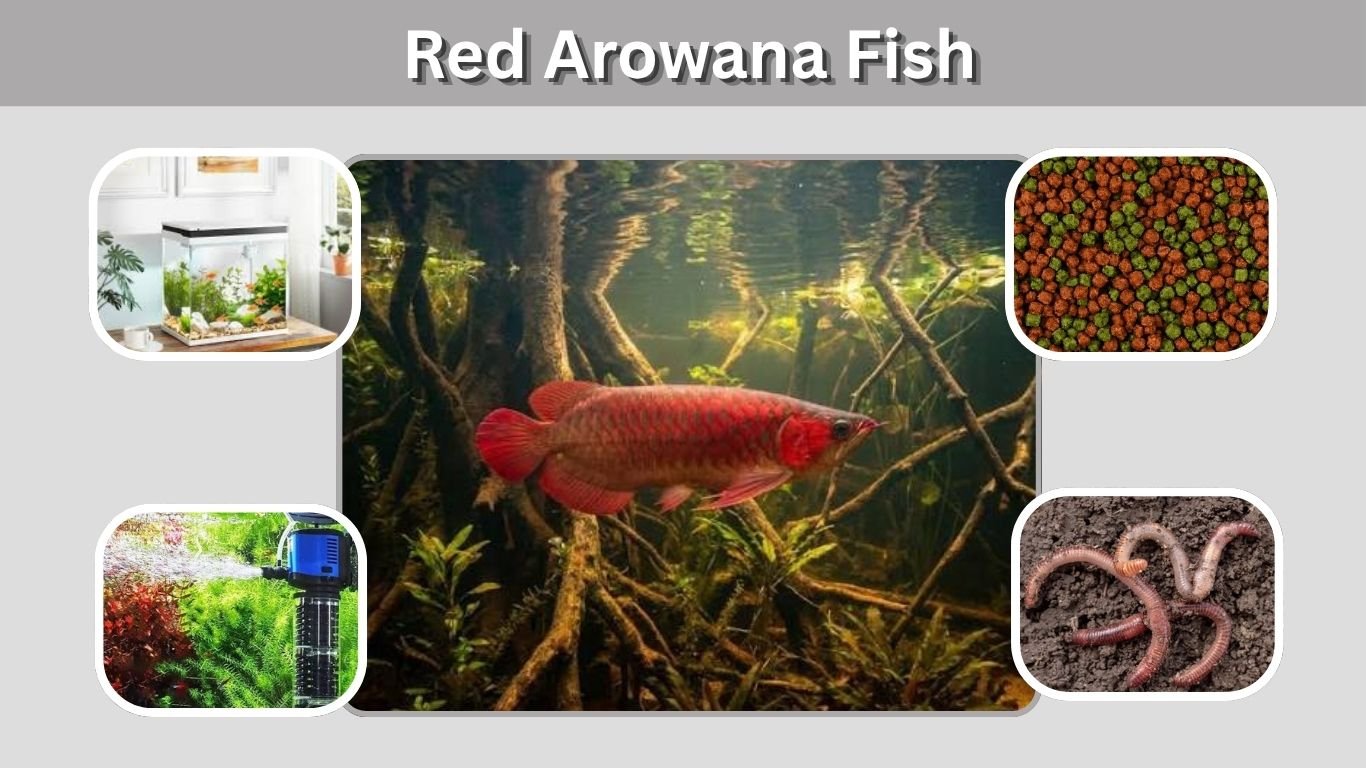
The red arowana is one of the most admired freshwater aquarium fish, famous for its long body, large scales, and brilliant red coloration. Also known as the Super Red Asian arowana or dragon fish, it is particularly popular among collectors in Asia. However, a young fish may look orange rather than deep red, and prices vary greatly according to color, breeding history, and location. Red arowanas also require enormous tanks and careful maintenance. This guide explains the different varieties, typical prices, adult size, feeding, coloration, care, and legal purchasing requirements.
What Is a Red Arowana?
A red arowana is a color form of the Asian arowana, Scleropages formosus, with an upturned mouth, two barbels, and reflective scales. Wild red populations originate around the upper Kapuas River in West Kalimantan, Indonesia. Nicknamed dragon fish, they symbolize prosperity in some Asian cultures, although this is a cultural belief. These large predators need extensive swimming space and long-term care.
Different Types of Red Arowana
Red arowanas carry multiple trade names, and grading varies among farms. Chili Red, Blood Red, and Super Red describe red Asian arowanas, not entirely separate species. Individual coloration changes with maturity.
Super Red Arowana
Super Red broadly describes prized red Asian arowanas. Adults may develop red scales, fins, and gill covers. Juveniles often look different from mature fish, so photographs cannot guarantee future color.
Chili Red Arowana
Chili Red, or Chilli Red, describes fish with rich red or orange-red coloration, often across the body and face. It does not guarantee every scale will become crimson.
Blood Red Arowana
Blood Red often refers to a deep, saturated tone. Hobbyists may distinguish it from Chili Red, but grading is inconsistent. Evaluate the individual fish and its documentation.
Banjar Red and Red Tail Golden
Banjar Red may resemble Super Red when young but typically develops orange-red fins without full-body red coloration. Red Tail Golden (RTG) has a mostly golden body and reddish tail, not the same appearance as Super Red.
| Trade name | General appearance |
| Super Red | Red Asian arowana with varying adult intensity |
| Chili Red | Rich red or orange-red appearance |
| Blood Red | Deep red appearance; grading varies |
| Banjar Red | More limited red, often stronger on fins |
| Red Tail Golden | Golden body with reddish tail |
How Do Red Arowanas Develop Their Color?
Young red arowanas rarely show the intense color of mature specimens. Genetics, age, health, and environment influence development. Some become crimson; others stay orange or copper. No lamp or supplement can guarantee a deep-red outcome.
Genetics and Age
Breeding lineage strongly influences adult color. Early red fins may suggest future development but are not guaranteed. Color maturation can take years.
Lighting and Diet
Consistent lighting shows natural coloration. Intense tanning lamps may cause stress and cannot change genetics. Nutritious, varied food supports healthy pigmentation better than relying on color-enhancing products.
Red Arowana Price: How Much Does It Cost?

Prices depend on size, color, farm reputation, condition, and location. Mature, intensely colored fish often cost more than juveniles. Because legal trade and transport differ, there is no reliable worldwide price.
| Example 2026 listing | Advertised price |
| Red arowana, Singapore marketplace | SGD 588 |
| Premium red, tagged and certified, Singapore | SGD 1,080 |
| Super Red, 35–40 cm, tagged, Singapore | SGD 1,500 |
| Chili Red, UK specialist listing | £1,000–£2,400 across sellers |
These are advertised examples, not appraisals. Exceptional fish can cost much more. Be wary of unusually cheap premium fish without paperwork.
Red Arowana Tank Size and Aquarium Setup
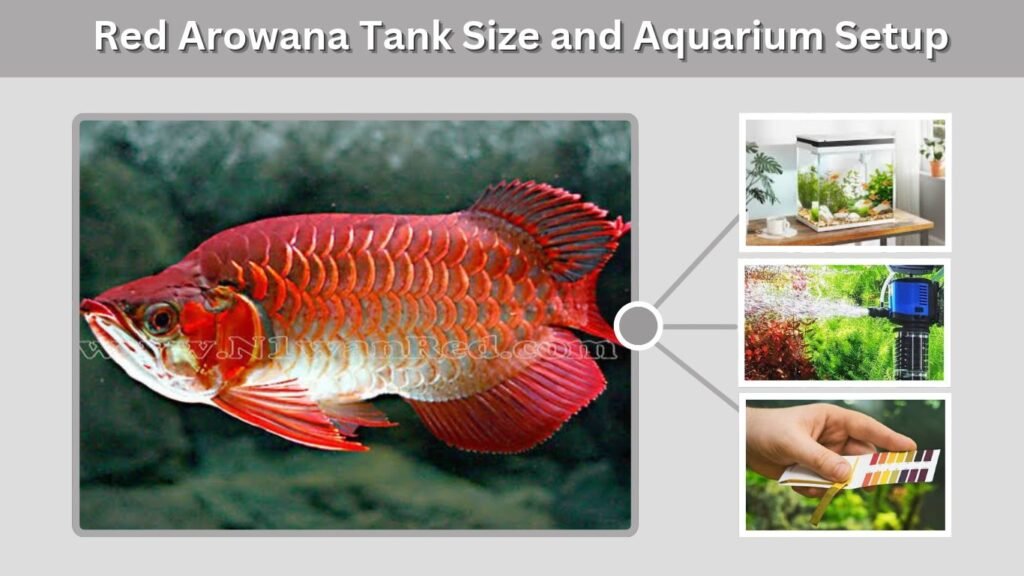
A red arowana can reach 2–3 feet, occasionally more. It swims near the surface and jumps powerfully. Adults require huge, securely covered aquariums and consistently clean water, often beyond ordinary home setups.
Minimum Tank Dimensions
Plan for an aquarium roughly 8 feet long and 3 feet wide or larger. Such setups can exceed 300 gallons. A juvenile tank is temporary, and narrow tanks may restrict turning despite impressive gallon ratings.
Water Temperature and Quality
A mature biological filter and regular testing are essential.
- Temperature: Approximately 75–82°F (24–28°C) works for many red arowanas.
- pH: Around 6.0–7.5 is commonly maintained, with stability more important than chasing a precise value.
- Ammonia and nitrite: Both should remain at zero in a properly cycled aquarium.
- Maintenance: Use strong filtration, good oxygenation, and regular partial water changes based on water testing.
Lighting, Decorations, and Lids
Provide open swimming space, smooth decorations, and a sturdy, gap-free lid. Avoid sharp rocks, exposed equipment, and stressful lighting.
What Do Super Red Arowanas Eat?
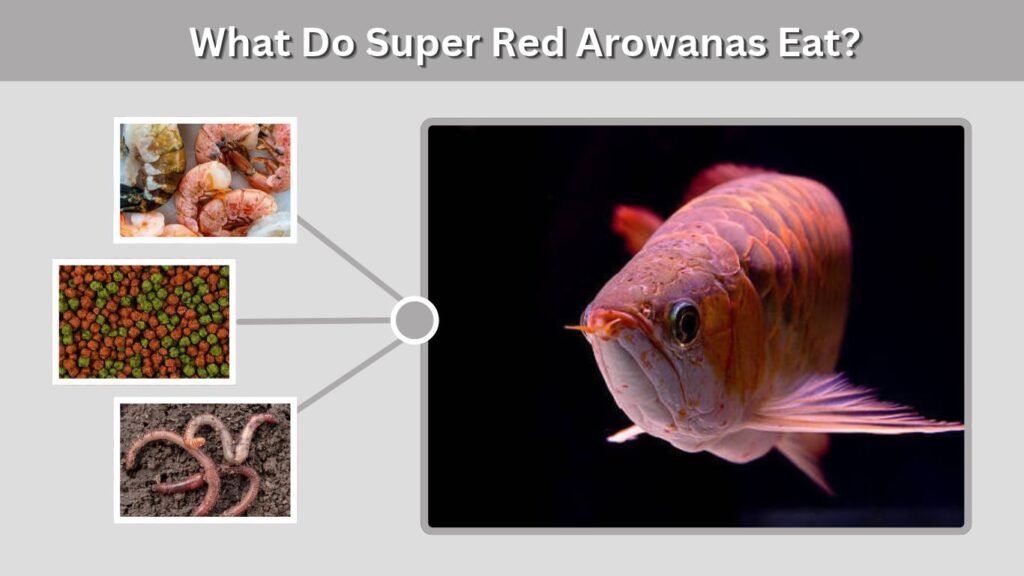
Red arowanas eat fish, crustaceans, insects, and other prey. Captive diets should be varied, appropriately sized, and adjusted with age. Aim for healthy body condition, not rapid weight gain.
Suitable foods may include:
- Quality floating carnivore pellets, if the fish accepts them.
- Shrimp, prawns, and pieces of appropriate fish flesh.
- Earthworms and safely sourced feeder insects.
- Occasional other nutritious aquatic invertebrates.
Avoid wild-caught or unhealthy feeder fish because they can introduce parasites. Remove leftovers promptly.
Are Red Arowanas Aggressive?
Red arowanas can be territorial toward fish sharing their swimming level and may swallow small tankmates. Temperament varies, making solitary housing the most predictable option.
Can Red Arowanas Live With Other Fish?
Large, robust tankmates sometimes work in exceptionally spacious tanks, but aggression remains possible. Avoid tiny fish and fin-nippers. Keep a backup enclosure ready. Red tail catfish are particularly challenging because they grow enormous.
Red Arowana Lifespan, Breeding, and Health

Asian arowanas may live 10–20 years or longer with good care. Their health requires stable water, varied food, and injury prevention. Breeding usually takes place in specialized facilities.
How Do Red Arowanas Breed?
Asian arowanas are paternal mouthbrooders: males protect eggs and young in their mouths. Breeding needs mature, compatible adults and specialized space.
Signs of a Health Problem
Check for symptoms such as:
- Persistent appetite loss or unusual weight loss.
- Cloudy eyes, damaged scales, or torn fins.
- Rapid breathing or swimming abnormally.
- Repeated jumping, collisions, or visible injuries.
Test water quality first. Seek an aquatic veterinarian if symptoms are severe or persistent.
Where Can You Legally Buy a Red Arowana?
Asian arowanas are listed under CITES Appendix I, requiring permits for applicable international trade. Captive-bred fish should have verifiable origins and required identification. US endangered-species law sharply restricts ordinary import and commercial trade, regardless of overseas availability.
Animal and Veterinary Service (AVS)+2
Before purchasing in a country where trade is permitted:
- Confirm the seller and breeding source are legitimate.
- Request applicable CITES permits and certificates.
- Verify the fish’s microchip or identification details when required.
- Check local ownership, sale, and transport regulations.
Never rely on a sales advertisement as proof of legality.
FAQs
1. Is a Super Red arowana different from a red arowana?
Super Red is a prized red color form of the Asian arowana. Red arowana and Super Red are often used interchangeably. Chili Red and Blood Red are additional trade descriptions within the red group.
2. At what age does a red arowana turn red?
Color develops gradually, sometimes over several years. Juveniles may have reddish fins before their scales darken. Genetics strongly influence the result, so not every fish becomes bright crimson.
3. What is the difference between red and golden arowanas?
Red arowanas are valued for red scales and fins; golden forms for metallic gold coverage. Red Tail Golden fish have reddish fins but primarily golden bodies rather than the crimson coloration associated with Super Red.
4. Can I keep a red arowana in a 100-gallon aquarium?
A juvenile might fit temporarily, but 100 gallons is inadequate for an adult. Red arowanas need long, wide tanks, strong lids, and powerful filtration. Arrange permanent housing before buying one.
5. Why are Super Red arowanas so expensive?
Selective breeding, intense coloration, individual quality, and legal documentation drive prices. Mature fish with established color often command premiums. A high asking price, however, never proves authenticity, health, or legal origin.