
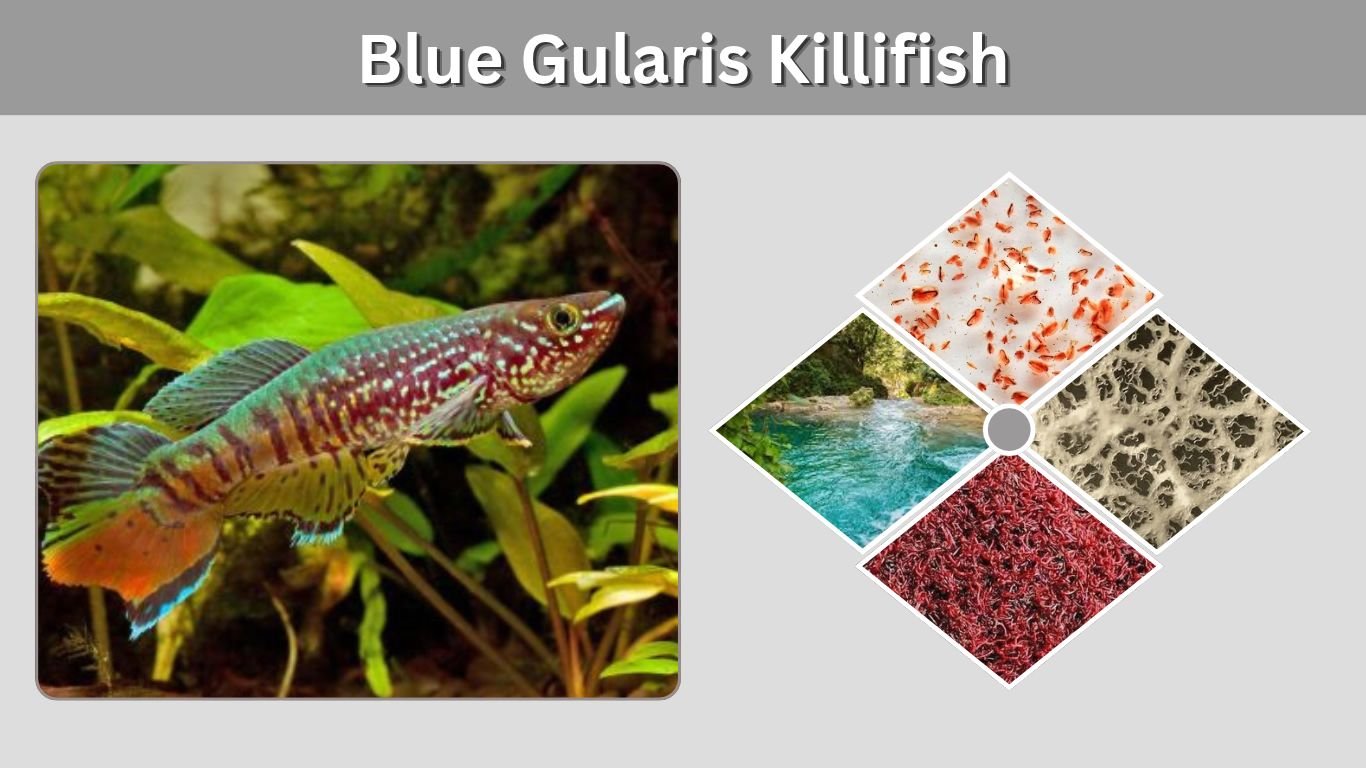
The blue gularis killifish (Fundulopanchax sjostedti) is a colorful freshwater fish known for its striking blue body, bright red markings, and impressive fins. Native to West Africa, particularly Nigeria and Cameroon, this species is among the largest and most attractive killifish kept in aquariums. Although its beautiful appearance makes it popular among fish enthusiasts, blue gularis killifish require appropriate tank conditions, nutritious food, and carefully selected tank mates. Their territorial behavior and unusual breeding habits also make them interesting to experienced aquarists. This guide covers their identification, size, lifespan, aquarium care, compatibility, breeding, and egg hatching.
What Is a Blue Gularis Killifish?
The blue gularis killifish is a freshwater species belonging to the genus Fundulopanchax. Its accepted scientific name is Fundulopanchax sjostedti, although older sources sometimes use Aphyosemion sjoestedti. It is also known as the golden pheasant gularis. This species naturally inhabits swampy freshwater environments and slow-moving streams in tropical West Africa, where dense vegetation provides shelter and breeding locations.
Blue Gularis Killifish Identification
Blue gularis killifish are easily recognized by their colorful bodies and elongated fins.
Their main characteristics include:
- Scientific name: Fundulopanchax sjostedti
- Family: Nothobranchiidae
- Common names: Blue gularis, golden pheasant gularis
- Body color: Blue, turquoise, green, and reddish-brown
- Fin coloration: Blue, yellow, orange, and red
- Adult size: Approximately 4–5.5 inches
- Natural habitat: Freshwater swamps and slow-moving streams
- Temperament: Territorial and sometimes aggressive
Their colorful markings and distinctive fins make them particularly attractive in planted aquariums.
Male vs. Female Blue Gularis Killifish
Male blue gularis killifish display more intense coloration than females. Their bodies feature brilliant blue and green shades with reddish spots and elongated fins.
Females are generally smaller and have less dramatic coloration. Their bodies are usually brownish or olive, with shorter, rounded fins.
Males may become particularly territorial during breeding, so providing adequate hiding areas is important when keeping multiple fish.
Blue Gularis Killifish Size and Lifespan

Blue gularis killifish are considerably larger than many other aquarium killifish. Their substantial size, active behavior, and territorial tendencies mean they require more space than smaller species.
Their growth and longevity depend on environmental stability, proper nutrition, and suitable aquarium conditions. Maintaining appropriate temperatures and avoiding overcrowding can help reduce stress and support long-term health.
How Big Do Blue Gularis Killifish Get?
Adult blue gularis killifish commonly grow to approximately 4–5 inches (10–13 cm).
Large males can approach 5.5 inches (14 cm) in total length, while females are generally somewhat smaller.
Their larger size makes them unsuitable for many tiny aquariums commonly used for smaller killifish species.
Blue Gularis Killifish Lifespan
Blue gularis killifish commonly live around two to three years in captivity, although individual lifespans can vary.
Several factors influence their longevity:
- Stable water temperature
- High-quality nutrition
- Clean aquarium water
- Adequate swimming space
- Reduced territorial stress
Prolonged exposure to unnecessarily high temperatures may shorten their lifespan.
Providing suitable environmental conditions is therefore more important than attempting to accelerate growth.
Blue Gularis Killifish Care Guide
Blue gularis killifish care requires attention to aquarium size, water conditions, and fish compatibility. Although this species can adapt to captivity, its relatively large size and occasionally aggressive temperament make it better suited to aquarists with some experience.
A carefully designed aquarium should provide a swimming room alongside sheltered areas where fish can retreat from territorial encounters.
Blue Gularis Killifish Tank Size
A 20-gallon long aquarium can serve as a starting point for a carefully managed breeding pair or trio, but a 30-gallon or larger aquarium is preferable for adult fish.
Larger aquariums provide more space for territorial behavior and help maintain stable water quality.
Recommended aquarium features include:
- Dense aquatic vegetation
- Driftwood and natural hiding places
- Floating plants
- Dark substrate
- Gentle filtration
- Open swimming areas
- A secure aquarium lid
Blue gularis killifish are capable jumpers, making a tightly fitted lid essential.
Water Temperature and Parameters
Blue gularis killifish naturally inhabit tropical freshwater environments, but they generally prefer moderately warm conditions rather than excessive heat.
| Water parameter | Recommended range |
| Temperature | 70–76°F (21–24°C) |
| pH | 6.0–7.0 preferred |
| Water hardness | Soft to moderately hard |
| Water movement | Gentle |
| Tank size | 30 gallons or larger preferred |
| Lighting | Low to moderate |
These ranges are practical starting points, and successful breeders sometimes maintain the species under somewhat different conditions.
Avoid sudden temperature changes, excessive water movement, and poor filtration.
Blue Gularis Killifish Tank Mates and Compatibility
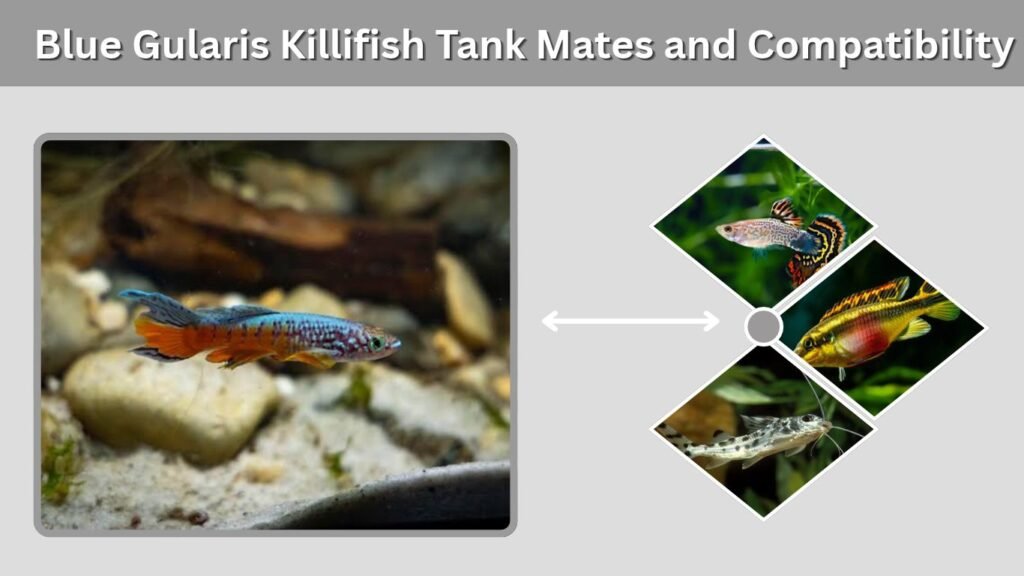
Choosing appropriate blue gularis killifish tank mates is important because this species can be territorial and predatory toward smaller animals.
Unlike many peaceful killifish, adult blue gularis may chase competing fish or eat smaller tank companions. Their compatibility therefore depends on aquarium space, the size of other fish, and individual temperament.
Best Tank Mates for Blue Gularis Killifish
Potential companions include appropriately sized, robust freshwater fish that tolerate similar water conditions.
Some possibilities are:
- Medium-sized peaceful catfish
- Appropriately sized Corydoras species
- Larger peaceful tetras
- Suitable small-to-medium plecos
- Other sturdy freshwater fish
Compatibility is not guaranteed, even with these choices.
A species-only aquarium is often the safest option, particularly when keeping breeding adults.
Avoid introducing tiny fish that could be mistaken for food.
Can Blue Gularis Killifish Live With Shrimp?
Blue gularis killifish are generally unsuitable companions for freshwater shrimp.
Their predatory instincts and relatively large mouths make smaller shrimp vulnerable.
Cherry shrimp and other dwarf shrimp may be eaten, particularly when they are young or recently molted.
Even larger shrimp may experience stress or occasional attacks.
For this reason, keeping shrimp in a separate aquarium is usually preferable.
What Do Blue Gularis Killifish Eat?

Blue gularis killifish are carnivorous fish that primarily consume small aquatic animals and insects.
In their natural habitats, they feed on available invertebrates and other small prey. Their diet should contain sufficient animal protein to support normal growth, coloration, and reproductive health.
Best Foods for Blue Gularis Killifish
A varied diet can include:
- Bloodworms: Protein-rich food suitable for adult fish.
- Brine shrimp: Nutritious live or frozen food.
- Daphnia: Small freshwater crustaceans.
- Mosquito larvae: Natural prey when obtained from safe sources.
- Mysis shrimp: Suitable for larger individuals.
- Quality carnivore pellets: May be accepted by fish accustomed to prepared foods.
Offer appropriately sized portions once or twice daily.
Remove uneaten food to prevent water-quality problems.
How Often Should You Feed Blue Gularis Killifish?
Adult blue gularis killifish can generally be fed once or twice daily.
Provide only the amount they can consume within a short period.
Breeding adults may benefit from additional variety and nutritious live foods.
Avoid consistently overfeeding, as leftover food can increase ammonia and reduce aquarium water quality.
Blue Gularis Killifish Breeding and Reproduction
Breeding blue gularis killifish is possible in captivity when suitable conditions are provided. Unlike livebearing aquarium fish, they reproduce by laying eggs.
This species is a substrate spawner, meaning eggs are usually deposited near or within suitable materials at the bottom of the aquarium. Breeders commonly use peat or spawning mops to collect and incubate eggs.
How to Breed Blue Gularis Killifish
For breeding, select healthy adults with good coloration and normal behavior.
A breeding trio consisting of one male and two females is often recommended.
Follow these steps:
- Prepare a separate breeding aquarium.
- Maintain stable, slightly acidic water.
- Provide suitable spawning substrate or mops.
- Condition adults with nutritious live foods.
- Introduce compatible breeding fish.
- Check the spawning medium for eggs.
- Carefully transfer eggs for incubation.
- Raise newly hatched fry separately.
Males can be aggressive toward females during breeding.
Providing hiding areas and allowing females to rest between breeding periods can help prevent exhaustion.
Blue Gularis Killifish Eggs and Hatching
Blue gularis killifish eggs can be incubated in water or carefully maintained moist spawning substrate.
Incubation time depends on the method and environmental conditions.
Under suitable conditions, water-incubated eggs may hatch after approximately three to five weeks.
Eggs stored in appropriately moist peat may be incubated for about 10–12 weeks before rewetting.
Newly hatched fry can be fed baby brine shrimp, microworms, and other suitably sized live foods.
Regular monitoring helps prevent fungal problems and improve hatching success.
Where to Buy Blue Gularis Killifish and Eggs
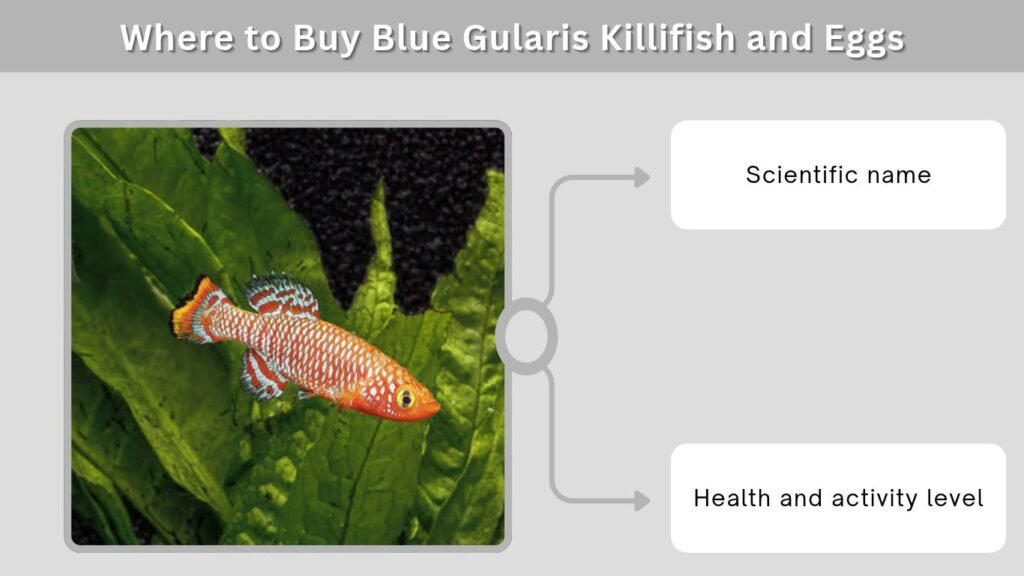
Blue gularis killifish are less commonly available than popular aquarium fish such as guppies, mollies, or tetras.
They are usually obtained from specialist breeders, aquarium clubs, and retailers specializing in uncommon freshwater species.
Blue Gularis Killifish for Sale
When purchasing blue gularis killifish in the United States, Canada, or the United Kingdom, look for reputable breeders who can confirm the fish’s identity.
Before buying, check:
- Scientific name
- Fish age and size
- Health and activity level
- Captive-bred origin
- Current water conditions
- Shipping arrangements
- Breeding lineage
The species is classified as Endangered in the wild, making responsible sourcing particularly important.
Blue Gularis Killifish Eggs for Sale
Some specialist breeders sell blue gularis killifish eggs instead of adult fish.
When purchasing eggs, confirm their collection date, incubation method, and expected hatching period.
Eggs require careful handling and appropriate moisture conditions.
Buyers should follow the breeder’s incubation instructions because different storage methods can affect development and hatching success.
FAQs
1. Are Blue Gularis Killifish Aggressive?
Yes, blue gularis killifish can be territorial and aggressive, particularly toward other males. They may also eat smaller fish. Providing sufficient swimming space, hiding places, and carefully selected companions helps reduce conflict, although a species-only aquarium is often preferable.
2. Can Blue Gularis Killifish Live in a Community Tank?
Blue gularis killifish can sometimes live with appropriately sized, robust fish that tolerate similar water conditions. However, their territorial behavior makes community housing unpredictable. Small fish, shrimp, and delicate species should generally be avoided.
3. How Long Do Blue Gularis Killifish Eggs Take to Hatch?
Blue gularis killifish eggs may hatch in approximately three to five weeks when incubated in water under suitable conditions. Eggs maintained in moist peat can take considerably longer, commonly around 10–12 weeks before rewetting and hatching.
4. Are Blue Gularis Killifish Good for Beginners?
Blue gularis killifish are generally better suited to intermediate or experienced aquarists. Their territorial behavior, larger adult size, jumping ability, and specialized breeding requirements make them more challenging than many common freshwater aquarium fish.
5. Can Blue Gularis Killifish Live With Other Killifish?
Keeping blue gularis killifish with smaller killifish species is generally discouraged because of possible aggression and predation. Mixing closely related species may also create breeding or identification problems. A dedicated species aquarium provides better control over behavior and reproduction.