
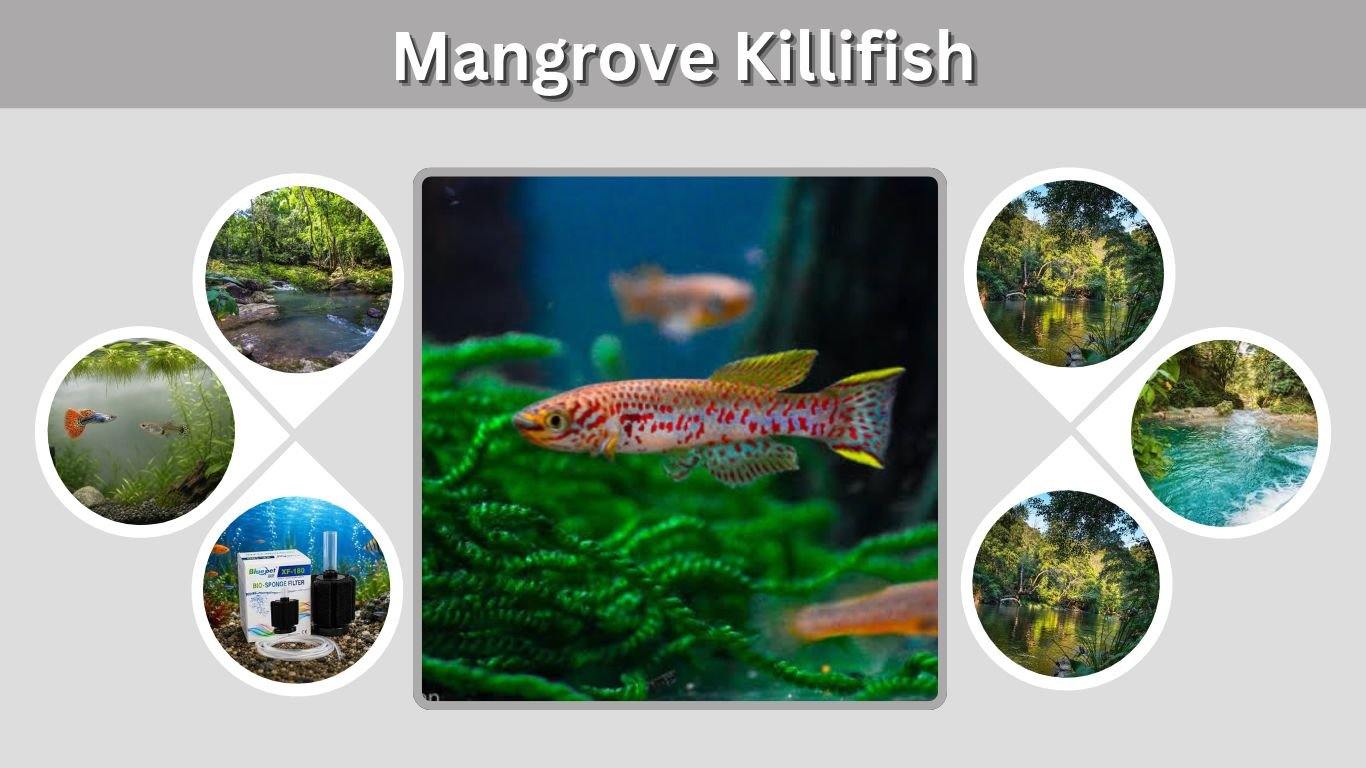
The mangrove killifish (Kryptolebias marmoratus), also known as the mangrove rivulus, is one of the world’s most unusual fish. Unlike most fish, it can survive outside water for extended periods, breathe through its skin, and reproduce through self-fertilization. Native to mangrove forests in Florida, the Caribbean, and parts of Central and South America, this tiny amphibious fish thrives in environments where other fish struggle to survive. Its remarkable adaptations have attracted scientific attention worldwide. This guide explores mangrove killifish identification, habitat, tree-climbing behavior, reproduction, aquarium care, and fascinating biological characteristics.
What Is a Mangrove Killifish?
The mangrove killifish is a small amphibious fish belonging to the family Rivulidae. Its scientific name is Kryptolebias marmoratus, although older publications identify it as Rivulus marmoratus. This species is particularly remarkable because it can live in water and temporarily survive on land. Its ability to tolerate changing environmental conditions makes it one of the most extensively studied amphibious fish.
Mangrove Killifish Identification
Mangrove killifish have slender bodies, rounded fins, and subtle coloration that provides camouflage in muddy environments.
Their identifying characteristics include:
- Scientific name: Kryptolebias marmoratus
- Common name: Mangrove rivulus
- Family: Rivulidae
- Body length: Approximately 1–2.4 inches
- Body color: Brown, olive, or grayish
- Markings: Irregular dark spots
- Habitat: Mangrove forests and coastal wetlands
- Special ability: Surviving outside water
Their small bodies help them enter narrow openings in decaying wood, crab burrows, and other sheltered locations.
Mangrove Killifish Size and Appearance
Adult mangrove killifish usually measure approximately 1–2 inches (2.5–5 cm), although larger individuals can approach 2.4 inches (6 cm).
Their coloration varies among individuals, but most display brownish bodies with darker spots or mottled patterns. These markings help them blend into muddy water, fallen leaves, and mangrove roots.
Some hermaphroditic individuals also display a distinctive spot near the base of the tail.
Can Mangrove Killifish Live Outside Water?
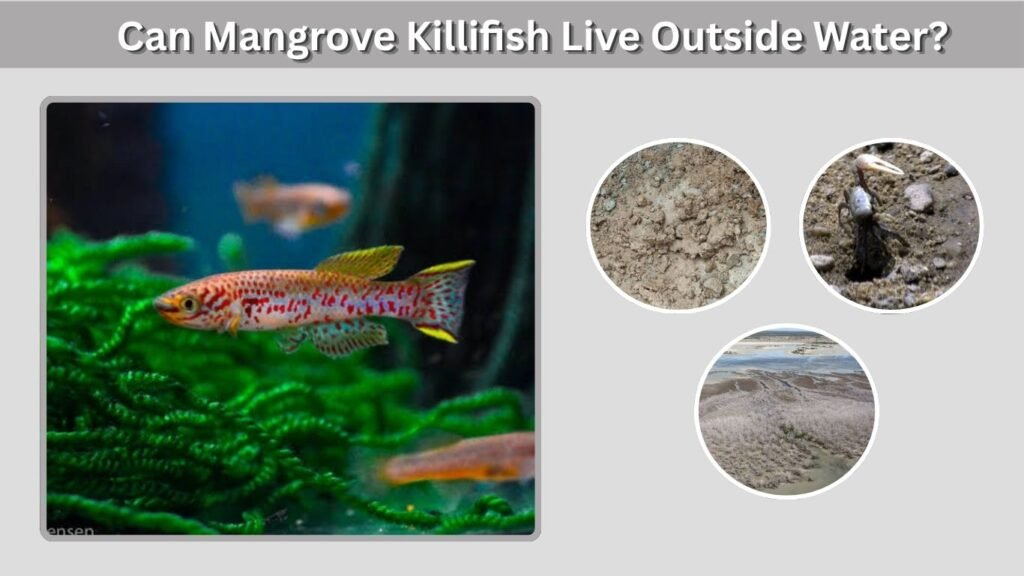
Yes, mangrove killifish can survive outside water for weeks under suitable conditions. This unusual ability makes them amphibious fish, meaning they can spend time both underwater and on land.
Their adaptations allow them to escape deteriorating water conditions, survive temporary habitat drying, and occupy damp terrestrial shelters. However, they must remain sufficiently moist to avoid dehydration.
How Long Can Mangrove Killifish Survive on Land?
Mangrove killifish have survived for at least 66 days outside water in laboratory observations.
Their survival depends on environmental moisture, temperature, and access to protected habitats.
They commonly shelter in:
- Moist leaf litter
- Decaying mangrove logs
- Crab burrows
- Damp mud
- Waterlogged wood cavities
Although they can survive extended periods on land, they cannot live indefinitely in completely dry environments.
How Do Mangrove Killifish Breathe on Land?
Mangrove killifish can absorb oxygen directly through their skin, a process called cutaneous respiration.
When these fish leave water, their skin becomes particularly important for gas exchange. It also helps maintain essential physiological functions during terrestrial exposure.
Their gills undergo structural changes that help them cope with prolonged periods outside water.
These adaptations allow mangrove killifish to survive conditions that would quickly kill most ordinary aquarium fish.
Do Mangrove Killifish Climb Trees?

Mangrove killifish are sometimes described as tree-climbing fish. However, this description can be misleading because they do not climb tall trees in the same way as climbing animals.
Instead, they move across damp surfaces and occupy cavities inside fallen or decaying mangrove wood. Their ability to enter sheltered wooden structures has contributed to their unusual reputation.
Why Do Mangrove Killifish Live in Trees?
Mangrove killifish have been discovered inside decaying mangrove logs containing tunnels created by insects.
These wooden cavities provide:
- Moist shelter
- Protection from drying
- Refuge from predators
- Temporary shelter when water levels decline
- Access to protected spaces
Researchers have documented large groups living together inside damp logs.
In one scientific observation, approximately 100 individuals occupied a section of decaying wood.
How Do Mangrove Killifish Move on Land?
Mangrove killifish cannot walk using legs. Instead, they move through a combination of body movements, flipping, and jumping.
Their movements allow them to travel across muddy surfaces and enter nearby sheltered locations.
They can sometimes move between crab burrows or other damp habitats without remaining continuously submerged.
Research published in The American Naturalist documented their unusual ability to occupy tunnels inside decaying mangrove logs.
Mangrove Killifish Habitat and Distribution
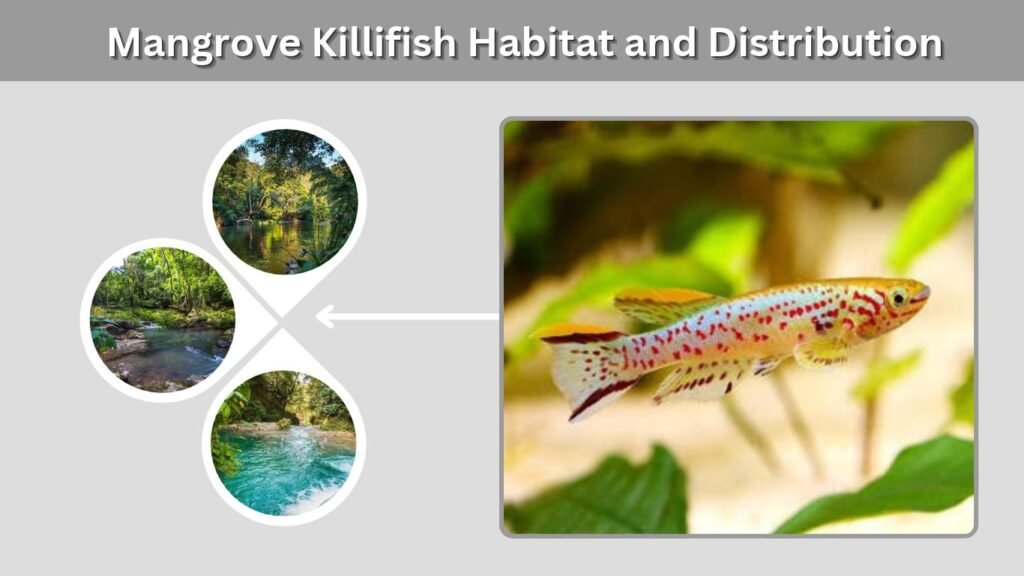
Mangrove killifish inhabit tropical and subtropical coastal environments where water levels, salinity, and oxygen availability change frequently.
They are particularly associated with red mangrove ecosystems, tidal wetlands, and shallow coastal pools. Their remarkable environmental tolerance allows them to survive in habitats that are unsuitable for many other fish species.
Where Do Mangrove Killifish Live?
Mangrove killifish occur in several regions, including:
- Southern Florida
- Florida Keys
- Bahamas
- Cuba
- Jamaica
- Belize
- Caribbean islands
- Coastal Central America
- Northern South America
- Brazil
These fish are frequently found in mangrove forests containing shallow pools, muddy channels, and crab burrows.
Can Mangrove Killifish Live in Freshwater?
Yes, mangrove killifish can survive in freshwater, brackish water, and highly saline environments.
However, they are most closely associated with coastal habitats where salinity may fluctuate significantly.
Some populations tolerate freshwater conditions, while others naturally inhabit brackish or saline waters.
For aquarium care, water conditions should match the requirements of the particular population or captive-bred strain.
Mangrove Killifish Reproduction and Hermaphroditism
One of the most remarkable characteristics of the mangrove killifish is its reproductive system. Unlike most vertebrates, many individuals can produce both eggs and sperm.
This ability allows a single fish to reproduce without requiring a separate mating partner. Scientists study this species to better understand reproductive evolution, genetics, and the advantages of self-fertilization.
How Do Mangrove Killifish Reproduce?
Most mangrove killifish are self-fertilizing hermaphrodites.
They possess reproductive tissue capable of producing both sperm and eggs. Fertilization occurs internally before the eggs are deposited.
Their reproductive process generally involves:
- Development of eggs and sperm.
- Internal self-fertilization.
- Deposition of fertilized eggs.
- Embryonic development.
- Hatching under suitable environmental conditions.
Some populations also contain males, allowing occasional reproduction between different individuals.
Is Mangrove Killifish Reproduction Parthenogenesis?
No. Mangrove killifish primarily reproduce through self-fertilization, not parthenogenesis.
Parthenogenesis involves the development of an embryo from an unfertilized egg.
In mangrove killifish, eggs are typically fertilized by sperm produced within the same hermaphroditic individual.
This distinction is important because the two reproductive processes operate through different biological mechanisms.
Mangrove Killifish Aquarium Care
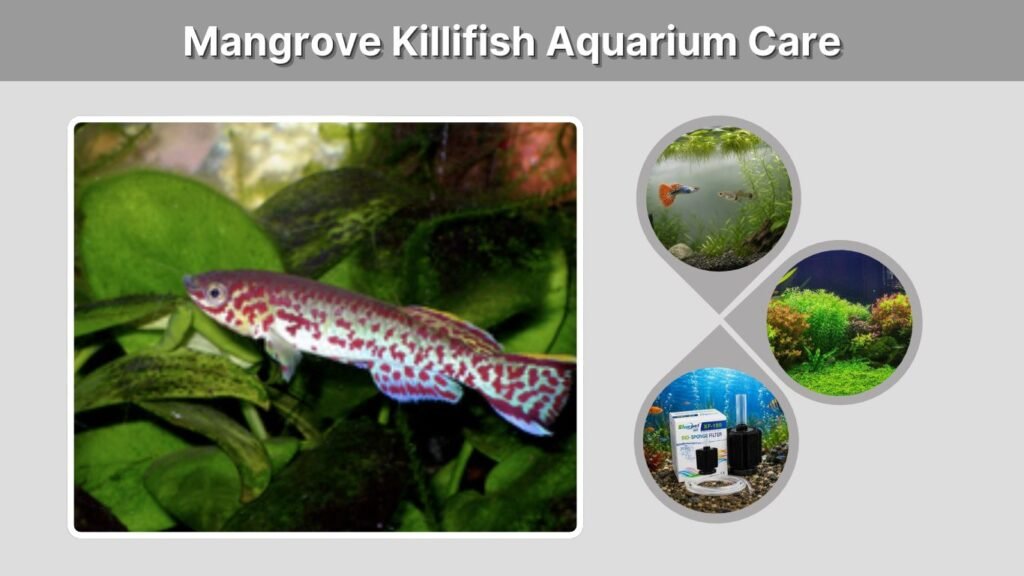
Mangrove killifish are fascinating but specialized aquarium animals. Their unusual habitat preferences, territorial tendencies, and environmental requirements make them more suitable for experienced aquarists than beginners.
A carefully maintained species-only aquarium is generally preferable to a typical community tank.
Tank Size and Aquarium Setup
A small, well-maintained aquarium can accommodate an individual mangrove killifish.
However, a larger enclosure provides more stable water conditions and space for shelter.
Important aquarium features include:
- A completely secure lid
- Stable water temperature
- Appropriate salinity
- Gentle filtration
- Sheltered hiding areas
- Suitable biological filtration
- Regular water-quality monitoring
Their ability to jump and move across damp surfaces makes escape prevention especially important.
Water Conditions and Temperature
Mangrove killifish tolerate considerable environmental variation, but stable conditions are still important in captivity.
Laboratory colonies are commonly maintained around 77°F (25°C), with salinity adjusted according to the population being studied.
Aquarists should confirm the fish’s original water conditions with the breeder before introducing it into a new aquarium.
What Do Mangrove Killifish Eat?
Mangrove killifish primarily feed on small animals found in their natural environment.
Their diet may include:
- Mosquito larvae
- Small aquatic insects
- Tiny crustaceans
- Worms
- Small invertebrates
In captivity, appropriately sized live or frozen foods may be offered.
Their feeding behavior can be surprisingly aggressive, and some individuals may consume smaller fish or juveniles.
Mangrove Killifish Aggression and Ammonia Tolerance
Mangrove killifish are known for their unusual behavioral and physiological responses to stressful environments.
Although they are small, individuals may exhibit aggressive behavior toward members of their own species, particularly when confined in limited aquatic spaces.
Are Mangrove Killifish Aggressive?
Yes, mangrove killifish can be territorial and aggressive toward one another.
Interestingly, aggression may decrease when groups occupy narrow cavities inside damp logs.
This behavioral difference has attracted scientific interest because it demonstrates how environmental conditions can influence social interactions.
How Do Mangrove Killifish Handle Ammonia?
Mangrove killifish have specialized mechanisms for eliminating nitrogenous waste while outside water.
When submerged, fish ordinarily excrete much of their ammonia through their gills.
During terrestrial exposure, mangrove killifish can release ammonia through their skin, including as gaseous ammonia.
This adaptation helps them maintain physiological balance when their gills cannot function normally underwater.
It does not mean aquarium ammonia is harmless. Captive fish still require properly maintained, biologically filtered water.
Why Are Mangrove Killifish Important to Scientists?
Mangrove killifish are valuable scientific model organisms because they combine unusual reproductive biology with remarkable environmental tolerance.
Their ability to self-fertilize allows researchers to establish genetically similar laboratory lines.
Scientists use these fish to investigate:
- Reproductive evolution
- Genetic inheritance
- Environmental adaptation
- Amphibious respiration
- Toxicity and pollution
- Physiological stress
- Behavioral flexibility
Their combination of self-fertilization, terrestrial survival, and environmental adaptability makes them particularly useful for studying how organisms respond to changing habitats.
FAQs
1. What Is Unusual About the Mangrove Killifish?
The mangrove killifish is unusual because it can survive outside water for extended periods, breathe through its skin, and reproduce through self-fertilization. These adaptations allow it to occupy challenging mangrove environments where many other fish cannot survive.
2. Can Mangrove Killifish Actually Climb Trees?
Mangrove killifish can move across damp surfaces and enter cavities inside fallen or decaying mangrove wood. Although they are sometimes described as tree-climbing fish, they are not known for routinely climbing tall, upright trees.
3. How Long Do Mangrove Killifish Live?
The natural lifespan of mangrove killifish remains uncertain. Captive individuals can survive for several years, and one laboratory specimen was reported to live for more than eight years. Longevity depends on environmental conditions and individual health.
4. Can You Keep Mangrove Killifish as Pets?
Yes, mangrove killifish can be maintained in specialized aquariums. However, their ability to escape, particular water requirements, and territorial behavior make them challenging for inexperienced aquarists. Captive-bred specimens from reputable specialists are preferable when available.
5. Are Mangrove Killifish the Same as Mudskippers?
No. Mangrove killifish and mudskippers are different types of amphibious fish. Both can spend time outside water, but they belong to different fish groups and possess distinct adaptations for terrestrial movement, respiration, and reproduction.