
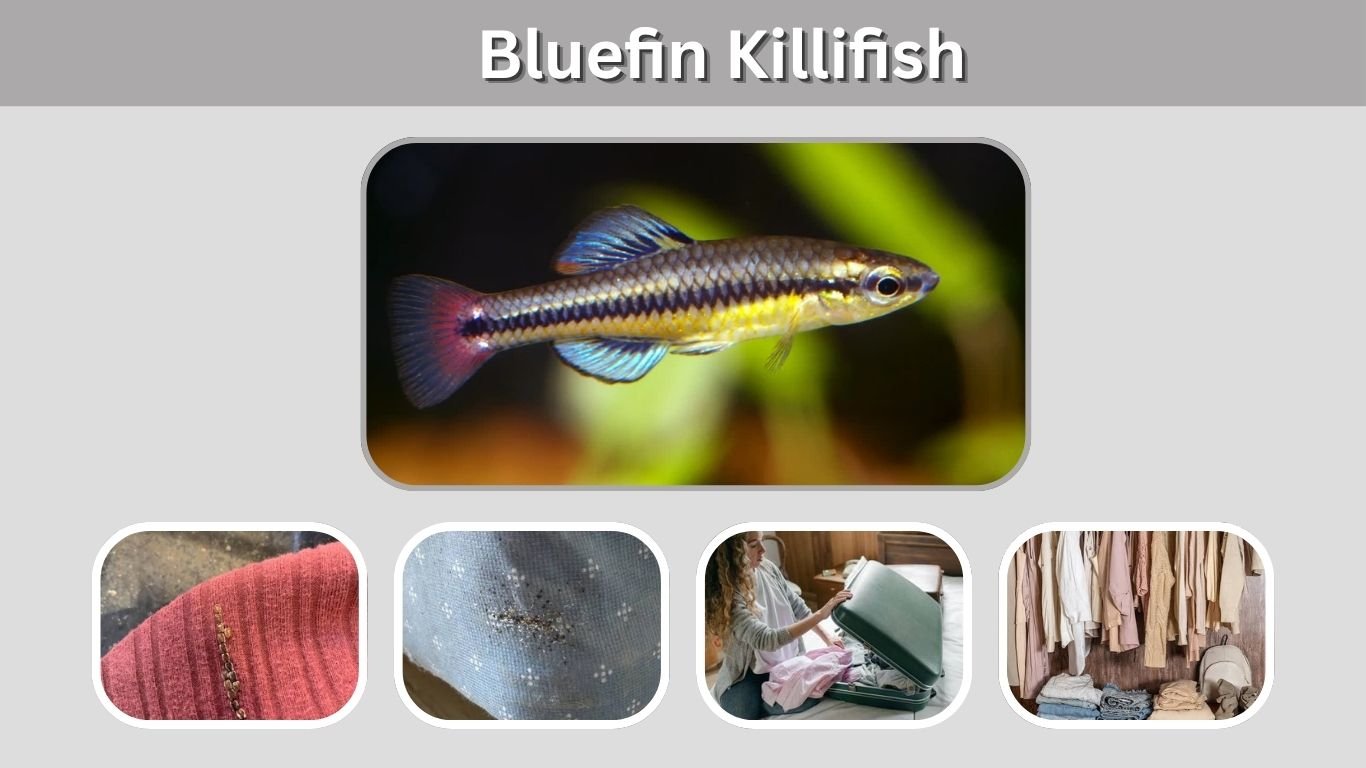
The bluefin killifish (Lucania goodei) is a small freshwater fish known for its colorful fins, peaceful appearance, and fascinating breeding behavior. Native to Florida and surrounding southeastern regions of the United States, this species inhabits freshwater springs, ponds, and slow-moving streams. Its attractive blue, orange, and red coloration makes it an interesting choice for planted aquariums. Although relatively easy to maintain under suitable conditions, bluefin killifish require proper water quality, a balanced diet, and appropriate tank mates. This guide covers their identification, size, lifespan, aquarium care, feeding habits, breeding, and natural habitat.
What Is a Bluefin Killifish?
The bluefin killifish (Lucania goodei) is a freshwater species belonging to the family Fundulidae. It is commonly found in Florida’s freshwater ecosystems, particularly in locations with abundant aquatic vegetation. Unlike annual killifish, which inhabit temporary pools, bluefin killifish live in more permanent aquatic environments and can survive for approximately two years.
Bluefin Killifish Identification
Bluefin killifish have slender, slightly compressed bodies with distinctive markings.
Their main characteristics include:
- Scientific name: Lucania goodei
- Family: Fundulidae
- Common name: Bluefin killifish
- Body color: Olive, brown, or yellowish
- Distinctive markings: Dark horizontal zigzag stripe
- Fin coloration: Blue, orange, and red
- Natural habitat: Freshwater ponds, springs, and streams
- Temperament: Generally peaceful, although breeding males may be territorial
Their small size and colorful fins make them particularly attractive in planted aquariums.
Male vs. Female Bluefin Killifish
Male bluefin killifish are generally more colorful than females. Their dorsal and anal fins display striking blue shades, often accompanied by orange or reddish markings.
Females have comparatively subdued coloration, with clearer fins and a less dramatic overall appearance.
During breeding, males may display their colorful fins to attract females and defend territories among aquatic plants.
Bluefin Killifish Size and Lifespan
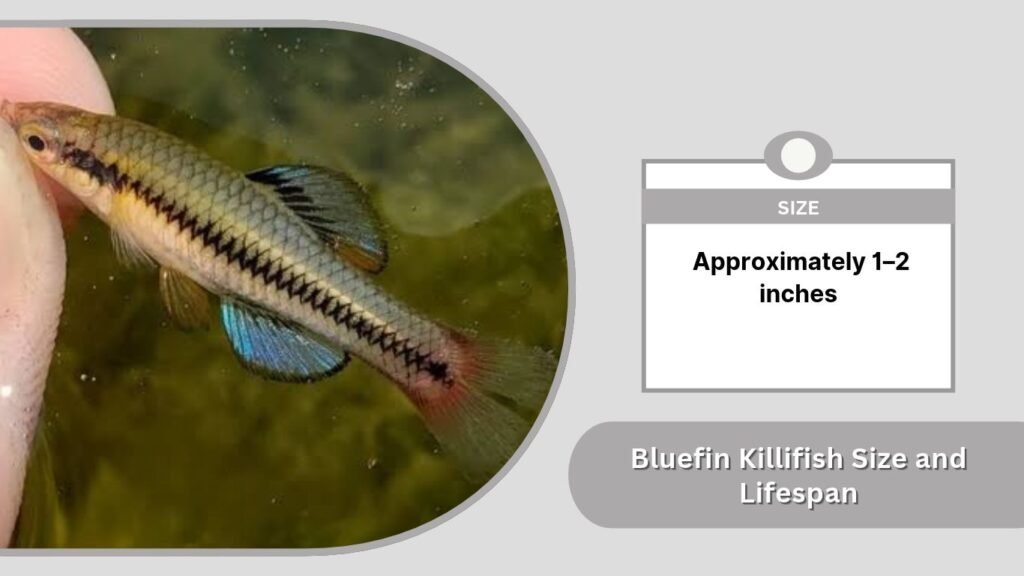
Bluefin killifish are relatively small compared with many other freshwater aquarium species. Their compact bodies allow them to navigate dense vegetation and shallow aquatic environments.
Despite their size, they remain active swimmers and benefit from adequate space. Their growth and longevity depend on food availability, water quality, environmental stability, and general care.
How Big Do Bluefin Killifish Get?
Most adult bluefin killifish measure approximately 1–2 inches (2.5 — 5 cm). Exceptionally large specimens may reach about 2.4 inches (6 cm).
Their small size makes them suitable for modest aquariums, provided sufficient swimming rooms and hiding areas are available.
How Long Do Bluefin Killifish Live?
The typical bluefin killifish lifespan is approximately two years.
Under favorable aquarium conditions, their longevity depends on:
- Consistent water quality
- Appropriate temperatures
- Balanced nutrition
- Minimal stress
- Suitable tank companions
Unlike annual killifish, bluefin killifish do not naturally depend on seasonal pond drying to complete their life cycle.
Bluefin Killifish Care in an Aquarium
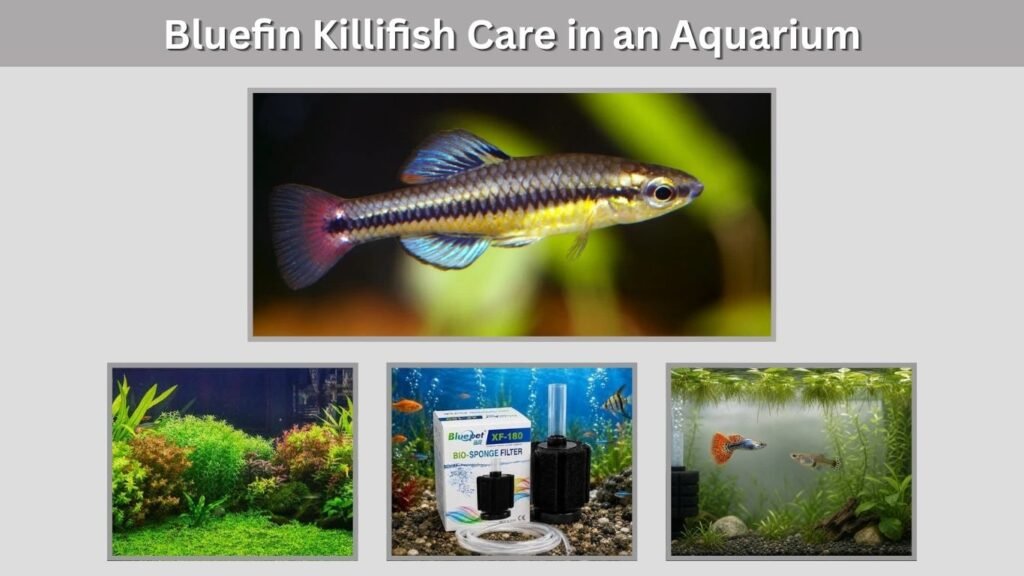
Bluefin killifish care is relatively manageable for aquarists who understand their natural habitat. These fish thrive in aquariums that resemble slow-moving freshwater environments containing abundant plants.
Providing stable water conditions, suitable filtration, and a nutritious diet helps maintain their health. They are particularly appealing for aquarists interested in North American native freshwater fish.
Bluefin Killifish Tank Size
A 10-gallon aquarium can accommodate a small number of bluefin killifish, but a 20-gallon long aquarium is preferable for a group.
A larger aquarium provides additional swimming room while allowing males to establish territories without constantly disturbing one another.
Recommended aquarium features include:
- Live aquatic plants
- Gentle filtration
- Floating vegetation
- Open swimming areas
- Dark or natural-colored substrate
- A secure aquarium lid
Dense vegetation provides hiding spaces and creates potential spawning sites.
Water Temperature and Conditions
Bluefin killifish naturally inhabit freshwater environments with varying seasonal temperatures.
For aquarium maintenance, the following conditions provide a practical starting point:
| Water parameter | Recommended conditions |
| Temperature | 65–74°F (18–23°C) |
| Water type | Freshwater |
| pH | Around neutral; prioritize stability |
| Water movement | Gentle |
| Lighting | Moderate, with shaded areas |
| Aquarium size | 20 gallons preferred for a group |
These are general husbandry guidelines rather than strict biological limits. Bluefin killifish tolerate a broader range of conditions, but prolonged overheating and sudden water changes should be avoided.
Bluefin Killifish Tank Mates
Bluefin killifish generally coexist well with peaceful fish of similar size.
Potential tank companions include:
- Least killifish
- Small peaceful native minnows
- Compatible small freshwater species
- Peaceful bottom-dwelling fish
Avoid large predators, aggressive fish, and species that require consistently high tropical temperatures.
During breeding, male bluefin killifish may defend small territories. Dense vegetation can help reduce confrontations.
What Do Bluefin Killifish Eat?

Bluefin killifish are omnivorous fish that consume small aquatic animals and plant material.
In the wild, they feed on tiny invertebrates, algae, and other available organic food sources. Their feeding habits help them survive in ponds, streams, and freshwater springs where food availability changes seasonally.
Best Foods for Bluefin Killifish
A balanced aquarium diet can include:
- Daphnia: Small freshwater crustaceans that provide animal protein.
- Baby brine shrimp: Nutritious food for adults and growing juveniles.
- Bloodworms: Suitable occasionally when appropriately sized.
- Micro-worms: Useful for smaller individuals.
- High-quality micro-pellets: Convenient prepared aquarium food.
- Frozen aquatic invertebrates: Provide dietary variety.
Offer small portions once or twice daily, adjusting the amount according to how quickly the fish consume their food.
Do Bluefin Killifish Eat Algae?
Yes, bluefin killifish may consume algae and other plant material.
However, they should not be considered dedicated aquarium algae cleaners. They also require animal-based foods and a nutritionally balanced diet.
If controlling algae is your main objective, aquarium maintenance and proper lighting management are more reliable than depending on bluefin killifish alone.
Bluefin Killifish Breeding and Fry Care
Breeding bluefin killifish can be rewarding because their courtship behavior is particularly interesting. Males establish territories among aquatic plants and display their colorful fins when attracting females.
Unlike annual killifish, bluefin killifish generally deposit eggs among vegetation without requiring a dry incubation period.
Bluefin Killifish Mating Behavior
During courtship, males may circle females, flick their heads, and spread their fins.
Females deposit eggs individually among aquatic vegetation. Under favorable conditions, spawning can continue over several weeks.
A female may release multiple eggs daily, although egg production varies with maturity and environmental conditions.
How to Breed Bluefin Killifish
Follow these basic steps:
- Prepare a planted breeding aquarium with gentle filtration.
- Introduce healthy, mature male and female fish.
- Provide fine-leaved plants or spawning mops.
- Maintain stable water conditions.
- Inspect spawning areas regularly.
- Transfer collected eggs to a protected hatching container.
- Feed newly hatched fry appropriately sized live foods.
Adult bluefin killifish may consume their own eggs, making egg protection important.
Newly hatched fry need extremely small food, such as infusoria or other appropriately sized live cultures, before transitioning to larger foods.
Research has confirmed that egg cannibalism occurs in this species and that spawning-site conditions influence egg survival.
Bluefin Killifish Natural Habitat and Distribution
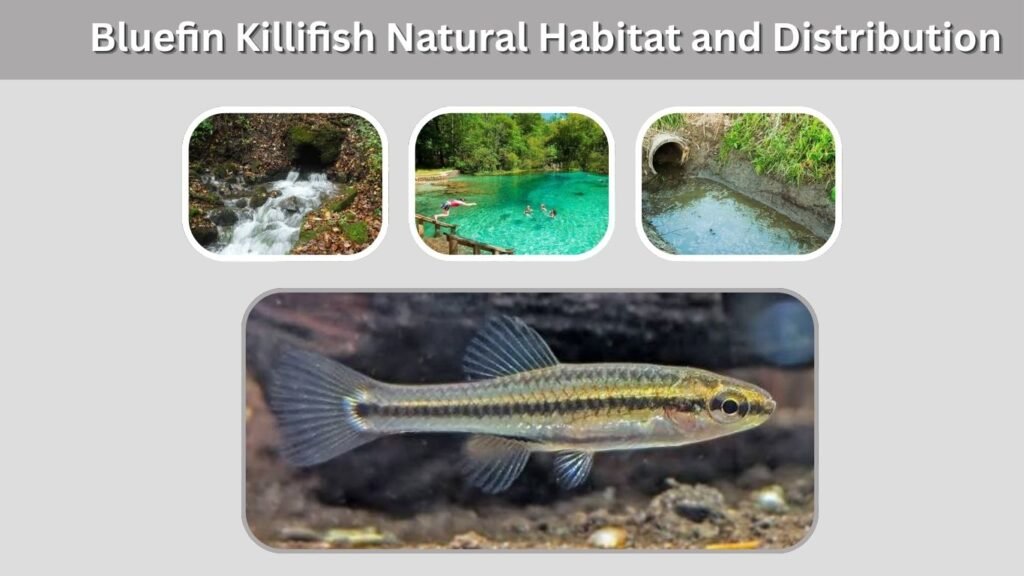
Bluefin killifish are native primarily to Florida, with additional native populations in parts of Georgia and southeastern Alabama.
They inhabit freshwater springs, ponds, drainage ditches, vegetated streams, and slow-moving backwaters.
Populations have also been documented outside their original range, including North Carolina, South Carolina, Texas, and California.
Can Bluefin Killifish Live in Brackish Water?
Bluefin killifish are primarily freshwater fish, but they can tolerate some brackish conditions.
Their ability to tolerate salinity does not mean salt is necessary for aquarium care.
Freshwater remains the most appropriate default environment, particularly for aquarists maintaining captive-bred specimens.
Bluefin Killifish in Florida Springs
Florida freshwater springs provide suitable habitats because they often contain aquatic plants, relatively stable water conditions, and abundant small food organisms.
Bluefin killifish frequently occupy densely vegetated areas, where plants offer shelter from predators and suitable breeding locations.
Bluefin Killifish vs. Bluefin Notho Killifish
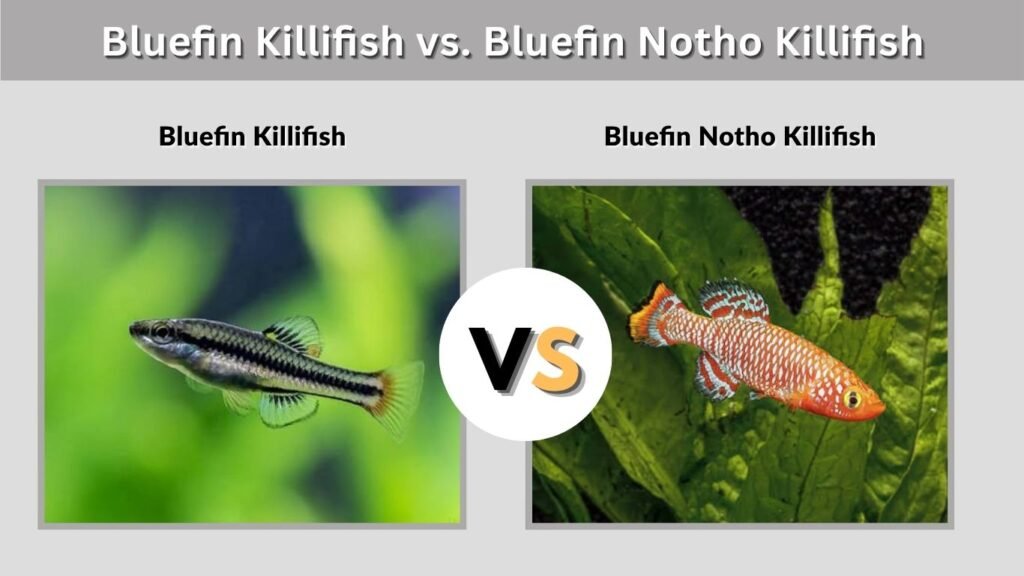
Bluefin killifish and bluefin notho killifish are two different species. Their similar common names can cause confusion among aquarium hobbyists.
The bluefin notho (Nothobranchius rachovii) is an African annual killifish known for its brilliant blue and red coloration.
| Feature | Bluefin Killifish | Bluefin Notho |
| Scientific name | Lucania goodei | Nothobranchius rachovii |
| Native region | Southeastern United States | Mozambique, Africa |
| Typical lifespan | Around 2 years | Often 6–12 months |
| Habitat | Permanent freshwater habitats | Seasonal pools |
| Breeding | Eggs deposited on vegetation | Eggs deposited in substrate |
| Egg incubation | Aquatic incubation | Moist substrate incubation with a resting period |
| Care requirements | Planted freshwater aquarium | Specialized annual killifish setup |
Bluefin notho killifish generally require more specialized breeding care because their eggs naturally survive periods when temporary pools dry out.
Understanding the species difference is important when purchasing fish or researching aquarium requirements.
Where to Buy Bluefin Killifish
Bluefin killifish are less commonly available in mainstream aquarium stores than popular tropical fish.
Potential sources include specialist killifish breeders, native fish aquarium suppliers, aquarium clubs, and reputable online fish sellers.
Before purchasing, confirm the scientific name because sellers sometimes use similar common names for different killifish species.
Choose active, healthy fish with clear eyes, intact fins, and normal swimming behavior. Captive-bred specimens are preferable when available.
Never release unwanted aquarium fish into natural waterways, as introduced populations can establish outside their native range.
FAQs
1. Are Bluefin Killifish Good for Beginners?
Bluefin killifish can be suitable for beginners who have some understanding of aquarium water quality and fish compatibility. Their small size and generally peaceful behavior are advantages, although stable water conditions, appropriate feeding, and a well-planted aquarium remain important.
2. Can Bluefin Killifish Live in a Pond?
Yes. Bluefin killifish naturally inhabit vegetated freshwater ponds and similar environments. However, an outdoor pond must provide suitable temperatures, clean water, shelter, and protection from predators. Keep them only in properly contained systems where escape into natural waterways cannot occur.
3. Are Bluefin Killifish Aggressive?
Bluefin killifish are generally peaceful, but males may display territorial behavior during breeding. They occasionally chase competing males or defend spawning locations. Providing adequate space, dense vegetation, and hiding areas can help reduce aggression.
4. Are Bluefin Killifish Annual Killifish?
No. Lucania goodei is a nonannual killifish that typically lives in permanent freshwater habitats. In contrast, the bluefin notho (Nothobranchius rachovii) is an annual species whose eggs are adapted to survive seasonal drying.
5. How Many Bluefin Killifish Should Be Kept Together?
A small group of around four to six bluefin killifish can be maintained in a suitably planted 20-gallon aquarium, depending on filtration, the male-to-female ratio, and individual behavior. Providing more females than males and plenty of vegetation can help reduce breeding-related competition.