
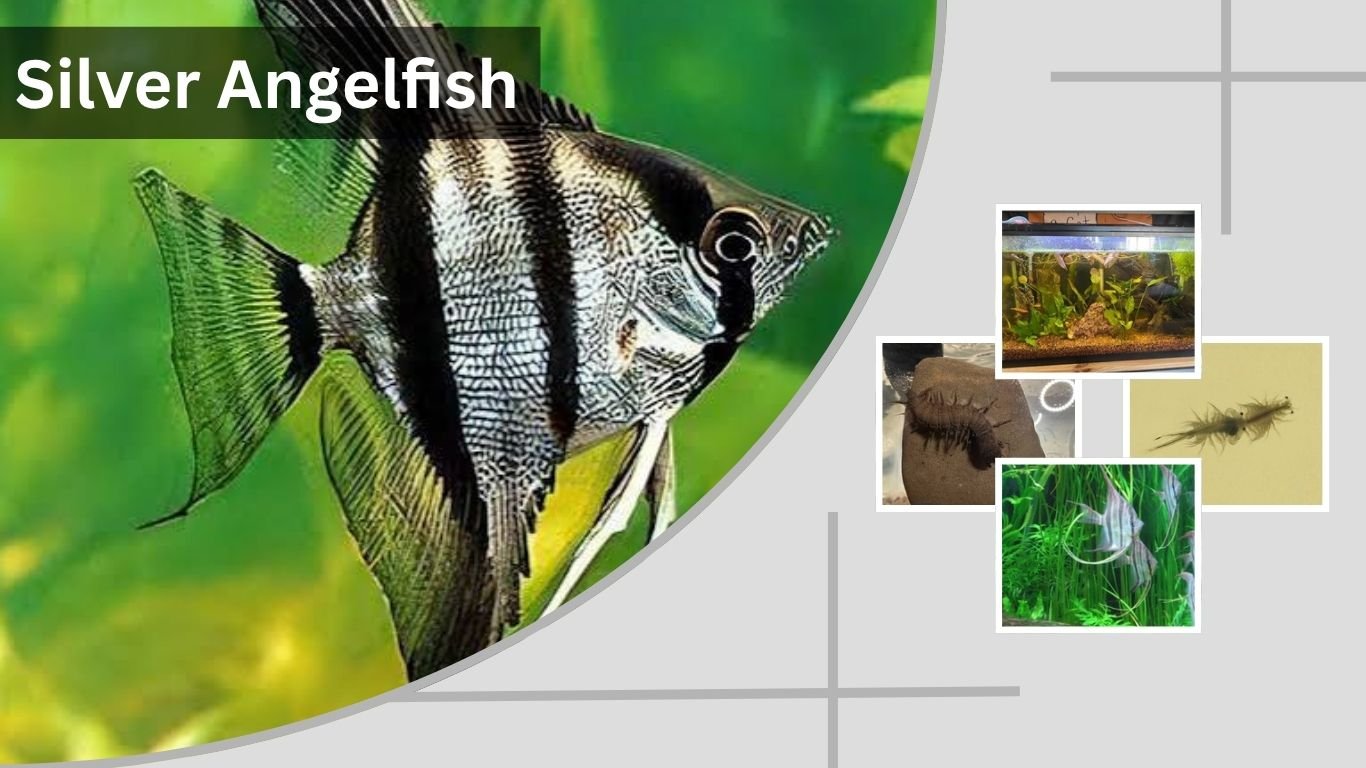
The Silver Angelfish is one of the classic freshwater angelfish varieties, admired for its bright silver body, dark vertical stripes, tall fins, and graceful swimming style. Most aquarium Silver Angelfish belong to Pterophyllum scalare, a South American cichlid that has been selectively bred into many color and fin varieties. Silver Angelfish are generally hardy, but they still need a tall aquarium, warm stable water, appropriate tank mates, and a balanced diet. With proper care, they can become impressive centerpiece fish in freshwater community aquariums.
Silver Angelfish Quick Facts
The Silver Angelfish closely resembles the natural coloration of freshwater angelfish. Its flattened body and tall dorsal and anal fins allow it to move easily among plants and submerged vegetation. Unlike marine angelfish, it is a completely freshwater species and belongs to the cichlid family.
| Feature | Silver Angelfish |
| Scientific name | Pterophyllum scalare |
| Family | Cichlidae |
| Water type | Freshwater |
| Maximum body length | Around 6 inches |
| Temperament | Semi-aggressive |
| Diet | Omnivorous with predatory tendencies |
| Lifespan | Up to 10–15 years with excellent care |
| Tank style | Tall freshwater aquarium |
| Breeding | Egg layer |
| Origin | Tropical South America |
What Does a Silver Angelfish Look Like?
The classic Silver Angelfish has a shiny silver-gray body crossed by dark vertical stripes. Its body is thin from side to side but unusually tall, especially when the dorsal and anal fins are fully extended. This distinctive shape is one reason angelfish require more vertical aquarium space than many other fish of similar body length.
Silver Angelfish Identification
Common characteristics include:
- Bright silver or gray body
- Several dark vertical bands
- Red or reddish eyes in many individuals
- Tall triangular dorsal and anal fins
- Long thread-like pelvic fins
- Deep, laterally compressed body
- Dark markings that may become stronger or lighter
Wild-type P. scalare are naturally silver with dark vertical stripes, although selective breeding has produced many variations.
Why Do Silver Angelfish Stripes Change?
Silver Angelfish may sometimes appear darker or lighter depending on their surroundings and condition. Their vertical stripes can become particularly noticeable during territorial displays, breeding behavior, or changes in activity.
A sudden color change combined with hiding, poor appetite, rapid breathing, or unusual swimming should receive more attention because environmental stress or illness may also affect appearance.
Silver Angelfish Size and Lifespan
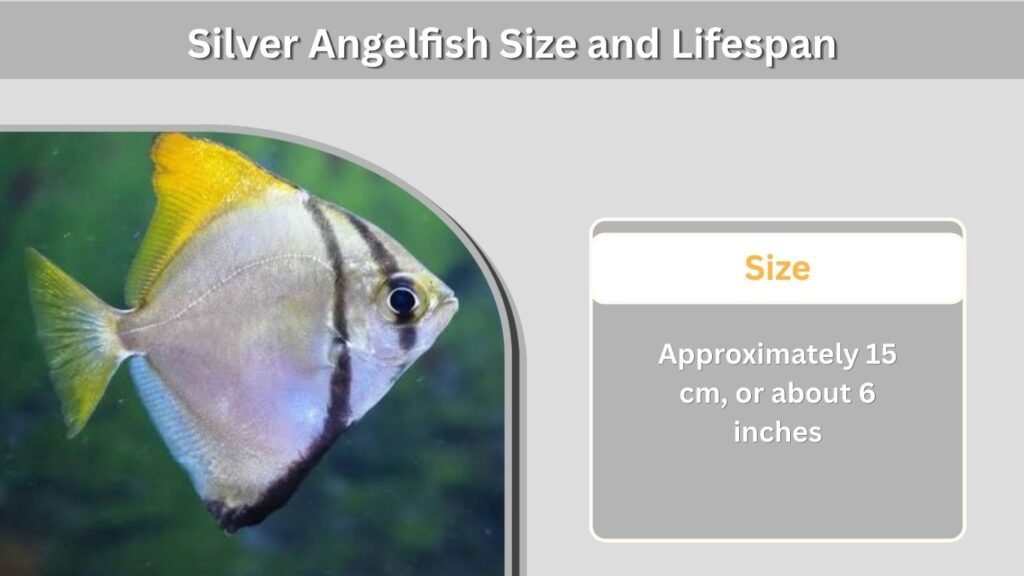
Silver Angelfish may look small in pet stores because juveniles are commonly sold when they are still young. Adults become considerably larger and, more importantly, much taller. Their fins can make a mature specimen look substantially bigger than its measured body length, so tank height should always be considered when planning permanent housing.
How Big Do Silver Angelfish Get?
Freshwater angelfish can reach approximately 15 cm, or about 6 inches, in body length. Their total vertical height can appear significantly greater because of the extended dorsal, anal, and pelvic fins. Veil varieties can look even larger because they develop exceptionally long finnage.
A juvenile should therefore not be judged by its current size. It needs enough room to develop its full body shape without constantly touching aquarium decorations or the bottom.
Silver Angelfish Lifespan
A well-maintained freshwater angelfish may live around 10 to 15 years under excellent conditions. Longevity depends on genetics, water quality, nutrition, aquarium size, disease prevention, and stress levels.
Keeping water parameters stable and providing appropriate food usually matters more than constantly trying to adjust the aquarium toward one exact number.
Silver Angelfish Care and Aquarium Setup
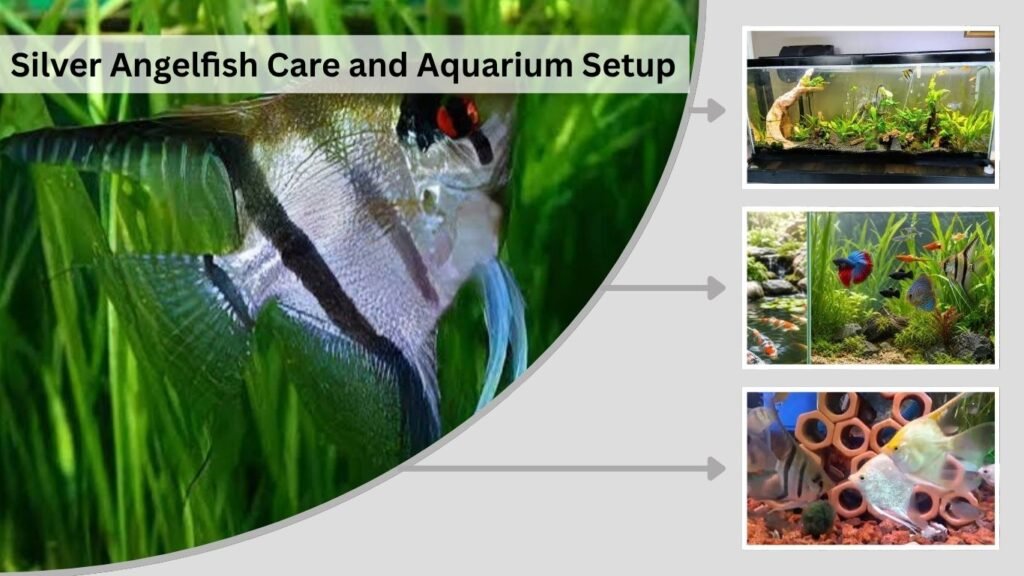
Silver Angelfish are considered relatively adaptable aquarium fish, but their size and body shape make proper tank selection important. An aquarium should offer both an open swimming room and sheltered areas created with plants or decorations. Tall aquariums are particularly useful because adult angelfish need enough vertical room to extend their fins naturally.
Ideal Aquarium Conditions
A suitable setup can include:
- Warm tropical freshwater
- Temperature around 75–86°F
- pH approximately 6.0–8.0
- Good biological filtration
- Moderate water movement
- Tall aquarium dimensions
- Plants or vertical structures
- Open swimming areas
- Regular partial water changes
Freshwater angelfish are adaptable, but sudden changes in water chemistry or temperature should still be avoided.
How Large Should the Tank Be?
Tank size depends on how many angelfish are being kept. Some older care recommendations describe approximately 20 gallons as the minimum for a single adult, while larger tanks are much more practical for groups or community setups. FishBase also recommends an aquarium at least about 100 cm long.
For multiple adult angelfish, a larger aquarium provides more territories and makes aggression easier to manage.
Silver Angelfish Food and Diet
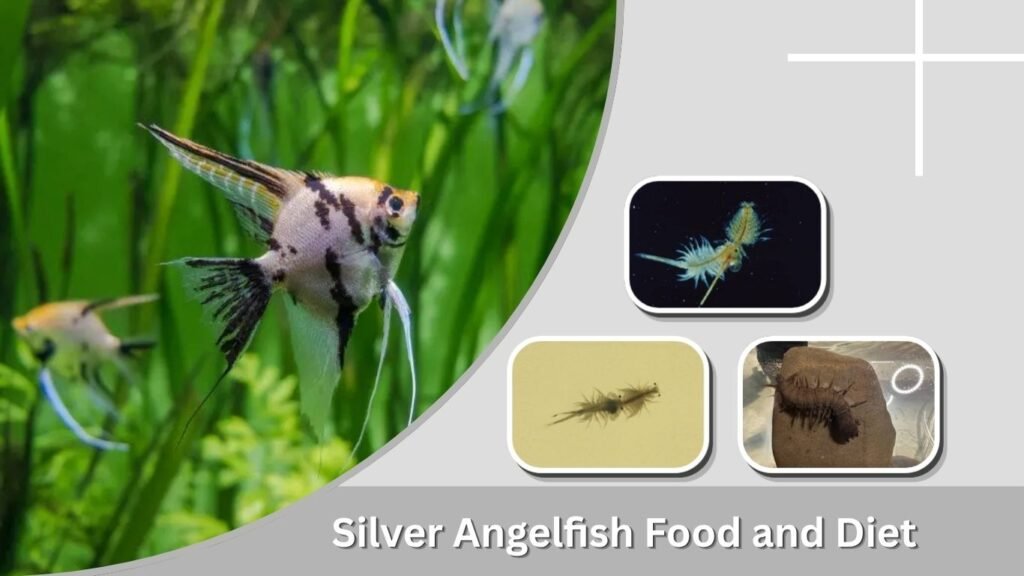
Silver Angelfish are enthusiastic feeders and have natural predatory instincts. In the wild and aquarium environments they readily consume small animal-based foods, and they may hunt very small fish or fry. A varied aquarium diet helps maintain body condition, coloration, fin growth, and breeding performance.
Best Foods for Silver Angelfish
Good food choices include:
- High-quality cichlid flakes
- Small or medium pellets
- Frozen mysis shrimp
- Brine shrimp
- Bloodworms as an occasional food
- Daphnia
- Suitable frozen aquarium foods
- Small amounts of vegetable-containing foods
Rather than feeding one food exclusively, rotating several types provides better nutritional variety.
Feeding Schedule
Adult angelfish can usually be fed one or two controlled meals per day. Juveniles benefit from smaller, more frequent meals while growing.
Feed only what the fish can consume reasonably quickly. Constant overfeeding can increase waste, degrade water quality, and contribute to health problems.
Silver Angelfish Varieties
Selective breeding has produced many freshwater angelfish colors and fin forms. The word “silver” may therefore appear in the names of several strains that differ considerably from the traditional wild-type Silver Angelfish. Trade names also vary between breeders, so two similarly named fish may not look exactly the same.
Popular Silver Angelfish Types
Common forms and trade names include:
- Classic Silver Angelfish – silver body with dark vertical stripes
- Silver Zebra Angelfish – additional or stronger dark striping
- Silver Veil Angelfish – silver coloration with elongated fins
- Silver Marble Angelfish – irregular dark marbling over a pale background
- Silver Ghost Angelfish – reduced dark body markings
- Silver Pearlscale Angelfish – textured, reflective-looking scales
- Philippine Blue Silver Angelfish – silver appearance combined with bluish coloration
- Silver Gold Marble Angelfish – mixed silver, gold, and marble patterning
Because domestic P. scalare occur in many established color and fin mutations, appearance can vary greatly between breeding lines.
Can Angelfish Live With Silver Dollars?
Silver Dollar fish and Silver Angelfish can sometimes live together, but the combination works best in a spacious aquarium. Both become fairly large, and Silver Dollars are active schooling fish that require room to swim. Common Silver Dollar species can reach roughly 14–18 cm depending on the species.
Angelfish and Silver Dollar Compatibility
Compatibility is easier when:
- The aquarium is large and tall
- Silver Dollars are kept in an appropriate group
- The angelfish have sufficient territory
- Neither species is severely overcrowded
- Food is distributed so all fish can eat
- Long angelfish fins are not being damaged
Their temperature requirements can overlap. For example, Metynnis hypsauchen is associated with tropical water around 24–28°C, which falls comfortably within the commonly recommended range for freshwater angelfish.
Potential Problems
Silver Dollars are highly active compared with the slower, more deliberate movements of angelfish. A cramped aquarium can therefore cause stress.
Angelfish can also become territorial when mature or breeding. The combination is much easier in a large community aquarium where fish can avoid one another.
Silver Angelfish Behavior and Tank Mates
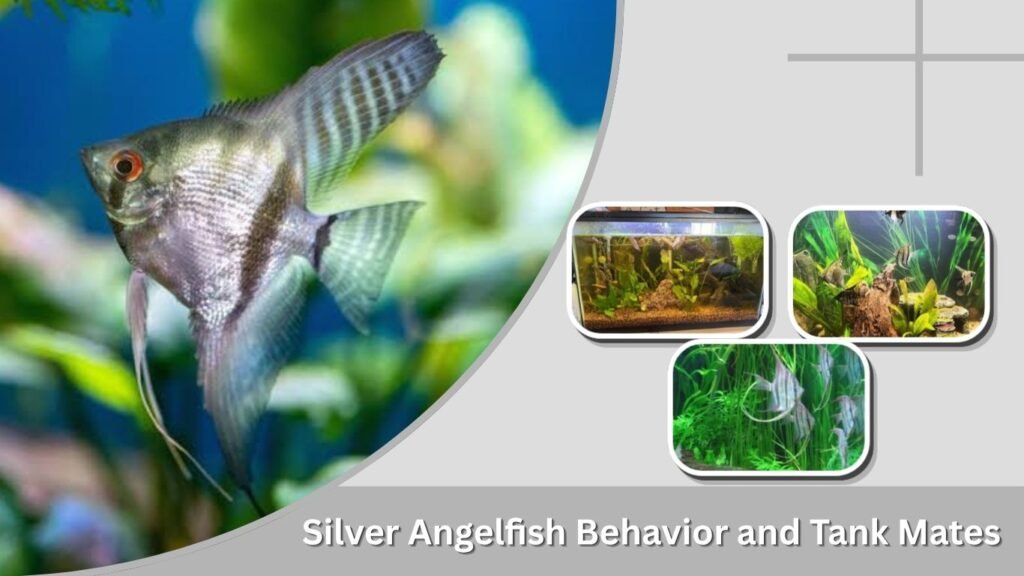
Silver Angelfish are cichlids, so they should not automatically be considered completely peaceful. Many individuals behave well in community aquariums, but adults may defend territories or become aggressive while breeding. They can also prey on sufficiently small fish.
Suitable Tank Mates
Possible companions include:
- Larger peaceful tetras
- Corydoras catfish
- Peaceful plecos
- Rainbowfish of appropriate size
- Larger rasboras
- Some peaceful gouramis
- Silver Dollars in sufficiently large tanks
Very small fish may eventually be viewed as prey, while aggressive fin-nipping species can damage an angelfish’s long fins.
Can You Keep Multiple Silver Angelfish?
Young angelfish can often be raised in groups. As they mature, some may form breeding pairs and begin defending areas of the aquarium.
A larger tank with plants, wood, and decorations that interrupt direct lines of sight helps weaker fish escape dominant individuals.
Silver Angelfish Breeding and Eggs
Silver Angelfish are substrate-spawning cichlids and can breed readily under suitable aquarium conditions. A compatible male and female usually establish a pair, select a spawning location, and begin cleaning it before eggs are deposited. Both parents may show strong territorial behavior during this period.
How Silver Angelfish Lay Eggs
A breeding pair commonly chooses a vertical surface such as a broad plant leaf, spawning cone, filter pipe, or piece of slate. The female lays rows of adhesive eggs and the male follows to fertilize them.
After spawning, parents may fan and guard the eggs. However, inexperienced aquarium pairs sometimes eat their first batches, particularly when frightened or repeatedly disturbed.
Male vs Female Silver Angelfish
Sexing young Silver Angelfish by appearance is difficult. Adult males and females can look very similar outside the breeding period.
The most reliable differences become visible when a mature pair prepares to spawn, especially around the breeding tubes. Observing established pair behavior is generally more reliable than trying to identify sex from head shape or fin length alone.
FAQs
Are Silver Angelfish freshwater fish?
Yes. Silver Angelfish are freshwater cichlids, typically belonging to Pterophyllum scalare. They should not be confused with marine angelfish. Their natural relatives originate from tropical South American freshwater environments.
How big do Silver Angelfish get?
Silver Angelfish can reach approximately 6 inches in body length, but their tall dorsal and anal fins make adults appear considerably larger vertically. Veil varieties may have even longer fins.
Do Silver Angelfish have red eyes?
Many classic Silver Angelfish have noticeable reddish eyes, although the intensity varies between individual fish and breeding strains. The traditional wild-type appearance includes a silver body, dark vertical stripes, and a red eye.
Can Silver Dollars live with Angelfish?
They can live together in a sufficiently large aquarium when water conditions, group size, and available swimming space are appropriate. Both fish become relatively large, so this pairing is better suited to spacious community tanks than small aquariums.
How long do Silver Angelfish live?
With excellent aquarium care, freshwater angelfish may live 10 to 15 years. Clean water, an appropriate tank size, quality nutrition, compatible tank mates, and disease prevention all contribute to long-term health.