
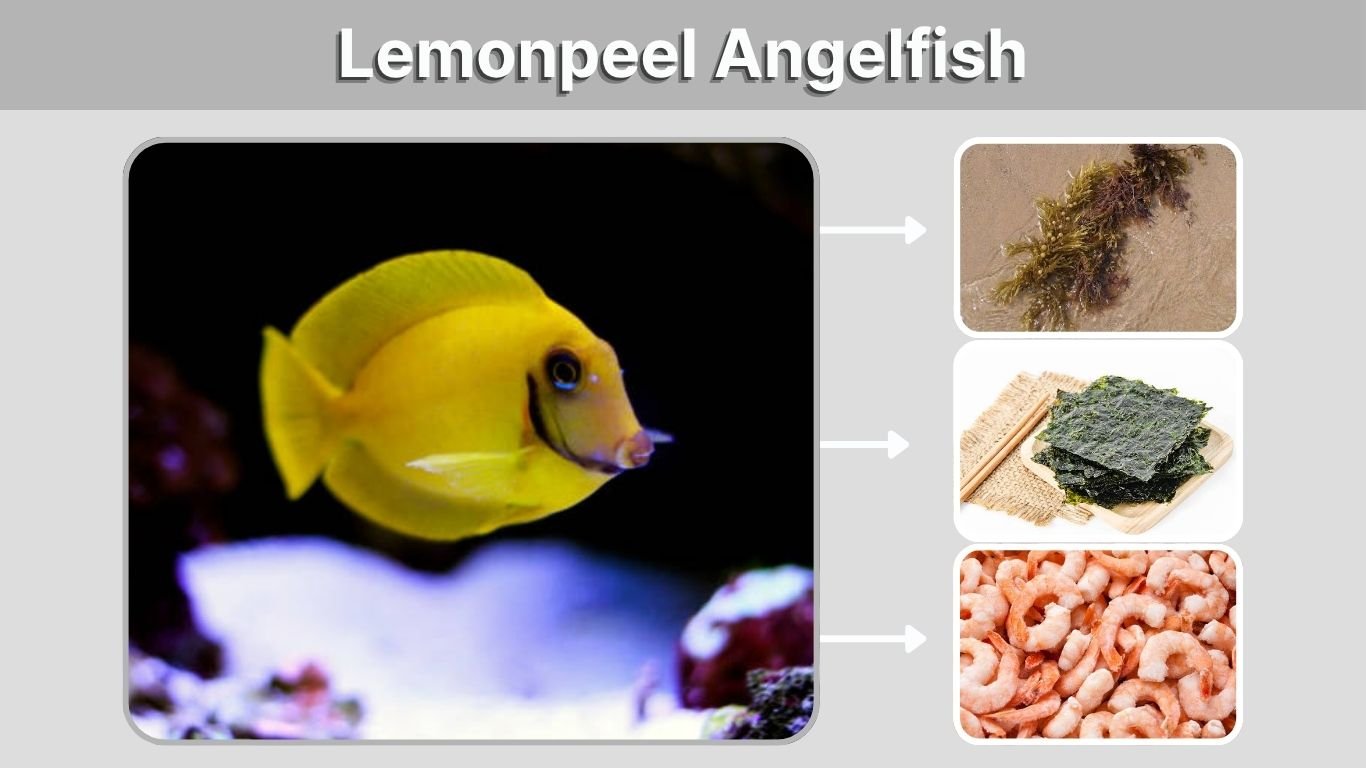
The Lemonpeel Angelfish (Centropyge flavissima) is a brilliant yellow dwarf marine angelfish known for its electric-blue eye ring and blue-edged fins. Its bold coloration, manageable adult size, and active personality make it a desirable saltwater aquarium fish. However, successful Lemonpeel Angelfish care requires an established tank, plenty of natural grazing surfaces, a varied algae-rich diet, and carefully selected tank mates. It can also nip at corals, so reef keepers should understand its behavior before adding one to a reef aquarium.
Lemonpeel Angelfish Quick Facts
The Lemonpeel is a true dwarf or pygmy angelfish belonging to the family Pomacanthidae. Although much smaller than large marine angels such as Emperor or Blueface Angelfish, it still needs substantial swimming space and mature live rock. Adults may reach approximately 5.5 inches, and the species has been reported to live as long as 11 years in captivity.
| Feature | Lemonpeel Angelfish |
| Scientific name | Centropyge flavissima |
| Family | Pomacanthidae |
| Adult size | Up to about 5.5 inches |
| Minimum tank size | Around 70 gallons |
| Diet | Omnivore, strongly algae-oriented |
| Temperament | Semi-aggressive |
| Reef safe | With caution |
| Care level | Moderate |
| Reported lifespan | Up to about 11 years |
| Main color | Bright yellow with blue markings |
Lemonpeel Angelfish Appearance and Identification
Few dwarf angelfish have coloration as simple yet distinctive as the Lemonpeel. Adults are dominated by an intense yellow body, but their blue facial and fin markings provide the easiest identification clues. Juveniles look similar overall but usually possess an additional dark eyespot on the side that gradually disappears as the fish matures.
How to Identify a Lemonpeel Angelfish
Look for the following characteristics:
- Bright lemon-yellow body
- Blue or bluish-white ring surrounding the eye
- Blue edging around the gill cover
- Blue margins along the dorsal and anal fins
- Yellow tail with blue edging in many individuals
- Deep, laterally compressed angelfish body
- Juveniles may have a dark, blue-edged eyespot on the side
The blue markings are particularly useful because several other yellow dwarf angelfish can appear remarkably similar.
False Lemonpeel Angelfish vs True Lemonpeel
The False Lemonpeel Angelfish commonly refers to Herald’s Angelfish (Centropyge heraldi). Both fish can have an almost completely yellow body, making confusion easy at first glance.
A true Lemonpeel has distinctive blue coloration around the eye and additional blue edging around parts of the face and fins. Herald’s Angelfish generally lacks these pronounced blue markings. Therefore, examining the eye ring and gill-cover coloration is one of the easiest ways to distinguish them.
Lemonpeel Angelfish Size, Lifespan and Habitat
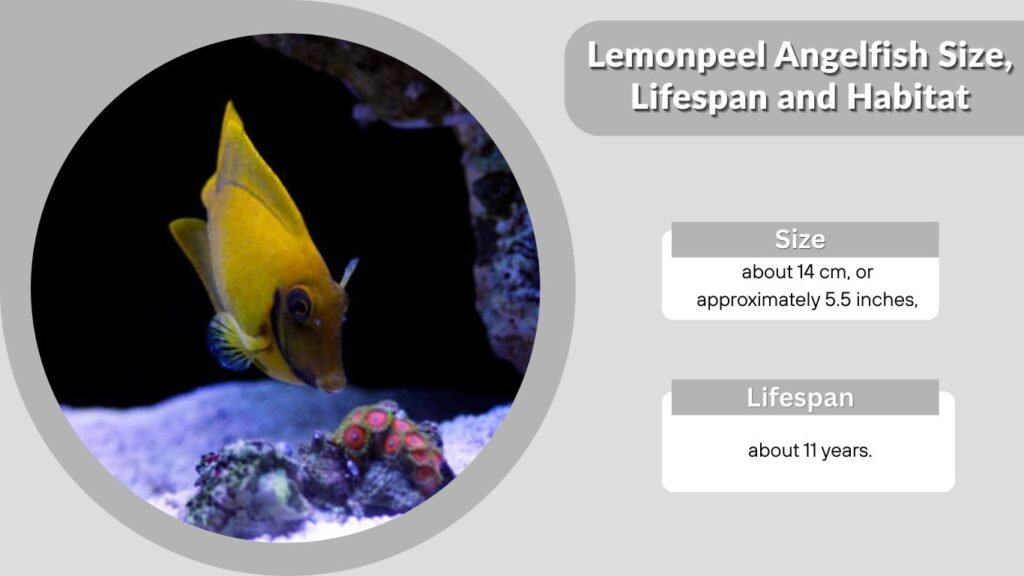
Despite being called a dwarf angelfish, the Lemonpeel needs considerably more room than its name might suggest. It is an active reef-associated fish that spends much of its day swimming around rockwork and grazing. Understanding its natural size and habitat helps aquarists create an aquarium that offers enough swimming space, shelter, and surfaces covered with natural algae.
Lemonpeel Angelfish Size and Lifespan
A full-grown Lemonpeel Angelfish can reach about 14 cm, or approximately 5.5 inches, in total length. FishBase also records a maximum reported captive age of about 11 years.
Reaching that potential lifespan depends heavily on stable water conditions, good nutrition, low stress, and avoiding chronic aggression from incompatible tank mates.
A healthy adult becomes relatively deep-bodied rather than simply growing longer, so it needs sufficient room to turn and move naturally around the aquarium.
Natural Habitat and Distribution
In the wild, Lemonpeel Angelfish inhabit tropical coral-rich environments, including shallow lagoons and exposed seaward reefs. They have been recorded from very shallow water down to approximately 50 meters.
Adults spend much of their time around reef structures where algae and other food organisms are available. Juveniles tend to be more secretive and remain close to shelter.
Lemonpeel Angelfish Care and Tank Size
Good Lemonpeel Angelfish care begins with an established aquarium rather than a newly cycled tank. Mature live rock provides hiding places and continuous grazing opportunities, both of which are important for this species. Although one fish does not require the enormous aquarium needed by large Pomacanthus angels, providing additional space usually makes territorial problems easier to manage.
Ideal Tank Setup
For long-term care, consider these basic requirements:
- Minimum tank size: About 70 gallons
- Temperature: Approximately 72–78°F
- pH: Around 8.1–8.4
- Specific gravity: Approximately 1.020–1.025
- Plenty of mature live rock
- Multiple caves and crevices
- Open swimming areas
- Strong biological filtration
- Stable marine water conditions
A 70-gallon tank is commonly recommended as a practical minimum, although a larger aquarium is preferable when keeping the Lemonpeel with other territorial fish.
Why Mature Live Rock Matters
Live rock is more than decoration for a Lemonpeel Angelfish. The fish naturally spends considerable time investigating surfaces and grazing on algae.
A well-established aquarium gives it opportunities to perform this natural feeding behavior between meals. Caves and crevices also create secure retreats, which can reduce stress when the angelfish is first introduced.
An aquarium with bare decoration and little natural growth may therefore be more challenging than an established system containing abundant rockwork.
Lemonpeel Angelfish Diet and Feeding
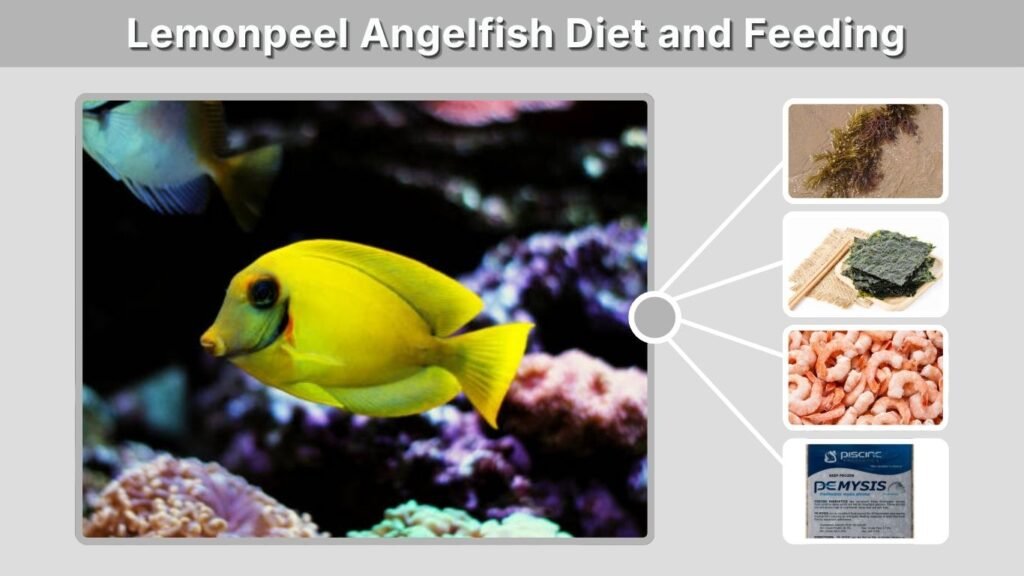
Wild Lemonpeel Angelfish feed mainly on algae, although aquarium specimens should receive a broader omnivorous diet. Simply feeding standard marine flakes once per day is unlikely to provide the variety they need. Frequent small meals containing algae-based foods and marine proteins are generally more appropriate, particularly while a new specimen is adjusting to aquarium conditions.
Best Foods for Lemonpeel Angelfish
A varied diet can include:
- Spirulina-based foods
- Marine algae
- Nori or other suitable seaweed
- High-quality marine angelfish preparations
- Mysis shrimp
- Frozen shrimp
- Finely chopped marine seafood
- Quality marine pellets
- Naturally occurring algae growing on live rock
This species generally benefits from receiving more algae and seaweed than many other marine angelfish. Several smaller feedings throughout the day can also encourage natural grazing behavior.
What If a Lemonpeel Angelfish Will Not Eat?
A newly introduced Lemonpeel may temporarily eat poorly because of shipping stress, unfamiliar surroundings, aggression, or inadequate hiding places.
An established aquarium can help because the fish may begin grazing before accepting prepared foods. Offering algae sheets, mysis shrimp, and several different marine foods may also stimulate feeding.
Continued refusal to eat combined with rapid breathing, abnormal swimming, visible spots, weight loss, or persistent hiding may indicate a health or environmental problem that needs attention.
Is a Lemonpeel Angelfish Reef Safe?
The Lemonpeel Angelfish is best considered reef safe with caution, rather than completely reef safe. Dwarf angelfish are natural grazers and may investigate sessile invertebrates while feeding. Lemonpeels in particular can nip at certain corals and clam mantles, which makes individual behavior important when deciding whether to place one in a valuable reef aquarium.
Lemonpeel Angelfish in a Reef Tank
Some individual Lemonpeels coexist with corals reasonably well, while others repeatedly nip them. Large-polyp stony corals, some soft corals, zoanthids, and clam mantles can be vulnerable.
Keeping the fish well fed and providing abundant live rock may reduce its interest in corals, but there is no guarantee.
For aquarists with expensive or delicate coral collections, a fish-only-with-live-rock aquarium offers a more predictable environment.
Are Lemonpeel Angelfish Aggressive?
Lemonpeel Angelfish are generally described as semi-aggressive. Once established, an individual may defend areas of rockwork, particularly against other dwarf angelfish with similar shapes or feeding habits.
Peaceful gobies can often coexist with them when there is sufficient space and shelter. Combining a Lemonpeel Angelfish with a Coral Beauty or Flame Angelfish is more unpredictable because all are territorial dwarf angels.
If multiple dwarf angelfish are attempted, a substantially larger aquarium with broken lines of sight and numerous territories provides a better chance of compatibility.
Lemonpeel Angelfish for Sale, Hybrids and Selection
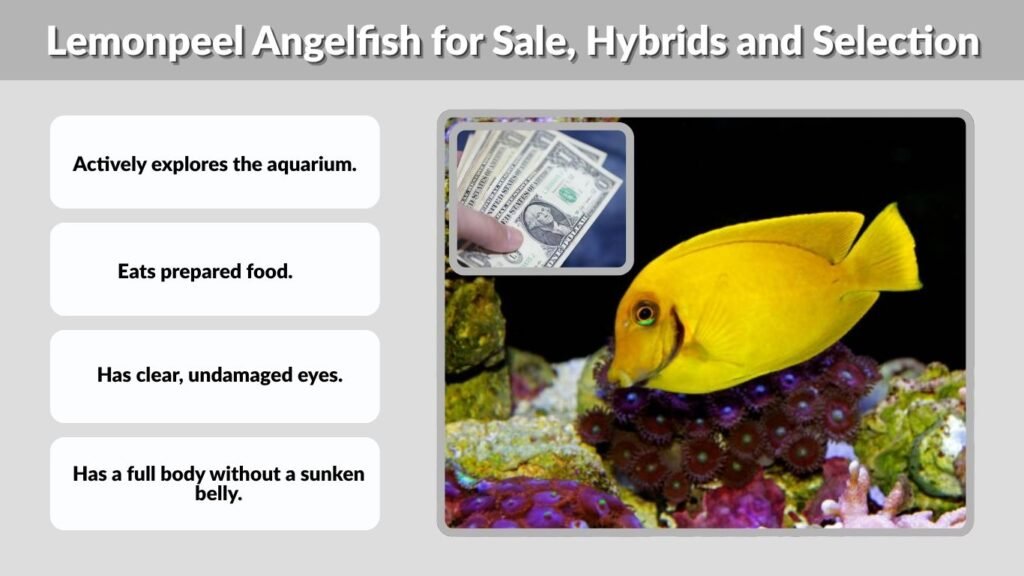
Choosing a healthy specimen can make the difference between an easy acclimation and weeks of problems. Lemonpeels are regularly available through the marine aquarium trade, including wild-collected and occasionally captive-produced fish. Never choose one based only on bright coloration; feeding response, body condition, breathing, and general behavior are much better indicators of its current health.
What to Check Before Buying
Look for a Lemonpeel Angelfish that:
- Actively explores the aquarium
- Eats prepared food
- Has clear, undamaged eyes
- Has a full body without a sunken belly
- Breathes normally
- Has intact fins
- Shows no visible white spots or sores
- Does not remain continuously hidden
- Has the characteristic blue eye and facial markings
Watching the fish eat before purchasing is especially helpful because established feeding behavior can make acclimation easier.
Hybrid Lemonpeel Angelfish
Lemonpeel Angelfish can hybridize with related dwarf angelfish. One recognized aquarium-trade example is a hybrid between Centropyge flavissima and Centropyge vrolikii, commonly producing fish with a mixture of yellow, dark, and blue coloration.
Hybrid specimens can look noticeably different from a pure Lemonpeel, so unusual coloration does not necessarily indicate poor health. Buyers looking specifically for C. flavissima should pay attention to identification and the fish’s stated origin.
FAQs
The following questions cover some of the most common concerns aquarists have before keeping this bright yellow dwarf angelfish. Its relatively small adult size can make it look easy to maintain, but tank maturity, feeding opportunities, territorial behavior, and coral compatibility are all important. Planning around these factors greatly improves the chances of maintaining a healthy Lemonpeel for many years.
Are Lemonpeel Angelfish dwarfs?
Yes. The Lemonpeel Angelfish belongs to the dwarf or pygmy angelfish genus Centropyge. However, “dwarf” does not mean it can live comfortably in a very small aquarium. Adults may reach approximately 5.5 inches and benefit from a tank of around 70 gallons or larger.
How long do Lemonpeel Angelfish live?
Lemonpeel Angelfish have been reported to live up to approximately 11 years in captivity. Actual lifespan depends on factors such as diet, aquarium stability, disease prevention, stress, and compatibility with other fish.
What size tank does a Lemonpeel Angelfish need?
A 70-gallon aquarium is a good minimum guideline for one Lemonpeel Angelfish. Larger tanks are preferable when other territorial fish are present because additional rockwork and swimming space make it easier for different fish to establish separate areas.
Can Lemonpeel Angelfish live with gobies?
Yes, many gobies can potentially live with a Lemonpeel Angelfish because they often occupy different parts of the aquarium. Compatibility still depends on the individual fish, aquarium size, available hiding places, and whether either species becomes territorial.
Is a Lemonpeel Angelfish safe with corals?
Not reliably. Lemonpeel Angelfish may nip at LPS corals, some soft corals, zoanthids, and clam mantles. Some individuals behave well in reef tanks, while others become persistent coral pickers. They should therefore be considered reef safe only with caution.