
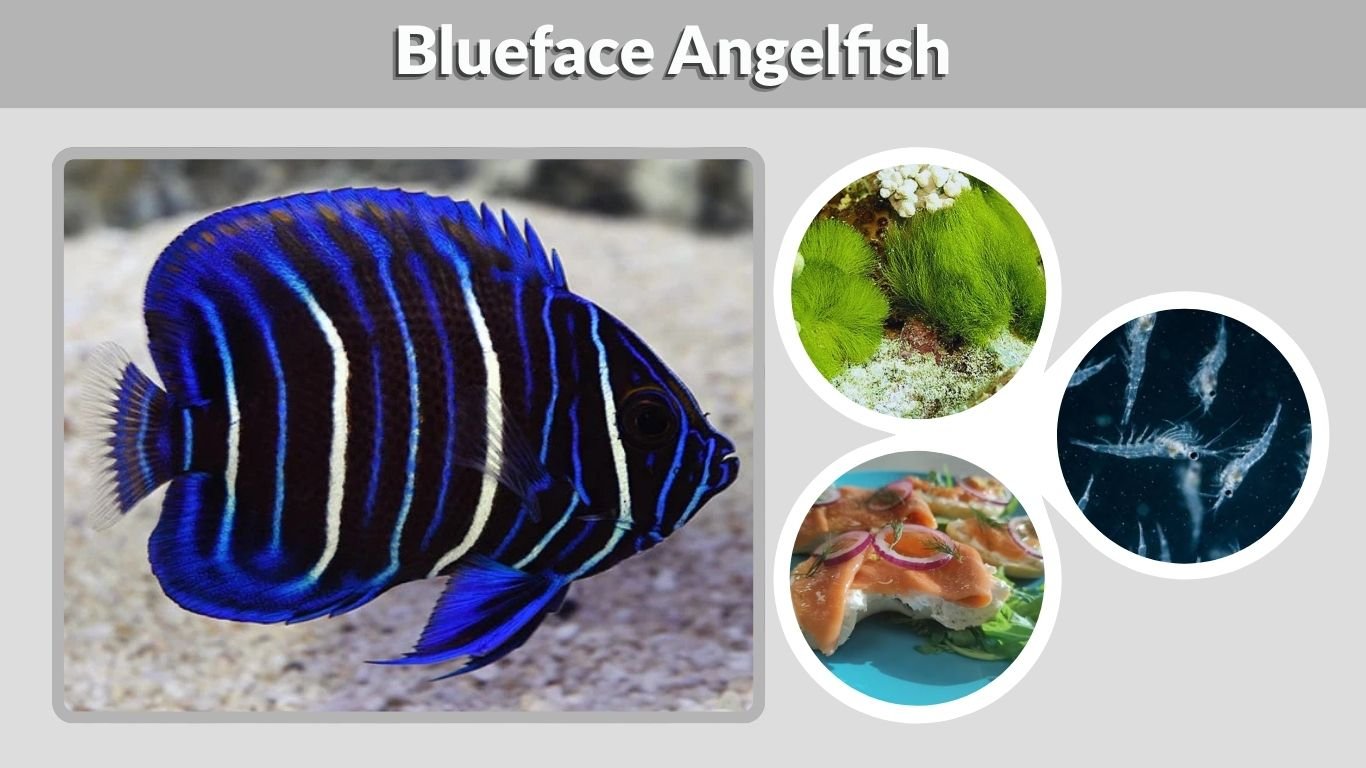
The Blueface Angelfish (Pomacanthus xanthometopon) is one of the most striking large marine angelfish kept in saltwater aquariums. Also called the Yellowface Angelfish, it is famous for its dramatic transformation from a dark-striped juvenile into a brightly colored adult with a blue face, yellow mask, and blue-and-yellow body pattern. In the wild, this species inhabits coral-rich areas of the Indo-Pacific and can reach about 15 inches long.
Keeping one successfully requires a large, established aquarium, excellent water quality, plenty of rockwork, and a varied diet.
Blueface Angelfish Quick Facts
Blueface Angelfish are large reef-associated marine fish belonging to the Pomacanthidae family. Their size and territorial behavior make them much better suited to experienced marine aquarists than beginners.
| Feature | Blueface Angelfish |
| Scientific name | Pomacanthus xanthometopon |
| Common names | Blueface Angelfish, Yellowface Angelfish |
| Maximum size | About 15 inches (38 cm) |
| Recommended tank | About 220 gallons or larger |
| Diet | Omnivorous; sponge-rich foods, algae and meaty marine foods |
| Temperament | Semi-aggressive/territorial |
| Reef safe | With caution |
| Care level | Moderate to advanced |
| Natural habitat | Coral-rich lagoons, channels and reef slopes |
In nature, Blueface Angelfish occur in the Indo-Pacific and are generally associated with coral-rich habitats, caves, lagoons, channels, and outer reef slopes.
What Does a Blueface Angelfish Look Like?
One of the most interesting characteristics of this species is how dramatically its appearance changes as it matures.
Juvenile Blueface Angelfish
A juvenile Blueface Angelfish looks almost completely different from an adult. Young fish normally have a dark blue to nearly black body crossed by narrow pale blue and white vertical bands.
This juvenile pattern can make them resemble juvenile Emperor, Koran, and other large Pomacanthus angelfish.
Juveniles also tend to spend more time around sheltered areas. In the wild, young Blueface Angelfish are associated with shallow inshore caves where algae grow.
Adult Blueface Angelfish
As the fish matures, its juvenile stripes gradually disappear.
Adults develop:
- Bright blue facial coloration
- A yellow band across the eyes
- Yellowish body coloration
- Blue edging around individual scales
- Yellow tail and pectoral fins
- Blue markings on the dorsal and anal fins
The blue face combined with the yellow eye mask makes an adult Blueface Angelfish easy to recognize.
Juvenile to Adult Color Change
The transition does not happen instantly. A growing Blueface Angelfish passes through a sub-adult stage in which juvenile stripes begin disappearing while adult yellow and blue coloration develops.
Because of this transformation, aquarists sometimes choose younger specimens specifically to watch their coloration change over time.
How Big Do Blueface Angelfish Get?
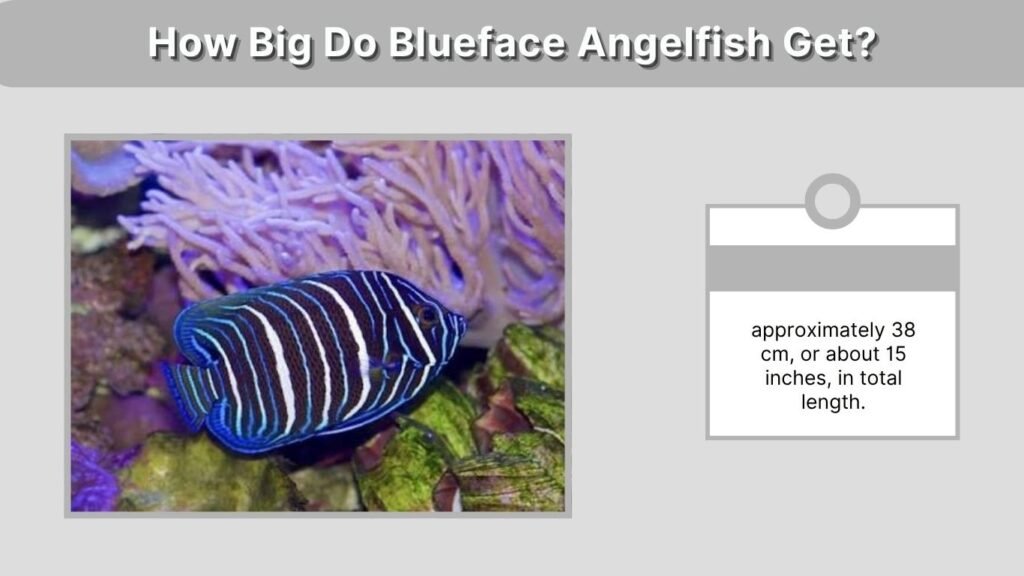
Blueface Angelfish are not small aquarium fish. They can reach approximately 38 cm, or about 15 inches, in total length.
Their deep, compressed bodies also make an adult look considerably larger than a thin fish of similar length.
Blueface Angelfish Tank Size
A 220-gallon aquarium or larger is a reasonable long-term target for an adult Blueface Angelfish.
A suitable tank should provide both:
- Large open areas for swimming
- Substantial rockwork with caves and hiding spaces
Avoid filling the entire aquarium with tightly packed rock. The fish needs shelter but also enough unobstructed room to turn and swim comfortably.
Smaller juveniles may temporarily live in smaller aquariums, but purchasing a juvenile does not remove the need to plan for its adult size.
Blueface Angelfish Care
Blueface Angelfish are generally considered better suited to aquarists who already have experience maintaining large saltwater systems.
Water Conditions
Stability is especially important for large marine angelfish.
A useful range is approximately:
- Temperature: 72–78°F
- Specific gravity: 1.020–1.026
- pH: approximately 8.0–8.4
A mature aquarium with stable biological filtration is preferable to a recently established tank.
Large angelfish eat heavily and can produce substantial waste, so strong filtration, protein skimming, circulation, and routine water changes are valuable.
Rockwork and Hiding Places
Provide several caves, overhangs, cracks, and shaded areas.
Rockwork serves two purposes. It gives the angelfish somewhere to retreat when stressed while also providing surfaces it can investigate and graze.
Quality Marine recommends established aquariums with substantial swimming room and rock structures containing caves and crevices for Pomacanthus angelfish.
Blueface Angelfish Diet
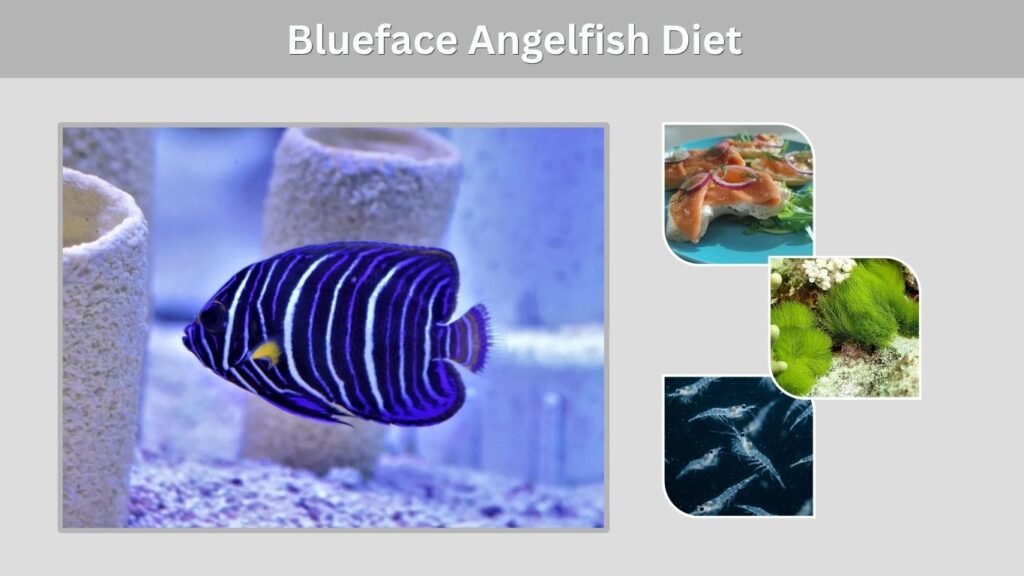
Wild Blueface Angelfish naturally consume sponges, tunicates and other encrusting organisms.
A captive diet should therefore be more varied than ordinary flakes or pellets alone.
What to Feed a Blueface Angelfish
Offer a mixture of:
- Marine angelfish preparations containing sponge
- Spirulina-based foods
- Marine algae
- Mysis shrimp
- Chopped shrimp or other marine foods
- Quality pellets formulated for marine omnivores
- Frozen angelfish preparations
Providing both plant-based and meaty foods helps create a more balanced diet. Sponge-containing angelfish foods are especially useful because sponge forms an important part of the species’ natural feeding ecology.
Blueface Angelfish Not Eating
A newly purchased Blueface Angelfish may refuse food because of transportation stress, unfamiliar surroundings, poor water quality, aggression, or an unsuitable diet.
Give the fish secure hiding places and keep conditions stable. Trying frozen mysis, finely chopped seafood, algae-based foods, and sponge-containing angel preparations can encourage feeding.
Persistent refusal to eat—especially when accompanied by rapid breathing, spots, damaged fins, unusual swimming, or weight loss—should be investigated rather than assumed to be normal acclimation.
Is the Blueface Angelfish Reef Safe?
The safest description is reef safe with caution.
Large Pomacanthus angelfish naturally investigate and consume sessile organisms, including sponges and tunicates, and may pick at other attached invertebrates.
Blueface Angelfish With Corals
Individual behavior varies considerably.
Some Blueface Angelfish may coexist with certain corals for long periods, while others repeatedly nip at fleshy corals or other desirable invertebrates.
Keeping one in an expensive mixed reef therefore involves risk. A large fish-only-with-live-rock system is usually more predictable.
If attempting a reef tank, keeping the angelfish well fed may reduce exploratory picking, but it cannot guarantee that corals will remain untouched.
Blueface Angelfish Behavior and Tank Mates
Blueface Angelfish are usually solitary in their natural environment and can become territorial in captivity.
Adults are generally best housed with other reasonably large, confident marine fish rather than tiny or extremely timid species.
Potential tank mates include appropriately sized:
- Tangs
- Triggerfish with suitable temperaments
- Wrasses
- Rabbitfish
- Larger clownfish
- Certain butterflyfish
- Other robust community marine fish
Be particularly careful when mixing it with similarly shaped large angelfish. Territorial disputes can become serious when aquarium space is limited.
Blueface Angelfish vs Majestic Angelfish
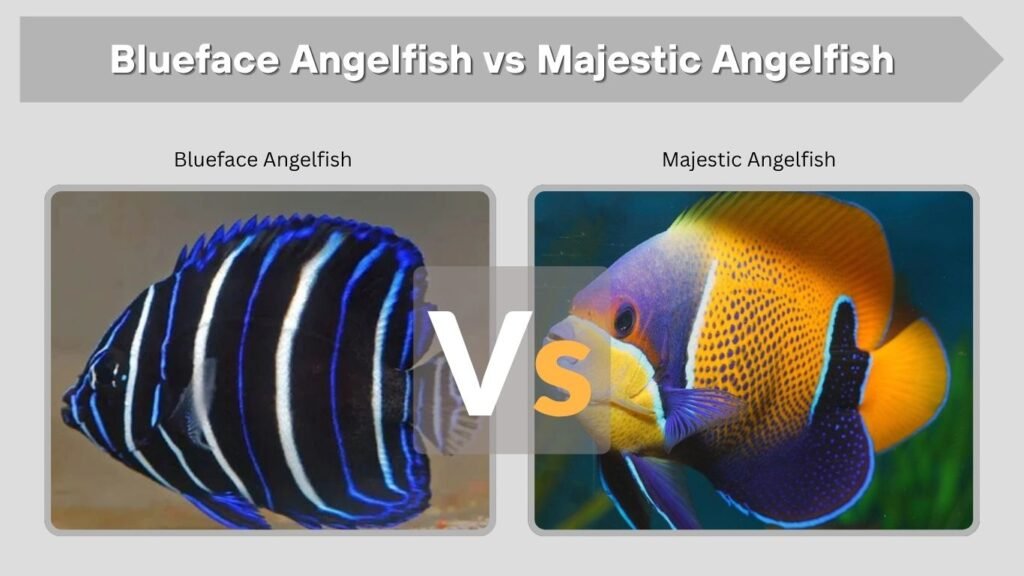
Blueface and Majestic Angelfish are sometimes compared because both belong to the genus Pomacanthus and develop spectacular blue-and-yellow adult coloration.
| Feature | Blueface Angelfish | Majestic Angelfish |
| Scientific name | P. xanthometopon | P. navarchus |
| Maximum size | About 15 inches | About 10 inches |
| Suggested tank | 220+ gallons | Around 180+ gallons |
| Adult appearance | Blue face, yellow mask, patterned body | Yellow body with large dark-blue region |
| Reef compatibility | With caution | With caution |
The Majestic Angelfish remains noticeably smaller, while the Blueface becomes a larger and more commanding display fish. Quality Marine lists roughly 220 gallons as a minimum for Blueface Angelfish and 180 gallons for Majestic Angelfish.
Blueface Angelfish for Sale: What to Look For
When choosing a Blueface Angelfish, health is more important than finding the lowest price.
Look for a fish that:
- Swims normally and confidently
- Responds to food
- Has clear eyes
- Has intact fins
- Has a full-looking body rather than a pinched stomach
- Shows no obvious white spots or external wounds
- Breathes normally
Whenever possible, ask to see the fish before purchasing it.
FishBase notes that individuals below about 20 cm in length may adapt better to aquarium life, making a healthy juvenile or smaller sub-adult an appealing option when the aquarist already has adequate long-term housing planned.
Blueface Angelfish Breeding
Breeding Blueface Angelfish in a typical home aquarium is considerably more difficult than simply keeping an individual.
Large marine angelfish require substantial space, compatible partners, appropriate spawning conditions, and specialized care for eggs and larvae. For most hobbyists, Blueface Angelfish should therefore be viewed primarily as a display species rather than a practical home-breeding project.
FAQs
Is a Blueface Angelfish difficult to keep?
It is moderately challenging. The fish needs a very large, mature saltwater aquarium, good filtration, stable conditions, suitable tank mates, and a varied diet containing sponge-based and marine foods.
How large does a Blueface Angelfish get?
An adult Blueface Angelfish can reach approximately 15 inches or 38 cm in length, although aquarium individuals may vary in final size.
What size tank does a Blueface Angelfish need?
A long-term aquarium of around 220 gallons or larger is recommended for an adult because the species becomes large and requires considerable swimming and territorial space.
Can Blueface Angelfish live in a reef tank?
They can sometimes be kept in reef aquariums, but they are not reliably reef safe. Individuals may nip corals and other sessile invertebrates, so keeping one with valuable corals involves some risk.
What does a Blueface Angelfish eat?
Its natural diet includes sponges, tunicates and other encrusting organisms. Captive fish should receive a varied diet including sponge-based marine angelfish food, algae, quality pellets and suitable frozen or meaty marine foods.