
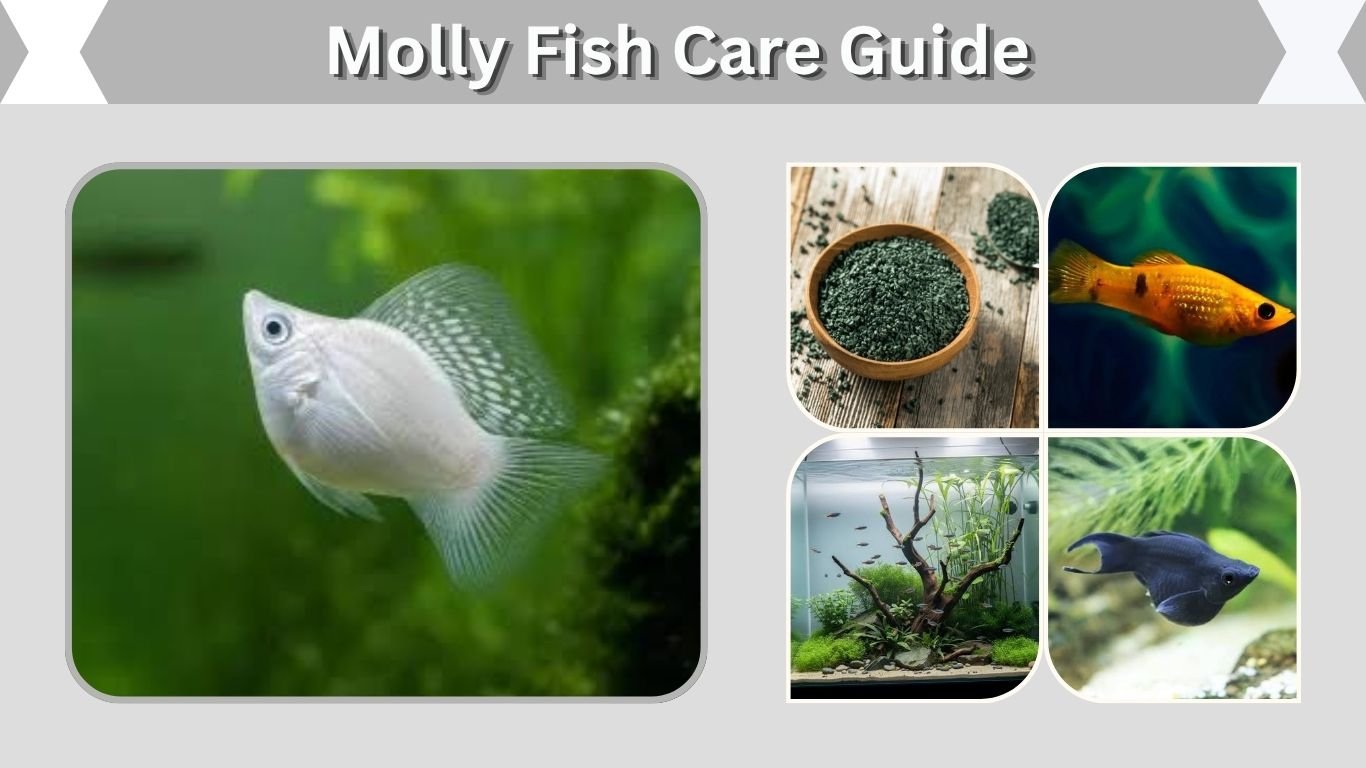
Molly fish are colorful freshwater livebearers loved for their peaceful nature, active swimming, and wide range of colors and body shapes. Black mollies, Dalmatian mollies, balloon mollies, sailfin mollies, and orange or white varieties are all popular aquarium choices. Although mollies are relatively easy to keep, they thrive best with warm water, adequate swimming space, a varied diet, and compatible companions. This guide covers molly fish care, tank requirements, food, varieties, size, lifespan, male and female differences, pregnancy, and breeding.
Molly Fish Identification and Characteristics
Mollies belong to the genus Poecilia and are closely related to guppies and other livebearing aquarium fish. Rather than laying eggs, females give birth to free-swimming fry. Selective breeding has produced numerous colors, fin shapes, and body forms, but most mollies share a sturdy body, fan-shaped tail, active personality, and preference for warm, mineral-rich water.
Molly Fish Size
Most commonly kept mollies grow approximately 3 to 5 inches long, although exact adult size depends on the species, sex, diet, and variety.
Sailfin mollies can become larger than many standard varieties, especially males with well-developed dorsal fins. Females are frequently larger and heavier-bodied than males, particularly when mature or pregnant.
How Long Do Molly Fish Live?
The typical molly fish lifespan is around 3 to 5 years under good aquarium conditions. Some individuals may live longer when provided with stable water quality, proper nutrition, adequate space, and low stress.
Poor water conditions, overcrowding, disease, and inappropriate tank mates can significantly shorten their lifespan.
Popular Types of Molly Fish
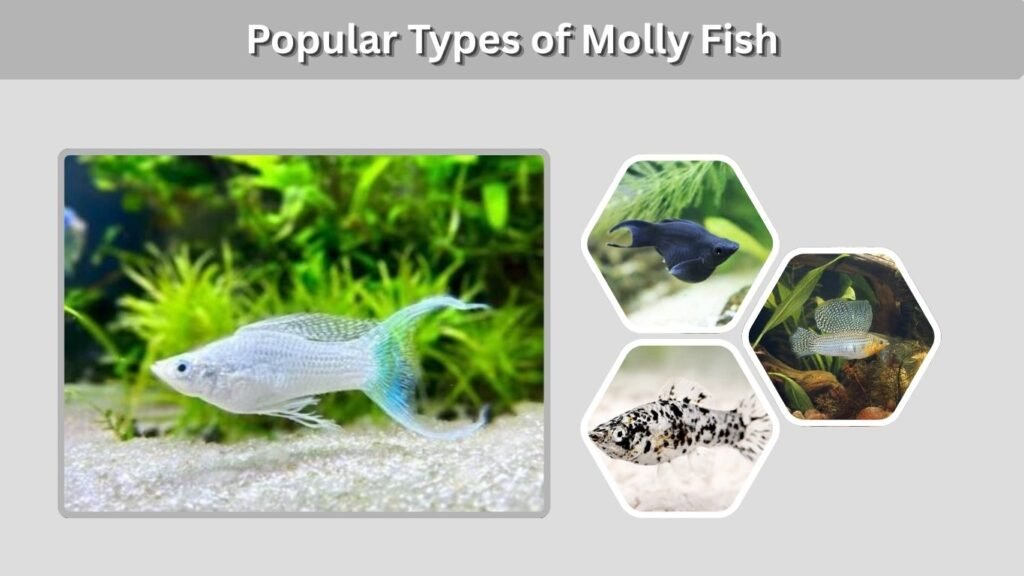
One reason mollies remain popular is their enormous variety. Different mollies can display solid black, white, silver, orange, blue-gray, spotted, or multicolored patterns. Some have unusually shaped bodies or enlarged dorsal fins. Although their appearance differs, most commonly sold varieties have broadly similar fundamental care requirements.
Common Molly Fish Varieties
Popular types include:
- Black molly: Almost completely black body and fins
- Dalmatian molly: White or silver body covered with black spots
- Balloon molly: Short, rounded body caused by selective breeding
- Sailfin molly: Large dorsal fin, especially noticeable on males
- White molly: White, cream, or silvery coloration
- Orange molly: Bright orange or golden body
- Red molly: Reddish-orange coloration
- Marble molly: Mixed irregular light and dark markings
- Orange and black molly: Combination of orange and dark patches
Black vs. Dalmatian Molly
Black mollies have predominantly dark pigmentation throughout the body, whereas Dalmatian mollies display contrasting black spots over a white or silvery background.
Their basic aquarium requirements are similar. Color alone does not require major changes in care, although individual strains and body shapes can vary in size and robustness.
Molly Fish Tank Setup and Requirements
Mollies are active swimmers and produce more waste than their small appearance might suggest, so they benefit from an aquarium with sufficient water volume and dependable filtration. Stable water conditions are especially important. They generally prefer harder, more alkaline freshwater compared with many soft-water tropical species and should not be placed in a newly established, unstable aquarium.
Molly Fish Tank Requirements
A suitable setup should provide:
- Tank size: Around 20–30 gallons or larger for a small group
- Temperature: Approximately 72–78°F
- pH: Roughly 7.5–8.5
- Water: Moderately hard to hard freshwater
- Filter: Reliable biological and mechanical filtration
- Plants: Live plants and algae-growing surfaces
- Swimming room: Open middle and upper areas
- Decorations: Rocks, wood, and hiding areas
- Maintenance: Consistent partial water changes
Larger sailfin mollies benefit from more swimming space than smaller varieties.
Do Molly Fish Need Salt?
Mollies can tolerate some salinity, and wild populations occur in freshwater, brackish, and sometimes coastal environments. However, aquarium mollies do not automatically require added salt.
For most home aquariums, maintaining stable, appropriately hard freshwater is more important than routinely adding aquarium salt. Salt can also be unsuitable for certain tank mates and plants.
What Do Molly Fish Eat?

Molly fish are omnivores, but plant material forms an important part of their diet. They naturally graze on algae and other organic material while also consuming small aquatic organisms. A varied aquarium diet helps maintain good coloration, digestion, growth, and breeding condition rather than relying entirely on one type of commercial flake.
Best Food for Molly Fish
Good foods include:
- High-quality tropical flakes
- Small pellets
- Spirulina flakes
- Algae-based foods
- Blanched zucchini
- Blanched spinach
- Shelled peas in small amounts
- Brine shrimp
- Daphnia
- Bloodworms occasionally
- Frozen or live foods
Plant-based food should remain a regular part of their diet rather than treating mollies strictly as carnivorous fish.
How Often Should Mollies Be Fed?
Adult mollies can generally be fed once or twice daily. Offer small portions they can consume quickly rather than adding large amounts at once.
Young fry may require several small feedings each day because they grow rapidly. Remove or avoid excess food because decomposition contributes to ammonia and poor water quality.
Male vs. Female Molly Fish
Sexing mature mollies becomes relatively easy once you examine the anal fin and body shape. Males also frequently spend significant time pursuing females. Keeping an appropriate male-to-female ratio helps prevent one female from receiving constant attention and becoming stressed.
Male Molly Fish
A mature male has a modified anal fin called a gonopodium. Instead of appearing fan-shaped, it looks narrow and pointed.
Males are often smaller and slimmer than females. Sailfin males can develop especially impressive dorsal fins that they display during courtship.
Female Molly Fish
Females have a normal fan-shaped anal fin and typically develop larger, rounder bodies.
Pregnant females become particularly swollen toward the rear of the abdomen. Because males frequently pursue females, keeping roughly one male with two or three females can distribute attention more evenly.
Pregnant Molly Fish and Breeding
Mollies are livebearers, meaning fertilization occurs internally and females eventually give birth to living fry rather than depositing eggs. They reproduce readily in healthy aquariums. Female mollies can also store sperm, allowing additional pregnancies to occur even when a male is no longer present in the tank.
Signs of a Pregnant Molly Fish
Typical signs include:
- Enlarging abdomen
- Increasingly squared appearance near the rear of the belly
- Darker gravid area in some lighter-colored females
- Increased hiding
- Reduced activity near delivery
- Changes in appetite
- Spending more time near plants or sheltered areas
Pregnancy can be harder to judge in black mollies because the dark coloration may conceal the gravid area.
How Long Are Molly Fish Pregnant?
Molly fish gestation generally lasts around four to six weeks, although temperature, age, health, and individual variation can affect timing.
When birth approaches, a female may isolate herself around dense vegetation. Fry are born capable of swimming and feeding immediately.
Caring for Molly Fry
Adult mollies may eat newly born fry, so dense plants such as Java moss or floating vegetation provide useful shelter.
If you want to raise a large percentage of the fry, a separate nursery tank is often more comfortable than keeping the mother confined in a small breeding box for an extended period.
Molly Fish Behavior and Tank Mates
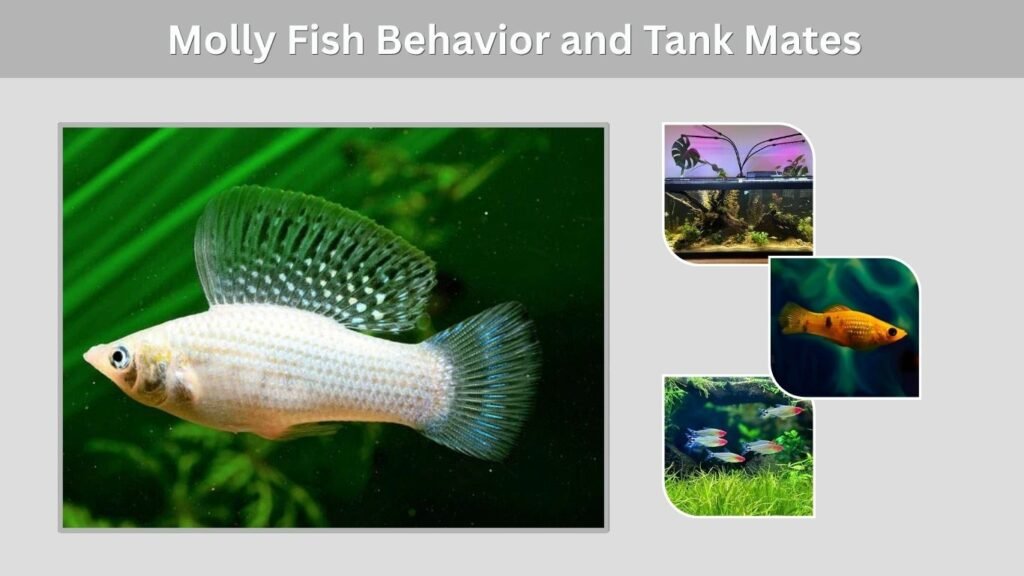
Mollies are social fish that often remain near others of their kind, although they are better described as loose shoaling fish than strict schooling fish. They are usually peaceful, but males may chase females and occasionally challenge other males. Adequate space and vegetation help reduce persistent chasing.
Good Tank Mates
Mollies can often live successfully with platies, swordtails, peaceful rainbowfish, some gouramis, compatible catfish, and other community species that tolerate similar hard, alkaline water.
Compatibility should be based on water requirements as well as temperament. A fish can be peaceful yet still be an unsuitable companion if it requires very different water chemistry.
Can Mollies Live With Goldfish?
Mollies and goldfish are generally not ideal tank mates. Mollies are tropical fish that prefer warm water, while many goldfish varieties do better at cooler temperatures.
Their feeding habits, adult sizes, waste production, and environmental requirements also differ, making separate aquariums a more reliable choice.
Common Molly Fish Health Problems
Healthy mollies are active, alert, and interested in food. Persistent hiding, clamped fins, rapid breathing, weight loss, unusual swimming, or white spots can indicate stress or disease. Water quality should be checked first whenever a molly suddenly behaves abnormally because poor conditions can weaken fish and increase susceptibility to illness.
Preventing Molly Fish Disease
Good preventive care includes:
- Maintain stable temperature
- Test ammonia and nitrite
- Avoid overcrowding
- Perform regular water changes
- Feed a balanced diet
- Quarantine new fish when possible
- Avoid sudden changes in water chemistry
- Watch for bullying
- Remove uneaten food
- Keep filtration working properly
Good aquarium conditions are one of the most effective ways to reduce recurring health problems.
FAQs
1. How big do molly fish get?
Most aquarium mollies grow approximately 3 to 5 inches long. Size varies among species and varieties, with sailfin mollies generally capable of becoming larger than many common short-fin mollies. Females are also often larger than males.
2. What temperature do molly fish need?
Mollies generally do well at temperatures around 72–78°F. Keeping the temperature stable is important because sudden fluctuations can stress fish. They also prefer relatively hard, alkaline water compared with many other popular tropical aquarium species.
3. How long are molly fish pregnant?
Pregnancy commonly lasts about four to six weeks. Exact gestation time varies with water temperature, the female’s age, health, and other conditions. Near delivery, her abdomen may appear larger and more squared toward the rear.
4. Do molly fish lay eggs?
No. Mollies are livebearing fish. Eggs develop inside the female’s body, and she gives birth to free-swimming fry. The young are capable of swimming and feeding shortly after birth, although adults may eat them if hiding places are unavailable.
5. Are mollies schooling fish?
Mollies are social and commonly gather with others, but they do not usually form the tight, coordinated schools seen in some tetras. They are better described as shoaling fish and generally benefit from companionship when adequate aquarium space is provided.