
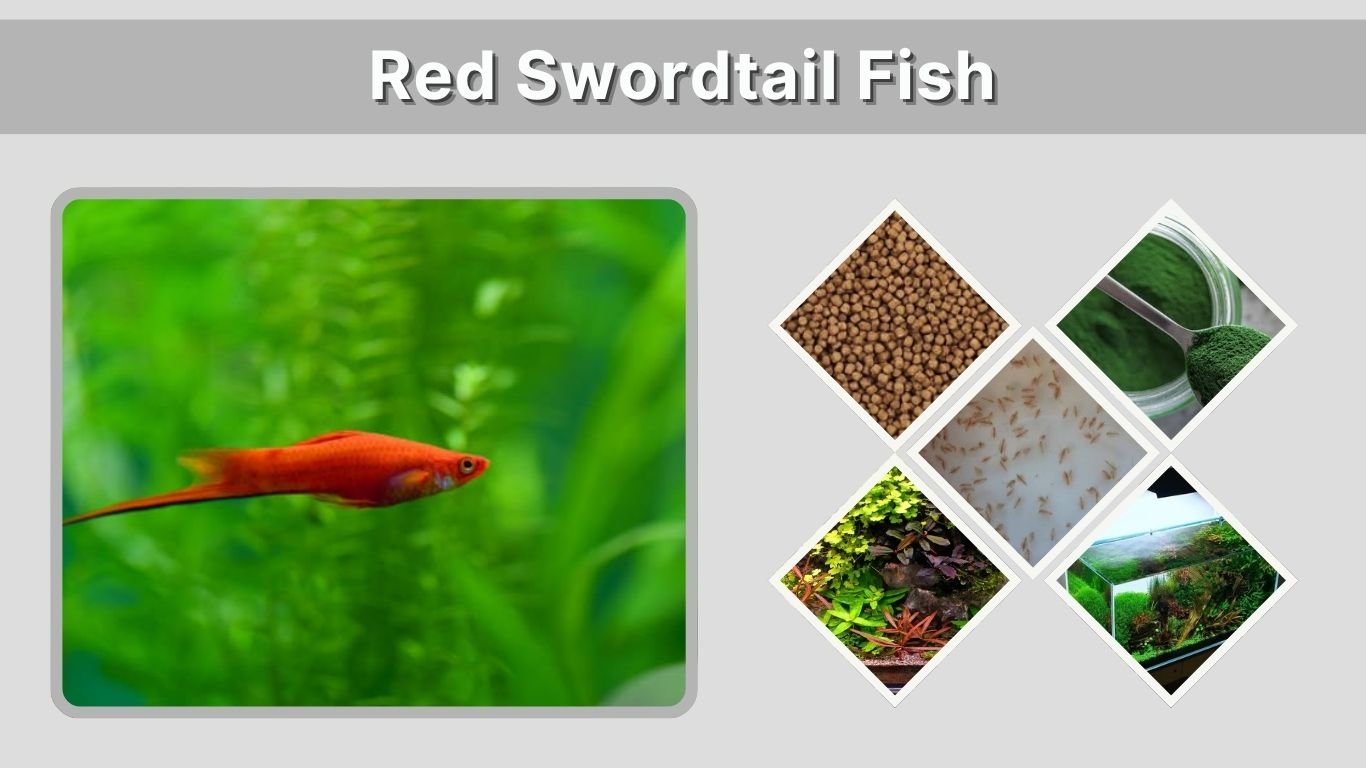
The red swordtail fish is a colorful freshwater livebearer known for its active swimming and the male’s distinctive sword-shaped tail extension. Popular varieties include red velvet, red wag, and red tuxedo swordtails, each offering a different combination of color and markings. These fish can thrive in a spacious community aquarium with clean, mineral-rich water, a varied diet, and suitable companions. However, males may chase one another or repeatedly pursue females, while frequent breeding can quickly increase the population beyond what a tank can comfortably support.
What Is a Red Swordtail Fish?
Red swordtails are selectively bred aquarium fish generally sold as varieties of Xiphophorus hellerii. Some domestic lines have hybrid ancestry involving related platies. Their red coloration is a cultivated characteristic rather than evidence of a separate species.
Identification and Basic Facts
- Family: Poeciliidae.
- Aquarium type: Freshwater.
- Adult size: Commonly around 3–5 inches, depending on strain and sex.
- Typical lifespan: Approximately 3–5 years.
- Diet: Omnivorous.
- Reproduction: Live-bearing.
- Activity: Mainly middle and upper aquarium levels.
- Distinctive feature: A lower tail extension in most mature males.
Size descriptions vary because some include the male’s sword while others emphasize body length. Large individuals can exceed the usual dimensions of shop specimens. The species’ wild ancestors come from Mexico and Central America.
Popular Red Swordtail Varieties
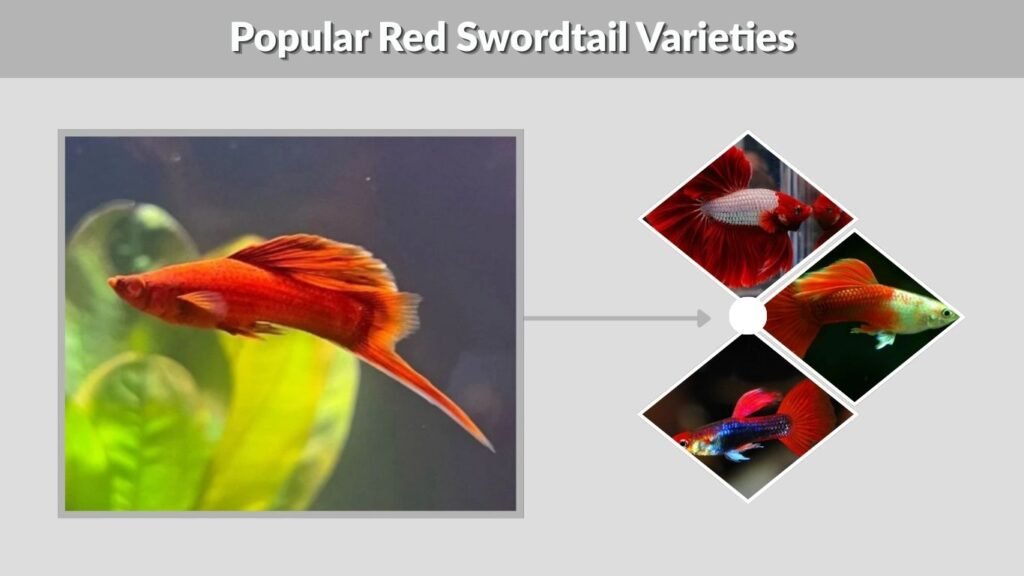
Color and fin names help describe appearance, but sellers do not always use them consistently. Ask for photographs of the actual stock rather than assuming a trade name guarantees a particular shade or pattern.
Red Velvet, Blood Red, and Ruby Red
Red velvet swordtails typically have rich, relatively uniform red coloration. “Blood red” and “ruby red” usually emphasize an intense red appearance, but these labels are not standardized across breeders.
Red-eyed strains also exist. Red eyes can be an inherited characteristic in some varieties; sudden cloudiness, swelling, or injury is a different issue.
Red Wag and Red Tuxedo
Red wag swordtails combine a red body with black fins. Red tuxedo swordtails have substantial dark pigmentation across part of the body, creating a red-and-black pattern.
Red-and-White, High-Fin, and Lyretail Forms
Red-and-white swordtails are often sold under koi or kohaku-style names. High-fin varieties have an enlarged dorsal fin, while lyretails have elongated upper and lower tail rays.
Fin shape and color can occur together, so a fish may be both red velvet and high-fin. Choose individuals that swim and feed normally rather than selecting only for unusually long fins.
Red Swordtail Fish Tank Setup
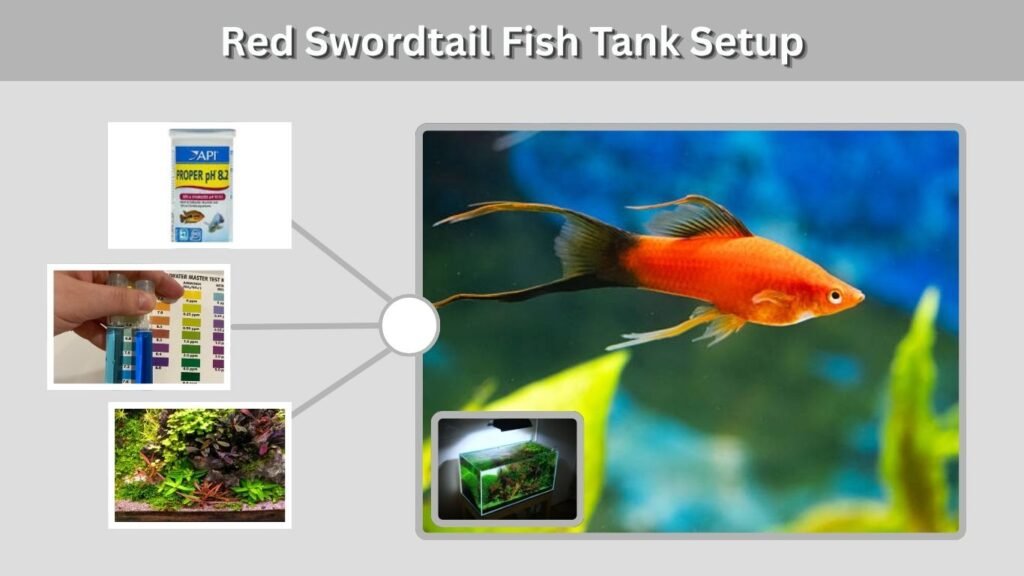
Swordtails are energetic swimmers, so horizontal space matters. Dense planting helps provide shelter, but an aquarium should also have clear swimming areas.
Tank Size and Equipment
For a small group, a long aquarium of at least 30 gallons is a practical starting point. Larger tanks are preferable when keeping multiple males or additional community fish.
Provide effective filtration, surface movement, and a secure lid: swordtails can jump. Arrange plants around the back and sides to interrupt chasing without filling every swimming lane.
Water Parameters
Suitable everyday targets for many domestic red swordtails include:
- Temperature: 74–78°F, approximately 23–26°C.
- pH: Around 7.0–8.2.
- General hardness: Approximately 12–20 dGH.
- Ammonia: 0 ppm.
- Nitrite: 0 ppm.
- Nitrate: Controlled through testing and regular maintenance.
These are practical target ranges, not values to chase with abrupt chemical adjustments. Ask the breeder about the water in which the fish were raised.
Maintenance
Introduce swordtails only to a fully cycled aquarium. Use dechlorinated replacement water, remove accumulated waste, and adjust water-change frequency to stocking and test results.
Aquarium salt is not routinely necessary. It does not replace adequate mineral hardness, filtration, or water changes.
What Do Red Swordtail Fish Eat?
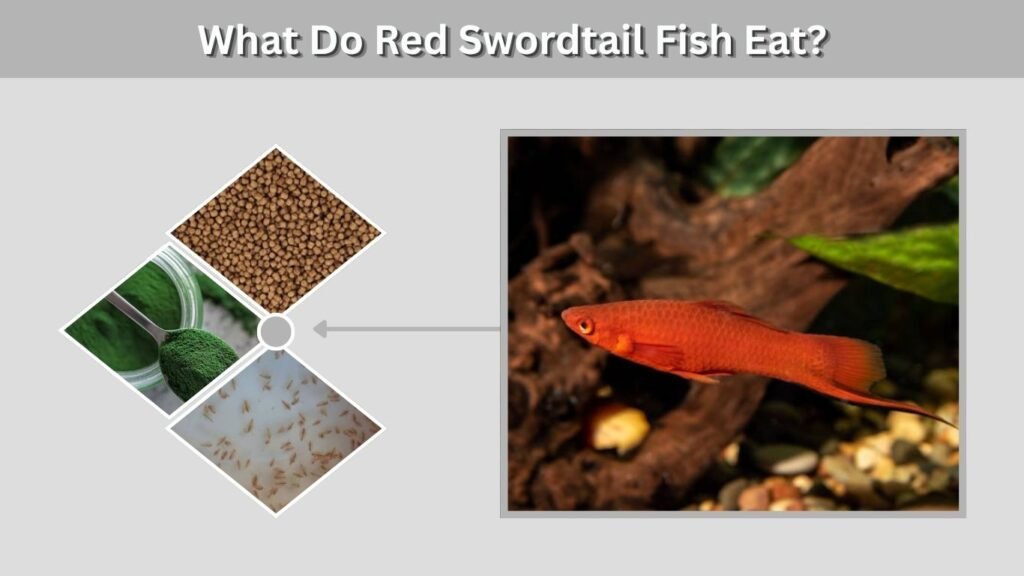
Red swordtails eat both animal and plant material. Grazing on aquarium algae is normal, but algae alone will not provide a balanced diet.
Suitable Foods
Offer a varied selection:
- Complete tropical flakes or small pellets.
- Spirulina-containing foods.
- Frozen or live daphnia.
- Brine shrimp.
- Occasional bloodworms.
- Small portions of softened vegetables.
Feed modest amounts once or twice daily and remove uneaten food. A complete staple diet should provide most nutrition; treats should not displace it.
Male vs. Female Red Swordtail Fish
The sword is useful for identifying many mature males, but the anal fin is especially important when examining young fish or unusual fin varieties.
Key Differences
| Feature | Male | Female |
| Anal fin | Narrow, rodlike gonopodium | Broad, fan-shaped fin |
| Tail | Usually develops a lower sword extension | Usually lacks the male’s sword |
| Body | Often slimmer | Often deeper-bodied and larger |
| Reproductive role | Fertilizes females | Gives birth to fry |
Young males may not yet show a conspicuous sword. Its absence alone does not prove that a fish is female.
Managing Male Harassment
For mixed-sex groups, approximately two or three females per male can help distribute attention. This does not eliminate chasing or prevent breeding.
Provide visual barriers and separate fish if one is persistently cornered, injured, or prevented from feeding.
Red Swordtail Fish Tank Mates
Compatibility depends on shared water requirements, adult size, temperament, and available space—not simply whether both fish are labeled “community fish.”
Platies and Black Mollies
Platies and appropriately sized mollies can be suitable companions in a sufficiently large, hard-water aquarium.
Swordtails are generally longer and more streamlined than platies. They can also interbreed with certain platy species, so avoid mixing them when maintaining a particular breeding line.
Black mollies need adequate space and compatible conditions; larger molly varieties may require a considerably bigger aquarium.
Female Bettas and Other Companions
A female betta is not a dependable first-choice companion. Swordtails’ activity and chasing may cause stress, while the betta may respond aggressively. Female sex does not guarantee peaceful behavior.
Other possible companions include suitably sized peaceful rainbowfish and community species that tolerate the same water conditions. Avoid fin-nippers, large predators, and fish needing very soft, acidic water.
Red Swordtail Fish Breeding
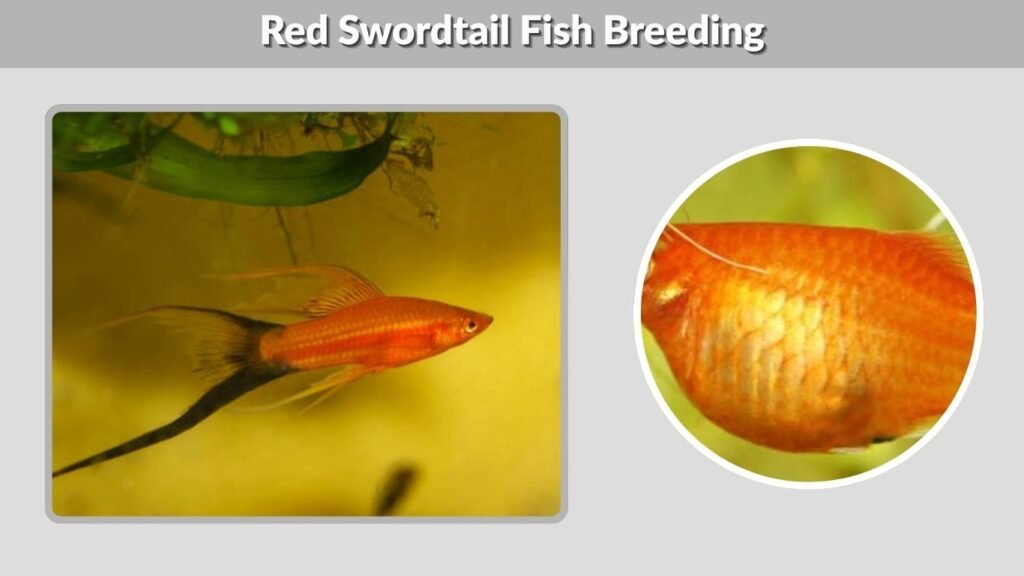
Red swordtails give birth to free-swimming fry rather than depositing eggs for external development. Breeding often occurs without special intervention, so prepare space or responsible new homes before keeping mixed-sex groups.
Pregnancy and Birth
Pregnancy generally lasts about four weeks, although timing varies. A female may develop a fuller abdomen, but appearance alone cannot reliably predict the exact birth date.
Females can store sperm and produce additional broods after separation from males. A female-only aquarium may therefore still produce babies if its inhabitants previously encountered males.
Caring for Baby Swordtails
Adults and other fish may eat newborn fry. Dense floating plants and fine-leaved cover improve hiding opportunities, while a separate, cycled nursery provides more controlled protection.
Use a sponge filter or protected intake. Feed finely crushed complete food and suitably small live foods in modest portions, keeping water quality stable.
Avoid leaving a pregnant female confined in a tiny breeding box for prolonged periods.
Buying and Keeping Red Swordtails Healthy
Red swordtail fish prices vary with location, size, fin type, and breeder. An unusual label does not necessarily indicate a healthier or rarer fish.
What to Check Before Buying
Choose fish with:
- Alert behavior and balanced swimming.
- Open, undamaged fins.
- Clear eyes and intact scales.
- Normal breathing.
- A healthy appetite.
- No obvious sores, white spots, or severe wasting.
Quarantine new arrivals separately before introducing them to established fish. If swordtails gasp, clamp their fins, or stop eating, check water conditions promptly and seek qualified advice rather than guessing at medication.
FAQs
Are red velvet swordtails a separate species?
No. Red velvet generally describes a cultivated color variety of domestic swordtail, not a separate species with fundamentally different care needs.
When can red swordtails have babies?
Some domestic swordtails become sexually mature at around three months, while others take longer. Strain, nutrition, temperature, and individual growth affect timing; body size alone is not a reliable guide.
Are red swordtail fish aggressive?
They are usually manageable community fish, but males can be territorial and persistent toward females. Crowding and poorly planned groups can intensify harassment.
Can red swordtails live in a 10-gallon tank?
A 10-gallon aquarium is not a suitable long-term choice for an adult group. Their swimming activity, potential size, and reproduction favor a substantially larger tank.
Why is my red swordtail losing color?
Stress, lighting, diet, illness, and natural variation can affect appearance. Check for accompanying changes in breathing, appetite, swimming, or fins before assuming the fish simply needs color-enhancing food.