
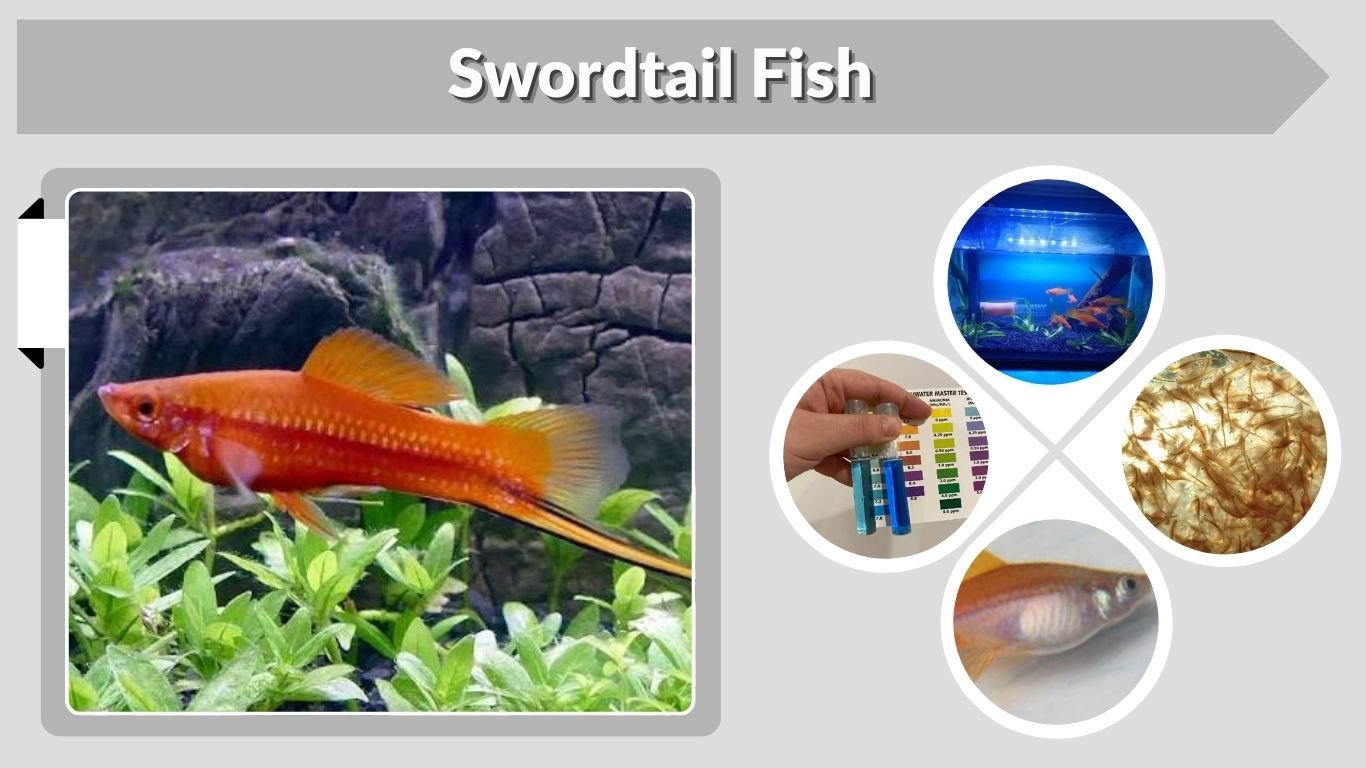
Swordtail fish are colorful, active freshwater fish known for the long, sword-shaped extension on the male’s tail. Their peaceful nature, attractive varieties, and relatively simple care make them popular among beginner and experienced aquarists. Swordtails are livebearers that produce free-swimming fry rather than laying eggs. With a spacious aquarium, stable water conditions, compatible tank mates, and a nutritious diet, these lively fish can remain healthy for several years.
Swordtail Fish Overview
The common swordtail belongs to the genus Xiphophorus and is closely related to platies. The wild green swordtail originates from parts of Mexico and Central America, where it inhabits warm streams, rivers, and other freshwater environments. Selective breeding has produced many colors, patterns, and fin shapes for the aquarium trade.
Appearance and Size
Male swordtails are recognized by the elongated lower section of their tail fin. This decorative “sword” does not function as a weapon. Females have rounded tails and are usually larger and fuller-bodied than males.
Important physical characteristics include:
- Male size: Approximately 3–4 inches, excluding the sword
- Female size: Approximately 4–5 inches
- Body shape: Long and slightly compressed
- Natural color: Olive-green with a reddish side stripe
- Lifespan: Usually three to five years
- Temperament: Active, social, and generally peaceful
Some females may grow close to six inches under excellent conditions. The fish therefore require more swimming space than their slim appearance might suggest.
Male vs. Female Swordtails
Adult males have a narrow, pointed anal fin called a gonopodium, while females have a broad, fan-shaped anal fin. The male’s tail sword is another clear distinction, although young males may not develop it immediately.
Mature females usually have deeper bodies and may display a dark gravid spot near the rear of the abdomen. This spot becomes more noticeable during pregnancy, though it can be difficult to see on dark-colored varieties.
Popular Swordtail Types and Colors
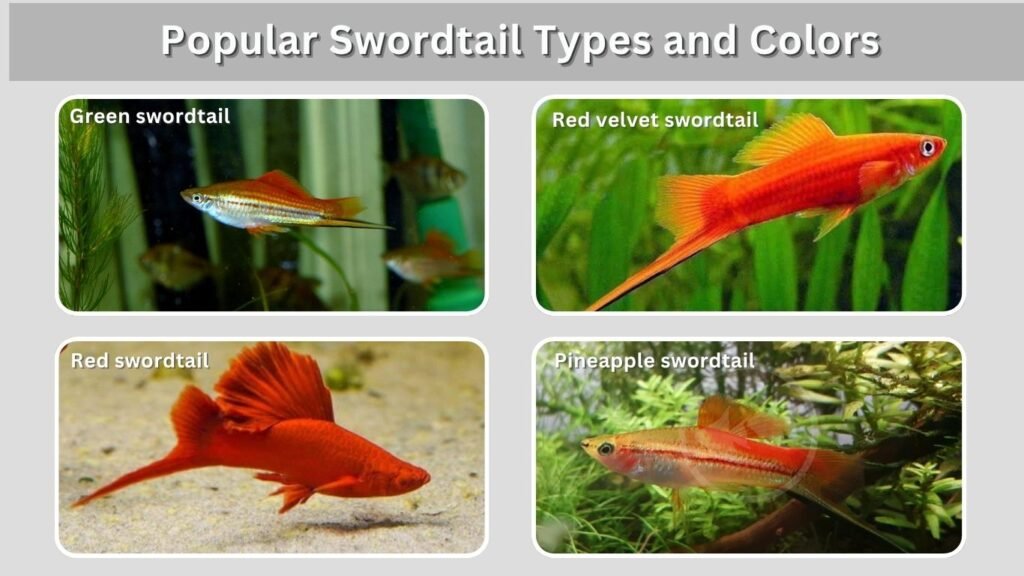
Swordtails have been selectively bred into an impressive range of aquarium varieties. Differences may involve body color, markings, dorsal-fin size, or tail shape. Fish sold under similar names can look slightly different depending on the breeder, so color quality and pattern placement are not always identical.
Common Swordtail Varieties
Popular types include:
- Green swordtail: Closely resembles the natural form, with an olive-green body and red side stripe.
- Red swordtail: Displays a bright orange-red or deep red body.
- Red velvet swordtail: Has an intense, smooth red coloration that may appear darker than a standard red variety.
- Pineapple swordtail: Usually combines yellow or orange coloring with red markings.
- Koi or Kohaku swordtail: Features white and red-orange patches resembling koi carp.
- Sanke swordtail: Displays combinations of white, red, and black.
- Black swordtail: Has extensive black coloration, sometimes combined with red or green.
- Neon swordtail: Shows reflective or iridescent coloring along the body.
- Marigold swordtail: Commonly has golden-yellow and orange tones.
- Lyretail swordtail: Develops elongated extensions on both the upper and lower parts of the tail.
Lyretail males may have difficulty breeding naturally because their gonopodium can become unusually long. Standard-finned varieties generally reproduce more easily.
Rare and Wild Swordtail Species
The aquarium trade also contains less common species, including the Montezuma swordtail. Male Montezuma swordtails can develop extremely long tail extensions, sometimes approaching or exceeding the length of their bodies.
Rare wild species may require more specialized care and are not always suitable for a typical community tank. Aquarists should confirm the exact species before purchasing because size, behavior, and water preferences can differ.
Swordtail Fish Tank and Water Requirements

Swordtails are hardy, but they are energetic swimmers that need clean, oxygenated water and adequate horizontal space. They can jump when frightened or excited, making a secure aquarium lid important. Stable conditions are healthier than repeatedly adjusting the water to achieve an exact measurement.
Recommended Aquarium Setup
A suitable swordtail aquarium should provide:
- Minimum tank size: 20 gallons for a small group
- Preferred size: 29 gallons or larger
- Water temperature: 72–79°F (22–26°C)
- pH range: Approximately 7.0–8.3
- Water hardness: Moderate to hard
- Ammonia and nitrite: 0 ppm
- Nitrate: Kept low through regular water changes
- Equipment: Filter, heater, thermometer, and secure lid
Add plants around the sides and back while leaving an open area for swimming. Java fern, anubias, hornwort, and floating plants can provide shelter. Dense vegetation is especially helpful for newborn fry.
Aquarium Maintenance
Change approximately 20–30% of the aquarium water each week, depending on the number of fish and nitrate level. Always treat new tap water with a suitable conditioner and avoid sudden changes in temperature.
A filter provides biological filtration, water circulation, and oxygen exchange. Additional aeration is not always necessary when the filter creates good surface movement, but an air stone can help in warm or heavily stocked tanks.
Swordtail Diet and Feeding
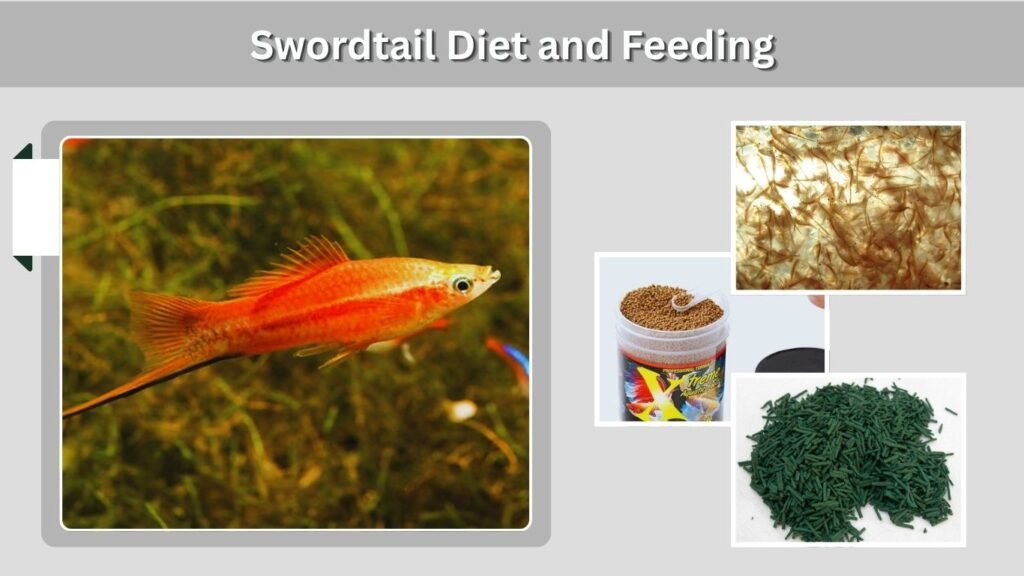
Swordtails are omnivores that consume plant matter, algae, insect larvae, small aquatic organisms, and other available foods. A varied diet helps maintain their colors, immune function, growth, and reproductive health. They should not be fed only one food throughout their lives.
Best Foods for Swordtails
Suitable foods include:
- High-quality tropical flakes or small pellets
- Spirulina flakes and algae-based foods
- Brine shrimp
- Daphnia
- Mosquito larvae from safe sources
- Bloodworms as an occasional treat
- Blanched spinach, peas, or zucchini
Feed small amounts once or twice daily. The fish should finish most food within a few minutes. Overfeeding can cause digestive problems and increase ammonia and nitrate by leaving decaying food in the aquarium.
Feeding Swordtail Fry
Newborn fry can eat finely crushed flakes, powdered fry food, baby brine shrimp, and microworms. Feed them small portions several times daily while maintaining excellent water quality.
Fry grow more successfully in a separate nursery aquarium or a heavily planted tank. Avoid placing a pregnant female in a very small breeding box for an extended period because confinement can cause stress.
Swordtail Tank Mates
Swordtails usually thrive in peaceful community aquariums containing fish with similar water requirements. However, males sometimes chase females or compete with one another. Tank size, hiding places, and the male-to-female ratio strongly influence their behavior.
Compatible Fish
Good tank mates may include:
- Platies
- Mollies
- Guppies
- Peaceful tetras
- Zebra danios
- Rainbowfish suited to similar water
- Corydoras catfish adapted to the aquarium conditions
- Bristlenose plecos
- Peaceful snails
Avoid slow, timid fish that may become stressed by constant activity. Large aggressive cichlids and predatory species may attack or eat swordtails.
Can Swordtails Live With Guppies?
Swordtails and guppies can generally live together in a spacious aquarium. Both are peaceful livebearers that prefer warm water, but swordtails are larger and may dominate feeding time. Provide enough food, swimming space, and plant cover.
A “double swordtail guppy” is a guppy variety with extensions on its tail. It is not a cross between a swordtail fish and a guppy.
Can Swordtails Live With Platies and Mollies?
Swordtails can live successfully with both platies and mollies. Platies are particularly close relatives, and some swordtail varieties have platy ancestry. Swordtails and platies can also hybridize, so breeders should keep them separately if maintaining pure lines is important.
Mollies generally require a larger aquarium and prefer hard, alkaline water. These requirements usually overlap well with those of swordtails.
Swordtail Pregnancy and Breeding
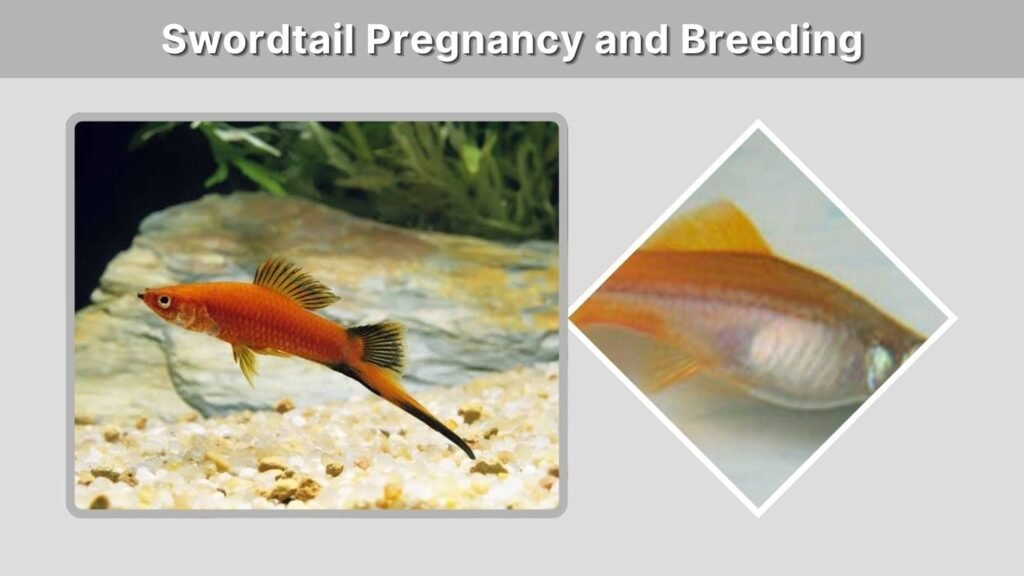
Swordtails are livebearing fish, meaning females deliver fully formed, free-swimming young. They breed readily in community aquariums, and a female can store sperm after mating. Consequently, she may produce several broods even when a male is no longer present.
Signs of a Pregnant Swordtail
Common signs include:
- A gradually enlarged abdomen
- A darker gravid spot near the anal fin
- A more squared appearance shortly before delivery
- Increased hiding or reduced activity
- Avoiding other fish near the end of pregnancy
Pregnancy usually lasts around four weeks, although temperature, age, diet, and stress can affect the timing. A female may give birth to approximately 20–100 fry.
Protecting the Fry
Adult swordtails may eat their young. Dense plants such as guppy grass, hornwort, or floating-root plants give fry places to hide. Alternatively, move the female to a properly prepared nursery tank and return her to the main aquarium after delivery.
Keep approximately one male for every two or three females. This arrangement reduces persistent chasing and gives females time to rest.
FAQs
How long do swordtail fish live?
Swordtail fish usually live for three to five years. Clean water, a balanced diet, adequate swimming space, and low stress can help them reach the upper end of that range.
What tank size does a swordtail need?
A 20-gallon aquarium is a practical minimum for a small group, but a 29-gallon or larger tank is preferable because swordtails are active and can grow several inches long.
Can a swordtail fish live alone?
A swordtail can survive alone, but these social fish generally behave more naturally in a group. Maintain a suitable male-to-female ratio to prevent females from being continually chased.
How many babies do swordtail fish have?
A female commonly produces around 20–100 fry per brood. Her age, size, health, and previous pregnancies influence the number of babies.
Are swordtail fish aggressive?
Swordtails are generally peaceful, but males may compete with each other or chase females. A larger tank, visual barriers, and an appropriate group ratio usually reduce aggression.