
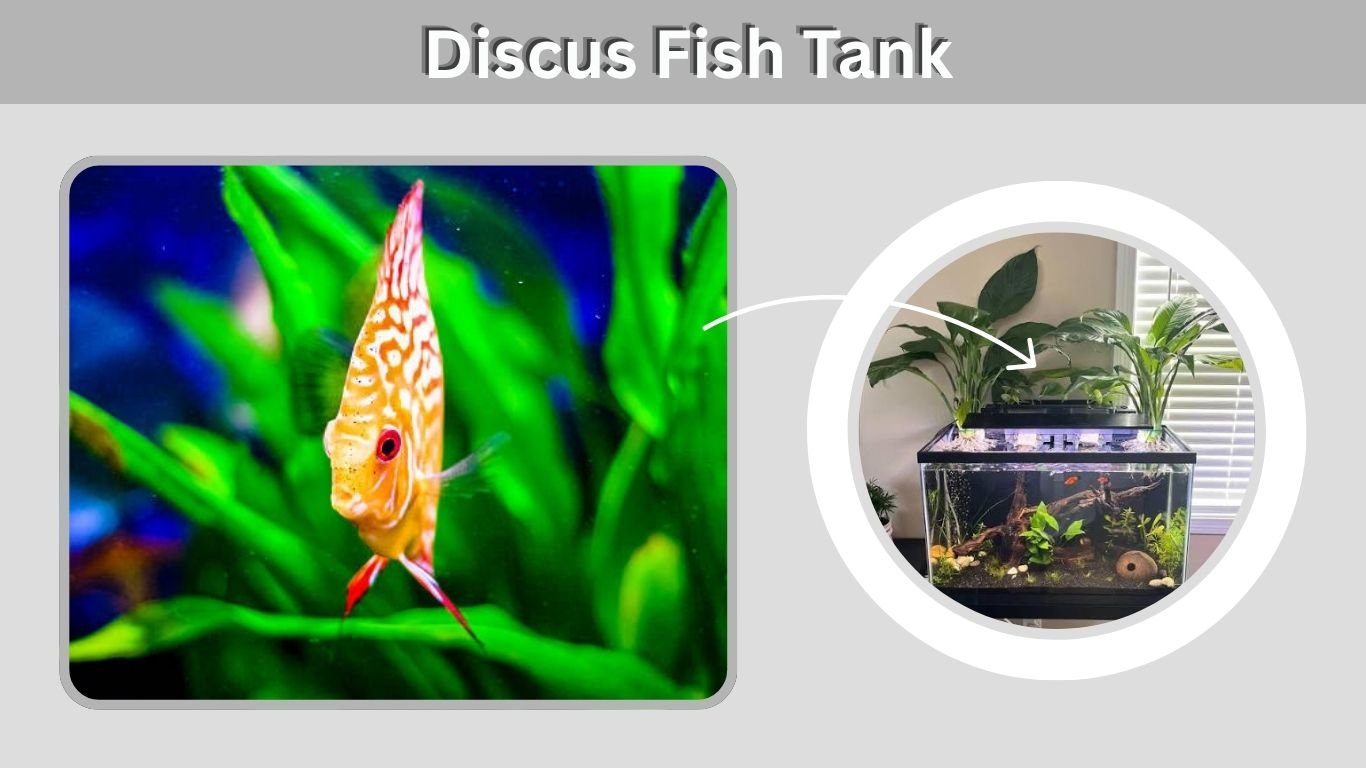
A discus fish tank needs more planning than a typical community aquarium because these large, social cichlids require warm, clean, stable water and plenty of swimming space. Adult discus are best kept in groups, making tank volume, filtration, and maintenance especially important. A 75-gallon or larger aquarium is generally a better long-term choice than a 55-gallon tank. Whether you prefer a planted display, bare-bottom setup, or natural Amazon-style aquarium, the goal is the same: stable conditions, gentle water movement, compatible companions, and excellent water quality.
What Size Tank Do Discus Fish Need?
Tank size is one of the most important decisions when keeping discus. Adults become large, tall-bodied fish and naturally feel more comfortable around others of their own kind. Aqueon recommends an aquarium of at least 75 gallons for full-grown discus, while Fluval suggests roughly 10 gallons of water per adult and keeping a group of six or more when possible.
Discus Tank Size Guide
- 10–30 gallons: Not suitable for a normal adult group
- 40 gallons: Better suited to temporary use or specialized breeding
- 55 gallons: Possible grow-out tank, but restrictive for an adult group
- 75 gallons: Good starting size for a permanent discus aquarium
- 90–100 gallons: Excellent for a larger community
- 120–125 gallons: Provides substantially more swimming and social space
- 150 gallons or larger: Excellent for large groups and elaborate aquascapes
Tank dimensions matter too. Discus are tall fish, so a reasonably tall aquarium with good horizontal swimming space works particularly well.
How Many Discus in a 55-Gallon Tank?
A standard 55-gallon aquarium is not ideal for a full-sized school.
It can temporarily house juveniles while they grow, or experienced breeders may use smaller tanks for established pairs. For a permanent social group of adults, upgrading to at least a 75-gallon aquarium provides better swimming space and water stability.
Keeping too many adults in 55 gallons increases waste production and makes aggression and water-quality problems more difficult to manage.
How Many Discus in a 75-Gallon Tank?
Around five to six adult discus is a practical target for many 75-gallon setups when filtration and maintenance are strong.
Discus naturally prefer groups, and Fluval recommends a real school of at least six where aquarium size permits. Avoid stocking purely according to gallons; decorations, tank dimensions, other fish, filtration capacity, and maintenance frequency also affect safe stocking.
Best Discus Fish Tank Setup
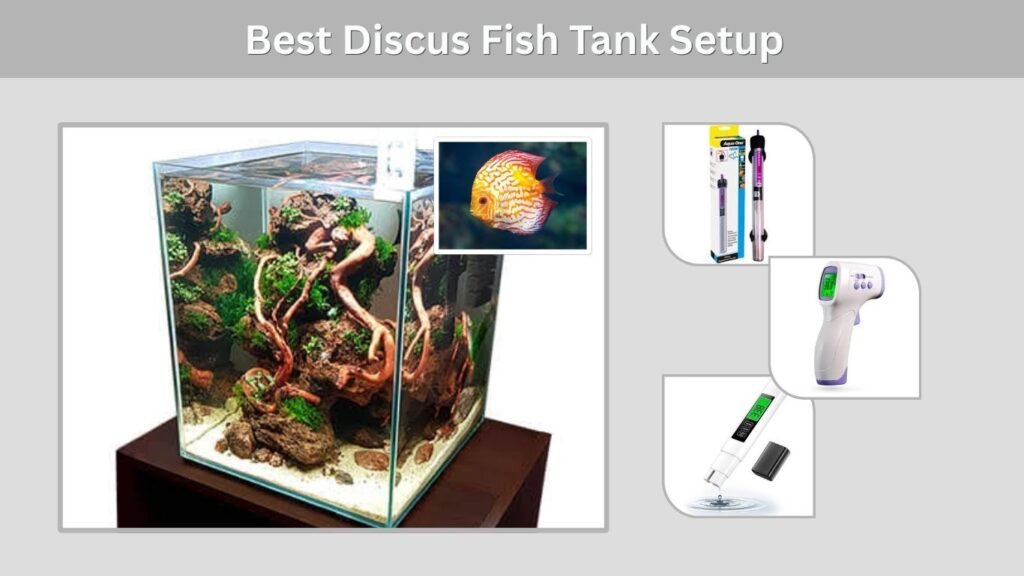
A successful discus setup emphasizes stability rather than complicated equipment. The aquarium should be fully cycled before fish are introduced, with zero ammonia and nitrite. Discus favor quiet water and naturally occupy slow-moving Amazonian environments around submerged trees. Gentle circulation, reliable biological filtration, consistent heating, and enough open swimming space therefore form the foundation of a healthy aquarium.
Essential Tank Equipment
- Appropriately sized aquarium
- Reliable aquarium heater
- Thermometer
- Efficient biological filtration
- Mechanical filtration
- Water-testing kit
- Gentle filter outlet or spray bar
- Siphon or gravel vacuum
- Secure aquarium lid
- Appropriate lighting
A backup heater can be valuable in large tanks because discus depend heavily on stable warm temperatures.
Water Temperature and Parameters
Discus prefer warm water. A typical target is approximately 82–86°F (28–30°C). Aqueon recommends pH around 6.0–7.0 and soft water, although captive-bred fish may tolerate somewhat different chemistry when properly acclimated.
Stability matters more than repeatedly adjusting pH with chemicals. Find out what conditions your fish were raised in and make changes slowly.
Filtration and Water Changes for Discus
Discus require excellent water quality because warm temperatures, heavy feeding, and multiple large fish can produce substantial waste. Filtration should process that waste efficiently without creating an excessively powerful current. Filters do not replace water changes; both are needed. Consistent maintenance helps keep nitrate and dissolved organic waste under control while reducing stress and disease risk.
Best Filtration for a Discus Tank
Common options include:
- Canister filters
- Large sponge filters
- Sump filtration
- Hang-on-back filters for supplementary filtration
- Pre-filter sponges on intakes
The ideal system combines mechanical and biological filtration while creating gentle circulation.
Avoid directing a very strong current through the center of the aquarium. Wild discus naturally favor relatively quiet water.
How Often Should You Change the Water?
Aqueon recommends weekly changes of approximately 10–25%, but heavily stocked tanks, growing juveniles, or systems with heavy feeding may require more frequent or larger changes.
Test the aquarium regularly rather than relying solely on a calendar.
Replacement water should be dechlorinated and reasonably close to the aquarium’s existing temperature to avoid sudden changes.
Planted Discus Tank vs Bare-Bottom Tank
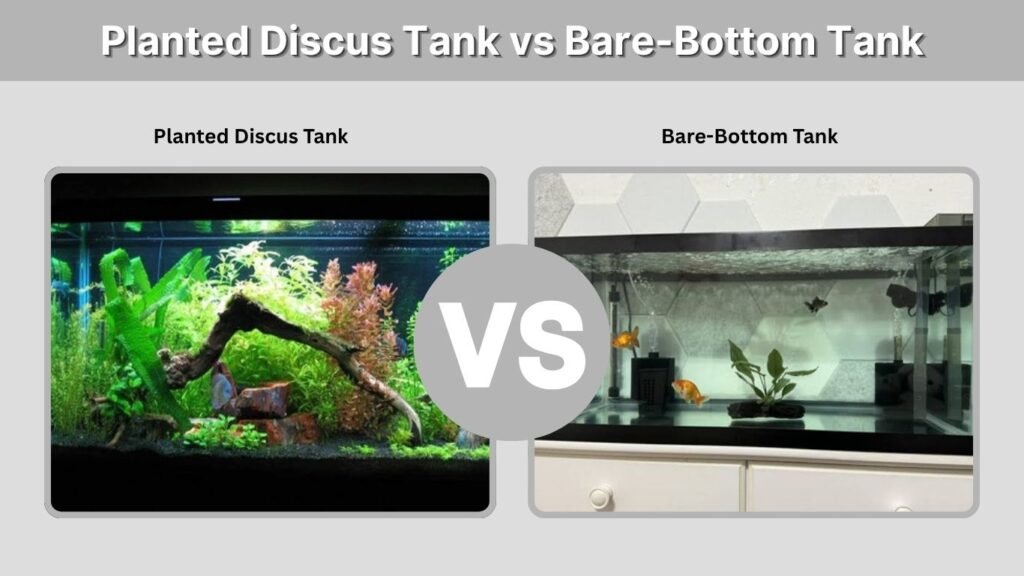
Both planted and bare-bottom discus tanks can work extremely well. The better choice depends on your goals. Planted aquariums offer a natural, decorative appearance and cover for fish, whereas bare-bottom systems make waste removal and intensive maintenance much easier. Breeders and people raising juveniles often prefer bare tanks, while display aquariums commonly incorporate plants, wood, and substrate.
Planted Discus Tank
A planted discus aquarium can be spectacular, but plants need to tolerate the high temperatures preferred by the fish.
Fluval notes that some aquarium plants perform poorly above 82°F, so plant selection is important.
Good candidates can include heat-tolerant forms of Amazon swords, Anubias, Java fern, Vallisneria, and selected Cryptocoryne species.
Leave generous open areas for swimming rather than filling the entire aquarium with vegetation.
Bare-Bottom Discus Tank
Bare-bottom aquariums contain no sand or gravel.
Waste and leftover food remain easy to see and can be siphoned quickly. This makes bare-bottom tanks popular for growing juvenile discus and breeding.
The downside is appearance. They do not provide the natural look of a planted aquarium, so they are used more often when easy cleaning and growth are the priorities.
Best Substrate, Plants and Decorations
A display tank can reproduce elements of the discus’s natural habitat without becoming overcrowded. Aqueon recommends smooth sand or fine-to-medium gravel along with broad-leaved plants and vertically arranged driftwood. Floating plants can also create shaded areas. Decorations should leave enough open space for these tall fish to turn and swim comfortably.
Good Choices for the Tank
- Fine sand
- Smooth gravel
- Driftwood
- Amazon sword plants
- Anubias
- Java fern
- Vallisneria
- Heat-tolerant Cryptocoryne
- Selected floating plants
Avoid sharp rocks or rough decorations that could injure the sides and fins of discus.
Blackwater and Biotope Tanks
A discus biotope can use driftwood, subdued lighting, leaf-litter aesthetics, and tannin-stained water to reproduce aspects of Amazonian environments.
A true biotope requires more research than simply adding brown water. Fish species, plants, wood, water chemistry, and overall layout should reflect the chosen geographic environment.
For ordinary captive-bred discus, creating a stable aquarium is more important than perfectly copying wild conditions.
Best Discus Tank Mates
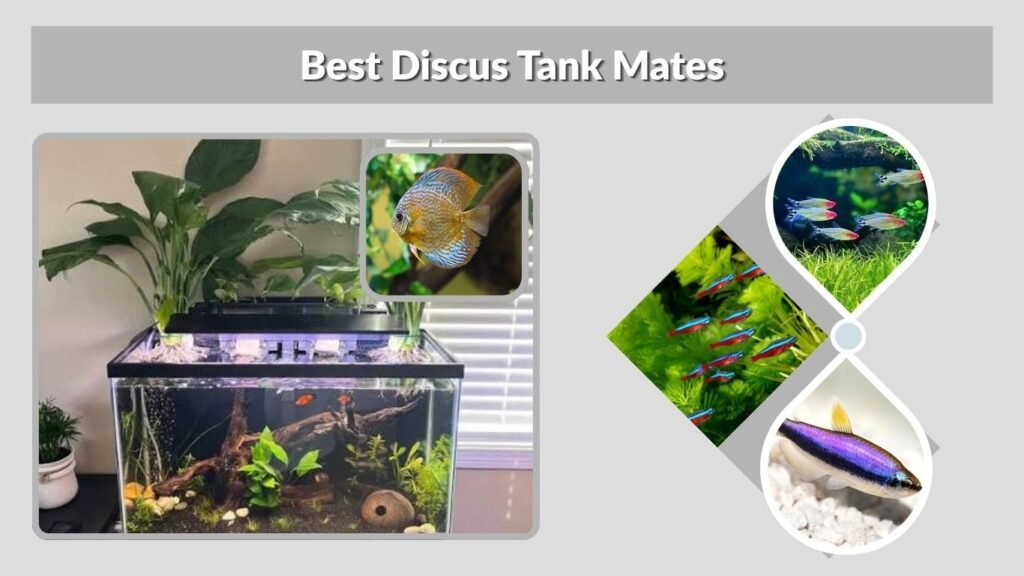
Discus are peaceful compared with many cichlids, but choosing companions requires special care. Tank mates must tolerate the unusually warm water and should not bully discus or outcompete them at feeding time. Aqueon identifies several tetras and dwarf cichlids as possible companions, while Fluval emphasizes that other discus remain the safest tank mates.
Good Tank Mates
- Cardinal Tetras
- Rummy-Nose Tetras
- Emperor Tetras
- Rams
- Selected Apistogramma
- Compatible warm-water Corydoras
- Other discus
Always verify that a particular species can comfortably tolerate your exact tank temperature.
Can Discus Live in a Community Tank?
Yes, but a discus community tank should be designed around the discus, not around ordinary community-fish conditions.
Choose peaceful species that tolerate warm, relatively soft water. Avoid fin nippers, aggressive cichlids, extremely active fish, and species that aggressively rush food before the discus can eat.
A lightly stocked community is generally easier to maintain than one containing many different species.
Can Discus Live With Angelfish?
Discus and angelfish can be kept together in sufficiently large aquariums, and Aqueon notes that angelfish can live with discus when temperatures remain above 82°F.
However, the combination requires caution.
Angelfish may become more assertive at feeding time or when breeding. They can also introduce disease or parasites when new fish are added without quarantine.
For a peaceful discus-focused display, keeping only discus with small compatible schooling fish is often simpler.
Adding New Discus to an Existing Tank
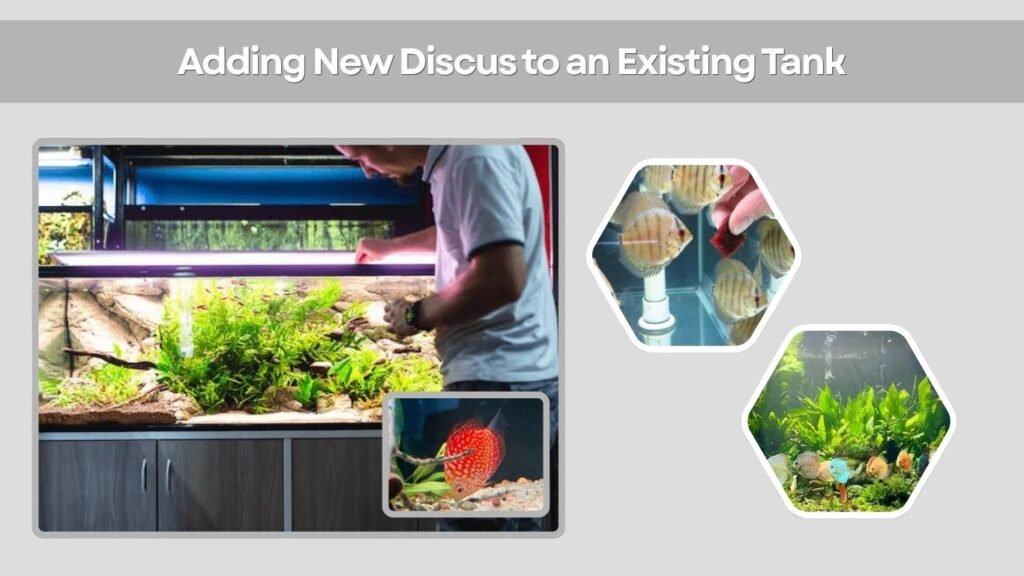
Introducing new discus directly into an established aquarium can expose valuable fish to disease and disrupt the existing social hierarchy. A separate quarantine period allows you to observe the newcomer before it meets the group. Quarantine is particularly worthwhile with high-value fish such as discus because treating an entire planted display after disease introduction can be difficult.
Safe Introduction Steps
- Quarantine new fish first.
- Confirm that they are eating normally.
- Match temperature and water chemistry gradually.
- Introduce similarly sized fish when possible.
- Rearrange limited décor if aggression is severe.
- Watch feeding closely after introduction.
- Monitor subordinate fish for persistent bullying.
Adding several compatible juveniles together can sometimes reduce the focus on a single newcomer.
Common Discus Tank Setup Mistakes
Discus are not impossible to keep, but they react poorly to unstable conditions. Many problems come from trying to keep adult groups in undersized tanks, introducing incompatible tank mates, or allowing water quality to decline. A simple, stable system maintained consistently usually performs better than an elaborate tank that receives irregular maintenance.
Mistakes to Avoid
- Keeping adult groups in very small aquariums
- Adding discus before the tank is cycled
- Maintaining temperatures that are too low
- Allowing ammonia or nitrite to appear
- Creating excessive current
- Overcrowding with tank mates
- Choosing plants that cannot tolerate warm water
- Overfeeding without sufficient maintenance
- Adding new fish without quarantine
FAQs
A discus aquarium works best when tank size, stocking, filtration, temperature, and maintenance are considered together. There is no single perfect setup for every keeper, but providing enough space and stable water solves many common problems before they start. These answers cover the most common questions about aquarium size and community setups.
1. What is the minimum tank size for discus fish?
Aqueon recommends 75 gallons or larger for full-grown discus, particularly when maintaining a proper group.
2. Can I keep discus in a 55-gallon tank?
A 55-gallon tank can be useful for juveniles, temporary housing, or specialized purposes, but it is restrictive for a permanent adult school. A 75-gallon or larger aquarium is preferable.
3. How many discus can live in a 75-gallon tank?
Around five or six adults is a sensible starting point for many setups, depending on tank dimensions, filtration, other fish, and maintenance.
4. Is a planted tank good for discus?
Yes. Discus can thrive in planted tanks, provided the plants tolerate water around 82–86°F and enough open swimming space remains.
5. What are the best tank mates for discus?
Other discus are the simplest companions. Cardinal and Rummy-Nose Tetras, certain dwarf cichlids, and selected warm-water bottom dwellers can also work when their temperature and behavioral needs match the tank.