
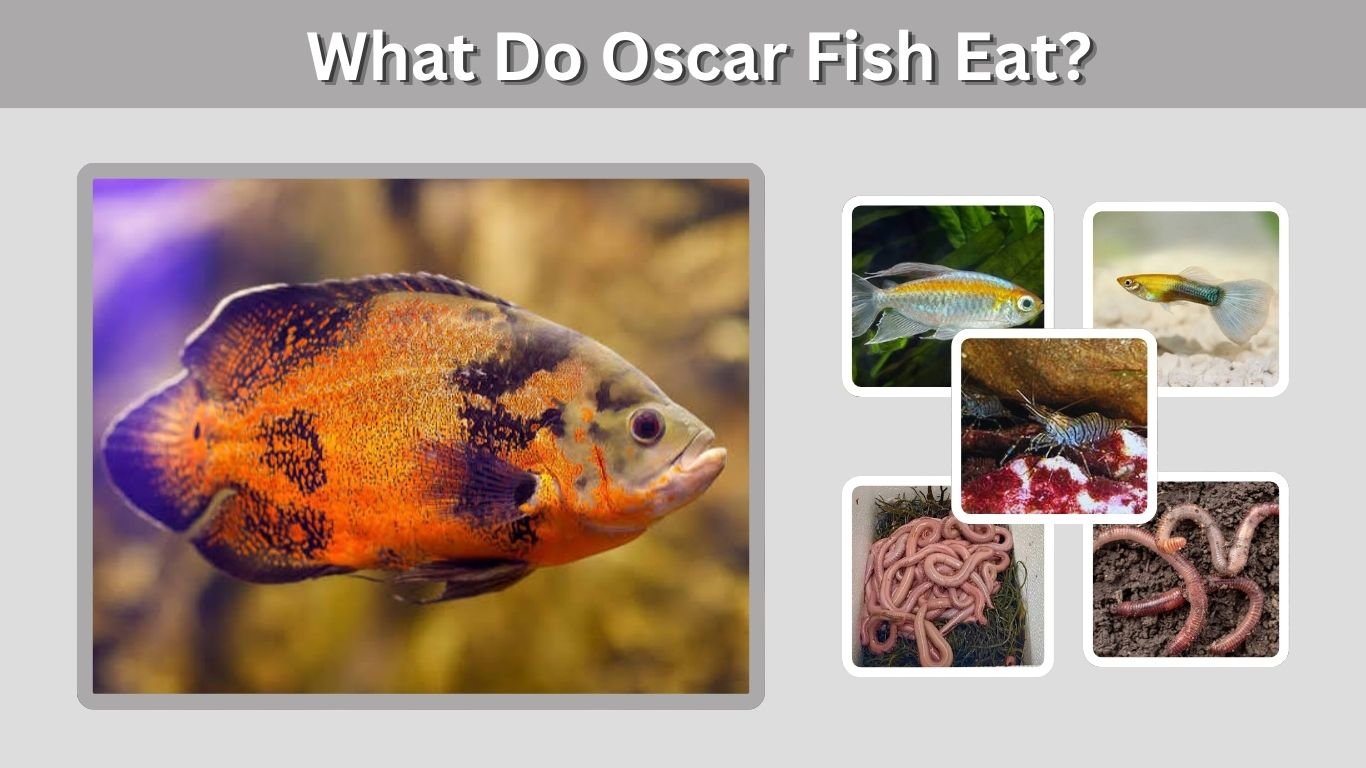
Oscar fish are large, intelligent cichlids with strong appetites and varied diets. In the wild, they consume insects, crustaceans, small fish, and other available aquatic prey. In an aquarium, however, feeding only live fish or meat can lead to nutritional problems. A high-quality cichlid pellet should normally form the foundation of an Oscar’s diet, supplemented with carefully selected protein-rich foods. Knowing what Oscar fish eat, how often to feed them, and which foods to avoid can help support healthy growth, strong coloration, and a long lifespan.
What Do Oscar Fish Eat?
Oscar fish (Astronotus ocellatus) are opportunistic feeders. They are often described as carnivorous or omnivorous cichlids because they consume a wide variety of animal-based foods and occasionally plant material. Aquarium Oscars readily learn feeding routines and may beg whenever their owner approaches, but begging does not necessarily mean the fish needs more food.
What Do Oscar Fish Eat in the Wild?
Wild Oscars inhabit tropical freshwater systems in South America. Their natural diet can include insects, insect larvae, crustaceans, small fish, and other aquatic organisms.
Juveniles generally target smaller prey, while large adults can capture larger food items.
Natural feeding opportunities change depending on habitat, season, and prey availability. This variety is one reason a diverse aquarium diet is preferable to relying on a single treat food.
What Do Tiger Oscar Fish Eat?
Tiger Oscars have the same basic nutritional requirements as other Oscar varieties.
Their coloration does not require a special diet. Tiger, red, albino, lemon, and other domestic Oscar varieties can all be fed a high-quality cichlid pellet as their primary food, supplemented with appropriate insects, crustaceans, and occasional other nutritious foods.
10 Best Foods for Oscar Fish
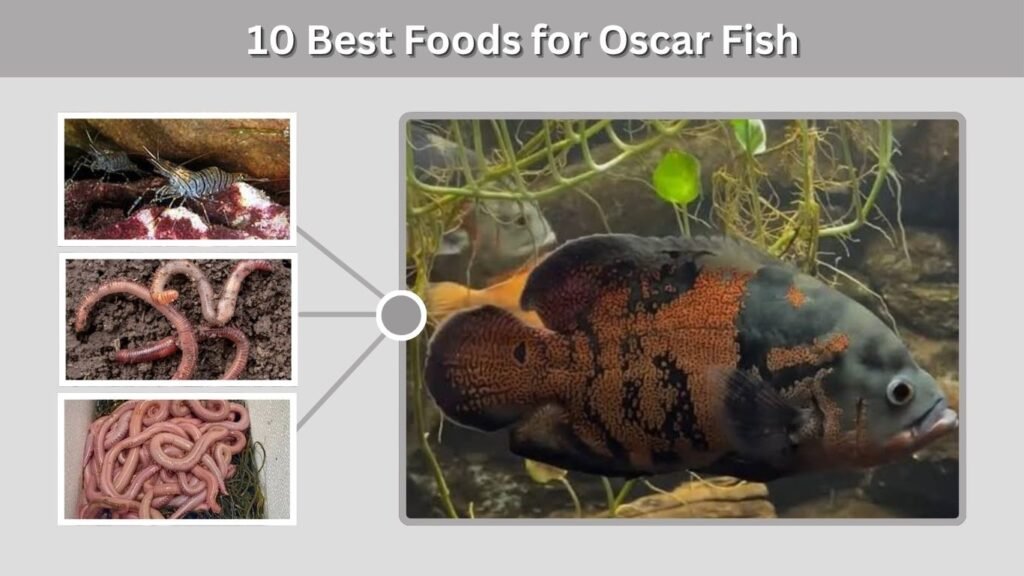
A good Oscar diet should provide adequate protein, vitamins, minerals, and other essential nutrients without adding excessive fat or contaminating the aquarium. Prepared foods are generally the easiest way to provide balanced nutrition, while whole foods can add enrichment and dietary variety.
1. High-Quality Cichlid Pellets
Cichlid pellets are one of the best staple foods for Oscar fish.
Choose pellets formulated for large carnivorous or omnivorous cichlids. A complete commercial diet is designed to supply protein, vitamins, minerals, and other nutrients in appropriate proportions.
Pellet size should match the size of the Oscar. Juveniles require smaller pellets, while adults can comfortably eat larger formulations.
Pellets are also cleaner and more nutritionally consistent than relying on live feeder fish.
2. Shrimp
Shrimp can be an excellent supplemental protein source.
Oscars may accept appropriately sized fresh, frozen, or aquarium-prepared shrimp. Remove shells or large hard pieces when necessary for smaller fish.
Shrimp also contain carotenoid pigments that may help support natural coloration when included as part of a balanced diet.
Do not season, fry, or otherwise prepare shrimp with human cooking ingredients before offering it.
3. Earthworms
Earthworms are nutritious and naturally attractive to many large cichlids.
They provide protein while encouraging natural feeding behavior. Appropriately sourced earthworms can be offered whole to large Oscars or cut into manageable pieces for smaller individuals.
Avoid collecting worms from areas treated with pesticides, herbicides, or other chemicals because contaminants could potentially be transferred to the fish.
4. Crickets
Oscars readily eat insects, making crickets an useful occasional food.
Live or appropriately prepared feeder crickets can stimulate hunting behavior and provide dietary enrichment.
Use insects specifically raised as feeder animals rather than collecting them from places where pesticides may have been applied.
Crickets should supplement a balanced staple diet rather than completely replacing formulated fish food.
5. Mealworms
Oscar fish can eat mealworms, although they are better used as an occasional treat than as a primary food.
Mealworms contain useful protein but also have a relatively tough outer covering and can be comparatively fatty.
Smaller Oscars should receive appropriately sized pieces. Avoid excessive feeding, particularly when the fish already receives other rich foods.
6. Krill
Krill is another useful supplemental food for Oscars.
Frozen, freeze-dried, or appropriately prepared aquarium krill provides animal protein and naturally occurring pigments.
Large Oscars can easily consume whole appropriately sized krill, while smaller fish may need broken pieces.
Because dried foods expand and vary in nutritional concentration, follow feeding recommendations and avoid offering excessive quantities.
7. Bloodworms
Bloodworms are particularly useful for juvenile Oscars or as an occasional treat for adults.
Frozen bloodworms are generally preferable to making them the main diet because Oscars eventually become too large for bloodworms to provide an efficient complete meal.
They can help add variety when a young fish is transitioning to a more balanced pellet-based diet.
8. Insect Larvae
Various appropriately raised insect larvae can provide enrichment and protein.
Oscars naturally consume insects, making this type of food compatible with their feeding behavior.
As with crickets and worms, feeder insects should come from reliable sources. Avoid wild insects from chemically treated areas or species that might contain defensive toxins.
9. Mussels or Other Suitable Shellfish
Small portions of plain, unseasoned shellfish can occasionally provide additional variety.
Mussel meat and similar aquatic foods contain protein and minerals. Offer portions small enough for the fish to swallow easily and remove leftovers promptly.
These foods can quickly contaminate aquarium water if uneaten, so they should be fed carefully rather than left sitting in the tank.
10. Occasional Vegetables or Plant-Based Foods
Although Oscars obtain much of their nutrition from animal-based foods, small amounts of suitable plant material may add variety.
Some Oscars may accept peas or other soft vegetables, while others ignore them completely.
Vegetables should never replace a nutritionally complete staple diet. They are better considered an optional addition rather than an essential meal for every Oscar.
How Often Should You Feed Oscar Fish?
Feeding frequency depends heavily on the fish’s age. Young Oscars are growing rapidly and normally require more frequent meals, while adults can be fed less often.
Overfeeding is a common problem because Oscars enthusiastically respond to food even when they have already eaten enough.
Feeding Juvenile Oscars
Young Oscars can typically receive several small meals spread throughout the day, depending on their size and growth stage.
Offer only what they can consume promptly and remove leftovers.
Rapid growth increases nutritional needs, but excessive feeding can still damage water quality and contribute to unhealthy weight gain.
Feeding Adult Oscars
Most adult Oscars do well with one or two appropriately sized meals per day, and some keepers use occasional lighter feeding days.
Body condition is more important than rigidly following a fixed quantity.
A healthy Oscar should appear muscular and well proportioned rather than excessively swollen after every meal.
Do Oscar Fish Eat Other Fish?
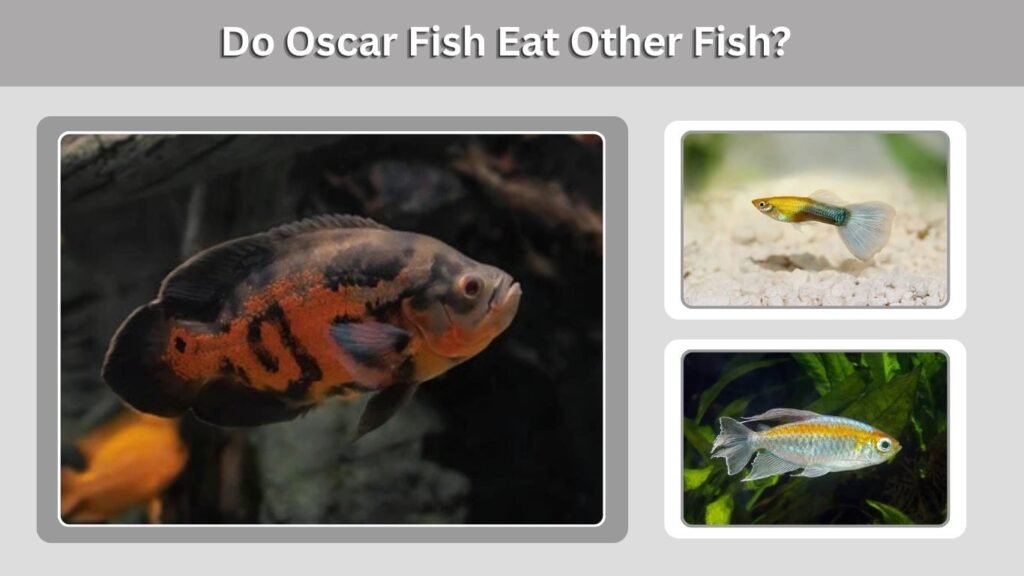
Yes. Oscars are predators and may eat fish small enough to fit inside their mouths.
This behavior is natural, but it does not mean feeder fish should become the main aquarium diet.
Will Oscars Eat Guppies or Small Tank Mates?
They can.
Small guppies, tetras, and similar fish may eventually become prey, even if the Oscar initially ignores them.
When choosing tank mates, assume that sufficiently small fish are at risk of being eaten.
Large, compatible fish are generally safer companions, although Oscar temperament varies individually.
Should Oscars Eat Goldfish?
Using feeder goldfish regularly is not recommended.
Feeder fish can introduce parasites, bacteria, and other diseases into an aquarium. A diet dominated by one feeder species may also be nutritionally unbalanced.
Quality pellets combined with controlled supplemental foods provide a safer and more consistent diet.
Can Oscar Fish Eat Human Foods?
Many household foods are technically edible to an Oscar, but that does not make them nutritionally appropriate. Foods designed for humans may contain salt, seasonings, oils, preservatives, or unsuitable levels of fat.
Fish-specific foods should remain the foundation of the diet.
Can Oscar Fish Eat Chicken?
Oscars may consume pieces of chicken, but poultry should not be a routine food.
Terrestrial animal meat has a different fat profile from the foods Oscars naturally encounter. Regular feeding can contribute unnecessary fat and does not provide the balanced nutrition of a quality fish diet.
Can Oscar Fish Eat Fruit?
Some Oscars may taste banana, apple, watermelon, or other fruit, but fruit is unnecessary for proper Oscar nutrition.
Sugary fruit should only be offered rarely, if at all.
There are much better supplemental foods, including shrimp, insects, earthworms, and balanced cichlid pellets.
Can Oscar Fish Eat Bread?
Bread should not be fed to Oscar fish.
It provides little useful nutrition and can swell or break apart in the aquarium, increasing waste and degrading water quality.
The same principle applies to popcorn, processed snacks, dog food, cat food, and heavily prepared human foods.
Foods You Should Avoid Feeding Oscars
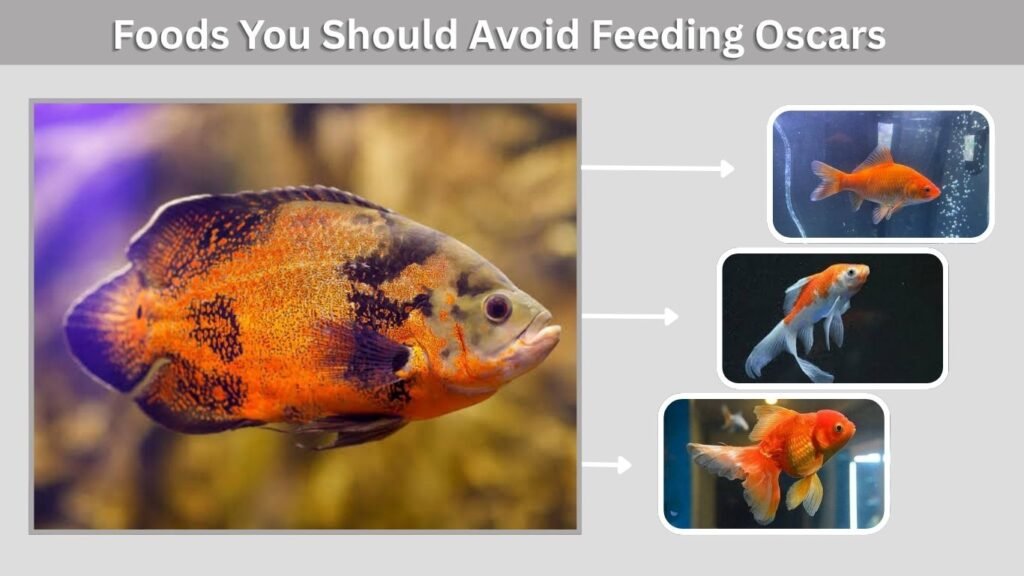
Being willing to swallow something does not mean it is healthy for an Oscar. Some foods provide poor nutrition, while others create unnecessary disease or contamination risks.
Foods to Limit or Avoid
Avoid routinely feeding:
- Feeder goldfish
- Wild-caught feeder fish
- Raw mammalian meat
- Fatty beef
- Processed chicken
- Bread
- Popcorn
- Dog or cat food
- Seasoned human food
- Insects exposed to pesticides
- Food too large to swallow safely
- Large amounts of fruit
A varied but controlled diet based on nutritionally complete aquarium food is safer.
Why Is My Oscar Fish Not Eating?
An Oscar suddenly refusing food can be concerning because these fish are normally enthusiastic eaters. A short appetite reduction may occur because of stress, environmental changes, or food preference, but prolonged loss of appetite deserves investigation.
Common Reasons an Oscar Stops Eating
Possible causes include:
- Poor water quality
- Ammonia or nitrite exposure
- Incorrect water temperature
- Sudden changes in water chemistry
- Stress after moving to a new aquarium
- Aggressive tank mates
- Illness or parasites
- Overfeeding
- Constipation or digestive problems
- Reproductive behavior
- Rejection of unfamiliar food
Always check aquarium conditions before repeatedly offering different foods.
New Oscar Fish Not Eating
A newly purchased Oscar may refuse food for several days because transportation and a new environment can cause stress.
Keep lighting moderate, provide hiding areas, maintain stable water conditions, and avoid constantly disturbing the fish.
Once it becomes comfortable, appetite usually improves. Persistent refusal accompanied by abnormal swimming, rapid breathing, lesions, bloating, or other symptoms warrants closer investigation.
How to Maintain a Healthy Oscar Diet
Variety is useful, but random feeding is not the same as balanced nutrition. A nutritionally complete large-cichlid pellet should normally supply most of the diet, with whole-food supplements used for enrichment.
Simple Feeding Plan
A practical approach is to:
- Use quality cichlid pellets as the staple.
- Rotate shrimp, worms, krill, or insects as supplements.
- Feed portions appropriate to the fish’s size.
- Avoid unnecessary feeder fish.
- Remove uneaten food promptly.
- Adjust feeding as the Oscar matures.
- Monitor body condition.
- Maintain excellent filtration and water quality.
Oscar feeding and aquarium maintenance are closely connected because these fish produce substantial waste.
FAQs
What is the best food for Oscar fish?
A high-quality pellet formulated for large cichlids is usually the best staple food. Shrimp, earthworms, krill, crickets, and similar foods can provide useful variety.
Can Oscar fish eat mealworms?
Yes. Oscars can eat mealworms, but they are better offered occasionally because they have a tough outer covering and can be relatively rich.
Do Oscar fish eat other fish?
Yes. Oscars may prey on smaller fish, including small tank mates. However, routinely feeding live fish is unnecessary and may introduce disease.
Can Oscar fish eat bananas?
An Oscar may eat a small piece of banana, but fruit is unnecessary and should not become a regular part of its diet. More suitable foods provide better nutrition.
Why is my Oscar fish not eating?
Stress, poor water quality, incorrect temperature, illness, overfeeding, aggression, or adjustment to a new aquarium can reduce appetite. Check water parameters and observe the fish for other signs of illness.