
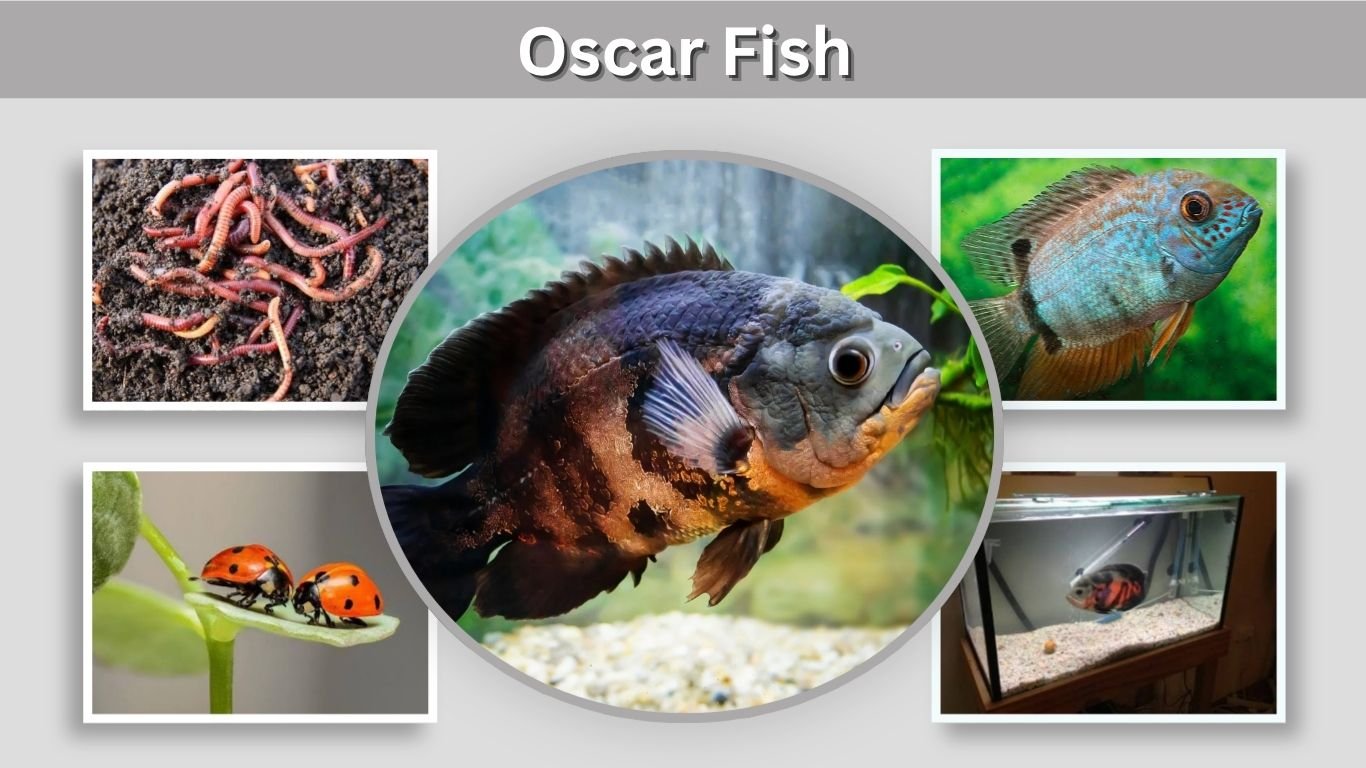
Oscar fish are large, intelligent freshwater cichlids famous for their bold personalities, rapid growth, and striking colors. Scientifically known as Astronotus ocellatus, they originate from tropical South America but have become popular aquarium fish worldwide. Oscars can recognize feeding routines, interact with their owners, and rearrange decorations inside their tanks. However, their large adult size and heavy waste production mean they require much more space and filtration than many beginner fish. Proper tank size, diet, water quality, and carefully selected tank mates are essential for keeping Oscars healthy.
What Is an Oscar Fish?
Oscar fish belong to the cichlid family and are native to freshwater habitats in South America. They are naturally found in slow-moving rivers, floodplains, and other warm waters.
Their combination of intelligence, personality, and impressive adult size has made them popular among experienced aquarium keepers.
Oscar Fish Scientific Name
The scientific name of the Oscar fish is Astronotus ocellatus.
Basic classification includes:
- Common name: Oscar fish
- Scientific name: Astronotus ocellatus
- Family: Cichlidae
- Order: Cichliformes
- Type: Freshwater cichlid
- Native region: Tropical South America
They are sometimes called velvet cichlids or marble cichlids.
What Does an Oscar Fish Look Like?
Oscars have deep, oval-shaped bodies with large heads, powerful mouths, and broad fins.
Wild individuals are usually dark with irregular orange or reddish markings. Selective breeding has produced many aquarium varieties with dramatically different colors.
Their body pattern may also change depending on age, mood, health, and environmental conditions.
How Big Do Oscar Fish Get?
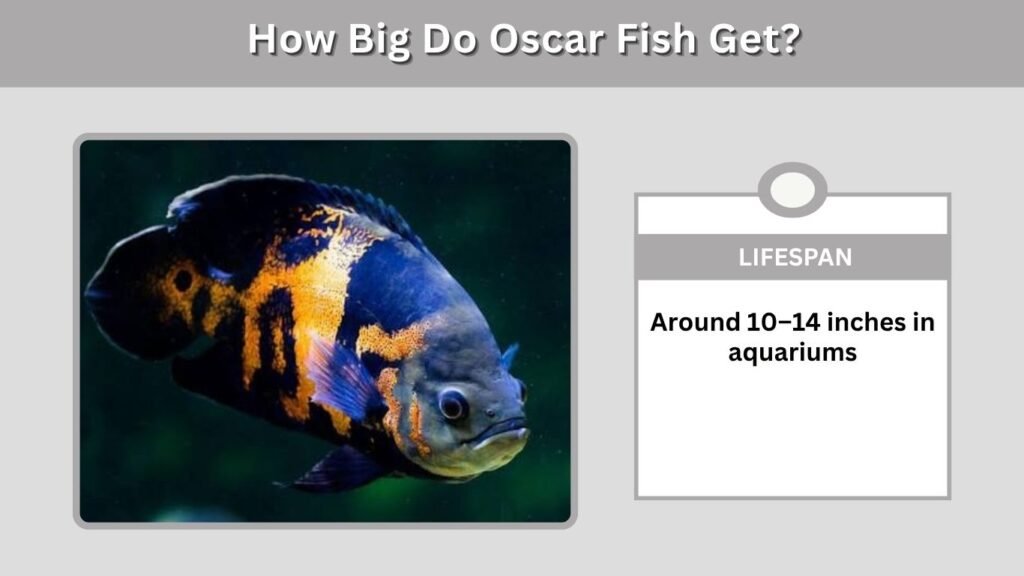
Oscar fish grow much larger than the juveniles commonly sold in aquarium stores. A small young Oscar can quickly become a substantial fish, which is why selecting the correct aquarium from the beginning is important.
Under good conditions, growth can be surprisingly fast during the first year.
Full-Grown Oscar Fish Size
Adult Oscars commonly reach around 10–14 inches in aquariums, although individual growth varies.
Some exceptionally large specimens may become even bigger under excellent conditions.
Size depends on:
- Genetics
- Diet
- Water quality
- Tank space
- Age
- Overall health
Keeping an Oscar in a small aquarium does not safely keep it small. Instead, inadequate conditions can create chronic stress and poor health.
How Fast Do Oscars Grow?
Young Oscars can grow rapidly when provided with adequate nutrition and clean water.
Growth is generally fastest while the fish is young and gradually slows as adulthood approaches.
Because of this rapid growth, buying a small tank with plans to upgrade much later often becomes inconvenient. Starting with an appropriately sized aquarium is usually easier.
Oscar Fish Tank Size and Setup
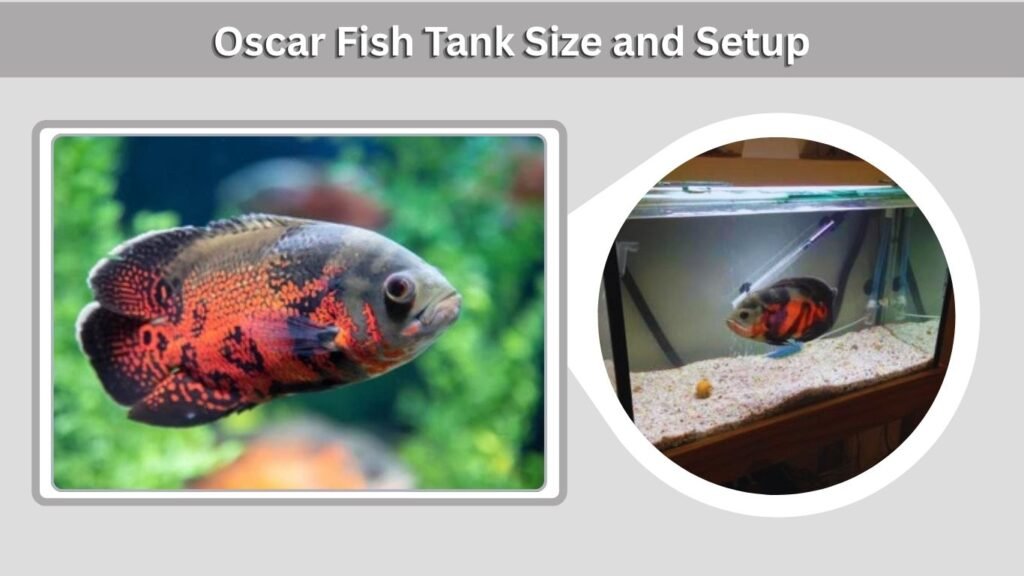
Oscars are large, messy fish that require substantial swimming space and strong filtration. Their aquarium should provide enough room to turn comfortably while maintaining stable water conditions.
A spacious tank also reduces territorial pressure if compatible tank mates are present.
Recommended Oscar Fish Tank Size
For one adult Oscar, many experienced aquarists recommend approximately a 75-gallon aquarium or larger.
Two Oscars generally require considerably more space, often around 100–125 gallons or larger depending on dimensions, filtration, and individual behavior.
Important setup features include:
- Powerful filtration
- Secure aquarium lid
- Heater
- Open swimming space
- Durable decorations
- Large rocks or driftwood
- Regular water changes
Always ensure rocks and decorations are stable because Oscars may move objects.
Water Conditions
Oscars prefer warm freshwater conditions.
A temperature around 74–81°F is generally suitable, while moderately acidic to neutral water is often appropriate.
More important than chasing an exact pH number is maintaining stable conditions with low ammonia and nitrite.
Regular testing and water changes are essential because large Oscars produce substantial waste.
What Do Oscar Fish Eat?
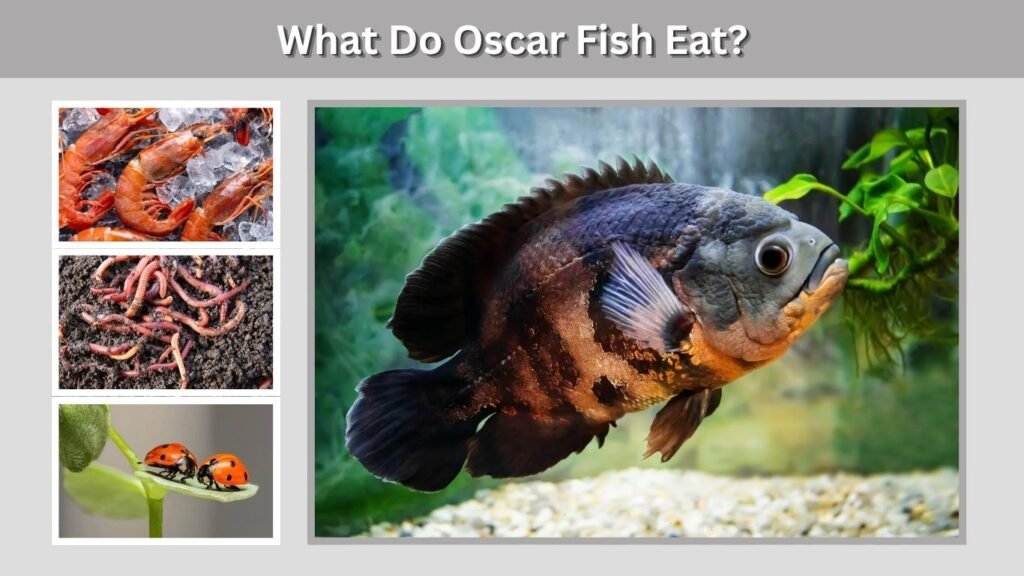
Oscars are opportunistic carnivorous to omnivorous fish. Wild Oscars eat a variety of aquatic organisms, while aquarium fish benefit from a balanced prepared diet supplemented with appropriate foods.
Feeding only one type of food can create nutritional deficiencies.
Best Oscar Fish Foods
A balanced diet can include:
- High-quality cichlid pellets
- Quality floating or sinking pellets
- Frozen shrimp
- Appropriate insects
- Earthworms
- Occasional crustaceans
- Other suitable prepared foods
A nutritionally complete pellet should generally form the foundation of the diet.
Foods to Avoid
Avoid relying heavily on feeder fish.
Feeder fish may introduce parasites or disease and can create an unbalanced diet. Fatty mammalian meats are also unsuitable as routine foods.
Overfeeding should be avoided because uneaten food quickly lowers water quality.
Oscar Fish Lifespan
Oscars are long-term aquarium pets rather than short-lived ornamental fish. With good care, they can remain part of a household for many years.
Their lifespan depends heavily on water quality, diet, aquarium size, genetics, and disease prevention.
How Long Do Oscar Fish Live?
Oscar fish commonly live approximately 10–15 years in captivity when kept under good conditions.
Some individuals can live longer.
Poor filtration, chronic exposure to ammonia or nitrate, inappropriate diets, overcrowding, and repeated stress can significantly reduce life expectancy.
Choosing an Oscar therefore requires a long-term commitment.
Oscar Fish Tank Mates
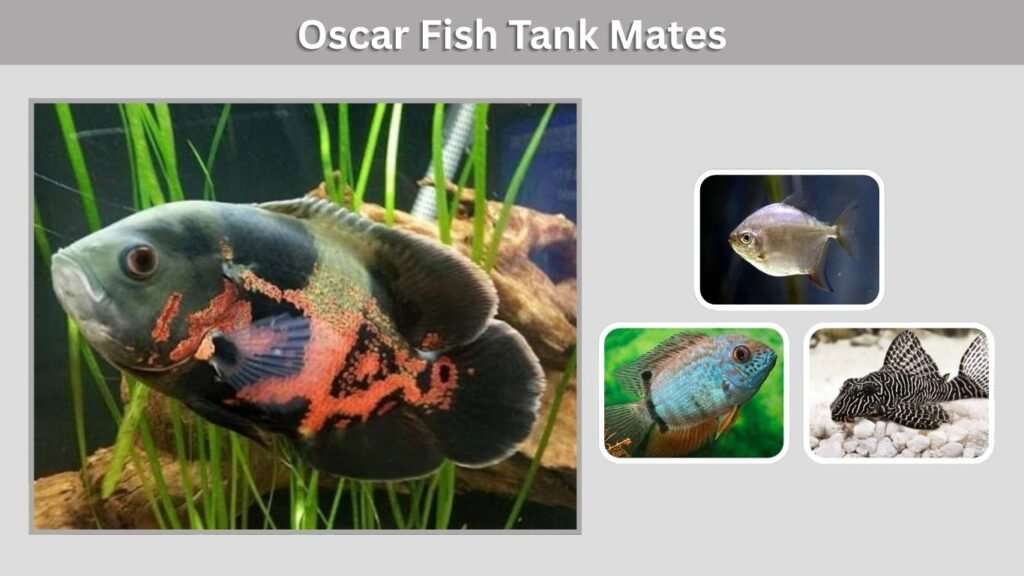
Oscars are large cichlids with predatory and territorial tendencies. Small fish can easily become food, while aggressive species may lead to constant fighting.
Tank mate compatibility also varies between individual Oscars.
Potential Oscar Tank Mates
Possible companions in sufficiently large aquariums include:
- Silver dollars
- Large plecos
- Severum cichlids
- Some large catfish
- Jack Dempsey cichlids in appropriate setups
- Other similarly sized robust fish
Even commonly recommended combinations require observation.
Fish to Avoid
Avoid very small or delicate species such as tiny tetras, guppies, and other fish that can fit inside an Oscar’s mouth.
Extremely aggressive cichlids can also be problematic.
Providing sufficient space, visual barriers, and separate territories can reduce conflict, but compatibility is never guaranteed.
Types of Oscar Fish
Selective breeding has created several popular Oscar varieties. Most belong to the same species and have similar general care needs, regardless of coloration.
Color does not determine how large the fish will eventually become.
Popular Oscar Fish Varieties
Common varieties include:
- Tiger Oscar
- Red Oscar
- Red Tiger Oscar
- Albino Oscar
- Lutino Oscar
- Lemon Oscar
- White Oscar
- Long-Fin Oscar
- Black or dark Oscar forms
Names used by breeders and stores can vary, particularly for unusual color strains.
Tiger Oscar Fish
The tiger Oscar is one of the classic aquarium varieties.
It usually has a black or dark brown body with irregular orange-red markings. Young tiger Oscars are commonly sold in aquarium stores and become increasingly impressive as they mature.
Their care requirements are essentially the same as those of other Oscar varieties.
Albino Oscar Fish
Albino Oscars have pale cream or whitish bodies with orange-red markings and reduced dark pigmentation.
Their striking appearance makes them popular aquarium fish.
Despite their different coloration, they require the same spacious aquarium, filtration, water maintenance, and balanced diet as darker Oscars.
Do Oscar Fish Have Teeth?
Yes, Oscars have teeth.
They possess teeth associated with the jaws as well as specialized structures farther inside the mouth that help process food.
Their mouth is powerful enough to capture fish, insects, crustaceans, and other prey.
Can Oscar Fish Bite?
An Oscar may nip or bite at fingers, particularly if it associates a person’s hand with food.
Although they are not dangerous in the way large predatory animals are, hand-feeding should be done cautiously.
Using feeding tools when necessary also reduces the chance of accidental bites.
Oscar Fish Behavior and Personality
Oscars have a reputation for being unusually interactive aquarium fish. They often learn to recognize activity around their tank and quickly respond when someone approaches at feeding time.
Some individuals even seem to distinguish familiar keepers from strangers.
Common Oscar Behaviors
Oscars may:
- Follow people along the aquarium
- Beg for food
- Move rocks and decorations
- Dig into substrate
- Establish territories
- Display different colors with mood
- Become defensive during breeding
- Investigate objects placed in the tank
Their habit of rearranging decorations has earned them a reputation as aquarium “interior designers.”
Common Oscar Fish Health Problems
Many Oscar health problems are linked to poor water quality or inappropriate nutrition rather than unavoidable disease.
Stable, clean water remains one of the best preventive measures.
Hole-in-the-Head Disease
Oscars are among the aquarium fish associated with head and lateral line erosion, commonly called hole-in-the-head disease.
Possible contributing factors are complex and can include poor environmental conditions and nutritional problems.
Affected fish may develop pits or lesions around the head.
Improving water quality, reviewing nutrition, and obtaining appropriate aquatic veterinary advice are important when significant lesions appear.
Oscar Fish Care Tips
Oscar care becomes considerably easier when the aquarium is designed around the fish’s eventual adult size rather than its juvenile appearance.
Essential Care Checklist
- Provide a large aquarium.
- Use strong biological filtration.
- Perform regular water changes.
- Maintain stable warm temperatures.
- Feed a varied, nutritionally balanced diet.
- Avoid overcrowding.
- Choose tank mates carefully.
- Test ammonia, nitrite, and nitrate regularly.
- Secure heavy decorations.
- Use a strong lid because large fish can jump.
With proper care, an Oscar can become a highly interactive aquarium fish for more than a decade.
FAQs
How big do Oscar fish get?
Most adult aquarium Oscars reach approximately 10–14 inches long, although growth varies with genetics and care.
What size tank does an Oscar fish need?
A single adult Oscar is commonly kept in an aquarium of about 75 gallons or larger. Multiple large fish require substantially more space.
How long do Oscar fish live?
With appropriate care, Oscars commonly live around 10–15 years and may sometimes live longer.
What do Oscar fish eat?
A quality cichlid pellet should form the foundation of the diet, supplemented with appropriate foods such as shrimp, insects, worms, and other nutritious aquarium foods.
Can Oscar fish live with other fish?
Yes, but tank mates need to be large and robust enough not to become prey while also being compatible with Oscar’s temperament. A large aquarium is essential for multi-fish setups.