
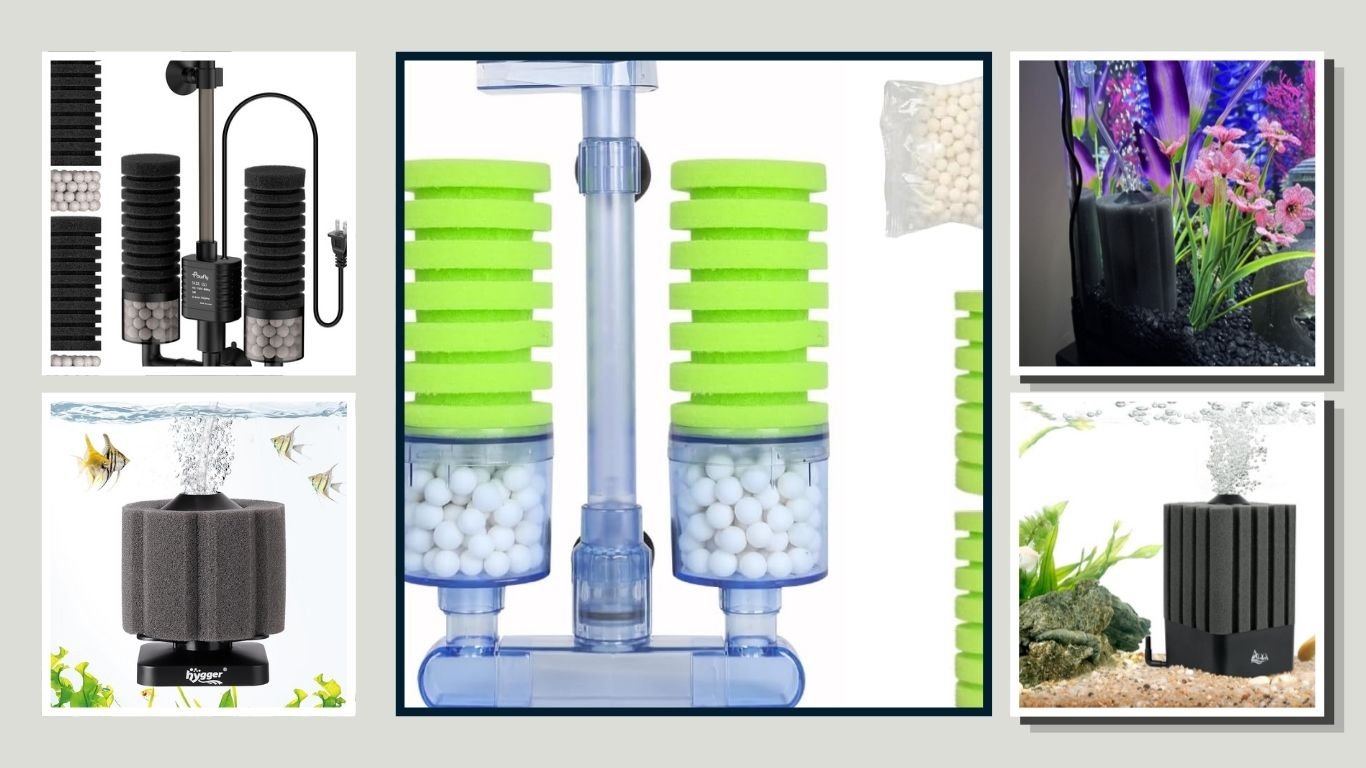
A good sponge filter provides gentle, reliable filtration while creating a safe environment for fish, shrimp, fry, and beneficial bacteria. The best sponge filter can improve water clarity, support biological filtration, increase oxygenation, and reduce the risk of small aquatic animals being pulled into a strong intake. These filters are especially useful for breeding tanks, betta aquariums, shrimp tanks, quarantine setups, and smaller community tanks. In this guide, we review nine dependable sponge filters with different designs, filtration capacities, and media options for various aquarium needs.
1. AQUANEAT Aquarium Bio Sponge Filter
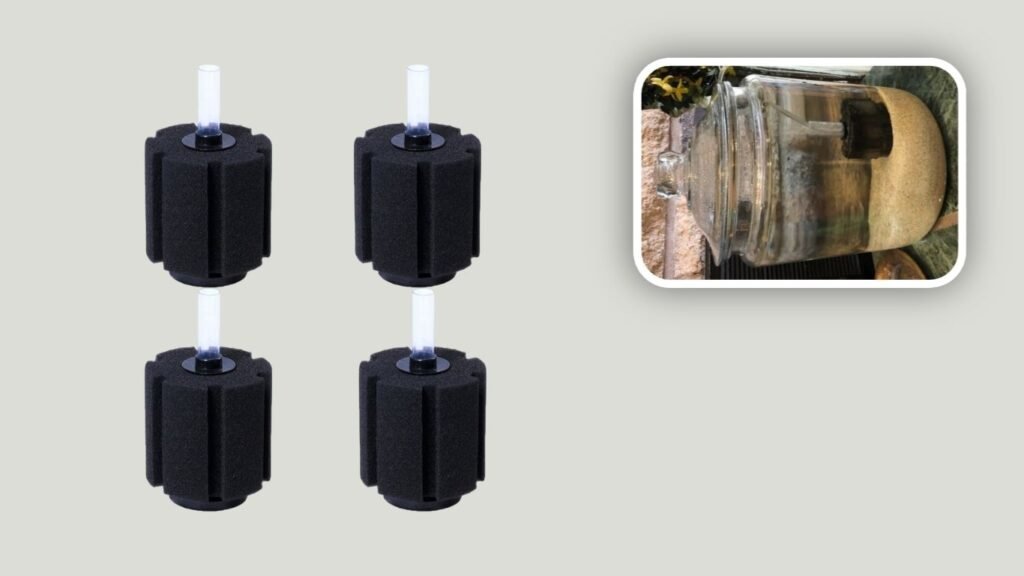
The AQUANEAT Aquarium Bio Sponge Filter is a simple, fish-safe filtration option designed especially for bettas, shrimp, fry, guppies, and breeding tanks. Instead of using a powerful motorized intake, it relies on air-driven water movement through a soft sponge. This creates gentle filtration while providing a large surface where beneficial bacteria can establish. AQUANEAT offers this filter in several sizes for different aquarium capacities.
Key Features
- Mechanical and biological filtration
- Soft sponge construction
- Gentle air-powered water movement
- Helps increase aquarium oxygenation
- Safe for shrimp, fry, and small fish
- Multiple size options available
- Easy sponge removal and cleaning
- Requires a separate air pump
Why It Is Best for Fry, Shrimp, and Bettas
The main strength of this AQUANEAT filter is its gentle intake. Traditional power filters can create enough suction to pull tiny shrimp or newborn fish toward the intake, but a sponge spreads suction across a much larger surface.
That characteristic makes it particularly useful for breeding tanks and aquariums containing delicate livestock. Bettas can also benefit because the filter creates circulation without producing the aggressive current associated with many motor-driven filters.
Filtration Performance and Biological Support
Water is drawn through the sponge as bubbles rise through the filter. The sponge physically captures suspended debris while simultaneously providing considerable surface area for beneficial bacteria. Those bacterial colonies contribute to biological filtration by processing waste compounds produced inside the aquarium.
The bubbling action also creates surface movement and helps improve oxygen exchange. Although sponge filtration may not polish water as aggressively as some multi-stage power filters, its gentle and dependable operation makes it particularly valuable in smaller or sensitive setups.
Maintenance and Overall Verdict
Maintenance is uncomplicated. During a water change, the sponge can be gently squeezed in removed aquarium water to release trapped debris while preserving much of the established bacterial population.
The AQUANEAT is especially attractive for aquarists who value simplicity, low current, and biological filtration. When paired with an appropriately sized air pump, it provides a practical filtration system for breeding setups, shrimp tanks, betta aquariums, and lightly stocked community tanks.
2. DVHEY Aquarium Sponge Filter
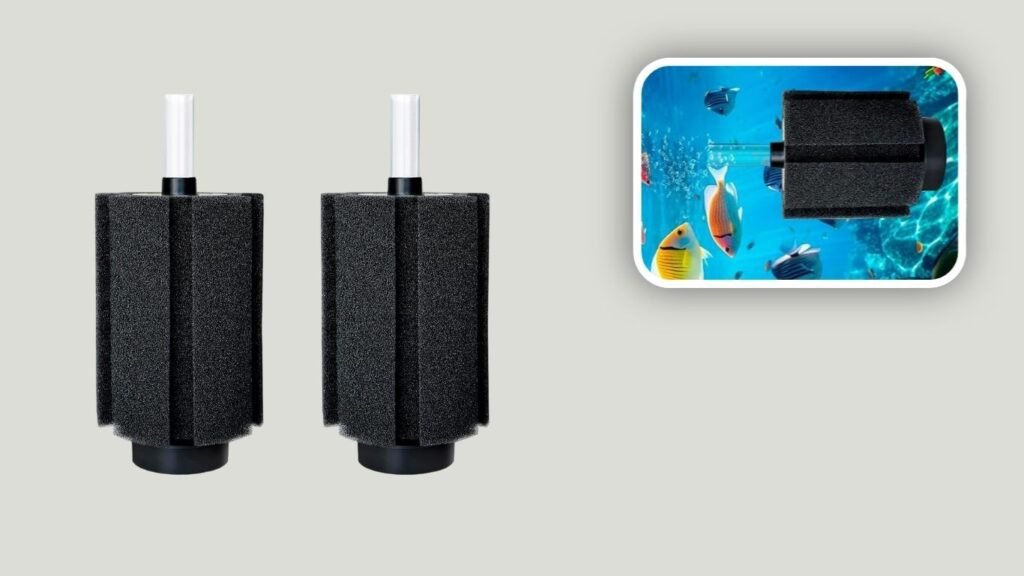
The DVHEY Aquarium Sponge Filter is designed for aquarists who need the gentle operating characteristics of a sponge filter but want greater capacity for larger setups. The linked large-size listing is sold as a two-filter package and incorporates sponge filtration, ceramic biological media, and air-driven water circulation. Its design makes it suitable for larger community tanks as well as breeding environments where safer intake flow remains important.
Key Features
- Two-filter package in the large-size version
- Sponge mechanical filtration
- Ceramic biological filtration media
- Air-driven operation
- Gentle intake for delicate livestock
- Suitable for breeding and fry tanks
- Provides aeration while filtering
- Designed for larger aquarium setups
Why It Is Best for Larger Breeding Setups
Large aquariums containing fry, shrimp, or smaller fish can be challenging because they need substantial biological filtration without dangerous intake suction. The DVHEY design addresses this by increasing filtration capacity while maintaining the basic safety benefits of sponge filtration.
Using two filters also provides greater placement flexibility. One unit can be positioned at each end of a longer aquarium, helping improve circulation compared with relying on a single filtration point.
This arrangement also creates additional biological media surface area, which can be valuable in aquariums with higher livestock numbers.
Filtration and Oxygenation Performance
The sponge captures suspended particles while providing another home for beneficial bacteria. Ceramic media expands the biological filtration area beyond what a basic sponge-only filter offers.
Because the system is powered by an air pump, rising bubbles draw aquarium water through the media and then move it upward. This process combines filtration with oxygenation and surface agitation.
The gentle flow is particularly useful for animals that do not perform well in strong currents, while the larger design gives aquarists more filtration capacity than a typical nano sponge filter.
Maintenance and Overall Verdict
Routine maintenance mainly involves removing accumulated debris from the sponge. Rinsing it gently in aquarium water removed during a water change helps clean the pores without unnecessarily exposing established bacteria to untreated tap water.
The DVHEY stands out for aquarists who like sponge filtration but need more capacity. Its two-filter configuration, ceramic media, and gentle air-driven operation make it especially practical for larger breeding systems and community tanks where livestock safety remains a priority.
3. hygger Double Sponge Aquarium Filter
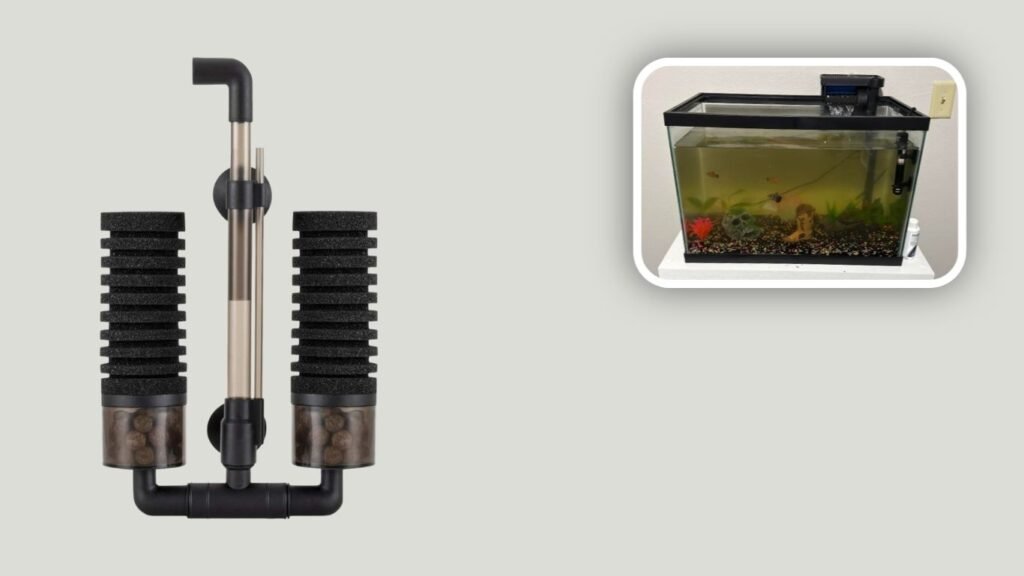
The hygger Double Sponge Filter expands the traditional sponge-filter concept with two sponges and separate ceramic-media chambers. This combination provides mechanical filtration alongside substantial biological filtration while maintaining gentle water movement. The linked B07RFL4JMM model includes dual sponge filtration, two ceramic-media containers, and spare sponges, giving it more filtration flexibility than a basic single-sponge design.
Key Features
- Dual sponge filtration
- Two ceramic biological-media compartments
- Mechanical and biological filtration
- Includes spare replacement sponges
- Adjustable outlet design
- Air-powered operation
- Gentle circulation
- Suitable for fish and shrimp tanks
Why It Is Best for Biological Filtration
The double-sponge configuration gives this hygger filter considerably more usable filtration surface than many compact single-sponge models. More sponge area means additional space for debris collection and beneficial bacterial colonization.
Ceramic media further increases biological filtration capacity. This is especially helpful in established community aquariums where maintaining a stable population of beneficial bacteria is important for processing ongoing fish waste.
Because the filter remains air driven, it achieves this without creating an aggressive intake that could endanger fry or shrimp.
Filtration Performance and Adjustability
The sponges provide the first major filtration stage by capturing particles as water passes through them. Water then interacts with the ceramic media, increasing the available surface for biological activity.
hygger’s design also allows the outlet direction and height to be adjusted, giving users greater control over water movement and surface agitation. The manufacturer lists different sizes for different tank capacities and recommends using more than one unit where additional filtration is required.
Maintenance and Overall Verdict
The filter can be disassembled for routine cleaning, and the sponge and ceramic media are replaceable. hygger recommends cleaning the sponge periodically with aquarium water rather than aggressively washing away the established bacterial colony.
For aquarists looking for more biological capacity than a basic sponge provides, this model offers an appealing design. Dual sponges, ceramic media, adjustable positioning, and gentle flow make it particularly well suited to shrimp, betta, planted, breeding, and community aquariums.
4. hygger Air-Powered Biochemical Sponge Filter
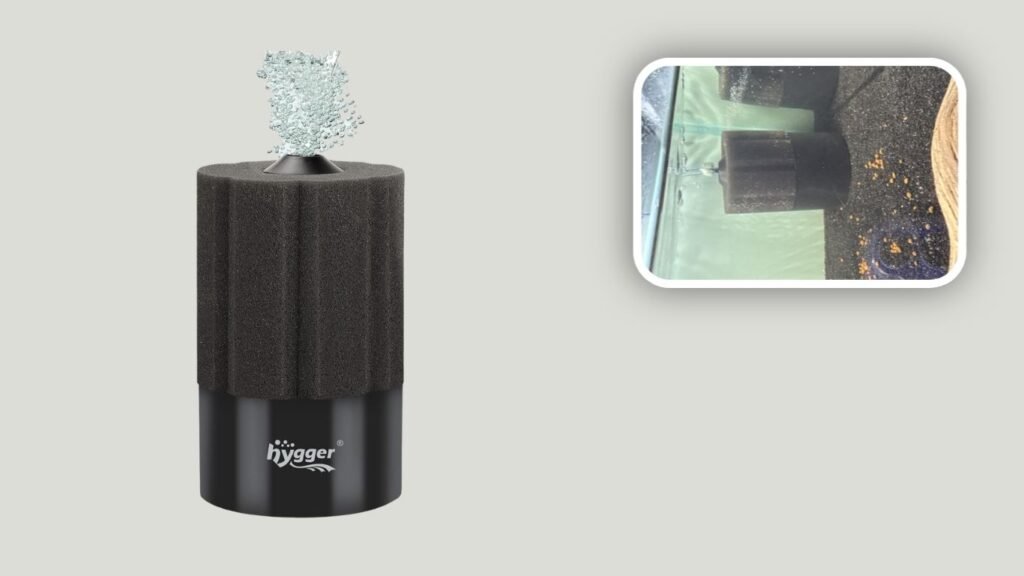
The hygger Air-Powered Biochemical Sponge Filter combines a large circular biochemical sponge with a chamber containing bio-ceramic media. The linked B0CSFRMHDK version is designed for larger aquarium applications and uses an air pump rather than an integrated electric water pump. Its gentle circulation, large biological surface, and reusable filtration materials make it an interesting choice when strong filtration is needed without strong intake suction.
Key Features
- Air-powered sponge filtration
- Biochemical filter sponge
- Bio-ceramic filtration media
- Mechanical and biological filtration
- Gentle water circulation
- Reusable sponge material
- Spare sponge included
- Designed for aquarium sizes up to larger setups
Why It Is Best for Gentle High-Capacity Filtration
Many larger aquariums rely on powerful motorized filters, but strong intakes and currents are not appropriate for every species. This hygger filter provides another approach by using rising air bubbles to pull water through the sponge.
That makes it particularly useful when aquarists want additional filtration in a large aquarium without adding another high-flow power filter. It can also function as supplemental biological filtration alongside another filtration system.
Its gentle operating principle remains suitable for fry, shrimp, snails, bettas, and other animals that benefit from lower water velocity.
Mechanical and Biological Performance
The high-density biochemical sponge catches suspended particles and waste as water moves through it. Beneath the sponge, ceramic media provides extra surfaces where beneficial bacterial colonies can grow.
Together, these stages handle both visible waste and biological filtration. The rising bubbles also produce continuous water movement and surface agitation, which contributes to aquarium oxygen exchange.
The result is a filtration system that focuses less on powerful water turnover and more on steady, biologically supportive circulation.
Maintenance and Overall Verdict
The reusable sponge can be removed and cleaned every few weeks depending on aquarium waste levels. Ceramic media can remain established for extended periods and should generally be handled carefully so the biological colony is not unnecessarily disrupted.
For aquarists who want a larger sponge-based filter with additional biological media, the hygger offers a technically useful combination. Its gentle flow and scalable filtration design make it especially suitable as a primary filter in appropriate setups or as supplemental filtration in larger tanks.
5. AQQA Submersible Aquarium Sponge Filter
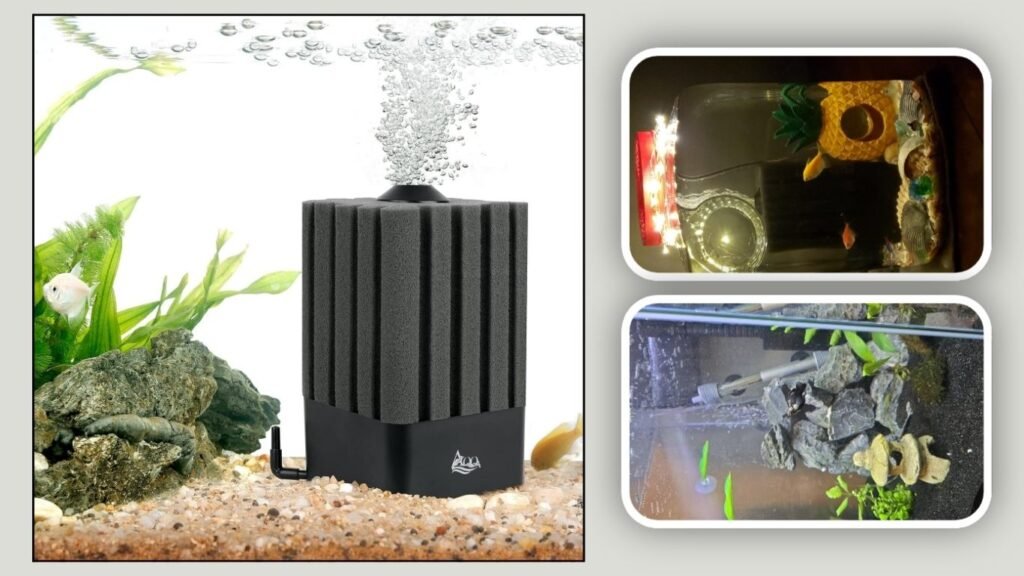
The AQQA Submersible Sponge Filter takes a more multifunctional approach than a traditional air-only sponge filter. It combines sponge filtration with ceramic biological media while supporting filtration, water circulation, and aeration. The linked B0BLGHJHT8 model is associated with the medium version, which is designed for a broad range of aquarium sizes and can be used in freshwater or marine setups.
Key Features
- Sponge mechanical filtration
- Replaceable ceramic biological media
- Filtration, aeration, and circulation functions
- Submersible aquarium design
- Replaceable sponge media
- Freshwater and saltwater compatibility
- Suitable for shrimp, betta, and fry tanks
- Multiple size options
Why It Is Best for Multi-Function Filtration
The biggest advantage of the AQQA design is that it handles several aquarium functions within one compact unit. Rather than using a basic sponge solely for air-driven filtration, this design also contributes to more active water circulation.
That can make it particularly useful in aquariums where owners want the safety and biological benefits of sponge filtration while still creating noticeable water movement.
It is also versatile enough for breeding tanks, shrimp setups, betta aquariums, and general freshwater systems.
Filtration and Water Circulation Performance
The sponge serves as the main mechanical filtration surface, trapping suspended waste while offering space for beneficial bacteria. Ceramic balls provide another biological stage and can be washed, reused, or replaced with other compatible media if desired.
The circulation function helps distribute filtered water around the aquarium instead of relying exclusively on bubble-driven movement. That can reduce stagnant areas and improve overall water mixing.
Aeration adds further value by helping increase water movement around the surface and supporting oxygen exchange.
Maintenance and Overall Verdict
Both the sponge and biological media are accessible for maintenance, giving aquarists flexibility when the filter begins accumulating debris. The manufacturer-related product information recommends saturating the sponge before operation so the unit settles properly underwater.
The AQQA is especially appealing for aquarists who want more functionality than a conventional air-powered sponge filter. Its combination of replaceable sponge media, ceramic biological filtration, aeration, and active circulation makes it a versatile option for a wide variety of aquarium environments.
6. Aquapapa Dual Bio Sponge Filter
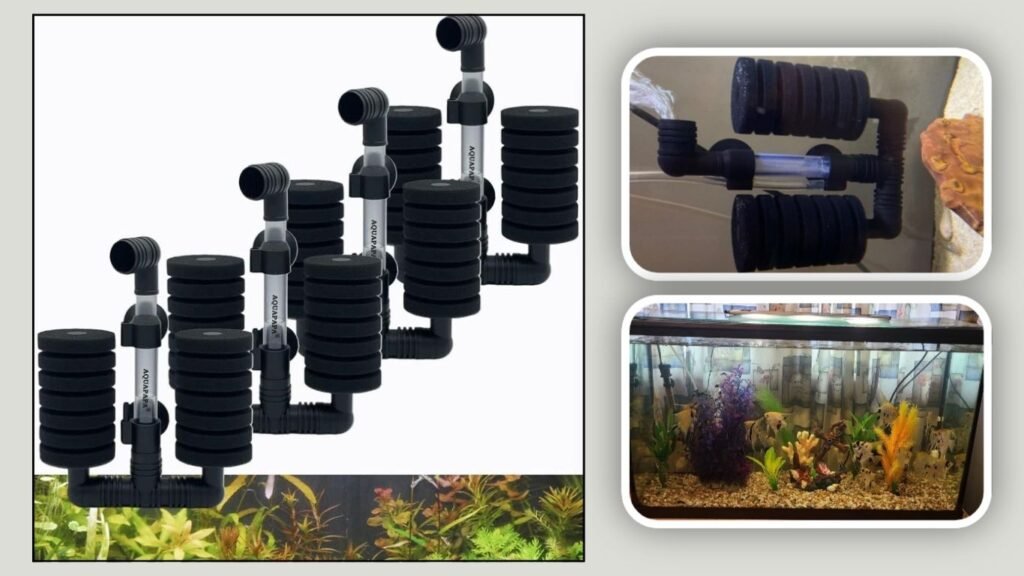
The Aquapapa Dual Bio Sponge Filter is particularly useful for breeding tanks, betta aquariums, shrimp setups, and other environments where gentle filtration matters. The linked package includes four dual-sponge filters, with each unit designed for aquariums up to approximately 30 gallons. Its air-powered operation provides both filtration and aeration without creating the strong suction associated with many conventional power filters.
Key Features
- Four dual-sponge filters included
- Rated for tanks up to approximately 30 gallons per filter
- Dual sponge filtration surfaces
- Mechanical and biological filtration
- Air-powered operation
- Provides filtration and aeration together
- Gentle intake suitable for fry and shrimp
- Air pump and airline tubing required separately
Why It Is Best for Breeding and Fry Tanks
Baby fish and shrimp require filtration, but powerful intakes can create unnecessary risk. The Aquapapa spreads suction across two sponge surfaces, allowing aquarium water to move through the filter more gently.
This makes it particularly useful for betta fry, guppy fry, shrimp, and other small aquatic animals. The sponge also becomes a useful biological surface as the aquarium matures.
Because the package contains four filters, it is especially practical for aquarists running multiple breeding, quarantine, or grow-out tanks rather than purchasing individual filtration units for each aquarium.
Filtration Performance and Aeration
Aquarium water is drawn through the sponge by an external air pump. As water passes through, visible particles become trapped while beneficial bacteria colonize the porous sponge material.
Rising bubbles then return water upward and create surface movement, providing aeration alongside filtration. The manufacturer information also positions the units for use as secondary filters or pre-filtration devices.
The gentle flow is not intended to replicate a high-output power filter, but that is precisely what makes it appealing for delicate livestock.
Maintenance and Overall Verdict
Cleaning is straightforward because the sponges can be removed and gently squeezed in aquarium water during routine maintenance. This clears accumulated waste while helping preserve established beneficial bacteria.
The Aquapapa is especially compelling for aquarists maintaining several smaller tanks. Its four-pack design, dual sponges, gentle circulation, and simple air-powered operation provide a practical combination for breeding systems, shrimp tanks, and low-flow aquariums.
7. hygger Self-Sinking Aquarium Sponge Filter
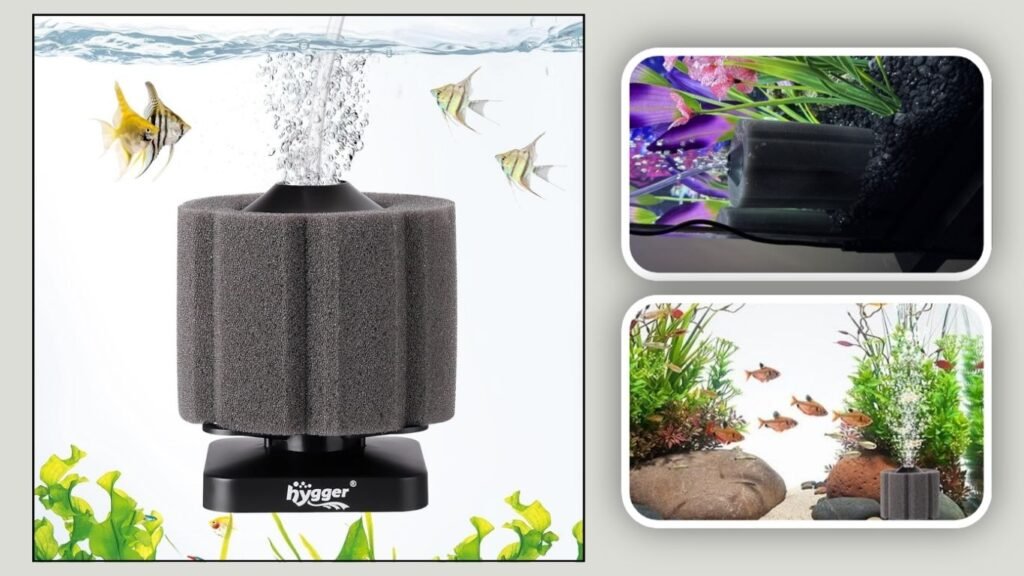
The hygger Self-Sinking Aquarium Sponge Filter is designed to make traditional sponge filtration easier to position inside an aquarium. Its self-sinking construction helps the unit remain at the bottom without the installation challenges sometimes associated with lightweight sponge filters. The air-powered design provides gentle mechanical and biological filtration, making it particularly suitable for shrimp, bettas, fry, and other fish that prefer calmer water movement.
Key Features
- Self-sinking aquarium design
- Air-powered filtration
- Gentle water circulation
- Sponge mechanical filtration
- Supports biological filtration
- Suitable for freshwater and saltwater setups
- Fry- and shrimp-friendly intake
- Compact bottom-positioned configuration
Why the Self-Sinking Design Is Useful
A common inconvenience with new sponge filters is getting all trapped air out of the sponge so the unit stays securely underwater. A self-sinking configuration simplifies placement and helps keep the filter positioned where intended.
This is especially useful in planted tanks or breeding aquariums where aquarists may want the filter sitting discreetly behind rocks, wood, or vegetation.
The compact positioning can also make the aquarium look less cluttered while still maintaining an active biological filtration surface.
Gentle Filtration and Biological Support
Like other air-driven sponge filters, this hygger model relies on airflow to move aquarium water through porous sponge material. The sponge catches suspended waste while gradually becoming colonized by beneficial bacteria.
This style of filtration works particularly well for shrimp and fry because there is no narrow high-suction intake. Sponge filters can also become feeding surfaces where shrimp and small fish graze on microorganisms and biofilm.
Because airflow determines much of the resulting circulation, aquarists can pair the filter with an appropriately sized adjustable air pump to achieve gentler or stronger bubbling.
Maintenance and Overall Verdict
Maintenance mainly involves periodically removing the sponge and squeezing it in water taken from the aquarium. Avoiding untreated tap water helps preserve more of the beneficial bacterial population.
The hygger Self-Sinking Sponge Filter is a practical option for aquarists who want the biological advantages of sponge filtration with easier bottom placement. Its gentle operating style suits breeding tanks, shrimp aquariums, betta setups, and other environments where strong current is unnecessary.
8. UPETTOOLS Aquarium Biochemical Sponge Filter
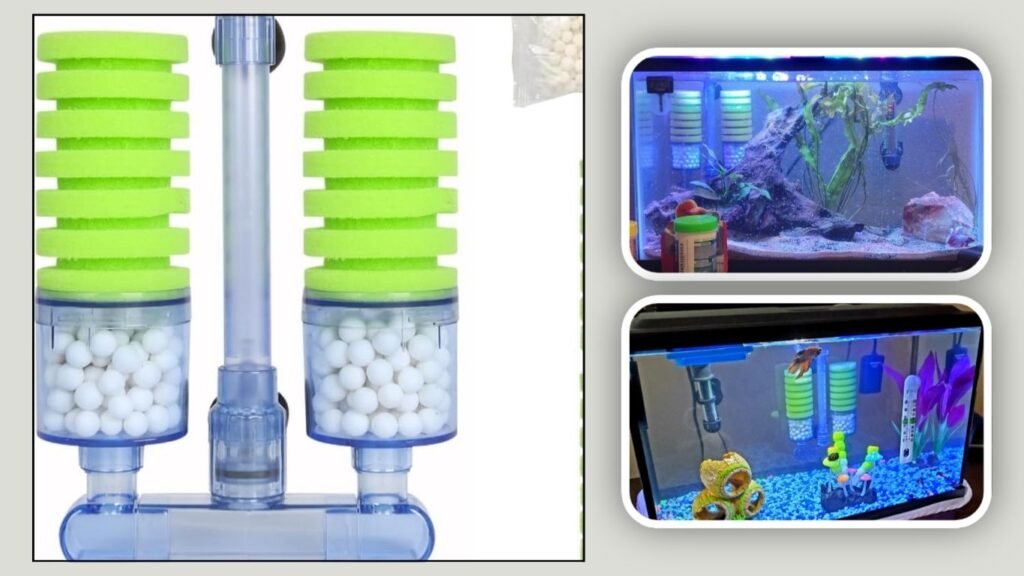
The UPETTOOLS Aquarium Biochemical Sponge Filter expands on a traditional sponge design by combining dual sponges with separate ceramic biological-media chambers. It provides mechanical filtration, biological support, and aeration while maintaining a gentle intake suitable for small fish and shrimp. The design can be installed using suction cups and is suitable for freshwater or saltwater aquarium environments.
Key Features
- Dual sponge filtration
- Ceramic biological filter media
- Mechanical and biological filtration
- Air-powered operation
- 360-degree adjustable oxygen outlet
- Removable sponge sections
- Suitable for freshwater and saltwater tanks
- Designed for shrimp, bettas, and smaller fish
Why It Is Best for Multi-Stage Biological Filtration
Many traditional sponge filters rely almost entirely on the sponge for biological filtration. UPETTOOLS adds dedicated ceramic-media chambers, increasing the amount of porous material available for beneficial bacterial colonization.
This arrangement can be useful in established community aquariums where stable biological filtration is a major priority.
The dual-sponge configuration also provides more area for capturing visible particles while distributing suction across a broader surface. This makes the filter suitable for delicate fish and shrimp that may be vulnerable around conventional power-filter intakes.
Filtration Performance and Adjustable Flow
The sponge provides mechanical filtration by trapping suspended debris as water passes through it. Ceramic media then provides additional surfaces for biological activity.
The filter is driven by a separate air pump, so rising bubbles create water movement while also contributing to aquarium aeration. Its oxygen outlet can rotate through 360 degrees, providing greater control over the direction of water and bubble movement.
This combination makes the unit particularly useful when gentle circulation is preferred over a forceful current.
Maintenance and Overall Verdict
The removable sponges simplify cleaning and replacement. During regular maintenance, gently rinsing or squeezing them in removed aquarium water can clear debris without completely stripping away the established biological colony.
For aquarists who want more filtration media than a basic sponge design provides, the UPETTOOLS is an appealing alternative. Its dual sponges, ceramic chambers, adjustable outlet, and gentle air-driven filtration make it especially suitable for shrimp, betta, breeding, and community aquariums.
9. Pawfly Electric Aquarium Sponge Filter
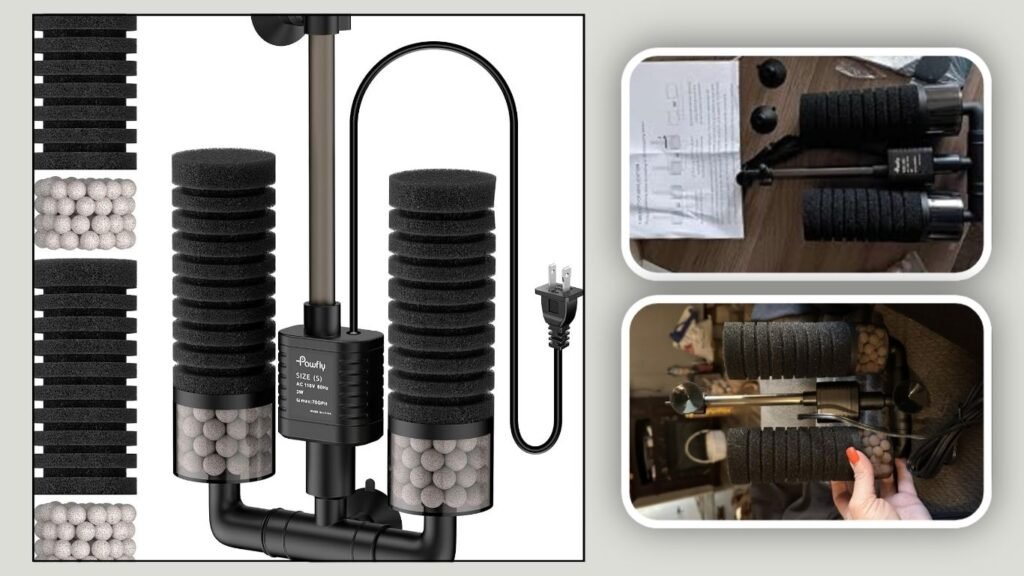
The Pawfly Aquarium Sponge Filter combines traditional sponge filtration with its own small submersible electric pump. The linked model delivers approximately 70 GPH using a 3-watt pump and is intended for aquariums around 10–40 gallons. Dual foam sponges and ceramic media provide both mechanical and biological filtration, while the integrated motor eliminates the need for a separate air pump.
Key Features
- Approximately 70 GPH flow rate
- Energy-efficient 3-watt water pump
- Intended for approximately 10–40 gallon tanks
- Dual sponge filtration
- Ceramic biological filter media
- No separate air pump required
- Submersible electric design
- Rated operating noise below 30 dB by product information
Why It Is Best for Convenient Electric Filtration
Traditional sponge filters normally require a separate air pump, airline tubing, and sometimes a check valve. Pawfly simplifies the setup by incorporating an electric water pump directly into the filter.
For aquarists who want the large biological surface of sponge filtration without running an external air pump, this can be a particularly convenient arrangement.
The roughly 70 GPH output provides active circulation while remaining more modest than many conventional internal power filters. That balance can work well in small and medium aquariums where strong currents are unnecessary.
Filtration Performance and Quiet Operation
Dual sponges help capture uneaten food, fish waste, and other suspended particles without relying on an exposed intake. Ceramic balls provide additional porous surface area for biological filtration.
The manufacturer-associated specifications list a 3-watt pump and approximately 70 GPH output for the 10–40 gallon model.
The integrated design also reduces the number of external accessories needed around the aquarium, which can help keep smaller setups simpler and more organized.
Maintenance and Overall Verdict
Pawfly recommends periodically disassembling the filter and rinsing the sponges with aquarium water. The ceramic media can remain in place as an important biological filtration surface, while accumulated debris should be cleared before it significantly reduces water flow.
This model stands out for combining sponge filtration with an integrated pump. For aquarists who appreciate biological sponge filtration but would rather avoid a separate air-pump setup, its 70 GPH circulation, dual sponges, ceramic media, and compact submersible construction offer a practical alternative.
FAQs
1. Are Sponge Filters Good for Aquariums?
Yes. Sponge filters provide mechanical filtration while creating a large surface for beneficial bacteria. Their gentle intake makes them especially useful for shrimp, bettas, fry, breeding tanks, quarantine tanks, and smaller community aquariums. They can also serve as secondary biological filtration in larger setups.
2. Do Sponge Filters Need an Air Pump?
Most traditional sponge filters require a separate air pump, airline tubing, and sometimes a check valve. Air moving through the filter creates bubbles that lift water and pull aquarium water through the sponge. However, electric sponge filters such as the Pawfly model use an integrated water pump instead.
3. How Often Should I Clean a Sponge Filter?
Cleaning every two to four weeks works as a general starting point, although the correct interval depends on stocking levels, feeding, and how quickly the sponge becomes clogged. Some manufacturers also recommend cleaning when water flow noticeably decreases.
4. How Should I Clean an Aquarium Sponge Filter?
Remove the sponge during a water change and gently squeeze or rinse it in the aquarium water you removed from the tank. This releases accumulated debris while preserving more beneficial bacteria than aggressively washing the sponge under untreated tap water.
5. Can a Sponge Filter Be the Main Filter in a Fish Tank?
Yes, particularly in appropriately sized shrimp tanks, betta tanks, breeding aquariums, and lightly or moderately stocked community tanks. The filter and air pump should be sized according to the aquarium’s volume and livestock. Larger or heavily stocked tanks may benefit from multiple sponge filters or an additional filtration system.