
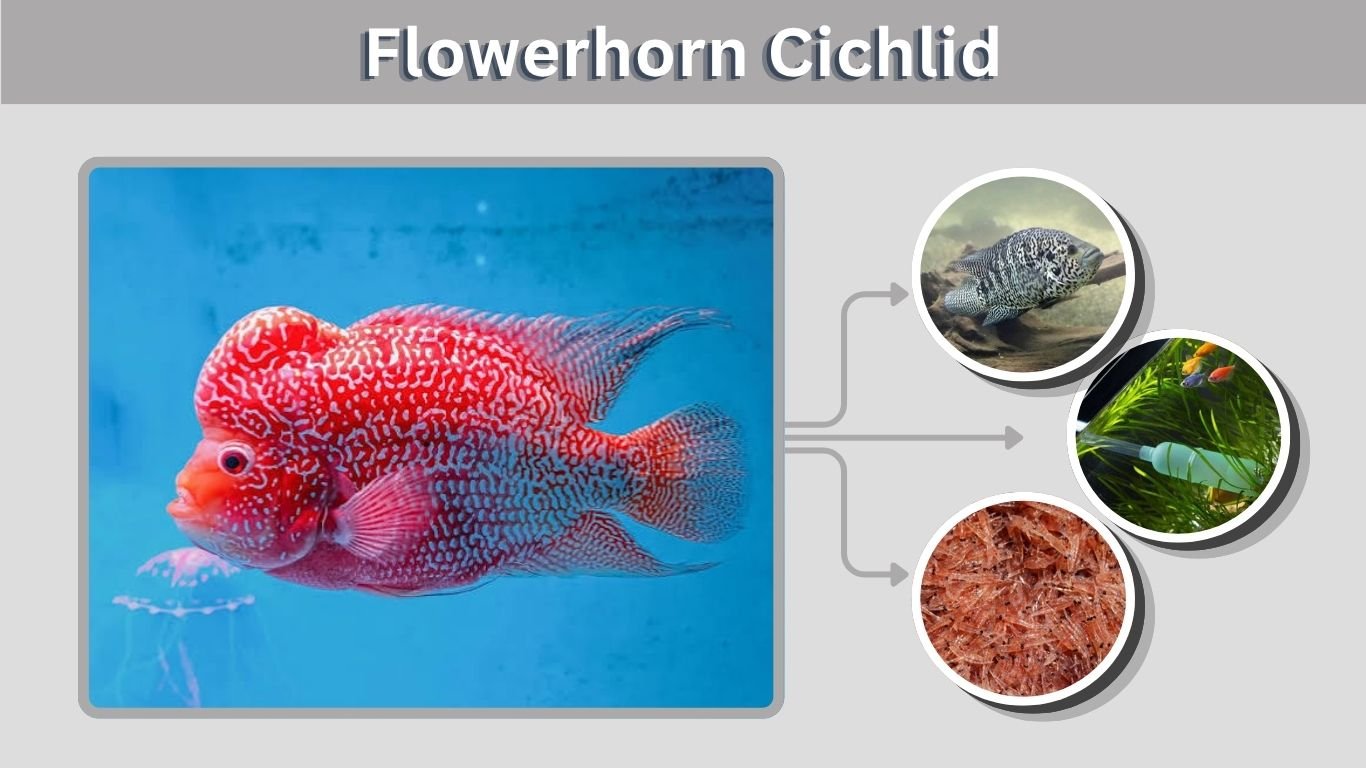
The Flowerhorn Cichlid is a colorful freshwater aquarium fish known for its large forehead hump, attractive body patterns, and bold personality. Unlike most aquarium fish, Flowerhorns are selectively bred hybrids developed from different Central American cichlid species. Their bright red, orange, blue, and pearly colors make them popular among aquarium enthusiasts.
Flowerhorn Cichlids are intelligent, interactive fish that often recognize their owners and respond when someone approaches the aquarium. However, their aggressive behavior, large adult size, and feeding requirements make proper care essential. Understanding their tank size, diet, water conditions, lifespan, and compatibility helps aquarium owners maintain healthy Flowerhorns.
What Is a Flowerhorn Cichlid?
The Flowerhorn Cichlid is a man-made hybrid freshwater fish developed through selective breeding during the 1990s, particularly in Malaysia. Breeders crossed different cichlid species to produce fish with distinctive forehead humps, bright colors, and unusual patterns.
Flowerhorns belong to the family Cichlidae, but they do not have a single universally accepted scientific species name because they are hybrids.
Their most recognizable feature is the large forehead hump called the nuchal hump, commonly known as the “kok.” Its size depends on genetics, age, sex, and overall condition.
| Characteristics | Flowerhorn Cichlid |
| Common Name | Flowerhorn Cichlid |
| Scientific Classification | Hybrid cichlid |
| Family | Cichlidae |
| Origin | Captive breeding in Asia |
| Adult Size | Commonly 10–14 inches |
| Lifespan | Approximately 8–12 years |
| Minimum Tank Size | 75 gallons for one adult |
| Temperature | 78–84°F (26–29°C) |
| Diet | Omnivorous |
| Temperament | Aggressive and territorial |
| Care Level | Intermediate to advanced |
Flowerhorn Cichlid Appearance and Size
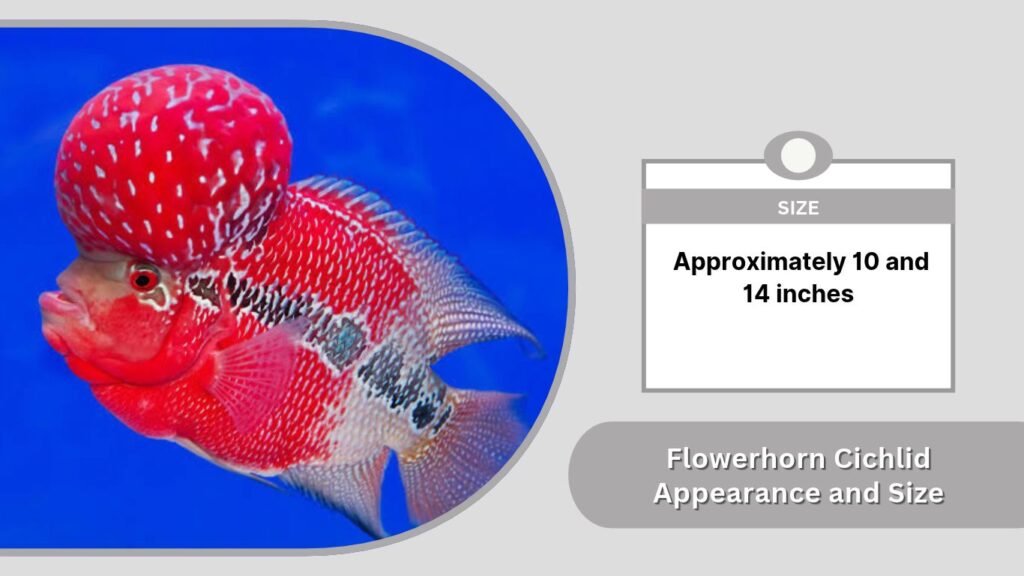
Flowerhorn Cichlids have thick, muscular bodies, prominent heads, and powerful jaws. Their bodies often display colorful markings, including red, orange, blue, silver, and black patterns.
Many varieties have reflective pearly scales that produce a shimmering appearance under aquarium lighting.
How Big Do Flowerhorn Cichlids Get?
Adult Flowerhorn Cichlids commonly grow between 10 and 14 inches long, although some varieties may become larger.
Males generally grow bigger than females and develop more prominent forehead humps. Their growth depends on genetics, nutrition, aquarium space, and water quality.
Young Flowerhorns grow relatively quickly when provided with suitable food and stable conditions. However, growth rates differ among individual fish.
Male vs. Female Flowerhorn Cichlid
Male Flowerhorns are usually larger, more colorful, and more likely to develop prominent forehead humps.
Females often have smaller humps and rounder bodies. Some females display dark markings on their dorsal fins, although this feature is not a reliable identification method.
Examining reproductive anatomy provides a more accurate way to determine sex in mature fish.
Popular Types of Flowerhorn Cichlids
Flowerhorn Cichlids are available in numerous varieties developed through selective breeding. Different strains are recognized by their coloration, head shape, body structure, and scale patterns.
1. Red Dragon Flowerhorn
The Red Dragon Flowerhorn is one of the most recognizable varieties. It typically has a bright red or orange body with attractive pearly markings.
The Super Red Dragon is a selectively bred form valued for its intense coloration and prominent forehead hump.
2. Kamfa Flowerhorn
Kamfa Flowerhorns are known for their broad bodies, fan-shaped tails, and distinctive facial features.
King Kamfa varieties are particularly popular among collectors because of their impressive body patterns and overall appearance.
3. Golden Monkey Flowerhorn
Golden Monkey Flowerhorns are prized for their distinctive head shapes, vivid coloration, and decorative markings.
Their appearance varies considerably depending on breeding lines.
4. Thai Silk Flowerhorn
Thai Silk Flowerhorns have metallic blue or silver coloration that gives their bodies a smooth, reflective appearance.
They are sometimes marketed as Titanium Flowerhorns.
5. Golden Base Flowerhorn
Golden Base Flowerhorns often develop golden, orange, or yellowish coloration as they mature.
Some individuals undergo noticeable color changes during development.
Flowerhorn Cichlid Tank Size and Setup
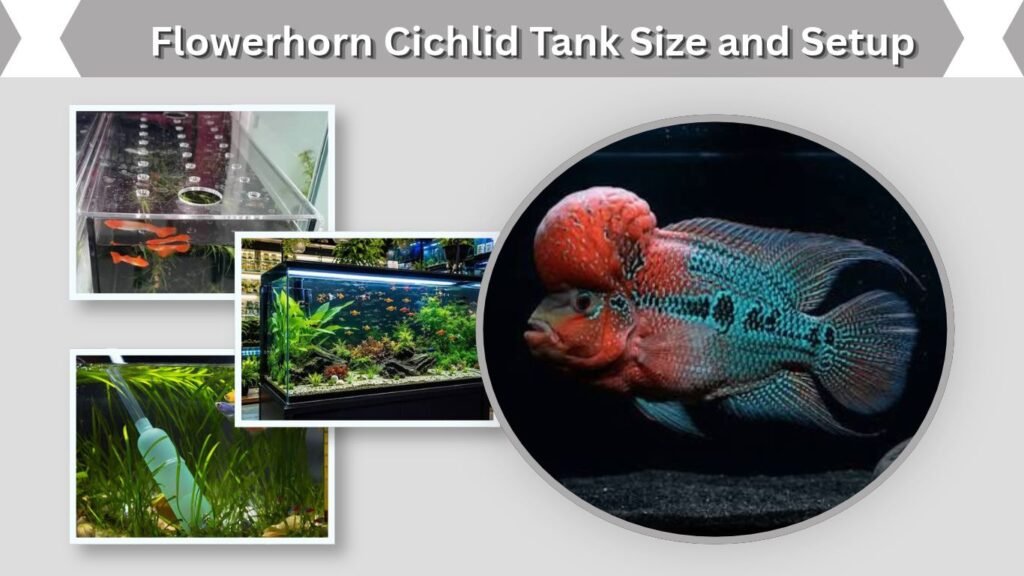
Flowerhorns need spacious aquariums because of their large bodies, active swimming behavior, and territorial nature.
A 75-gallon aquarium is a practical minimum for one adult Flowerhorn, while a 90–125-gallon tank provides additional swimming space, particularly for larger males.
Juvenile Flowerhorns can temporarily live in smaller aquariums, but owners should prepare for their adult requirements.
Ideal Flowerhorn Aquarium Setup
A suitable aquarium should include:
- Strong filtration: Removes waste and helps maintain water quality.
- Reliable heater: Maintains a stable tropical temperature.
- Open swimming space: Allows the fish to move comfortably.
- Smooth decorations: Reduces the risk of injury.
- Secure aquarium lid: Helps prevent accidental jumping.
- Substrate: Fine sand or a bare bottom makes cleaning easier.
Flowerhorns frequently rearrange decorations and disturb substrate. Avoid sharp rocks, fragile equipment, and unstable ornaments.
Live plants may also be uprooted or damaged.
Flowerhorn Cichlid Water Conditions
Maintaining stable water conditions is essential for keeping Flowerhorn Cichlids healthy.
Although they are relatively hardy fish, sudden water changes or poor filtration can cause stress and disease.
| Water Parameter | Recommended Condition |
| Temperature | 78–84°F |
| pH Level | Approximately 6.5–8.0 |
| Ammonia | 0 ppm |
| Nitrite | 0 ppm |
| Nitrate | Keep low through maintenance |
| Water Changes | Around 25–30% weekly, adjusted to test results |
Aquariums should be fully cycled before introducing Flowerhorns.
Regular water testing helps identify problems before they affect the fish. Always use dechlorinated replacement water with a temperature close to that of the aquarium.
What Do Flowerhorn Cichlids Eat?
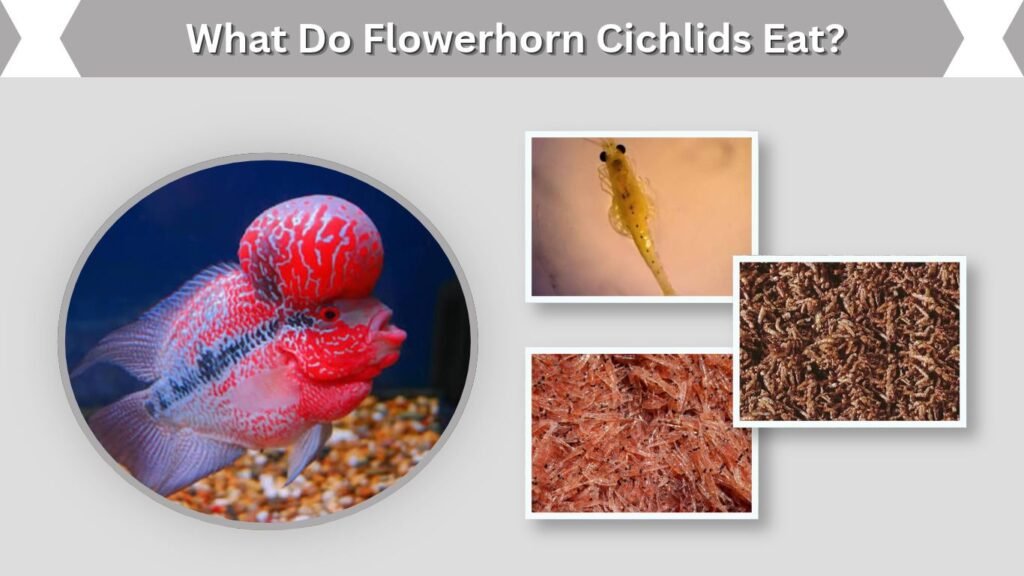
Flowerhorn Cichlids are omnivorous fish that eat both animal-based and plant-derived nutrients.
Their diet should primarily consist of high-quality cichlid pellets formulated to provide balanced nutrition.
Suitable foods include:
- High-quality Flowerhorn or cichlid pellets
- Frozen shrimp
- Krill
- Bloodworms as occasional treats
- Mysis shrimp
- Appropriate insect-based aquarium foods
- Nutritionally balanced foods containing plant ingredients
Protein supports growth and tissue maintenance, while vitamins and minerals contribute to overall health.
Avoid relying exclusively on one type of frozen food. Do not feed seasoned human foods, fatty mammal meat, or unverified supplements.
Flowerhorn Cichlid Feeding Schedule
Adult Flowerhorns generally do well with one or two modest feedings daily.
Juvenile Flowerhorns may require smaller, more frequent meals because they are growing rapidly.
Feed only what the fish can consume promptly, and remove uneaten food.
Flowerhorn Cichlid Overfeeding Symptoms
Overfeeding is a common problem among Flowerhorn owners.
Possible warning signs include:
- Unusual abdominal swelling
- Reduced appetite
- Increased waste production
- Uneaten food accumulating in the aquarium
- Sluggish swimming behavior
- Deteriorating water quality
A swollen abdomen does not always indicate overfeeding. Constipation, infection, internal parasites, and other medical conditions can produce similar symptoms.
If swelling persists or the fish becomes lethargic, consult an aquatic veterinarian.
Flowerhorn Cichlid Temperament and Behavior
Flowerhorn Cichlids are territorial fish that may attack other aquarium inhabitants.
Some individuals also respond aggressively to their reflections or objects placed near the aquarium.
Despite their aggression, Flowerhorns are highly interactive with humans.
Many learn to recognize their regular caregivers and approach the aquarium glass during feeding.
Their intelligence and distinctive personalities are major reasons aquarium enthusiasts enjoy keeping them.
Are Flowerhorn Cichlids Aggressive?
Yes. Flowerhorn Cichlids are generally aggressive, especially after reaching maturity.
They may chase, bite, or injure other fish entering their territory.
Their behavior varies between individuals, but aggression should always be considered when planning an aquarium.
Flowerhorn Cichlid Tank Mates
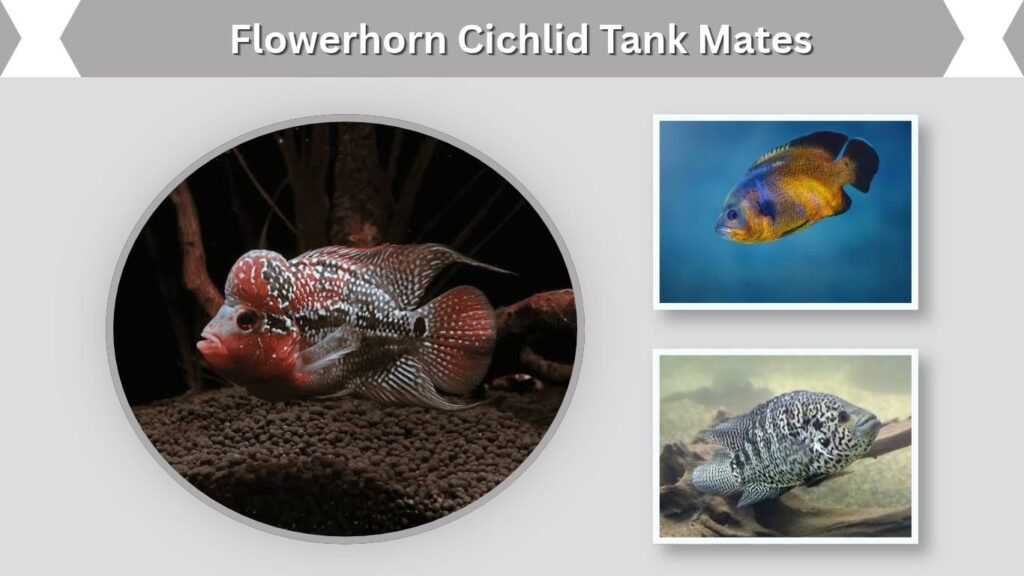
Keeping a Flowerhorn alone is usually the safest option.
Small community fish are unsuitable because they may be attacked or eaten.
Large cichlids, including Oscars, Jaguar Cichlids, and Texas Cichlids, are sometimes housed with Flowerhorns by experienced aquarists. However, similar size does not guarantee compatibility.
Even apparently peaceful combinations can become dangerous without warning.
If attempting a shared aquarium, provide substantial space, monitor aggression closely, and maintain a separate tank for immediate relocation.
Flowerhorn Cichlid Lifespan
Flowerhorn Cichlids commonly live approximately 8–12 years under suitable aquarium conditions, although individual lifespans vary.
Several factors influence their longevity:
- Genetics and breeding quality
- Balanced nutrition
- Stable water temperature
- Clean aquarium conditions
- Sufficient swimming space
- Low stress levels
- Early identification of health problems
Routine maintenance and appropriate feeding are important for long-term health.
Common Flowerhorn Cichlid Diseases
Flowerhorn Cichlids can develop several health problems, particularly when aquarium conditions deteriorate.
Hole-in-the-Head Disease
This condition produces pits or lesions around the head.
Its development can involve several factors, including poor environmental conditions and certain infections. Veterinary assessment is important for determining appropriate treatment.
Ich or White Spot Disease
Ich is a parasitic infection that produces small white spots on the fish’s body and fins.
Affected fish may rub against aquarium surfaces, breathe rapidly, or become less active.
Bloating and Digestive Problems
Abdominal swelling may develop because of inappropriate feeding, constipation, infections, or other internal disorders.
Persistent swelling, abnormal swimming, or refusal to eat should be investigated rather than treated through guesswork.
Flowerhorn Cichlid Breeding
Breeding Flowerhorn Cichlids can be challenging because of their aggressive behavior and hybrid genetics.
A compatible male and female may reproduce by laying eggs on a cleaned, flat surface.
The male fertilizes the eggs, and the parents may guard them.
However, aggressive behavior during pairing can cause serious injuries. Some hybrid males are also infertile.
Breeding attempts require careful monitoring, suitable equipment, and a way to separate the fish quickly.
What to Know Before Buying a Flowerhorn Cichlid
Flowerhorn Cichlids are available through specialized aquarium stores and ornamental fish breeders.
Their prices vary considerably depending on variety, size, coloration, head development, and breeding quality.
Before purchasing, examine the fish carefully.
Look for clear eyes, intact fins, steady swimming, normal breathing, and an active feeding response.
Avoid fish displaying severe abdominal swelling, visible lesions, or unusual swimming movements.
Juvenile Flowerhorns are often less expensive than mature specimens, but their final coloration and forehead development cannot be guaranteed.
FAQs
1. Are Flowerhorn Cichlids Good for Beginners?
Flowerhorn Cichlids are better suited to aquarists with some experience. Their large tank requirements, aggressive behavior, and need for consistent water maintenance make them challenging for beginners.
2. Can Flowerhorn Cichlids Live Alone?
Yes. Flowerhorns can live alone and generally do not require other fish for companionship. A spacious aquarium with suitable enrichment and regular interaction can support their well-being.
3. Do Flowerhorn Cichlids Recognize Their Owners?
Flowerhorns can learn to recognize familiar people and feeding routines. Many approach the glass when their regular caregiver enters the room.
4. How Fast Do Juvenile Flowerhorn Cichlids Grow?
Juvenile Flowerhorns can grow quickly under suitable conditions, particularly during their first year. However, growth rates depend on genetics, feeding, water quality, and available aquarium space.
5. Why Is My Flowerhorn Cichlid Losing Its Color?
Flowerhorns may lose color because of stress, poor water quality, inadequate nutrition, illness, or natural developmental changes. Check aquarium conditions and feeding habits first. Persistent discoloration accompanied by behavioral changes may indicate an underlying health problem.
