
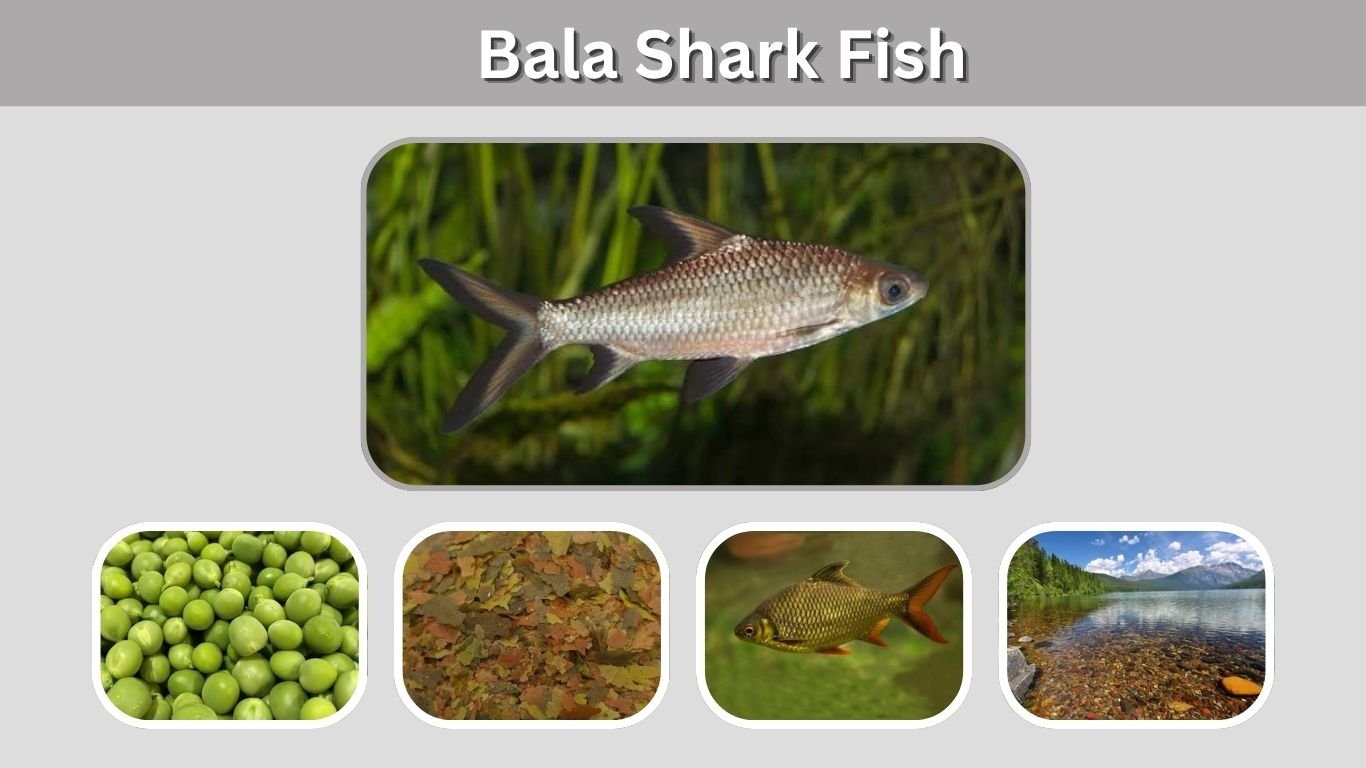
The Bala Shark Fish is a popular freshwater aquarium fish recognized for its shiny silver body, black-edged fins, and shark-like appearance. Despite its name, the Bala Shark is not a true shark. It belongs to the carp family and is also known as the Silver Shark or Tricolor Sharkminnow. Its peaceful temperament, active swimming behavior, and attractive appearance make it an interesting addition to exceptionally large freshwater aquariums.
However, Bala Sharks grow much larger than many beginners expect. They also prefer living in groups and require considerable swimming space. Understanding their adult size, aquarium requirements, diet, tank mates, and natural behavior is essential before bringing these fish home.
What Is a Bala Shark Fish?
The Bala Shark (Balantiocheilos melanopterus) is a freshwater fish belonging to the family Cyprinidae, which includes carps, barbs, and minnows.
It is native to parts of Southeast Asia, particularly Borneo and Sumatra, where it naturally inhabits rivers and lakes.
Bala Sharks have long, streamlined bodies that resemble miniature sharks. Their tall dorsal fins and forked tails contribute to this appearance.
Unlike most actual sharks, Bala Sharks are peaceful omnivores that feed on insects, small aquatic animals, algae, and plant material.
| Characteristics | Bala Shark Fish |
| Scientific Name | Balantiocheilos melanopterus |
| Common Names | Bala Shark, Silver Shark |
| Family | Cyprinidae |
| Origin | Southeast Asia |
| Habitat | Freshwater rivers and lakes |
| Adult Size | Approximately 12–14 inches |
| Lifespan | Commonly 8–10 years or longer |
| Adult Group Tank Size | Around 225 gallons or more |
| Temperature | 68–82°F (20–28°C) |
| pH Range | 6.0–8.0 |
| Diet | Omnivorous |
| Temperament | Generally peaceful |
| Social Behavior | Shoaling fish |
| Care Level | Advanced due to space requirements |
Bala Shark Fish Appearance and Identification
Bala Sharks have distinctive physical characteristics that make them easy to recognize.
Their bodies are elongated and covered with shiny silver scales that reflect aquarium lighting.
One of their most recognizable features is the dark edging around their dorsal, pelvic, anal, and tail fins.
Silver Body and Black Fins
The body of a healthy Bala Shark typically appears metallic silver, sometimes with a slightly golden sheen.
Its fins are generally pale or yellowish near the base, with prominent black edges.
This contrast gives the fish its distinctive tricolor appearance.
Shark-Like Body Shape
Bala Sharks have pointed heads, streamlined bodies, and tall triangular dorsal fins.
Their forked tails help them swim quickly through open water.
Although their appearance resembles that of sharks, they are biologically unrelated to true sharks.
Where Do Bala Shark Fish Live?

Bala Sharks naturally inhabit freshwater environments in Southeast Asia.
They are associated with large rivers, river systems, and natural lakes, particularly in Borneo and Sumatra.
Their natural habitats provide extensive swimming areas, moving water, and a variety of food sources.
Wild Bala Shark populations have declined significantly in some locations because of environmental changes and habitat disturbances.
Most Bala Sharks sold in aquarium stores today come from commercial breeding operations rather than wild collection.
How Big Do Bala Shark Fish Get?
Adult Bala Sharks commonly reach 12–14 inches in length, making them considerably larger than many other popular community aquarium fish.
Young Bala Sharks are frequently sold at approximately 2–4 inches long.
Their small juvenile appearance can mislead aquarium owners into believing they will remain suitable for ordinary community tanks.
How Fast Do Bala Sharks Grow?
Bala Sharks can grow relatively quickly when provided with appropriate food and aquarium conditions.
However, growth rates vary depending on genetics, nutrition, water quality, and available space.
They continue developing over several years before reaching their full adult size.
Keeping Bala Sharks in small aquariums does not safely prevent growth. Inadequate space can contribute to chronic stress, poor health, and physical injuries.
Bala Shark Fish Tank Size
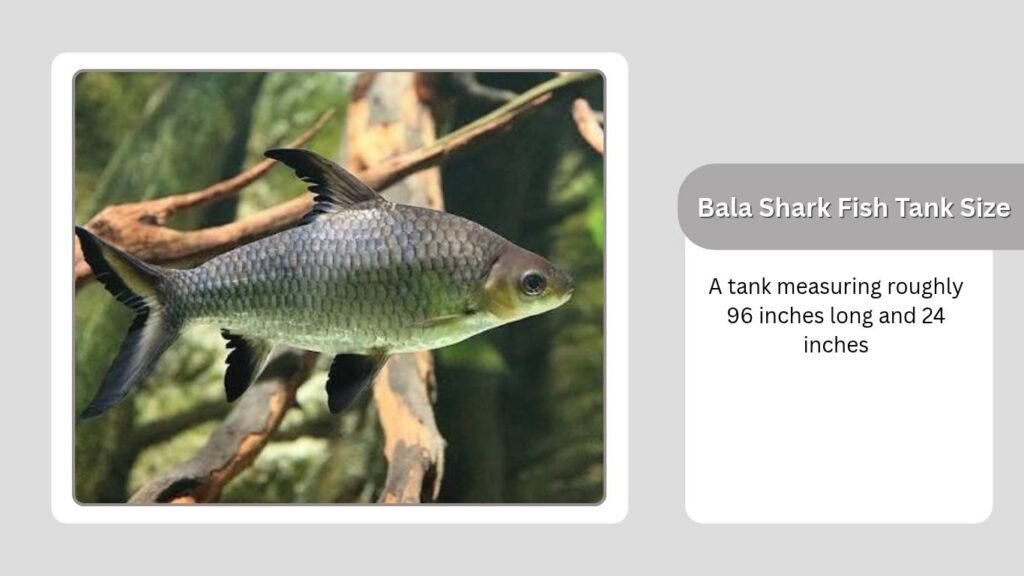
Bala Sharks need exceptionally large aquariums because they are active swimmers and naturally live in groups.
For a group of five or more adults, an aquarium approximately 8 feet long and around 225 gallons or larger is a sensible starting point.
A tank measuring roughly 96 inches long and 24 inches wide provides the extensive horizontal swimming space these fish require.
Aquarium length and width are especially important because Bala Sharks frequently swim rapidly across open areas.
A tall aquarium with limited horizontal space is not an appropriate substitute.
Ideal Bala Shark Aquarium Setup
A suitable aquarium should include:
- Large swimming area: Provides space for active group movement.
- Strong filtration: Maintains clean, oxygen-rich water.
- Moderate water movement: Helps create suitable swimming conditions.
- Secure aquarium lid: Prevents jumping accidents.
- Smooth decorations: Reduces injuries during sudden movements.
- Suitable substrate: Fine gravel or sand works well.
- Open central space: Allows uninterrupted swimming.
Bala Sharks can become startled by sudden movements or disturbances outside the aquarium.
Avoid sharp decorations and maintain a secure lid because frightened fish may jump.
Are Bala Sharks Schooling Fish?
Yes. Bala Sharks are social fish that naturally form groups, although their behavior is more precisely described as shoaling.
They should generally be kept in groups of at least five individuals.
Keeping a Bala Shark alone may cause nervous behavior, unusual aggression, or increased stress.
Groups of only two or three can also develop social problems, with dominant individuals repeatedly chasing weaker fish.
A suitable group allows more natural interactions and helps distribute aggression.
However, their social requirements make them unsuitable for most smaller home aquariums.
Bala Shark Water Temperature and Conditions
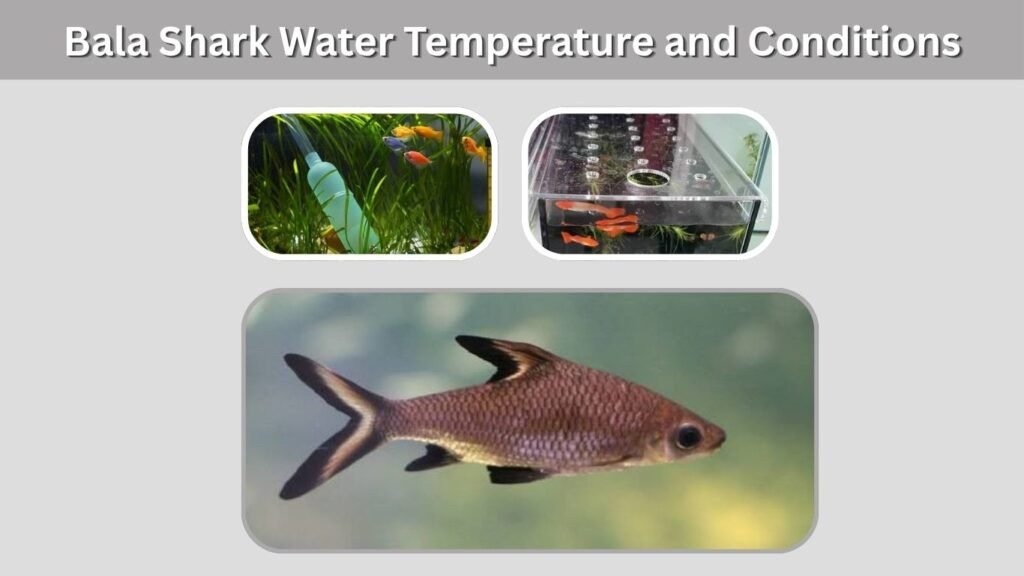
Bala Sharks require clean, well-oxygenated freshwater with stable water parameters.
They can tolerate a relatively broad range of water conditions, but sudden changes should be avoided.
| Water Parameter | Recommended Range |
| Temperature | 68–82°F |
| pH | 6.0–8.0 |
| Water Hardness | Approximately 2–15 dGH |
| Ammonia | 0 ppm |
| Nitrite | 0 ppm |
| Nitrate | Keep low through maintenance |
| Water Changes | Approximately 25–30% weekly, adjusted as needed |
Strong filtration is especially important because adult Bala Sharks produce significant amounts of waste.
Regular water testing and partial water changes help maintain suitable conditions.
New aquariums should complete the nitrogen cycle before fish are introduced.
What Do Bala Shark Fish Eat?
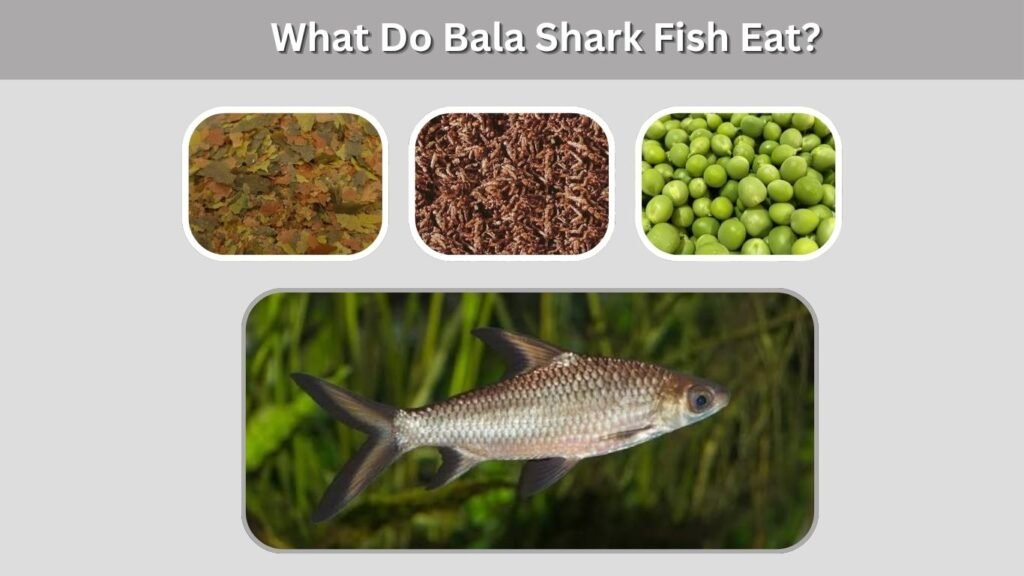
Bala Sharks are omnivorous fish that consume both animal-based and plant-based foods.
In natural habitats, they feed on insects, small crustaceans, algae, and other available food sources.
In aquariums, they readily accept many commercially prepared fish foods.
Best Food for Bala Sharks
Suitable foods include:
- High-quality tropical fish flakes
- Omnivorous fish pellets
- Bloodworms
- Brine shrimp
- Daphnia
- Frozen or prepared shrimp
- Blanched spinach
- Shelled peas
- Zucchini
A balanced diet should include appropriate protein sources alongside vegetable matter.
Offering several food types helps support healthy growth and normal coloration.
How Often Should You Feed Bala Sharks?
Adult Bala Sharks can generally be fed one or two times daily.
Provide moderate portions that the fish can consume promptly.
Avoid excessive feeding because uneaten food can decompose and reduce water quality.
During feeding, observe whether all members of the group receive sufficient food.
Dominant fish may reach food more quickly than smaller or less confident individuals.
Bala Shark Fish Temperament and Behavior
Bala Sharks are generally peaceful fish that rarely display deliberate aggression toward similarly sized, compatible species.
However, they are extremely active swimmers and may unintentionally disturb smaller or slower-moving fish.
Their rapid movements can also frighten timid aquarium inhabitants.
Are Bala Sharks Aggressive?
Bala Sharks are not normally considered aggressive fish.
However, stress, inadequate space, or improper group sizes may lead to chasing and competitive behavior.
Providing sufficient swimming room and maintaining an appropriate group helps reduce these problems.
Do Bala Sharks Eat Other Fish?
Bala Sharks are not specialized fish predators, but they may eat very small fish that fit into their mouths.
This is more likely when there is a substantial size difference between the Bala Shark and its tank mates.
Small fry, tiny tetras, and other miniature aquarium fish may be at risk.
Therefore, peaceful behavior does not guarantee that every smaller fish is safe.
Bala Shark Fish Tank Mates
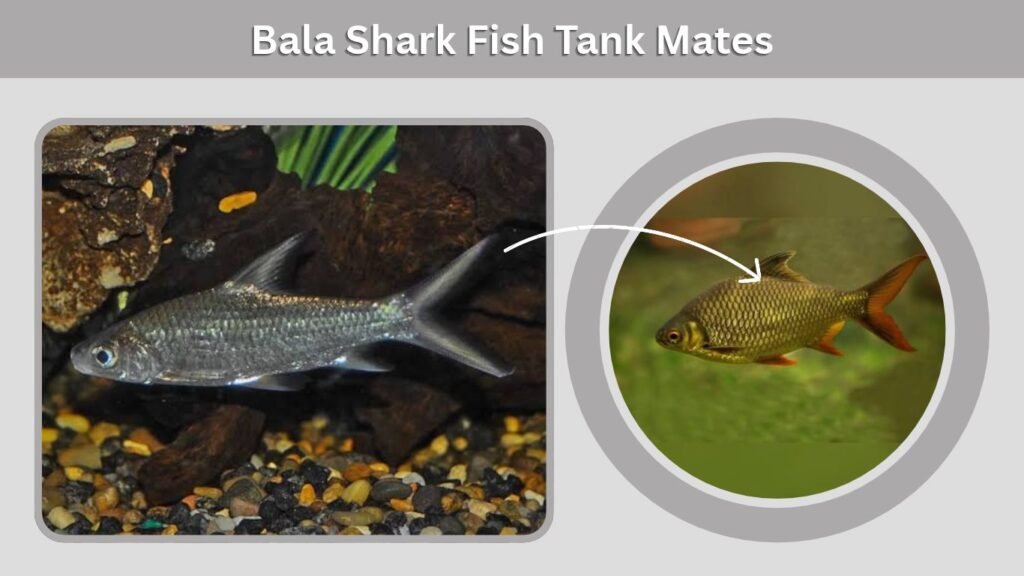
Bala Sharks can coexist with other peaceful, appropriately sized freshwater fish when the aquarium provides enough space.
However, compatibility must consider the adult size, swimming behavior, and social needs of every species.
Potentially Compatible Fish
In exceptionally large aquariums, possible companions include:
- Silver Dollar Fish: Active, peaceful fish that generally occupy open swimming areas.
- Tinfoil Barbs: Large, active fish with similar space requirements.
- Clown Loaches: Social bottom-dwelling fish that also require large aquariums and groups.
- Larger Rainbowfish: Some robust species may be suitable when not small enough to be swallowed.
- Larger Peaceful Catfish: Certain species can coexist when their environmental requirements match.
These combinations require careful planning because adding more large fish increases the aquarium’s space and filtration demands.
Fish That Are Poor Bala Shark Tank Mates
Several popular aquarium species are generally unsuitable companions.
- Betta Fish: Their slower movement and long fins make them vulnerable to disturbance.
- Small Tetras: Very small individuals may eventually be swallowed.
- Goldfish: Their preferred conditions and waste production make compatibility difficult.
- Highly aggressive cichlids: Species such as Oscars may intimidate or attack Bala Sharks.
- Tiny livebearers: Small individuals and fry may be at risk.
Angelfish may also experience stress from the constant activity of large Bala Sharks, particularly in confined aquariums.
Bala Shark Fish Lifespan
Bala Sharks commonly live approximately 8–10 years in captivity, and some may survive considerably longer under suitable conditions.
Their lifespan depends on several factors, including:
- Aquarium size
- Water quality
- Balanced nutrition
- Group size
- Stress levels
- Disease prevention
- General maintenance
Providing adequate space throughout their lives is one of the most important responsibilities of Bala Shark ownership.
Bala Shark Male vs. Female
Male and female Bala Sharks look very similar, particularly when they are young.
Adult females may develop rounder or deeper bodies, especially when carrying eggs.
Males are generally somewhat slimmer.
However, body shape alone is not always a reliable way to distinguish the sexes.
Young Bala Sharks are particularly difficult to identify as male or female.
Bala Shark Fish Breeding
Breeding Bala Sharks in ordinary home aquariums is extremely difficult.
In commercial facilities, successful breeding generally involves specialized conditions and controlled reproduction techniques.
Their large adult size, group behavior, and spawning requirements make reproduction challenging for hobbyists.
Unlike livebearing aquarium fish, Bala Sharks reproduce by laying eggs.
Females release eggs that are fertilized externally by males.
Breeding should not be attempted without suitable facilities and a thorough understanding of their reproductive requirements.
Common Bala Shark Health Problems
Bala Sharks can experience health problems when aquarium conditions are unsuitable.
White Spot Disease
White spot disease, commonly called ich, causes small white spots on the body and fins.
Affected fish may rub against decorations or display unusual swimming behavior.
Stress-Related Injuries
Bala Sharks sometimes collide with aquarium glass or decorations when frightened.
These accidents may damage their mouths, scales, or fins.
Providing open swimming space and reducing sudden disturbances can help prevent injuries.
Loss of Appetite
A Bala Shark may stop eating because of stress, poor water quality, illness, or changes in its environment.
Check water parameters and observe the entire group if feeding behavior changes.
Persistent refusal to eat requires investigation.
FAQs
1. Are Bala Sharks Freshwater Fish?
Yes. Bala Sharks are freshwater fish native to Southeast Asian rivers and lakes. They are not saltwater sharks and should be maintained in appropriately filtered freshwater aquariums.
2. Can Bala Sharks Live With Other Fish?
Yes. Bala Sharks can coexist with peaceful, similarly sized fish in very large aquariums. However, they should also have a group of their own species, and small fish may be at risk of being eaten.
3. Can Bala Sharks Live in a 55-Gallon Tank?
A 55-gallon aquarium is not suitable for a long-term group of Bala Sharks. Their adult size, active swimming behavior, and social requirements demand a much larger aquarium.
4. Why Is My Bala Shark Swimming Fast and Hitting the Glass?
Sudden rapid swimming and collisions may indicate fright or stress. Possible causes include sudden movements, inadequate space, aggressive tank mates, and unsuitable water conditions. Check the environment and look for injuries.
5. Are Bala Sharks Good for Beginners?
Bala Sharks are generally not recommended for beginners because of their large adult size and group requirements. Although they are usually peaceful and accept common aquarium foods, maintaining a suitable adult group requires considerable space, equipment, and experience.