
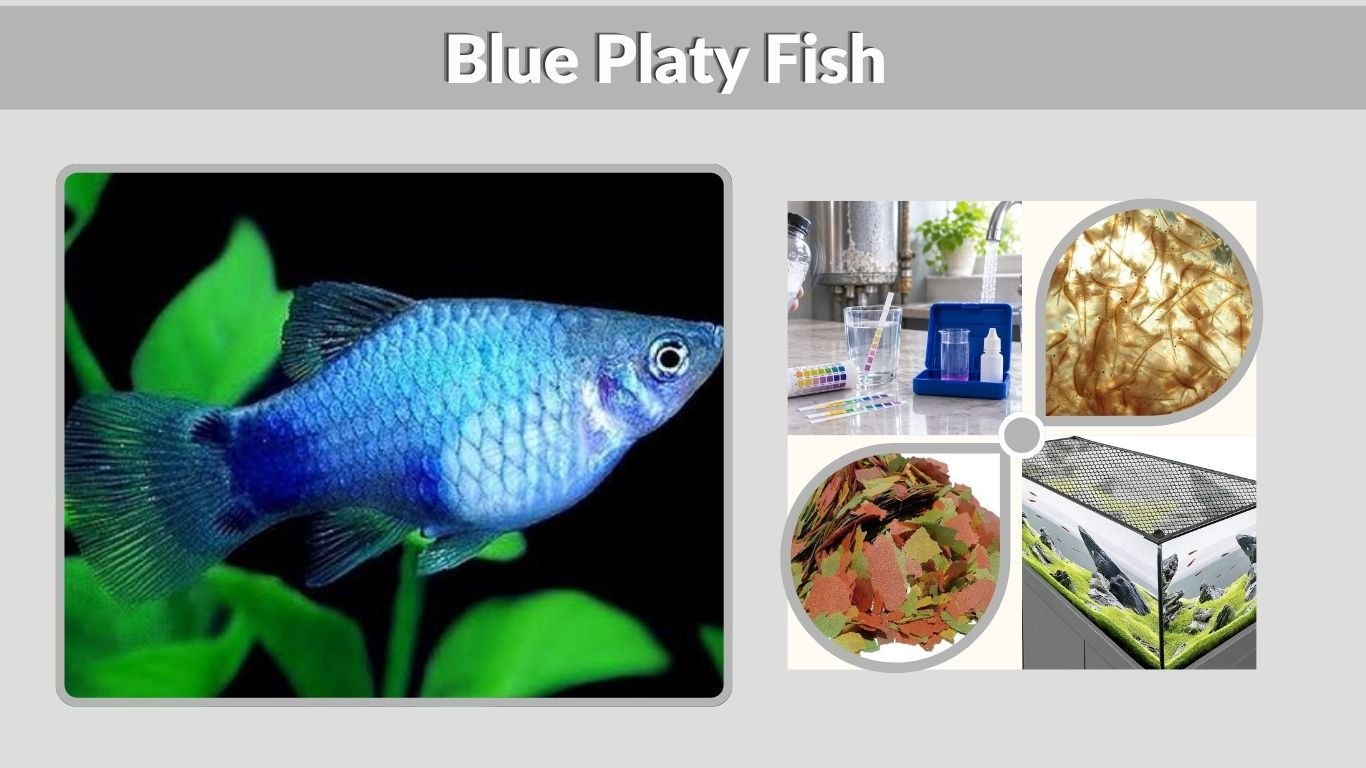
The blue platy fish is a colorful freshwater livebearer valued for its peaceful temperament, easy care, and active behavior. Rather than one naturally blue species, the name covers selectively bred platy varieties displaying blue, silver, black, or iridescent patterns. Popular forms include blue wag, coral, Mickey Mouse, tuxedo, calico, and neon blue platies. With stable water, compatible tank mates, and balanced feeding, these compact fish can thrive in beginner community aquariums and reproduce readily throughout their typical three-to-four-year lives.
Blue Platy Fish Appearance and Identification
Blue platies are usually color varieties of the southern platyfish, Xiphophorus maculatus, although some aquarium strains contain variable platy or swordtail ancestry. Their exact appearance varies considerably because breeders select them for particular colors, markings, and fin shapes. Most have compact bodies, fan-shaped tails, and an attractive blue sheen that becomes brighter under balanced aquarium lighting.
Identification Features
Blue platy fish can be recognized by the following characteristics:
- Adult size: Usually 1.5–2.5 inches long
- Body shape: Short, deep, and slightly rounded
- Primary color: Pale blue, steel blue, or deep iridescent blue
- Tail: Broad and fan-shaped
- Mouth: Small and slightly upturned
- Temperament: Peaceful, social, and constantly active
- Swimming area: Mostly the middle and upper levels
- Scientific group: Xiphophorus species and aquarium hybrids
Females are generally larger and rounder than males. Well-kept adults should have open fins, smooth scales, clear eyes, and an alert response to movement or food.
Popular Blue Platy Varieties
The blue wag platy normally has a blue body contrasted by dark or black fins. Neon blue wagtail plates display a brighter metallic shine with similar dark fins. Blue coral platies tend to have an even blue or blue-silver body, although sellers may use “coral” differently.
Blue Mickey Mouse plates carry a large dark marking near the base of the tail with two smaller spots resembling Mickey Mouse ears. Other varieties include blue tuxedo, blue calico, blue butterfly, blue moon, blue rainbow, and spotted blue platies. Because these are trade names rather than separate species, colors can vary between breeders.
Blue Platy Fish Care Requirements
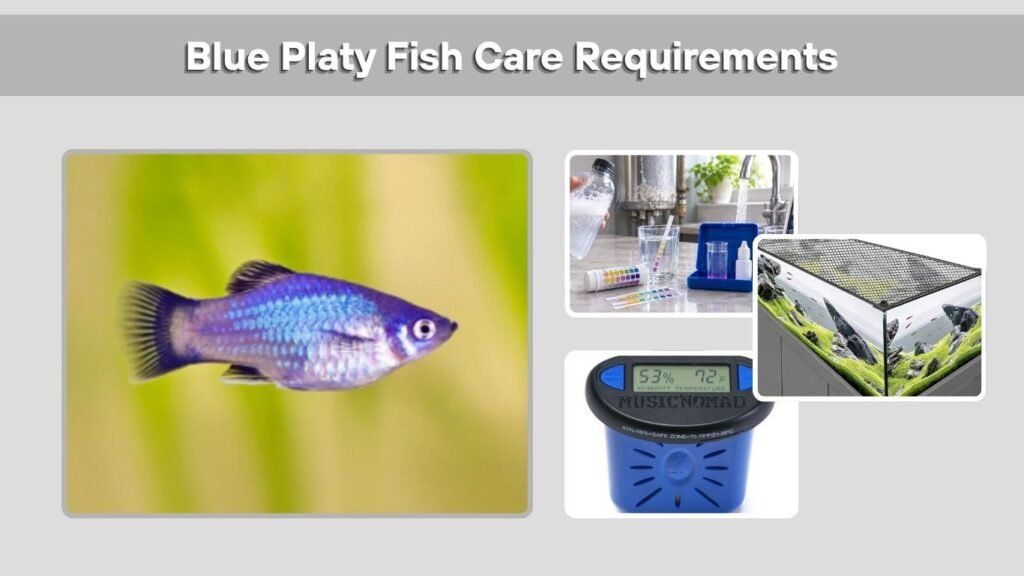
Blue platies are considered beginner-friendly, but they still require a fully cycled aquarium. They tolerate a reasonable range of conditions while performing best in clean, moderately hard, slightly alkaline water. Sudden parameter changes, overcrowding, and an immature biological filter can cause stress even when the temperature remains within the recommended range.
Tank and Water Requirements
A suitable setup should provide:
- Minimum tank: 10 gallons for a very small group; 20 gallons is preferable
- Temperature: Approximately 70–78°F (21–26°C)
- pH: About 7.0–8.0
- Water hardness: Moderate to hard
- Ammonia: 0 ppm
- Nitrite: 0 ppm
- Nitrate: Kept low through maintenance
- Filtration: Gentle but efficient biological filtration
- Decorations: Live plants, open swimming areas, and hiding places
- Tank lid: Recommended to prevent accidental jumping
FishBase describes the southern platy’s natural environment as slow-moving freshwater containing vegetation, insects, crustaceans, worms, and plant material. A planted aquarium with moderate flow therefore suits its natural behavior.
Aquarium Maintenance
Replace approximately 20–30% of the aquarium water every week, adjusting the amount according to stocking and nitrate levels. Treat new tap water with a suitable conditioner and keep its temperature reasonably close to the aquarium water.
Rinse filter media gently in removed tank water when necessary. Washing biological media under untreated tap water can damage beneficial bacteria. Avoid replacing all filter material or deep-cleaning the entire tank at once, as doing so may disrupt the nitrogen cycle.
Blue Platy Fish Diet and Feeding
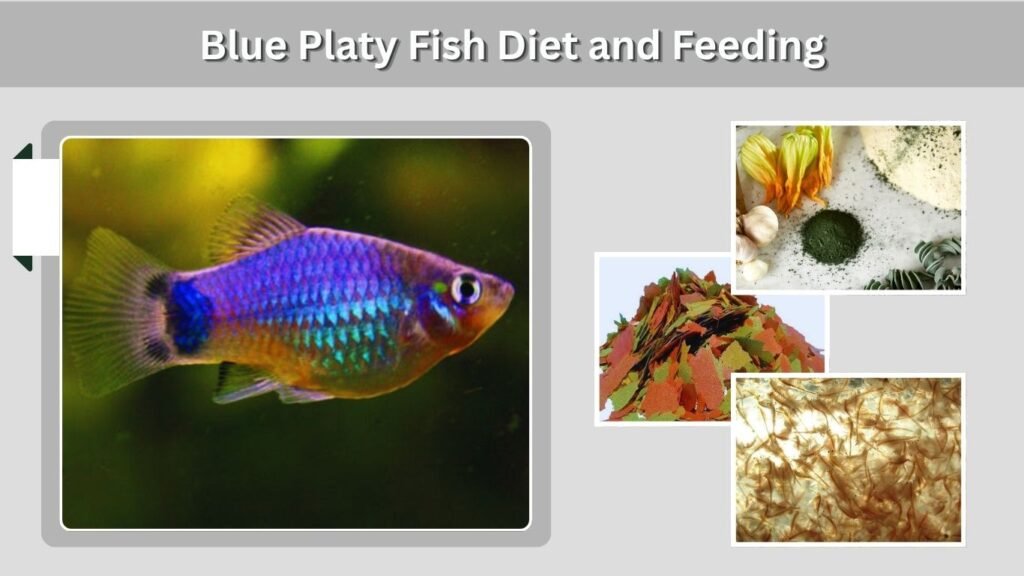
Blue plants are omnivores that accept a wide range of aquarium foods. Their diet should contain both plant-based ingredients and animal protein. Variety supports healthy growth, digestion, reproduction, and coloration, whereas continually feeding only one low-quality product can result in nutritional deficiencies.
Suitable Foods
A balanced menu can include:
- High-quality tropical flakes
- Small livebearer pellets
- Spirulina-based food
- Blanched zucchini or spinach
- Frozen or live brine shrimp
- Daphnia
- Bloodworms as an occasional treat
- Foods containing natural color-enhancing ingredients
How Often Should Blue Platies Eat?
Feed adult blue platies once or twice daily, providing only what they can consume in about one or two minutes. Remove significant leftovers before they decay and affect water quality.
Young fry need smaller portions more frequently. Powdered fry food, crushed flakes, baby brine shrimp, and microworms can support early growth. Overfeeding does not make platies grow faster safely; it usually produces waste, digestive problems, and unstable water.
Temperament and Compatible Tank Mates
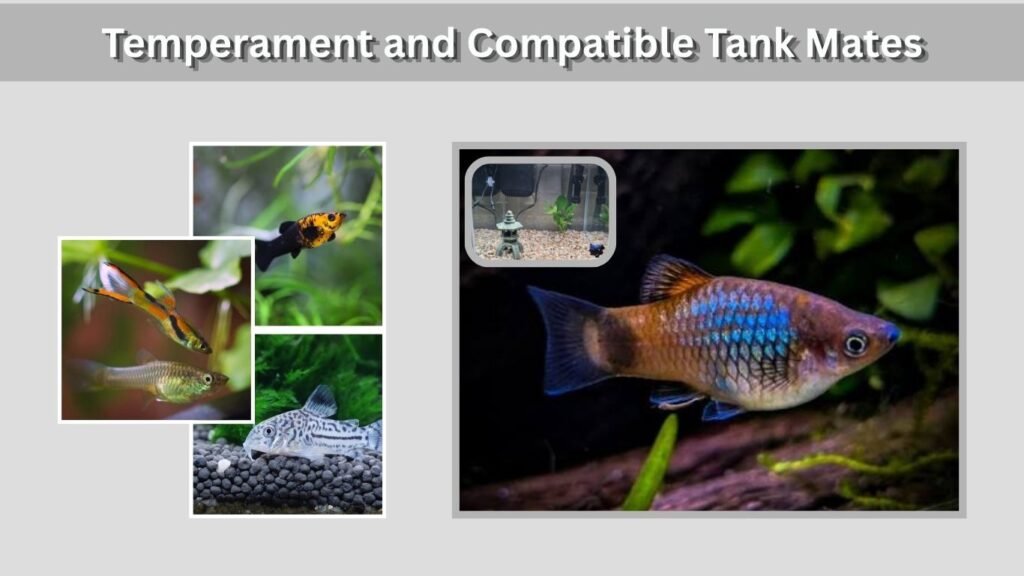
Blue platies are social community fish rather than true schooling fish. They often explore the aquarium together but do not need to swim in a tightly coordinated group. Keeping several plates encourages natural activity. However, an unsuitable male-to-female ratio can lead to persistent courtship and stress.
Best Tank Mates
Appropriate companions include:
- Other platy varieties
- Guppies and Endler’s livebearers
- Mollies in a sufficiently large aquarium
- Peaceful swordtails
- Corydoras catfish
- Bristlenose plecos
- Small rainbowfish
- Peaceful rasboras
- Nerite snails
- Some peaceful shrimp, although fry-sized shrimp may be eaten
Keep platies away from highly aggressive cichlids, large predatory fish, and persistent fin-nippers. A blue acara is much larger than a platy and may intimidate or eat small fish, particularly as it matures. Housing these species together is therefore risky and generally not recommended.
Male, Female and Pregnant Blue Platies
Sexing blue platies is relatively easy after they mature. This distinction matters because they reproduce frequently and males may constantly pursue females. A practical breeding group contains approximately one male for every two or three females, which distributes courtship attention and reduces stress.
Male Versus Female
Look for these differences:
- Male: Smaller, slimmer, and sometimes more intensely colored
- Female: Larger, deeper-bodied, and rounder around the abdomen
- Male anal fin: Narrow and pointed, forming a gonopodium
- Female anal fin: Broad and fan-shaped
- Pregnant female: Enlarged abdomen that becomes boxier near delivery
- Gravid spot: A darkened area near the rear of the abdomen, although it may be difficult to see on dark blue fish
Pregnancy and Fry Care
Blue platies are livebearers, meaning females give birth to free-swimming young instead of laying eggs. Pregnancy commonly lasts around four weeks, although temperature, age, and health affect the timing. One female may produce dozens of fry, and stored sperm can allow additional pregnancies even after males are removed.
Dense plants such as guppy grass, hornwort, or Java moss give newborn fish somewhere to hide. Adult platies may eat their fry, so a separate rearing aquarium offers better survival. A heavily planted community tank is suitable when the goal is to save only some offspring.
Buying Blue Platy Fish
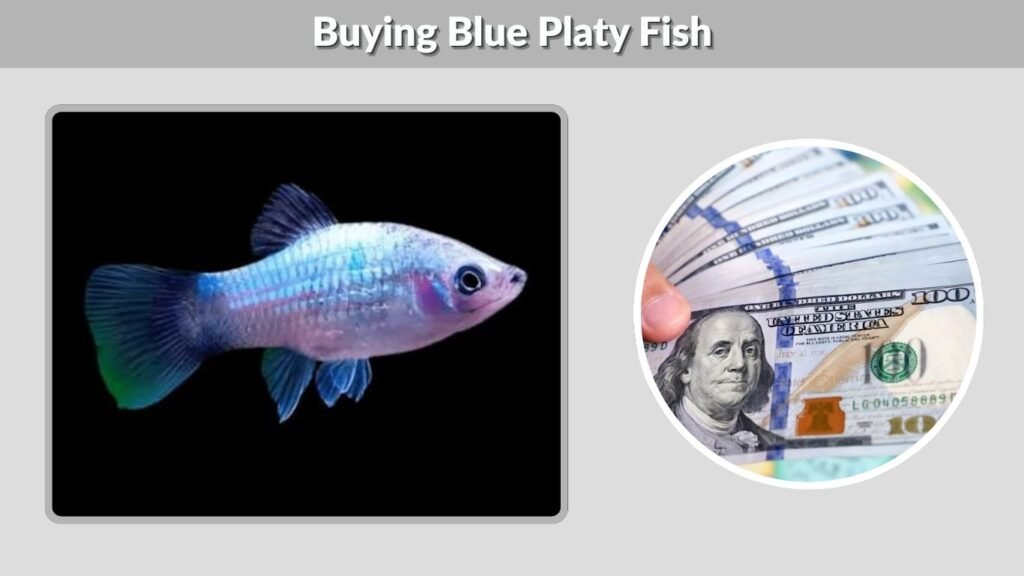
Blue platies may be available from aquarium stores, online sellers, specialty breeders, and local hobbyists. Price depends on coloration, size, strain quality, availability, and shipping. Rare neon, calico, tuxedo, or unusually bright blue lines may cost more than standard platies.
Choosing a Healthy Fish
Observe a fish before buying it. A healthy blue platy should swim normally, hold its fins open, breathe steadily, and respond to food. Avoid specimens with white spots, clamped fins, cloudy eyes, visible sores, sunken bellies, bent spines, or difficulty maintaining balance.
Quarantine new fish when possible before adding them to an established aquarium. This observation period helps prevent parasites and infections from spreading to existing livestock. It also gives newly purchased platies time to recover from transportation.
FAQs
Blue platies are simple to maintain once their basic needs are understood. The following answers cover their coloration, lifespan, social needs, breeding behavior, and suitability for new fishkeepers.
Are blue platy fish naturally blue?
Blue aquarium platies are selectively bred color varieties. Their ancestors may show more subdued natural colors, while breeders have developed metallic blue, coral, wag, tuxedo, and calico strains.
How long do blue platy fish live?
Most blue plants live approximately three to four years with clean water, proper nutrition, and low stress. Some may live longer under excellent conditions.
How many blue platies should be kept together?
Keep at least three when possible. If both sexes are present, maintain approximately one male for every two or three females to reduce excessive chasing.
How can I tell if my blue platy is pregnant?
A pregnant female develops a noticeably enlarged abdomen that may appear square near delivery. She may also hide more frequently or become less active shortly before giving birth.
Are blue platy fish suitable for beginners?
Yes. Blue platies are peaceful, adaptable, and willing to eat common aquarium foods. However, beginners must still cycle the aquarium, monitor ammonia and nitrite, perform water changes, and prepare for rapid reproduction.