
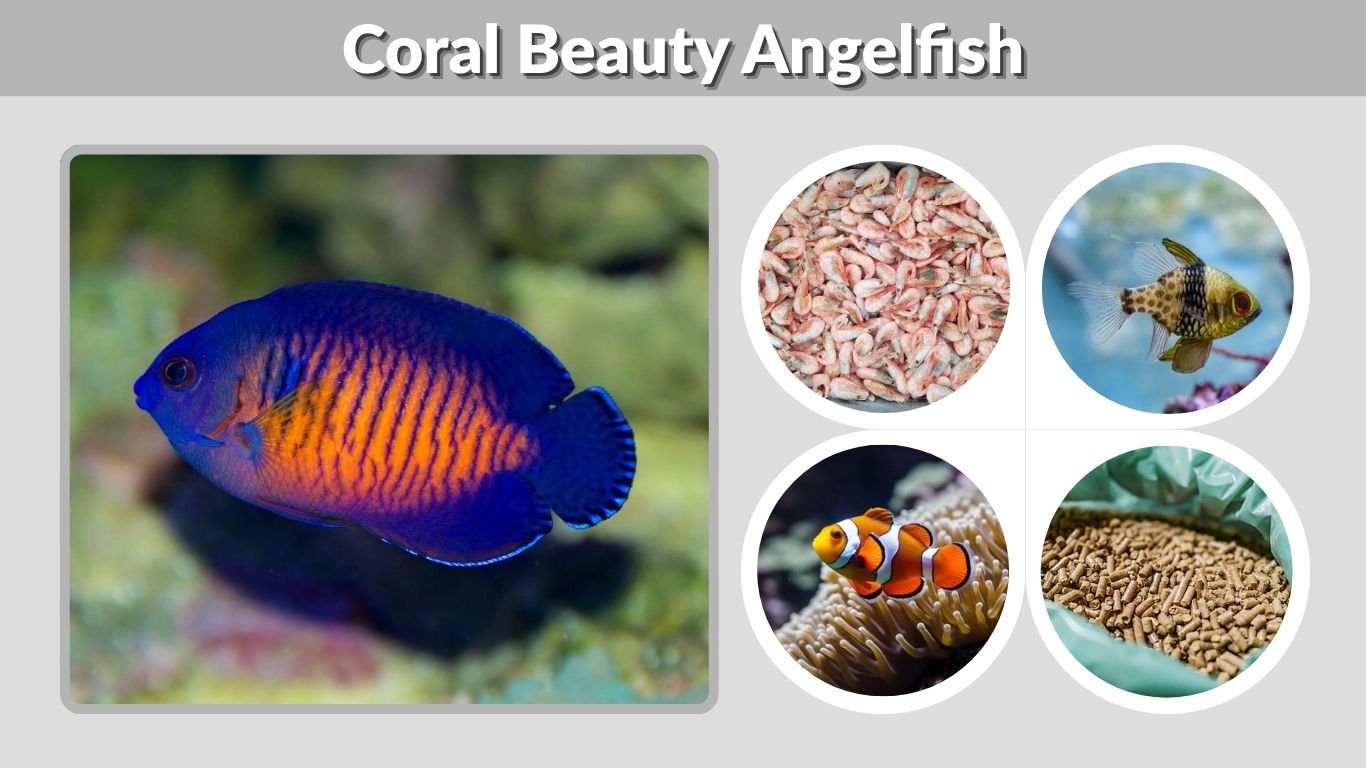
The coral beauty angelfish (Centropyge bispinosa) is a colorful marine dwarf angelfish with a deep blue or purple body, bright orange markings and blue-edged fins. Its manageable size and relatively hardy nature make it popular among saltwater aquarists. However, it requires a mature aquarium, plenty of live rock and a varied diet. It is also only reef-safe with caution, because individual fish may nip corals or clam mantles.
Coral Beauty Angelfish Facts
The coral beauty is also called the two-spined angelfish or dusky angelfish. It naturally inhabits coral-rich lagoons and outer reef slopes across much of the Indo-Pacific, from East Africa to the central Pacific. Wild fish are normally found alone, in small groups or in harems.
| Feature | Care information |
| Scientific name | Centropyge bispinosa |
| Family | Pomacanthidae |
| Adult size | About 4–4.5 inches |
| Minimum tank | Preferably 65–70 gallons |
| Temperament | Semi-aggressive |
| Diet | Omnivorous grazer |
| Reef safety | With caution |
| Temperature | Around 72–78°F |
| pH | 8.1–8.4 |
| Specific gravity | 1.020–1.025 |
FishBase records a maximum length of approximately 11.5 centimetres, or 4.5 inches. Most aquarium specimens remain close to four inches when fully grown.
Coral Beauty Angelfish Identification and Appearance
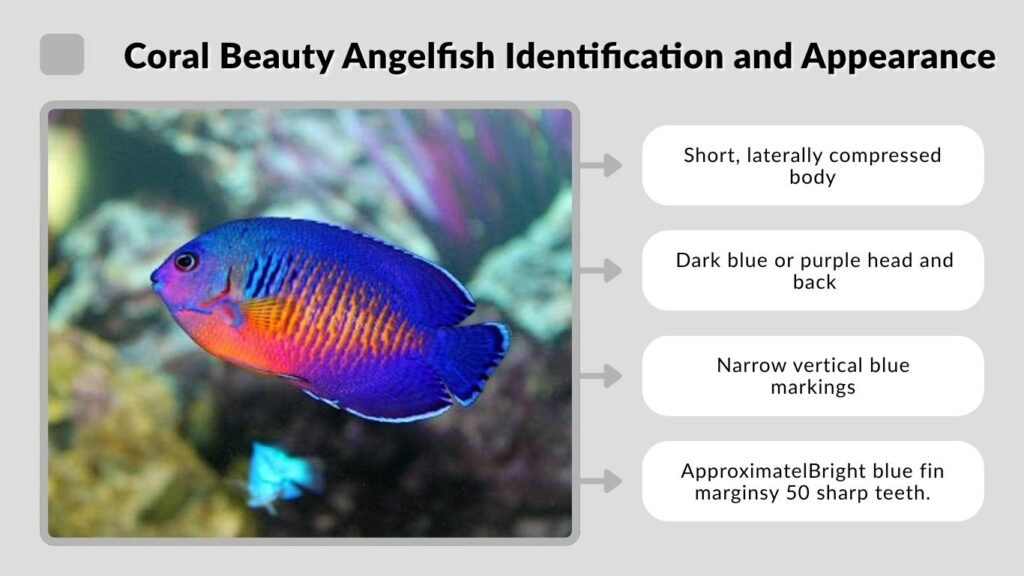
Coral beauties vary considerably in color. Some are predominantly purple-blue, while others display a brighter orange or yellow center. Most have narrow dark vertical bars across the sides and electric-blue edging on the dorsal, anal and tail fins.
Identification Features
- Short, laterally compressed body
- Dark blue or purple head and back
- Orange, yellow or reddish sides
- Narrow vertical blue markings
- Bright blue fin margins
- Small mouth adapted for grazing
- Two noticeable spines near the gill cover
Juveniles may appear brighter orange, while some adults develop deeper blue and purple coloration. Regional differences also produce variations in the intensity and distribution of their colors.
Coral Beauty Angelfish Tank Size
A mature coral beauty should ideally have a 65- to 70-gallon aquarium or larger. Although some guides list 40 gallons as the minimum, a larger tank provides more grazing surface, swimming room and separate territories. Both LiveAquaria and Biota recommend approximately 65–70 gallons for an adult.
A 20-gallon aquarium is too small for long-term care. A young fish might temporarily live in a 30- or 40-gallon setup, but it will eventually need more room. Restricted space can increase stress, territorial behavior and coral-nipping.
Ideal Tank Setup
The aquarium should be mature, stable and filled with porous live rock. Arrange the rock to create caves, crevices and shaded passages while leaving open areas for swimming.
Provide:
- A strong biological filtration system
- Moderate water movement
- Stable salinity and temperature
- Several rock caves and hiding areas
- Mature live rock containing natural algae
- Regular testing for ammonia, nitrite and nitrate
Coral beauties spend much of the day moving around rockwork and picking at algae, sponges and other edible material. An aquarium with bare decorations and little established growth does not meet this natural grazing behavior.
Water Parameters
Maintain stable marine conditions rather than allowing rapid changes.
| Water condition | Recommended range |
| Temperature | 72–78°F |
| pH | 8.1–8.4 |
| Specific gravity | 1.020–1.025 |
| Alkalinity | 8–12 dKH |
| Ammonia | 0 ppm |
| Nitrite | 0 ppm |
Perform regular partial water changes and avoid introducing the fish into a newly cycled aquarium. Sudden changes in salinity, pH or temperature can weaken the fish and make it more vulnerable to disease.
What Do Coral Beauty Angelfish Eat?
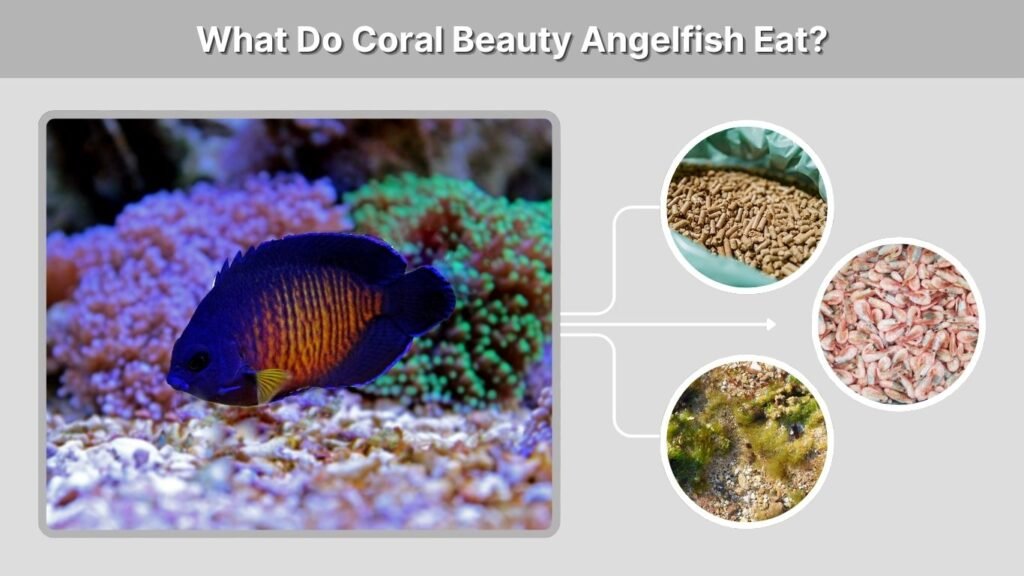
The coral beauty is an omnivore with a strong grazing habit. Wild fish feed heavily on algae, along with small organisms and material collected from reef surfaces. Aquarium fish need both vegetable-based and meaty foods.
Best Foods
- Spirulina flakes or pellets
- Marine algae sheets or nori
- High-quality dwarf-angelfish pellets
- Frozen mysis shrimp
- Enriched brine shrimp
- Chopped marine seafood
- Angelfish preparations containing sponge
- Naturally growing algae on live rock
Offer two or three small meals each day instead of one large feeding. Frequent feeding and continuous grazing opportunities may reduce the temptation to nip corals, although they cannot guarantee reef-safe behavior.
Do Coral Beauty Angelfish Eat Algae?
Yes. Coral beauties regularly graze on algae growing across aquarium rocks and surfaces. However, they should not be purchased as the primary solution to an algae problem.
They may consume some film and filamentous algae but will not necessarily control every type. A balanced aquarium still requires suitable lighting, nutrient management, maintenance and an appropriate cleanup crew.
Is the Coral Beauty Angelfish Reef-Safe?
The coral beauty is classified as reef-safe with caution. Many individuals live in reef aquariums without causing serious damage, but others repeatedly nip soft corals, large-polyp stony corals, zoanthids or clam mantles.
Risk may be lower when the aquarium contains abundant live rock and the fish receives a varied diet several times daily. However, coral-nipping is strongly influenced by the individual fish. Captive-bred specimens are often better adapted to prepared foods, but they should not automatically be considered completely reef-safe.
Watch for:
- Corals remaining closed
- Missing or damaged polyps
- Repeated picking at clam mantles
- Fish focusing on one particular coral
- Unexplained coral tissue loss
A backup plan is important because removing an established angelfish from a rock-filled reef aquarium can be difficult.
Temperament and Aggression
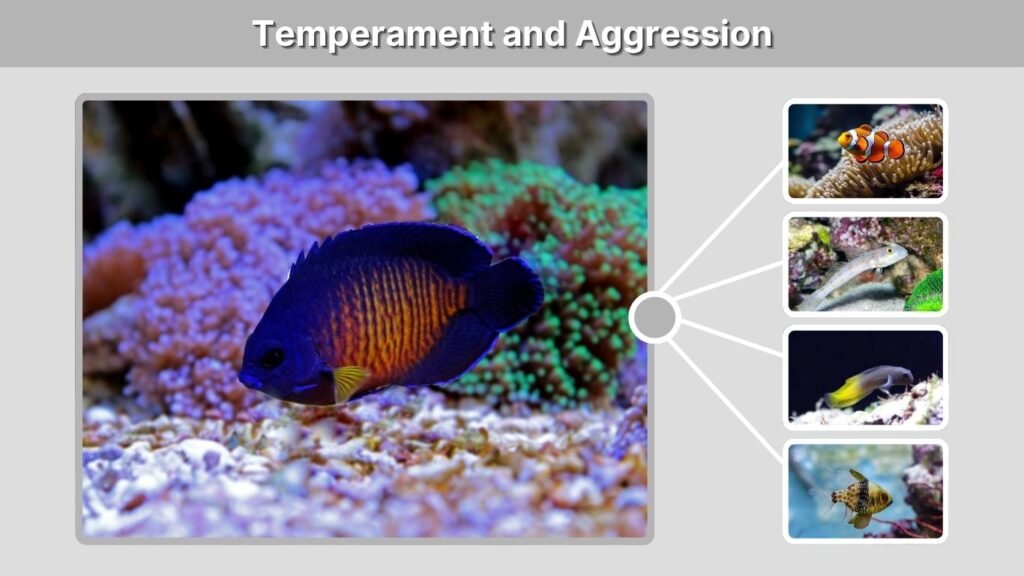
Coral beauties are semi-aggressive and may defend caves or sections of rockwork. Most aggression is directed toward other dwarf angelfish or fish with similar shapes and colors.
Suitable Tank Mates
Potential companions include:
- Clownfish
- Gobies
- Blennies
- Cardinalfish
- Chromis
- Peaceful wrasses
- Anthias
- Rabbitfish
- Tangs in sufficiently large aquariums
Clownfish and coral beauties are usually compatible when the tank provides adequate space and neither fish is excessively territorial. Biota lists clownfish among compatible companions.
Can Coral Beauty and Flame Angelfish Live Together?
Combining a coral beauty with a flame, bicolor or lemonpeel angelfish is risky. Dwarf angelfish commonly fight over territory, especially in smaller aquariums.
Keeping two species should only be attempted in a very large, carefully aquascaped tank with numerous territories. Adding them at the same time may help, but peaceful coexistence is never guaranteed.
Common Diseases
Coral beauties can develop marine ich, velvet, flukes and bacterial infections. Warning signs include white spots, rapid breathing, scratching against rocks, cloudy eyes, damaged fins, appetite loss or unusual hiding.
Quarantine new marine fish for at least 30 days before adding them to the display aquarium. Separate equipment should be used for the quarantine system. Marine ich can persist through several life stages, so treatment should be performed in a suitable hospital aquarium under guidance from an aquatic veterinarian or experienced fish-health professional.
Captive-Bred Coral Beauty Angelfish
Captive-bred coral beauties are increasingly available. They are accustomed to aquarium conditions and prepared foods, reducing pressure on wild reef populations. They may also arrive in better condition than fish that have undergone lengthy wild collection and transportation.
When choosing a fish, look for:
- Clear eyes
- Smooth, complete fins
- Steady breathing
- A rounded but not swollen belly
- Active grazing behavior
- A strong feeding response
- No white spots or skin damage
Price and Lifespan
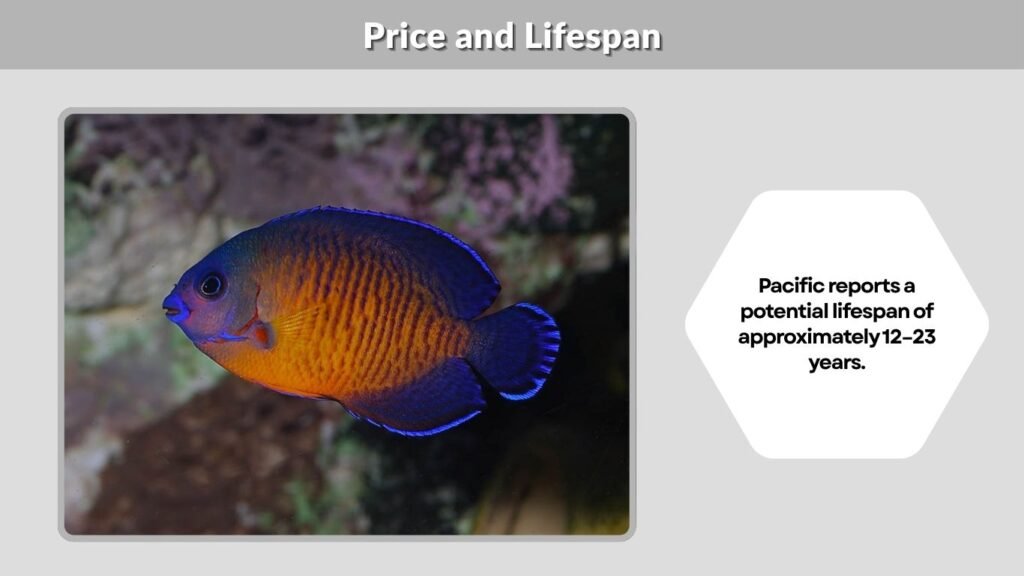
Price varies according to size, location and whether the fish is wild-caught or captive-bred. Current American listings show approximately $60 for some standard specimens, while captive-bred fish may cost around $135–$170. Prices and availability can change significantly.
A well-maintained coral beauty can live for more than ten years. The Aquarium of the Pacific reports a potential lifespan of approximately 12–23 years, although actual aquarium longevity depends on nutrition, water stability, disease prevention and tank conditions.
FAQs
Is a coral beauty angelfish suitable for beginners?
It is one of the harder dwarf angelfish, but it is better for aquarists with an established saltwater aquarium. The keeper must understand salinity, cycling, filtration, disease quarantine and reef compatibility.
How big does a coral beauty angelfish get?
Most adults reach approximately four inches, while FishBase records a maximum length of about 4.5 inches. Despite its small body, it needs considerable territory and grazing space.
Can a coral beauty live in a 30-gallon tank?
A juvenile may survive temporarily in a mature 30-gallon tank, but this is not recommended as a permanent home. An adult should preferably receive at least 65–70 gallons.
Can coral beauty angelfish live with clownfish?
Yes. Clownfish are generally suitable tank mates, provided the aquarium offers enough space and hiding places. Monitor both species because individual fish can still become territorial.
Can you keep two coral beauty angelfish together?
Keeping two together is risky because they can be aggressive toward their own species. Captive-bred pairs may work in large aquariums when introduced together, but a single coral beauty is the safer choice.