
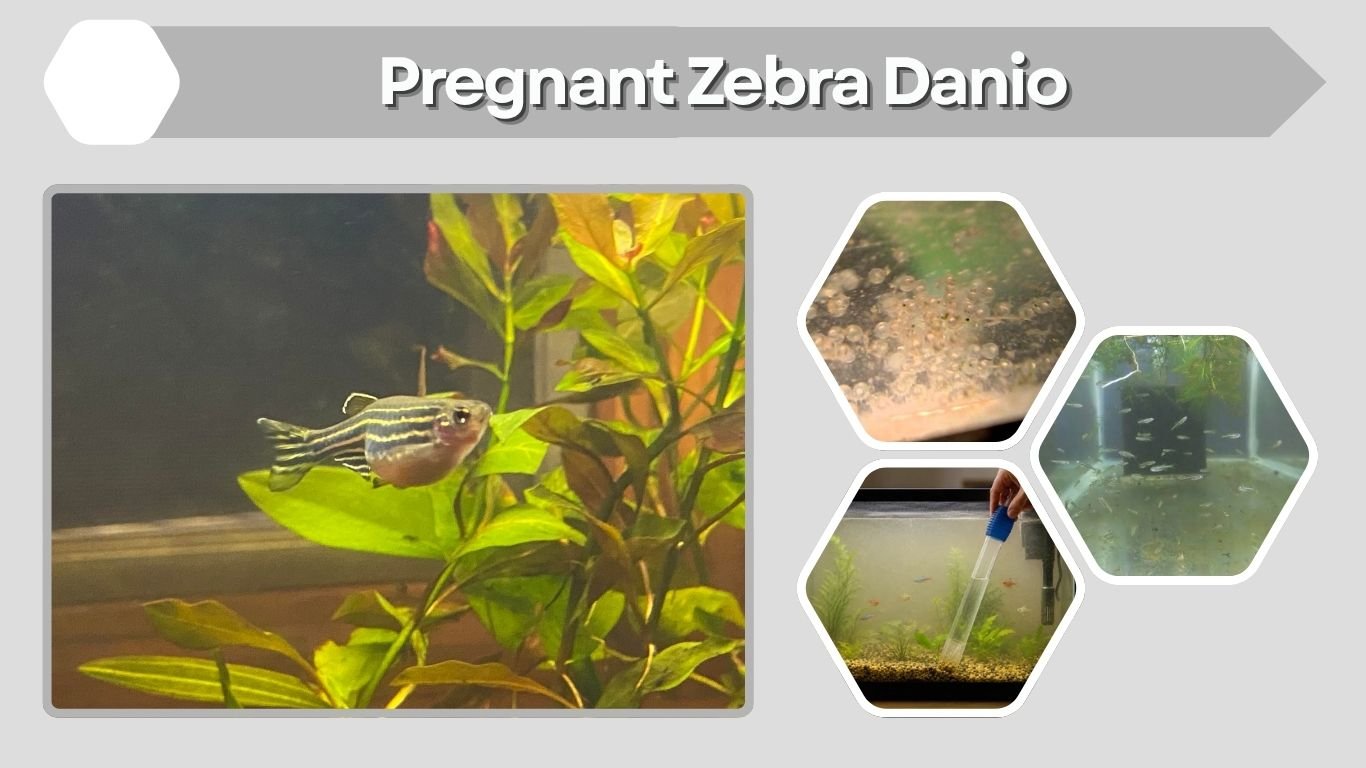
A “pregnant zebra danio” is actually a gravid female carrying unfertilized eggs, because zebra danios (Danio rerio) are egg-laying fish rather than livebearers. A female ready to spawn usually develops a noticeably rounder abdomen and may become more active when males begin chasing her. However, a swollen belly can also result from overeating or illness, so appearance alone is not always enough. This guide explains how to identify a gravid zebra danio, breeding behavior, egg laying, care, and common causes of bloating.
Can Zebra Danios Get Pregnant?
Zebra danios do not become pregnant in the way guppies, mollies, or other livebearing fish do. Females develop eggs inside their ovaries and release them during spawning. Males then fertilize the eggs externally in the water. Therefore, “gravid,” “full of eggs,” or “ready to spawn” are more accurate descriptions than pregnant.
How Zebra Danio Reproduction Works
The basic reproductive process involves:
- A female developing mature eggs
- Her abdomen becoming noticeably fuller
- A male chasing and courting the female
- The female scattering eggs
- The male releasing sperm over the eggs
- Fertilization occurring outside the female
- Embryos developing separately from their parents
Zebrafish commonly begin breeding activity after the beginning of the light period, and females carrying eggs have visibly distended abdomens.
How Long Is a Zebra Danio Pregnant?
There is no true pregnancy or gestation period.
Females continuously develop eggs when mature, healthy, and well fed. Under suitable conditions they can spawn frequently, commonly around the beginning of the daylight cycle. Research husbandry protocols even describe females producing and potentially reabsorbing eggs on a regular cycle.
So, if your zebra danio looks pregnant for several days, she may simply be carrying mature eggs while waiting for appropriate spawning conditions.
What Does a Pregnant Zebra Danio Look Like?
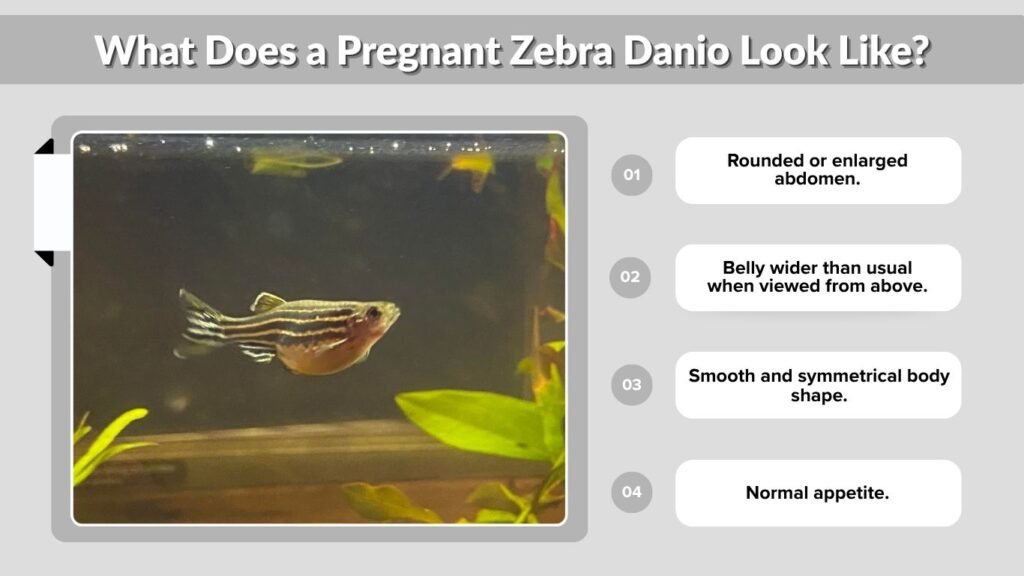
A gravid female becomes noticeably rounder through the abdomen. The swelling should usually look smooth and relatively symmetrical rather than sharply localized. Females are naturally fuller-bodied than males, so comparing several mature fish in the same aquarium can make identification easier.
Signs of a Gravid Female
Look for several signs together:
- Rounded or enlarged abdomen
- Belly wider than usual when viewed from above
- Smooth and symmetrical body shape
- Normal appetite
- Normal swimming behavior
- Increased attention from males
- Males chasing her, especially around morning
- Female appearing slimmer soon after spawning
A documented adult gravid female zebrafish shows a clearly distended abdomen and a more prominent cloacal area.
Female vs Male Zebra Danio
Adult females generally have a deeper, fuller body, especially when carrying eggs. They often appear more silvery through the abdomen.
Males tend to be:
- Slimmer
- More streamlined
- Slightly more golden or yellow
- More active during courtship
A naturally plump female should not automatically be assumed to be ready to spawn every time her abdomen appears large.
Pregnant Zebra Danio or Bloated?
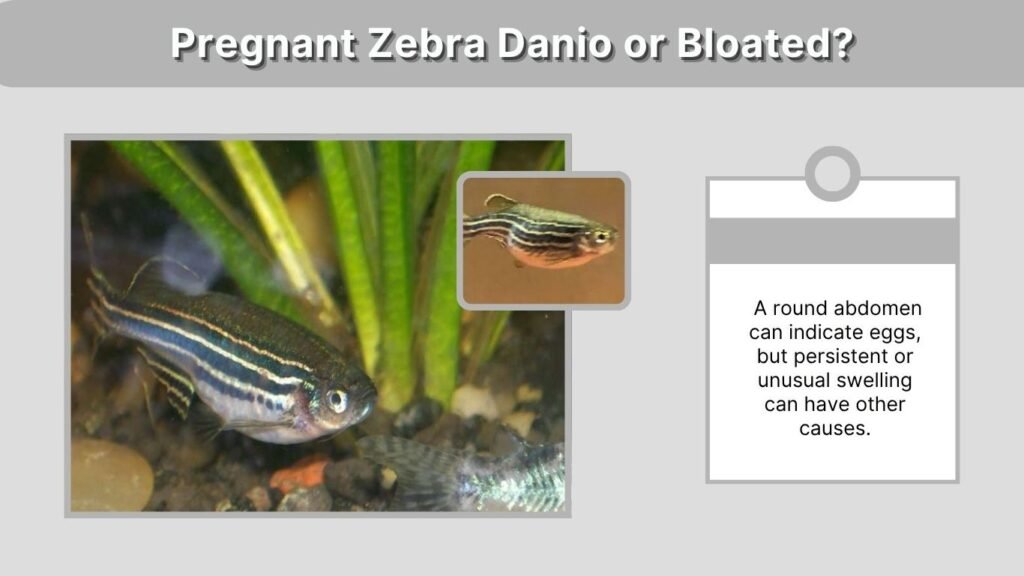
This distinction is especially important. A round abdomen can indicate eggs, but persistent or unusual swelling can have other causes. Consider the fish’s behavior, appetite, scales, feces, and whether the swelling changes after spawning rather than relying only on belly size.
Signs It May Be Eggs
Egg-related fullness is more likely when:
- The fish is a mature female
- Her belly is evenly rounded
- She continues eating normally
- Swimming remains normal
- Males actively court her
- Other fish appear healthy
- She becomes slimmer after spawning
A female that successfully releases eggs should usually show an obvious reduction in abdominal fullness afterward.
Signs the Fish May Be Bloated or Ill
Be more cautious if you notice:
- Extreme or rapidly increasing swelling
- Scales sticking outward
- Loss of appetite
- Difficulty swimming
- Remaining at the surface or bottom
- Rapid breathing
- Abnormal feces
- Redness, sores, or other visible changes
Overfeeding, digestive problems, internal disease, or fluid accumulation can all create a “pregnant-looking” abdomen.
If severe swelling is accompanied by raised scales, breathing problems, marked lethargy, or loss of balance, treat it as a health problem rather than assuming the fish is carrying eggs.
Pregnant Zebra Danio Behavior Before Spawning
Behavior can provide stronger clues than appearance alone. Zebra danios are active egg-scattering fish, and courtship becomes especially noticeable around spawning. Males pursue females and perform coordinated movements that encourage egg release.
Signs Spawning May Be Near
Common behaviors include:
- Males chasing females
- Faster swimming
- Increased activity after lights turn on
- Male and female swimming closely together
- Brief body-to-body contact
- Female moving toward spawning areas
- Sudden reduction in the female’s belly afterward
Detailed studies of zebrafish courtship show males using coordinated body movements around gravid females to stimulate egg release.
How to Care for a Gravid Zebra Danio
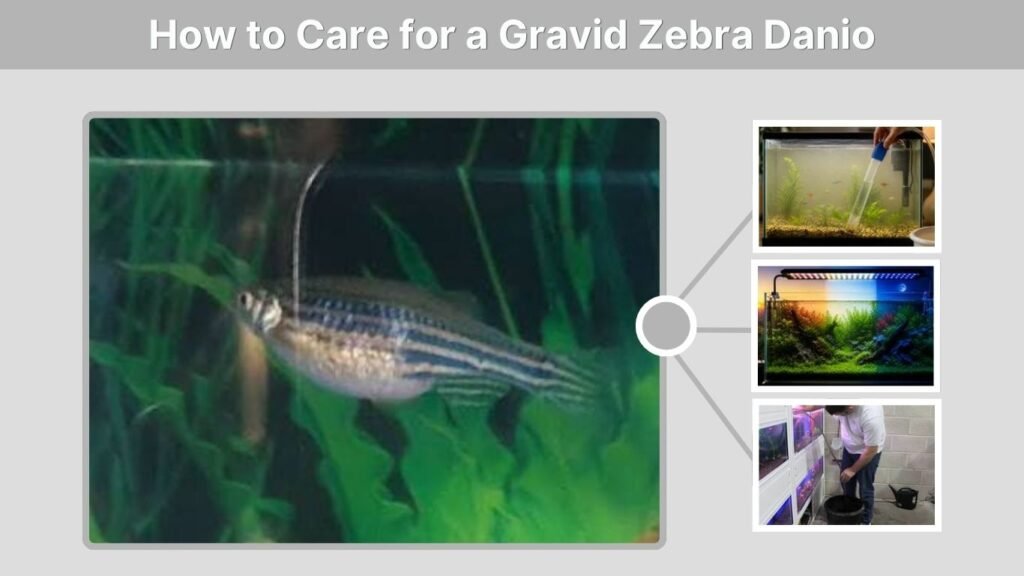
Most gravid females do not require special treatment. Good water quality, appropriate nutrition, enough swimming space, and suitable companions are generally more useful than frequently catching or handling the fish.
Basic Care
Provide:
- Clean, stable aquarium water
- Appropriate filtration
- Regular partial water changes
- A varied, nutritious diet
- A group of zebra danios rather than keeping one alone
- Plants or other cover
- Consistent day-night lighting
- Low stress
Do not squeeze a pet zebra danio’s abdomen to try to force eggs out. Techniques used in research facilities involve specialized handling and should not be copied casually at home because excessive pressure can injure the fish.
Feeding Before Breeding
A varied diet can help condition adult fish for spawning. Suitable foods include good-quality flakes or small pellets supplemented with appropriately sized frozen or live foods.
Avoid excessive feeding simply because the female is producing eggs. Overfeeding can cause bloating and make it much harder to distinguish a healthy gravid belly from digestive problems.
Zebra Danio Eggs and Spawning
Zebra danios are egg scatterers and provide essentially no parental care. Eggs fall through plants, gravel, mesh, or other structures after being released. Unfortunately, adults will readily eat exposed eggs, which is why breeders usually separate the parents from eggs they want to raise.
What Happens During Spawning?
During spawning:
- The female releases eggs into the water.
- The male fertilizes them externally.
- Eggs fall toward the aquarium bottom.
- Adults may immediately search for and eat eggs.
- The female becomes noticeably slimmer afterward.
Research breeding systems commonly use marbles or similar barriers so eggs can fall into gaps beyond the adults’ reach.
How to Protect Zebra Danio Eggs
If you want fry, a dedicated breeding setup is more reliable than a community aquarium.
You can use a bottom layer or barrier that lets eggs fall out of reach of the adults. Fine plants or spawning material can also provide protection.
Once spawning is complete, remove the adults rather than expecting them to guard their offspring.
Zebra Danio Eggs and Baby Fish
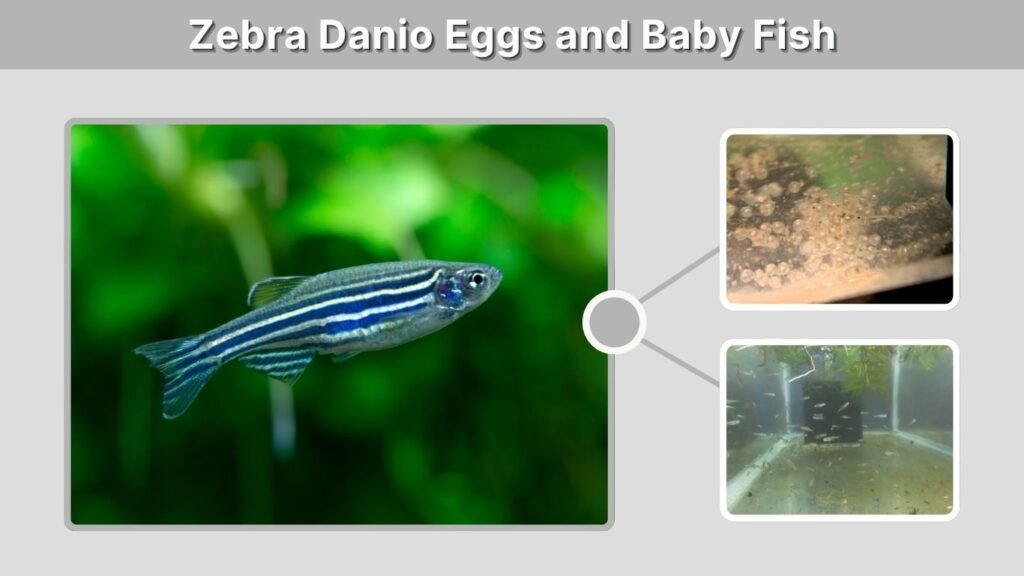
Egg development begins immediately after successful fertilization. Temperature and water conditions influence the exact timing, but the embryos develop rapidly compared with many aquarium fish.
What Do the Eggs Look Like?
Healthy developing zebra danio eggs are tiny and somewhat translucent. Unfertilized or failed eggs may become opaque or whitish.
Avoid disturbing developing eggs unnecessarily and maintain clean, stable water.
When Do Zebra Danio Eggs Hatch?
Hatching typically occurs within a few days under suitable warm conditions. Newly hatched larvae remain tiny and are initially poor swimmers.
Once the fry become free-swimming, they need extremely small foods that fit their mouths. Suitable early foods can include infusoria or specialized powdered fry food, followed later by foods such as newly hatched brine shrimp as the fry grow.
GloFish, Golden and Longfin Zebra Danios
Different color and fin varieties can cause additional confusion, but their reproductive biology remains essentially the same when they are varieties derived from Danio rerio. A pink GloFish danio, golden zebra danio, or longfin zebra danio carrying eggs may therefore develop the same characteristic rounded female abdomen.
Are GloFish Zebra Danios Pregnant?
They are not truly pregnant either. A female GloFish zebra danio can become gravid with eggs and spawn in essentially the same way as other zebra danios.
Color does not change the fundamental breeding process: eggs are released by the female and fertilized externally.
FAQs
Because female zebra danios can become dramatically round when full of eggs, owners frequently mistake them for livebearing fish. Watching body shape together with behavior is the best way to distinguish a healthy gravid female from an aquarium fish that is simply bloated.
How can I tell if my zebra danio is pregnant?
A mature female carrying eggs usually has a smooth, noticeably rounded abdomen while continuing to swim and eat normally. Males may also chase her more frequently.
Do zebra danios give birth to live babies?
No. Zebra danios scatter eggs, which are fertilized externally. They do not give birth to live fry.
How long do zebra danios stay pregnant?
They do not have a pregnancy period. Females develop and hold eggs until spawning conditions encourage egg release.
Why is my female zebra danio so fat?
She may be carrying eggs, but overeating or a health problem can also cause enlargement. A healthy gravid female usually remains active and develops a smooth, symmetrical belly.
What should I do if my zebra danio is carrying eggs?
Maintain excellent water quality and good nutrition. If you want to raise fry, prepare a separate breeding setup that protects scattered eggs from adults, because zebra danios commonly eat their own eggs.