
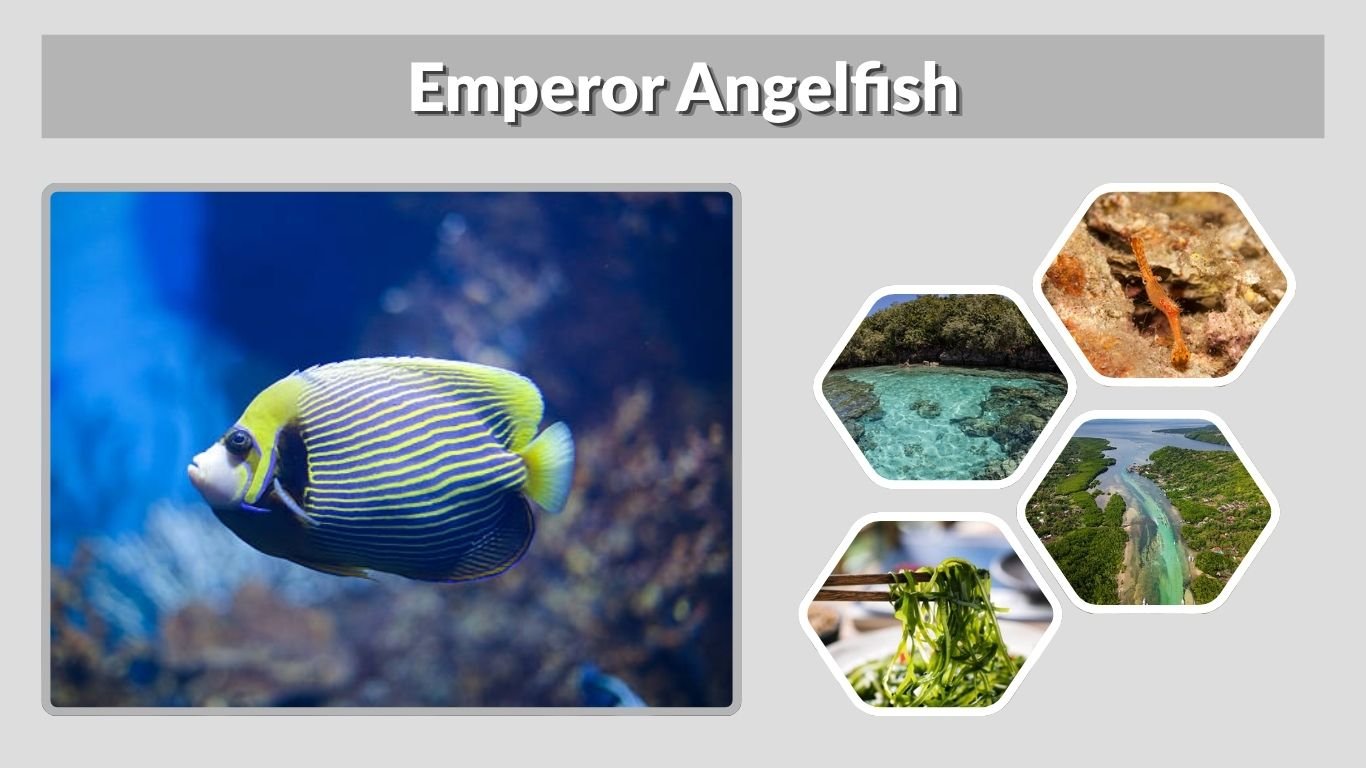
The emperor angelfish is one of the most recognizable saltwater fish, admired for its brilliant colors and dramatic transformation from juvenile to adult. Scientifically known as Pomacanthus imperator, this large marine angelfish requires a spacious, mature aquarium, stable water conditions, a varied diet, and carefully selected tank mates. Although it can become an impressive centerpiece fish, its territorial behavior, specialized feeding needs, and tendency to nip corals make it better suited to experienced marine aquarists.
Emperor Angelfish Quick Facts
Emperor angelfish are vertebrate marine fish belonging to the family Pomacanthidae. They naturally inhabit tropical coral reefs across a wide area of the Indo-Pacific, including the Red Sea, East Africa, Australia, Southeast Asia, and many Pacific islands.
| Feature | Information |
| Common name | Emperor angelfish |
| Scientific name | Pomacanthus imperator |
| Family | Pomacanthidae |
| Water type | Saltwater |
| Maximum wild size | Approximately 15–16 inches |
| Minimum aquarium size | About 220 gallons |
| Diet | Omnivore, especially sponges and encrusting organisms |
| Temperament | Semi-aggressive and territorial |
| Reef safe | Generally no; may be kept with caution |
| Care level | Intermediate to advanced |
FishBase records a maximum length of approximately 40 cm and a maximum reported age of 14 years, although lifespan in captivity depends heavily on water quality, nutrition and overall care.
What Does an Emperor Angelfish Look Like?
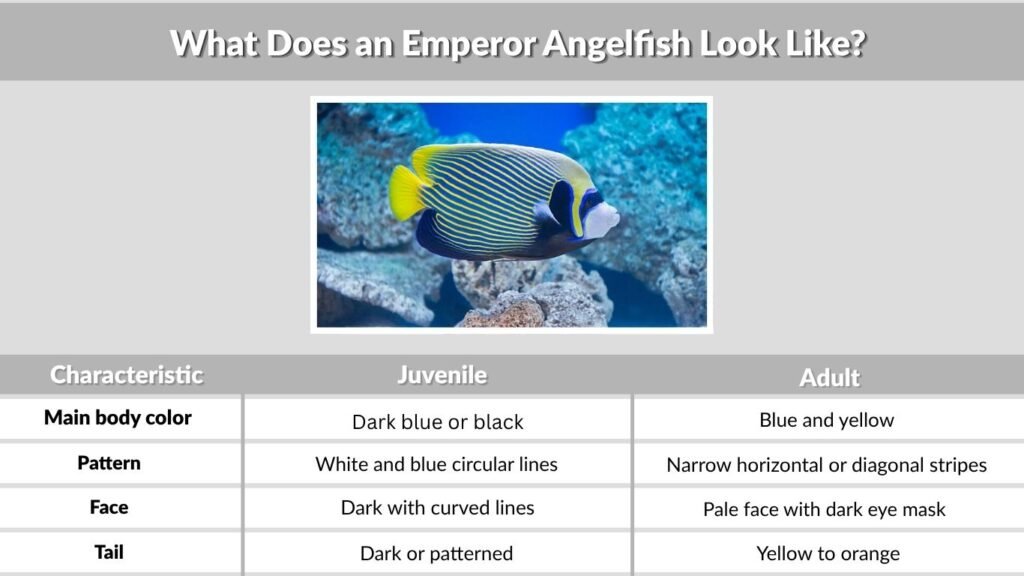
Few aquarium fish change as dramatically as the emperor angelfish. A juvenile can look so different from an adult that inexperienced aquarists may believe they are separate species.
Juvenile Emperor Angelfish
Juveniles have dark blue or almost black bodies covered with curved white and electric-blue lines. These lines form circular or semicircular patterns around the rear portion of the body. Their unusual pattern provides strong contrast while they shelter under reef ledges and inside small cavities.
Adult Emperor Angelfish
Adults develop alternating yellow and blue horizontal or diagonal stripes. A dark mask crosses the eyes, the face becomes pale blue or whitish, and the tail turns yellow to orange. A dark band also develops behind the head.
Juvenile vs Adult Emperor Angelfish
| Characteristic | Juvenile | Adult |
| Main body color | Dark blue or black | Blue and yellow |
| Pattern | White and blue circular lines | Narrow horizontal or diagonal stripes |
| Face | Dark with curved lines | Pale face with dark eye mask |
| Tail | Dark or patterned | Yellow to orange |
| Typical behavior | Secretive and shelter-oriented | Bold and increasingly territorial |
The transformation happens gradually. During the changing stage, yellow stripes begin appearing over the juvenile circular pattern, producing a mixture of juvenile and adult markings.
Emperor Angelfish Natural Habitat and Distribution
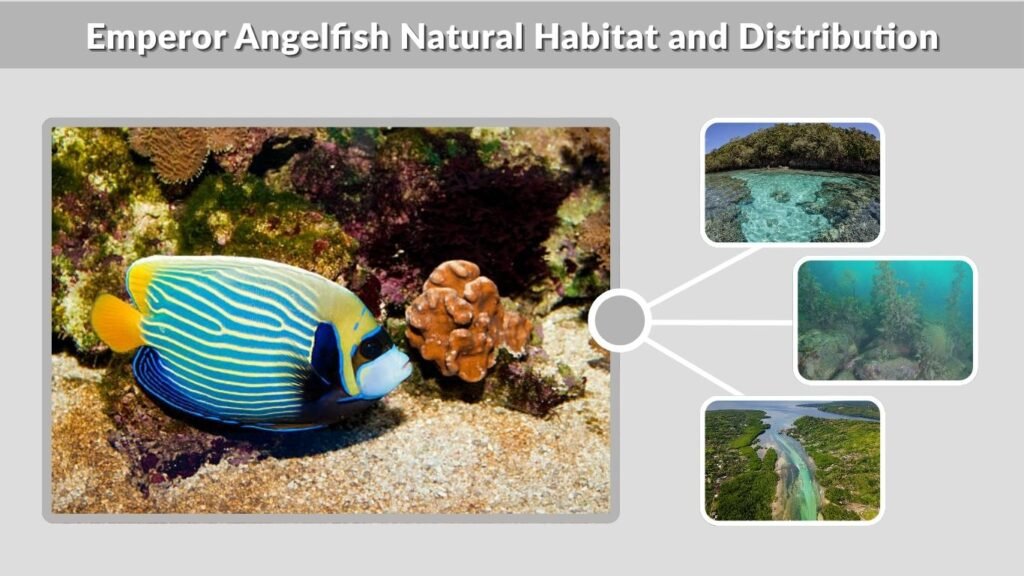
Emperor angelfish live around coral-rich lagoons, channels, outer reef flats and seaward reefs. Juveniles usually remain beneath ledges or inside holes in relatively sheltered areas. Subadults move toward reef fronts and surge channels, while large adults commonly occupy caves and ledges surrounded by abundant coral growth.
The species is native to the Indian and Pacific Oceans. Its distribution extends from the Red Sea and East African coast across Southeast Asia and Australia to central Pacific islands. It is a true marine fish and cannot survive in a freshwater aquarium.
Emperor Angelfish Care
This species needs more than a large container of saltwater. Its aquarium should recreate the shelter, grazing surfaces and swimming room found on a coral reef.
Tank Size
A minimum tank size of approximately 220 gallons is recommended for a long-term adult setup. Smaller juveniles are sometimes temporarily housed in smaller aquariums, but they grow into large, active fish and should not be purchased without a suitable adult-sized tank already planned.
The aquarium should be long enough for unrestricted swimming and contain:
- Substantial biological filtration
- Strong water movement and oxygenation
- Large open swimming areas
- Securely arranged live rock
- Several deep caves and shaded retreats
- A covered or protected equipment area
Avoid filling the entire tank with rock. The fish needs hiding places, but an adult also requires considerable open space to turn and swim comfortably.
Water Parameters
Stable conditions are more important than chasing an exact number every day.
| Water condition | Recommended range |
| Temperature | 72–78°F or 22–26°C |
| pH | 8.1–8.4 |
| Specific gravity | 1.020–1.025 |
| Alkalinity | Approximately 8–12 dKH |
| Ammonia and nitrite | 0 ppm |
Use a fully cycled, mature aquarium with dependable filtration. Sudden changes in temperature, salinity or pH can cause stress, appetite loss and increased vulnerability to disease.
Acclimation
Choose an alert specimen that is swimming normally and already accepting food. Slowly acclimate it to the aquarium’s salinity and temperature. Quarantine is strongly recommended because marine angelfish can carry parasites or develop disease after the stress of transport.
Provide a dark cave immediately after introduction. The fish may remain hidden or refuse food during its first few days, especially when placed in a brightly lit aquarium without adequate shelter.
What Do Emperor Angelfish Eat?
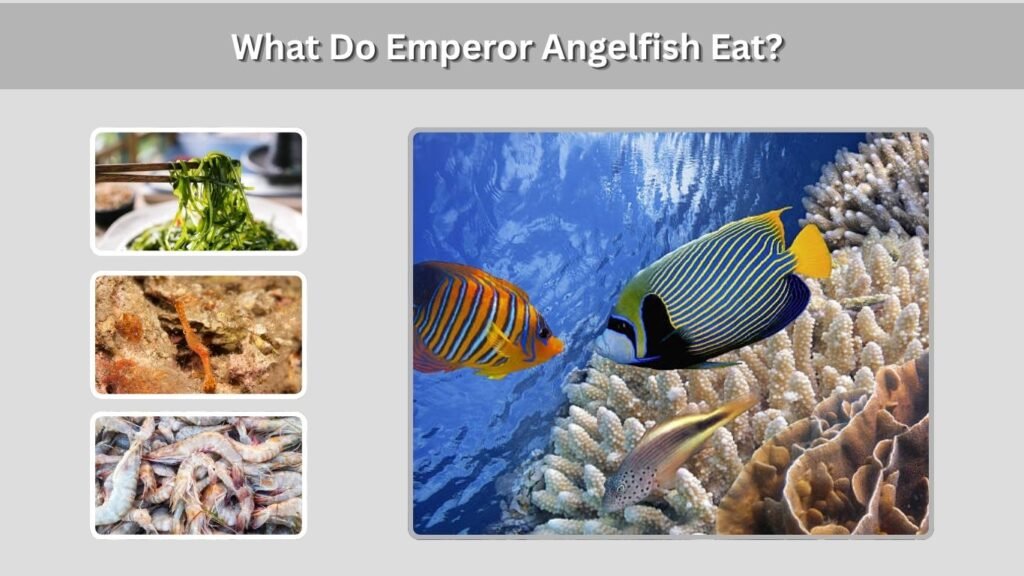
In the wild, emperor angelfish feed heavily on sponges, tunicates and other encrusting reef organisms. Their diet may also include algae and small invertebrates found among these growths.
A captive diet should include:
- Marine angelfish formulas containing sponge
- Spirulina and marine algae
- Nori or other seaweed
- Mysis shrimp
- Chopped marine shrimp
- Enriched frozen preparations
- High-quality marine pellets
Offer several small meals rather than one oversized feeding. A varied diet supports healthy growth, stronger coloration and a better transition from juvenile to adult markings. Live rock also gives the fish opportunities to graze between meals.
Are Emperor Angelfish Aggressive?
Emperor angelfish are considered semi-aggressive. Adults can become territorial around caves, feeding areas and preferred sections of the aquarium. They may chase peaceful fish or fight with similar-looking angelfish, particularly when space is limited.
Suitable tank mates may include appropriately sized tangs, larger wrasses, rabbitfish, groupers and other robust marine fish. Individual compatibility varies, so every new introduction must be monitored.
Avoid placing an emperor angelfish with:
- Very small fish that may be intimidated
- Extremely peaceful or slow-feeding species
- Other large angelfish in an undersized aquarium
- Fish with similar body shapes and colors
- Aggressive species capable of seriously injuring it
Introducing the emperor angelfish after more peaceful residents have settled may reduce its ability to claim the entire aquarium.
Is an Emperor Angelfish Reef Safe?
Emperor angelfish are not considered reliably reef safe. They may nip at soft corals, large-polyp stony corals, zoanthids, clam mantles and other stationary invertebrates. Some individuals cause limited damage, while others repeatedly consume or injure valuable corals.
A well-fed specimen may still pick at corals because grazing is natural behavior rather than simply a response to hunger. Fish-only-with-live-rock aquariums are therefore the safest choice. Keeping one in a reef tank should be treated as an experiment requiring close observation and a removal plan.
Lifespan and Health
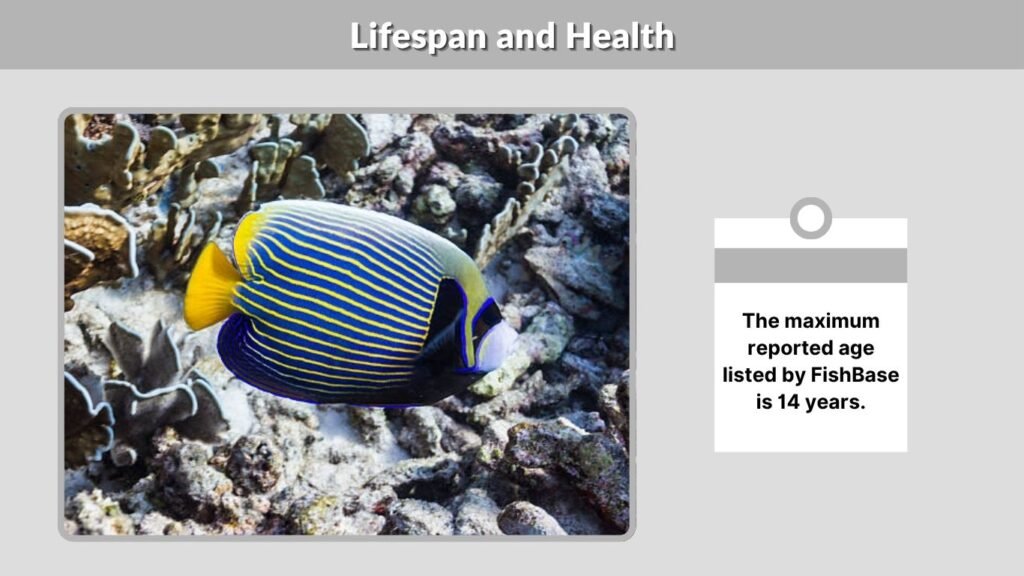
The maximum reported age listed by FishBase is 14 years, showing that emperor angelfish can become a long-term commitment. Clean water, an appropriate diet and sufficient space have a major influence on longevity.
Common warning signs include:
- Refusing food for several days
- Rapid breathing
- Cloudy eyes
- White spots or dusty skin
- Frayed fins
- Scratching against rocks
- Faded coloration
- Remaining hidden continuously
Poor nutrition can contribute to color loss and gradual weight reduction. Maintaining stable salinity, offering sponge-based foods and quarantining new livestock can reduce many preventable health problems.
FAQs
How big do emperor angelfish get?
Emperor angelfish can reach approximately 15–16 inches in the wild. Aquarium specimens may remain somewhat smaller, but they are still large, deep-bodied fish that need considerable swimming room. Their eventual adult size is why a tank of around 220 gallons or larger is recommended.
Can emperor angelfish live in freshwater?
No. Emperor angelfish are saltwater reef fish and cannot live in freshwater. They require marine salinity, an alkaline pH and stable tropical temperatures. They should not be confused with freshwater angelfish, which are South American cichlids with completely different environmental and care requirements.
How long does an emperor angelfish take to change color?
The color transformation is gradual and varies according to the fish’s growth, age, diet and environment. Transitional individuals display both juvenile circles and emerging yellow adult stripes. The process may take several months or longer rather than occurring suddenly.
What is the best food for an emperor angelfish?
The best diet combines sponge-containing marine angelfish food, marine algae, spirulina and meaty foods such as mysis or chopped shrimp. Feeding a varied selection several times daily is preferable to relying on a single pellet or frozen product.
Can two emperor angelfish live together?
Keeping two is risky unless the aquarium is exceptionally large and the fish form a compatible pair. Unrelated adults may fight over territory. Most home aquarists should keep only one emperor angelfish and avoid combining it with other large Pomacanthus species in limited space.