
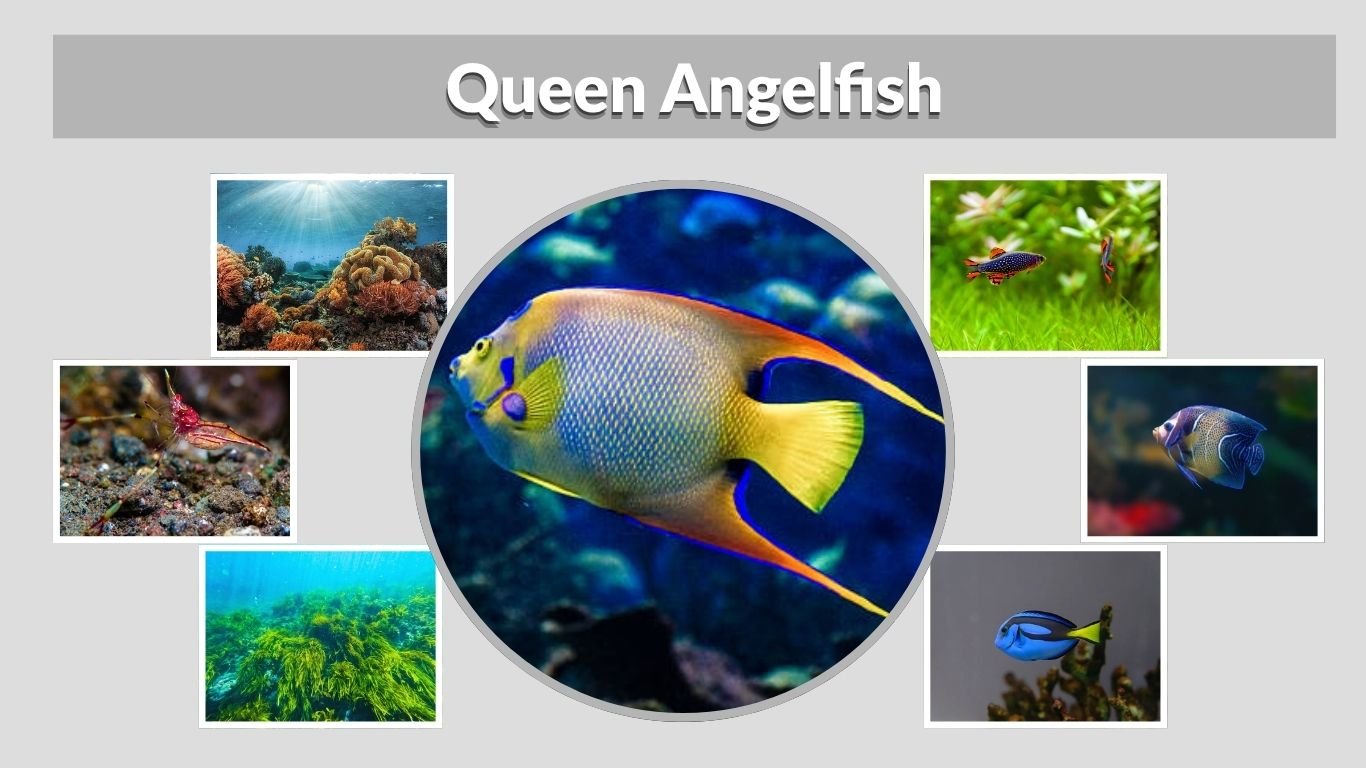
The queen angelfish is a spectacular saltwater fish known for its electric-blue markings, golden-yellow tail, and crown-like spot above its eyes. Scientifically named Holacanthus ciliaris, it naturally inhabits coral reefs in the western Atlantic and Caribbean. Although beautiful, this large and territorial species requires a spacious, mature aquarium, excellent water quality, and a specialized diet. Its adult size and habit of nipping corals make it more suitable for experienced marine fishkeepers than beginners.
Queen Angelfish Quick Facts
Queen angelfish are large marine fish belonging to the Pomacanthidae family. They are sometimes called golden angelfish, yellow angelfish, queen angels, or blue angelfish, although the true blue angelfish is a separate species.
| Feature | Information |
| Scientific name | Holacanthus ciliaris |
| Family | Pomacanthidae |
| Water type | Saltwater |
| Common adult length | Around 12 inches |
| Maximum recorded length | About 18 inches |
| Temperament | Semi-aggressive and territorial |
| Diet | Omnivore, mainly sponges in the wild |
| Minimum tank size | Approximately 120 gallons |
| Reef safe | No |
| Care level | Intermediate to advanced |
FishBase reports a common length of approximately 30 centimetres and a maximum length of 45 centimetres, or nearly 18 inches.
What Does a Queen Angelfish Look Like?
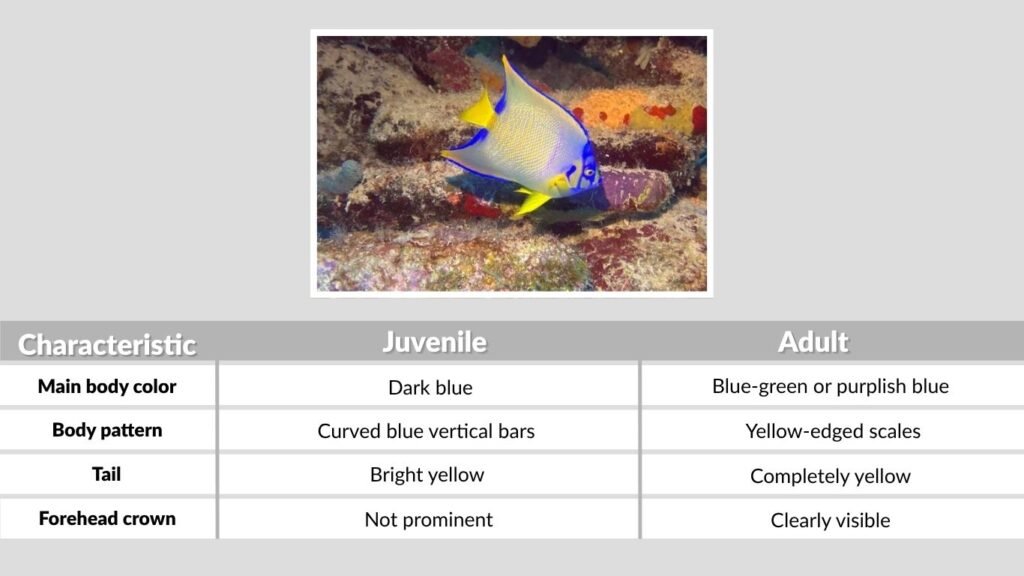
The queen angelfish has a deep, compressed body that allows it to move between corals, sea fans, caves, and narrow reef spaces. Its appearance changes significantly as it grows.
Adult Queen Angelfish
Adults are mainly blue-green or purplish blue, with yellow-orange edges around their scales. Their tails and pectoral fins are yellow, while electric-blue markings outline parts of the face and fins.
The easiest identification feature is the dark circular mark on the forehead. This spot contains blue dots and is surrounded by an electric-blue ring, creating the appearance of a small crown.
Juvenile Queen Angelfish
Juveniles look very different from adults. They have dark blue bodies, yellow tails, yellow coloring near their pectoral fins, and several bright-blue vertical bars.
Young queen and blue angelfish appear similar. However, juvenile queen angelfish usually have curved body bars, while juvenile blue angelfish have straighter bars. Young queens may also establish cleaning stations where they remove external parasites from larger fish.
Juvenile vs Adult Queen Angelfish
| Characteristic | Juvenile | Adult |
| Main body color | Dark blue | Blue-green or purplish blue |
| Body pattern | Curved blue vertical bars | Yellow-edged scales |
| Tail | Bright yellow | Completely yellow |
| Forehead crown | Not prominent | Clearly visible |
| Behavior | Secretive; may clean fish | Territorial and confident |
The transformation occurs gradually, with the juvenile bars fading as the yellow, green, and blue adult coloration becomes more visible.
Queen Angelfish Natural Habitat and Distribution
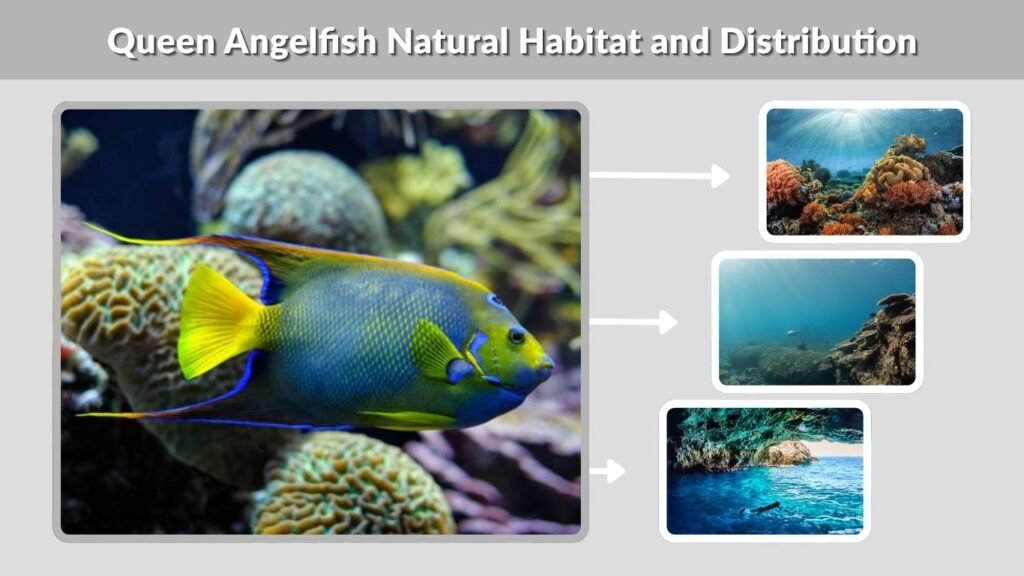
Queen angelfish live in tropical and subtropical parts of the western Atlantic. Their range extends from Florida and Bermuda through the Caribbean and Gulf of Mexico to Brazil. They are particularly abundant around Caribbean islands.
Where Do Queen Angelfish Live?
They inhabit coral reefs from shallow coastal water to depths of approximately 230 feet. Adults usually remain close to the reef bottom, swimming around corals, gorgonians, sea whips, caves, and sponge-covered structures.
Queen angelfish are generally found alone or in pairs. They may establish long-term breeding partnerships and defend preferred areas of the reef from competing fish.
What Do Queen Angelfish Eat?
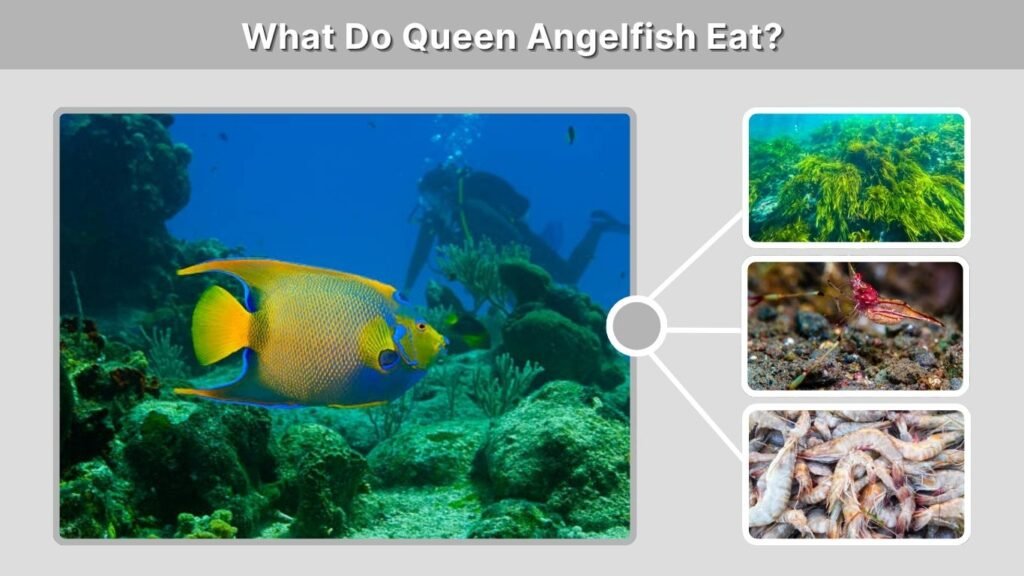
Queen angelfish are classified as omnivores, but their wild diet is highly specialized. Examination of wild specimens has shown that they eat primarily sponges, supplemented by algae, tunicates, hydroids, bryozoans, and other small reef organisms.
Best Food for Queen Angelfish
A captive diet should include:
- Marine angelfish food containing sponge
- Spirulina and marine algae
- Nori or dried seaweed
- Mysis shrimp
- Enriched brine shrimp
- Chopped marine shrimp
- High-quality marine pellets
- Frozen omnivore preparations
Feed several small portions throughout the day instead of one large meal. Live rock is also valuable because it allows the fish to graze naturally between feedings. A varied diet helps maintain healthy body weight, strong immunity, and vibrant adult coloration.
Queen Angelfish Aquarium Care
Queen angelfish need a mature saltwater aquarium with stable water chemistry and strong biological filtration. Because adults are large and active, keeping one should be considered a long-term commitment.
Tank Size and Setup
A minimum aquarium size of approximately 120 gallons is commonly recommended, although a larger system provides better swimming space and makes territorial behavior easier to manage.
The aquarium should contain:
- Large open swimming areas
- Secure live-rock structures
- Several caves and shaded retreats
- Strong filtration and oxygenation
- Moderate water movement
- A protein skimmer
- A well-established biological cycle
Do not overcrowd the tank with rock. The fish needs hiding places, but it must also have enough open space to turn and swim comfortably.
Water Conditions
| Water condition | Recommended range |
| Temperature | 76–80°F or 24–27°C |
| pH | 8.1–8.4 |
| Specific gravity | 1.020–1.025 |
| Ammonia | 0 ppm |
| Nitrite | 0 ppm |
Stable conditions are more important than frequent adjustments. Sudden changes in temperature, salinity, or pH can cause stress, appetite loss, and increased vulnerability to marine parasites.
Queen Angelfish Behavior and Tank Mates
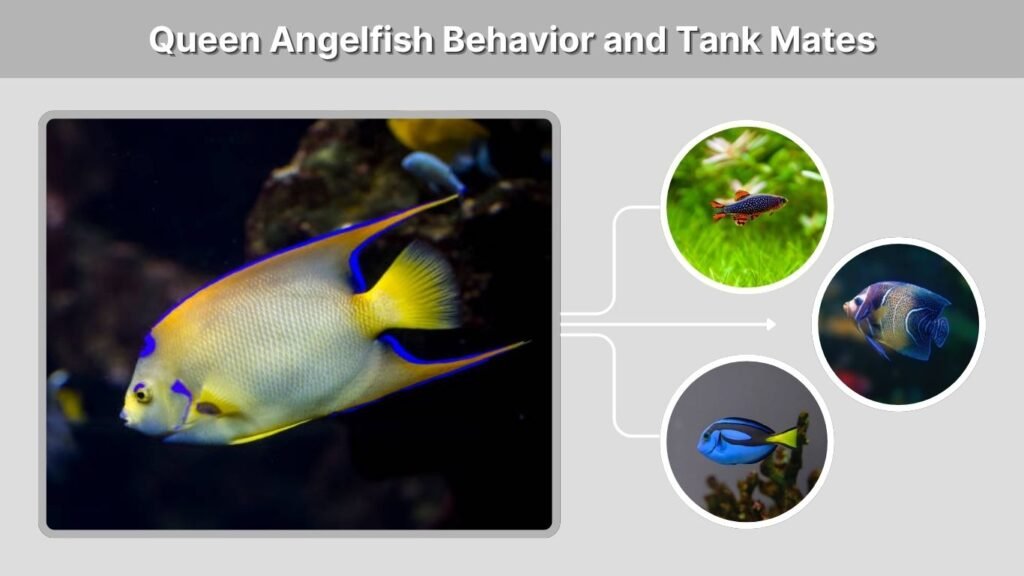
Queen angelfish are semi-aggressive and often become increasingly territorial as they mature. They may defend caves, feeding areas, and preferred sections of the aquarium.
Suitable companions include appropriately sized, confident marine fish that are not likely to be bullied. Tangs, larger wrasses, rabbitfish, and some robust clownfish may work in a sufficiently large aquarium.
Avoid housing a queen angelfish with:
- Tiny or extremely timid fish
- Other queen angelfish without exceptional space
- Blue angelfish in a small aquarium
- Similar large angelfish
- Slow fish that struggle during feeding
- Aggressive predators capable of injuring it
Queen and blue angelfish may fight because of their similar shape, appearance, diet, and territorial requirements. Keeping only one large Holacanthus angelfish is safer for most home aquariums.
Is the Queen Angelfish Reef Safe?
Queen angelfish are not considered reef safe. They may nip or eat soft corals, stony coral polyps, clam mantles, sea anemones, and other stationary invertebrates. Their interest in these animals is connected to their natural sponge- and invertebrate-based feeding behavior.
Some individuals may initially ignore certain corals, but their behavior can change as they grow. A fish-only-with-live-rock aquarium is therefore the most dependable setup.
Queen Angelfish Lifespan and Health
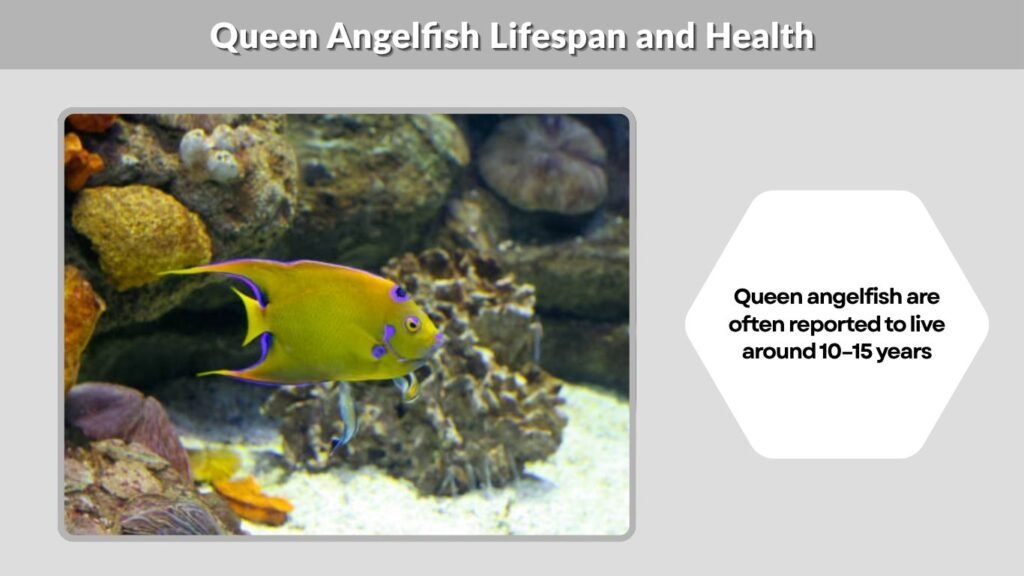
With suitable care, queen angelfish are often reported to live around 10–15 years in captivity. Their longevity depends on tank size, nutrition, water stability, disease prevention, and the condition of the fish when purchased.
Watch for warning signs such as:
- Refusing food
- Rapid breathing
- White spots or dusty skin
- Cloudy eyes
- Faded coloration
- Frayed fins
- Scratching against rocks
- Unusual hiding
Quarantine new fish before placing them in the main aquarium. Choose a queen angelfish that is alert, breathing normally, and already eating prepared food.
Male vs Female Queen Angelfish
Male and female queen angelfish do not have obvious external differences that allow reliable visual identification. Size, fin length, or color alone cannot confirm sex. Identifying a compatible male-female pair is therefore difficult without observing courtship or reproductive behavior.
FAQs
Are queen angelfish freshwater fish?
No. Queen angelfish are marine reef fish that require full-strength saltwater. They cannot survive in freshwater. They should not be confused with freshwater angelfish from the genus Pterophyllum, which are smaller South American cichlids with completely different tank, water, and dietary requirements.
How big do queen angelfish get?
Queen angelfish commonly reach around 12 inches, although large individuals can grow to approximately 18 inches. Their deep bodies and active swimming behavior make them unsuitable for small aquariums, even when purchased as juveniles. Owners should plan for their full adult size.
What is the best tank size for a queen angelfish?
Around 120 gallons is commonly listed as the minimum, but a larger aquarium is preferable for an adult. Extra space provides better swimming room, supports more stable water conditions, and reduces territorial conflicts. The tank should also include caves, live rock, and open swimming areas.
Can queen angelfish live with corals?
They can physically live in a reef aquarium, but they are likely to nip corals, clam mantles, and other invertebrates. Individual behavior varies, but the species is not considered reef safe. A fish-only-with-live-rock aquarium offers a more predictable and secure long-term setup.
What is the difference between queen and blue angelfish?
Queen angelfish have a completely yellow tail and a dark, blue-ringed crown spot on the forehead. Blue angelfish have a blue tail with yellow edging and lack the distinctive ringed crown. Juvenile queens also have more strongly curved blue body bars.