
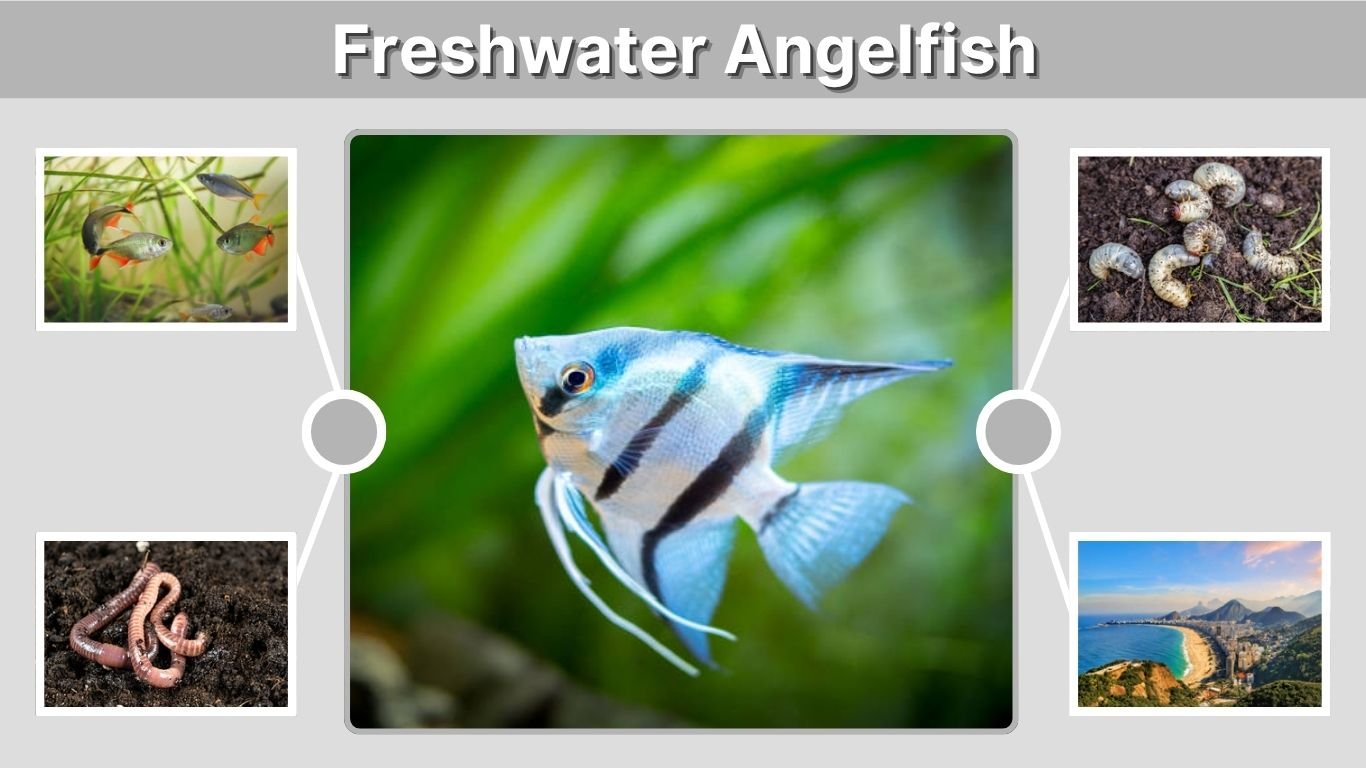
Angelfish are among the most recognizable freshwater aquarium fish, admired for their tall bodies, graceful movement, and flowing fins. The common freshwater angelfish, Pterophyllum scalare, is a South American cichlid available in silver, black, marble, koi, gold, and many other varieties. Although generally calm, angelfish can become territorial as they mature or prepare to breed. Successful care requires a tall, spacious aquarium, warm and stable water, suitable companions, and a varied diet. This guide explains angelfish identification, natural habitat, size, behavior, tank setup, feeding, breeding, and common health concerns for new and experienced fish keepers.
What Is an Angelfish?
The name “angelfish” refers to both freshwater and marine fish, but they are not closely related. Freshwater angelfish belong to the cichlid family, while marine angelfish belong to the family Pomacanthidae. This guide focuses on the freshwater species commonly kept in home aquariums.
Scientific Classification
The most common aquarium angelfish is Pterophyllum scalare. Two other recognized freshwater species are Pterophyllum altum and Pterophyllum leopoldi. Most color varieties sold in pet stores are selectively bred forms of P. scalare.
Angelfish Identification
- Tall, flattened, disc-shaped body
- Long triangular dorsal and anal fins
- Thin, trailing pelvic fins
- Small mouth and pointed snout
- Silver, black, gold, white, orange, or mixed coloration
- Vertical dark bars in wild-type fish
- Slow, graceful swimming movement
- Long-finned and standard-finned varieties available
Wild P. scalare usually have silvery bodies with dark vertical bands. Selective breeding has produced varieties such as koi, marble, zebra, black lace, golden, blushing, half-black, and veiltail angelfish.
Angelfish Size and Lifespan
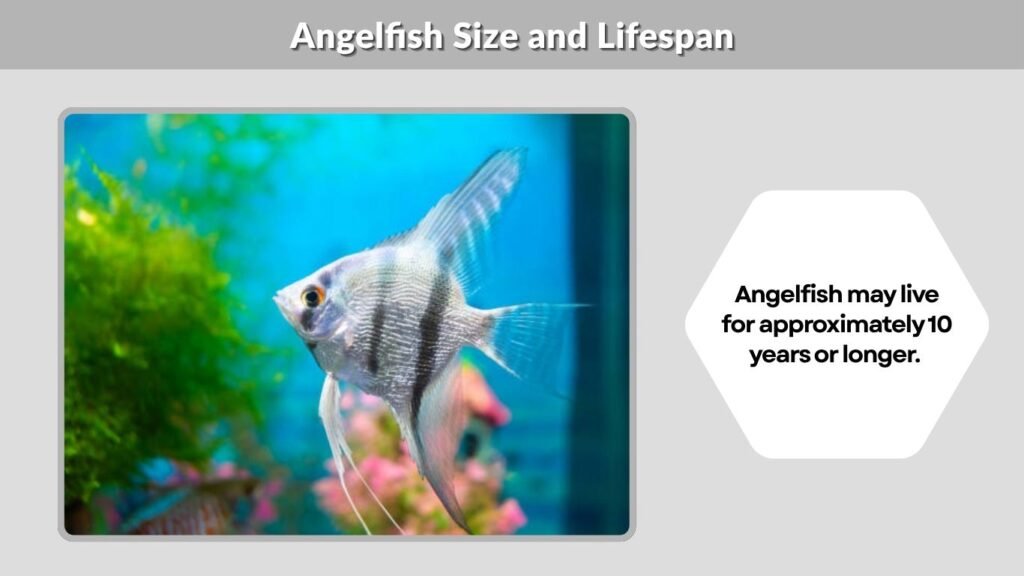
Angelfish are often sold when very small, but they require considerably more room as adults. Their unusual height, including their fins, makes aquarium depth as important as water volume.
How Big Do Angelfish Get?
Freshwater angelfish may reach approximately 15 centimeters, or 6 inches, in total body length. Their extended dorsal, anal, and pelvic fins can make them appear much taller than their measured body length. A deep aquarium prevents mature fish from feeling cramped and allows their fins to develop properly.
How Long Do Angelfish Live?
With stable water quality, nutritious food, sufficient space, and appropriate companions, captive angelfish may live for approximately 10 years or longer. Their lifespan can be shortened by poor water conditions, overcrowding, chronic aggression, and untreated disease.
Natural Habitat and Distribution
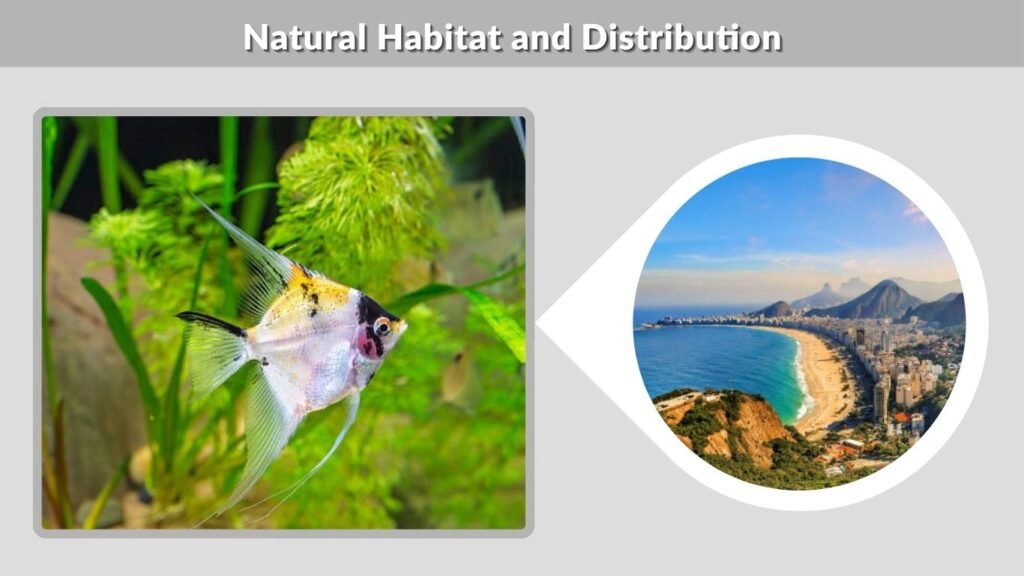
Freshwater angelfish are native to tropical South America. Their shape is well suited to moving between submerged branches, roots, and tall aquatic plants.
Where Do Angelfish Live?
Pterophyllum scalare occurs in the Amazon River basin and connected waterways in countries including Brazil, Peru, Colombia, Guyana, and French Guiana. It inhabits swamps, flooded areas, and densely vegetated waters that may be clear or silty.
Conditions in Their Natural Habitat
Wild angelfish prefer quiet or slow-moving water with thick vegetation, submerged wood, and shaded areas. Their vertical body markings provide camouflage among plant stems, roots, and branches. A home aquarium can imitate this environment through gentle filtration, tall plants, driftwood, and open swimming areas.
Angelfish Tank Setup and Water Conditions
A suitable angelfish aquarium must accommodate the species’ height, adult size, and territorial behavior. Stable conditions are more important than constantly adjusting the water to achieve an exact number.
| Care requirement | Recommended setup |
| Tank size | About 55 gallons for full-grown fish or a group |
| Tank shape | Tall and spacious |
| Temperature | 78–84°F or 26–29°C |
| pH | Approximately 6.8–7.8 for captive-raised fish |
| Water movement | Gentle |
| Decoration | Tall plants, driftwood, shaded areas |
| Diet | Omnivorous, varied foods |
| Temperament | Peaceful to semi-aggressive |
The recommended ranges can vary slightly depending on the strain and source of the fish. Avoid sudden changes in temperature, pH, or hardness.
Choosing the Right Tank
A tall aquarium is preferable because angelfish have deep bodies and extended fins. Although juveniles may temporarily live in smaller aquariums, Aqueon recommends a tank of 55 gallons or more for full-grown angelfish. Groups and community setups need additional room to reduce competition and territorial conflicts.
Filtration and Water Maintenance
Use an established filter that maintains clean water without producing a powerful current. Test the aquarium regularly for ammonia, nitrite, nitrate, pH, and temperature. Partial water changes should be completed consistently, and replacement tap water must be conditioned and brought close to the aquarium’s temperature. Aqueon suggests changing around 10% weekly or 25% every other week.
Plants and Decorations
Broad-leaved plants, tall background plants, floating cover, and vertically arranged driftwood help create a natural-looking environment. Leave enough open space for swimming. Decorations should have smooth surfaces because sharp rocks and rough artificial plants can tear the fish’s long fins.
Angelfish Diet and Feeding
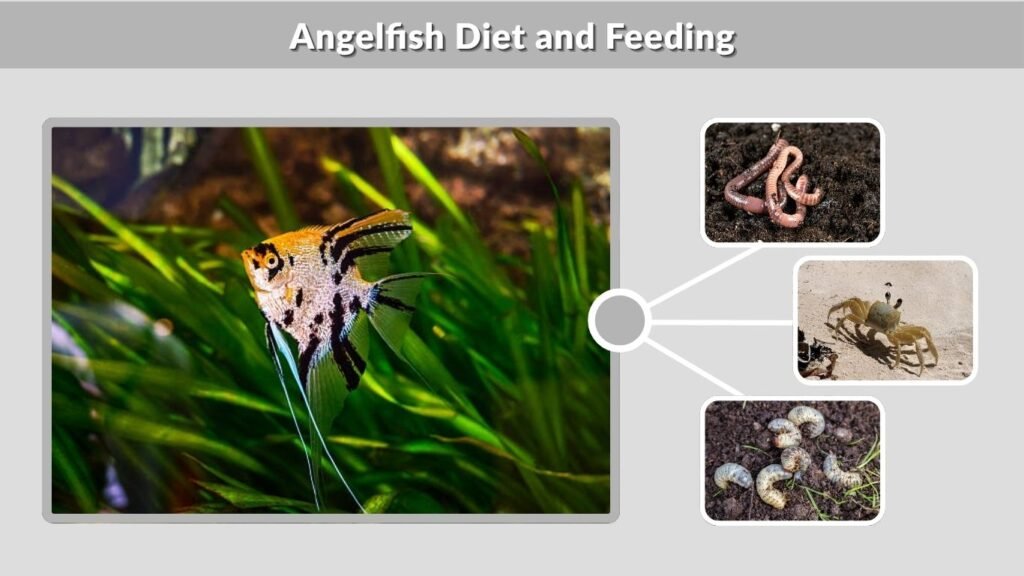
Angelfish are omnivorous fish that consume both animal and plant-based foods. A varied diet supports steady growth, strong coloration, immune health, and successful breeding.
What Do Angelfish Eat?
In nature, angelfish forage for worms, small crustaceans, insect larvae, and other edible material. Captive fish can eat quality tropical flakes, cichlid granules, and appropriately sized pellets. Frozen or live brine shrimp, bloodworms, and similar foods may be offered occasionally.
How Often Should Angelfish Be Fed?
Adult angelfish can generally be fed once or twice daily. Offer only an amount they can finish within a few minutes. Excess food settles into the substrate, decomposes, and reduces water quality. Young growing fish may need smaller portions more frequently than adults.
Angelfish Behavior and Tank Mates
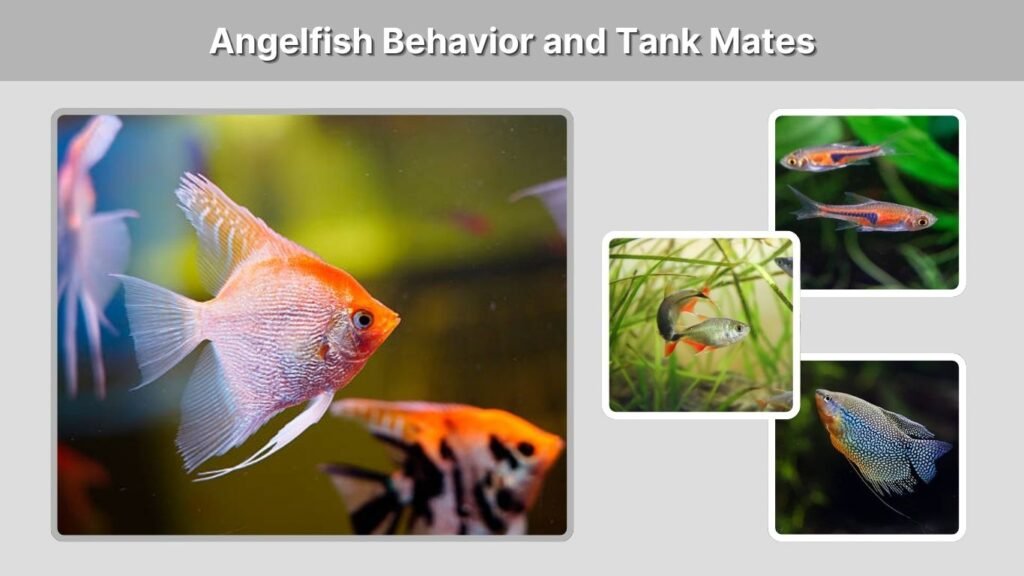
Angelfish are often peaceful in spacious community tanks, but they remain cichlids. Their behavior may change as they mature, establish territories, or form breeding pairs.
Are Angelfish Aggressive?
Angelfish may chase, nip, or intimidate one another while developing a social hierarchy. Breeding pairs become especially protective of their chosen spawning area. Limited space can increase aggression because weaker fish have fewer places to escape or hide.
Suitable Angelfish Tank Mates
Appropriate companions include peaceful fish that are too large to be swallowed and that tolerate similar warm-water conditions. Larger tetras, peaceful rasboras, gouramis, corydoras, rainbowfish, and medium-sized peaceful catfish may work in a sufficiently large aquarium.
Avoid very small fish that may be viewed as prey. Fin-nipping species can damage an angelfish’s long fins, while highly aggressive cichlids may bully or injure it. Individual temperament and available space should always be considered.
Angelfish Breeding
Freshwater angelfish form pairs and may breed regularly under favorable aquarium conditions. Their spawning behavior is one of the most interesting aspects of keeping this species.
Spawning and Egg Care
A breeding pair cleans a flat, usually vertical surface such as a broad plant leaf, slate, filter pipe, or aquarium wall. The female deposits rows of adhesive eggs, and the male follows to fertilize them. Both parents may guard and fan the eggs, although some captive fish eat their eggs, particularly during early spawning attempts.
Raising Angelfish Fry
A separate breeding aquarium protects the eggs and fry from other fish. Gentle sponge filtration is commonly used because it creates water movement without pulling small fry into the filter. Once the fry become free-swimming, they need appropriately sized foods and consistently clean water.
Common Angelfish Health Problems
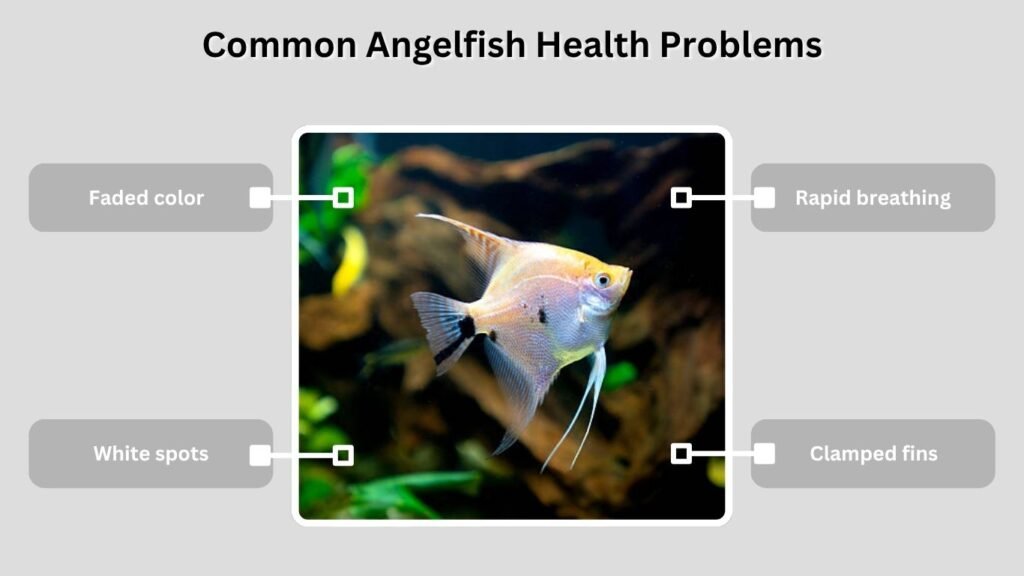
Angelfish may become vulnerable to disease when water quality declines or stress remains high. Early observation makes many aquarium health problems easier to manage.
Signs of an Unhealthy Angelfish
Watch for loss of appetite, rapid breathing, clamped fins, faded color, white spots, cloudy eyes, damaged fins, swelling, unusual waste, or prolonged hiding. Test the water immediately when several fish show symptoms. Many apparent illnesses begin with ammonia, nitrite, temperature, or oxygen problems.
Preventing Disease
Maintain a fully cycled aquarium, avoid overfeeding, quarantine new fish when possible, and keep the temperature stable. Do not overcrowd the tank or combine angelfish with incompatible species. Regular water changes and prompt removal of uneaten food reduce the buildup of harmful waste.
FAQs
Are angelfish suitable for beginners?
Angelfish can suit committed beginners who understand aquarium cycling, water testing, filtration, and routine maintenance. They are less forgiving of cramped tanks and unstable water than some beginner fish, so owners should prepare the full adult setup before purchasing juveniles.
Can angelfish live alone?
A single angelfish can live alone when provided with adequate space and suitable community companions. However, angelfish naturally interact with members of their species. Keeping several requires a much larger aquarium so subordinate fish can avoid dominant individuals.
Can two angelfish live together?
Two angelfish may live peacefully if they form a compatible pair. Two unrelated adults may fight, particularly in a small tank. Introductions should be monitored carefully, and the aquarium should contain visual barriers and enough room for each fish.
Do angelfish eat other fish?
Angelfish are opportunistic feeders and may eat fish small enough to fit inside their mouths. Tiny tetras and newly born fry are especially vulnerable. Select medium-sized tank mates and provide adequate food without overfeeding the aquarium.
How can you tell male and female angelfish apart?
Male and female angelfish look very similar, making visual identification unreliable outside the breeding period. The most dependable differences become visible near spawning, when the female develops a broader egg-laying tube and the male shows a narrower breeding tube.