
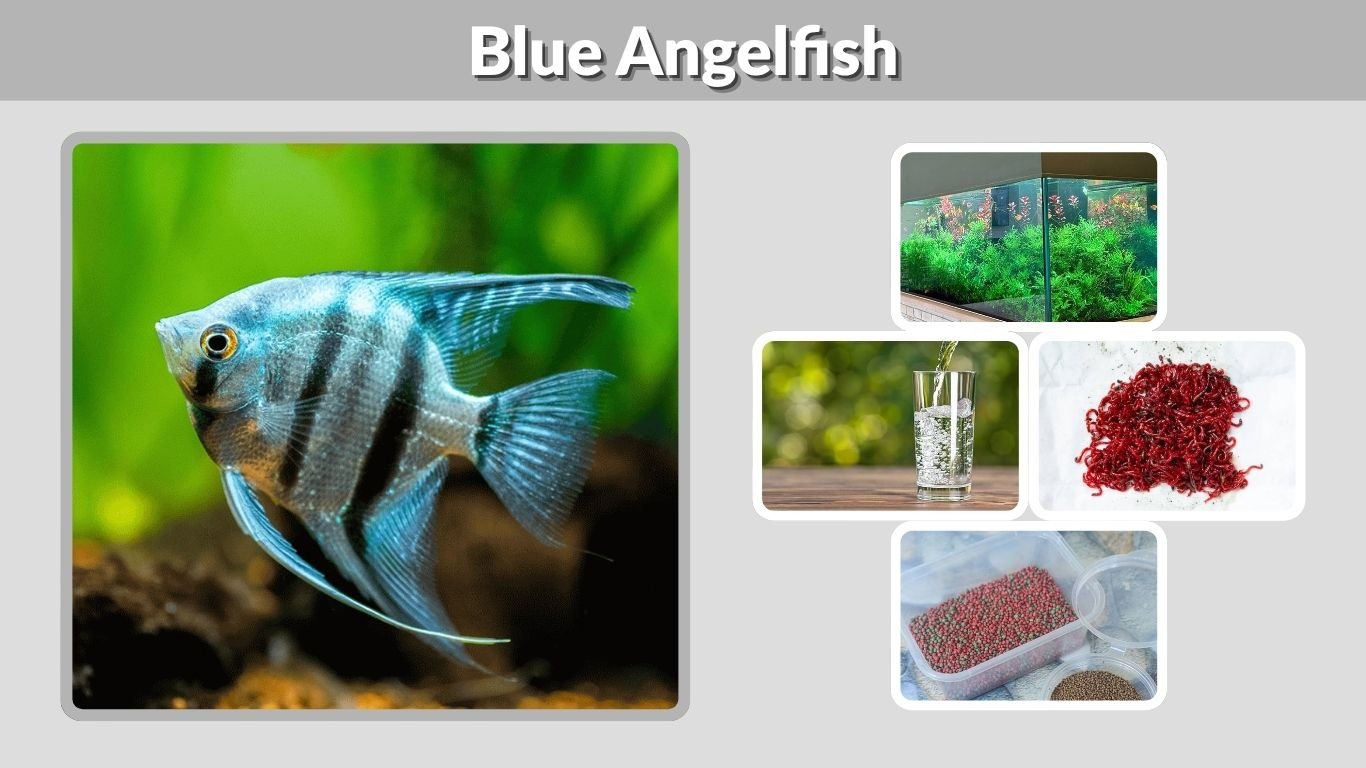
Blue angelfish are admired for their shimmering color, tall bodies, and long, elegant fins. However, the name can refer to two very different groups: selectively bred freshwater angelfish and large marine angelfish found on coral reefs. Freshwater varieties such as Blue Diamond, Philippine Blue, Pinoy Blue, and Blue Marble are forms of Pterophyllum scalare. The marine blue angelfish is a separate saltwater species requiring a much larger and more specialized aquarium.
What Is a Blue Angelfish?
In freshwater aquariums, “blue angelfish” usually describes a color variety of the common freshwater angelfish, Pterophyllum scalare. Blue coloration was developed through selective breeding and may appear as pale silver-blue, dark metallic blue, turquoise, or nearly black-blue.
Freshwater angelfish are South American cichlids. Their natural range includes parts of the Amazon River basin, where they inhabit slow-moving waters, swamps, and flooded areas with dense vegetation. Wild fish are generally silver with dark vertical bars, while aquarium breeding has produced many blue patterns and colors.
Freshwater vs. Saltwater Blue Angelfish
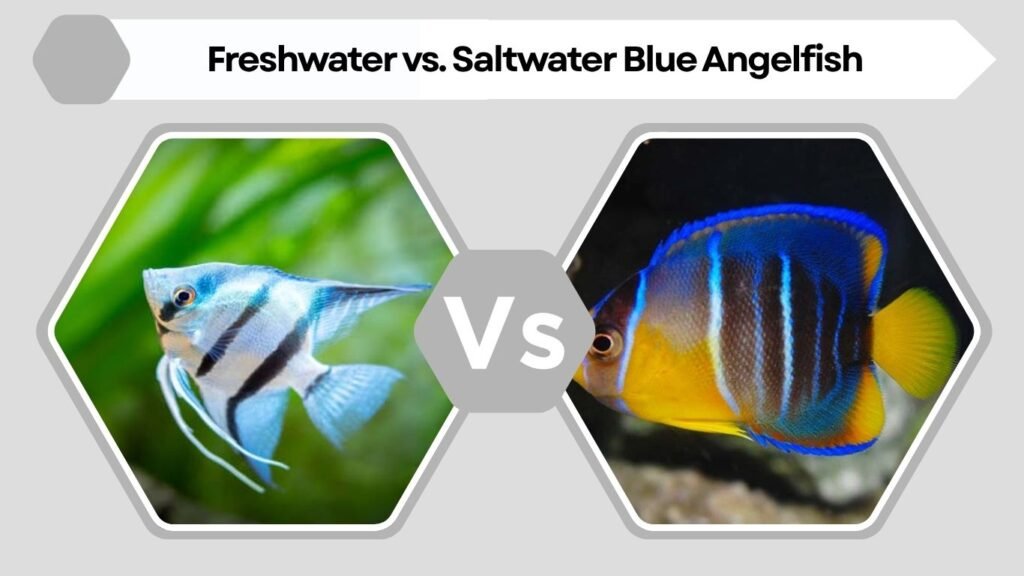
Freshwater and marine blue angelfish are unrelated beyond sharing a common name.
| Feature | Freshwater blue angelfish | Marine blue angelfish |
| Typical scientific name | Pterophyllum scalare | Holacanthus bermudensis |
| Water type | Freshwater | Saltwater |
| Adult size | Around 6 inches long | More than 12 inches possible |
| Tank requirement | Moderate to large freshwater tank | Very large marine aquarium |
| Care level | Intermediate | Advanced |
| Appearance | Tall triangular body | Rounded reef-fish body |
A freshwater blue angelfish should never be placed in a saltwater aquarium, and a marine blue angelfish cannot survive in freshwater.
Popular Types of Freshwater Blue Angelfish
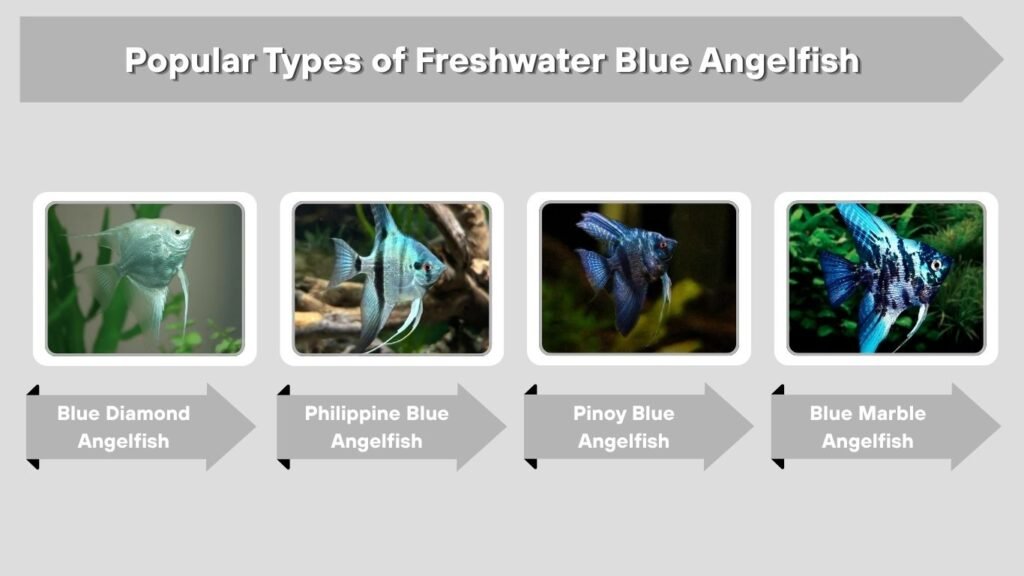
Blue angelfish occur in several varieties. Names sometimes overlap because breeders may combine multiple color and pattern genes.
Blue Diamond Angelfish
The Blue Diamond angelfish usually has a smooth metallic-blue or silver-blue body with few visible stripes. Young fish may appear silver, but their blue sheen often becomes stronger as they mature.
This variety is popular in display aquariums because its relatively plain body highlights the reflective blue coloration.
Philippine Blue Angelfish
The Philippine Blue is a genetic color variety that produces a cool blue or turquoise appearance. Its coloration may be combined with other patterns to create Blue Zebra, Blue Marble, Blue Smokey, and Blue Leopard angelfish.
The intensity of the blue depends on genetics, age, lighting, background color, diet, and stress level.
Pinoy Blue Angelfish
Pinoy Blue angelfish combine Philippine Blue genetics with dark coloration. They often have a charcoal, black, or deep blue body with an iridescent blue-green sheen.
Some Pinoy fish retain visible vertical bars, while others appear nearly solid.
Blue Marble Angelfish
Blue Marble angelfish have irregular dark patches over a blue, silver, or turquoise base. No two individuals have exactly the same marble pattern.
They may also be sold as Blue Marble Philippine angelfish or Blue Marble Pinoy angelfish, depending on their breeding background.
Blue Zebra Angelfish
Blue Zebra angelfish display multiple dark vertical bands across a blue or silver-blue body. Their striped pattern resembles a wild angelfish but may contain more bars.
Blue Smokey Angelfish
Blue Smokey angelfish usually have a bluish front half and a darker gray or smoky pattern toward the rear of the body. The contrast becomes more noticeable as the fish matures.
Blue Blushing Angelfish
Blue Blushing angelfish have reduced or absent gill-cover pigmentation, creating a pink or reddish area near the cheeks. Their bodies may appear pearl-blue or silver-blue with limited striping.
Blue Angelfish Size
A freshwater blue angelfish can grow to approximately six inches in body length, although its total height may reach eight inches or more when the extended fins are included.
Their tall shape means aquarium height is as important as water volume. Small juveniles may look comfortable in compact tanks, but adults need enough vertical room to swim without their fins touching the substrate or surface.
Growth depends on:
- Genetics
- Water quality
- Tank size
- Diet
- Temperature
- Competition for food
- Disease and parasite exposure
Most of their rapid growth occurs during the first year, but the body and fins may continue developing afterward.
Tank Size and Aquarium Setup
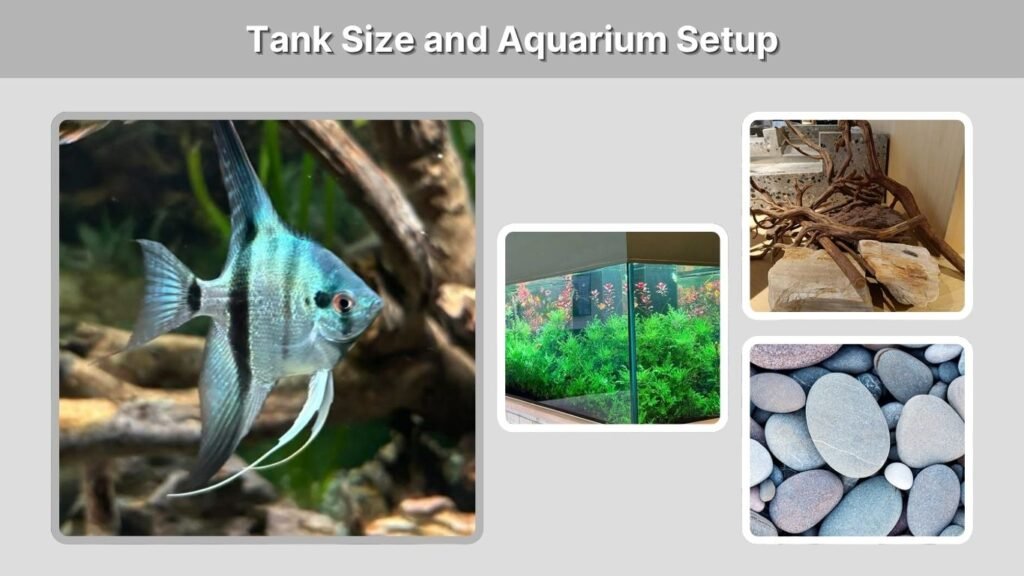
A 30-gallon aquarium may temporarily hold young angelfish, but a tall 40–55-gallon tank is more suitable for an adult pair. A group usually requires at least 75 gallons, depending on the number of fish and their behavior.
Ideal Tank Features
- Tall aquarium with open swimming space
- Gentle to moderate water movement
- Strong biological filtration
- Broad-leaved plants
- Driftwood and vertical branches
- Smooth rocks
- Dark substrate or background
- Secure lid
- Sheltered areas for weaker fish
Avoid sharp decorations because they can damage long fins. Dense planting around the back and sides provides cover while leaving the center open for swimming.
Blue Angelfish Water Parameters
Captive-bred blue angelfish are more adaptable than many wild angelfish, but they still require stable, clean water.
| Parameter | Recommended range |
| Temperature | 76–82°F |
| pH | 6.0–7.5 |
| Hardness | Soft to moderately hard |
| Ammonia | 0 ppm |
| Nitrite | 0 ppm |
| Nitrate | Kept low |
The natural species can tolerate temperatures around 24–30°C and a relatively broad pH range, although captive fish usually perform best when conditions remain stable rather than changing frequently.
Perform regular partial water changes and remove uneaten food. Poor water quality can cause fin damage, reduced appetite, faded color, and increased disease risk.
Blue Angelfish Diet and Feeding
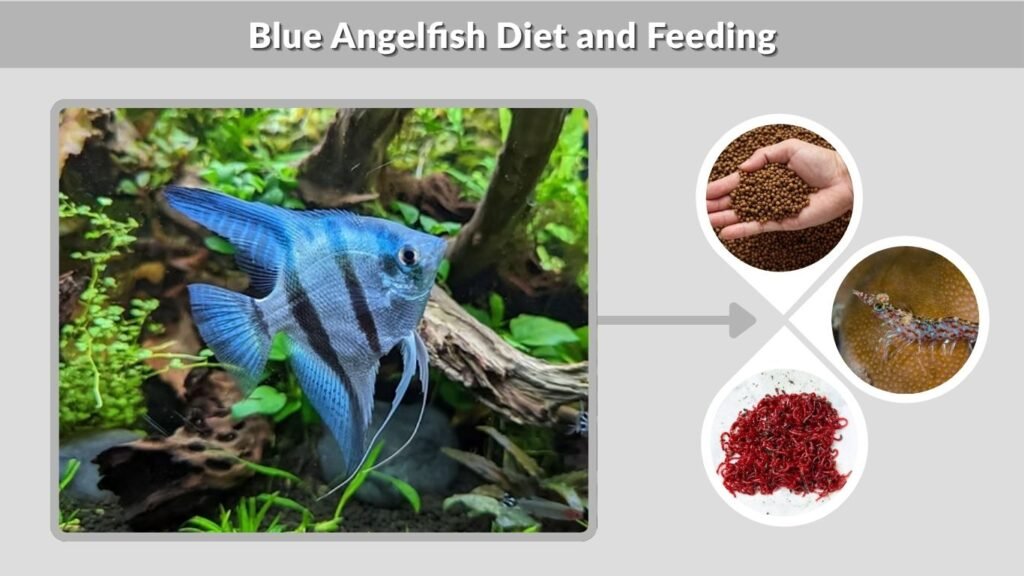
Blue angelfish are omnivores with a strong appetite for animal-based foods. A varied diet supports growth, breeding condition, and stronger coloration.
Suitable foods include:
- High-quality cichlid flakes
- Angelfish pellets
- Brine shrimp
- Mysis shrimp
- Daphnia
- Bloodworms in moderation
- Blackworms from a safe source
- Insect-based foods
- Spirulina-containing flakes
Feed adults once or twice daily. Juveniles may receive two or three smaller meals to support growth.
Only provide what the fish can finish within a few minutes. Overfeeding causes obesity, digestive problems, and declining water quality.
Blue Angelfish Tank Mates
Blue angelfish are relatively peaceful cichlids, but they may eat very small fish and become territorial when breeding.
Potential tank mates include:
- Larger tetras
- Peaceful rasboras
- Corydoras catfish
- Bristlenose plecos
- Peaceful rainbowfish
- Larger pencilfish
- Other similarly sized angelfish
Avoid tiger barbs and other fin-nippers. Highly aggressive cichlids may injure angelfish, while tiny fish such as small neon tetras may eventually be swallowed.
Blue acara may sometimes live with angelfish in a spacious aquarium, but compatibility is not guaranteed. Both species can become territorial, especially during spawning.
Behavior and Temperament
Young blue angelfish often form loose groups, but adults may pair off and defend territories. Chasing, posturing, and lip-locking can occur as fish establish dominance.
Signs of serious aggression include:
- Continuous chasing
- Torn fins
- A fish hiding constantly
- Refusal to eat
- Rapid breathing
- One fish trapped near the surface
Adding visual barriers and rearranging decorations may reduce aggression. Severely bullied fish should be moved to another aquarium.
Breeding Blue Angelfish
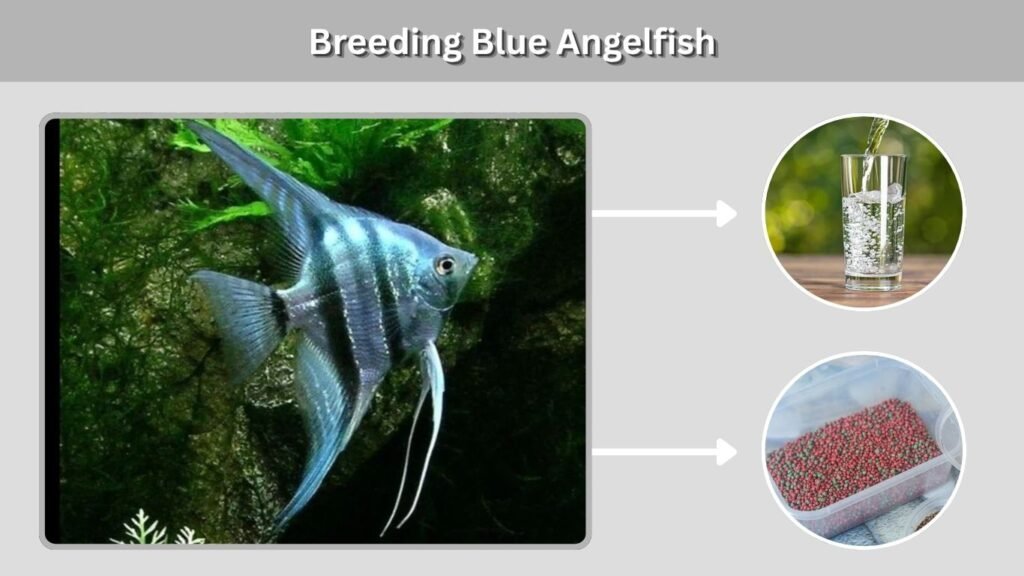
A mature pair may spawn on a broad plant leaf, vertical piece of slate, filter pipe, or aquarium glass.
Before spawning, the pair cleans a surface. The female lays rows of adhesive eggs, and the male follows to fertilize them. Both parents may fan and guard the eggs.
For better breeding results, provide:
- A compatible mature pair
- Warm, clean water
- A vertical spawning surface
- High-quality foods
- Minimal disturbance
- A separate breeding tank
Some inexperienced parents eat their first batches of eggs. This behavior may improve after several spawning attempts.
Marine Blue and Blue-Ring Angelfish
The marine blue angelfish, Holacanthus bermudensis, is a western Atlantic reef fish and should not be confused with freshwater blue varieties.
The blue-ring angelfish, Pomacanthus annularis, is another marine species. It comes from the Indo-West Pacific, can reach about 45 centimeters, and develops curved blue stripes across a golden-brown adult body. It inhabits coral and rocky reefs and feeds heavily on sponges and tunicates.
These marine angelfish require:
- A very large saltwater aquarium
- Mature live rock
- Stable marine water chemistry
- Powerful filtration
- Specialized foods
- Careful tank-mate selection
Large marine angelfish are generally not considered reliably reef-safe because they may nip corals, clams, and other invertebrates.
Buying a Blue Angelfish
When choosing a fish, look for:
- Clear eyes
- Straight, undamaged fins
- Steady swimming
- Normal breathing
- A rounded but not swollen abdomen
- Active feeding behavior
- No white spots or open sores
Ask the seller for the exact variety, adult size, current diet, and water parameters. Some young blue varieties do not display their strongest color until they mature.
FAQs
Are blue angelfish naturally blue?
Wild freshwater angelfish are usually silver with dark bars. Most strong blue coloration seen in aquarium fish results from selective breeding and particular color genes.
How long do blue angelfish live?
With suitable water, diet, space, and disease prevention, freshwater blue angelfish may live approximately 8–12 years.
Can blue angelfish live alone?
One angelfish can live alone, but many behave more naturally with compatible companions. Groups need enough space because adults may become territorial.
Why is my blue angelfish losing color?
Stress, poor water quality, illness, low-quality food, bright surroundings, bullying, or sudden environmental changes can make the fish appear pale.
Are Blue Diamond and Philippine Blue angelfish the same?
Not exactly. Philippine Blue refers to a blue-color genetic trait, while Blue Diamond is a trade name generally used for a mostly solid metallic-blue angelfish. Breeders may combine traits, so names can overlap.