
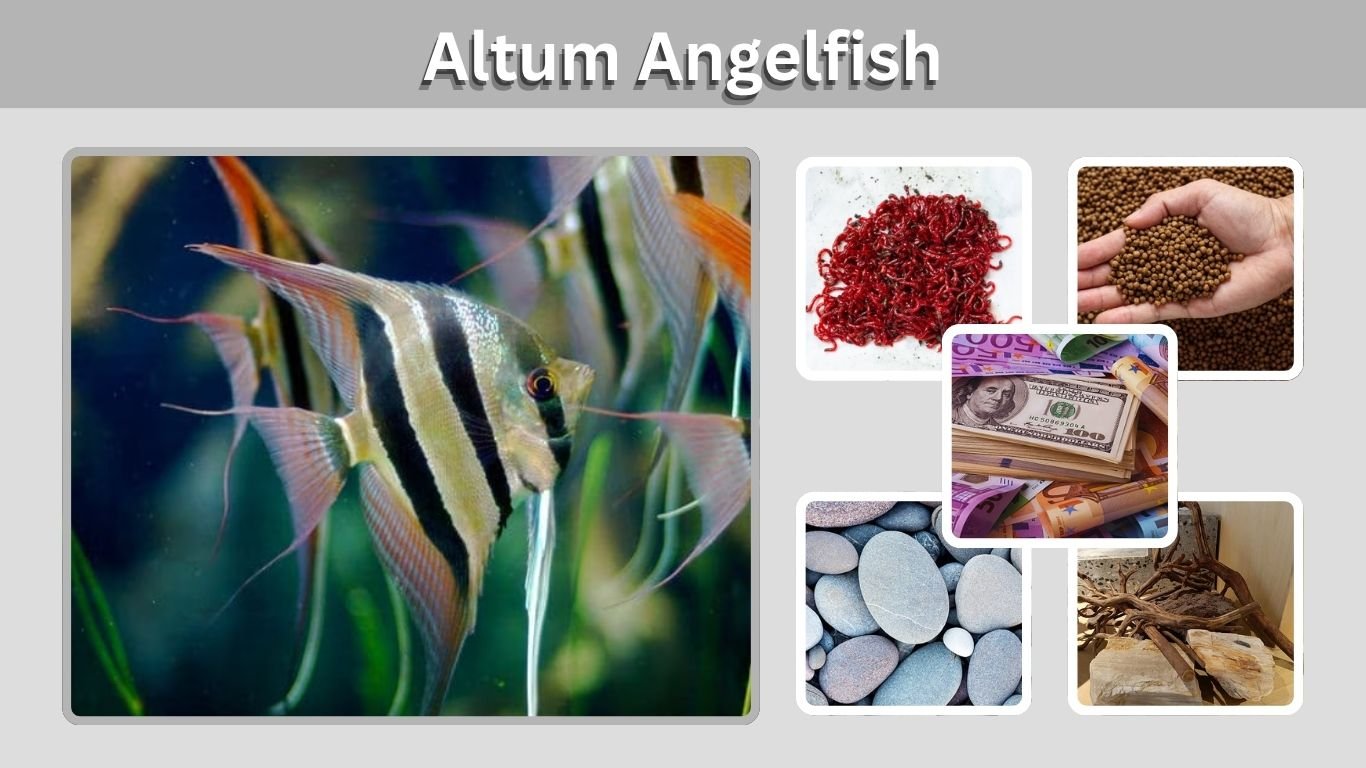
The Altum angelfish is one of the tallest and most impressive freshwater angelfish kept in aquariums. Its deep body, long fins, strong vertical bands, and distinctive head shape separate it from the common angelfish. However, true Altums are sensitive fish that require warm, soft, acidic water and excellent aquarium maintenance. Buyers must also be careful because fish sold as “Peruvian Altums” are usually tall-bodied forms of Pterophyllum scalare, not true Pterophyllum altum.
Altum Angelfish Overview
The true Altum angelfish has the scientific name Pterophyllum altum. It belongs to the cichlid family and is a freshwater species native to South America.
Wild populations occur in the upper Orinoco system and parts of the upper Rio Negro drainage, including the Inírida and Atabapo river regions. These habitats generally contain warm, soft, acidic water.
| Feature | Details |
| Scientific name | Pterophyllum altum |
| Common name | Altum angelfish |
| Water type | Freshwater |
| Temperament | Generally peaceful but territorial |
| Temperature | 81–88°F |
| Preferred pH | Approximately 4.8–6.5 |
| Maximum body length | Around 7 inches |
| Difficulty | Advanced |
| Social behavior | Best maintained in a compatible group |
Altum Angelfish Identification
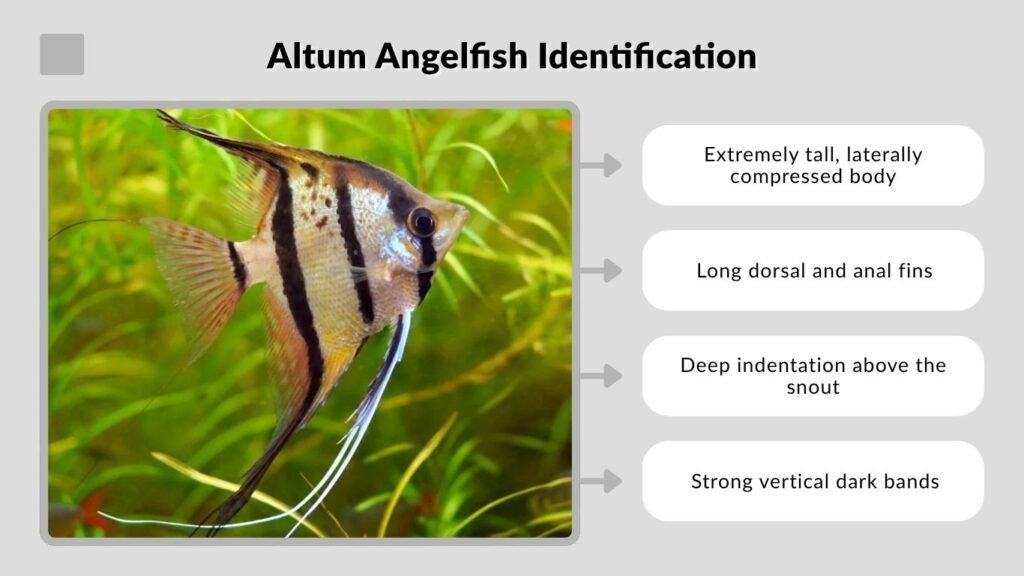
True Altums resemble common angelfish but are usually taller, deeper-bodied, and more sharply shaped.
Key Identification Features
- Extremely tall, laterally compressed body
- Long dorsal and anal fins
- Deep indentation above the snout
- Strong vertical dark bands
- Long, threadlike pelvic fins
- Silver, bronze, or brownish base color
- More dramatic body height than common angelfish
The indentation above the eye and snout is sometimes described as a saddle-shaped or notched profile. Common P. scalare usually has a smoother forehead.
Color intensity can change with stress, lighting, social behavior, and water conditions. A frightened fish may become pale, while a healthy, settled Altum often displays stronger bands.
How Big Do Altum Angelfish Get?
True Altum angelfish may reach approximately 7 inches in body length. Their total vertical height can be much greater because of their extended dorsal and anal fins.
FishBase reports a maximum length of about 18 centimeters and notes that they may reach approximately 20 centimeters in height in the wild. Aquarium strains with particularly long fins may appear taller.
Their unusual height makes aquarium depth especially important. A long but shallow tank may not provide enough vertical swimming space for a full-grown Altum.
Altum Angelfish Tank Size
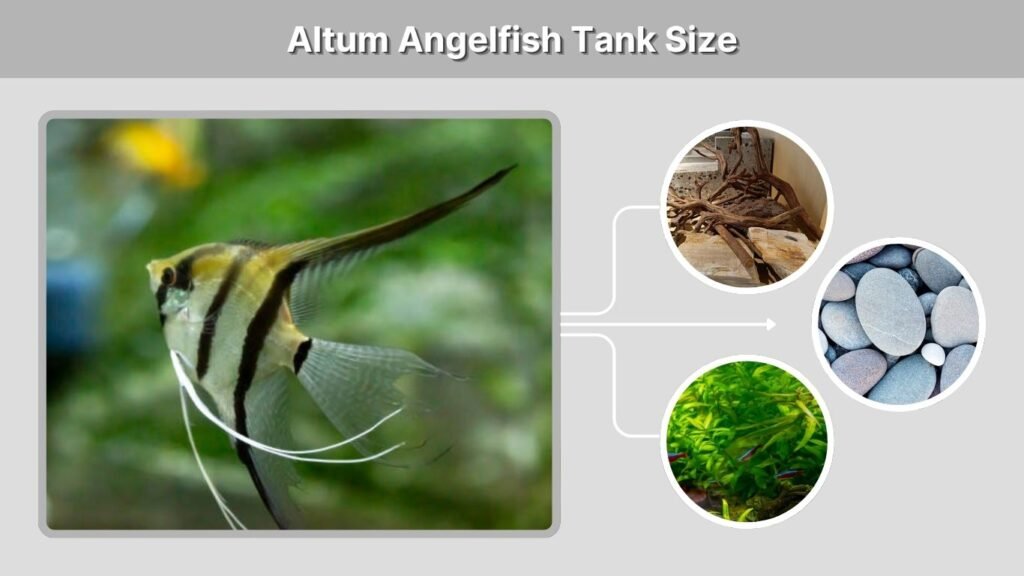
A single adult pair should have at least a tall 75-gallon aquarium, although a larger tank is strongly preferred. A group requires considerably more room.
A suitable group aquarium may be:
- 100 gallons or larger
- At least 24 inches tall
- Long enough to create separate territories
- Equipped with powerful but gentle filtration
Altums are social when young and usually feel more secure in groups. However, adults may become territorial when pairs form. Keeping several fish in an undersized tank can lead to constant chasing and stress.
Aquarium Setup
An Altum aquarium should provide open swimming space along with tall structures for shelter. Suitable decorations include:
- Large pieces of driftwood
- Vertical branches
- Broad-leaved plants
- Smooth stones
- Fine sand
- Floating plants
- Dried leaves for a natural appearance
A blackwater-style biotope can include dim lighting, wood, leaf litter, tannin-stained water, and minimal planting. Ensure that all decorations are smooth because long fins can tear against sharp objects.
Altum Angelfish Water Parameters
True Altums are more sensitive to poor or unstable water than most domesticated angelfish.
FishBase lists a natural temperature range of approximately 81–88°F, a pH of 4.8–6.2, and very soft water around 1–5 dH.
For aquarium care, aim for:
| Parameter | Recommended range |
| Temperature | 82–86°F |
| pH | 5.0–6.5 |
| General hardness | 1–6 dGH |
| Ammonia | 0 ppm |
| Nitrite | 0 ppm |
| Nitrate | As low as practical |
Captive-bred fish may adapt to slightly broader conditions than newly imported wild Altums. Even so, stability matters more than constantly adjusting the water to reach an exact number.
Perform regular partial water changes and match the new water’s temperature and chemistry closely. Sudden changes in pH, hardness, or temperature can weaken the fish.
Altum Angelfish Diet and Feeding
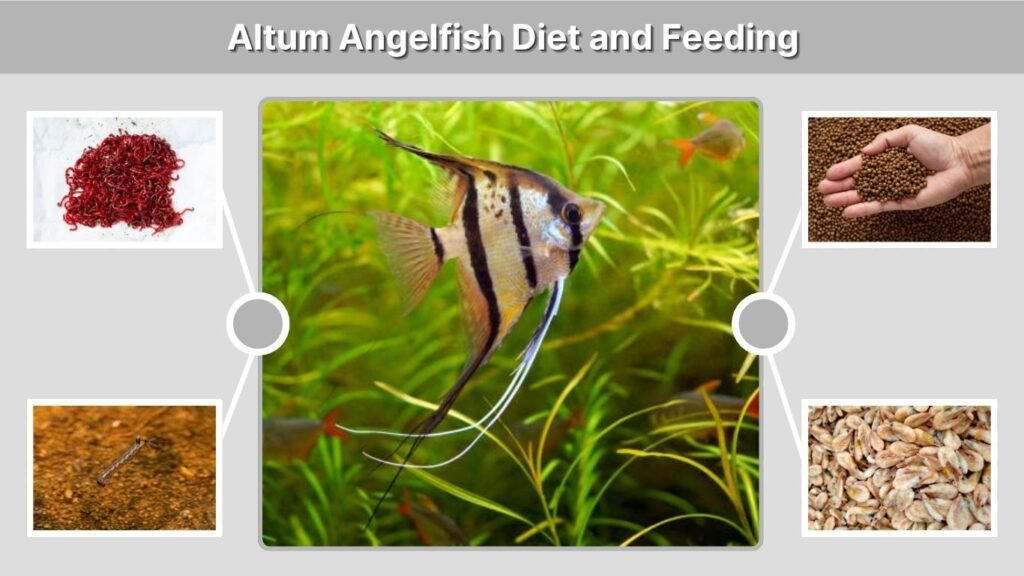
Altum angelfish are opportunistic carnivores and should receive a varied, protein-rich diet.
Suitable foods include:
- High-quality cichlid pellets
- Soft granules
- Frozen brine shrimp
- Mysis shrimp
- Daphnia
- Bloodworms in moderation
- Black mosquito larvae
- Carefully sourced live foods
Feed adults once or twice daily, offering only what they can consume within a few minutes. Young fish may benefit from smaller meals several times per day.
Wild-caught Altums may initially reject dry food. Frozen or live food can help them begin feeding, after which prepared foods can gradually be introduced.
Avoid overfeeding because uneaten food quickly reduces water quality.
Altum Angelfish Tank Mates
Altums are usually peaceful toward fish that are too large to swallow. However, they may become territorial during pairing and breeding.
Good potential tank mates include:
- Discus in carefully managed large tanks
- Larger peaceful tetras
- Cardinal tetras raised alongside the Altums
- Rummy-nose tetras
- Peaceful Corydoras suited to warm water
- Medium-sized pencilfish
- Certain peaceful plecos
Avoid fin-nipping barbs, highly aggressive cichlids, very active fish, and species requiring cool or hard water.
Small fish may be viewed as prey, especially when introduced after the Altums have reached adulthood. Even normally compatible species require enough space and suitable water conditions.
Altum Angelfish vs. Scalare
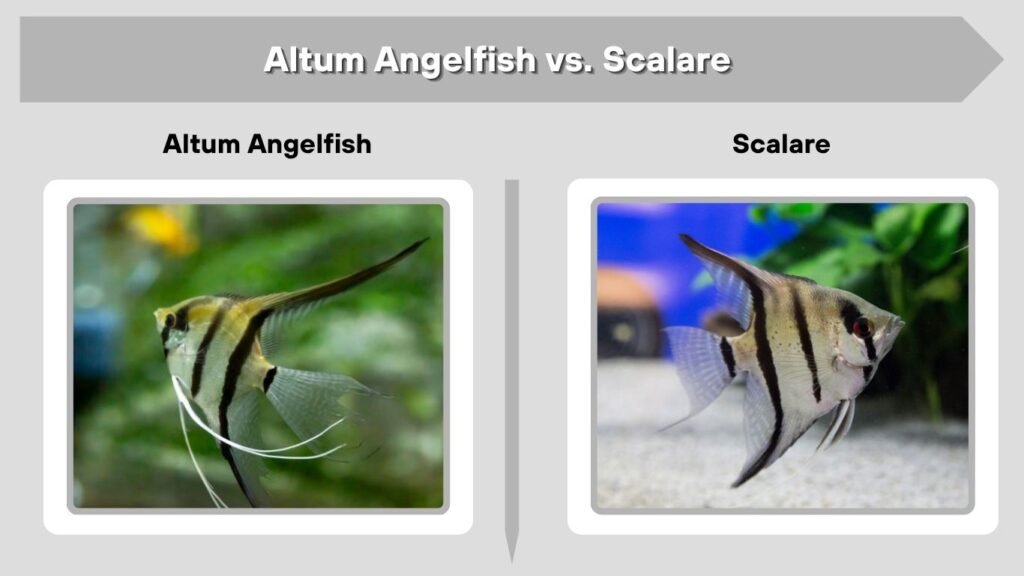
| Feature | True Altum | Common Scalare |
| Scientific name | Pterophyllum altum | Pterophyllum scalare |
| Body shape | Extremely tall and deep | Shorter and rounder |
| Forehead | Distinctive indentation | Usually smoother |
| Water needs | Very soft, acidic and warm | More adaptable |
| Care level | Advanced | Beginner to intermediate |
| Availability | Relatively uncommon | Widely available |
True Altums are generally more delicate and demanding than domesticated scalare angelfish.
What Is a Peruvian Altum Angelfish?
The name “Peruvian Altum” can be misleading. Most Peruvian Altums in the aquarium trade are not Pterophyllum altum. They are usually wild-type or selectively bred Pterophyllum scalare with tall bodies and long fins.
Peruvian Altums are generally:
- Easier to maintain
- More tolerant of moderate water hardness
- Less sensitive during acclimation
- More commonly tank-raised
- Usually less expensive than true Altums
Ask the seller for the scientific name and collection locality. Labels such as Orinoco, Atabapo, or Rio Negro may provide useful information, but the fish’s identity should still be verified.
Acclimating New Altum Angelfish
Altums can become stressed during shipping, particularly when wild-caught.
Before introducing them:
- Prepare a fully cycled quarantine aquarium.
- Match the temperature carefully.
- Keep the lighting low.
- Avoid rapid changes in water chemistry.
- Provide driftwood or vertical cover.
- Observe breathing, appetite, feces, and swimming.
- Quarantine before adding them to the main aquarium.
Do not pour shipping water directly into the display tank. Newly imported fish should be monitored for parasites, bacterial problems, fin damage, and refusal to eat.
Breeding Altum Angelfish
Breeding true Altums is considerably more difficult than breeding common angelfish. A compatible pair may clean a vertical surface and deposit eggs on broad leaves, slate, wood, or aquarium glass.
Successful breeding generally requires:
- Mature compatible fish
- Very soft water
- Acidic conditions
- Warm temperature
- Excellent water quality
- Minimal disturbance
- A tall spawning surface
Both parents may guard and fan the eggs. However, inexperienced pairs sometimes eat their first clutches. Eggs are also vulnerable to fungus if water quality or fertility is poor.
Buying Altum Angelfish
True Altums are usually more expensive than ordinary angelfish because they are less common, harder to transport, and more challenging to breed.
Before buying, confirm:
- The scientific name
- Whether the fish is wild-caught or tank-bred
- Its collection locality
- Current water parameters
- Foods it accepts
- Quarantine history
- Whether it is a true Altum or Peruvian scalare
Choose fish with upright fins, clear eyes, steady breathing, full bodies, and an active feeding response. Avoid individuals that swim sideways, clamp their fins, breathe rapidly, or remain unusually dark.
FAQs
Are Altum angelfish suitable for beginners?
True Altums are better suited to experienced aquarists. They require stable, warm, soft water, careful acclimation, excellent filtration, and close attention to water quality.
Can Altum angelfish live in a 75-gallon tank?
A tall 75-gallon tank may accommodate a compatible pair, but a larger aquarium is preferable. Groups need significantly more room, especially once adults begin forming territories.
Are Peruvian Altums true Altum angelfish?
Usually not. Most fish sold as Peruvian Altums are tall-bodied forms of Pterophyllum scalare. They resemble true Altums but are normally hardier and easier to maintain.
Can Altum angelfish live with discus?
They can sometimes live together in a large, carefully maintained aquarium because both prefer warm, soft water. Disease transmission, feeding competition, territorial behavior, and tank space must be managed carefully.
What is the difference between wild and F1 Altums?
Wild Altums were collected from their natural habitat. F1 Altums are the first captive-bred generation produced from wild parents. F1 fish may adapt to aquarium life more readily, although they still require specialized care.