
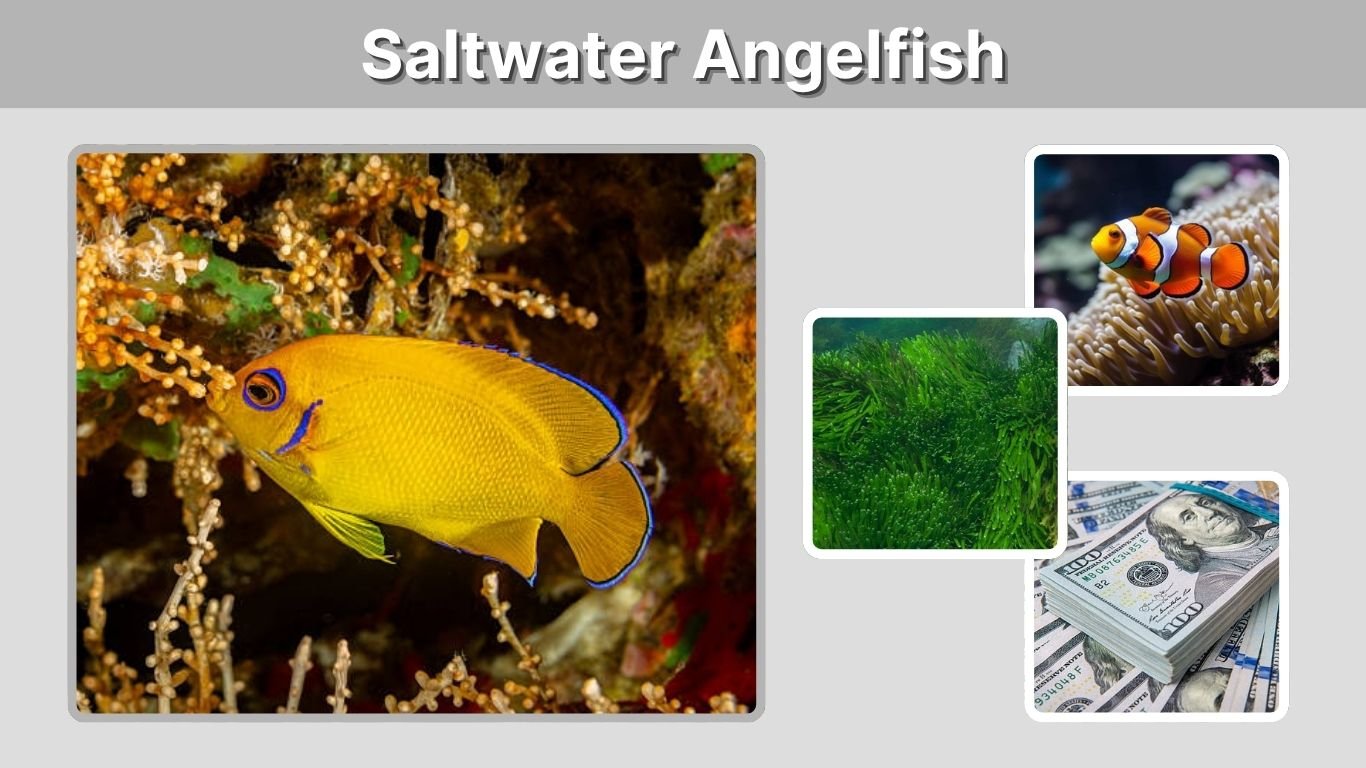
Saltwater angelfish are colorful reef fish belonging to the family Pomacanthidae. They include tiny dwarf species suitable for medium-sized marine aquariums and large species that may require tanks holding more than 200 gallons. Their brilliant blue, yellow, orange, black, and white patterns make them highly desirable, but many are territorial, sensitive to poor water quality, and likely to nip corals. Choosing the correct species and planning for its adult size are essential for successful care.
Are Angelfish Saltwater or Freshwater Fish?
There are both saltwater and freshwater fish called angelfish, but they are not closely related.
Marine angelfish belong to the family Pomacanthidae, which currently contains about 91 recognized species. They naturally inhabit tropical and subtropical marine environments, particularly coral and rocky reefs.
Freshwater angelfish belong to the cichlid family Cichlidae and are usually members of the genus Pterophyllum. They cannot live in saltwater, while marine angelfish cannot be placed in freshwater aquariums.
| Feature | Saltwater angelfish | Freshwater angelfish |
| Family | Pomacanthidae | Cichlidae |
| Natural habitat | Coral and rocky reefs | Tropical South American rivers |
| Water type | Marine | Freshwater |
| Typical colors | Blue, yellow, orange, black | Silver, black, white and domestic colors |
| Aquarium difficulty | Moderate to difficult | Beginner to moderate |
| Reef compatibility | Often risky | Not applicable |
What Do Saltwater Angelfish Look Like?
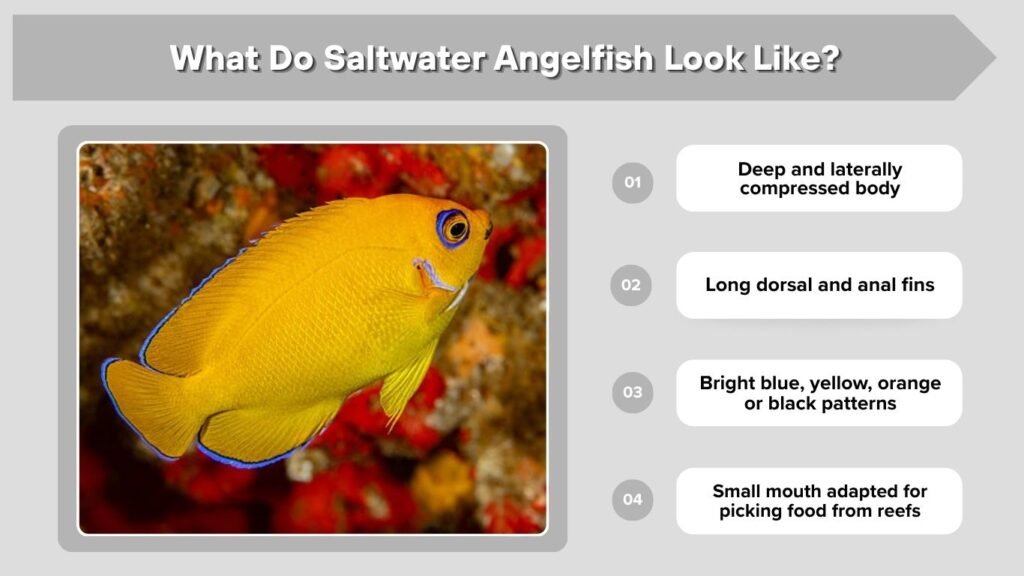
Marine angelfish generally have deep, flattened bodies, small mouths, strong fins, and bright contrasting colors. Depending on the species, they may display vertical bars, horizontal stripes, spots, masks, rings, or brightly colored fin edges.
Identification Features
- Deep and laterally compressed body
- Long dorsal and anal fins
- Bright blue, yellow, orange or black patterns
- Small mouth adapted for picking food from reefs
- Strong territorial behavior in many species
- Different juvenile and adult patterns in some species
- Adult lengths ranging from about three inches to nearly two feet
Juvenile Emperor Angelfish look dramatically different from adults. Young fish are dark blue with white circular markings, while adults develop yellow horizontal stripes, a dark eye mask, and a yellow tail.
Popular Types of Saltwater Angelfish
Saltwater angelfish are commonly divided into dwarf angelfish and large angelfish. Dwarf species are smaller, but they still require adequate swimming room, rockwork, and stable marine conditions.
| Type | Adult size | Suggested minimum tank |
| Cherub Angelfish | About 3 inches | 55 gallons |
| Flame Angelfish | About 4 inches | 70 gallons |
| Watanabe’s Angelfish | About 6 inches | Large established aquarium |
| Emperor Angelfish | About 15 inches | 220 gallons |
| Queen Angelfish | About 18 inches | 250 gallons |
| Koran Angelfish | About 14 inches | 250 gallons |
Tank recommendations vary among keepers and aquarium layouts, but adult size, activity, aggression, and available rockwork must all be considered.
Dwarf Saltwater Angelfish
Dwarf angelfish mainly belong to the genus Centropyge. Popular species include the Flame, Coral Beauty, Lemonpeel, Cherub, Flameback, Multicolor, and Bicolor Angelfish.
The Cherub Angelfish reaches only around three inches, but it can be surprisingly territorial. It requires numerous hiding places and live rock where it can graze on microalgae.
The Flame Angelfish has a brilliant red-orange body marked with dark vertical bars and blue-edged fins. It reaches around four inches in typical aquarium listings, although wild specimens may grow larger.
Large Saltwater Angelfish
Large marine angelfish include Emperor, Queen, French, Gray, Blueface, Majestic, Koran, Regal, Cortez, and Bluering species.
A Queen Angelfish can reach approximately 45 centimeters, or around 18 inches. Emperor Angelfish may reach approximately 40 centimeters and have a reported maximum age of 14 years in FishBase records.
Large species need substantial swimming space and cannot be permanently housed in small tanks simply because they are purchased as juveniles.
Saltwater Angelfish Tank Setup
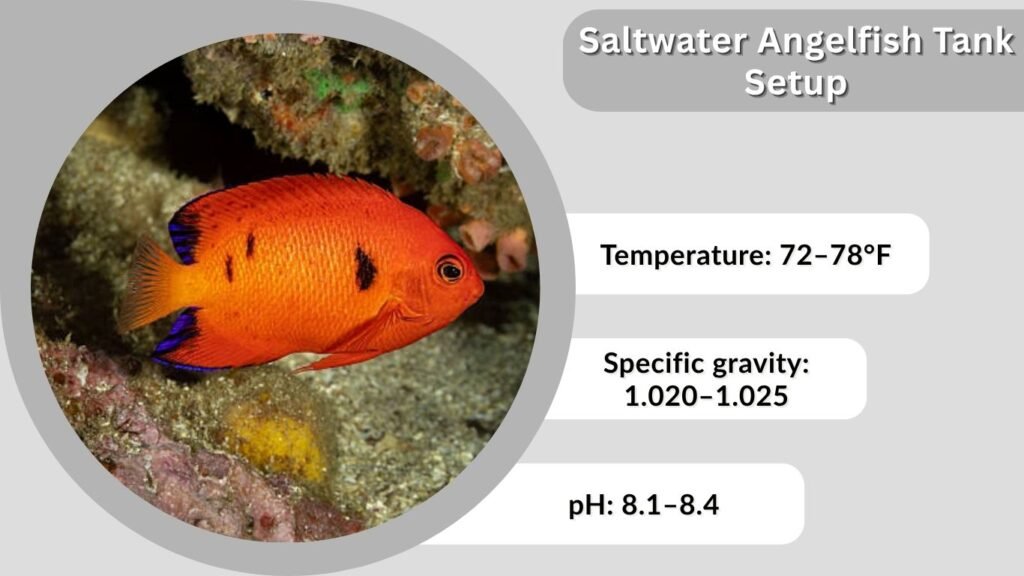
Marine angelfish generally perform best in mature, biologically stable aquariums. Their tanks should contain swimming room, caves, sheltered areas, and live rock for grazing.
Water Conditions
Commonly recommended water conditions include:
- Temperature: 72–78°F
- Specific gravity: 1.020–1.025
- pH: 8.1–8.4
- Alkalinity: approximately 8–12 dKH
- Ammonia and nitrite: 0 ppm
- Stable salinity and temperature
These values are broad guidelines shared across aquarium listings for dwarf and large marine angelfish. Sudden changes are often more dangerous than small differences within a suitable range.
Rockwork and Hiding Places
Arrange live rock to provide caves and passageways without removing all open swimming space. Large species such as Emperor Angelfish need deep caves for security, while dwarf species require numerous smaller hiding places.
Live rock also supports natural grazing on algae and other reef growth. Secure the rockwork carefully because large angelfish can disturb loose decorations while swimming or feeding.
What Do Saltwater Angelfish Eat?
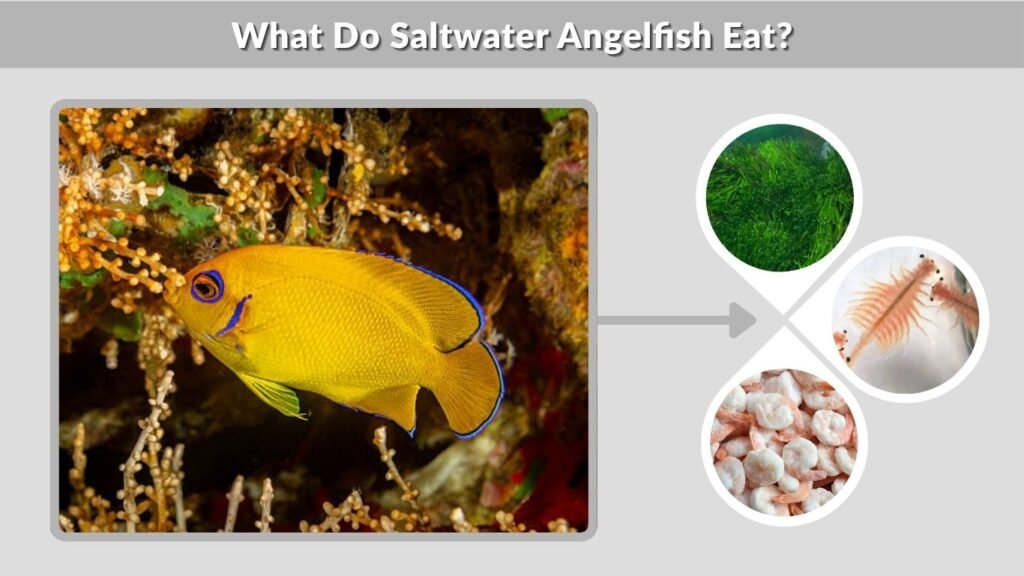
Most marine angelfish are omnivores, but their natural diets differ by species. Many consume algae, sponges, tunicates, bryozoans, small invertebrates, coral organisms, and other materials growing on reefs.
French Angelfish, for example, feed on sponges, algae, tunicates, zoantharians, gorgonians, and bryozoans. Watanabe’s Angelfish are plankton feeders that occupy outer reef slopes and drop-offs.
Suitable Aquarium Foods
A varied diet may include:
- Marine algae and spirulina
- Sponge-containing angelfish formulas
- Mysis shrimp
- Frozen shrimp
- Enriched brine shrimp
- High-quality marine pellets
- Seaweed sheets
- Foods made for omnivorous reef fish
Large Pomacanthus and Holacanthus species often benefit from foods containing sponge material. Many angelfish should receive several small meals throughout the day rather than one large feeding.
Are Saltwater Angelfish Reef-Safe?
Most saltwater angelfish should be considered reef-safe with caution rather than completely reef-safe.
Large species commonly nip soft corals, stony corals, zoanthids, sponges, and clam mantles. Even dwarf angelfish may repeatedly pick at corals after behaving well for several months.
Angelfish from the genus Genicanthus, including Watanabe’s Angelfish, are often considered better choices for reef aquariums because they naturally feed mainly from the water column rather than constantly grazing on attached reef organisms. However, aquarium compatibility can still vary between individuals.
Saltwater Angelfish Tank Mates
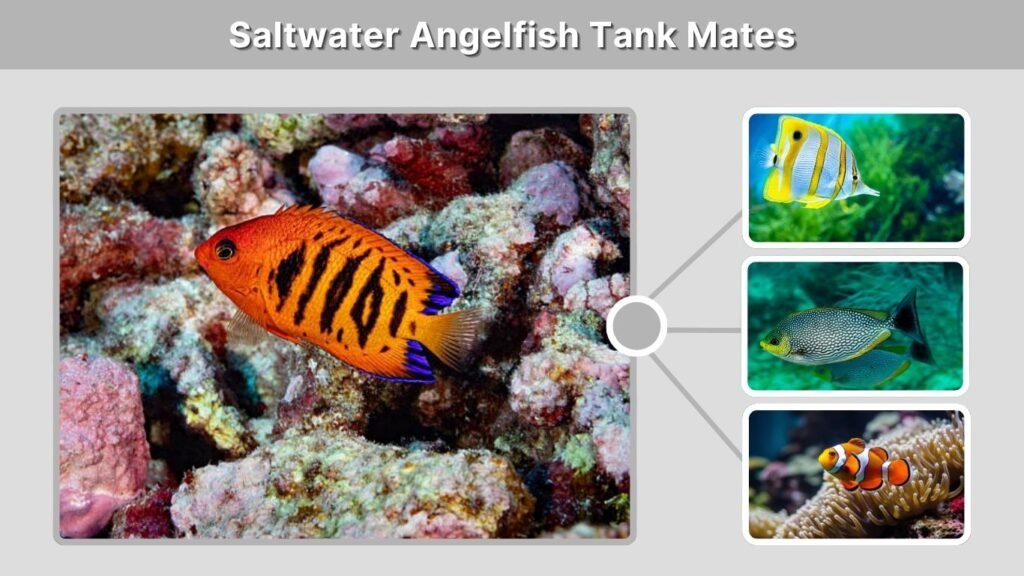
Marine angelfish are generally semi-aggressive. Many defend caves, feeding areas, or entire sections of the aquarium.
Appropriate tank mates may include suitably sized tangs, wrasses, butterflyfish, rabbitfish, clownfish, gobies, and other marine species that are not easily swallowed or bullied. Compatibility depends heavily on aquarium size and the temperament of each fish.
Avoid placing multiple similar-looking angelfish together without a very large aquarium and careful planning. Cherub Angelfish males can fight intensely, while large angelfish may become territorial toward related species.
Common Saltwater Angelfish Diseases
Saltwater angelfish can develop marine ich, marine velvet, flukes, bacterial infections, and stress-related health problems.
Marine ich is caused by Cryptocaryon irritans and may produce white spots, clamped fins, lethargy, scratching, and breathing difficulties. Marine velvet affects the skin and gills and can cause a fine dusty coating, rapid breathing, appetite loss, and high mortality.
New fish should be quarantined before entering the main aquarium. Disease prevention depends on stable water quality, proper nutrition, sanitation, reduced crowding, and avoiding sudden environmental changes.
Buying a Saltwater Angelfish
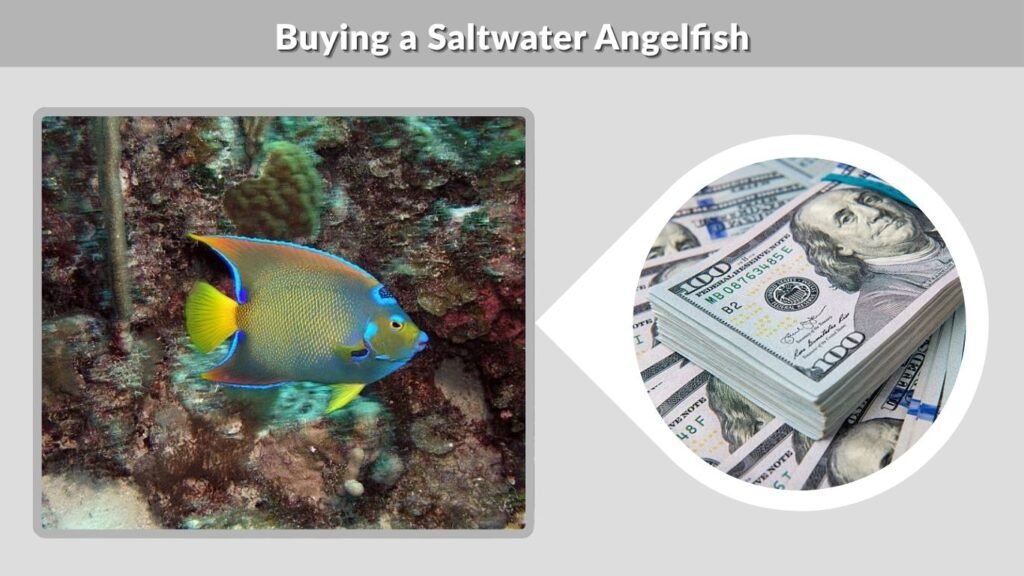
Choose a fish that is actively swimming, breathing normally, and accepting prepared food. Avoid individuals with cloudy eyes, damaged fins, visible spots, rapid gill movement, severe weight loss, or a pinched stomach.
Research the adult size rather than purchasing according to juvenile appearance. A small Emperor, Queen, Koran, or Cortez Angelfish can eventually require an aquarium exceeding 200 gallons. Whenever available, responsibly sourced or captive-bred fish are preferable.
FAQs
Are angelfish naturally saltwater fish?
Some angelfish are marine, while others are freshwater. Saltwater angelfish belong to Pomacanthidae, whereas common freshwater aquarium angelfish belong to the cichlid genus Pterophyllum. They require entirely different water conditions.
What is the smallest saltwater angelfish?
The Cherub or Atlantic Pygmy Angelfish is among the smallest commonly available species, reaching approximately three inches. Despite its size, it can be territorial and generally needs a tank of around 55 gallons with live rock.
What is the best saltwater angelfish for beginners?
Hardier dwarf varieties such as the Coral Beauty or Flame Angelfish are often considered more manageable than large Emperor, Queen, or Regal Angelfish. However, they still require a mature aquarium, stable water conditions, suitable food, and careful reef planning.
Can saltwater angelfish live together?
They sometimes can, but aggression is common between similar species or fish with comparable colors and body shapes. Success is more likely in very large aquariums containing extensive rockwork and established territories.
How long do saltwater angelfish live?
Lifespan varies by species and care. FishBase reports a maximum age of 27 years for the French Angelfish and 14 years for the Emperor Angelfish. Captive longevity depends on tank size, diet, water quality, disease prevention, and stress.