
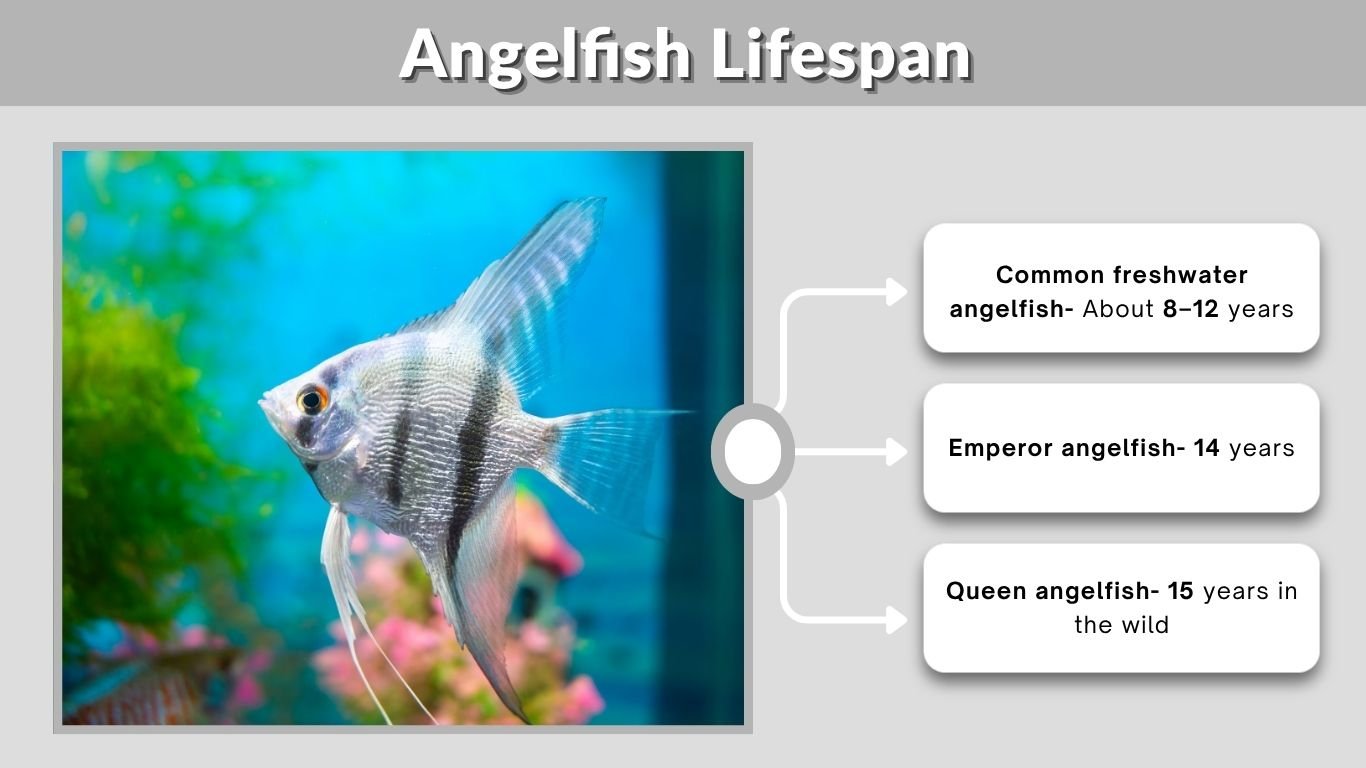
The average freshwater angelfish lifespan is approximately 8–12 years in a well-maintained aquarium. Ten years is a realistic goal for a healthy fish, although poor water quality, overcrowding, disease, stress, and an unsuitable diet can shorten its life considerably.
The name “angelfish” also applies to many unrelated marine species. Freshwater angelfish belong to the genus Pterophyllum, while emperor, queen, flame, coral beauty, and French angelfish are saltwater reef fish with different care requirements and lifespans.
How Long Do Freshwater Angelfish Live?
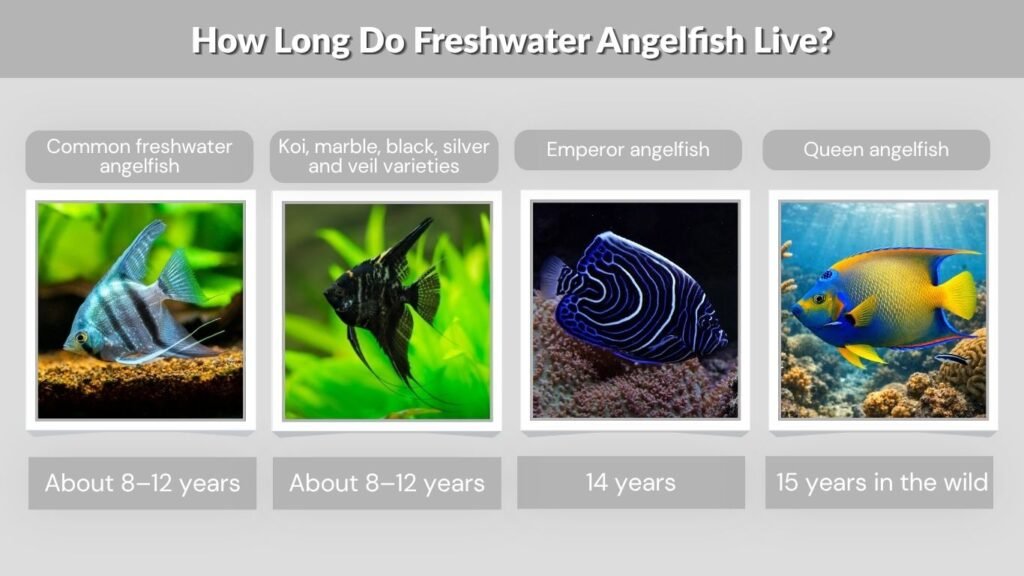
Common freshwater angelfish, especially Pterophyllum scalare, can live for 8–12 years when provided with clean water, sufficient swimming space, minimal stress, and nutritious food. Some care guides use “up to 10 years” as a more conservative expectation.
Many pet angelfish die younger than their biological potential because of preventable husbandry problems. A fish kept in unstable water or an overcrowded aquarium may survive only a few years, while one raised in a mature, carefully maintained tank can remain healthy for a decade or longer.
Angelfish Lifespan and Size
| Angelfish type | Expected or recorded lifespan | Adult size |
| Common freshwater angelfish | About 8–12 years | Up to 6 inches long |
| Koi, marble, black, silver and veil varieties | About 8–12 years | Similar to common angelfish |
| Emperor angelfish | Maximum reported age of 14 years | Up to about 16 inches |
| Queen angelfish | Up to approximately 15 years in the wild | Up to about 18 inches |
| French angelfish | Maximum reported age of 27 years | Up to about 16 inches |
Freshwater and marine angelfish are unrelated groups, so their lifespan and size should not be treated as interchangeable. FishBase records a maximum reported age of 14 years for emperor angelfish and 27 years for French angelfish, while queen angelfish may live up to approximately 15 years in the wild.
Do Different Freshwater Varieties Have Different Lifespans?
Koi, marble, black, silver, zebra, albino, platinum and veil angelfish are generally color or fin varieties of Pterophyllum scalare. There is no strong evidence that each variety has a completely different natural lifespan, so the general 8–12-year range is appropriate for most of them.
However, genetics can affect individual health. Heavily selected lines may occasionally be more susceptible to weak growth, malformed fins, reduced fertility, or other inherited problems. Purchasing active, well-developed fish from a responsible breeder improves the chance of long-term health.
Altum Angelfish Lifespan
Altum angelfish, Pterophyllum altum, are a separate freshwater species rather than a color variety. They can grow considerably taller than common angelfish, reaching approximately 10–13 inches from the top of the dorsal fin to the bottom of the anal fin.
A dependable, widely accepted species-specific lifespan for altum angelfish is difficult to establish. They may potentially remain in an aquarium for many years, but they are generally more demanding than common captive-bred angelfish. Stable water conditions and careful acclimation are particularly important.
How to Help an Angelfish Live Longer
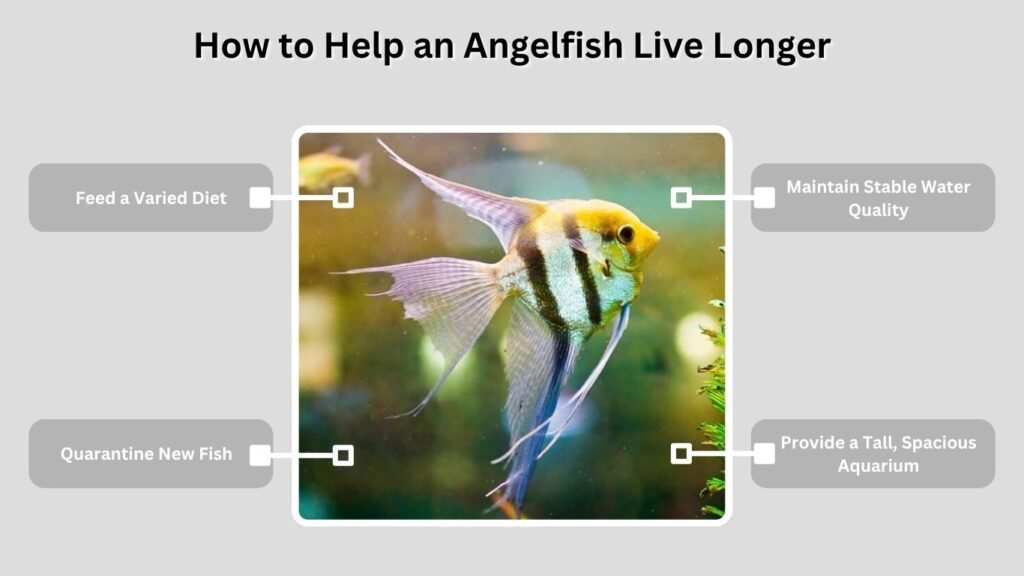
An angelfish’s lifespan depends on more than its variety. Aquarium size, water stability, nutrition, stress, disease prevention, and compatibility all influence how long the fish survives.
Maintain Stable Water Quality
Freshwater angelfish tolerate a reasonably broad range of conditions, but sudden changes are stressful. Captive-bred fish are commonly maintained at approximately 78–86°F, with a pH between about 6.0 and 8.0. Stability is usually more important than repeatedly adjusting the water to reach one exact number.
Use a fully cycled filter and test the water regularly. Perform partial water changes before waste accumulates, remove uneaten food, and clean filter media without destroying the beneficial bacteria.
Provide a Tall, Spacious Aquarium
Adult freshwater angelfish can reach approximately six inches in body length and eight inches in total height, including their fins. Their tall shape makes aquarium height especially important.
A 29-gallon aquarium can accommodate a limited number of adults when stocking and filtration are carefully managed. Larger tanks provide more stable water, additional territories, and greater freedom to separate fish during breeding disputes.
Overcrowding can increase:
- Territorial fighting
- Fin damage
- Chronic stress
- Waste production
- Disease transmission
- Competition during feeding
Feed a Varied Diet
Angelfish are omnivores and benefit from a mixture of quality pellets or flakes and suitable frozen, live, or freeze-dried foods. Krill, brine shrimp, bloodworms, and similar foods can supplement a prepared staple diet.
Avoid feeding only one food for years. A varied diet provides a broader nutritional profile and may support better growth, coloration, immune function, and reproductive condition.
At the same time, overfeeding can pollute the aquarium and contribute to obesity. Give portions the fish can finish promptly rather than allowing food to decay on the bottom.
Reduce Aggression and Stress
Angelfish are cichlids and may become territorial, particularly after forming breeding pairs. Males may challenge one another, while both parents can aggressively defend eggs and fry.
Provide plants, driftwood, and visual barriers that allow weaker fish to escape an aggressor’s view. Separate individuals when one fish is continually chased, injured, prevented from eating, or forced to remain in a corner.
Avoid small tank mates that may be eaten and aggressive fin-nipping species that can damage the angelfish’s long fins.
Quarantine New Fish
New fish can introduce parasites or infections into an established aquarium. Keeping new arrivals in a separate quarantine tank allows you to observe their appetite, breathing, swimming, waste, skin, and fins before exposing older angelfish.
Quarantine is especially valuable when the established fish are mature. An older angelfish may recover more slowly from severe infection or medication-related stress.
Signs of an Aging Angelfish
An older angelfish may become less active and spend more time resting. Its colors may appear less intense, and damaged fins may regrow more slowly than they did when the fish was young.
Possible age-related changes include:
- Slower swimming
- Reduced breeding activity
- Less interest in food
- Gradual weight loss
- Faded coloration
- Cloudy eyes
- Increased sensitivity to poor water quality
These signs are not always caused by age. Parasites, bacterial infections, poor nutrition, bullying, and unsuitable water can produce similar symptoms. Check the aquarium conditions and observe the fish carefully before assuming it is simply getting old.
Freshwater vs. Saltwater Angelfish Lifespan
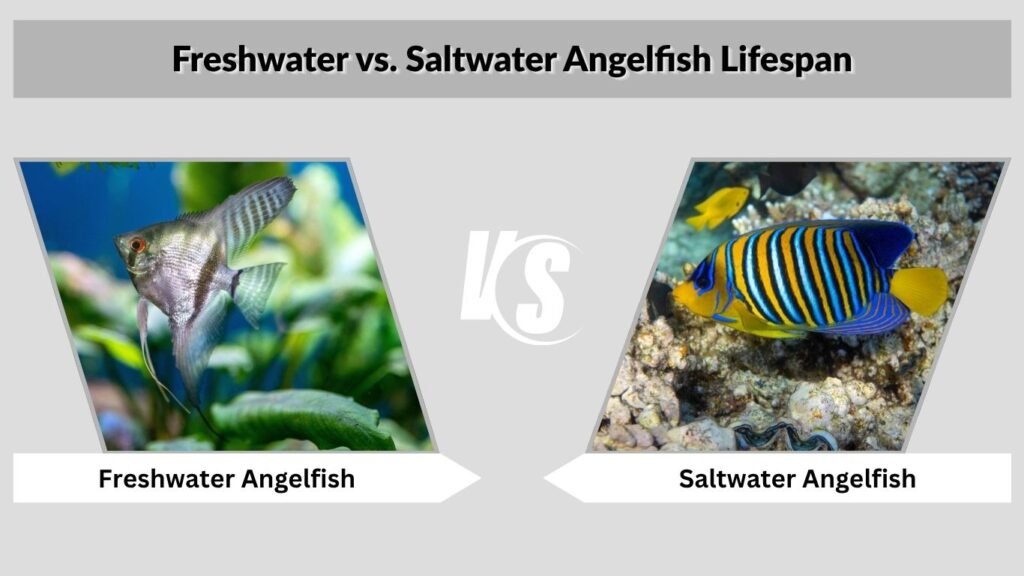
Saltwater angelfish belong to the family Pomacanthidae and include dozens of species with very different adult sizes and care requirements. They should not be given the same lifespan estimate as freshwater angelfish.
For example, the maximum reported age is 14 years for emperor angelfish and 27 years for French angelfish. Queen and king angelfish may live for approximately 15 years. These figures are species records or general estimates, not guarantees for fish kept in home aquariums.
Reliable lifespan records for flame, coral beauty, bicolor, regal, lemonpeel and other marine angelfish are less consistent. Their survival depends heavily on aquarium maturity, tank size, diet, collection history, acclimation, disease prevention, and the keeper’s experience.
FAQs
What Is the Average Lifespan of an Angelfish?
A well-cared-for freshwater angelfish generally lives around 8–12 years. Ten years is a reasonable expectation, although some fish die younger because of disease, unstable water, aggression, overcrowding, or poor nutrition.
How Long Do Angelfish Live in a Tank?
Freshwater angelfish can live approximately 8–12 years in an aquarium that provides clean, warm water, suitable filtration, adequate space, compatible tank mates, and a balanced diet. A poorly maintained tank may substantially reduce that lifespan.
Do Koi and Marble Angelfish Live as Long as Silver Angelfish?
Yes, they have approximately the same expected lifespan. Koi, marble, black, silver, albino and many other aquarium varieties are generally forms of Pterophyllum scalare, so most can live around 8–12 years with comparable care.
How Long Do Emperor Angelfish Live?
FishBase lists a maximum reported age of 14 years for the marine emperor angelfish. Its actual aquarium lifespan depends on tank size, water quality, diet, stress, disease prevention, and the condition in which it was collected.
What Shortens an Angelfish’s Lifespan?
The most common problems include uncycled aquariums, accumulated waste, sudden temperature or pH changes, small tanks, poor diets, untreated disease, aggressive tank mates, and chronic territorial stress. Regular observation and stable care provide the best chance of a long life.