
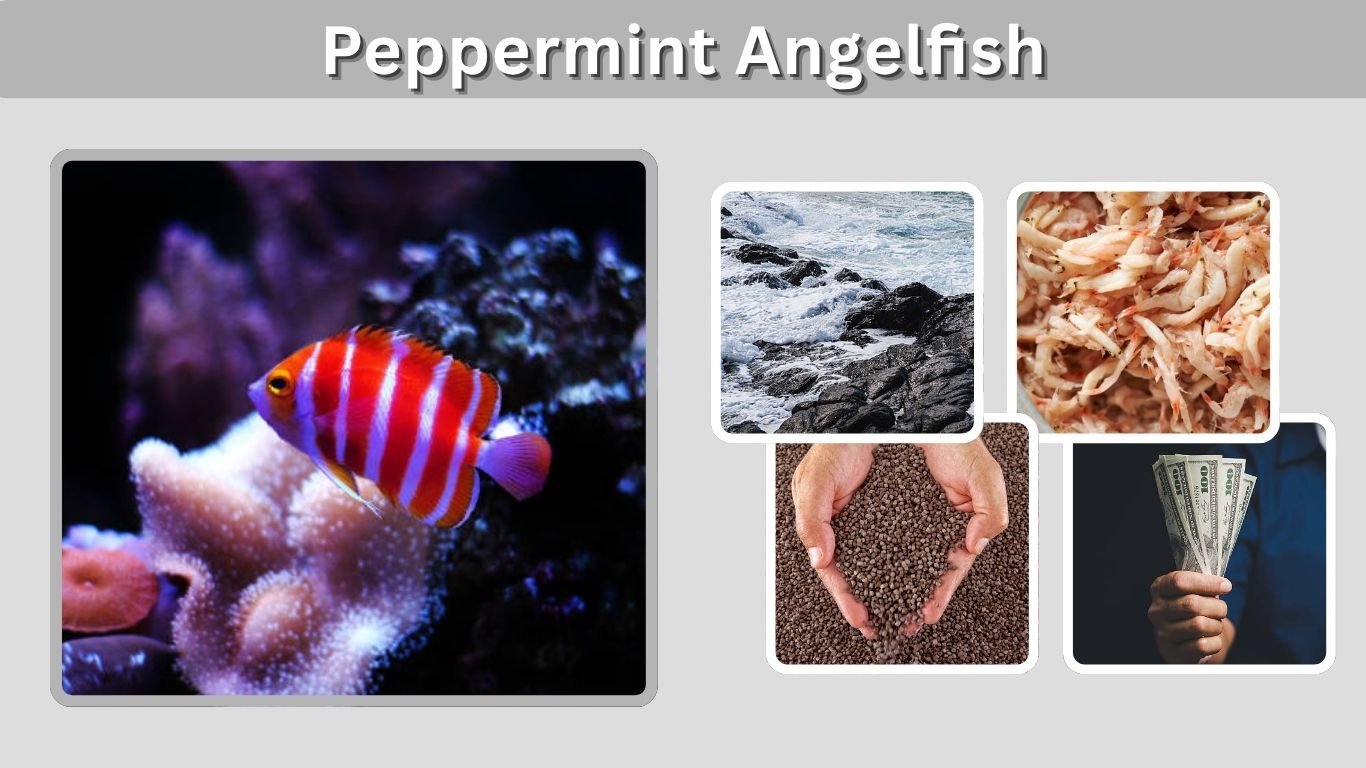
The peppermint angelfish is one of the rarest and most recognizable marine angelfish. Its compact body is covered with brilliant red-orange and white vertical bands that resemble peppermint candy. Unlike commonly sold dwarf angelfish, this species inhabits deep reefs around Rarotonga in the Cook Islands and is seldom available to private aquarists. Its limited range, extreme collection depth, specialized handling requirements, and tiny supply have historically made it one of the world’s most expensive aquarium fish.
What Is a Peppermint Angelfish?
The peppermint angelfish is a small marine fish belonging to the family Pomacanthidae. Its accepted scientific name is Centropyge boylei. Some older aquarium publications use Paracentropyge boylei, but the World Register of Marine Species currently accepts it within the genus Centropyge.
It was scientifically described in 1992 and named after Charles “Chip” Boyle, the diver and collector credited with discovering the species. It is sometimes called the peppermint dwarf angelfish or peppermint pygmy angelfish.
Quick Facts
| Characteristic | Information |
| Scientific name | Centropyge boylei |
| Family | Pomacanthidae |
| Environment | Marine |
| Maximum length | About 7 cm or 2.8 inches |
| Natural range | Rarotonga, Cook Islands |
| Recorded depth | 53–120 meters |
| Habitat | Deep reef ledges, caves, and rubble |
| Aquarium availability | Extremely rare |
| Freshwater species | No |
Peppermint Angelfish Identification
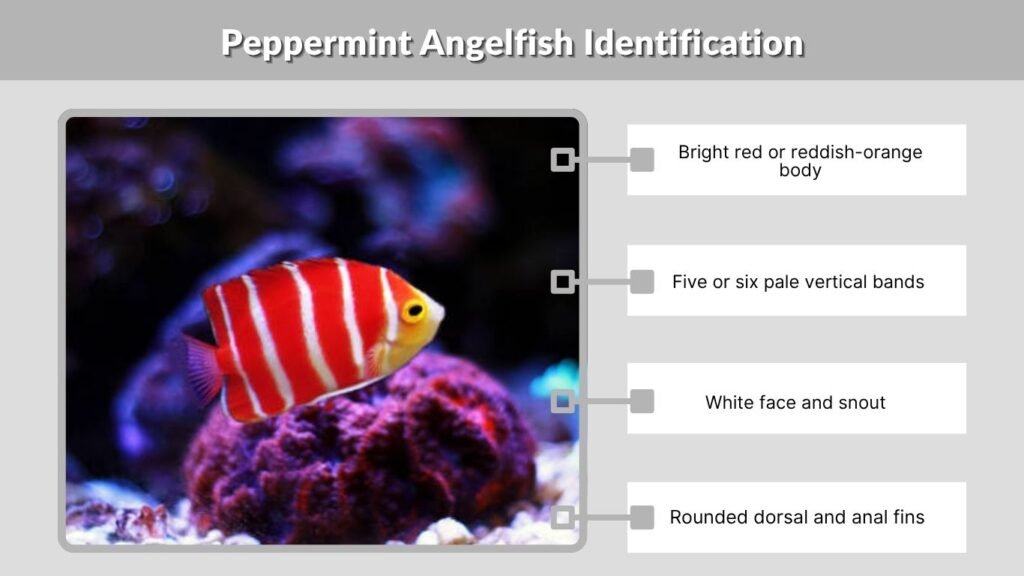
The fish has a short, deep, laterally compressed body. Its intense coloration makes it difficult to confuse with most other dwarf angelfish.
Key Identification Features
- Bright red or reddish-orange body
- Five or six pale vertical bands
- White face and snout
- Yellow-orange coloring around the eye
- Rounded dorsal and anal fins
- Pale blue edging on parts of the fins
- Transparent or lightly colored tail
- Small adult body size
The width and shape of the bands can vary slightly among individuals. Lighting also changes the appearance of the red coloration, making some fish look orange and others deep crimson.
“Rainbow peppermint angelfish” is not generally recognized as a separate species. It is more likely a descriptive or commercial name based on the fish’s striking colors.
Peppermint Angelfish Size
The maximum documented total length is approximately 7 centimeters, or 2.8 inches. This makes it a true dwarf marine angelfish despite its unusually high value.
Its small size does not automatically make it suitable for a small aquarium. The species comes from deep, dimly lit reef environments, and very little standardized husbandry information is available. Any aquarium housing one would need exceptional stability, suitable cover, carefully controlled lighting, and experienced professional management.
Where Do Peppermint Angelfish Live?
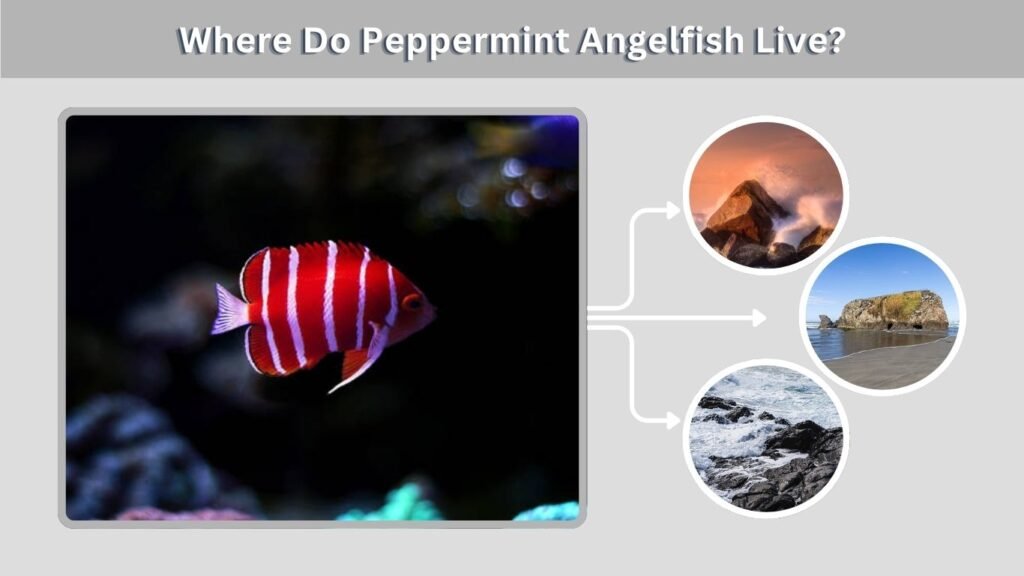
Peppermint angelfish are known from Rarotonga in the Cook Islands, in the eastern-central Pacific Ocean. Their documented distribution is remarkably restricted compared with many other dwarf angelfish.
Natural Habitat
They inhabit steep seaward reefs at recorded depths of approximately 53–120 meters, or 174–394 feet. Within this deep-reef environment, they occur around:
- Rocky ledges
- Caves and overhangs
- Coral rubble
- Dark crevices
- Steep reef slopes
These depths receive far less sunlight than shallow coral reefs. Fish living there experience dim conditions, cooler water, and greater pressure. Their secretive habitat also makes locating, observing, and collecting them exceptionally difficult.
Why Are Peppermint Angelfish So Rare?
Their rarity in aquariums does not necessarily mean that only a specific small number remain in the ocean. Reliable population estimates are unavailable because the species inhabits deep, difficult-to-survey reefs.
Its rarity in the aquarium trade results primarily from several factors:
- It has a very limited known geographical range.
- It lives at depths beyond ordinary recreational diving.
- Divers have little working time at such depths.
- Collected fish require careful decompression.
- Transporting a deep-water fish without injury is difficult.
- Only a tiny number enter the aquarium trade.
FishBase describes the species as never or only rarely exported. These challenges explain why ordinary aquarium stores almost never stock it.
Peppermint Angelfish Price
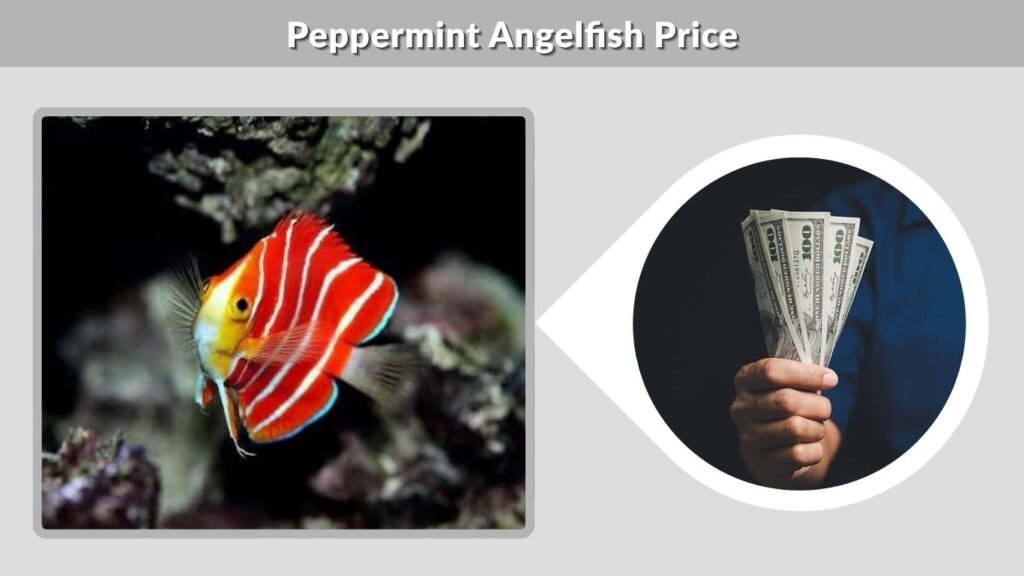
There is no dependable standard retail price because the species is not regularly available for sale. Historical aquarium reports have associated individual peppermint angelfish with prices around $20,000, while other widely repeated estimates have reached approximately $30,000. These figures should be understood as exceptional historical reports—not a guaranteed current market price.
Why Does It Cost So Much?
Its price reflects:
- Specialized deep-diving operations
- Long decompression procedures
- Risk to divers and collected fish
- International transportation
- Extremely limited supply
- Strong collector demand
- Specialized aquarium care
The fish’s small size makes its price even more remarkable. However, a high asking price does not prove that a seller possesses a genuine, legally obtained specimen.
Buying a Peppermint Angelfish
Be cautious with websites claiming to have peppermint angelfish permanently available. A genuine seller should provide the fish’s origin, collection history, current video, feeding record, health information, legal documentation, and secure shipping arrangements.
Never confuse it with the peppermint angelfish sold under inaccurate names or with more common striped dwarf-angelfish species. Consult a marine-fish expert before making any payment.
Peppermint Angelfish Diet
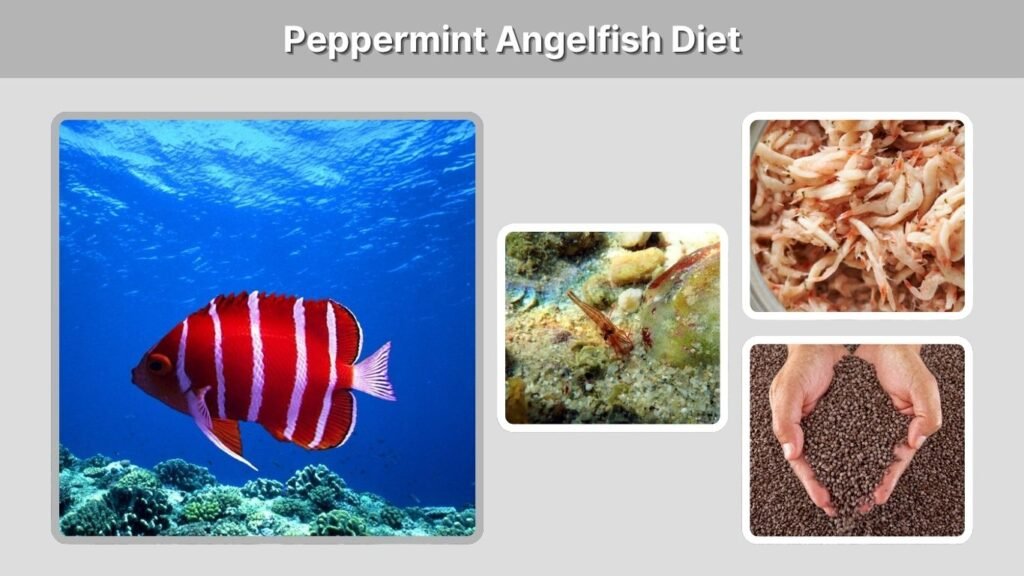
The natural diet has not been thoroughly documented. Like related dwarf angelfish, it probably grazes on small organisms and organic material growing on reef surfaces, but species-specific feeding evidence remains limited.
Aquarium references suggest offering small crustaceans, zooplankton, mysis shrimp, Artemia, pods, and algae-based foods. A mature aquarium with established rock surfaces may also provide opportunities for natural grazing. These suggestions are based partly on related angelfish and limited captive experience rather than a complete study of the species’ wild diet.
A suitable captive diet might include:
- Mysis shrimp
- Enriched brine shrimp
- Copepods
- Finely chopped marine foods
- Sponge-based angelfish food
- Spirulina preparations
- High-quality micro-pellets
Small meals offered several times daily would be preferable to one large feeding, particularly while the fish adjusts to captivity.
Peppermint Angelfish Care
Peppermint angelfish should not be treated like a routine beginner aquarium fish. Its deep-water origin, scarcity, value, and poorly documented requirements make it suitable only for highly experienced aquarists, research facilities, or public aquariums.
Aquarium Setup
A specialized setup should provide:
- A mature biological filtration system
- Excellent water quality
- Numerous caves and overhangs
- Dim or carefully controlled lighting
- Gentle areas away from strong currents
- Stable temperature and salinity
- Peaceful tankmates
- Constant observation of feeding behavior
One historically important specimen collected in 2001 was still reported alive in 2015. Its aquarium used subdued lighting and a habitat designed around the fish’s deep-reef behavior, demonstrating that long-term survival is possible under highly specialized care.
However, one successful case does not establish a universal care formula. Published tank-size, temperature, aggression, and feeding recommendations remain inconsistent because so few individuals have been maintained.
Is the Peppermint Angelfish Reef Safe?
Its reef compatibility is uncertain. There is not enough captive evidence to describe the species as reliably reef safe. Related dwarf angelfish may graze on algae, sponges, tunicates, and coral surfaces, and some individuals nip coral polyps.
A valuable specimen should not be placed immediately into a display containing rare corals. Careful observation in a controlled, mature system would be safer. Reef references list its reef safety and aggressiveness as unknown because available information remains insufficient.
Peppermint Angelfish Breeding
Its reproductive behavior in the wild remains poorly documented. Based on related dwarf angelfish, adults likely release floating eggs into the water during spawning, followed by a planktonic larval stage.
The Association of Zoos and Aquariums Marine Fish Egg Catalog contains documented egg measurements for Centropyge boylei. However, the existence of recorded eggs does not mean that the species is routinely captive-bred or commercially produced.
Successful large-scale breeding would require compatible adults, controlled spawning conditions, collection of tiny eggs, suitable microscopic larval food, and specialized rearing systems.
Peppermint Angelfish Lifespan
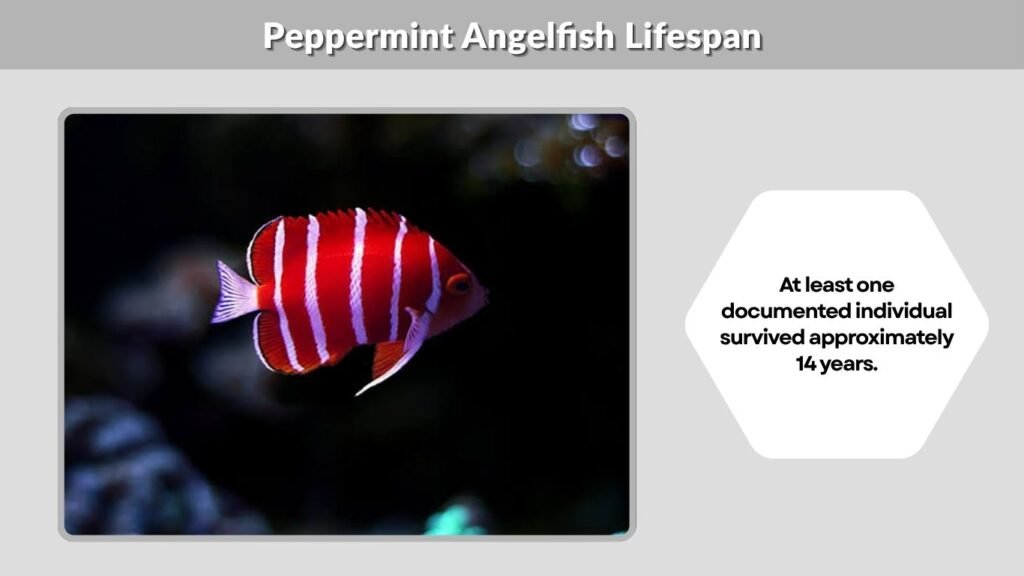
No scientifically established average lifespan is available for wild or captive peppermint angelfish. The species has been kept too rarely to produce a dependable average.
At least one documented individual survived approximately 14 years after being collected in 2001 and photographed in 2015. This suggests that the species may be capable of a long aquarium life when its environmental and nutritional requirements are properly met.
Interesting Peppermint Angelfish Facts
- It grows to only about 2.8 inches long.
- It is a saltwater fish, not a freshwater angelfish.
- Its accepted scientific name is Centropyge boylei.
- It is known primarily from Rarotonga in the Cook Islands.
- It has been recorded as deep as 120 meters.
- Its red-and-white bands resemble peppermint candy.
- It is rarely exported for aquarium use.
- Reported historical prices reached tens of thousands of dollars.
- Reliable wild population figures are unavailable.
- Its care and reproduction remain poorly understood.
FAQs
How much does a peppermint angelfish cost?
There is no regular market price because specimens are almost never available. Historical reports commonly mention prices of about $20,000–$30,000, but current asking prices may differ considerably.
Can you keep a peppermint angelfish at home?
Technically, it may survive in captivity, but it is inappropriate for nearly all home aquariums. It requires expert deep-water fish care, exceptional system stability, dim shelter, specialized feeding, and careful monitoring.
Is the peppermint angelfish freshwater or saltwater?
It is strictly a marine saltwater fish. It inhabits deep tropical reef slopes around the Cook Islands and cannot survive in a freshwater aquarium.
How many peppermint angelfish are left?
No reliable total population estimate is available. The fish is difficult to survey because it occupies deep reefs. Its rarity in stores should not be confused with a scientifically measured wild population.
What makes the peppermint angelfish expensive?
Its restricted known range, deep habitat, difficult collection, decompression requirements, transport risks, tiny supply, and strong demand among collectors all contribute to its exceptional price.