
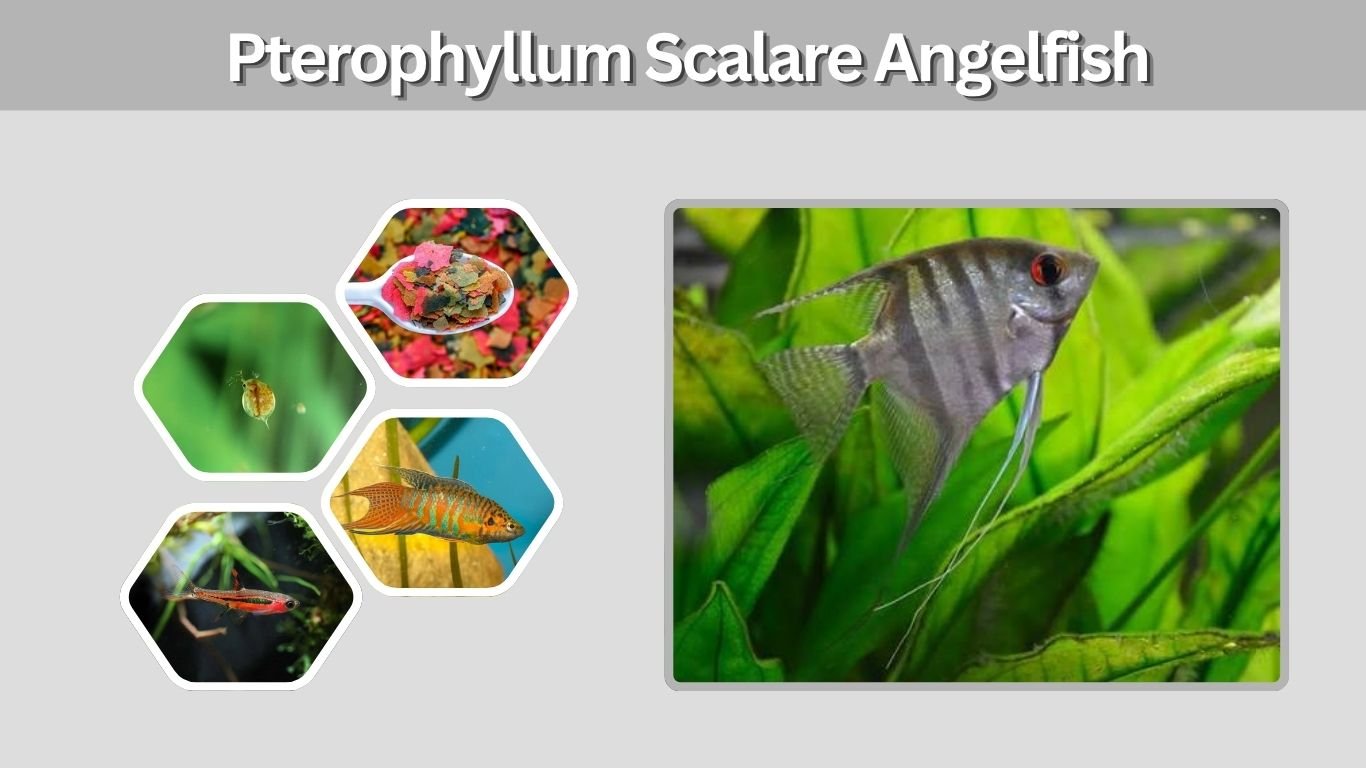
The Pterophyllum scalare angelfish is one of the most recognizable freshwater aquarium fish. Its compressed body, tall triangular fins, trailing pelvic filaments, and graceful swimming style make it a popular centerpiece species. Native to tropical South America, this angelfish naturally inhabits calm, warm waters with dense aquatic vegetation. Although captive-bred fish adapt well to aquariums, they still need a tall, properly cycled tank, stable water conditions, a varied diet, and compatible companions to remain healthy.
Pterophyllum Scalare Overview
Pterophyllum scalare belongs to the cichlid family, Cichlidae. It is commonly called the freshwater angelfish, common angelfish, or scalare angelfish.
| Feature | Details |
| Scientific name | Pterophyllum scalare |
| Common name | Freshwater angelfish |
| Family | Cichlidae |
| Origin | Tropical South America |
| Adult length | Up to about 6 inches |
| Overall height | Around 8–10 inches with fins |
| Lifespan | Approximately 8–12 years |
| Temperament | Semi-aggressive |
| Diet | Omnivorous |
| Water temperature | 75–82°F |
| Recommended tank | 29 gallons or larger |
| Care level | Moderate |
Wild adults inhabit swamps, flooded areas, tributaries, and slow-moving waters where vegetation is dense. Their tall, narrow bodies help them move between vertical stems, roots, and submerged branches.
Pterophyllum Scalare Angelfish Appearance and Identification
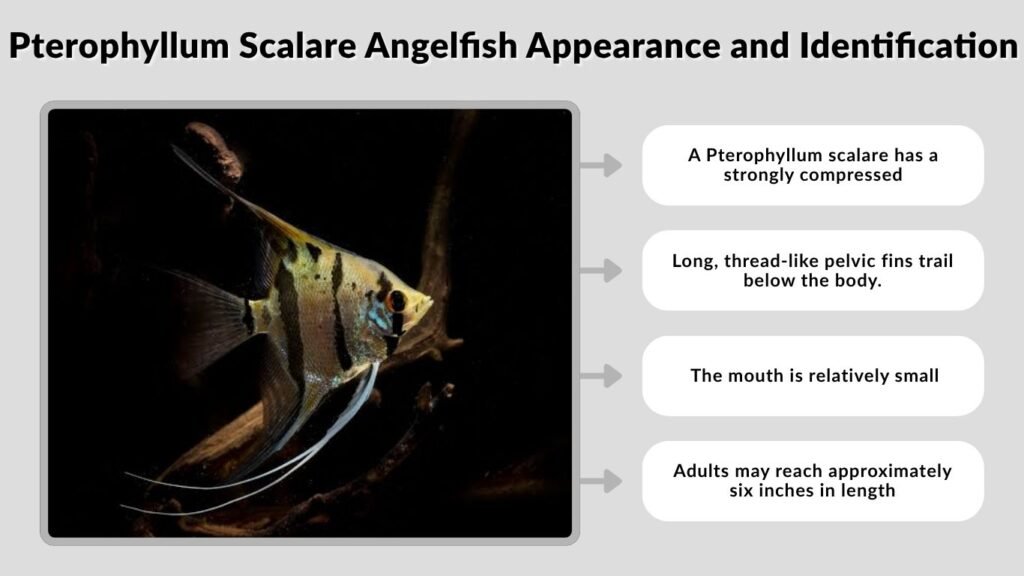
The classic freshwater angelfish has a silvery body marked with dark vertical bands. Selective breeding has produced many additional patterns, colors, and fin shapes.
Body Shape
A Pterophyllum scalare has a strongly compressed, disc-shaped body. Its dorsal and anal fins extend vertically, creating the triangular outline associated with angelfish.
Long, thread-like pelvic fins trail below the body. The mouth is relatively small, while the eyes are positioned near the front of the head. Adults may reach approximately six inches in length, but their extended fins can make them considerably taller.
Natural Color
Wild-type angelfish generally have silver or gray bodies with several dark vertical bars. These bands help break up the fish’s outline among vegetation and shadows.
The bars may become darker when the fish is frightened, excited, defending territory, or preparing to breed. A stressed or submissive fish may temporarily appear pale.
Popular Color Varieties
Common captive-bred varieties include:
- Silver angelfish
- Zebra angelfish
- Black angelfish
- Marble angelfish
- Koi angelfish
- Gold angelfish
- Platinum angelfish
- Philippine blue angelfish
- Red marble angelfish
- Veiltail angelfish
These varieties belong primarily to the same species and generally require similar care. However, long-finned individuals may be more vulnerable to fin damage and should not live with persistent fin-nipping fish.
Pterophyllum Scalare vs. Other Angelfish
The genus Pterophyllum contains closely related freshwater angelfish. P. scalare is the species most commonly found in home aquariums, while P. altum and P. leopoldi are less frequently available.
| Feature | P. scalare | P. altum | P. leopoldi |
| Availability | Very common | Uncommon | Rare |
| Body | Tall and rounded | Extremely tall | Smaller and elongated |
| Care difficulty | Moderate | More demanding | Moderate to demanding |
| Captive varieties | Numerous | Limited | Limited |
| Best suited for | Most aquarists | Experienced keepers | Experienced keepers |
Pterophyllum altum normally develops a taller body and a more noticeable indentation above the snout. It often requires softer, warmer, and more acidic water. Fish sold simply as “freshwater angelfish” are usually P. scalare or domesticated fish derived largely from scalare-type stock.
Pterophyllum Scalare Angelfish Tank Size and Setup
A small juvenile angelfish may appear comfortable in a compact aquarium, but adults need substantially more swimming room and vertical clearance.
Recommended Tank Size
A 29-gallon tall aquarium is a practical minimum for one adult or a compatible pair. A 40- to 55-gallon tank provides a better long-term environment, especially for a group or community.
Aquarium length matters, but height is particularly important because mature angelfish develop extended dorsal and anal fins. FishBase recommends an aquarium measuring at least 100 centimeters in length for group maintenance.
A group of juveniles may live together peacefully at first. As they mature and form pairs, territorial disputes can become more intense. The keeper may need to move aggressive pairs or weaker individuals.
Aquarium Decoration
Create a natural-looking setup with:
- Tall live plants
- Amazon sword plants
- Vallisneria
- Java fern
- Anubias
- Smooth driftwood
- Submerged roots
- Open central swimming space
Place tall plants and wood around the sides and back while leaving room in the center. Avoid sharp rocks and rough artificial decorations that could tear the fins.
Filtration and Water Movement
Use a filter capable of maintaining excellent water quality without producing an excessively powerful current. Angelfish naturally occupy calm or slow-flowing habitats and may struggle when constantly swimming against strong output.
A sponge prefilter can protect delicate fins and prevent young fry from being drawn into the intake. Regular partial water changes are also necessary because filtration alone does not remove all dissolved waste.
Water Parameters
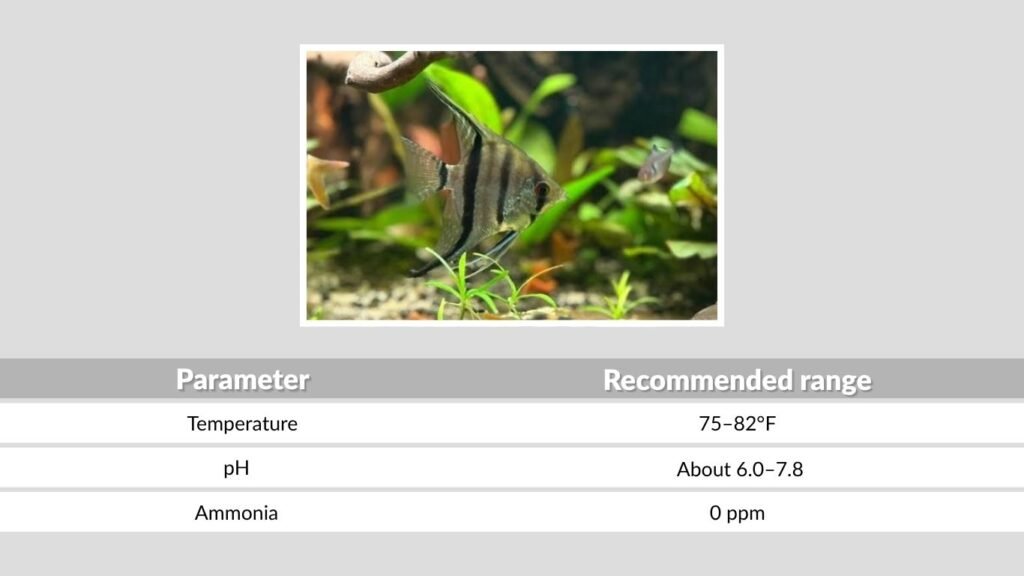
Captive-bred angelfish tolerate a wider range of conditions than many wild specimens, but stability is more important than repeatedly adjusting the water.
| Parameter | Recommended range |
| Temperature | 75–82°F |
| pH | About 6.0–7.8 |
| Ammonia | 0 ppm |
| Nitrite | 0 ppm |
| Nitrate | Kept low |
| Water flow | Gentle to moderate |
The aquarium must be fully cycled before angelfish are added. Sudden changes in temperature, pH, or water chemistry can cause stress even when the final reading falls within an acceptable range. Published care profiles commonly place the species within approximately 75–86°F, although the middle of that range is suitable for most community aquariums.
Pterophyllum Scalare Angelfish Diet and Feeding
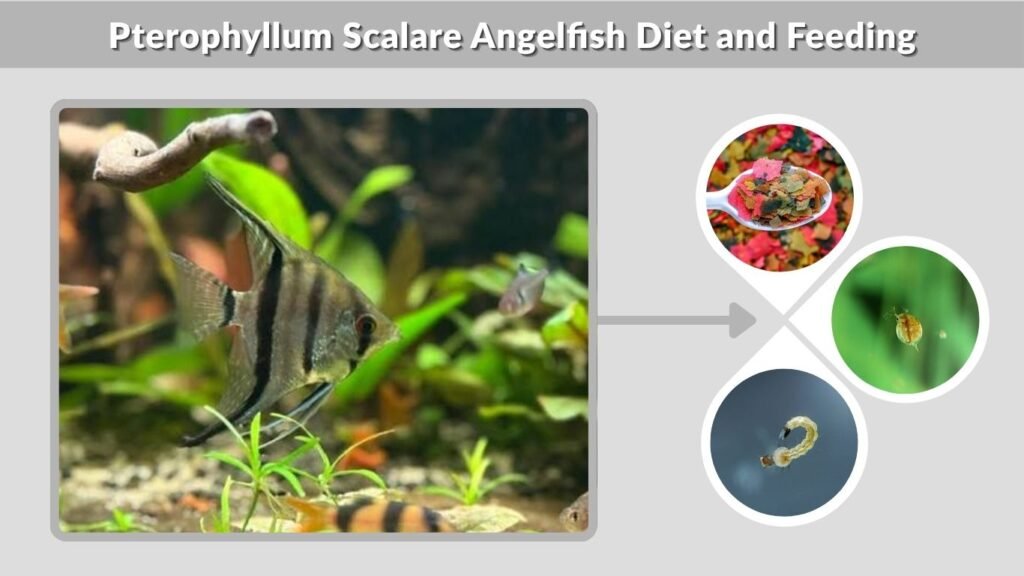
Pterophyllum scalare is an omnivorous cichlid that consumes small aquatic animals and other available foods. Aquarium fish perform best when offered several food types rather than one basic product.
Suitable Foods
A balanced diet can include:
- High-quality cichlid flakes
- Slow-sinking pellets
- Brine shrimp
- Daphnia
- Mysis shrimp
- Bloodworms
- Mosquito larvae
- Chopped earthworms
- Spirulina-based foods
Research on captive angelfish indicates that food type can influence growth and reproductive performance. A varied diet that combines complete prepared food with suitable frozen or live foods is therefore preferable to feeding only one item.
Feed adult fish once or twice daily. Give only an amount they can consume within a few minutes. Remove uneaten food before it decays and affects water quality.
Temperament and Tank Mates
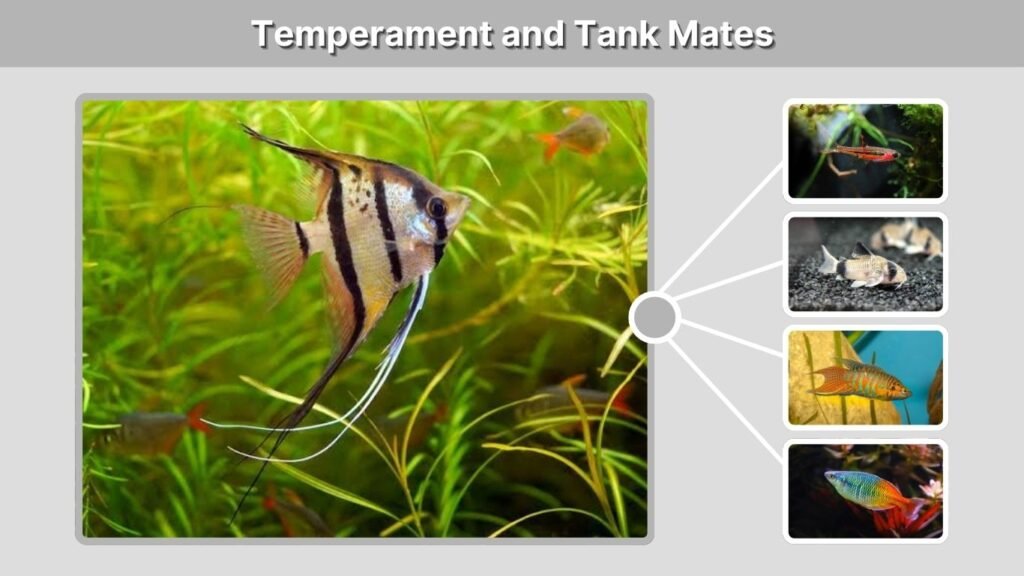
Freshwater angelfish are often described as semi-aggressive. They may appear calm in a spacious community tank but become territorial during feeding, pairing, spawning, or egg guarding.
Compatible Tank Mates
Potential companions include:
- Corydoras catfish
- Medium-sized peaceful tetras
- Larger rasboras
- Peaceful gouramis
- Bristlenose plecos
- Some rainbowfish
- Other angelfish in spacious tanks
Avoid extremely small fish that could fit inside an adult angelfish’s mouth. Tiny tetras and fry may eventually be treated as prey.
Tiger barbs and other fin-nipping species can damage the angelfish’s long fins. Highly aggressive cichlids may intimidate or injure them, while slow long-finned species can become targets of territorial angelfish.
Male vs. Female Pterophyllum Scalare
Male and female angelfish look very similar, making reliable identification difficult before breeding maturity.
Mature males may develop a broader forehead and slightly larger body, while females may appear rounder when carrying eggs. However, these characteristics are not always dependable.
The most reliable difference appears during spawning. The female develops a wider, blunt ovipositor for depositing eggs, whereas the male has a smaller, more pointed breeding tube.
Breeding and Egg Care
A compatible pair usually cleans a vertical or slightly angled surface before spawning. Suitable locations include broad plant leaves, slate, filter pipes, driftwood, and aquarium glass.
The female deposits rows of adhesive eggs, and the male follows to fertilize them. Both parents may fan the eggs, remove unhealthy ones, and defend the spawning area. Water quality and parental behavior can significantly affect hatching and fry survival.
Eggs usually hatch after several days, depending on temperature. The larvae initially remain attached near the spawning site and survive on their yolk sacs. Once free-swimming, the fry can be offered newly hatched brine shrimp or other appropriately sized foods.
Inexperienced or stressed parents sometimes eat their eggs. This may improve after several spawning attempts, although some breeders choose to hatch the eggs separately.
Common Health Problems
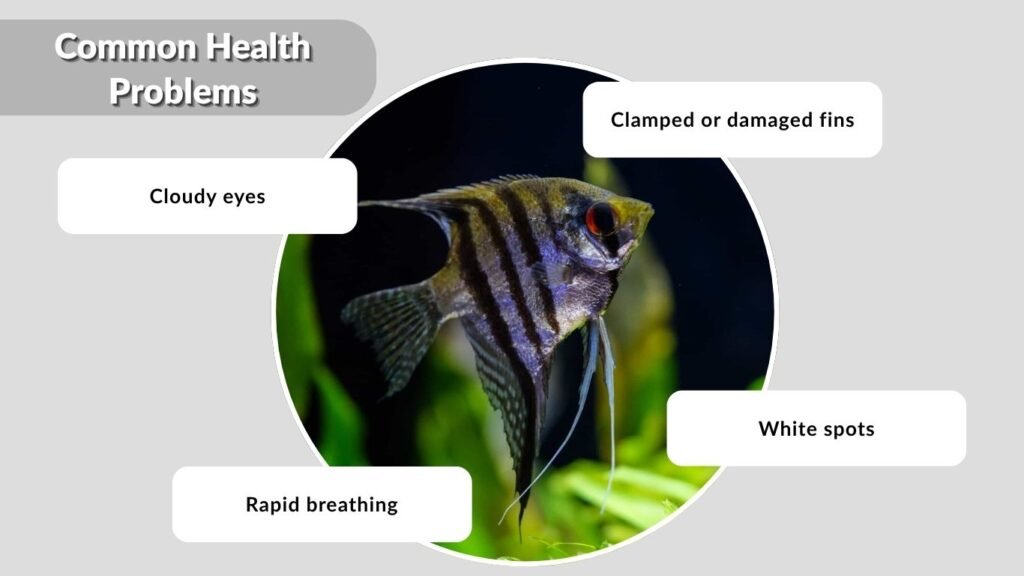
Poor water quality, inappropriate tank mates, overcrowding, and nutritional deficiencies can increase the risk of disease.
Watch for:
- Clamped or damaged fins
- White spots
- Cloudy eyes
- Rapid breathing
- Loss of appetite
- Abdominal swelling
- Stringy waste
- Rubbing against decorations
- Remaining near the surface
- Unusual head-up swimming
Test the water before adding medication. Ammonia, nitrite, incorrect temperature, and sudden chemical changes can produce symptoms that resemble infection.
FAQs
Is Pterophyllum scalare a freshwater fish?
Yes. Pterophyllum scalare is a tropical freshwater cichlid from South America. It should not be confused with marine angelfish, which belong to different families and require saltwater aquariums.
How big does Pterophyllum scalare get?
An adult commonly reaches around six inches in body length. Including the extended dorsal and anal fins, a mature fish may measure eight inches or more from top to bottom, which is why a tall aquarium is essential.
Can Pterophyllum scalare live alone?
A single angelfish can live alone when provided with enough space, enrichment, and appropriate care. However, these fish may also be kept in pairs or groups when the aquarium is large enough to manage territorial behavior.
Can Pterophyllum scalare live with neon tetras?
It is risky. Adult angelfish may eat neon tetras because they are small enough to be considered prey. Larger, deeper-bodied tetras are usually safer, although individual behavior and aquarium size still affect compatibility.
How long does a Pterophyllum scalare live?
A well-maintained freshwater angelfish can live approximately 8–12 years. Its lifespan depends on genetics, water quality, tank size, nutrition, disease prevention, and the amount of stress caused by overcrowding or aggression.