
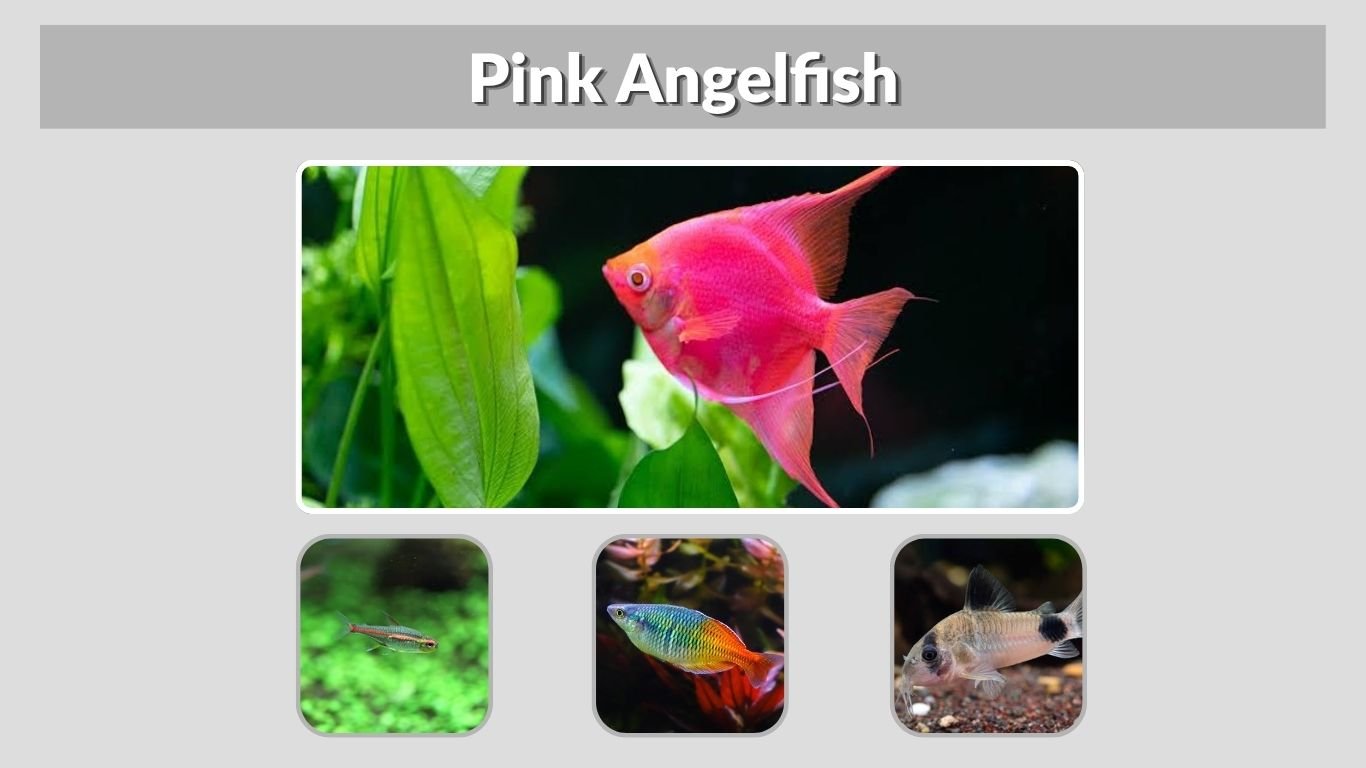
Pink angelfish are striking freshwater aquarium fish recognized by their tall bodies, long fins, and bright pink or reddish coloration. The name may describe fluorescent Starfire Red angelfish, pale blushing varieties, pink koi angelfish, or fish sold under labels such as “pink diamond.” Despite their unusual color, their basic requirements are similar to those of other freshwater angelfish: warm, clean water, a tall aquarium, gentle filtration, and carefully selected tank mates.
What Is a Pink Angelfish?
A pink angelfish is generally a color variety of the common freshwater angelfish, Pterophyllum scalare. It is not a separate naturally occurring angelfish species.
The brightest neon-pink examples are fluorescent angelfish. In the United States, the officially marketed variety is the GloFish Starfire Red Angelfish. Although its registered color is called red, the fish often appears hot pink or reddish-pink under aquarium lighting.
GloFish colors are inherited through fluorescent proteins rather than being created by injecting or painting each fish with dye. Blue lighting makes the fluorescence appear more intense, but the fish does not produce visible light in complete darkness.
Pink Angelfish Types
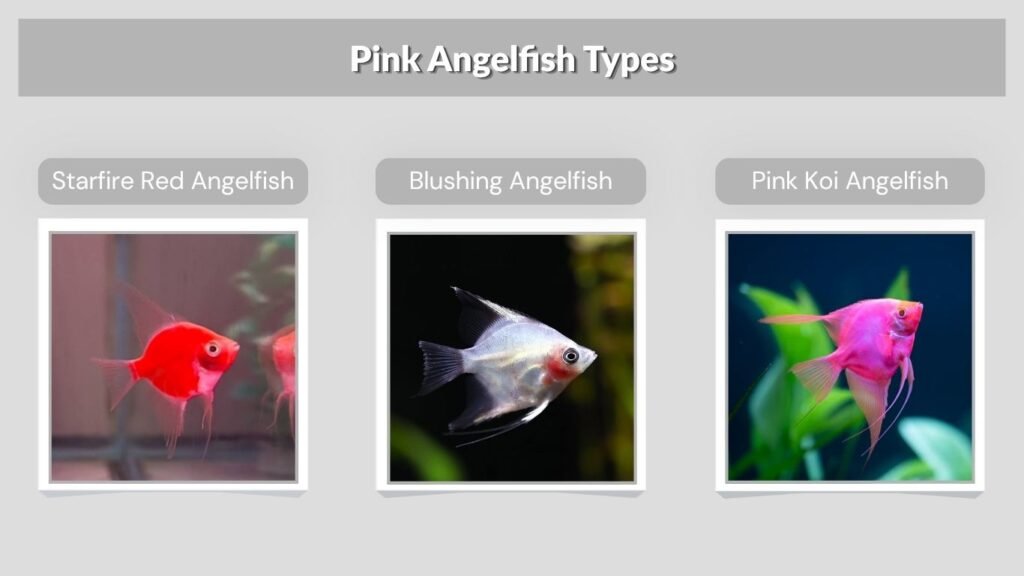
Names used by breeders and aquarium stores are not always standardized. Two fish advertised as pink angelfish may have very different genetics and appearances.
| Variety | Typical appearance | Fluorescent? |
| Starfire Red Angelfish | Bright red, magenta, or neon pink | Yes |
| Blushing Angelfish | White or silver body with visible pink gills | No |
| Pink Koi Angelfish | White body with pink, orange, or peach patches | No |
| Pink Diamond Angelfish | Usually pale pink, pearly, or strongly fluorescent | Depends on seller |
| Platinum or Albino Angelfish | White or cream with a slight pink tone | No |
Neon Pink or Fluorescent Angelfish
Fluorescent pink angelfish display their strongest color under blue-spectrum lighting. Under ordinary white light, they remain colorful but may look more red, coral, or magenta.
The color should cover much of the body rather than appearing as an unnatural surface stain. Some fish develop darker spots, marbling, or speckles as they mature. These markings can occur naturally in captive angelfish varieties and do not necessarily indicate illness.
Pink Diamond Angelfish
“Pink diamond angelfish” is usually a commercial label rather than a formally recognized species. Some sellers use it for fluorescent fish, while others use it for pale diamond-shaped angelfish with pearl-like scales.
Before purchasing, check whether the fish is fluorescent, selectively bred, albino, blushing, or simply photographed under colored lighting.
Pink Koi and Blushing Angelfish
A pink koi angelfish commonly has a white or silver base with peach, orange, or pinkish patches. A blushing angelfish has reduced dark markings, allowing the red or pink gill area to show through its pale body.
These varieties may look pink, but they do not fluoresce like Starfire Red angelfish.
Pink Angelfish Size and Lifespan
Adult freshwater angelfish can reach approximately six inches in body length and eight inches in total height when their dorsal and anal fins are included. Their tall shape means aquarium height is just as important as water volume.
With clean water, a balanced diet, and minimal stress, an angelfish may live approximately 8–12 years. Pink varieties generally have the same expected size and lifespan as other Pterophyllum scalare varieties.
Pink Angelfish Care Requirements
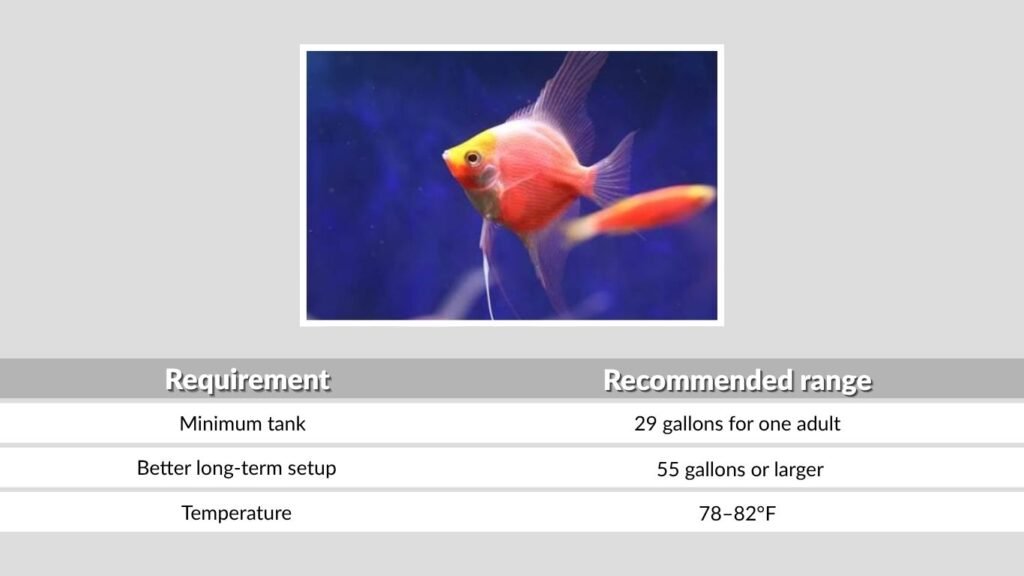
Pink angelfish are manageable for aquarists with some experience, but they should not be treated like small beginner fish. They require stable water conditions and enough room to reach their adult size.
Tank and Water Requirements
| Requirement | Recommended range |
| Minimum tank | 29 gallons for one adult |
| Better long-term setup | 55 gallons or larger |
| Temperature | 78–82°F |
| pH | Approximately 6.8–7.8 |
| Water movement | Gentle |
| Tank shape | Tall rather than shallow |
| Lighting | Moderate; blue light enhances fluorescence |
A 29-gallon tall aquarium can house a single adult, but a 55-gallon or larger aquarium provides better long-term space for multiple angelfish or a community setup. Large plants and vertically arranged driftwood imitate the slow, vegetated waters preferred by freshwater angelfish.
The aquarium should be completely cycled before adding fish. Ammonia and nitrite should remain at zero, and nitrate should be controlled through regular testing and partial water changes.
Filtration and Lighting
Use a reliable filter that maintains clean water without creating a powerful current. Angelfish have tall bodies and long fins that are better suited to calm, slow-moving water.
Standard aquarium lighting is sufficient for health. Blue lighting can make a fluorescent pink angelfish appear brighter, but it should not remain on continuously. Keep the aquarium dark at night and limit the daily lighting period to approximately 8–12 hours.
Plants and Decorations
Suitable aquarium decorations include:
- Amazon sword plants
- Java fern
- Anubias
- Vallisneria
- Smooth driftwood
- Broad-leaved artificial plants
- Fine gravel or sand
Leave an open area for swimming while placing taller plants around the back and sides. Avoid sharp plastic decorations that could tear the fish’s trailing fins.
Pink Angelfish Diet and Feeding
Pink angelfish are omnivores. Feed them a varied diet rather than relying on a single type of flake food.
Their diet can include high-quality cichlid flakes, small pellets, brine shrimp, daphnia, bloodworms and mysis shrimp. Offer frozen or live foods as occasional additions rather than the entire diet.
Feed adults once or twice daily, providing only what they can consume within about two minutes. Overfeeding can produce poor water quality, bloating, and excessive waste.
Temperament and Tank Mates
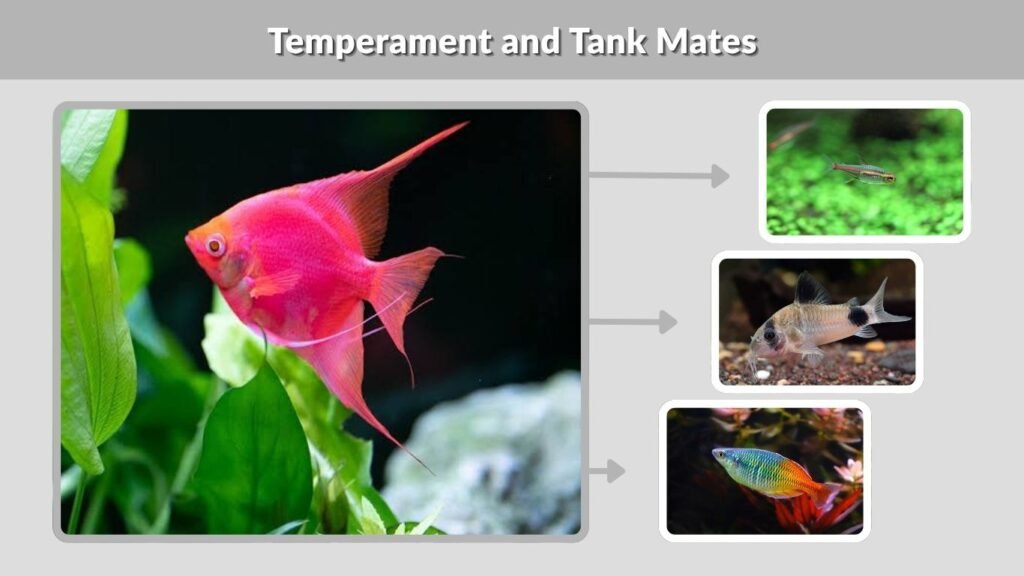
Pink angelfish are semi-aggressive cichlids. They may live peacefully in a community aquarium but can become territorial when forming pairs or protecting eggs.
Good potential tank mates include medium-sized peaceful tetras, corydoras, peaceful gouramis, larger rasboras and some rainbowfish.
Avoid very small fish that could fit into an adult angelfish’s mouth. Fin-nipping barbs and highly aggressive cichlids are also poor choices. Even compatible species require enough aquarium space and hiding areas.
Pink Angelfish Price and Availability
Pink angelfish prices depend on size, coloration, availability, breeder quality, and whether the fish is fluorescent.
The official U.S. GloFish shop currently lists a single Starfire Red Angelfish for $29.99, although local aquarium-store prices and shipping costs may differ. Traditional blushing or pink-toned koi angelfish may be cheaper, while uncommon breeding-quality fish can cost considerably more.
When buying one, choose a fish with:
- Clear eyes
- Fully opened fins
- Smooth swimming movements
- A full but not swollen body
- No white spots, wounds, or fuzzy growth
- A strong feeding response
Quarantine new fish before introducing them to an established community aquarium.
Pink Gills: Normal Color or Health Problem?
Visible pink gills can be normal in pale, albino, or blushing angelfish because their light skin allows the underlying gill tissue to show.
However, suddenly reddened gills accompanied by rapid breathing, surface gasping, inactivity, or loss of appetite may indicate poor water quality, ammonia exposure, parasites, or another health issue. Test ammonia, nitrite, nitrate, temperature, and pH immediately rather than assuming the color is natural.
Freshwater vs. Marine Pink Angelfish
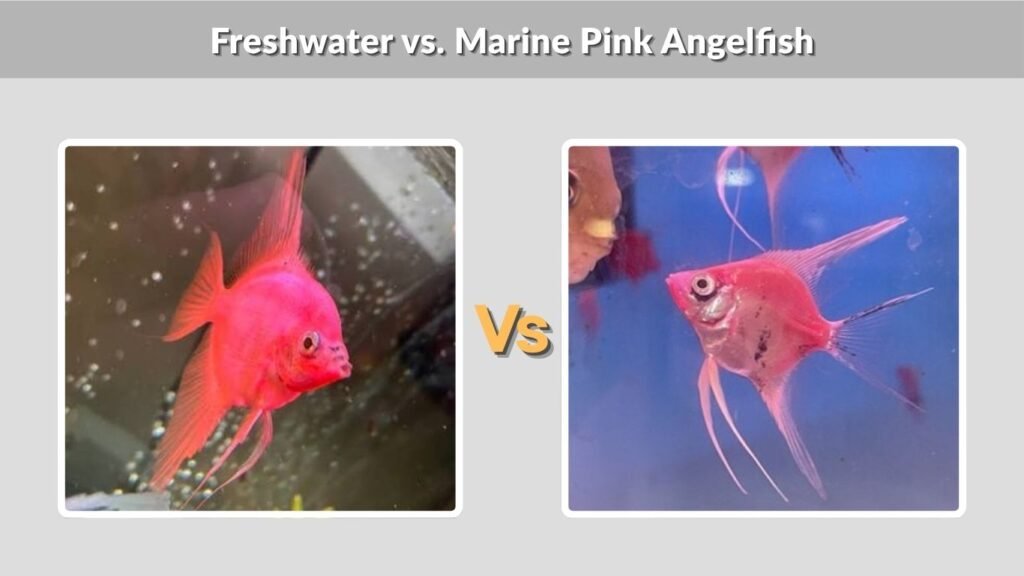
Most fish sold as pink angelfish are freshwater fish from the genus Pterophyllum. Marine angelfish belong to a different family and require saltwater aquariums.
Do not purchase a fish based only on its common name. Confirm whether it is freshwater or marine before preparing the aquarium, as their habitat, diet, adult size, and care requirements are completely different.
FAQs
Are pink angelfish naturally pink?
Some selectively bred angelfish have pale pink, peach, or blushing coloration. Extremely bright neon-pink fish are usually fluorescent varieties rather than naturally occurring wild colors. Wild freshwater angelfish are generally silver with dark vertical bars.
Do pink angelfish glow in the dark?
Fluorescent pink angelfish do not glow in total darkness. Their fluorescent proteins absorb light and re-emit it, making the fish appear especially bright under blue or ultraviolet-rich aquarium lighting.
How big does a pink angelfish get?
A common pink freshwater angelfish may reach about six inches long and eight inches tall when its extended fins are measured. It needs a tall aquarium that allows the fins to extend without touching decorations.
Can pink angelfish live with neon tetras?
There is a risk because adult angelfish may eat small neon tetras. Larger, deeper-bodied tetras are generally safer companions. Compatibility also depends on the angelfish’s temperament, tank size, and whether the fish were raised together.
Are pink angelfish difficult to keep?
They are moderately easy when housed in a cycled, appropriately sized aquarium. The main challenges are maintaining stable water quality, controlling aggression, preventing overcrowding, and choosing tank mates that will neither attack the angelfish nor be eaten by it.