
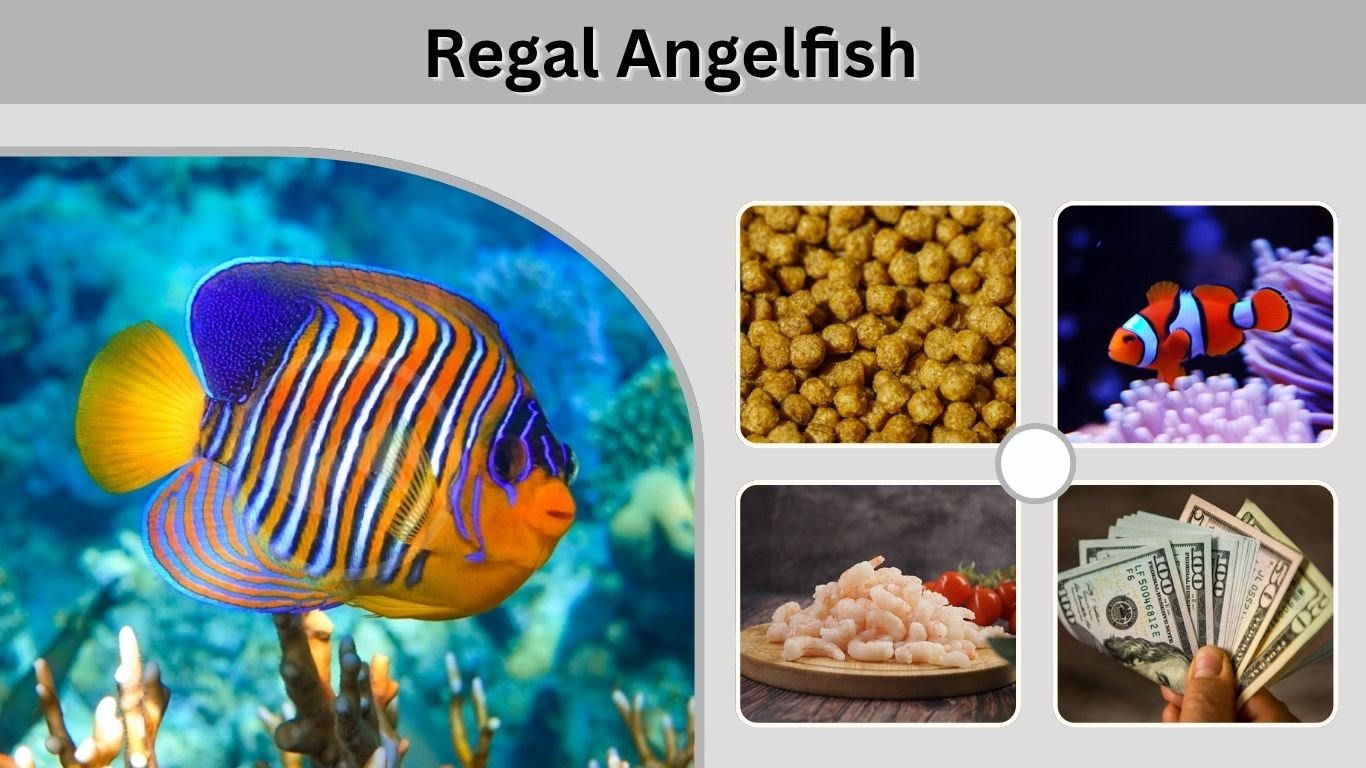
The regal angelfish is one of the most colorful and desirable marine aquarium fish. Its alternating yellow, white, blue, and black bands give it an unmistakable appearance, but this beauty comes with demanding care requirements. Regal angelfish are sensitive to stress, unstable water conditions, aggressive tank mates, and unsuitable foods. A healthy specimen can thrive for years in a mature saltwater aquarium, but the species is better suited to experienced aquarists than beginners.
Regal Angelfish Overview
The scientific name of the regal angelfish is Pygoplites diacanthus. It belongs to the marine angelfish family Pomacanthidae and is the only recognized species in its genus. In nature, it inhabits coral-rich lagoons and outer reefs across the Red Sea, Indian Ocean, and Indo-Pacific region. It usually remains close to caves, crevices, and other protective reef structures.
| Feature | Details |
| Scientific name | Pygoplites diacanthus |
| Common names | Regal angelfish, royal angelfish |
| Adult size | Approximately 8–10 inches |
| Minimum tank size | About 125 gallons for an adult |
| Diet | Omnivorous; sponge-rich and varied marine foods |
| Temperament | Shy to semi-aggressive |
| Reef safety | Reef-safe with caution |
| Care level | Expert |
| Habitat | Tropical coral reefs |
| Recommended aquarium | Mature, stable marine tank |
Identification and Physical Characteristics
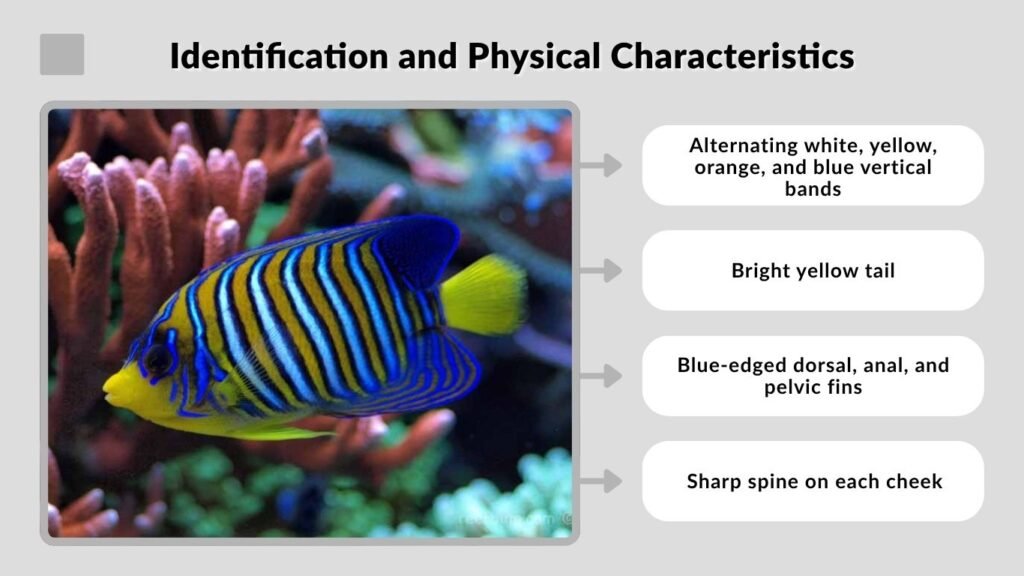
Regal angelfish have a compressed, oval-shaped body marked by vertical bands. Their vivid pattern allows them to stand out even among other colorful reef fish.
Identification
- Alternating white, yellow, orange, and blue vertical bands
- Bright yellow tail
- Blue-edged dorsal, anal, and pelvic fins
- Small mouth adapted for picking food from reef surfaces
- Dark blue area near the rear of the dorsal fin
- Sharp spine on each cheek
- Juveniles have a prominent false eyespot near the dorsal fin
The juvenile eyespot fades as the fish matures. Unlike many large marine angelfish, juvenile regal angelfish already resemble adults closely and do not undergo a complete color transformation.
Red Sea vs Indo-Pacific Regal Angelfish
Regal angelfish show regional color variations. These are geographic forms of the same species rather than separate breeds.
Red Sea and Yellow-Belly Regal Angelfish
Red Sea and western Indian Ocean specimens typically have a bright yellow or orange belly extending beneath the mouth. They are often called yellow-belly, orange-belly, or Red Sea regal angelfish.
These fish are highly sought after because of their intense coloration. Historically, well-handled Red Sea and Indian Ocean specimens have also developed a reputation for adapting more readily to aquarium conditions than some imported Indo-Pacific fish.
Indo-Pacific Regal Angelfish
Regal angelfish from Indonesia and other parts of the Indo-Pacific commonly have a blue-gray belly. Their overall pattern remains similar, although the darker chest creates a noticeably different appearance.
The collection method, shipping history, and condition of the individual fish are more important than color alone. A healthy, actively feeding Indo-Pacific specimen is a better purchase than a weak yellow-belly fish.
Misbar Regal Angelfish
Misbar regal angelfish have irregular, broken, missing, or unusually shaped body bands. These patterns occur naturally but are uncommon among wild fish.
Captive breeding has made misbar specimens more available. Their markings may continue changing as juveniles mature, so a young fish is not guaranteed to retain exactly the same pattern throughout its life.
Regal Angelfish Size and Lifespan
An adult regal angelfish can reach approximately 8–10 inches, although aquarium specimens may remain somewhat smaller depending on genetics, nutrition, health, and available space. Their tall body shape makes them appear larger than another fish of equal length.
A properly maintained regal angelfish may live for many years in captivity. Exact lifespan varies considerably because imported specimens often experience collection, transportation, feeding, or disease-related problems before reaching the aquarium. Starting with a healthy fish and providing stable long-term care are more important than expecting a fixed lifespan.
Regal Angelfish Tank Size and Setup
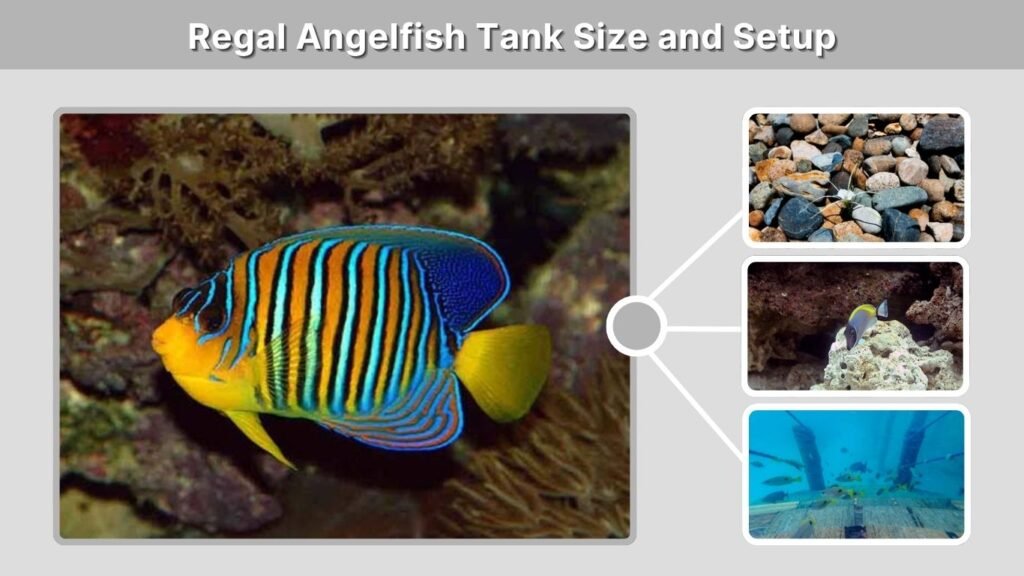
An adult regal angelfish should be given an aquarium of at least 125 gallons. Although juveniles may temporarily live in smaller grow-out systems, a large tank provides more stable water conditions, swimming space, hiding locations, and natural grazing surfaces.
Ideal Tank Setup
A regal angelfish aquarium should include:
- Mature biological filtration
- Abundant live rock
- Caves and narrow hiding spaces
- Open swimming areas
- Strong but varied water circulation
- Efficient protein skimming
- Stable temperature and salinity
- Low levels of nitrate and phosphate
The aquarium should be well established before the fish is introduced. Moving mature rocks into a newly assembled tank does not instantly create the stability required by this sensitive species.
Acclimation
Keep the lights dim when introducing a new regal angelfish. An appropriately sized acclimation box containing hiding materials can allow the fish to observe its tank mates while remaining protected.
Avoid repeatedly changing rockwork, placing hands in the tank, or exposing the fish to heavy activity during its first days. Stress frequently leads to appetite loss, which is one of the most serious problems associated with regal angelfish.
Regal Angelfish Diet
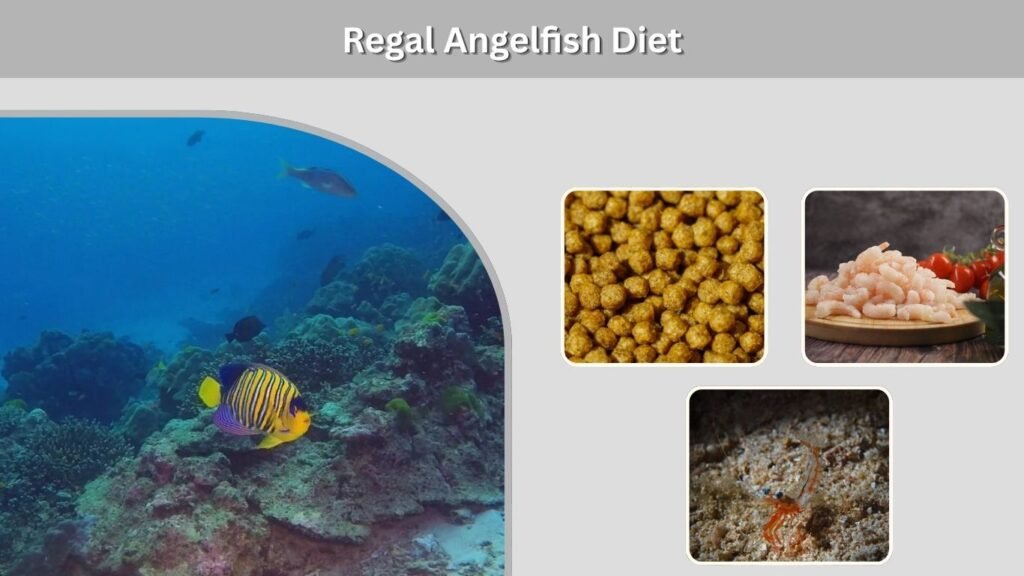
Wild regal angelfish graze mainly on benthic invertebrates, particularly sponges and tunicates. This specialized natural diet helps explain why some wild-caught individuals refuse ordinary aquarium foods.
Best Foods for Regal Angelfish
Offer a varied selection that includes:
- Frozen angelfish formulas containing sponge
- High-quality marine pellets
- Chopped shrimp and seafood
- Spirulina-enriched brine shrimp
- Mysis shrimp in moderation
- Red or green marine algae
- Masstick or other foods attached to rocks
- Vitamin-enriched frozen preparations
Juveniles and newly acquired specimens benefit from several small meals throughout the day. Captive-bred youngsters may require three to five or more daily feedings while growing because they have fast metabolisms and limited energy reserves.
How to Get a Regal Angelfish to Eat
First reduce stress and prevent aggressive fish from dominating feeding time. Offer foods close to the fish’s hiding place instead of expecting it to compete in open water.
Fresh clam, chopped shrimp, frozen mysis, sponge-based preparations, or food pressed into rock crevices may stimulate feeding. Avoid buying a wild-caught regal angelfish that refuses every offered food at the store. A visibly thin fish with sunken areas behind the head may be difficult to recover.
Are Regal Angelfish Reef-Safe?
Regal angelfish are generally described as reef-safe with caution. They may coexist with many corals for long periods, but no individual can be guaranteed completely safe.
They are more likely to nip at:
- Fleshy large-polyp stony corals
- Zoanthids and button polyps
- Some soft corals
- Sponges and tunicates
- Tridacna clam mantles
Small-polyp stony corals are often ignored, although individual behavior varies. Keeping the fish well-fed may reduce grazing on ornamental invertebrates, but it cannot eliminate the possibility.
Captive-bred individuals raised on prepared foods may show less interest in corals than some wild fish, but they should still be monitored carefully.
Regal Angelfish Tank Mates
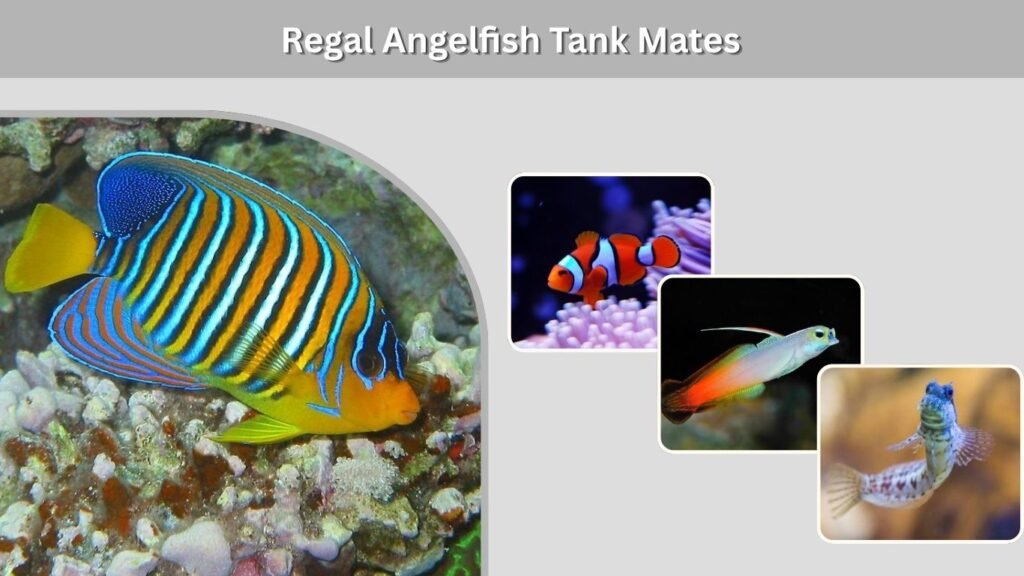
Regal angelfish are usually shy and may stop eating when housed with aggressive or highly competitive fish. Peaceful companions that do not occupy every hiding space are preferable.
Suitable tank mates can include clownfish, gobies, peaceful wrasses, cardinalfish, anthias, blennies, and moderately tempered tangs. Avoid large aggressive angelfish, hostile triggerfish, aggressive wrasses, and fish that continually chase or intimidate the regal.
Keeping two regal angelfish together can be risky unless they are a confirmed compatible pair. Similar-sized individuals may fight over territory, while determining the sex from external appearance is difficult.
Captive-Bred Regal Angelfish
Captive-bred regal angelfish are generally the preferred choice when available. They are raised on prepared foods and are already accustomed to aquarium conditions, reducing one of the major difficulties associated with wild-caught fish.
However, captive-bred does not mean beginner-friendly. These fish still need a mature aquarium, frequent feeding, peaceful tank mates, and highly stable water quality. Captive-bred juveniles are often small, so they must be protected from powerful pumps and larger fish.
Buying a Regal Angelfish
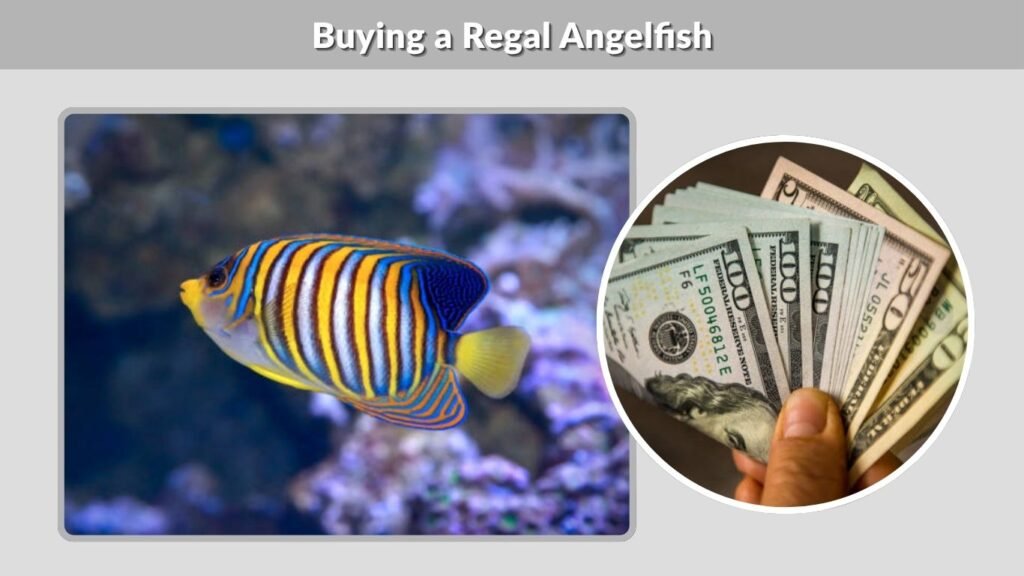
Regal angelfish prices vary according to size, geographic origin, condition, availability, captive-bred status, and unusual markings. Red Sea, captive-bred, and rare misbar specimens commonly cost more than standard wild imports.
Before buying, check that the fish:
- Accepts food while you watch
- Has a full body without pinched muscles
- Breathes normally
- Swims upright and deliberately
- Has clear eyes and intact fins
- Shows no white spots, wounds, or cloudy patches
- Has been held and observed by the seller
A cheaper fish that refuses food can become far more costly than a conditioned specimen from a reputable source.
FAQs
Is a regal angelfish suitable for beginners?
No. Regal angelfish are sensitive to stress, water-quality changes, inappropriate tank mates, and feeding problems. They are best kept by experienced marine aquarists with mature aquariums and the time to provide frequent observation and varied meals.
What is the minimum tank size for a regal angelfish?
A 125-gallon aquarium is a sensible minimum for an adult. The tank should provide extensive live rock, secure hiding places, open swimming room, and stable reef-quality water. A juvenile can temporarily use a smaller established grow-out aquarium.
Why is my regal angelfish not eating?
Appetite loss may result from shipping stress, bullying, unstable water, disease, unfamiliar foods, bright lighting, or insufficient hiding space. Reduce disturbance, check water parameters, separate aggressive fish, and offer sponge-based foods, chopped seafood, or food attached near its shelter.
Can regal angelfish live with coral beauty angelfish?
They sometimes coexist in sufficiently large aquariums, but compatibility depends on individual temperament and established territories. Introduce them carefully, provide multiple hiding areas, and watch for chasing. An aggressive resident coral beauty may prevent a shy regal angelfish from feeding.
Are regal angelfish cold-blooded?
Yes. Like other fish, regal angelfish are ectothermic, meaning their body temperature is largely influenced by the surrounding water. A reliable aquarium heater and stable tropical temperature are therefore essential for normal metabolism, digestion, and immune function.