
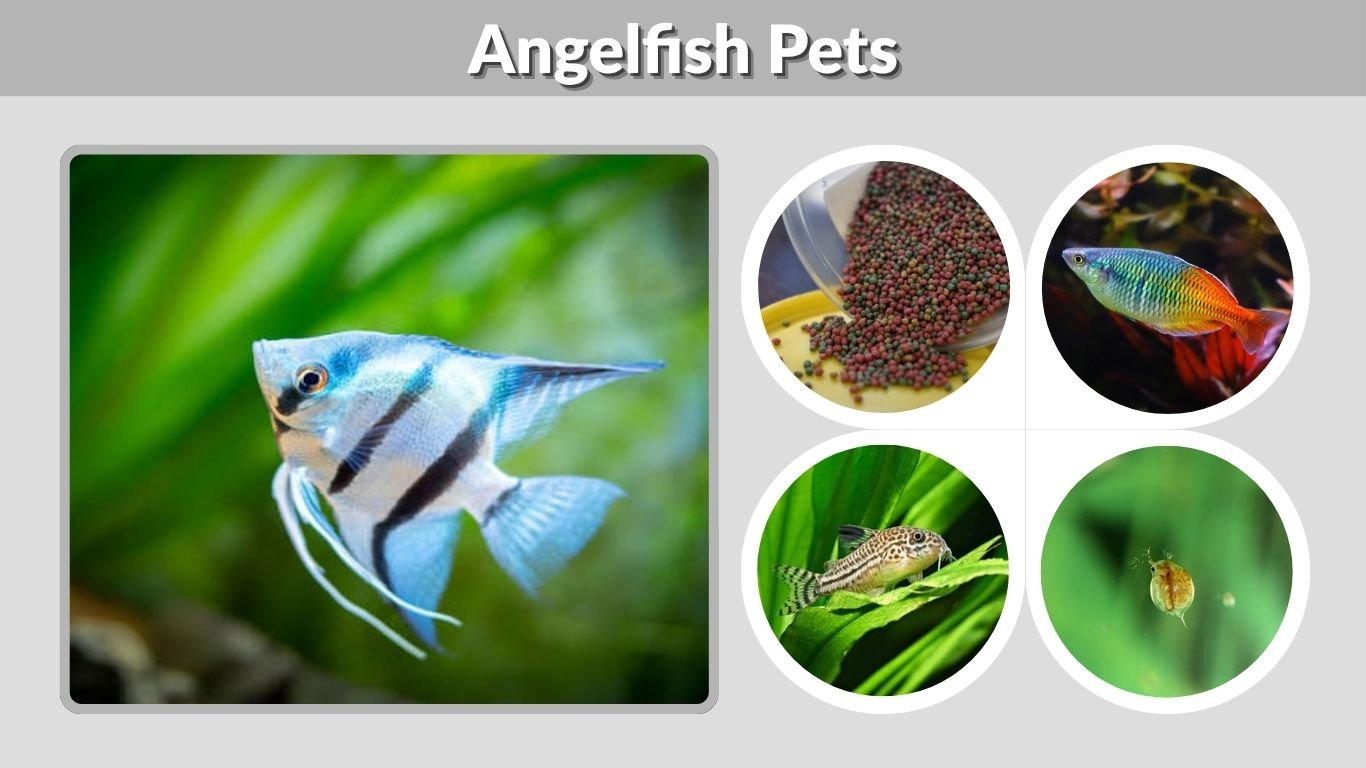
Angelfish are among the most recognizable freshwater aquarium pets. Their tall bodies, long flowing fins, and wide variety of colors make them attractive centerpiece fish. However, their elegant appearance can hide a territorial cichlid personality. Angelfish can be rewarding pets when provided with a tall aquarium, warm clean water, suitable companions, and a balanced diet. Understanding their adult size and behavior before purchasing them is essential.
Are Angelfish Good Pets?
Freshwater angelfish can be excellent pets for aquarists who understand basic aquarium maintenance. They are attractive, responsive at feeding time, and display more individual personality than many small community fish.
They are not completely effortless pets. Angelfish are members of the cichlid family and may become territorial as they mature, especially when they form breeding pairs. Their long fins are also vulnerable to damage from aggressive or fin-nipping tank mates.
| Feature | Pet angelfish requirements |
| Scientific name | Pterophyllum scalare |
| Care level | Moderate |
| Temperament | Generally calm but territorial |
| Adult body length | Around 6 inches |
| Total height | Potentially 8–12 inches with fins |
| Lifespan | Commonly 8–12 years with good care |
| Diet | Omnivorous |
| Water type | Warm freshwater |
| Social needs | Single fish, compatible pair, or managed group |
| Best owner | Prepared beginner or intermediate aquarist |
What Do Pet Angelfish Look Like?
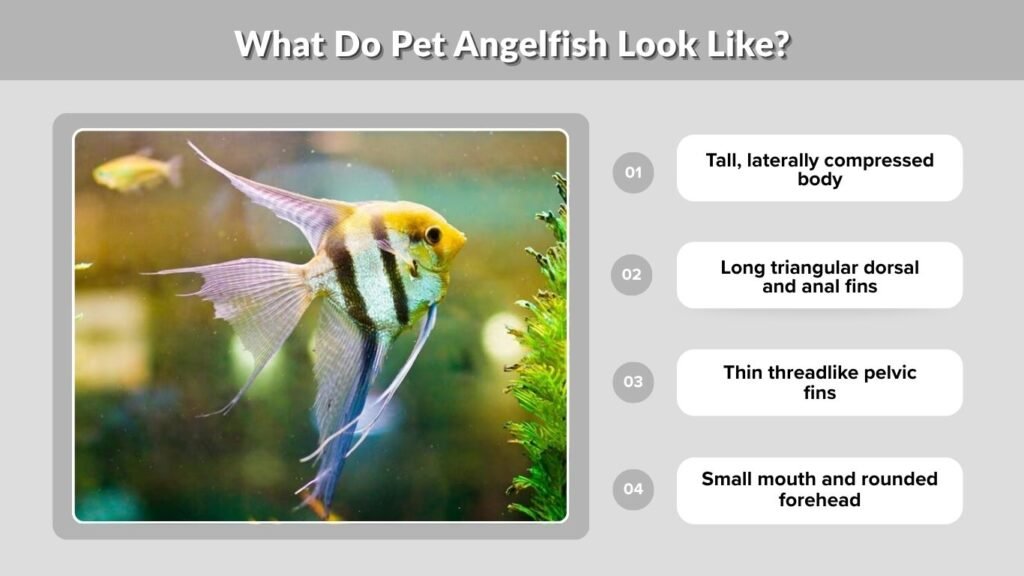
Wild-type angelfish usually have silver bodies with dark vertical bands. Selective breeding has produced many pet varieties with different colors, patterns, scale types, and fin shapes. Common varieties include marble, koi, gold, black, zebra, platinum, blushing, and veiltail angelfish.
Identification
- Tall, laterally compressed body
- Long triangular dorsal and anal fins
- Thin threadlike pelvic fins
- Small mouth and rounded forehead
- Vertical bands or decorative marble patterns
- Silver, black, gold, orange, white, or mixed coloration
- Slow, graceful swimming movement
Juveniles sold in pet stores may look small, but adults become much taller and more substantial. Buyers should plan for the fish’s mature size rather than choosing a tank based on its size at purchase.
Pet Angelfish Tank Size
A single adult angelfish needs a tall aquarium with enough room to turn and swim without its fins touching decorations. A 29-gallon tank can serve as a practical minimum for one angelfish, but a larger aquarium is preferable, particularly when keeping a pair or adding tank mates.
A 40-gallon breeder or 55-gallon aquarium provides more territory and stable water conditions. Groups need considerably more space because adults create a hierarchy and may fight over preferred areas. Aquarium Co-Op recommends limiting a 29-gallon community aquarium to no more than four adults, although stocking should also account for other fish and the filtration capacity.
Ideal Aquarium Setup
A suitable angelfish tank should contain:
- A reliable heater
- Gentle but efficient filtration
- Tall live or artificial plants
- Vertical pieces of driftwood
- Open swimming space
- Smooth decorations without sharp edges
- A secure aquarium lid
- A fully established biological cycle
Tall plants and vertical structures resemble the environments these fish naturally navigate while providing visual barriers between territorial individuals. Avoid powerful currents that constantly push the angelfish around or force them to struggle while feeding.
Water Conditions for Angelfish
Tank-bred angelfish are adaptable, but sudden changes in temperature, pH, or water quality can weaken them. Keep the aquarium warm and stable rather than constantly trying to adjust the water to an exact number.
A temperature of approximately 76–82°F generally suits freshwater angelfish. They can adapt to moderately soft or moderately hard water, although neutral to slightly acidic conditions are commonly preferred.
Test the aquarium regularly and keep ammonia and nitrite at zero. Nitrate should remain controlled through partial water changes, sensible feeding, and appropriate stocking.
Routine Maintenance
Change approximately 20–30% of the water weekly, depending on test results and the aquarium’s bioload. Vacuum waste from exposed substrate, rinse reusable filter media in removed aquarium water, and check the heater and filter.
Do not replace all filter media simultaneously or wash biological media under chlorinated tap water. Doing so may remove beneficial bacteria and destabilize the nitrogen cycle.
What Do Pet Angelfish Eat?
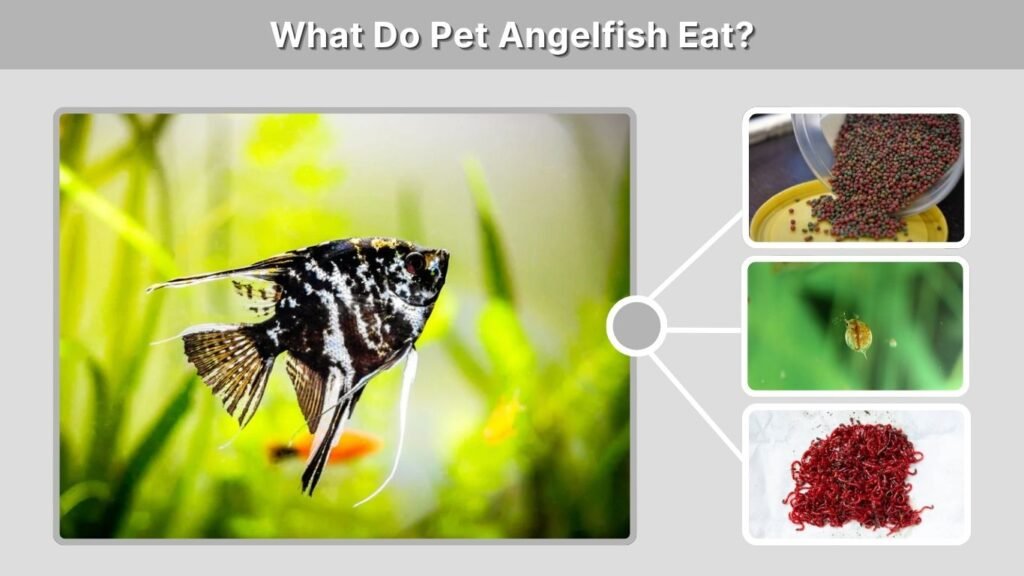
Angelfish are omnivores that need a varied diet. High-quality tropical flakes or appropriately sized cichlid pellets can form the nutritional foundation. Frozen or live foods provide additional protein and encourage natural feeding behavior.
Suitable foods include:
- Angelfish or cichlid pellets
- Quality tropical flakes
- Frozen brine shrimp
- Mysis shrimp
- Daphnia
- Bloodworms as an occasional food
- Insect-based preparations
- Spirulina-containing foods
Feed adults once or twice daily, offering only what they consume within a few minutes. Growing juveniles may benefit from smaller, more frequent meals. Tank-bred angelfish generally accept flakes, pellets, and frozen or live foods.
Overfeeding can pollute the aquarium and contribute to obesity, digestive problems, and poor water quality. Remove uneaten food instead of allowing it to decay.
Angelfish Personality and Behavior
Angelfish often learn to approach the front of the aquarium when their owner enters the room. They may recognize routines, follow movement outside the glass, and eagerly gather near the feeding area.
Despite their calm swimming style, they are not always peaceful. Angelfish establish dominance, chase weaker individuals, defend feeding areas, and become especially territorial while breeding. A fish that was peaceful as a juvenile may become assertive after reaching maturity.
Should You Keep One or Several Angelfish?
A single angelfish can live successfully as the centerpiece of a compatible community aquarium. It does not require another angelfish to remain healthy.
A compatible breeding pair may also work, but the pair can defend a large part of the tank. Keeping two unrelated angelfish is risky because one may continually bully the other.
Groups of juveniles can be raised together in a spacious tank, but owners must be prepared to separate aggressive adults or established pairs. Plants, driftwood, and other visual barriers can reduce constant confrontation but cannot guarantee peace.
Best Tank Mates for Angelfish
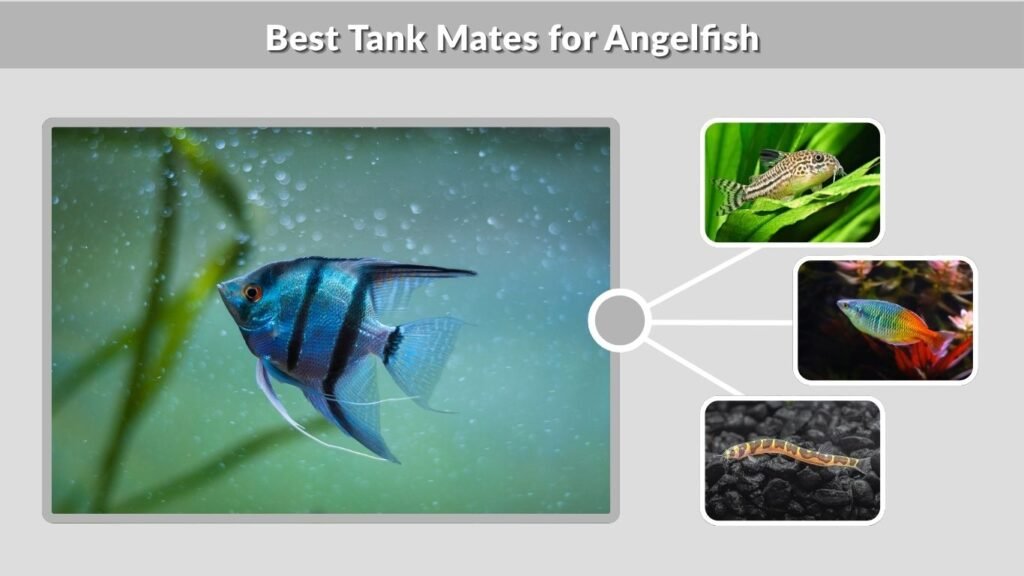
Good companions are generally peaceful, medium-sized fish that prefer similar warm-water conditions. They should be too large for an adult angelfish to swallow but not aggressive enough to attack its fins.
Potential tank mates include:
- Corydoras catfish
- Bristlenose plecos
- Larger peaceful tetras
- Medium-sized rasboras
- Peaceful gouramis
- Rainbowfish
- Kuhli loaches
- Peaceful barbs without fin-nipping behavior
Larger tetras, rasboras, gouramis, peaceful barbs, rainbowfish, corydoras, and other medium-sized catfish are commonly recommended companions. Individual temperament and aquarium size still determine whether a combination succeeds.
Fish to Avoid
Avoid tiger barbs, serpae tetras, and other persistent fin nippers. Large aggressive cichlids may injure angelfish, while tiny fish such as young neon tetras may eventually be viewed as prey.
Small shrimp and newborn fish are also likely to be eaten. Slow-moving bettas may clash with angelfish because both possess long fins and territorial tendencies.
Can Angelfish Live With Goldfish?
Angelfish and goldfish should not normally share an aquarium. Angelfish prefer warmer tropical water, while most goldfish perform better at cooler temperatures. Goldfish also produce considerable waste and may compete heavily during feeding.
Their different temperature needs, body shapes, feeding styles, and water-quality demands make separate aquariums safer and easier to manage.
How Long Do Pet Angelfish Live?
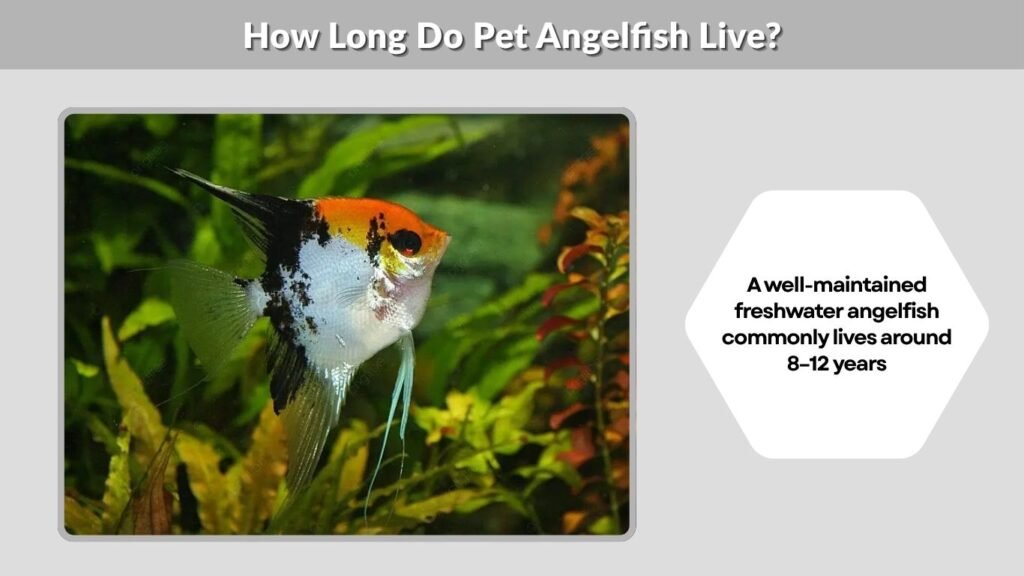
A well-maintained freshwater angelfish commonly lives around 8–12 years, although lifespan varies with genetics, aquarium size, diet, water conditions, disease exposure, and long-term care. Some individuals live longer in stable aquariums.
Owners can support a long lifespan by preventing overcrowding, maintaining good water quality, offering varied foods, and avoiding incompatible tank mates.
Warning signs requiring attention include:
- Refusing food
- Rapid breathing
- Clamped or damaged fins
- White spots or unusual growths
- Swollen abdomen
- Long stringy waste
- Hiding continuously
- Loss of balance
- Persistent aggression or injuries
Testing the water should be the first step whenever several fish develop symptoms simultaneously.
Buying Angelfish From a Pet Store
Choose active fish that swim upright and respond to food. The eyes should be clear, the abdomen should not appear severely sunken, and the fins should remain open rather than clamped against the body.
Avoid tanks containing dead fish, white spots, cloudy water, or individuals gasping near the surface. Ask what food the angelfish currently eats and whether new arrivals have been observed before sale.
Quarantine new fish when possible. A separate observation tank helps prevent parasites and infections from spreading to an established aquarium.
Pet Angelfish Names
Angelfish can be named according to their coloration, pattern, or personality. Popular choices include Angel, Luna, Pearl, Marble, Shadow, Goldie, Sunny, Oreo, Nova, Stripe, Storm, Ghost, Mango, and Neptune.
Pairs can receive matching names such as Moon and Star, Salt and Pepper, or Gold and Silver.
FAQs
Are angelfish good pets for beginners?
Angelfish can suit prepared beginners who understand aquarium cycling, water testing, and compatible stocking. They are less forgiving than hardy beginner fish because they require warm, clean water, sufficient height, and careful management of territorial behavior.
Can an angelfish live alone?
Yes. A single angelfish can live alone as the only member of its species and does not require a partner. It can be kept with compatible community fish, provided the aquarium offers adequate space and the other fish do not nip its fins.
Do pet angelfish recognize their owners?
Angelfish can associate a person’s presence with feeding and familiar routines. They often approach the glass when their regular caretaker enters the room. This behavior demonstrates learning and recognition of repeated visual cues, although it should not be interpreted exactly like mammalian attachment.
Do angelfish need live plants?
Live plants are beneficial but not mandatory. Tall plants provide cover, territorial boundaries, and potential spawning surfaces. Good-quality artificial plants can also work, but they should be soft and free from sharp plastic edges that could tear the angelfish’s fins.
How many angelfish should be kept together?
One angelfish can live successfully alone. A compatible pair may work in a sufficiently large aquarium, while groups require much more space and careful aggression monitoring. Keeping only two unpaired individuals can result in one repeatedly bullying the other.