
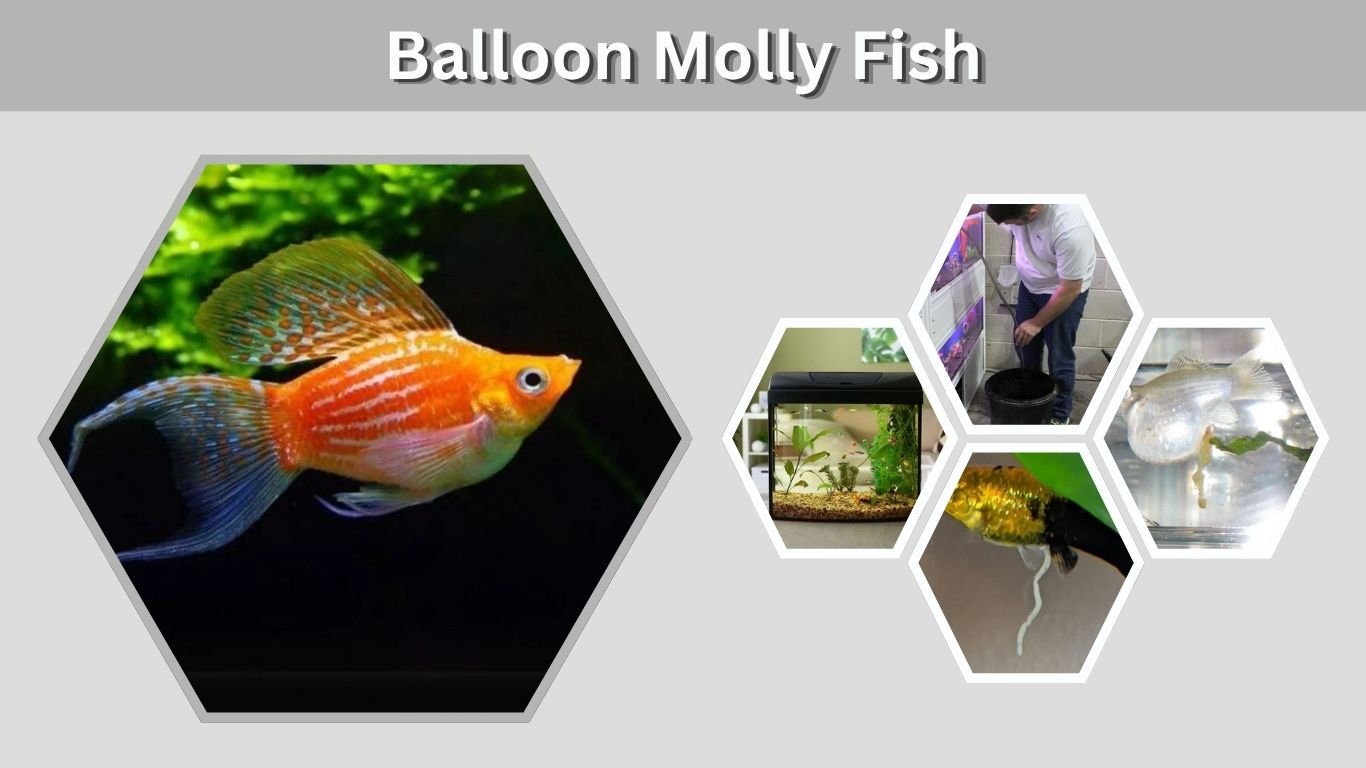
Balloon molly fish are colorful freshwater livebearers recognized by their short bodies and unusually rounded bellies. They are available in black, white, orange, red, yellow, silver, Dalmatian, and mixed-color varieties, making them popular additions to community aquariums. Although their care is similar to that of standard mollies, their compact body shape can make them somewhat more sensitive to poor water quality and stress. This guide covers balloon molly fish care, tank setup, food, behavior, size, lifespan, breeding, pregnancy, and common health concerns.
What Is a Balloon Molly Fish?
The balloon molly is a selectively bred form of molly with a shortened, curved body and noticeably enlarged abdomen. Its unusual appearance is the main reason it has become popular in the aquarium hobby. Balloon mollies are not a completely separate molly species, and their basic behavior, feeding habits, and reproduction are similar to those of other mollies.
Balloon Molly Fish Appearance and Size
Balloon mollies have a compact body with a rounded belly that remains prominent even when the fish is not pregnant. Their back is often slightly arched, and their fins may vary depending on the particular variety.
Typical characteristics include:
- Short, deep body
- Large rounded abdomen
- Slightly arched back
- Fan-shaped tail
- Small upward-facing mouth
- Adult length of roughly 2–3 inches
- Wide range of colors and patterns
Because females naturally have fuller bodies, distinguishing pregnancy can sometimes be harder in balloon mollies than in standard mollies.
Balloon Molly Fish Colors and Types
Selective breeding has produced many attractive balloon molly varieties. Their care requirements are generally very similar regardless of color.
Common varieties include black balloon mollies, white balloon mollies, silver balloon mollies, orange balloon mollies, red balloon mollies, and yellow balloon mollies.
Dalmatian balloon mollies have contrasting black-and-white markings, while some fish display orange, black, white, or gold patches.
Lyretail balloon mollies are distinguished by extensions on the upper and lower portions of the tail fin.
Balloon Molly Fish Lifespan
Balloon molly fish commonly live around two to five years, although individual lifespan varies considerably.
Their longevity depends on genetics, water quality, diet, stocking density, disease prevention, and overall aquarium management.
Their unusual compact body structure may make some individuals more vulnerable to swimming, digestive, or internal-organ problems than standard-bodied mollies. Providing stable conditions is therefore particularly important.
Balloon Molly Fish Care and Tank Setup
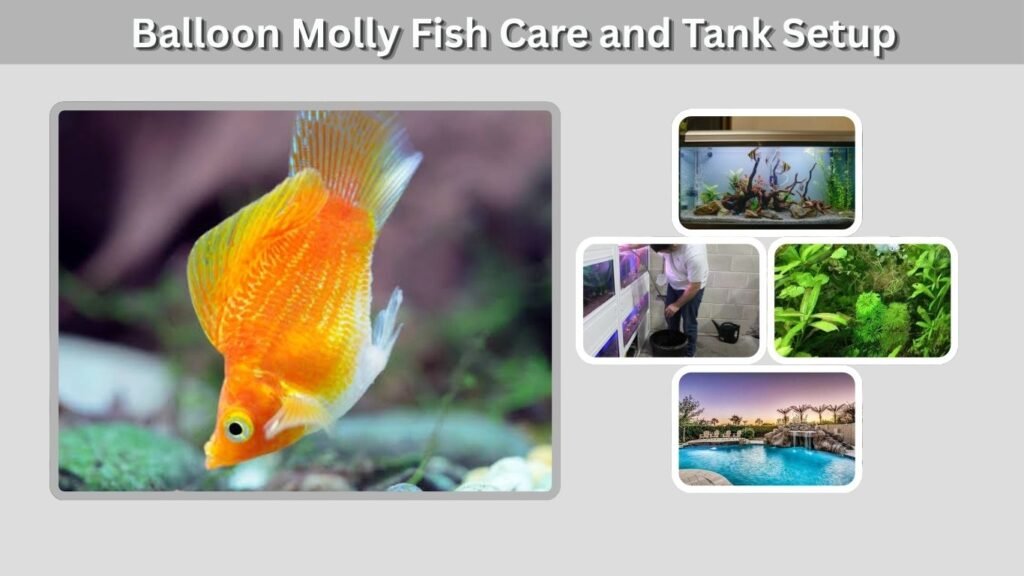
Balloon mollies can be relatively easy aquarium fish when kept in clean, stable water. However, they should not be treated as fish that can tolerate neglected tanks. Maintaining proper temperature, hardness, filtration, and water quality plays an important role in keeping them healthy.
Balloon Molly Fish Tank Requirements
A tank of at least about 20 gallons is a better choice for a small group of balloon mollies than a very small aquarium.
Recommended conditions include:
- Tank size: 20 gallons or larger
- Temperature: approximately 72–82°F
- pH: around 7.5–8.5
- Water: moderately hard to hard
- Filtration: efficient but not excessively strong
- Water changes: regular partial changes
- Decor: plants, open swimming areas, and hiding spots
- Lighting: normal freshwater aquarium lighting
Mollies generally prefer alkaline, mineral-rich water. Keeping them in very soft or unstable water can contribute to stress.
Balloon Molly Fish Food
Balloon mollies are omnivores and benefit from a varied diet containing both plant and animal material.
A quality tropical flake or small pellet can serve as the basic food. Their diet can also include spirulina flakes, algae wafers, blanched vegetables, brine shrimp, and daphnia.
Feed small portions once or twice daily rather than giving excessive amounts at one time. Because balloon mollies have compact bodies, overfeeding can contribute to bloating or digestive problems.
Balloon Molly Fish Tank Mates
Balloon mollies are usually peaceful enough for community tanks.
Good companions can include guppies, platies, swordtails, peaceful rasboras, compatible rainbowfish, and suitable bottom-dwelling species.
Fish sharing the aquarium should preferably tolerate similar hard, alkaline water conditions.
Balloon mollies are social but are not true schooling fish. Keeping several together can make them feel more secure, although the sex ratio should be managed carefully.
Balloon Molly Fish Behavior and Aggression
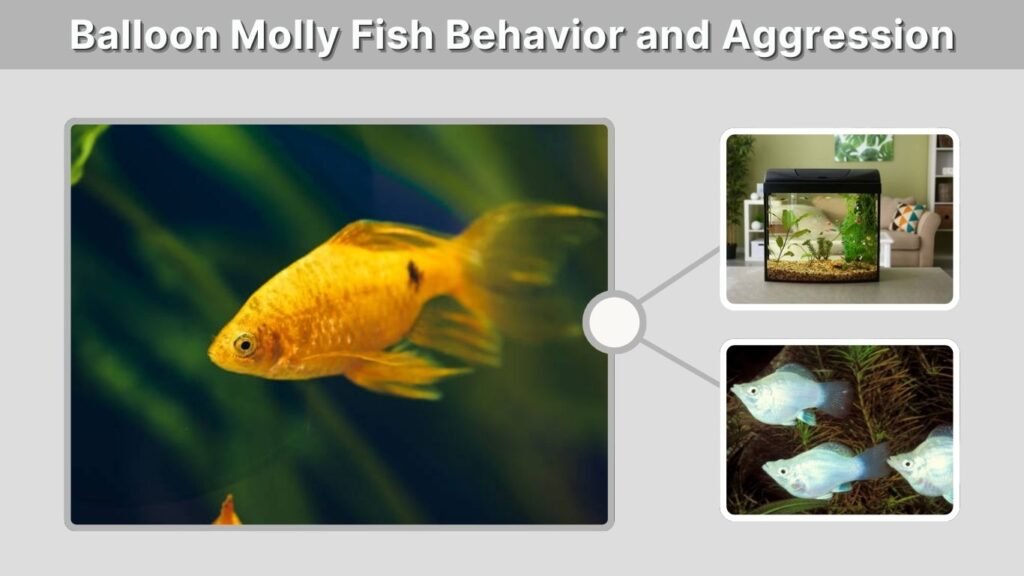
Most balloon mollies are active, social fish that spend much of their time swimming through the middle and upper parts of the aquarium. Chasing can occur, especially between males or during courtship. Occasional chasing does not necessarily indicate serious aggression, but constant harassment can stress weaker fish.
Are Balloon Molly Fish Aggressive?
Balloon mollies are generally considered peaceful, but males can become pushy.
Aggressive or persistent chasing may happen because of:
- Competition between males
- Courtship behavior
- Too few females
- Small aquarium size
- Overcrowding
- Lack of hiding places
- Stress caused by poor water conditions
Keeping approximately one male for every two or three females can reduce constant pressure on individual females.
Why Is My Balloon Molly Chasing Another Molly?
Male mollies regularly chase females when attempting to mate. Two males can also chase one another to establish social dominance.
Watch for damaged fins, constant hiding, refusal to eat, or one fish being repeatedly trapped in a corner. These signs suggest that the behavior has become stressful rather than normal social interaction.
Adding plants, increasing available space, and adjusting the male-to-female ratio can help.
Balloon Molly Staying at the Bottom
A balloon molly repeatedly sitting at the bottom can indicate stress or illness, especially if this is new behavior.
Possible causes include poor water quality, inappropriate temperature, ammonia or nitrite exposure, stress, digestive problems, disease, or difficulty swimming.
Check water parameters immediately if the behavior develops suddenly. Look for additional signs such as rapid breathing, clamped fins, white spots, swollen scales, or appetite loss.
Male vs Female Balloon Molly Fish
The naturally rounded body of balloon mollies makes sex identification based on body shape unreliable. Examining the anal fin is much more accurate.
How to Tell Male and Female Balloon Mollies Apart
The primary differences include:
- Male: Pointed, rod-like anal fin called a gonopodium
- Female: Broad, fan-shaped anal fin
- Male: Usually somewhat smaller and slimmer
- Female: Often larger and fuller
- Male: Frequently chases females
- Female: Belly becomes larger during pregnancy
Adult males can also appear more active during courtship.
Balloon Molly Fish Breeding
Balloon mollies breed readily when healthy males and females are kept together.
They are livebearers, so the female produces live fry rather than laying eggs. This means aquarium keepers should not expect to find balloon molly fish eggs attached to plants or aquarium decorations.
A female can also store sperm after mating, allowing her to produce more than one brood after a successful mating.
Pregnant Balloon Molly Fish and Giving Birth
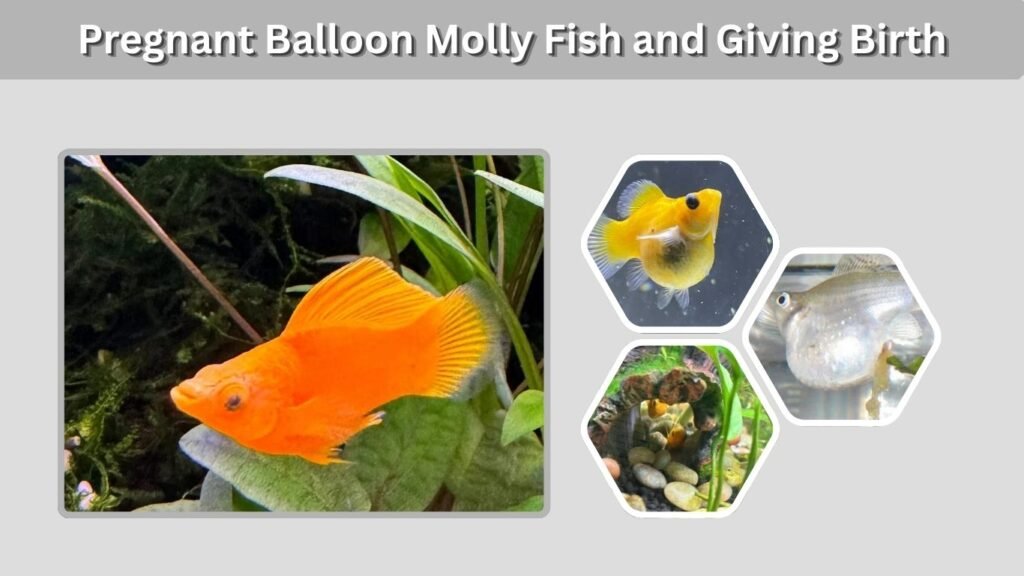
Identifying pregnancy can be challenging because balloon mollies already have enlarged abdomens. Instead of relying only on belly size, observe changes in body shape and behavior.
Pregnant Balloon Molly Fish Signs
Common signs include:
- Abdomen becoming larger than usual
- Belly becoming more squared near delivery
- Increased appetite during pregnancy
- Visible gravid area in some females
- Hiding among plants
- Reduced activity shortly before birth
- Spending more time alone
- Restlessness near labor
A black balloon molly may show a less obvious gravid spot because of its dark coloration.
How Long Are Balloon Mollies Pregnant?
Balloon mollies usually have a gestation period of roughly four to six weeks.
The exact duration can vary according to water temperature, female age, genetics, nutrition, and environmental conditions.
Pregnant females should receive nutritious food and stable water rather than being repeatedly moved between tanks, which can increase stress.
Balloon Molly Fish Giving Birth
As labor approaches, the female may hide, isolate herself, remain near plants, or appear restless.
Balloon mollies can produce dozens of fry, although brood size varies widely according to the female’s size, age, and condition.
Adults may eat newborn fry. Dense plants such as Java moss or floating vegetation can give babies places to hide.
Baby balloon mollies can eat crushed flakes, powdered fry food, or newly hatched brine shrimp.
Balloon Molly Fish Health Problems
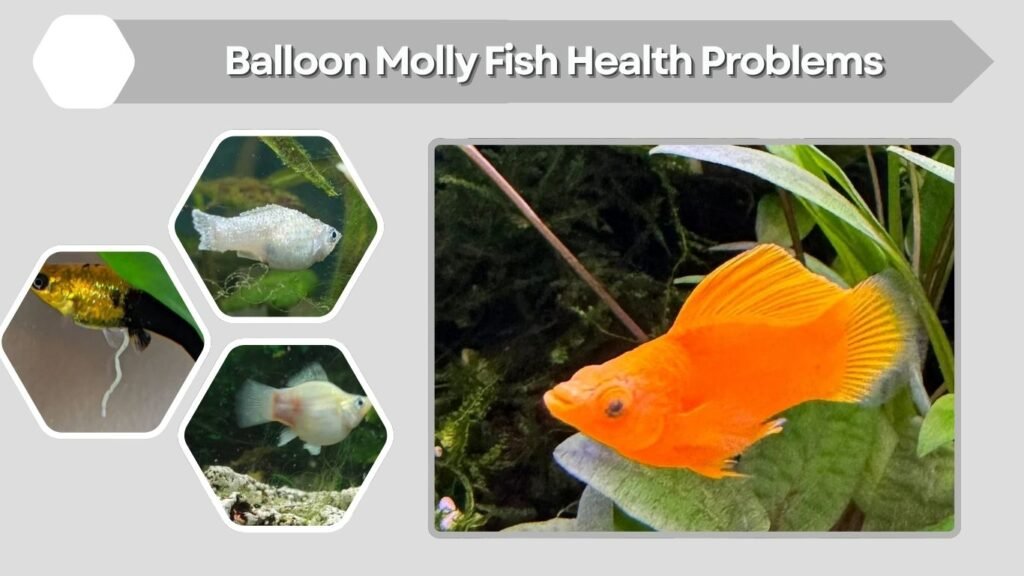
Balloon mollies may experience many of the same diseases as standard mollies, including ich, fungal infections, bacterial infections, fin damage, and internal problems. Their unusually short body shape may make some individuals more susceptible to digestive or swimming difficulties.
Common Signs of Disease
Watch for:
- White spots
- Fuzzy patches
- Clamped fins
- Rapid breathing
- Loss of appetite
- Abnormal swimming
- Persistent bottom sitting
- Swollen body
- Pinecone-like scales
- Rubbing against aquarium objects
Testing water quality should be one of the first steps whenever a fish suddenly behaves abnormally.
Keeping Balloon Mollies Healthy
Stable aquarium conditions are especially important for this variety. Avoid overcrowding and overfeeding, perform regular water changes, and maintain suitable hardness and pH.
New fish should ideally be observed carefully before being introduced to an established aquarium. Early detection of illness makes problems easier to manage and reduces the chance of disease spreading through the tank.
FAQs
1. How big do balloon molly fish get?
Most balloon mollies grow to approximately 2–3 inches long. Their short, deep bodies make them look larger and rounder than standard mollies of a similar length.
2. Are balloon mollies aggressive?
They are generally peaceful, but males may chase females or compete with other males. Providing enough space and keeping more females than males can reduce harassment.
3. Do balloon molly fish lay eggs?
No. Balloon mollies are livebearers. Females give birth to live, free-swimming baby fish instead of laying eggs.
4. How long do balloon molly fish live?
Their typical lifespan is around two to five years, depending on genetics, water quality, diet, disease prevention, and overall care.
5. Can balloon mollies live with guppies?
Yes. Balloon mollies and guppies can often live together peacefully, provided the aquarium is large enough and the water conditions are suitable for both species.