
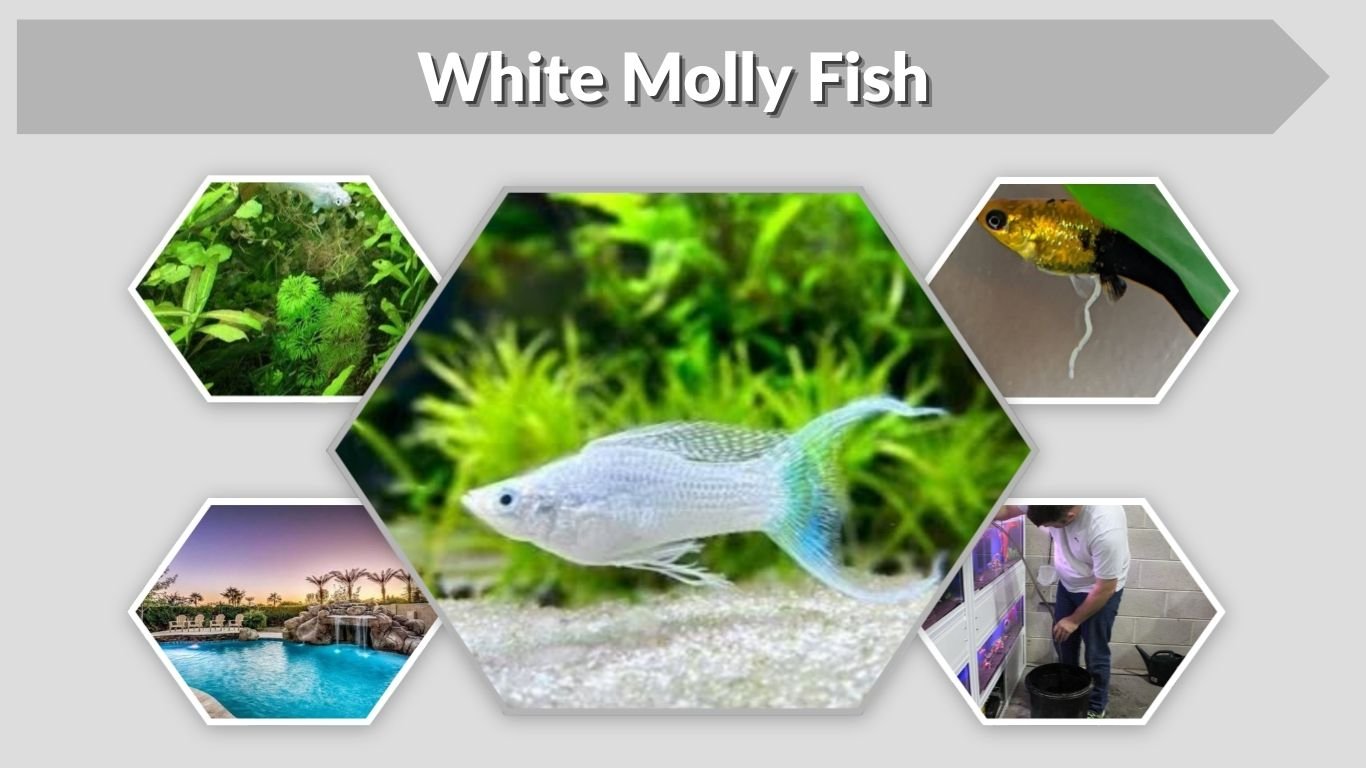
White molly fish are attractive freshwater livebearers known for their bright coloration, peaceful nature, and active swimming behavior. They are popular among both beginner and experienced aquarium keepers because they adapt well to community tanks when provided with stable water conditions and a balanced diet. White mollies are available in several forms, including white balloon mollies and white sailfin mollies, while some display black, orange, or silver markings. This guide covers their care, feeding, lifespan, pregnancy, male and female differences, and common problems such as white spots and fungus.
What Is a White Molly Fish?
White molly fish are color varieties of mollies belonging mainly to the Poecilia genus. Their pale white, cream, or silvery coloration results from selective breeding rather than making them a completely separate species. Like other mollies, they are livebearers, meaning females give birth to free-swimming fry instead of laying eggs.
Appearance and Size
Most white mollies have a bright white or pearly body that may appear slightly silver under aquarium lighting. Depending on the variety, adults commonly grow around 3 to 5 inches long.
Some important physical characteristics include:
- White, cream, or silvery body coloration
- Rounded or elongated body depending on variety
- Fan-shaped tail
- Relatively large dorsal fin
- Upturned mouth
- Adult size of approximately 3–5 inches
- Males usually smaller and slimmer than females
Sailfin varieties may appear larger because of their impressive dorsal fins.
Common White Molly Varieties
Several white and partially white varieties are available in the aquarium trade. The white balloon molly has a short, rounded body, while the white sailfin molly develops a much larger dorsal fin.
Black and white molly fish are also popular. These may have patches, spots, or marbled markings. Some are sold as Dalmatian mollies because their dark spots resemble those of a Dalmatian dog.
Other varieties can include orange and white, red and white, gold and white, or silver-white mollies.
White Molly Fish Lifespan
White molly fish commonly live approximately three to five years when kept under good conditions. Genetics, diet, water quality, stress, disease, and tank maintenance can all influence their lifespan.
Providing stable water parameters, enough swimming space, proper nutrition, and compatible tank mates gives mollies the best chance of living a healthy life.
How to Take Care of White Molly Fish

White mollies are generally hardy, but they perform best when aquarium conditions remain stable. Sudden changes in temperature or water chemistry can cause stress and make them more vulnerable to illness.
Tank Setup and Water Conditions
A tank of around 20 gallons or larger is preferable for a small group of mollies. Larger tanks are especially useful if you keep sailfin mollies or expect frequent breeding.
Important care requirements include:
- Temperature: approximately 72–82°F (22–28°C)
- pH: roughly 7.5–8.5
- Moderate to hard water
- Good filtration
- Regular partial water changes
- Plenty of swimming space
- Plants and hiding areas
Mollies generally prefer harder, more alkaline water than many soft-water tropical fish.
Avoid overcrowding because it can increase stress and cause water quality to deteriorate quickly.
White Molly Fish Food
White mollies are omnivores and naturally eat both plant and animal matter. A high-quality tropical flake or pellet can form the main part of their diet.
Their diet can also include spirulina-based foods, algae wafers, blanched vegetables, brine shrimp, daphnia, and other small aquatic foods.
Vegetable matter is particularly valuable because mollies naturally graze on algae and plant material. Feeding small portions once or twice daily is generally better than providing excessive amounts of food at once.
Tank Mates
White mollies are usually peaceful community fish. They can live with other calm species that prefer similar water conditions.
Good companions may include platies, swordtails, guppies, certain peaceful rainbowfish, and compatible bottom-dwelling species.
Avoid extremely aggressive fish or persistent fin nippers, particularly when keeping sailfin mollies with prominent fins.
Male vs Female White Molly Fish
Determining whether a white molly is male or female becomes easier once the fish reaches maturity. Body shape can provide clues, but the anal fin is usually the most dependable characteristic.
How to Tell Male and Female White Mollies Apart
Look for the following differences:
- Male: Narrow, pointed gonopodium instead of a fan-shaped anal fin
- Female: Broad, fan-shaped anal fin
- Male: Usually slimmer
- Female: Often larger and rounder
- Pregnant female: Abdomen becomes noticeably enlarged
- Male: May actively chase females during courtship
Males may also display their fins while attempting to attract females.
Breeding Behavior
Mollies reproduce readily in suitable aquariums. Males frequently pursue females, which can sometimes become stressful if there are too many males.
Keeping roughly one male with two or three females can help distribute the male’s attention.
Female mollies can also store sperm after mating, allowing them to produce additional broods without immediately mating again.
Pregnant White Molly Fish Signs
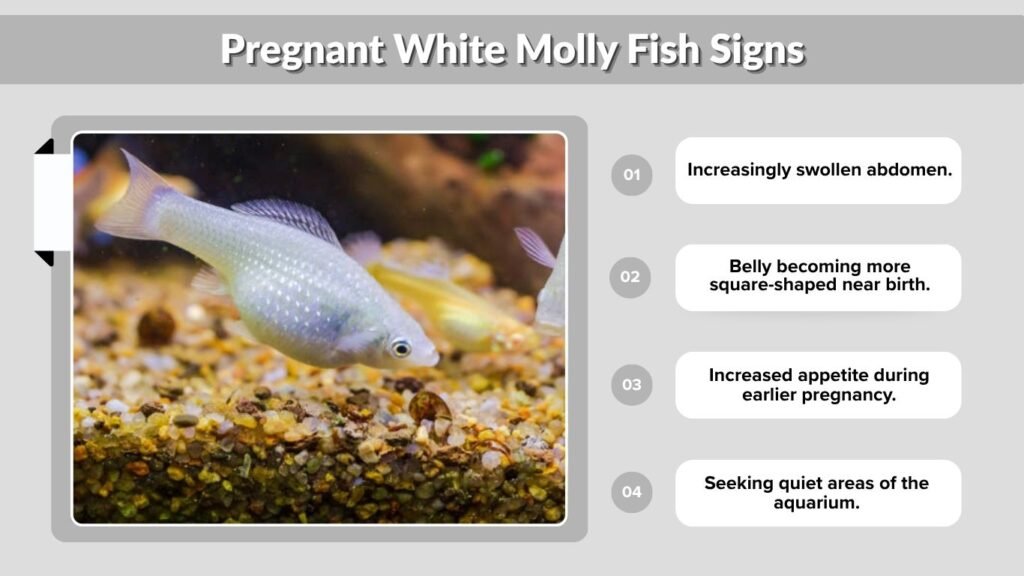
Pregnancy can be slightly more difficult to recognize in white mollies because their pale coloration may make certain physical changes less obvious. However, abdominal growth and behavioral changes usually become noticeable as birth approaches.
How to Identify a Pregnant White Molly
Common pregnancy signs include:
- Increasingly swollen abdomen
- Belly becoming more square-shaped near birth
- Increased appetite during earlier pregnancy
- Seeking quiet areas of the aquarium
- Hiding among plants
- Reduced activity before giving birth
- Darkened or visible gravid area in some females
The gravid spot may not appear as strongly on some white or lightly colored mollies.
White Molly Fish Giving Birth
Female mollies usually give birth to live fry after a gestation period of roughly four to six weeks, although temperature, age, health, and individual variation can affect the timing.
As birth approaches, the female may spend more time hiding near plants or remaining in quieter areas.
Dense live plants, floating plants, or breeding grass can help baby mollies hide because adult fish may eat newborn fry.
Caring for Baby White Molly Fish
Molly fry can usually swim and search for food soon after birth. They should receive very small foods several times throughout the day.
Suitable foods include crushed flakes, powdered fry food, baby brine shrimp, and other appropriately sized foods.
Clean water is especially important because young fish are more vulnerable to poor water conditions.
Why Does My Molly Fish Have White Spots?
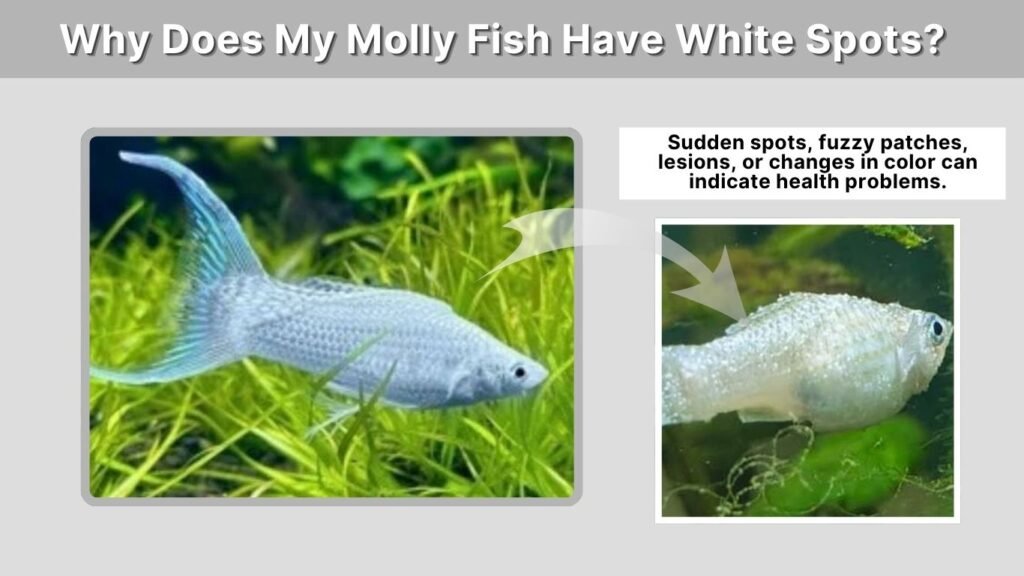
White spots appearing on a molly should not automatically be assumed to be part of its natural coloration. Sudden spots, fuzzy patches, lesions, or changes in color can indicate health problems.
White Spots on Molly Fish
Numerous tiny white dots resembling grains of salt can be associated with ich, a common parasitic disease of aquarium fish.
Other possible signs include scratching against decorations, clamped fins, rapid breathing, reduced appetite, and unusual hiding.
Before treating the tank, carefully inspect the fish and confirm whether the spots are actually new rather than natural pigmentation.
White Fungus or Fuzzy Growth
Cotton-like white or gray material around the mouth, fins, body, or an injury may indicate fungal growth or certain bacterial infections that can look similar to fungus.
Poor water conditions, stress, injuries, overcrowding, and weakened immunity can increase the risk.
Test the aquarium water, remove decaying material, perform appropriate water changes, and isolate affected fish when practical. Treatment should be selected according to the actual cause rather than using multiple medications unnecessarily.
Why Is My Molly Fish Turning White?
A molly changing from black, orange, or gold toward a paler appearance can have several possible explanations.
Natural genetic color changes sometimes occur as fish mature. However, rapid fading can also result from stress, poor water quality, unsuitable temperature, illness, or bullying.
If color loss occurs together with abnormal swimming, appetite loss, white patches, damaged fins, or rapid breathing, examine both the fish and aquarium conditions carefully.
White Poop in Molly Fish
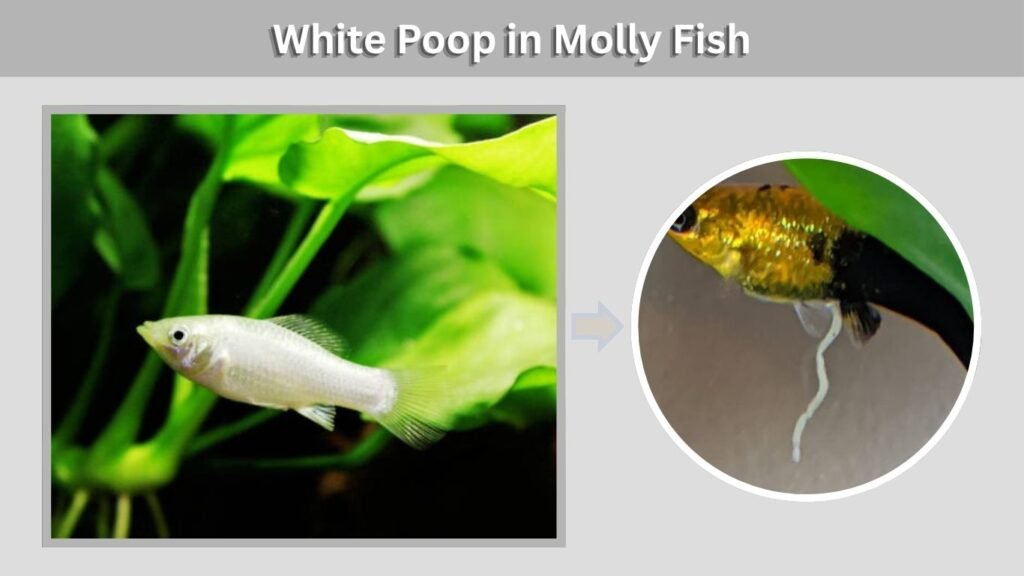
Occasional pale feces are not necessarily a sign of disease. Diet can affect the color and consistency of fish waste. However, persistent white stringy poop combined with other symptoms deserves attention.
White Stringy Poop
Possible contributing factors can include:
- Recent diet changes
- Fish temporarily not eating
- Digestive irritation
- Stress
- Intestinal infection or parasites
Avoid diagnosing internal parasites from poop color alone. A fish that continues eating, swimming normally, and maintaining body weight may simply be passing mucus or lightly colored waste.
A molly with long-term white stringy feces, weight loss, a sunken abdomen, poor appetite, or unusual behavior should be monitored closely and appropriately treated after determining the likely cause.
FAQs
1. Are white molly fish easy to care for?
Yes. White mollies are relatively hardy when they receive warm, clean, moderately hard water, adequate swimming space, and a balanced omnivorous diet.
2. How big do white molly fish get?
Most white mollies reach approximately 3 to 5 inches in length. Size varies according to genetics and variety, with some sailfin mollies growing larger than smaller forms.
3. How can I tell if my white molly fish is pregnant?
A pregnant female usually develops an enlarged abdomen that may become more square-shaped near delivery. She may also hide more frequently and become less active shortly before giving birth.
4. Why does my black molly fish have white spots?
Naturally patterned mollies can have permanent white markings. However, newly appearing salt-like dots may indicate ich, while fuzzy white areas can be associated with fungal or bacterial problems.
5. How long do white molly fish live?
White molly fish generally live around three to five years. Good water quality, proper feeding, stable temperatures, adequate space, and disease prevention can help them reach the upper end of their expected lifespan.