
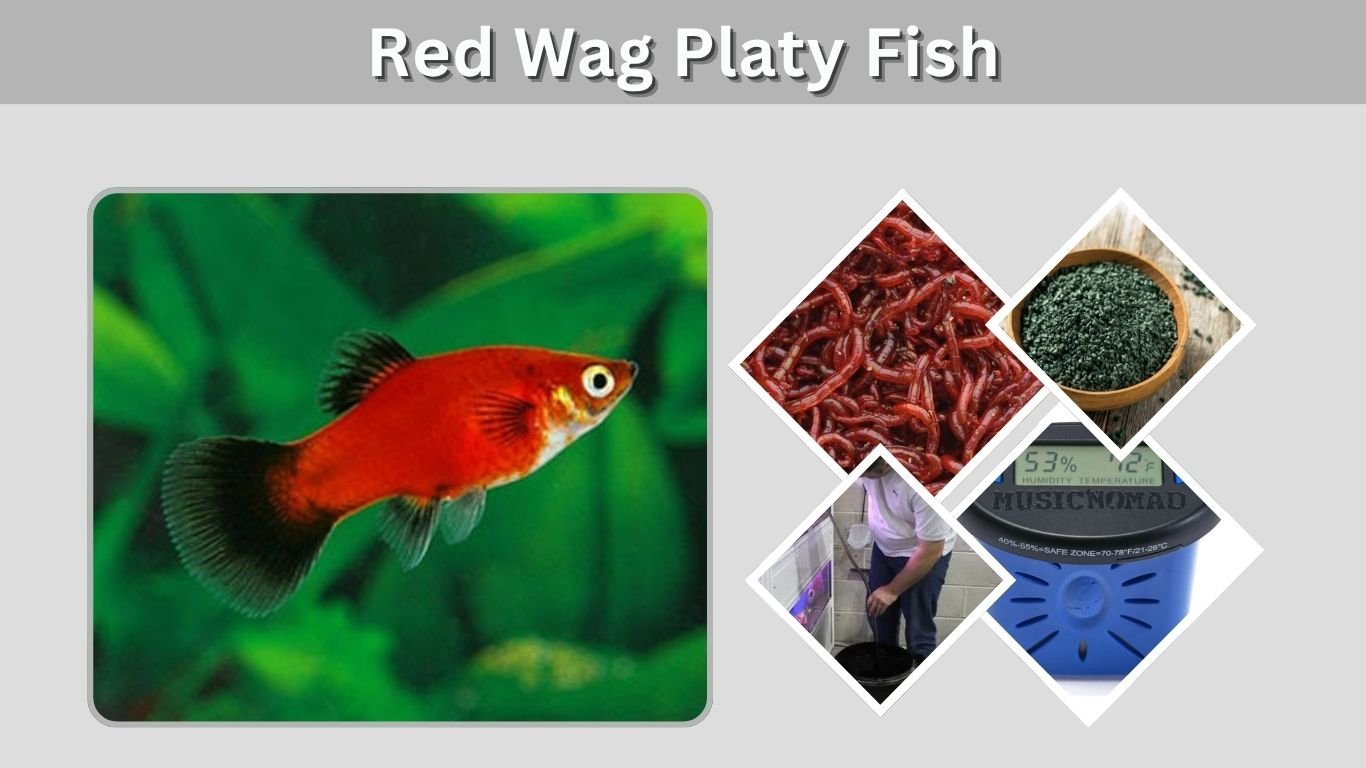
The red wag platy is a colorful, peaceful livebearer prized for its bright red body and contrasting black fins. Easy care, modest size, and active behavior make it an excellent fish for beginners and community aquariums. Red platies are available in several patterns, including coral, Mickey Mouse, balloon, tiger, and tuxedo varieties. With warm, clean water, suitable companions, and a balanced diet, these adaptable fish can remain healthy, breed readily, and add constant movement to a freshwater tank.
Red Wag Platy Fish Overview
The red wag platy is a selectively bred color variety of the southern platyfish, Xiphophorus maculatus. Its vivid coloration and undemanding nature have made it one of the most widely kept livebearers. Some commercial lines may also carry genetics from the variable platy, Xiphophorus variatus.
Appearance and Size
A typical red wag platy has a brilliant red or reddish-orange body. Its tail, dorsal, and sometimes lower fins are solid black, creating the characteristic “wag” pattern.
Important identification features include:
- Adult length of approximately 2–3 inches
- Short, deep, laterally compressed body
- Fan-shaped tail and rounded head
- Red or orange body with contrasting black fins
- Females usually larger and rounder than males
- Males equipped with a narrow reproductive fin called a gonopodium
Color intensity differs among individuals. Genetics, diet, age, stress, lighting, and aquarium conditions can all affect how red a fish appears.
Behavior and Temperament
Red wag platies are active, social, and generally peaceful. They spend much of their time swimming through the middle and upper sections of the aquarium. They may also explore plants, decorations, and the substrate in search of tiny food particles.
Occasional chasing is normal, particularly when males compete or pursue females. However, persistent aggression can occur when the tank is overcrowded or contains too many males. Keeping approximately one male for every two or three females helps distribute the males’ attention.
Lifespan
A red wag platy normally lives for about two to four years. Excellent water quality, proper feeding, and stable temperatures may help some individuals live longer. Poor genetics, overfeeding, chronic stress, and repeated exposure to ammonia or nitrite can shorten their lives.
Red Wag Platy Care Requirements
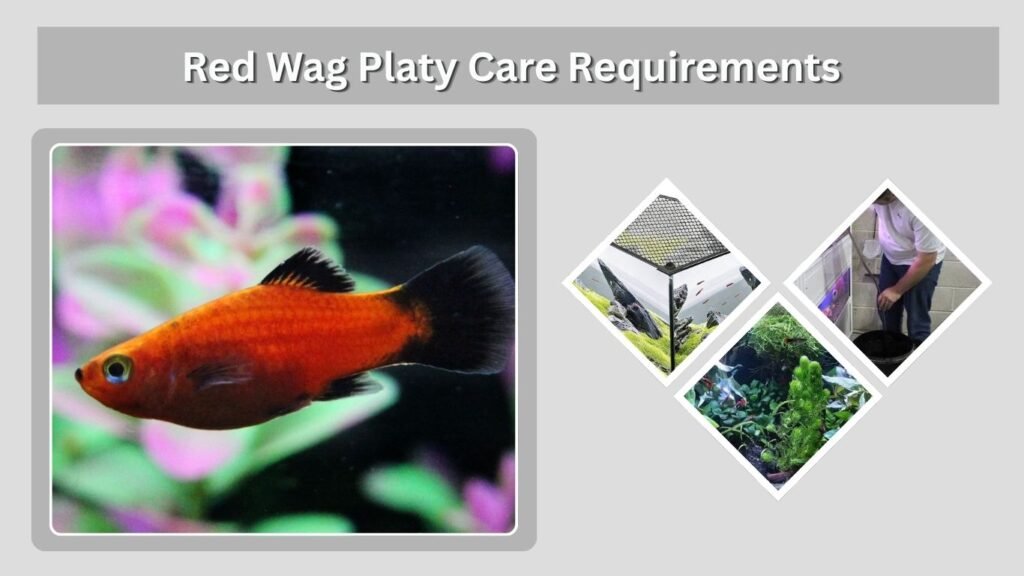
These platies are forgiving, but they still need a properly cycled aquarium. A filter should process waste while creating a moderate current. Plants and open swimming areas will help the fish feel secure without restricting their movement.
Tank Size and Setup
A 10-gallon aquarium may hold a small group, but a 15- to 20-gallon tank is more comfortable and easier to maintain. A larger aquarium is especially important because platies reproduce quickly.
An appropriate setup should include:
- A cycled aquarium with effective filtration
- Live or artificial plants around the sides and back
- Open space for swimming
- A secure lid to prevent accidental jumping
- Gentle or moderate water movement
- Regular partial water changes
- Dense cover if fry will remain in the tank
Java moss, hornwort, water sprite, anubias, and floating plants provide excellent cover. Platies are adaptable to different substrates, so sand or smooth gravel can both be used.
Water Temperature and Parameters
The recommended water temperature for red wag platies is approximately 72–78°F (22–26°C). They generally prefer neutral to moderately alkaline water with a pH of around 7.0–8.2.
Platies perform especially well in moderately hard water. Very soft or acidic conditions may contribute to stress and health difficulties. Ammonia and nitrite must remain at zero, while nitrate should be controlled through routine maintenance. Replace about 20–30% of the water weekly, depending on the number of fish and the aquarium’s condition.
Suitable Tank Mates
Red platies can live with many similarly sized community fish. Good companions include other platies, mollies, guppies, swordtails, small peaceful barbs, rasboras, danios, Corydoras catfish, and suitable tetras.
Avoid large predators and highly aggressive or territorial species. Long-finned fish may also experience unwanted fin-nipping from certain companions. Although platies can sometimes live with bettas, compatibility depends on the betta’s personality and the available tank space.
Feeding a Red Platy
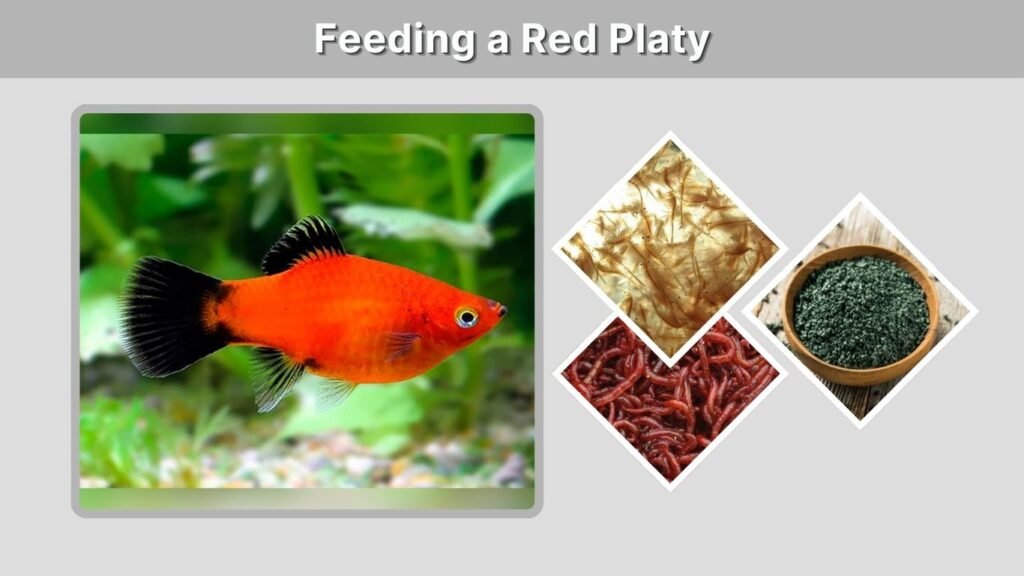
Red platies are omnivores. In nature, related fish consume algae, plant material, small crustaceans, insect larvae, and other tiny organisms. Captive fish benefit from a varied diet containing both plant-based and animal-based ingredients.
Best Foods
A quality tropical flake or small pellet can serve as the staple food. Supplement it with foods such as brine shrimp, daphnia, bloodworms, spirulina flakes, blanched vegetables, and algae-based products.
Feed only what the fish can finish in about one or two minutes. One or two small feedings per day are normally enough. Overfeeding can cause obesity, digestive problems, and deteriorating water quality. Vegetable matter is particularly helpful because platies naturally graze and require more than a purely meat-based diet.
Popular Red Platy Varieties
Selective breeding has produced many red platies with different body shapes and markings. Names may vary among breeders and aquarium stores, so fish carrying similar names do not always look identical.
Red Coral Platy
The red coral platy usually displays an intense, nearly solid red body. Unlike the red wag, it often has red fins rather than strongly contrasting black ones. Dwarf red coral and teacup platy are commercial names that may describe small strains, but they are not always standardized varieties.
Red Mickey Mouse Platy
This variety has three dark marks near the base of its tail. One large central spot and two smaller spots resemble the silhouette of Mickey Mouse’s head. The rest of its body can be red, orange, gold, or a combination of colors.
Red Tuxedo Platy
The red tuxedo platy has a red front section and extensive black coloration along the rear body. Some specimens resemble red wag platies but have considerably more black on their sides.
Red Balloon, Tiger, and Calico Platies
Balloon red platies have shortened, rounded bodies created through selective breeding. Their compressed shape can make them more susceptible to swimming or internal health problems, so they require careful husbandry.
Red tiger platies possess dark stripes or irregular vertical markings. Red calico and Dalmatian platies display scattered black or multicolored spots. A red comet platy normally has contrasting markings on the upper and lower edges of its tail.
Male vs. Female Red Wag Platy
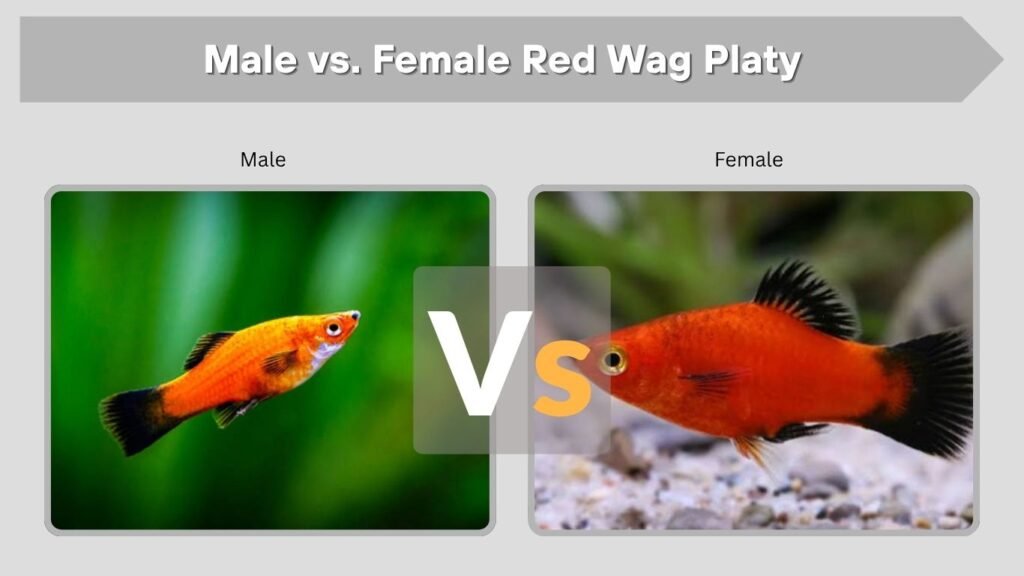
Sexing mature red wag platies is relatively easy when their anal fins are visible. Body shape provides additional clues, although it is less reliable in young or well-fed fish.
How to Identify the Sex
Use these characteristics to distinguish males from females:
- Male: Narrow, pointed gonopodium beneath the body
- Female: Broad, fan-shaped anal fin
- Male: Usually smaller and more streamlined
- Female: Generally larger with a fuller abdomen
- Pregnant female: May develop a swollen, squared-off belly
- Adult male: Often chases females and displays frequently
Juvenile fish can be difficult to sex. Waiting until the anal fin has fully developed provides a more dependable answer than judging coloration or body size.
Pregnancy and Breeding
Platies are livebearers, meaning females release free-swimming fry instead of laying external eggs. They breed readily without complicated conditioning, and pregnancies are common in mixed-sex aquariums.
Signs of a Pregnant Red Platy
A pregnant red wag platy gradually develops an enlarged abdomen. Close to delivery, her belly may appear box-shaped, and she may seek shelter among plants. Other possible signs include reduced activity, increased appetite followed by reduced feeding, and avoidance of other fish.
The dark gravid spot found near the rear of the abdomen can be difficult to see in a solid-red fish. Therefore, body shape and behavior may be more useful than coloration.
Gestation and Giving Birth
Gestation commonly lasts about 24–30 days, although water temperature, age, stress, and individual health can influence the timing. A female may produce roughly 20–50 fry, with large adults sometimes delivering more.
Adult plants may eat newborn fry. Dense plants give the babies a better chance of surviving. Alternatively, move the fry to a separate cycled grow-out tank after birth. Repeatedly moving or confining a heavily pregnant female can cause considerable stress.
Caring for Red Platy Fry
Newborn fry can eat finely crushed flakes, powdered fry food, newly hatched brine shrimp, and other appropriately sized foods. Offer very small portions several times daily while keeping the water clean. Sponge filters are useful because they provide gentle filtration without pulling fry into an intake.
Female platies can store sperm and produce several broods after a single mating. Consequently, a female purchased without a male may still give birth later.
Common Health Concerns

Healthy red platies should swim actively, eat readily, and hold their fins open. Disease is more likely when the aquarium is uncycled, overcrowded, or exposed to sudden changes.
Red Gills and Warning Signs
The gills naturally contain blood vessels and may look slightly reddish. However, unusually bright, swollen, or inflamed gills can indicate ammonia exposure, nitrite poisoning, poor oxygenation, parasites, or infection.
Test the water immediately if red gills occur alongside gasping, rapid breathing, rubbing, lethargy, or loss of appetite. Other concerning signs include white spots, clamped fins, torn fins, bloating, fuzzy growths, and abnormal swimming. Correcting water-quality problems should be the first step before using medication.
FAQs
Are red wag platies aggressive?
They are normally peaceful. Males may chase females or compete with one another, especially when the tank is small or the male-to-female ratio is unbalanced.
How many red wag platies should be kept together?
Keep at least three, preferably with one male and two or three females. A female-only group can help prevent constant breeding and mating pressure.
Do red wag platies need a heater?
A heater is recommended when the room cannot maintain a stable temperature of approximately 72–78°F. Stability is more important than frequent temperature fluctuations.
Why is my red wag platy changing color?
Color may change with maturity, genetics, diet, stress, lighting, or illness. Gradual pattern development can be normal, but sudden fading accompanied by unusual behavior may indicate a problem.
How can I improve my red platy’s color?
Provide a varied diet containing carotenoid-rich and spirulina-based foods, maintain clean water, reduce stress, and use appropriate aquarium lighting. Genetics ultimately determines the fish’s maximum color intensity.