
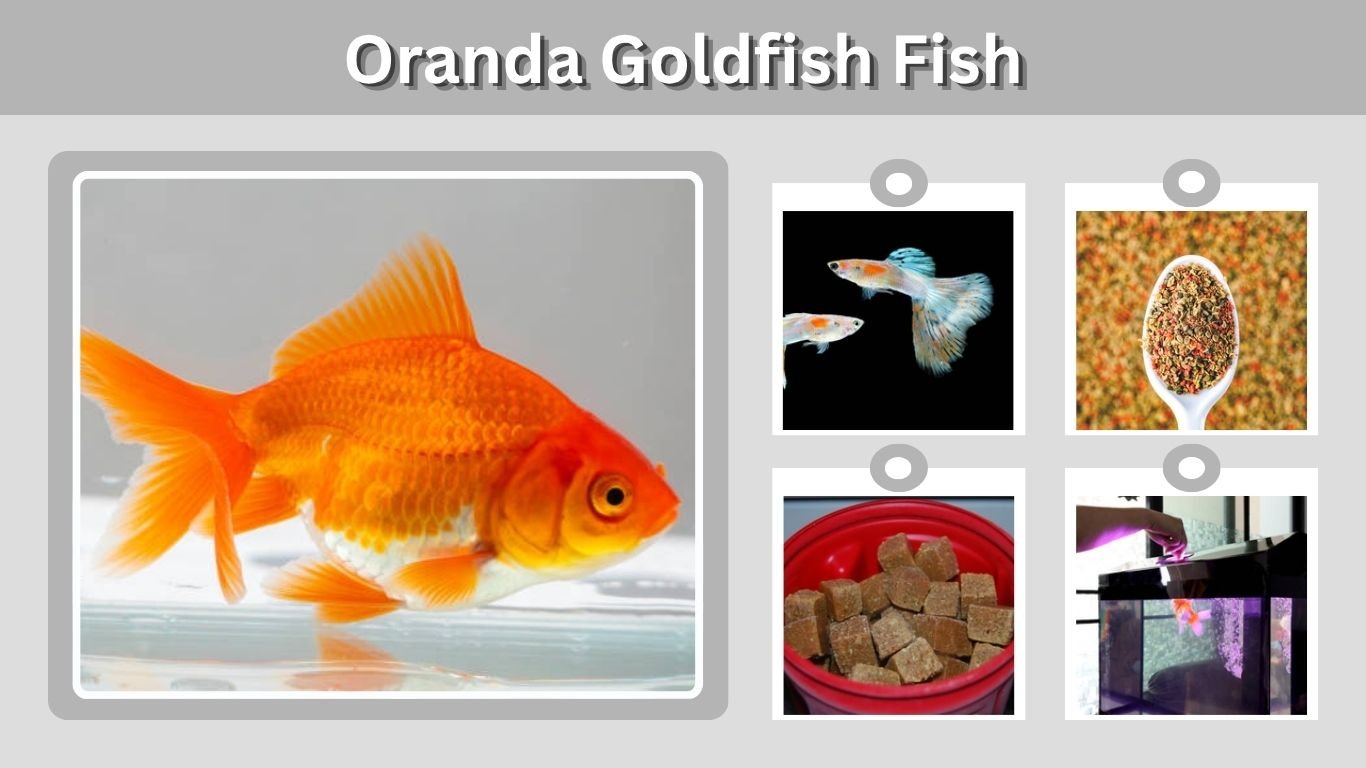
The Oranda goldfish fish is one of the most popular fancy goldfish varieties because of its rounded body, flowing fins, and soft head growth called a wen. Many beginners love Orandas for their peaceful nature and beautiful colors, including red cap, panda, calico, orange, white, and black varieties. However, Orandas need more care than many people expect. They are slow swimmers, produce a lot of waste, and need clean water, proper food, and carefully chosen tank mates.
What Is an Oranda Goldfish Fish?
An Oranda goldfish is a fancy goldfish variety developed through selective breeding. Unlike common goldfish, which have long, streamlined bodies, Orandas have rounder bodies, double tails, and slower swimming ability. Aquarium Co-Op describes fancy goldfish as selectively bred freshwater fish with egg-shaped bodies and flowing double tails, which need special care compared with long-bodied goldfish.
The most famous feature of the Oranda is the wen, the fleshy growth on the head. In red cap Oranda goldfish, the body is usually white or silver, while the wen is bright red or orange. Panda Orandas often show black-and-white patterning, although goldfish colors can change as they grow.
| Quick Fact | Oranda Goldfish |
| Type | Fancy goldfish |
| Temperament | Peaceful |
| Swimming speed | Slow to moderate |
| Best tank mates | Other fancy goldfish |
| Water type | Freshwater |
| Best temperature | Cool to mild water |
| Main concern | Clean water and safe tank mates |
Oranda Goldfish Appearance
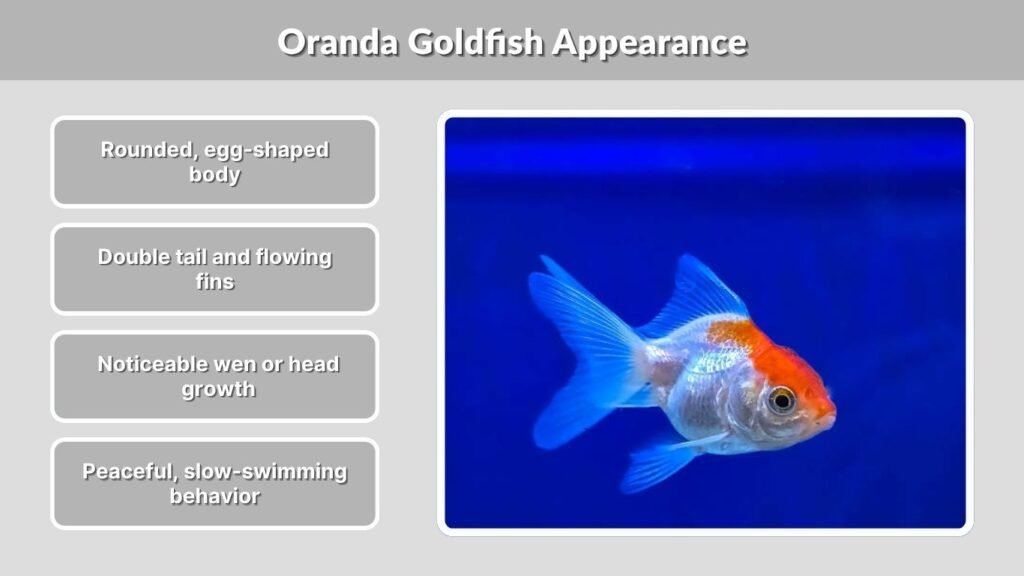
Oranda goldfish are easy to recognize because they have a rounded body, flowing fins, and a head growth that gives them a unique look. Their body shape makes them beautiful but also less athletic than common, comet, or shubunkin goldfish.
Key Identification Features
- Rounded, egg-shaped body
- Double tail and flowing fins
- Noticeable wen or head growth
- Peaceful, slow-swimming behavior
- Colors may include red, white, orange, black, calico, blue, or panda
- Red cap Oranda has a white body with a red head cap
- Panda Oranda has black-and-white markings
- Often swims slowly compared with slim-bodied goldfish
The wen can grow large in some Orandas. If it grows over the eyes or traps debris, the fish may need extra monitoring. Poor water quality can also irritate the wen, so clean water is especially important for this variety.
Oranda Goldfish Tank Size
Orandas should not live in small bowls. They need a real aquarium with filtration, swimming space, and stable water conditions. Aquarium Co-Op recommends about 20 gallons per fancy goldfish, with extra water volume for each additional fish. RSPCA Australia also advises that larger tanks and filters are better for goldfish, with a minimum tank volume of 50 liters and dimensions based on adult body length.
For practical care, a 20-gallon tank may work for one young Oranda, but a larger tank is better long term. A 40-gallon breeder-style tank is often more comfortable for two fancy goldfish because it gives them more surface area and swimming room.
Best Tank Setup
Orandas do best in tanks with strong filtration, gentle water flow, smooth decorations, and open swimming space. Avoid sharp rocks, rough ornaments, or narrow caves because their fins and wen can be damaged. Sand or smooth gravel can work, but gravel should be large enough not to be swallowed or small enough to pass safely.
Goldfish produce a lot of waste, so filtration is not optional. RSPCA NSW notes that goldfish eat a lot and produce a lot of waste, so a suitable filter and water movement help keep the aquarium clean and oxygenated.
Water Temperature and Parameters
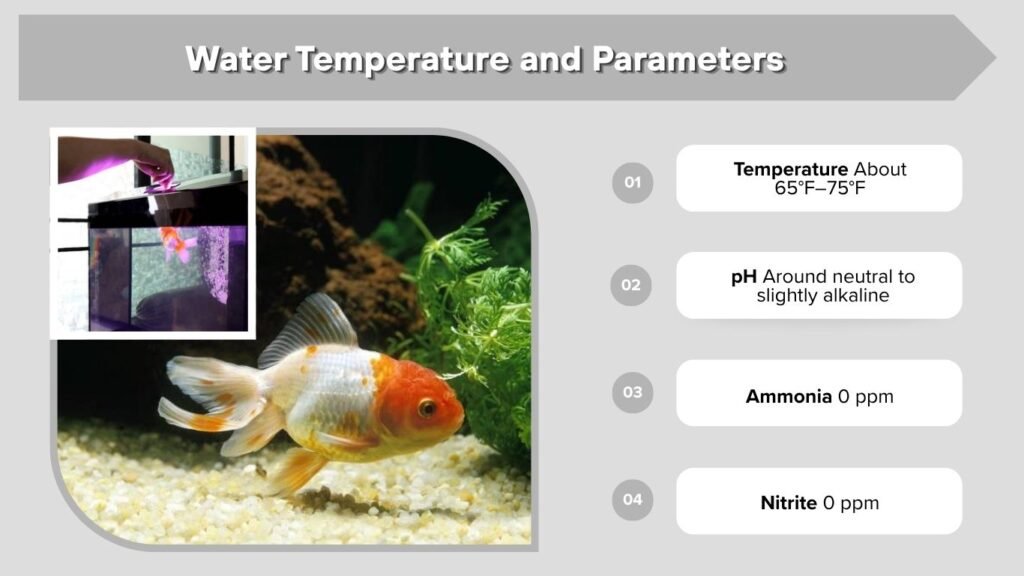
Oranda goldfish are not tropical fish. They prefer cooler to mild freshwater. Aqueon lists the optimum temperature for fancy goldfish as 68°F to 74°F, while PetMD gives a general goldfish temperature range of 65°F to 75°F and notes that goldfish are not suited for tropical aquariums.
RSPCA guidance also separates goldfish from tropical fish, noting that goldfish are kept in cooler water while tropical fish need heated aquariums. This is one reason many tropical community fish are poor matches for Orandas.
| Water Factor | Good Target for Oranda Goldfish |
| Temperature | About 65°F–75°F |
| pH | Around neutral to slightly alkaline |
| Ammonia | 0 ppm |
| Nitrite | 0 ppm |
| Nitrate | As low as possible with water changes |
| Flow | Gentle to moderate |
| Filter | Strong biological filtration |
Stable water is more important than chasing perfect numbers. Sudden temperature or chemistry swings can stress goldfish, so regular testing and water changes are important.
Best Fish Food for Oranda Goldfish
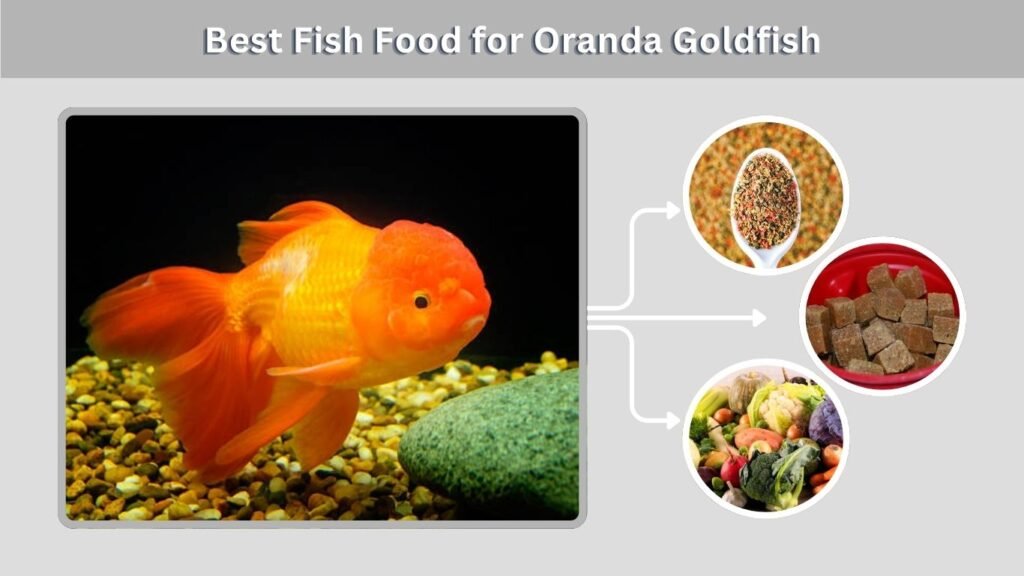
The best fish food for Oranda goldfish is a balanced fancy goldfish diet. Because Orandas have round bodies and can be prone to buoyancy issues, many keepers prefer sinking pellets instead of floating flakes. The Spruce Pets notes that sinking diets are preferred for fancy goldfish to help avoid buoyancy problems.
A good Oranda diet can include sinking goldfish pellets, gel food, blanched vegetables, and occasional protein foods. Vegetables such as shelled peas, spinach, lettuce, or zucchini can add fiber. Protein treats such as bloodworms or brine shrimp can be offered occasionally, but they should not replace a balanced staple food.
Feeding Tips
- Feed small portions once or twice daily
- Use sinking pellets or gel food for fancy goldfish
- Remove uneaten food after a few minutes
- Avoid overfeeding because it pollutes the water
- Add vegetables for fiber
- Use treats only in moderation
Overfeeding is one of the most common Oranda problems. Extra food quickly turns into waste, which can raise ammonia and harm the fish.
Can Oranda Goldfish Live With Other Fish?
Yes, Oranda goldfish can live with other fish, but tank mates must be chosen carefully. The safest tank mates are usually other fancy goldfish with similar body shapes and swimming speeds. Aqueon also recommends choosing other goldfish of the same breed or similar type to avoid stress or competition.
Good companions often include other Orandas, Ranchu, Lionhead, Fantail, Ryukin, Telescope, or Black Moor goldfish. These fish are all slower than common goldfish and are less likely to outcompete Orandas for food.
Best Tank Mates for Oranda Goldfish
Other fancy goldfish are usually the best choice. Some keepers also use peaceful cool-water companions in large, well-maintained tanks. Aquarium Co-Op lists goldfish tank mate options such as hillstream loaches, dojo loaches, and certain larger peaceful bottom dwellers, but compatibility depends on temperature, size, behavior, and tank space.
Snails may also work in some tanks, especially larger mystery snails or nerite snails. However, very small snails may be eaten or harassed.
Fish to Avoid With Oranda Goldfish
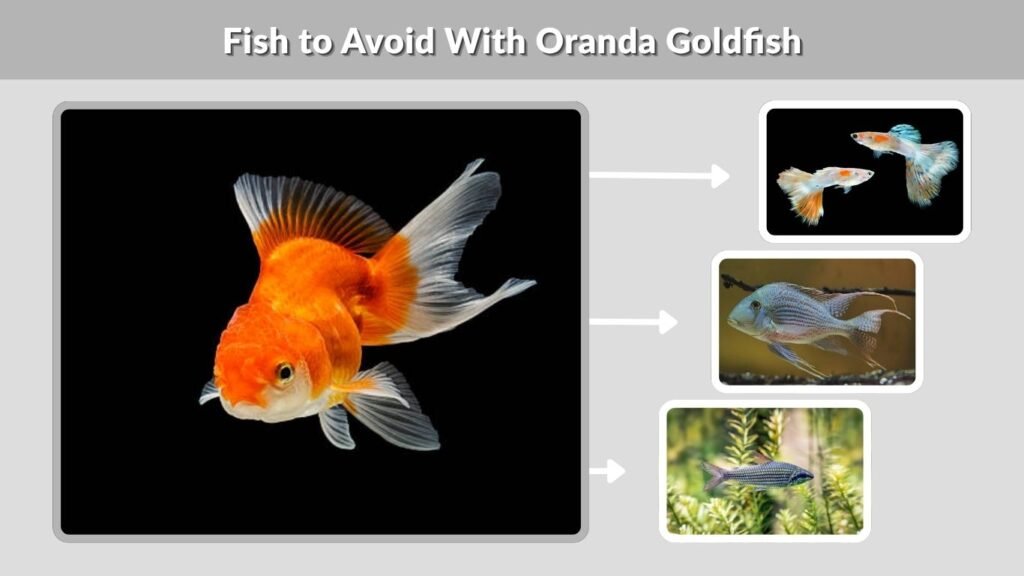
Not every peaceful fish is good for an Oranda tank. Avoid fish that are too fast, too aggressive, too small, too warm-water dependent, or likely to nip fins.
Fast fish can steal food before Orandas get enough. Fin nippers may damage their long fins. Tiny fish may become snacks. Warm tropical fish may need temperatures that are too high for long-term goldfish care.
Poor Tank Mate Choices
- Betta fish
- Guppies
- Neon tetras
- Small minnows that fit in the mouth
- Tiger barbs and other fin nippers
- Cichlids
- Common plecos
- Common goldfish or comet goldfish in small tanks
- Very fast tropical fish
- Shrimp small enough to be eaten
A betta fish with Oranda goldfish is usually a bad idea. Bettas prefer warmer tropical water and may nip flowing fins, while Orandas prefer cooler water and produce heavy waste. PetMD notes that goldfish are not suited for tropical aquariums, while RSPCA says tropical fish need heated tanks with higher temperatures.
Can Oranda Goldfish Live With Koi Fish?
Oranda goldfish and koi fish are not ideal tank mates in most situations. Koi grow very large, swim strongly, and usually belong in outdoor ponds or very large systems. Orandas are slower, rounder, and more delicate. A koi can easily outcompete an Oranda for food or bump it around.
Some goldfish can live with koi in large ponds, but this is more suitable for hardier, long-bodied goldfish than delicate fancy varieties. The Spruce Pets notes that goldfish may be kept with koi in larger ponds, but fancy goldfish have body structures that make them more vulnerable and less agile.
For most keepers, Orandas are better kept with other fancy goldfish in an aquarium rather than with koi.
Do Oranda Goldfish Eat Other Fish?
Oranda goldfish are peaceful, but they are still opportunistic feeders. They may eat very small fish, tiny fry, shrimp, fish eggs, or anything small enough to fit in their mouth. This does not mean they are aggressive predators. It simply means they investigate edible objects while foraging.
If a tank mate is small enough to be swallowed, it is not safe with an Oranda. This is why tiny fish such as neon tetras, small guppies, baby fish, and small shrimp are risky. Choose tank mates that are too large to be eaten and calm enough not to bother the Oranda.
Oranda Goldfish Behavior
Orandas are generally gentle, slow, and social. They often learn feeding routines and may swim toward the front of the tank when they see their owner. They spend much of the day searching for food, picking at the substrate, and exploring decorations.
Because they are social fish, many Orandas do well with at least one compatible goldfish companion. However, the tank must be large enough. Crowding causes stress, poor water quality, and competition during feeding.
Common Oranda Goldfish Problems
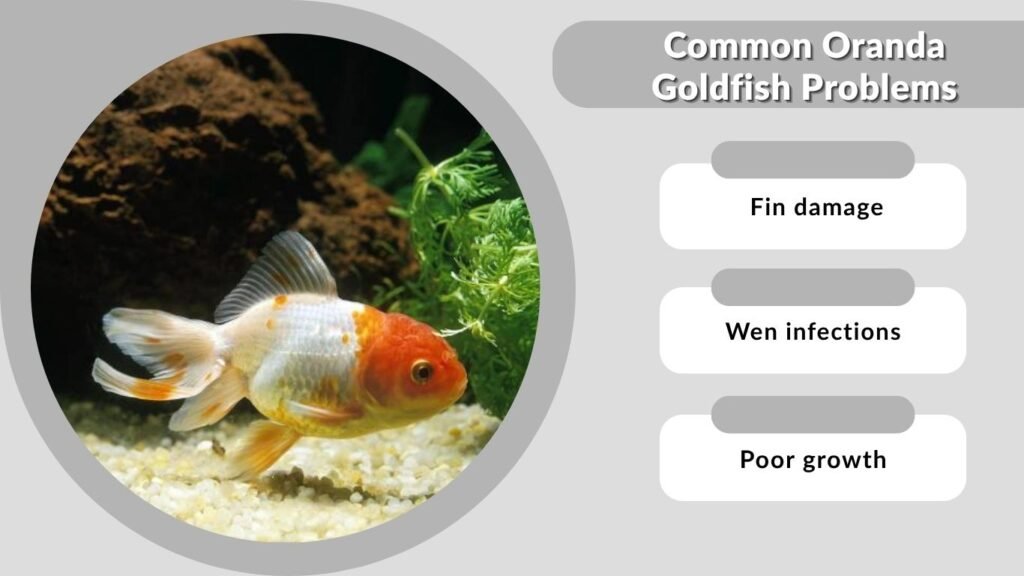
Orandas are hardy when kept correctly, but they can develop problems in poor conditions. Their wen can collect debris or become irritated. Their round body shape may make them more prone to buoyancy trouble, especially if they are overfed or given poor-quality food.
Common problems include swim bladder issues, fin damage, wen infections, poor growth, ammonia burns, and stress from aggressive tank mates. Most of these issues are easier to prevent than fix. Clean water, good food, enough space, and peaceful companions are the foundation of healthy Oranda care.
How to Keep an Oranda Goldfish Healthy
Healthy Oranda care starts with a cycled tank. This means the aquarium has beneficial bacteria that process fish waste. Test water regularly, change water as needed, and clean the filter without killing beneficial bacteria.
Feed a varied diet, avoid sharp decorations, and watch your fish daily. A healthy Oranda should swim normally, show interest in food, hold its fins naturally, and have clear eyes and smooth scales.
Basic Care Checklist
- Use a spacious aquarium, not a bowl
- Keep ammonia and nitrite at 0 ppm
- Maintain stable cool-to-mild water temperature
- Use strong filtration with gentle flow
- Feed sinking fancy goldfish food
- Choose peaceful fancy goldfish tank mates
- Avoid tropical, aggressive, or tiny fish
- Perform regular partial water changes
FAQs
What fish can live with Oranda goldfish?
The best fish to keep with Oranda goldfish are usually other fancy goldfish, such as Fantails, Ranchu, Lionheads, Black Moors, Telescopes, and other Orandas. Some peaceful cool-water species may work in large tanks, but other fancy goldfish are the safest choice.
Can Oranda goldfish live with tropical fish?
Oranda goldfish should not usually live with tropical fish. Orandas prefer cooler to mild water, while tropical fish usually need warmer heated tanks. The temperature difference can stress one species or the other.
Can Oranda goldfish live with koi fish?
Oranda goldfish are not ideal with koi. Koi grow very large, swim faster, and usually need ponds or very large systems. Orandas are slower and more delicate, so they are better kept with other fancy goldfish.
What is the best fish food for Oranda goldfish?
The best food is a high-quality sinking pellet or gel food made for fancy goldfish. You can also offer vegetables and occasional protein treats. Avoid overfeeding, because extra food quickly pollutes the water.
Will Oranda goldfish eat other fish?
Oranda goldfish may eat very small fish, fry, shrimp, or eggs if they fit in the mouth. They are not aggressive hunters, but they are opportunistic feeders. Avoid keeping them with tiny tank mates.