
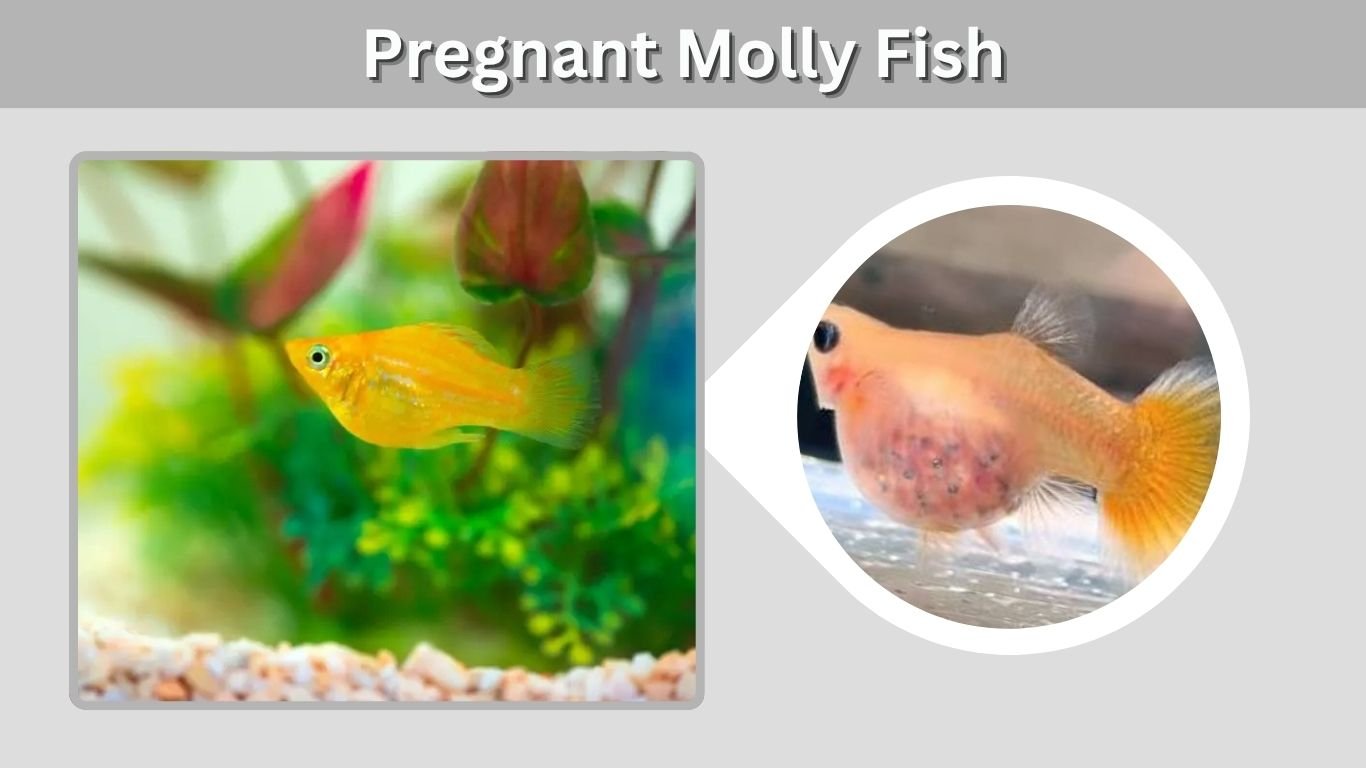
A pregnant molly fish is usually easy to recognize once you know the key signs. Female mollies are livebearers, which means they give birth to free-swimming fry instead of laying eggs. During pregnancy, the belly gradually enlarges, behavior may change, and the abdomen often becomes more square-shaped as birth approaches. Whether you keep black mollies, Dalmatian mollies, balloon mollies, or gold mollies, understanding pregnancy stages, gestation time, and proper care can help both the mother and babies remain healthy.
How to Tell If a Molly Fish Is Pregnant
Female mollies can become pregnant soon after reaching sexual maturity. Because they can store sperm after mating, a female may produce several broods even when a male is no longer present. Physical changes usually provide the clearest indication of pregnancy.
Signs of a Pregnant Molly Fish
- Belly becomes noticeably larger and rounder
- Abdomen gradually develops a boxy or squared shape
- Gravid area near the rear of the abdomen may become darker
- Female may eat more during early and middle pregnancy
- She may spend more time hiding as birth approaches
- Activity can decrease shortly before delivery
- She may avoid males or other active fish
- Restlessness may develop just before giving birth
The gravid spot can be easier to see in light-colored mollies than in black molly fish. With dark-colored varieties, body shape and behavior are often more useful signs.
What Does a Pregnant Molly Fish Look Like?
A pregnant female typically develops a swollen belly that grows steadily over several weeks. Early in pregnancy, she may simply look slightly fuller. Later, the abdomen becomes much larger.
Shortly before birth, the belly often looks more square or box-shaped rather than smoothly rounded. This is one of the most useful visual clues that delivery may be approaching.
How Long Are Molly Fish Pregnant?
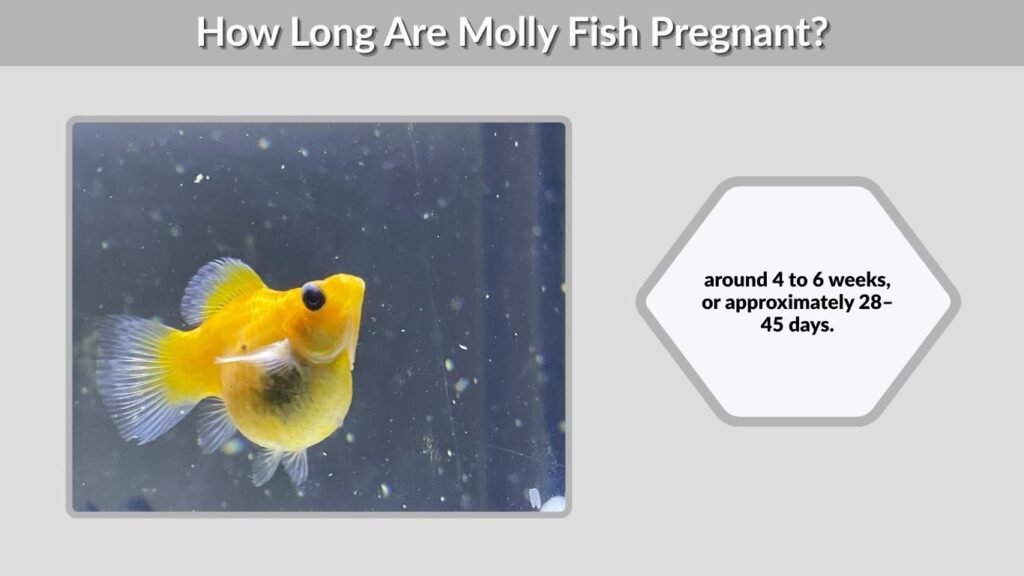
Molly fish generally remain pregnant for around 4 to 6 weeks, or approximately 28–45 days. The exact gestation period varies with temperature, genetics, age, health, and environmental conditions.
A healthy female kept in stable warm water may develop fry slightly faster than one living in cooler or stressful conditions.
How Long Are Black Molly Fish Pregnant?
Black molly fish have approximately the same gestation period as other molly varieties—usually around four to six weeks.
Because their dark coloration can hide the gravid area, it may be harder to determine exactly how far along a pregnant black molly fish is. Watching changes in belly shape and behavior is especially useful.
Can a Molly Fish Get Pregnant Alone?
A female cannot become newly fertilized without mating with a male. However, mollies can store sperm after mating and use it to fertilize later batches of eggs.
For this reason, a female molly may appear to become pregnant even after being kept without males for weeks or months.
Pregnant Molly Fish Stages
Pregnancy progresses gradually rather than changing overnight. Observing the stages can help estimate when fry may arrive.
Early Pregnancy
During early pregnancy, changes can be subtle.
- Belly becomes slightly fuller
- Appetite usually remains normal or increases
- Female continues swimming actively
- Gravid area may begin to darken
- Few behavioral changes are obvious
At this stage, it can be difficult to distinguish pregnancy from a naturally well-fed female.
Middle Pregnancy
As embryos grow, pregnancy becomes much easier to recognize.
The abdomen becomes noticeably larger, and the female may eat more frequently. She generally remains active but may start seeking quieter parts of the aquarium.
A healthy, varied diet is particularly important during this stage because developing fry require significant nutrition.
Late Pregnancy
During the final stage, the belly often becomes very large and develops a squared appearance toward the rear.
The female may hide behind plants, remain close to the bottom, stay near a heater, or separate herself from tank mates. Appetite may decrease shortly before birth.
These behavioral changes often indicate that delivery is getting closer.
Pregnant Molly Fish Giving Birth Signs
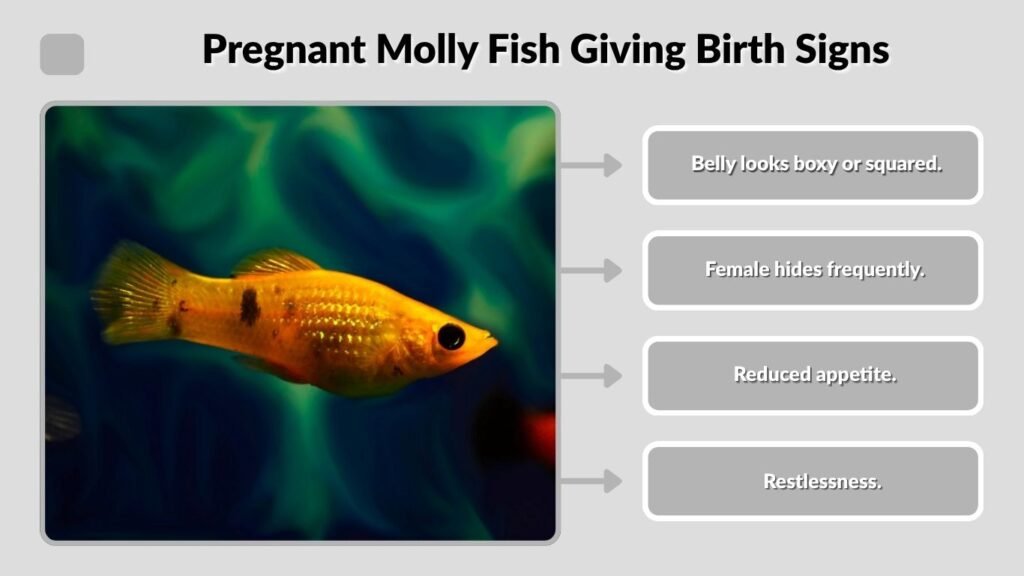
A female approaching labor can behave differently from her normal routine. However, not every molly shows exactly the same signs.
Common Signs Molly Fish Is About to Give Birth
- Belly looks boxy or squared
- Female hides frequently
- Reduced appetite
- Restlessness
- Spending time alone
- Remaining near dense plants
- Staying close to the bottom or in a quiet corner
- Faster breathing
- Repeatedly changing position
If your pregnant molly fish is hiding, this does not necessarily indicate illness. Females often seek secluded locations when they are close to giving birth.
Delivery can take several hours, with fry appearing one at a time.
How Many Babies Do Molly Fish Have?
The number of baby molly fish varies considerably. A female may produce roughly 20 to 100 fry, although smaller or larger broods are possible.
Young or first-time females generally produce fewer babies than large, mature females.
Molly fry are born fully formed and can swim immediately. Unfortunately, adult mollies—including the mother—may eat newborn fry.
Protecting Molly Fish Babies
Dense vegetation provides one of the easiest ways to increase fry survival.
Good hiding areas include Java moss, guppy grass, hornwort, floating plants, and other dense aquarium vegetation.
A separate nursery tank can protect more babies, but moving a heavily pregnant female too close to delivery may cause unnecessary stress. If using a separate tank, transfer her before labor begins and provide plenty of cover.
How to Take Care of a Pregnant Molly Fish
Pregnant mollies generally do not require complicated special treatment. Maintaining stable water conditions and reducing stress are more important than constantly moving or handling the fish.
Tank Conditions
- Temperature: Around 72–82°F
- pH: Approximately 7.0–8.5
- Water: Moderately hard to hard
- Filtration: Reliable but not excessively strong
- Hiding areas: Live plants and sheltered spaces
- Water quality: Zero ammonia and nitrite
Perform regular partial water changes, but avoid making sudden major changes in temperature or water chemistry.
Best Food for Pregnant Mollies
Feed a varied diet containing both plant-based and protein-rich foods.
Suitable choices include quality tropical flakes, molly pellets, spirulina, algae-based foods, daphnia, brine shrimp, and occasional bloodworms.
Small meals once or twice daily are usually preferable to heavy feeding. Overfeeding can quickly pollute the aquarium.
Fat vs Pregnant Molly Fish
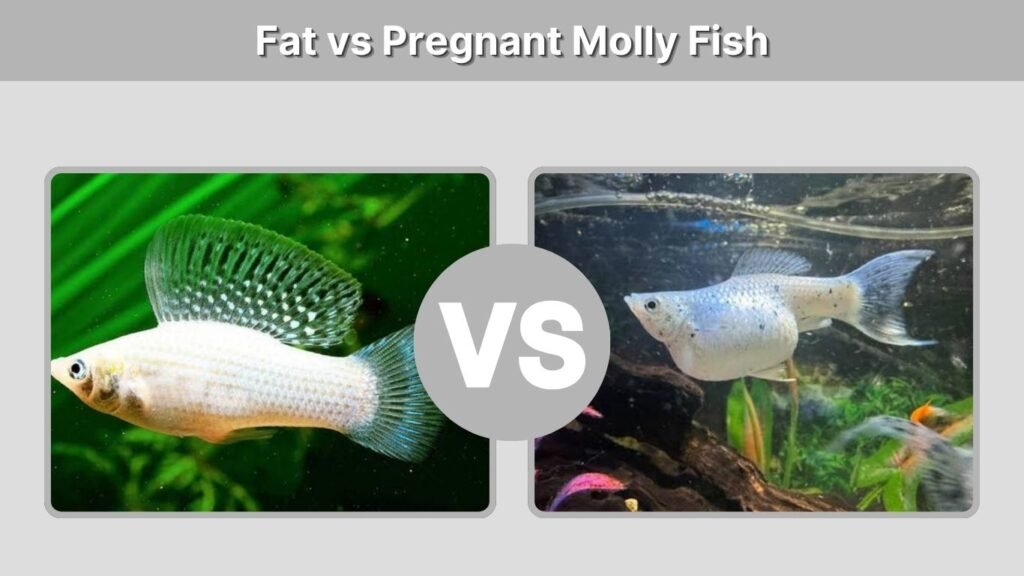
A large belly does not always mean pregnancy. Mollies can appear swollen because of overeating, constipation, disease, or internal problems.
A pregnant female generally remains active during most of gestation and shows gradual abdominal enlargement over several weeks.
A bloated or sick molly may show additional symptoms such as:
- Raised scales
- Difficulty swimming
- Clamped fins
- Refusing food
- Stringy waste
- Rapid breathing
- Sudden swelling
- Lethargy
If the abdomen enlarges suddenly rather than gradually, investigate water quality and possible illness instead of assuming pregnancy.
Male Molly Fish Chasing a Pregnant Female
Male mollies frequently chase females because of mating behavior, and they may continue even when a female is already pregnant.
Constant chasing can become stressful, particularly late in pregnancy. Keeping approximately one male for every two or three females can distribute male attention more evenly.
Plants, caves, and other visual barriers also give females places to escape persistent males.
If one male becomes excessively aggressive, temporary separation may be necessary.
Pregnancy in Different Molly Varieties
Pregnancy signs are broadly similar among common molly varieties, although body shape and coloration can make certain signs easier or harder to recognize.
Pregnant Black Molly Fish
A pregnant black molly fish develops an enlarged abdomen, but the dark body makes the gravid spot difficult to see. Look mainly for a growing belly, squared abdomen, hiding, and late-pregnancy behavior changes.
Pregnant Dalmatian Molly Fish
A pregnant Dalmatian molly becomes noticeably fuller behind the chest and may develop a squared belly before giving birth. The spotted pattern sometimes makes subtle abdominal changes harder to notice.
Pregnant Balloon Molly Fish
Balloon mollies naturally have round bodies, making pregnancy more difficult to identify. Look for an abdomen that becomes unusually large, a more box-shaped rear belly, and changes in behavior.
Pregnant Gold or Panda Molly Fish
Gold, gold dust, golden panda, and similar light-colored mollies may show pregnancy relatively clearly because the darker gravid area can sometimes be visible through the abdomen.
FAQs
At What Age Can Molly Fish Get Pregnant?
Mollies can become sexually mature at only a few months of age. The exact timing varies with growth rate, nutrition, temperature, and variety.
How Do Molly Fish Get Pregnant?
Mollies reproduce through internal fertilization. The male uses a modified anal fin called a gonopodium to transfer sperm to the female, which then carries the developing embryos internally.
Do Molly Fish Lay Eggs?
No. Mollies are livebearing fish. Their eggs develop inside the female, and she gives birth to live, free-swimming fry.
Why Is My Pregnant Molly Not Giving Birth?
Gestation length varies, so estimated delivery dates may be inaccurate. Stress, cooler water, poor conditions, or simply misidentifying bloating as pregnancy can also explain an apparent delay.
How Soon Can a Molly Fish Get Pregnant Again?
Females can become pregnant again very quickly and can store sperm from previous matings. This allows them to produce repeated broods without mating before every pregnancy.