
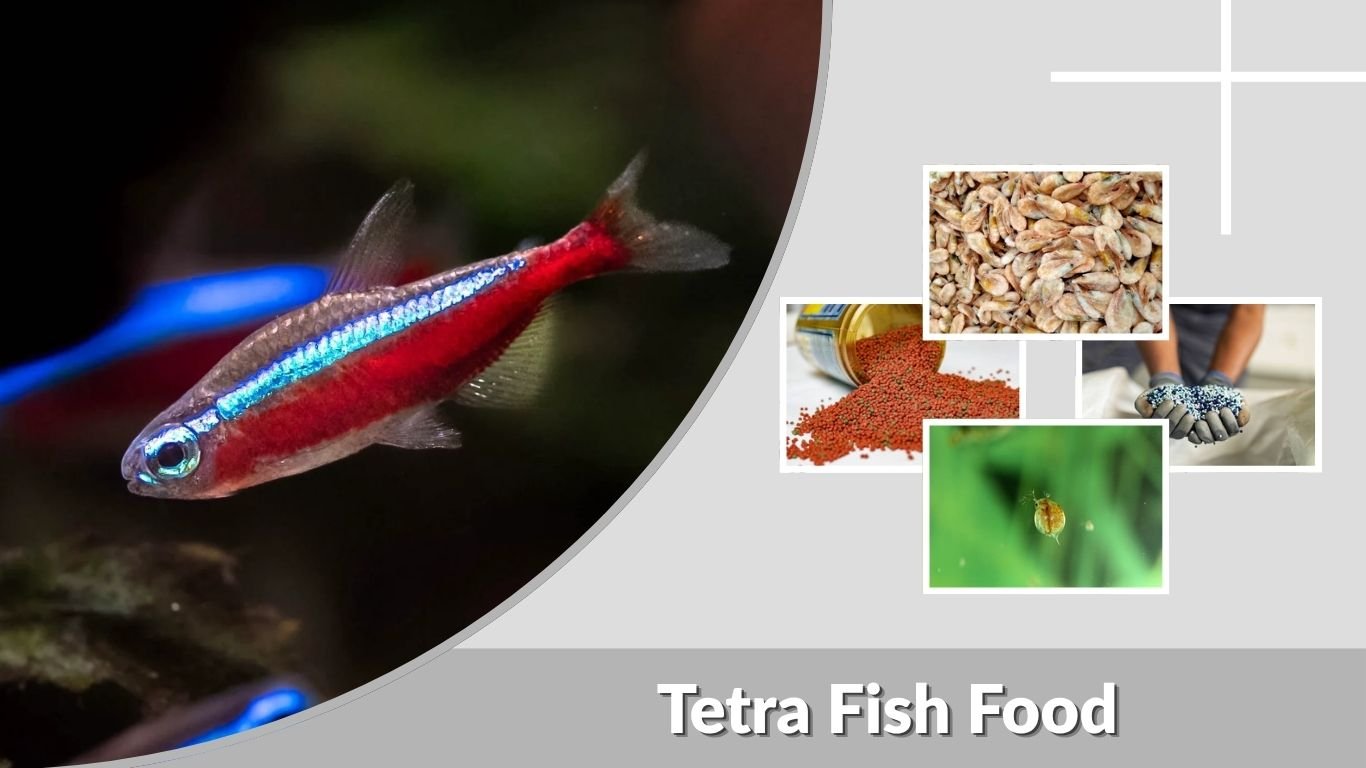
Choosing the right tetra fish food helps your fish stay colorful, active, and healthy. Most tetras are small omnivores that need protein-rich foods in pieces small enough to swallow. Tropical flakes, micro-pellets, granules, and frozen foods can all be part of a balanced diet. However, feeding too much or relying on only one food may cause poor nutrition and dirty water. This guide explains what tetra fish eat, the best food types, feeding amounts, and whether they can eat betta or goldfish food.
What Food Do Tetra Fish Eat?
Most aquarium tetras are omnivores. In nature, they commonly eat tiny insects, insect larvae, small crustaceans, algae, plant material, and other microscopic organisms.
In an aquarium, their diet should include both animal-based protein and some plant ingredients. A quality tropical fish food can be used as the daily staple, while frozen or live foods add variety.
Good foods for tetras include:
- Tropical fish flakes
- Micro-pellets
- Small granules
- Brine shrimp
- Daphnia
- Cyclops
- Mosquito larvae
- Finely chopped bloodworms
- Small insect-based foods
- Spirulina-containing flakes
Because tetras have small mouths, all food must be appropriately sized. Large flakes should be crushed between your fingers before feeding.
Best Fish Food for Tetras
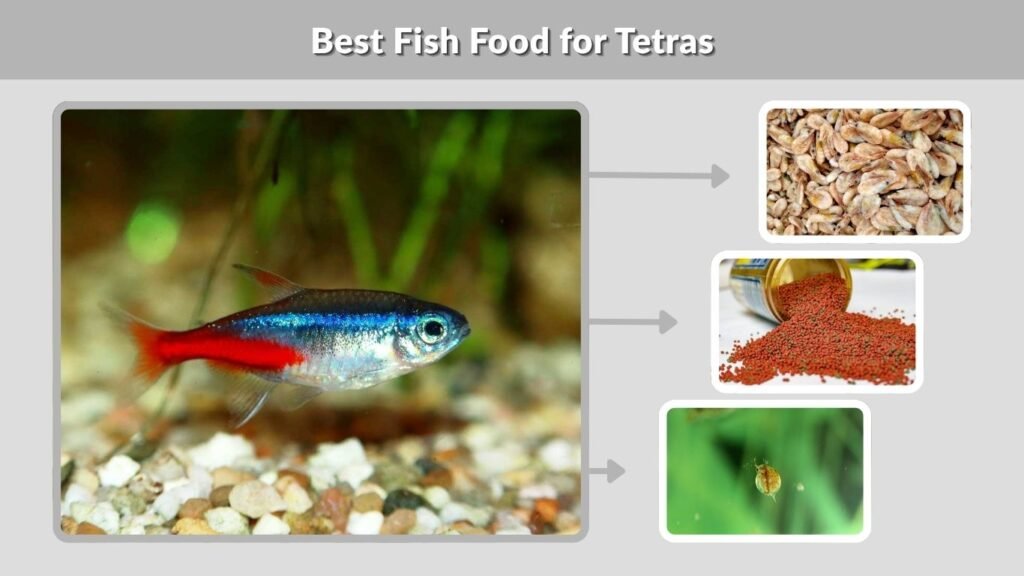
The best tetra fish food should contain useful protein sources, vitamins, minerals, and ingredients that are easy to digest. It should also float or sink slowly enough for tetras to catch it in the middle and upper parts of the aquarium.
| Food type | Best use | Feeding frequency |
| Tropical flakes | Everyday staple food | Once or twice daily |
| Micro-pellets | Balanced daily feeding | Once or twice daily |
| Small granules | Midwater feeding | Several times weekly |
| Frozen brine shrimp | Protein and variety | 1–3 times weekly |
| Daphnia | Digestion and variety | 1–2 times weekly |
| Bloodworms | Occasional protein treat | Once or twice weekly |
| Live foods | Enrichment and breeding | Occasionally |
Tropical Flakes
Tropical flakes are one of the most convenient foods for neon tetras, cardinal tetras, black skirt tetras, glow tetras, and other small community fish.
Flakes float briefly before slowly sinking, allowing fish at different levels to eat. Crush them into small pieces so weaker or smaller tetras can swallow them easily.
Choose flakes that list recognizable protein sources near the top of the ingredient list. Fish meal, shrimp meal, insect meal, krill, and other aquatic proteins are generally useful ingredients.
Micro-Pellets and Granules
Micro-pellets are often less messy than flakes and may retain their nutrients better in the water. Slowly sinking pellets are especially suitable because many tetras prefer feeding in the middle of the aquarium.
Check the pellet size carefully. Pellets that are too large may be ignored, spat out, or left to decay on the substrate.
Frozen and Live Foods
Frozen and live foods provide variety and can encourage natural hunting behavior. They may also help condition adult fish before breeding.
Suitable options include baby brine shrimp, daphnia, cyclops, and small bloodworms. Thaw frozen food in a small container of aquarium water before adding it to the tank.
Treat foods should support the main diet rather than completely replace a balanced flake or pellet food.
Best Food for Neon Tetra Fish
Neon tetras have very small mouths, so food size is especially important. Finely crushed tropical flakes and tiny slow-sinking pellets are excellent daily choices.
A balanced neon tetra feeding plan may include:
- Crushed flakes or micro-pellets as the staple
- Baby brine shrimp once or twice weekly
- Daphnia for variety
- Frozen cyclops or finely chopped bloodworms
- Color-enhancing food containing krill or natural carotenoids
Do not feed large whole bloodworms or oversized pellets. Neon tetras may struggle to swallow them.
Best Food for Cardinal Tetras
Cardinal tetras have feeding needs similar to neon tetras. They do well on small tropical flakes, micro-granules, brine shrimp, daphnia, and insect-based foods.
Cardinals may be shy when first introduced to an aquarium. Slowly sinking food allows them more time to feed, especially in planted tanks where they feel secure.
Best Food for Glow Tetras
“Glow tetra” usually refers to fluorescent forms of black skirt tetras. These fish are larger than neon tetras and can eat flakes, small pellets, granules, brine shrimp, daphnia, and bloodworms.
Their bright fluorescent colors are genetic. Color-enhancing foods may support overall condition, but they do not create or permanently change the fish’s fluorescent color.
Tetra Fish Food Flakes vs Pellets
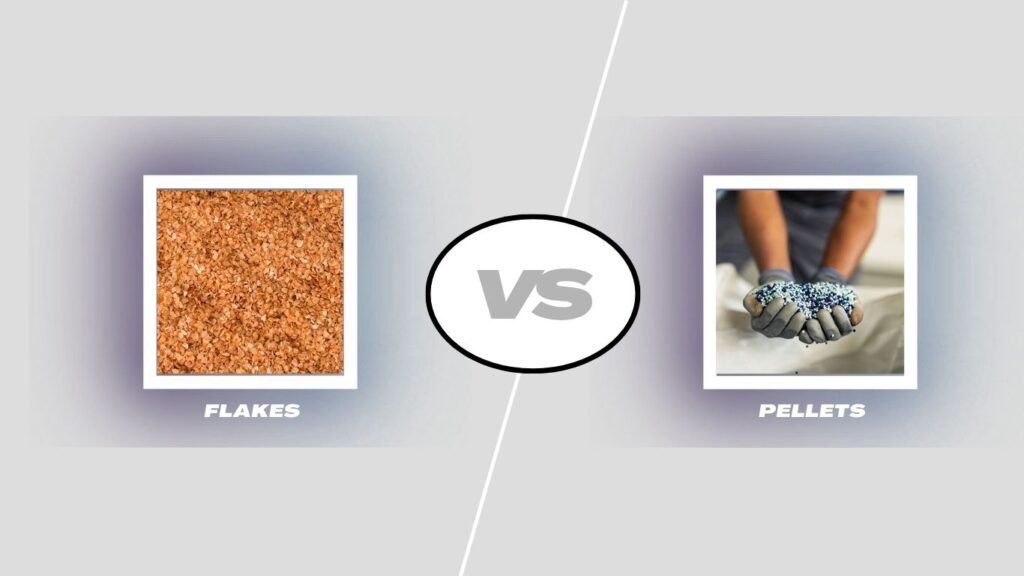
Both flakes and pellets can provide complete nutrition when they are high quality and appropriately sized. The best choice depends on your fish, aquarium setup, and feeding habits.
Advantages of Flakes
- Easy to crush for very small fish
- Widely available
- Suitable for mixed community tanks
- Float before slowly sinking
- Easy to measure in small amounts
Advantages of Pellets
- Often create less dust and waste
- Simple to portion
- May remain nutritious longer in water
- Available in floating and sinking forms
- Useful for controlled feeding
You do not have to choose only one. Alternating between finely crushed flakes and micro-pellets can provide variety while allowing you to observe which food your fish prefer.
How Much Food Should You Feed Tetra Fish?
Feed only an amount the fish can finish in about one to two minutes. For a small school, this may be only a small pinch of flakes or a few micro-pellets per fish.
It is safer to begin with too little food and add a tiny amount if necessary. Uneaten food settles in the aquarium, where it breaks down and can increase ammonia, nitrite, nitrate, and algae growth.
How Often Should Tetras Be Fed?
Adult tetras can normally be fed once or twice daily. Young, growing fish may benefit from two or three very small meals.
A simple schedule is:
- Morning: Small portion of flakes or pellets
- Evening: Small portion of pellets or another staple
- One to three times weekly: Frozen or live food instead of one regular meal
Avoid giving multiple full portions in the same feeding session.
Signs of Overfeeding
Common signs include:
- Uneaten food on the substrate
- Cloudy or foul-smelling water
- Rapid algae growth
- Rising ammonia or nitrate
- Bloated fish
- Frequent filter clogging
- Snails multiplying quickly
Remove leftover food with a siphon and reduce the amount offered at the next feeding.
Can Tetra Fish Eat Betta Food?
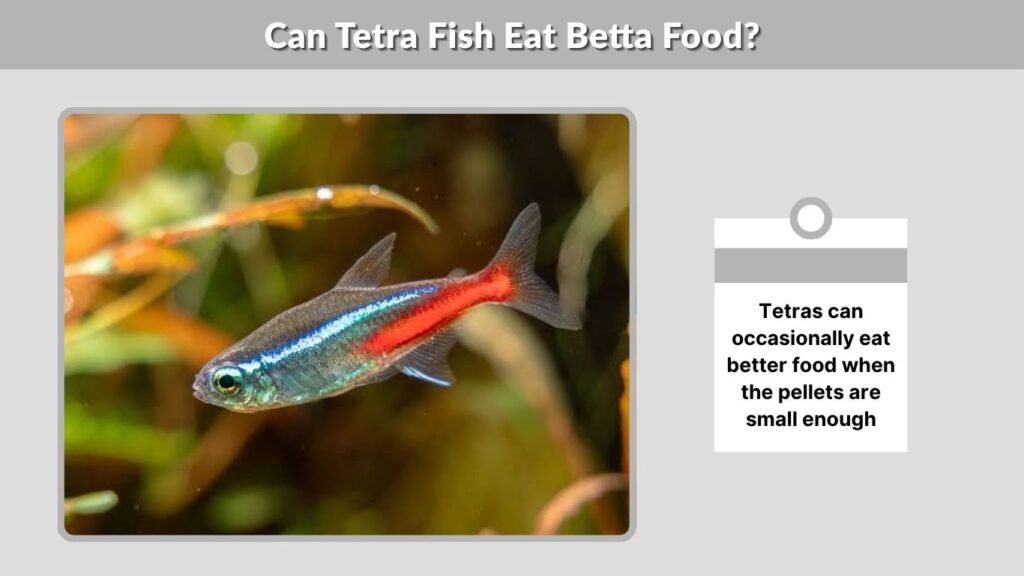
Tetras can occasionally eat better food when the pellets are small enough. Betta foods are usually high in animal protein because bettas are mainly carnivorous.
However, betta pellets may be too large and may not provide the best long-term balance for omnivorous tetras. Crush the pellets when necessary and use them only as part of a varied diet.
Bettas can also eat some tropical tetra flakes, but a betta-specific food should usually remain their main diet.
Can Tetra Fish Eat Goldfish Food?
Tetras may eat crushed goldfish flakes in an emergency, but goldfish food should not be their regular diet. Goldfish and tropical tetras have different nutritional and temperature-related needs.
Goldfish foods may contain more plant matter and may not provide the protein balance needed by many tetra species. Use a tropical community food designed for small omnivorous fish instead.
Can Guppies and Tetras Eat the Same Food?
Guppies and many tetra species can share quality tropical flakes or micro-pellets. Both are omnivores and benefit from a varied diet containing animal protein and plant ingredients.
Make sure all fish receive food. Fast-moving guppies may reach floating flakes before shy tetras. Slowly sinking micro-food can help distribute the meal through different levels of the tank.
Tetra Brand Fish Food vs Food for Tetra Fish
The word “Tetra” can describe both a group of freshwater fish and a popular aquarium food brand. Tetra-brand products include tropical flakes, color foods, betta foods, goldfish foods, koi foods, cichlid foods, pond sticks, and vacation feeders.
Not every product carrying the Tetra name is suitable for tetra fish. For example, koi sticks and large cichlid pellets are too large and are made for fish with different nutritional needs.
For tetra species, look for products labeled for:
- Tropical community fish
- Small tropical fish
- Tetras, barbs, or rasboras
- Small-mouthed fish
- Micro-feeding
- Slow-sinking tropical fish
What to Look for in Tetra Fish Food Ingredients
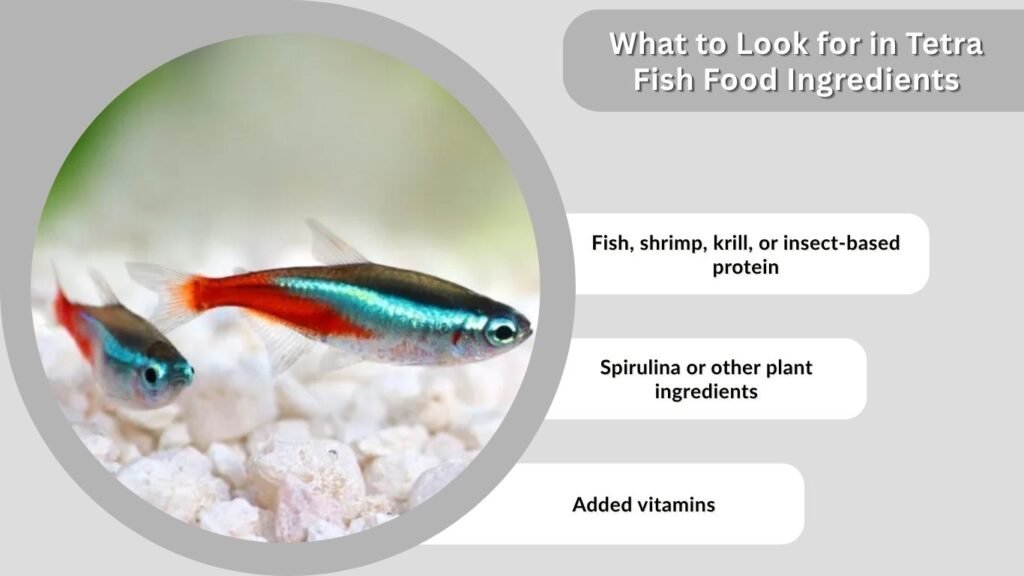
Read the ingredient list before buying food. A useful staple food should contain quality protein, vitamins, minerals, and digestible ingredients.
Look for:
- Fish, shrimp, krill, or insect-based protein
- Spirulina or other plant ingredients
- Added vitamins
- Natural color-supporting ingredients
- An appropriate pellet or flake size
- Clear storage and expiration information
Avoid buying more food than your fish can consume within several months. Repeated exposure to heat, air, light, and moisture can reduce quality.
Keep the container tightly closed in a cool, dry location. Never use food that smells spoiled, appears moldy, or has become damp.
How Long Can Tetra Fish Go Without Food?
Healthy adult tetras can often survive several days without food, but this does not mean they should regularly be left unfed. Their survival time depends on age, health, water temperature, tank maturity, and available natural microorganisms.
Most healthy adults can generally manage a short absence of about three to five days better than they can tolerate overfeeding from an automatic or vacation feeder.
Young, sick, underweight, or breeding fish should not be left without proper care for long periods. For longer trips, arrange for a trusted person to provide pre-measured portions.
FAQs
Is flake food good for tetra fish?
Yes, quality tropical flakes can be an excellent staple food for tetras. Crush the flakes into pieces that fit their small mouths. For better variety, combine flakes with micro-pellets and occasional frozen foods such as brine shrimp or daphnia.
What is the best food for neon tetras?
The best neon tetra diet includes finely crushed tropical flakes or tiny slow-sinking pellets as the main food. Supplement this diet with baby brine shrimp, daphnia, cyclops, or finely chopped bloodworms once or twice a week.
How many times a day should tetra fish eat?
Most adult tetras should eat once or twice daily. Each meal must be small enough to finish within one or two minutes. Young tetras may need more frequent feeding, but every portion should remain very small to protect water quality.
Can tetras eat only pellets?
Tetras can live on nutritionally complete micro-pellets, but a varied diet is better. Combining pellets with crushed flakes, brine shrimp, daphnia, and other suitable foods supplies different nutrients and encourages natural feeding behavior.
Should I use vacation food for tetras?
Vacation blocks may dissolve unevenly and sometimes affect water quality. For a short trip, healthy adult tetras may be safer without food for a few days. For longer absences, use a tested automatic feeder or ask someone to offer pre-measured portions.